
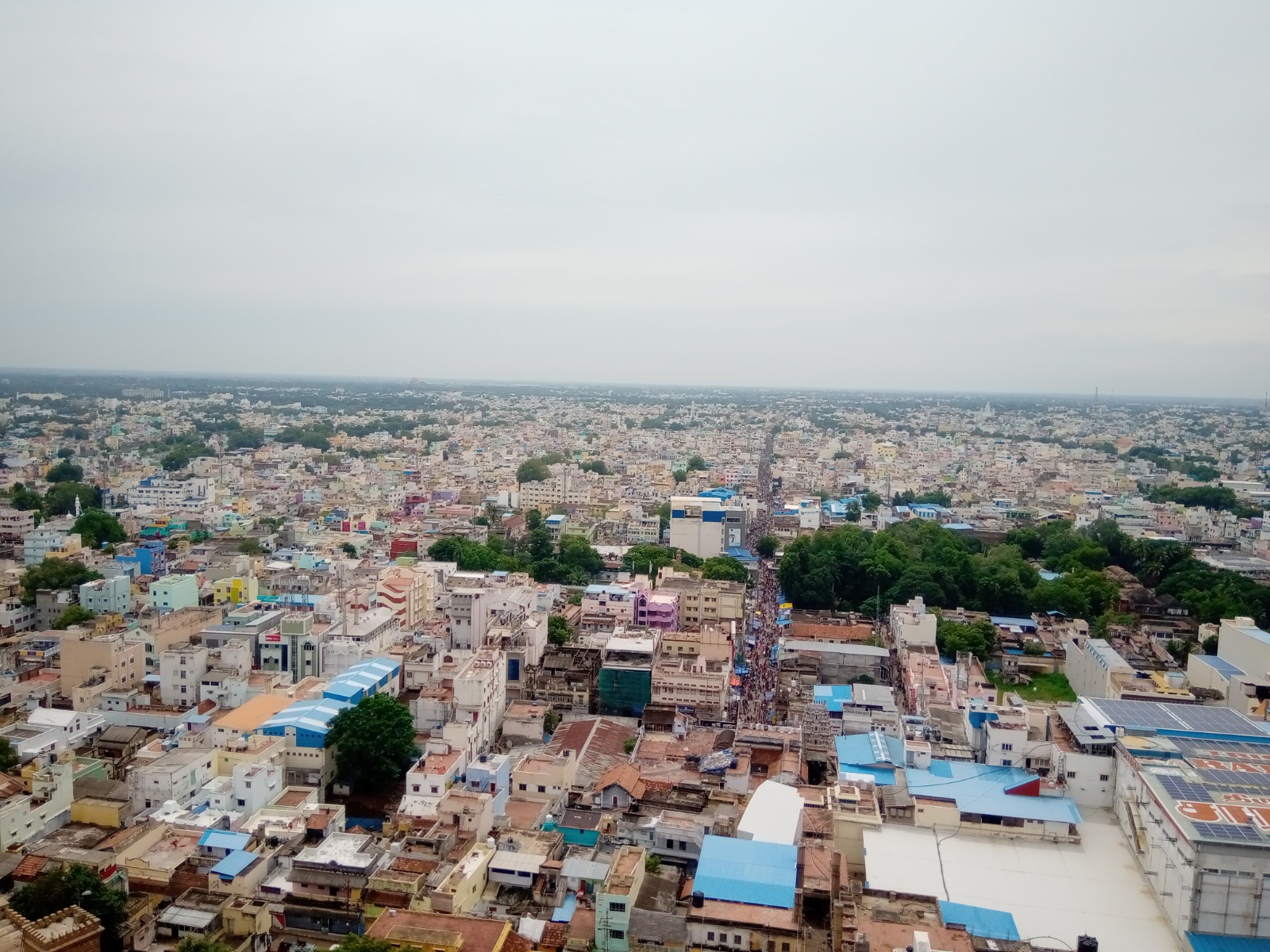
As the nation embarks on Viksit Bharat@2047, its ambitious plan to make India a developed country by 2047, it is imperative that the country develops organically with the local bodies driving the economic development and also benefitting from it. If this opportunity is missed, the gains derived from the 73rd and 74th Constitutional amendments would dissipate. To this end, the second-generation institutional reforms of urban local bodies (ULBs) need to be taken up.
Despite new initiatives like Smart City Mission, AMRUT, etc., the ULBs continue to face challenges in providing basic civic facilities like water supply, sanitation, urban public transport, all-weather road connectivity, stormwater and drainage, solid waste management, sewage, public sanitary facility, street lights, safety, and security, etc. Hamstrung by inadequate decentralisation, the local governments are unable to raise funds and channelise development projects to solve physical infrastructure facilities. Moreover, the funds allocated by the states are always disproportionate to the requirements and spending on developmental projects is scarce and riddled with quality issues.
Status of Local Bodies in Tamil Nadu
Take the case of Tamil Nadu, which envisions becoming a trillion-dollar economy by 2030. While the State is the most urbanised (53% population) in the country, the civic facilities that its cities and town offer to its residents are no different from any other poorly managed cities and towns in the country. The predominant reason is the lack of financial and administrative autonomy of the ULBs. The recent efforts to improve some of the services have also not yielded sustainable results.
Given this background, the government of Tamil Nadu has recently announced proposals to expand the existing geographical coverage of urban ULBs limits by merging nearby municipalities into city corporations, town panchayats into municipalities, and village panchayats into town panchayats. Some of the major factors for the expansion of urban areas include increase in population, popular demand from people, and an increase in tax revenues. The following are the key announcements of the Government of Tamil Nadu’s Department of Municipal Administration through the issue of G.Os notified on 31st December 2024:
- Expansion of 16 municipal corporations including Greater Chennai, Coimbatore, Cuddalore, Dindigul, Erode, Karur, Hosur, Madurai, Salem, Tiruchirapalli, Tiruppur, Avadi, Kumbakonam, Thanjavur, Thoothukudi, and Sivakasi by annexing 4 municipalities, 5 town panchayats and 149 village panchayats;
- 41 municipalities including Tiruvarur, Tiruvallur, and Chidambaram, are to be expanded by annexing 1 town panchayats and 147 village panchayats;
- Formation of 13 new municipalities including Kanyakumari, Harur, and Perundurai;
- Formation of 25 new town panchayats including Yercaud, Kalayar Koil and Thirumayam; and
- Annexation of 29 village panchayats with 25 town panchayats.
Advantages of Geographic Expansion
- Expansion through mergers increases land values thereby boosting the real estate and related sectors.
- The expanded city corporations and municipalities may get relatively higher fund allocation for improving the infrastructure development facilities and services.
- Decentralised regulation of planned development of the city at least on paper if not for implementation in letter and spirit.
Disadvantages of Geographic Expansion
- The citizens of expanded ULBs may bear higher taxes for services like water, property tax, municipal waste disposal, etc.
- The expansion may result in parent ULBs being unable to cater to the needs of its newer territory. The newly added areas either continue with existing services or face neglect having lost its erstwhile independent identity.
- Incompatibility between the vision of the parent ULBs and the needs of the merging units.
Issues with Expansion through Mergers
Often ULBs are expanded for political reasons or to obtain approvals from the Centre for new projects, like metro train services, which require a particular size of population. Further, ULBs are already financially stressed and the state governments do not give adequate funds after the merger, aggravating their financial position. Furthermore, expansion through merger goes against the principle of local governance where small is considered beautiful. There is absolutely no need for mergers just to develop infrastructure, which may be developed as there are.
Prerequisites for Expansion
Any merger of ULBs should be done only after existing areas of an ULB achieve the desired levels of reasonable, minimum standards of urban infrastructure and quality of life. Further, a thorough study has to be made on the likely benefits and issues with prospective mergers from administrative, financial and other perspectives.
If ULBs are really empowered through adequate decentralisation, mergers may be proposed by the ULBs themselves or, they may explore partnerships and sharing of resources without formal mergers. All the decision-making process has to be decentralised, moving closer to the local level and ward level for the participation of people. Only the technical aspects have to be decided at the state or regional level to support ULBs effectively and on timely. Anything on the contrary would create chaos as witnessed in big cities. like recent floods and inundations during regular monsoons.
Several years ago, the scheme on Providing Urban Amenities to Rural Areas (PURA), a vision of Dr APJ Abdul Kalam, was implemented in a few states like Andhra Pradesh, Kerala, Maharashtra, Puducherry, Rajasthan, and Uttarakhand. It is a Public Private Partnership scheme with a clear framework for governments, state governments, the private sector, and local government to take advantage of improving facilities and services with 10 years of maintenance services. Why not try something like this new scheme to make our semi-urban and rural areas with all infrastructure facilities?
B.Chandrasekaran is an Economist and Founder Chairman of the AgaPuram Policy Research Centre, Erode.
Views expressed by the author are personal and need not reflect or represent the views of the AgaPuram Policy Research Centre.