
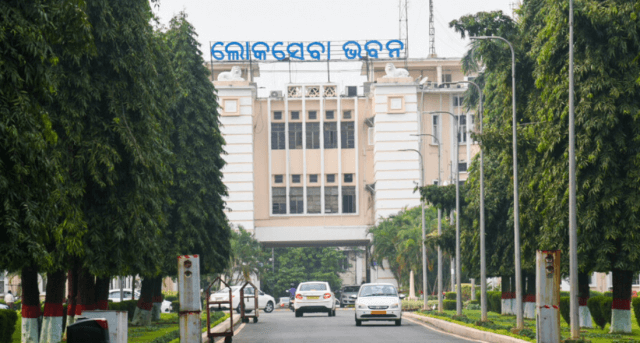
Fiscal Excellence of Odisha
Financial health is the key indicator of capability, opportunities and challenges of an individual, family, institution or a government. Urban Local Bodies (ULB) like city corporations, municipalities and town panchayats are belong to the third tier of our governance structure responsible for urban growth centres that plays a crucial role in the era of aspirational India. The third tier of governance was enforced through 73rd and 74th Amendments Act in 1993 – an early stage of our economic reforms gradually becoming part of policy discourse because of its mandate and functions entrusted upon.
On the backdrop of the latest report on “Fiscal Health Index 2023” to assess the fiscal health of the States; it is also a matter of imperative to look at the state of municipal finances as reported by Reserve Bank of India in its “Report on Municipal Finances 2024”. This report delineates the sources of revenue generation, opportunities and challenges by the municipal corporations of the states.
In the context of “Odisha” that stood on top of the list of States in India due to its fiscal prudence obtained through a systematic financial management over a period of time as per “Fiscal Health Index 2023” by NITI AAYOG; an analysis of the financial health of MC may help further strengthening the overall financial wellbeing of the State through its municipal governance. There are 5 MCs in Odisha namely- Berhampur, Bhubaneswar, Cuttack, Sambalpur and Rourkela situated in eastern, western and northern region of the state. As per 2011 Census, Odisha was one of the least urbanized states in India, however, it is catching up in urbanisation as in 2024; 34 new notified area councils (NCCs) and upgradation of 5 municipalities added to the list of local urban governments.
The NITI AAYOG Report on Fiscal Health Index 2023 highlighted that “Odisha excels in fiscal health with the highest overall index score of 67.8. It tops the Debt Index (99.0) and Debt Sustainability (64.0) rankings with better than average scores under Quality of Expenditure and Revenue Mobilization. The state has maintained low Fiscal Deficits, a good debt profile, and an above average Capital Outlay/GSDP ratio.” Also “the top five high-performing states are Odisha, Chhattisgarh, Goa, Jharkhand, and Gujarat.” Further, the report stated that “Odisha and Chhattisgarh have performed well under Revenue Mobilization, with their Own Non-Tax Revenue growing significantly due to high revenue collection from mining.”
The Reserve bank of India, started focusing on the financial health of MCs by releasing state-wise reports in 2022 and 2024 that delve into fiscal position. Since, MCs are responsible for the provision of vital public services like health, education, water, sanitation, street lighting, public parks registration of births and deaths under their jurisdictions; they have a crucial role to play in effective urban management, urban development and upgradation of urban infrastructure. Odisha is also mineral rich state which supports for manufacturing sector across different region.
Odisha publishes monthly fiscal report. According to RBI report “Odisha was one of the most fiscally stressed States in the early 2000s, with a debt-GSDP ratio of 57.3% in 2002-03 – well above the consolidated debt-GDP ratio of 32.1% for all States. The interest payments to revenue receipts ratio (IP/RR) was 34.2% in 2002-03, imposing a significant strain on the State’s finances. Over the subsequent two decades, there has been a turnaround in the fiscal position of the State, with the debt-GSDP ratio declining to 16.0% in 2023-24 –the lowest among the Indian States”.
RBI Report also highlights that “during the challenging times of COVID-19, Odisha maintained prudent fiscal practices like periodic revision of the rates/user charges of various tax and non-tax sources and monthly reviews of revenue collection. Odisha is the only State to register a revenue surplus (1.7% of GSDP) during the pandemic year of 2020-21, which increased to 6.5% of GSDP in 2021-22 on account of higher realisation of non-tax revenue.”
Status of MCs in Odisha
The RBI report primarily highlights the revenue account, revenue sources and reforms being undertaken by MCs. In the context of Odisha – the following observations convey the status of its MCs:
- The size of revenue receipts of MCs in Odisha has increased substantially in last five years period from Rs.612.36 crore in 2019-20 to Rs.1266.96 Crore in 2023-24 (BE). Total revenue expenditure of 2023-24 (BE) is Rs.1060.89 crore.
- Ratio of Municipal Corporations’ Revenue Receipts to State Government’s Revenue Receipts comes to 0.7 Ratio of Municipal Corporations’ Tax and Non-Tax Revenue to State Government’s Tax and Non-Tax Revenue is 0.3.
- The percentage of Revenue Grants, Contribution and Subsidies has marked an increase by 21.6% which doubled from 22.27% in 2019-20 to 43.87 in 2023-24 (BE). In terms of capital receipts; there is a marked increase in Finance Commission grant from 6.17 % out of total receipts for specific purposes in 2019-20 to 21.28 % in 2023-24 (BE). Similarly, the State Finance Commission grant increased by 10.26% from 21.17 % to 31.43 % for specific purposes.
- Capital expenditure of the MCs in Odisha has been consistently above 95% throughout in last five years under evaluation. The ratio of capital expenditure to total expenditure for MCs is more than 50%.
- The own tax ratio of MCs in Odisha was only 14.98 % in 2023-24 (BE) as compared to the highest level at 53.8% in Karnataka and 50.3% in Telangana.
- A trend of decreasing in percentage of own tax revenue (OTR) was observed in last three years from 22.86 % in 2021-22 to 16.00 % in 2022-23 and a further decrease to 14.98 % in 2023-24 (BE). Similarly, sources like- “income from investment” and “interest earned on loans” have reported a decrease from 4.13 % in 2019-20 to 1.72 % in 2023-24 (BE) and from 4.08 % to 1.45 % respectively.
RBI Report Highlighted the following Institutional Innovations by Odisha Government
- In 2019-20, Odisha introduced gender budgeting and child budgeting to support gender equality and the development of children”.
- In 2020-21, Odisha introduced Nutrition Budget to improve nutritional outcomes and Climate Budget to prepare for climate risk mitigation.
- In 2021-22, Odisha announced many institutional reforms including “publication of Fiscal Risk Statement to provide a comprehensive assessment of the emerging risks for the State government finances. SDG-based budget policy document to provide an overview of how the State is approaching budget planning and management process for the SDGs. Launch of Budget Execution Technique Automation (BETA) to ensure effective online monitoring of monthly and quarterly expenditure pattern.”
- In 2022-23, Odisha announced for “Budget Stabilisation Fund to build up sufficient resources for mitigation of financial risks.”
Key takes and Scope for Odisha
Municipal Corporations in Odisha can play a remarkable role as engine of growth for the state provided appropriate reforms are initiated and carried out. Reform is what needed not only in the context of Odisha but also for all the MCs in the country. Indian MCs generate much lower revenues compared to advanced economies as well as emerging market economies that are comparable. It may be noted that relying on own revenues would allow the MCs financial autonomy to plan strategically and implement efficiently the development projects without relying heavily on grants from higher government tiers and Finance Commissions.
City specific strategies are necessary keeping in view the local economy and growth potential in key emerging areas such as cultural and creative sectors (since Odisha is one of the richest states in terms of its arts, culture, crafts, handlooms, performing arts, heritage etc.) along with green economy, renewable energy, religious and eco-tourism. Expansion of economic activities in tier two and three cities including through PPP and investments can also be augmented.
Though it is a matter of concern as percentage of own tax revenue of MCs in Odisha is decreasing in last three years under evaluation, however, this trend can be reversed through adopting affirmative actions towards compliance with guidelines of Finance Commissions, innovations in local economy, reform in taxation and revenue generation as well as ensuring simple and ease regulation of rules under its authorities.
The Author is a Delhi based Independent Consultant who worked with NITI Aayog and NCPCR, Government of India, New Delhi.
The Author is Research Fellow at AgaPuram Policy Research Centre.
Views expressed by the authors are personal and need not reflect or represent the views of the AgaPuram Policy Research Centre.
This article originally was first published in Orissa Today at