
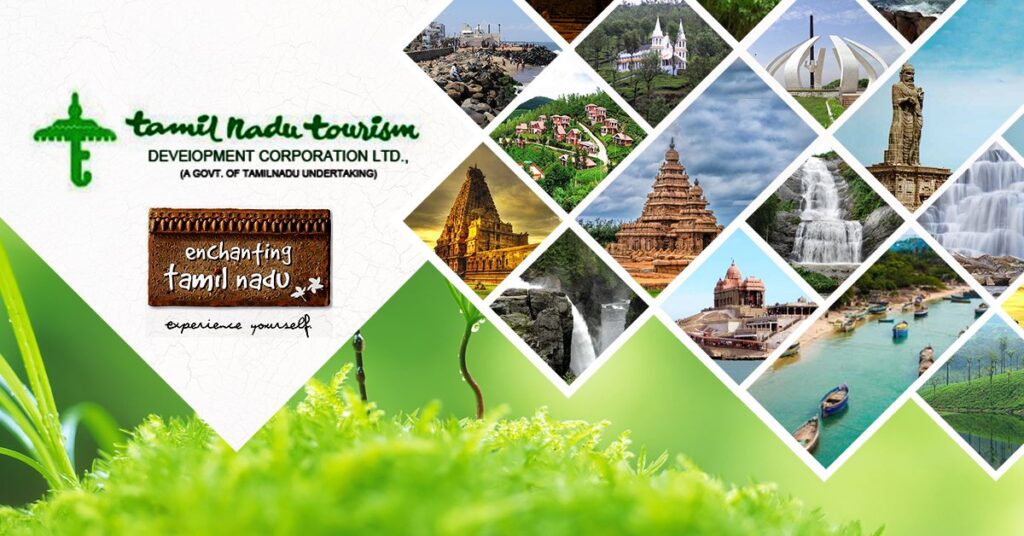
Tourism plays a crucial role in the economy, contributing 6.23% to the national GDP and providing 8.78% of total employment. For Tamil Nadu, 8% of its GDP comes from the tourism sector and the State aims to increase it to 12% by 2030. In 2019, Tamil Nadu had 49.5 crore domestic tourist arrivals and 0.69 crore foreign tourist arrivals. Between 2013 and 2019, Tamil Nadu was the most visited State by domestic tourists garnering 22.1% of total domestic tourists in India. However, this trend declined significantly in 2020 and 2021 due to the pandemic and continues with the trend.
The overall experiences experience of any tourist to the State is a disappointing given the kind of state’s industrialisation and urbanisation achievements. Despite several new steps taken in recent times to promote the tourism sector by the government, the state’s tourism infrastructure continues to be substandard with a lack of integrated mobility; lack of basic civic facilities like water, hygiene and sanitation; lack of adequate safety and security facilities etc. This reflects lapses in holistically developing the sector.
In 2003, the Union Ministry of Tourism and Culture released a study titled “20 Years Perspective Tourism Plan for the State of Tamil Nadu” to promote holistic tourism in Tamil Nadu. The study stated that “Tamil Nadu is a magical blend of timeless traditions and colourful festivals – a seat of cultural heritage.” It also stated, “Tamil Nadu, with its picturesque hills, beaches, waterfalls, wildlife sanctuaries, temples, ancient monuments, places of worship for all faiths and centres of art and culture has a lot to offer to the domestic and international tourists”.
The following findings were highlighted in the study, which are still relevant as far as the challenges faced by the tourism sector of the State are concerned:
- Inadequate infrastructure like roads, water, electricity, and transport at some tourist destinations, and increasing pollution arising out of tourism.
- The bottlenecks at the state level have been identified as lack of accommodation (51%), water supply and sanitation (46%), poor connectivity (43%), power supply (37%), lack of life garbage disposal (30%), lack of travel booking (16%), and insecurity (8.3%). Hence, the average spending by a foreign and domestic tourist is less in Tamil Nadu as compared to some other northern states.
- There is an absence of heritage hotels, paying guest accommodations, and dormitories at pilgrim destinations.
- It is estimated that 1.2 international tourist visits provide employment to one person, whereas 17 domestic tourists generate employment for one person. Hence, the employment multiplier is 1.358”.
- It is estimated that Rs.10.00 lakh invested in tourism created 47.5 jobs against 44.7 in agriculture and 12.6 in manufacturing… In respect of the hotel industry, an investment of Rs.10.00 lakh will give direct employment for 12 persons and five rooms in a five-star hotel at an average gives direct employment to eight persons.”
The study recommended the following measures to develop holistic tourism in Tamil Nadu:
- Tamil Nadu has a long sea coast (ECR) which can be used to connect places on the East coast and provide added attraction for tourists. Possibilities of inland cruise service on the river/ canals are also suggested to be explored.
- Tourism plays an important role in the socio-economic development of any country. It is one of the major sources earning foreign exchange. Tourism promotion also generates employment in urban as well as rural areas that may arrest the large scale migration of rural mass to urban centres and in turn help avoid formation of more slums.
- Tourism can yield positive results provided it satisfies the requirements of sustainable eco-development and is managed scientifically and gainfully. Local people should be made to participate in planning and development of tourism so that they can bring new ideas, support and influence the decisions, and in turn be a part of it.
- Develop training content and capability to strengthen passenger services at transport interchanges (bus, railway, ferry, ship and air plane terminals); Promote the application of universal design principles to improve the accessibility of tourism sites, especially cultural, heritage and pilgrimage sites.
- To develop in tandem with allied departments like HR and CE, Transport, Rural Development, Municipal Administration, Water Supply, Department of Art and Culture, NGOs involved in tourism and cultural activities;”
Tamil Nadu has just 2 cruises at present, despite having 13% of India’s total coastline. Tourism is highly labour-intensive, but the employment generation has decline in tourism sector in the state recently. Some reasons for the failure are:
- The statutory powers and other delivery systems to support tourism development (infrastructure development), are vested with various government departments/ agencies which operate in silos with hardly any coordination.
- Tamil Nadu Tourism Development Corporation (TTDC), incorporated in 1971, has not developed adequate institutional facilities and services for the tourism sector to cater to the demands of inbound domestic and foreign tourists. It has 51 hotels with 852 rooms, which is not adequate.
- The Institute of Hotel Management, Catering Technology & Applied Nutrition in Chennai and The State Institute of Hotel Management & Catering Technology in Tiruchirappalli are still not adequately equipped with state-of-the-art infrastructure facilities for training skilled manpower for the tourism sector of the state, resulting in failure to produce enough semi-skilled or skilled tourist guides with proficiency in different regions of India and international languages.
As the State aims to achieve a one trillion-dollar economy in 2030, tourism presents a significant opportunity for growth. The State’s Tourism Policy 2023 aims to attract new investments of Rs. 20,000 crores and achieve employment generation of 25 lakhs by 2028. It also aims to achieve a tourism sector contribution of 12% of the GSDP share in the state economy. It envisions to develop all the tourism destinations through Tamil Nadu Integrated Tourism Promotion Project (TNITPP). It also announced Focus Tourism Destinations (FTDs) and Focus Tourism Corridors (FTCs), Tourism Hubs, etc. as [art of the strategy to promote tourism.
The foremost flaw of this new policy is that it undermines the potential of temple tourism and the culture of the temple economy. Rather, it aims to promote new areas like Adventure, Recreation, Caravan, Rural and Plantation, Coastal, Medical and Wellness, Film Tourism, etc, which require huge investments. However, the State’s policy for attracting investments from the private sector is not comprehensive.
According to a study 62% of tourist’s footfalls are concentrated in just 10 cities of Tamil Nadu- Chennai -8-9%, Coimbatore- 4-5%, Cuddalore- 4-5%, Dindigul- 5-7%, Kancheepuram & Chengalpattu- 6-7%, Kanyakumari- 5-6%, Madurai- 6-7%, Nilgiri- 2-3%, and Tiruchirappalli -7-8%.
Given the local governance’s failure to ensure holistic basic tourism infrastructure facilities, especially in tier two and tier three cities and small towns where the state tourism thrives, the policymakers need to focus more on the coordination of State agencies, rather than reinventing the wheel. With the right strategies, Tamil Nadu has the potential to further establish itself as the top-most destination, not just in India but globally.
B.Chandrasekaran is an Economist and Founder Chairman of the AgaPuram Policy Research Centre, Erode.
Views expressed by the author are personal and need not reflect or represent the views of the AgaPuram Policy Research Centre.