
For a long time, the regional politics of Tamil Nadu has been closely watched at the national level. Ever since the regional party was first elected as the ruling government, defeating a national party, the furious State’s identity politics became a focal point with emphasis on the Tamil language, federalism, State autonomy, perpetual campaign against other Indian languages, miscommunication of the relationship between the Union Government and the State Government, nationalist spirits, etc.
Besides the antiquity of cultural value systems embedded in the land and Tamil people, what are closely watched at the national level are the achievements of the state’s welfare progress, social development and economic development indicators.
It is interesting to note that there is a new narrative by the newly elected state government led by Tamilaga Vettri Kazhagam (TVK), after close to six decades of two party rulings which made the governance systems redundant at all levels for a long time. However, it’s not entirely a new narrative as such; regional politics are concerns; it is a new flavour in an old bottle with few exceptions.
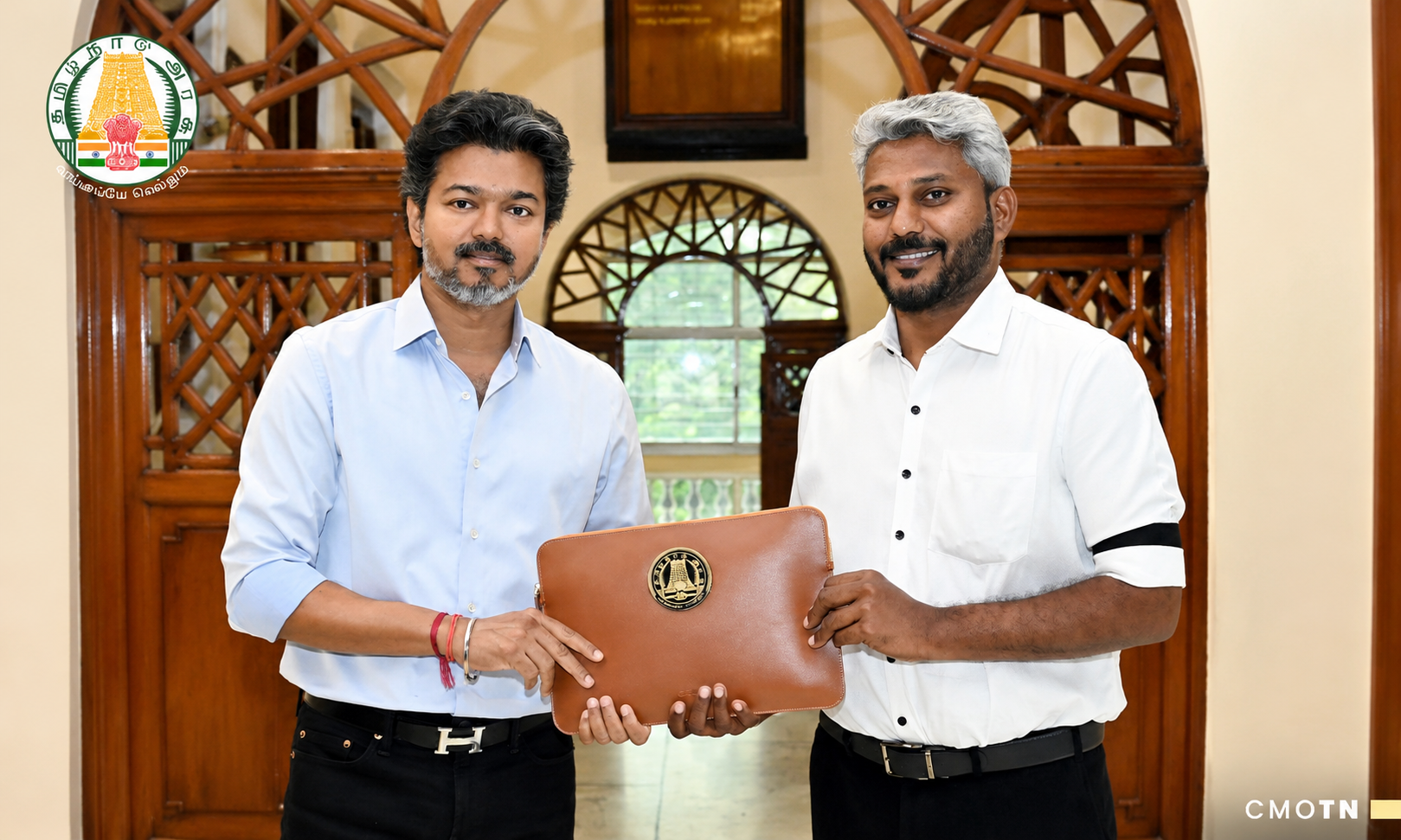
The newly elected State Government led by TVK, under the Chief Ministership of Shri. C. Joseph Vijay, in Tamil Nadu, has brought out three important process reform steps that are worth noting. These include (i) Release of White Paper on Status of State Finance, (ii) White Paper on Status of Electricity Department/Energy Sector, and (iii) Constitution of a High Level Committee on “Revenue Augmentation” under the chairmanship of eminent economist Shri Montek Singh Ahluwalia.
As far as the white paper on the status of state finance is concerned, the release of the white paper, which spells out the increase of the state’s debt (Rs.10.98 lakh crore) in a short span of time, is really shocking. It notes that the rise in debt for servicing the loans already availed and channelling to expenditures which are not creating durable assets in the state economy are real concerns. It also rightly focuses on undertaking reforms in some of the state public sector companies, which are welcome.
Similarly, the white paper on TNEB are very important steps towards process reforms in state’s energy sector which is irrecoverably riddled with debts of Rs.2.47 lakh crore, redundancy in financial management, contracts awarded to vested interests groups, failure to build adequate infrastructure for power supply which is main lubricant to the dynamic economic activities, etc., and these are some of the structural and institutional irregularities plugging the state’s energy sector for quite long time.
The TVK Government has presented its first budget for the year 2026-27. TVK has got a thumping victory in the assembly elections of 2026 with historic shifts in state politics literally ending the two Dravidian party rulings. The budget spelled out its long-term goal of achieving a 1.5 trillion dollar economy by the year 2036.
Further, the new government has adopted its election manifesto as the main guiding document for the next few years and states that “the Vetri Tamizhagam Vision Document, covering sectoral priorities which inter alia include empowering women, improving governance, providing housing for all, ensuring safe drinking water, generating sustainable livelihood opportunities, protecting social justice and promoting green cover. The first budget of this Government would lay the foundation for realising these visionary programmes.”
The TVK government’s first budget-2026-27 is seems to be clearly well thought out to undertake the much needed process reforms in the state which were hitherto perpetually undermined by the successive governments.
Interestingly, the Budget aims “to transform public service delivery and streamline administrative workflows, a Governance Processes Reforms Committee will be constituted under the chairmanship of Chief Secretary. Bringing together senior administrative leaders, industry transformation experts, and academic system designers, the Committee will re-engineer bureaucratic processes, eliminate redundant compliance, and build a modern, technology-enabled, citizen friendly (G2C) and business friendly (G2B) governance ecosystem in the State.”
Taking the vision document into action, the new Government’s first budget focuses mainly on the sectors of revenue augmentation, reforming the energy sector, increased access to mobility, modernisation of government schools, etc. The streamlining of state fiscal health has been identified as a top priority, which aims to be fixed by the next two years are good steps.
The budget focuses on clean campuses for school children, skilling of 1.2 million college students and one lakh unemployed youth on emerging sectors like AI, modern residential infrastructure for college students for one lakh beds capacity across 200 educational hubs, and aims to skill and empower 5 lakh youth across engineering colleges, polytechnics and ITIs by 2031. The efforts to address the issues of unemployment, unskilled youth and employability are a tall order and are need to be backed up with a strong institutionalised system partnering with industries are must be embedded in the programme implementations.
Nevertheless, the following are some of the key announcements made in the budget that have strong implications for the growing economy:
- Multi Modal Logistics Parks (MMLPs) and Dry Ports at strategic locations, and to establish petrochemical and ancillary industries.
- A system for installing smart meters for all consumers in Chennai city, as well as for 50 lakh industrial and commercial consumers across other parts of the State.
- The ‘Chief Minister’s Integrated Urban Development Mission’, bringing under one roof urban infrastructure, water supply, underground sewerage systems, integrated solid waste management, city roads, urban transport, expansion of green spaces, protection of urban water bodies, social infrastructure, etc.
- TN 26-27 Budget: “‘Performance Based Maintenance Contract’. Members of the public may photograph and report any road defects through the ‘Namma Salai’ mobile application, and such defects will be rectified promptly.”
All of the above budget announcements are interesting, but we need to wait and see the modality of each of these schemes’ implementation and outcomes achieved. One of the key to achieve greater outcomes are decentralized governance, clear guidelines for stakeholders’ participation, and a review and monitoring system to take course corrections.
Moreover, the state has the most vibrant culture of entrepreneurship development with 4.3 million units of Micro, Small and Medium Enterprises (MSMEs) providing employment to crores of people. However, the financial allocations made in the budget is not adequate, with Rs.2,142 crore. Of which, the amount of Rs.225 crore is allocated under the Tamil Nadu Women Entrepreneurs Empowerment Scheme, and Rs.352 crore under the Capital Subsidy Scheme are very meager.
Alas, the TVK’s first budget has not taken due diligence about the imperative to take concrete steps for rationalisation of subsidies like food (Rs.14,000 crore), electricity (Rs.7,432 crore and Rs.5000 crore as compensation to TNGDC), transportation (Rs.7,675 crore), fertilisers, etc., which need to be restructured with better targeted deliveries, implementation and arrest of leakages through the help of technologies.
B.Chandrasekaran is a Senior Economist and Founder Chairman of the AgaPuram Policy Research Centre, Erode. He was Consultant to Union Planning Commission, Government of India, New Delhi for 11th and 12th Five Year Documents Preparations.
Views expressed by the author are personal and need not reflect or represent the views of the AgaPuram Policy Research Centre.