
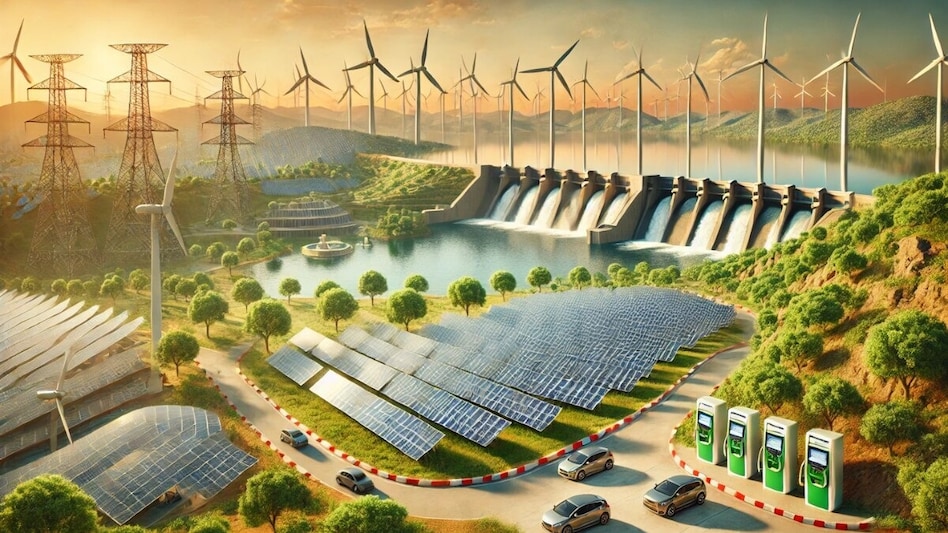
According to the Government of India, the share of non-fossil sources in the country’s total installed electricity capacity reached 50.08% in June 2025 (242.78 GW out of a total of 484.82 GW). This achievement exceeded the 50% capacity target under its Nationally Determined Contribution (NDC) more than five years ahead of the 2030 deadline.
Renewable energy is highly significant in India. The growth of solar and wind energy is driven by falling technology costs, supportive government policies, and increased funding availability. Solar energy is especially important due to its exceptionally high potential across the country.
As said in the International Solar Alliance report on Ease of Doing Solar 2025, policy support, investment climate, infrastructural condition, and reduced administrative costs are the vital factors for rapid solar deployment. Moreover, India is seeking new technological innovations such as green hydrogen, battery storage, electric vehicles, and sustainable fuels. The energy transition handbook by IIT Kanpur highlights that to achieve India’s transition, various energy-consuming sectors must undergo a parallel shift.
Progress
By March 31, 2026, India had a total of 283.46 GW of non-fossil capacity, which included 274.68 GW of renewable energy and 8.78 GW of nuclear power. This non-fossil capacity represents 56.7% of the country’s target of 500 GW by 2030, with renewable energy alone constituting about 54.9% of the total capacity. Hence, it can be stated that India has already crossed the 50% mark in installed capacity; however, the share of the generated electricity remains below since renewable energy depends on weather and time of day, and there is still a lot of coal-generated electricity.
Indicators | Achievements | Target / Comparison |
Non-fossil installed capacity | 283.46 GW (31 Mar 2026) | 500 GW by 2030 |
Renewable installed capacity | 274.68 GW (31 Mar 2026) | ≈54.9% of 500 GW target |
Non-fossil share of generation | 29.2% in FY 2025–26 | Shows actual electricity use |
Ethanol blending | 19.05% in ESY 2024–25 | 20% target |
Source for the added figures: Government of India / Press Information Bureau releases on Energy Transition and Renewable Capacity (2026).
Biofuels are a key aspect of India’s approach as it continues to use fossil fuel for transportation. For example, with the ethanol blending initiative, India is able to use less crude oil and simultaneously support farmers in rural areas. According to government statistics, the average ethanol blend was around 19.05 % in 2024–25, which is almost close to its target of 20%. Promoting the use of home-grown biofuels can also help India boost its energy independence since it helps lessen the dependence on foreign fossil fuel.
Challenges of Energy Transitions
The major challenge is that the country still relies on coal for electricity production, as it is strongly related to industrial activity and energy safety. Moving away from coal usage is very challenging, as solar and wind energy generation are dependent on the weather and daytime.
The second obstacle involves ensuring energy is affordable while simultaneously attracting huge financial requirement needed for creating transmission infrastructure, electricity distribution and storage, EV charging infrastructure, green hydrogen, and energy-efficient technologies. To address this, the national energy policy framework must balance adequacy and access with affordability and sustainability. Further, regulatory uncertainty and project delays significantly increase financial risks. Mitigating these risks requires stable legislation alongside robust, coordinated investments from both the public and private sectors.
Infrastructure remains a critical challenge. Abundant renewable energy can only be utilized if transmission, storage, and distribution systems function effectively. Because renewable projects are typically located far from major consumption centers, expanding the grid is essential. As highlighted in the Ease of Doing Solar report, removing implementation bottlenecks is vital to project success.
Policy Measures for Energy Transitions
India must build domestic manufacturing capabilities and skilled workforce so that the transition does not create excessive dependence on imported technologies and components. Research, innovation and technology transfer can help reduce costs.
The transformation of the energy infrastructure brings significant social and regional consequences. Coal areas largely rely on the mining and power generation sectors to provide job opportunities and economic development options. Reduced use of fossil fuels may lead some workers and communities in coal areas to face economic challenges. Consequently, a fair transformation is required. This approach requires reskilling and upskilling programs, creation of new job opportunities, and support for local communities.
Energy is related to multiple sectors, including electricity, coal, petroleum, transport, agriculture, industry, buildings, and finance, thus making it vital to bring together many stakeholders such as government agencies, state governments, regulators, companies, and consumers.
India’s energy transition is both a necessity and a big development opportunity. The country has already made progress on the renewable energy front in the areas of solar deployment, ethanol blending and other low-carbon initiatives. However, the transition is complicated due to rising energy demand, coal dependency, affordability, financing, infrastructure development, and technological changes. India needs a balanced approach that integrates renewable energy, energy efficiency, storage, grid modernisation, cleaner fuel usage, electric mobility, energy assets use and social policy.
The Author is pursuing MBA in Sustainable Development and Management at Nalanda University, Bihar. Views expressed by the author are personal.
This article is based on his internship work with the AgaPuram Policy Research Centre, Erode, Tamil Nadu on virtual mode.
Views expressed by the author are personal and need not reflect or represent the views of the AgaPuram Policy Research Centre.