Read in : தமிழ்
In the nine months it has been in power, the DMK government has announced a welfare schemes and borrowed more money but has done little to institute structural reforms and rev up TN economy.
The strengths and weaknesses of a state economy are often well known. Tamil Nadu is no exception. But Tamil Nadu is a large state and its performance impacts national economy. The state’s contribution to the country’s GDP is about 8-9%, and is also among the top few states which contribute to close 50% of the country’s GDP. However, in recent years the TN economy has been sliding downwards.
During the last two decades, Tamil Nadu was ruled thrice by the AIADMK and once by the DMK. In 2021, the DMK came to power after a gap of ten years in opposition. During this period, the party had focused on harnessing every political opportunity to mock either the Union government led by the BJP or the state government led by the AIADMK on issues like language, regional disparity, state’s debt increase, GST, demonetisation, NEET, inter-state relationship and river water sharing, relief for calamities, relief for pandemic, farmers welfare, governance issues in health and education sector, and federalism. In all of these issues, it did not pay close attention to the sectoral challenges to make responsible and constructive criticisms but indulged in political posturing.
Also, the DMK had time and again said it will take Tamil Nadu way up with next-generation reforms. Having come to power, the DMK-led government did not give much attention to the structural rigidities in the state economy in the last nine months. The welfare measures it has pursued in full swing without increasing the avenues for revenue generation will erode the already burdened exchequer.
Nearly half of the borrowings in the last nine months were spent for interest payments, which is not a healthy sign
The government’s achievements propagated during the recently held urban local body elections had little to do with issues concerning local bodies: decentralisation, financial and administrative devolution for economic development and growth of cities and towns except the signing of a few MoUs with few industrialists that made news headlines. The DMK government’s White Paper on TN economy and finances highlighted issues in sectoral growth and development of the state economy but failed to take concrete steps to overcome at least some of them in the current financial year.
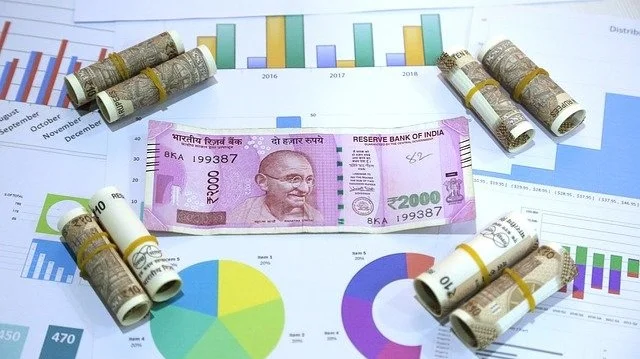
Tamil Nadu is a debt-laden state with huge loans and interest payments. More than half of its borrowings were for doles to garner votebanks. According to a recent report, Tamil Nadu has borrowed some Rs 84,500 crores between April 8, 2021, and March 9, 2022.
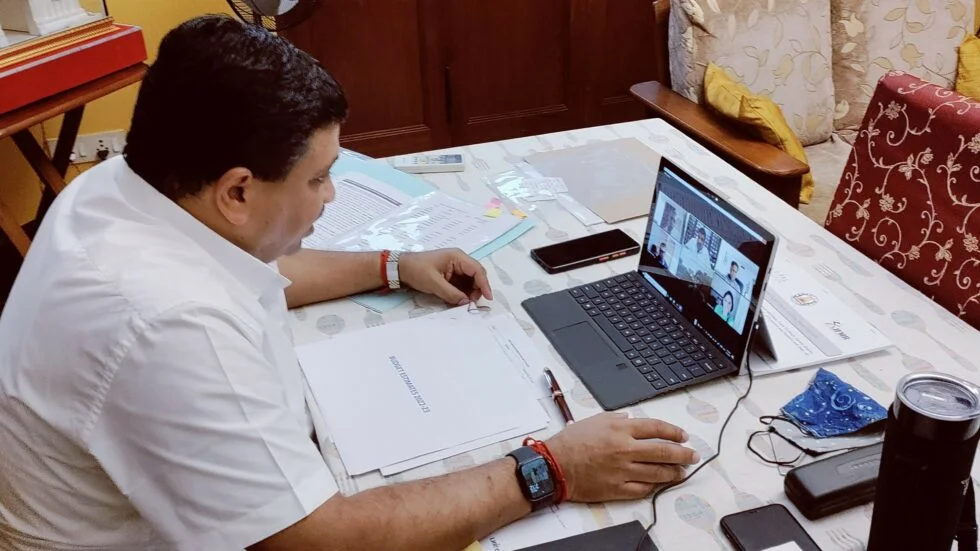
In his first budget, Finance Minister Palanivel Thiaga Rajan estimated that the state government will borrow Rs 92,484.50 crore for the financial year 2021-2022. He also stated in the budget that the state has estimated interest payments of Rs 44,700 crore in the current financial year. Thus, nearly half of the borrowings were spent for payment of interests which is not a healthy sign.
Despite these mounting debts, Thiaga Rajan has sought the approval from the Union government for state borrowings of 5% of the GSDP without any conditions for the financial year 2022-23. Surely, this is not good governance by any yardstick. Before the 1991 economic reforms, several states were borrowing huge loans that were not allocated for capital expenditure. Now they are paying the price for the profligacy with thousands of crores of interest payments.