
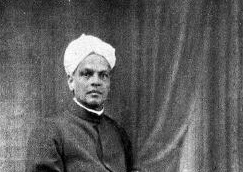
VS Srinivasa Sastri – Forgotten Liberal Intellectual – Part 2
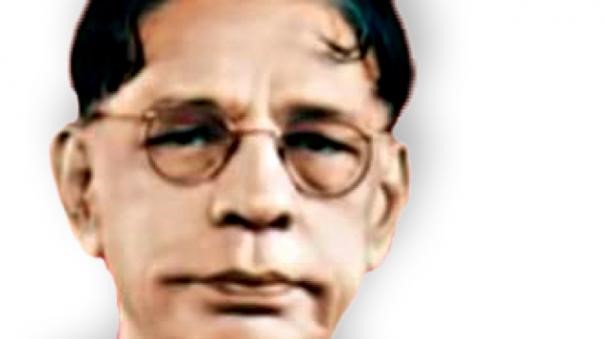
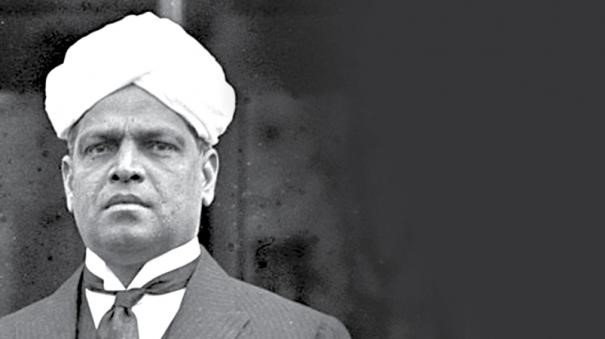
VS Srinivasa Sastri – Forgotten Liberal Intellectual – Part 2 VS Srinivasa Sastri – Forgotten Liberal Intellectual – Part 2 When VS Srinivasa Sastri joined the Servants of Indian Society he renounced all ambitions of acquiring wealth and power and exercising patronage. By the sheer force of his personality, he rose to great eminence and influence in the affairs of India and the Commonwealth. Chandrasekaran Balakrishnan January 7, 2020 Indian Liberals Editor’s Note: This is the second article in a two-part series paying homage to VS Srinivasa Sastri, the forgotten liberal intellectual of pre-independent India. Read the first part here. Sastri and Indian Liberalism Srinivasa Sastri was born ten days before Mahatma Gandhi. But unlike Gandhi, Sastri was born to a very poor family and rose through his hard works to serve the country like his political guru Gopala Krishna Gokhale. In the early part of the twentieth century, both Gokhale and Sastri were the two greatest sons of India who strived for freedom with liberalism. Both were equally respected in British Governments for their foresighted ideas and reform policies. But at home, both faced furious criticisms on their proposed policies but none could critique their commitments to the patriotism of mother India. Sastri assisted Gokhale on his major works in reform policies including Gokhale’s Universal Elementary Education Bill in Indian Legislative Council in 1912. According to P Kodanda Rao who worked with Sastri first as a private secretary for a decade and then a member of Servants of India Society note that “Parallelism between Gokhale and Sastri is indeed very striking. Both were born poor; both were teachers turned statesmen; both played a conspicuous part in the evolution of the Indian Constitution and the legislatures of India, provincial and central; both made several political visits to England; both took a hand in the South African Indian question; both suffered from bitter and unfair attacks from a section of Indians and were sometimes discounted by the British Government; both stood for constitutional methods of political agitation….; both admired the Mahatma personally and differed from him politically.” However, historians have ignored Sastri’s works through the mirror of ideologies. For example, in the book on Gandhi: The Years that Changed the World-1914-1948, Ramachandra Guha notes that “Sastri was Brahminical in both the good and bad senses of the term: deeply learned in the scriptures, but entirely dependent on the labour of others for his sustenance. As a constitutionalist, he abhorred Gandhi’s use- in South Africa-of strikes, fasts and boycotts to make his case. (Page VIII)”. In contrast, Sastri strived for education for all children including those belonging to weaker sections of the society. He has provided financial supports to several poor children and some were adopted by him to nourish in his house. Thus, it is shocking to note that Mr Guha concludes with a single incidence and he never bothered to read the intellectual contributions of the constitutional method of freedom struggles pursued by Sastri. And it was surprising that Zareer Masani who reviewed Guha’s book in the Open Magazine said, “Indian democracy owes more to liberal politicians like Tej Bahadur Sapru and Srinivasa Sastri, who cooperated with the embryonic parliamentary institutions that the Raj introduced in 1919 and 1937.” Even the veteran left-leaning constitutional expert AG Noorani noted in 2012 that “before 1947 neither Gandhi nor Nehru helped in forging a settlement on the minorities’ rights and safeguards or in promoting parliamentary democracy. The studied rewriting of history, which denies the liberals their stupendous contribution in India’s political evolution until the 1920s when the Gandhi-Nehru hegemony came to hold sway, is unworthy and demeaning…. The liberals are mentioned condescendingly. They were more clear-headed, realistic and practical than Gandhi or Nehru and not a whit inferior in political scruples to either.” Sastri was attracted to Ranade’s vision of “To equalise, to humanise, and to spiritualise” with which he strived his entire political career in British India. Ranade was Gokhale’s guru and influenced Sastri to join for freedom movements with liberal ideas. The veteran Telugu scholar, D.Anjaneyulu (1924-1998) vividly noted that Sastri “A Liberal he was, no doubt, from the beginning of his political career (in 1907) to his last day (in 1946). But Sastri chose to spell his “liberalism” with a small “l”. Like most Indian Liberals of the time, he was bred on the 19th century British classics like Mill on “Liberty” and Morley on “Compromise.” In his case, however, liberalism was not a matter of political strategy or public stance but an article of personal faith.” During the period 1916-1918, Sastri played a vital role for declaration of self-governance in British India after decades of struggles by both Ranade and Gokhale. In 1916, Sastri wrote a Pamphlet titled Self-Governance for India under the British Flag which highlighted the constitutional movements for independence of countries like Canada, Australia, etc. and wondered why India’s case was lingering for long with the unjust rule of British imperialists. When the Montague reform Report was released in 1918 for the gradual introduction of self-governing systems in India, there was a strong difference of opinions among top leaders of the Indian National Congress for the first time since 1885. Eventually, the top leadership was split into two groups, one was supporting the Montagu Reforms and the other was opposing it vehemently. Sastri and the Indian Liberal Party The opposition was called “extremist leaders” which included Bipin Chandra Pal, Lala Lajpat Rai, Bal Gangadhar Tilak, Aurbindo Ghosh, etc. And those who supported the reforms was called “moderate leaders with liberal ideas” who have left the Congress and formed a separate political party called “Indian National Liberal Federation” or The Liberal Party on November 1, 1918, mainly led by VS Srinivasa Sastri, Dinshah Wacha, Surendranath Banarjee, Bhupendranath, and Ambica Charan Mazumdar. It also had other prominent liberal leaders like Tej Bahadur Sapru, Pherozeshah Mehta and M.R.Jayakar among others. These liberals have played a major role in bringing about constitutionalism and liberalism from Indian perspectives. Sastri was president of the liberal party in 1922. According to P Kodanda Rao “when he joined the Servants of Indian Society he renounced all ambitions of acquiring wealth and
VS Srinivasa Sastri – Forgotten Liberal Intellectual – Part 2 Read More »