Chandrasekaran Balakrishnan

Rebuttal: Tamil Nadu is a success story in Mudra loans

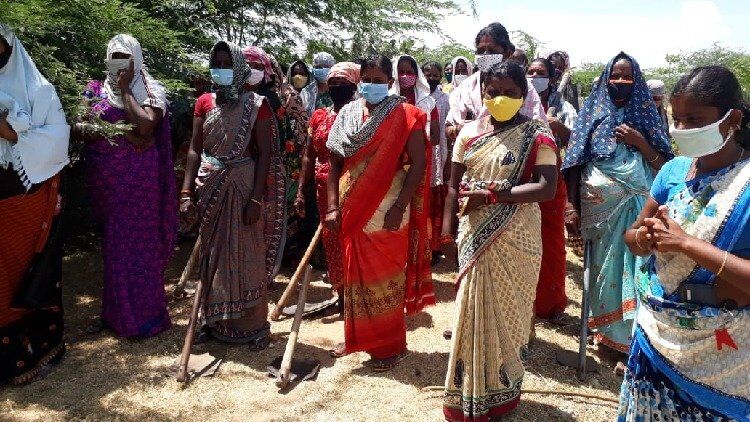
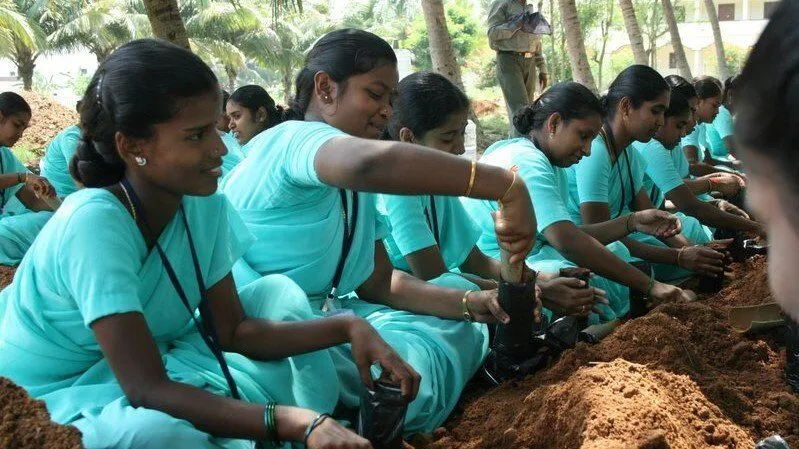
Rebuttal: Tamil Nadu is a success story in Mudra loans Rebuttal: Tamil Nadu is a success story in Mudra loans Chandrasekaran Balakrishnan April 8, 2022 Tamilnadu Economy The total share of Mudra loans accounts operated by women entrepreneurs in Tamil Nadu was 65.61%. The total sanctioned loan amount for women entrepreneurs in Tamil Nadu was 48.57% which is 5% higher than all of India’s shares. (Photo Credit: Self Help Group Nursery by Project GreenHands- Flickr) Read in : தமிழ் Mudra loans have been a tremendous success in Tamil Nadu since it fulfills an essential need. People even in relatively developed states like Tamil Nadu still find it difficult to get access to credit for their businesses due to various factors such as lack of collateral. To address these challenges and to help micro, small and medium enterprises (MSMEs) get access to formal credit without collateral backup, the Union government launched the Pradhan Mantri Mudra Yojana (PMMY) or Mudra scheme in 2015. The interest rates are transparent and affordable compared to other modes of loans available in the market. Under the Mudra scheme, three types of loans namely Shishu- up to Rs.50,000, Kishor- Rs. 50,001-Rs. 5 lakh, and Tarun- Rs. 5 lakh to Rs. 10 lakh are provided to help business enterprises in manufacturing, processing, trading, services, and allied activities of agriculture. Lending institutions have been given a clear mandate and thrust to give loans to eligible business enterprises as much as possible. The major lenders are all public and private sector commercial banks, state co-operative banks, regional rural banks, microfinance institutions, NBFC -microfinance institutions, non-banking financial institutions, and small finance banks. During the last seven years, the Mudra loans scheme has been a phenomenal hit among the MSMEs including in Tamil Nadu and played a key role in infusing confidence and lubricating business enterprises of all kinds with working capital backup. About 6,000 products are manufactured by MSMEs and employ several millions of people both directly and indirectly. More than 23.27 crore Mudra loans amounting to Rs 8.10 lakh crore were given to women. This constitutes about 68% of the total number of loans and 44% of the amount of loans provided. According to the latest data available, as of 18.03.2022, under the scheme, cumulatively over 34.28 crore accounts involved a sanctioned amount of Rs. 18.52 lakh crore, out of which Rs.17.99 crore (97.19%) was dispersed across the country. Out of this, more than 23.27 crore loans amounting to Rs 8.10 lakh crore were given to women. This constitutes about 68% of the total number of loans and 44% of the amount of loans provided. As per the Udyog Aadhaar Registration report, a total of 1,105,983 MSMEs were registered in Tamil Nadu, out of which 9,68,497 are micro-enterprises and 1,33,123 are small enterprises, and 4,362 are medium enterprises. Tamil Nadu’s share is 10.81% of such enterprises in India. The percentage share of Tamil Nadu’s micro, small and medium enterprises is 10.81%, 10.91%, and 8.75%, respectively. The Mudra scheme has been the most popular in Tamil Nadu for access to credit for MSMEs. Registration and compliance to loan norms for these MSME units are easy in Mudra. The total number of accounts under the scheme is 4.08 crore or 12% of all-India figures. So far, the total loan amount dispersed to beneficiaries is Rs.1,85,420.03 crore, which is 10.30% of all-India. In a reply to a question raised in Parliament (Rajya Sabha) on 05.04.2022, it was reported that as of 25.02.2022, there was a total of 2,64,46,737 women entrepreneurs in Tamil Nadu which is 11.49% in the country. The total amount of loans dispersed to women entrepreneurs was Rs.89,235.22 crore, which is 11.67% of the country. The total share of Mudra loans accounts operated by women entrepreneurs in Tamil Nadu was 65.61%. The total sanctioned loan amount for women entrepreneurs in Tamil Nadu was 48.57% which is 5% higher than all of India’s shares. Also, the total loan amount dispersed to women entrepreneurs in Tamil Nadu was 48.81% which is 6% higher than all of India’s share of women entrepreneurs. Tamil Nadu has about 5 million MSMEs in the state employing one crore people, which is the 3rd highest in the country. The state government in 2020-21 has arranged loans of Rs 1 lakh crore through its agencies to less than 19 lakh units in the state. Some 3 million units did not get any credit. Mudra scheme is there to bridge such gaps. Tamil Nadu has a total population of about 8 crores, out of which about 6.28 crore are adults aged 18 and above. People ask how for 6.28 crore people in the state, 4.07 crore loan accounts are there under the Mudra scheme in Tamil Nadu? But this is a misunderstanding. The Mudra scheme’s aim is not to give loans to every single individual in the country or state. Mudra scheme is an institutionalized “refinancing” model to bridge the gaps in the lack of continuous access to timely financial support for MSMEs. The scheme is not a typical standard model loan. For instance, Tamil Nadu has about 5 million MSMEs in the state employing one crore people, which is the 3rd highest in the country. Most of them are in the informal sector. The state government in 2020-21 has arranged loans of Rs 1 lakh crore through its agencies to less than 19 lakh units in the state. Some 3 million units did not get any credit. Mudra scheme is there to bridge such gaps. Contrary to what this article says, in business it’s not possible to give one person just one loan when even a tiny business needs continuous cash flow throughout the year. And it is not possible to club all the loans as one account either. Under the Mudra scheme, the beneficiary is allowed to take loan amounts more than once in all three categories after repaying the availed loan with interests in a financial year to help their working capital requirements. Each time the loan beneficiary is counted afresh. It

Rebuttal: Tamil Nadu is a success story in Mudra loans Read More »
சில்வர் டங்க்டு ஆரேட்டர் மகாகனம் வி.எஸ்.ஸ்ரீனிவாச சாஸ்திரி | பா.சந்திரசேகரன்

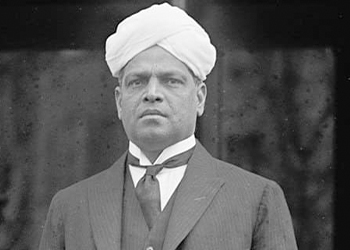
சில்வர் டங்க்டு ஆரேட்டர் மகாகனம் வி.எஸ்.ஸ்ரீனிவாச சாஸ்திரி | பா.சந்திரசேகரன் சில்வர் டங்க்டு ஆரேட்டர் மகாகனம் வி.எஸ்.ஸ்ரீனிவாச சாஸ்திரி | பா.சந்திரசேகரன் Chandrasekaran Balakrishnan April 7, 2022 Tamil Articles    மத்திய அரசால் இந்தியாவின் 75வது சுதந்திர தினம் ‘அம்ருத் மகோத்சவம்’ என்ற முழக்கத்துடன் சிறப்பாகக் கொண்டாடப்பட்டு வருகிறது. சுதந்திரப் போராட்ட உணர்வு, தியாகிகளுக்குப் புகழஞ்சலி, மற்றும் சுதந்திர இந்தியாவை உருவாக்குவதற்கான அவர்களின் உறுதிமொழி ஆகியவற்றை உணரும் விழாவாக இந்த விழா இருக்க வேண்டும் என்று பிரதமர் நரேந்திர மோடி சூளுரைத்துள்ளார். சுதந்திரப் போராட்ட வீரர்களுக்கு மரியாதை செலுத்த வேண்டும், அவர்களின் கருத்துக்களை மக்களிடம் எடுத்துச் செல்ல வேண்டும் அவர் வலியுறுத்தியுள்ளார். மறக்கப்பட்ட தலைவர்களின் பங்களிப்பு, சிந்தனை மற்றும் கருத்துக்கள் தேசிய முயற்சிகளுடன் ஒருங்கிணைக்கப்பட வேண்டும் என்பது பிரமரின் அறிவுரை. இந்தச் சிறப்பான முன்னெடுப்பில் மாநில அரசுகள் எந்தளவுக்குத் தங்கள் மாநிலத் தலைவர்களை நினைவுகூர்ந்து அவர்கள் செய்த தியாகங்களையும் அவர்கள்தம் கருத்துக்களையும் இன்றையத் தலைமுறைக்கு எடுத்துச் செல்கிறது என்பது, தமிழ்நாட்டைப் பொறுத்தவரையில் புரியாத புதிராகத்தான் உள்ளது. தமிழகத்தைச் சேர்ந்த ரைட் ஹானரபிள் மகாகனம் என்று அழைக்கப்பட்ட மாபெரும் தலைவர் வி.எஸ்.ஸ்ரீனிவாச சாஸ்திரி அவர்களின் 150-வது பிறந்த தினம், தமிழகத்திலும் சரி, தேசிய அளவிலும் சரி, சில பேரால் கூட நினைவு கூரப்படவில்லை. ஸ்ரீனிவாச சாஸ்திரி பல்முனை ஆற்றல் படைத்த மாபெரும் ஆளுமை. இவர் 22 செப்டம்பர் 1869ம் ஆண்டில், தொன்மையான ஆலயங்கள் சூழ் நகரமான கும்பகோணத்தின் அருகில் உள்ள வலங்கைமான் என்ற கிராமத்தில்  பிறந்தார். பிற்காலத்தில் காந்திஜி இவரை அண்ணன் என்று அழைத்தார். அதற்குப் பல காரணங்கள் உண்டு. பொதுவாக இவரை சாஸ்திரியார் என்றே அனைவரும் அழைத்தனர்.                                                                                                                    வலங்கைமான் சங்கரநாராயண ஶ்ரீனிவாச சாஸ்திரி                                                              (22 September 1869 – 17 April 1946) தனிப்பட்ட முறையில் மகாத்மா காந்தி மற்றும் சாஸ்திரி இருவரும் நல்ல நண்பர்களாக இருந்தார்கள். ஆனாலும் இவர்களது அரசியல் கொள்கை வாழ்க்கை முழுவதும் முரணாகத்தான் இருந்தது. அதேசமயம் தனிப்பட்ட நட்பை இருவரும் கட்டுக்கோப்பாகக் கடைப்பிடித்தனர். சாஸ்திரியின் நீண்ட பணிகள் பற்றி ஒரு தபால் அட்டை அளவுக்கான தகவல்கள் கூட இங்கே யாருக்கும் தெரியவில்லை. அனைவருக்கும் சம உரிமை, வளர்ச்சி மற்றும் படிப்படியாக முழு சுதந்திரம் என்ற கொள்கையுடன் நாடு பூரண சுதந்திரம் பெற அயராது பாடுபட்ட ஆரம்பக்கட்ட தலைவர்களில், மாபெரும் அறிவுஜீவிகளில் இவரும் ஒருவர். சாதாரணப் பள்ளி ஆசிரியராகத் தனது வாழ்க்கையைத் தொடங்கிய ஶ்ரீனிவாச சாஸ்திரி பின்னாட்களில் பிரிட்டிஷ் பிரதமருடன் நேருக்குநேர் விவாதிக்கும் ஆளுமையாக உயர்ந்தவர். ஸ்ரீனிவாச சாஸ்திரி அவர்கள் தஞ்சை மாவட்டத்தில் கும்பகோணம் அருகிலுள்ள வலங்கைமான் எனும் சிற்றூரில் மிகச் சாதாரண புரோகிதத் தாய் – தந்தைக்கு 1869-ஆம் ஆண்டு செப்டம்பர் 22-ல் மூத்த மகனாகப் பிறந்தார். இவருடன் பிறந்தவர்கள் மொத்தம் ஆறு பேர். வலங்கைமானில் ஆரம்பக் கல்வியை முடித்த பிறகு சாஸ்திரி அவர்கள் பின்னர் கும்பகோணம் நேட்டிவ் உயர்நிலைப் பள்ளியிலும், தொடர்ந்து கல்லூரிப் படிப்பை கும்பகோணம் அரசுக் கல்லூரியிலும் பயின்று 1888-ல் பட்டம் பெற்றார். ஆங்கிலத்திலும் சம்ஸ்கிருதத்திலும் இவர் முதல் வகுப்பில் தேர்ச்சி பெற்றார். இவரது ஆங்கிலப் புலமைக்குப் பரிசாக ரூ.350/- பெற்றார். இந்தத் தொகை அன்றைக்குப் பெரும் தொகை. இவரது தந்தையார் சக புரோகிதர்களை அழைத்துப் பெரிய விருந்தையே அளித்துள்ளார். இவரது தனித் திறமையினால் பள்ளி மற்றும் கல்லூரிப் படிப்பை, அன்றைய ஆங்கிலேயே அரசின் கல்வி உதவி மூலம் பெற்றார். பிறகு இன்றைய மயிலாடுதுறை என்று அழைக்கப்படும் மாயவரத்திலுள்ள முனிசிபல் உயர்நிலைப் பள்ளியில் மாத ஊதியமாக ரூ.50-க்கு ஆசிரியர் பணியில் சேர்ந்தார். மூன்றாண்டுகளுக்குப் பிறகு 1891-ல் அவர் சென்னை சைதாப்பேட்டையில் உள்ள அரசு ஆசிரியர் பயிற்சிக் கல்லூரியில் சேர்ந்து ஆசிரியர் பயிற்சியைப் பெற்றார். அப்போது ஒரு நிகழ்வு நடந்தது. அந்த ஆசிரியர்ப் பயிற்சிக் கல்லூரியின் தலைவர் ஒருநாள் வகுப்பில் பாடம் நடத்தும்போது அவரது ஆங்கில உச்சரிப்பில் பிழை உள்ளது என்று சாஸ்திரி கூறினார். ஆனால் அந்த கல்லூரித் தலைவர் அதை மறுத்தார். கல்லூரியின் தலைவர், தன்னுடைய தாய்மொழி ஆங்கிலம், ஆகையால் தான் சொல்லுவதுதான் சரியான உச்சரிப்பு என்றார். இதை ஏற்கவில்லை சாஸ்திரியார். கல்லூரியின் நூலகத்திலுள்ள பிரபலமான ஆங்கில அகராதியை எடுத்துப் பார்த்ததில், சாஸ்திரி கூறியதே சரியான உச்சரிப்பு என்று புரிந்துகொண்ட கல்லூரித் தலைவர் வியந்துபோய் சாஸ்திரியின் ஆங்கிலப் புலமையைப் பாராட்டினாராம். சாஸ்திரி அவர்கள் பிரபல ஆங்கில அகராதியான வெப்ஸ்டர் முழுவதையும் நன்கு அறிந்திருந்தார் என்று பலபேர் பின்னாட்களில் கூறியுள்ளார்கள். 1893ல் சாஸ்திரி அவர்கள் சேலம் முனிசிபல் கல்லூரியில் முதல் நிலை உதவி ஆசிரியர் பணியில் சேர்ந்தார். ஒன்பது ஆண்டுகள் அங்கு ஆங்கில ஆசிரியராகப் பணியாற்றினார். இந்தக் காலக்கட்டத்தில் அப்போது தென்னிந்தியாவின் சிங்கம் என்று அழைக்கப்பட்ட சேலம் சி.விஜயராகாவாச்சாரியார் அவர்களை அறிந்த பிறகு நாட்டின் பொது வாழ்க்கையில் ஈடுபட அவர் ஆர்வம் கொண்டார். அந்தச் சமயத்தில் தி இந்து ஆங்கிலப் பத்திரிகையில் மக்களின் துயரங்களைப் பற்றி பல கட்டுரைகள் எழுதி பொது மக்களிடையே விழிப்புணர்வு ஏற்படுத்தினார். இதற்காக, அவர் மேல் துறை ரீதியான ஒழுங்கு நடவடிக்கை எடுக்கப்படும் என்று ஆங்கிலேயே அரசு மிரட்டியது. ஆனால் சாஸ்திரி அஞ்சவில்லை. பிறகு சென்னையில் உள்ள பச்சையப்பன் மேல்நிலைப் பள்ளியில் ஆசிரியராகப் பணியாற்றினார். 1902ல் சாஸ்திரி திருவல்லிக்கேணி இந்து உயர்நிலைப் பள்ளியின் தலைமை ஆசிரியராகப் பணியாற்றி அந்தப் பள்ளியை அன்றைய மெட்ராஸ் மாகாணத்திலேயே மிகச் சிறந்த பள்ளியாக உயர்த்தினார். ஸ்ரீனிவாச சாஸ்திரி அவர்கள் 17 ஆண்டுகளாக ஆசிரியராகப் பணியாற்றிய பிறகு தனது 37-வது வயதில் 1907-ல் முழுமையாகப் பொது வாழ்க்கைக்கு வந்தார். அப்போது பூனாவில் சர்வெண்ட்ஸ் ஆஃப் இந்தியா சொசைட்டி (இந்திய ஊழியர் சங்கம்) என்ற இயக்கத்தை நடத்தி வந்த மகாத்மா கோபால கிருஷ்ண கோகலே அவர்களுடன் இணைந்தார். கோகலே அவர்களால் பெரிதும் ஈர்க்கப்பட்ட சாஸ்திரி அவரையே தனது அரசியல் குருவாக ஏற்றுக்கொண்டார். கோகலேவும் ஒரு ஏழ்மையான குடும்பத்தில் பிறந்து ஆசிரியர் பணியில் இருந்து விலகிப் பொது வாழ்க்கையில் ஈடுபட்டவர்தான். அந்தக் காலகட்டத்தில் காங்கிரசில் மகாத்மா காந்தி இந்தியாவுக்கு வரவில்லை. அப்போது பரிபூரண சுதந்திரம் என்ற அறிவிப்பு வராத காலம். சுதந்திரத்தை அடைய எந்த வழியில் போராடப் போகிறோம் என்று அறியாத நிலையில் அப்போதைய காங்கிரஸ், பிரிட்டிஷ் அரசுக்கு வேண்டுகோள் விடுத்து வந்த மிதவாத காங்கிரஸார் வாழ்ந்த காலம். பல்வேறு முக்கியத் தலைவர்கள் மிகத் தீவிரமாக நாட்டின் சுதந்திரத்துக்காகப் பாடுபட்டு வந்தனர். அவர்களில் முக்கியமானவர்கள் தாதாபாய் நௌரோஜி, மஹாதேவ் கோவிந்த ரானடே, பால கங்காதர திலகர், பிபின் சந்திர பால், லாலா லஜ்பத் ராய், அரவிந்த கோஷ், அன்னிபெசன்ட், ஃபிரோஸ்ஷா மேத்தா, தீன்ஷா வாச்சா, சுரேந்திரநாத் பானர்ஜி போன்றவர்கள். இவர்கள் சமூக மறுமலர்ச்சியாளர்கள், சமூக சீர்திருத்தவாதிகள் என்றெல்லாம் அழைக்கப்பட்டனர். இவர்களிடையே சில அடிப்படை வேறுபாடுகள் இருந்தன. அவர்கள் இரண்டு வகைப்படும். ஒன்று நேரடி எதிர்ப்பு, புரட்சி, தீவிர தேசியவாதிகள். மற்றொன்று வன்முறை இல்லாத போராட்ட முறை. அதாவது மிதவாதப் போராளிகள். இவர்கள் அரசியல் சாசனம், அரசின் சட்டத்திட்ட முறைகளின் மூலம் உயிர்ச் சேதம் ஏற்படாமல் செயல்பட வேண்டும் என்று எண்ணினார்கள். கோகலே மிதவாதி. சாஸ்திரி கோகலேயைப் பின்பற்றி மிதவாதியானார். தீவிரவாத – மிதவாதக் கருத்து வேறுபாட்டினால் காங்கிரஸ் கட்சி இரண்டாக உடைந்ததுபோது நேஷனல் லிபரல் ஃபெடரேசன் ஆப் இந்தியா என்ற கட்சியை சாஸ்திரி, தன்னோடு கருத்து ஒற்றுமை உடையவர்களோடு சேர்ந்து தொடங்கினார். அவர்களில் முக்கியமானவர்கள் ஃபிரோஸ்ஷா மேத்தா, தீன்ஷா வாச்சா, சுரேந்திரநாத் பானர்ஜி, தேஜ் பகதூர் சப்ரு, எம்.ஆர்.ஜெய்கர் போன்றவர்கள். சாஸ்திரி 1922ல் அக்கட்சியின் தலைவராகத் தேர்ந்தெடுக்கப்பட்டார். எதிர்பாராதவிதமாக 1915-ல் கோகலே இறந்தபோது சர்வெண்ட்ஸ் ஆஃப் இந்தியா சொசைட்டியின் தலைவராக சாஸ்திரி தேர்ந்தெடுக்கப்பட்டார். அவர் தொடர்ந்து 12 ஆண்டுகள் அதில் பணியாற்றினார். 1914ல் காந்தி இந்தியா வந்தவுடன் கோகலே நாடு முழுவதும் சென்று மக்களின் பிரச்சனைகளை அறிந்த பிறகு சொசைட்டியில் காந்தியைச் சேர்த்துக்கொள்ளலாம் என்று அறிவுறுத்தினார்.  ஆனால் கோகலே 1915-ல் இறந்து விட்டார். கோகலேவின் சித்தாந்த, அரசியல், பொருளாதார, சமூகக் கொள்கைகளை முழுமையாக நாடு முழுக்க எடுத்துச் சென்றவர்களில் முதன்மையானவர் ஸ்ரீனிவாச சாஸ்திரியார்தான். சாஸ்திரி மெட்ராஸ் லெஜிஸ்லேடிவ் கவுன்சிலில் 1913 முதல் 1916 வரை உறுப்பினராக இருந்தார். 1916 முதல் 1919 வரை இம்பீரியல் லெஜிஸ்லேடிவ் கவுன்சிலிலும் உறுப்பினராக இருந்தார். 1920 முதல் 1925 வரை கவுன்சில் ஆஃப் ஸ்டேட்ஸ் எனும் அமைப்பிலும் பணியாற்றினார். இந்தியாவில் நடக்கும் வழக்குகளில், இந்திய உயர் நீதிமன்றத் தீர்ப்புக்குப் பிறகு மேல் முறையீடு செய்ய வேண்டுமானால் இங்கிலாந்தில் இருந்து செயல்பட்ட பிரிவி கவுன்சிலுக்குப் போக வேன்டும். அந்த பிரிவி கவுன்சிலில் சாஸ்திரி உறுப்பினராக இருந்தார். இந்த முக்கியப் பொறுப்புகள் மூலம் புதிய அரசியல் சாசனம் மற்றும் அரசின் நிர்வாகம் போன்றவற்றில் சாஸ்திரியாரின் பங்களிப்பு ஏராளம். பிரிட்டிஷ் இந்திய அரசு பிறப்பித்த ரவுலட் சட்டத்தைத் தீவிரமாக எதிர்த்தார் சாஸ்திரியார். இந்தச் சட்டத்தின்படி அன்றைய ஆங்கிலேயே அரசு யாரை வேண்டுமானாலும் விசாரணையின்றிச் சிறையில் அடைக்க முடியும். இம்பீரியல் லெஜிஸ்லேடிவ் கவுன்சிலில் சாஸ்திரி இந்தச் சட்டத்தை எதிர்த்து ஆற்றிய உரை வரலாற்றில் போற்றப்பட்ட

சில்வர் டங்க்டு ஆரேட்டர் மகாகனம் வி.எஸ்.ஸ்ரீனிவாச சாஸ்திரி | பா.சந்திரசேகரன் Read More »

In Tamil Nadu, MGNREGA is unproductive, old age pension

In Tamil Nadu, MGNREGA is unproductive, old age pension In Tamil Nadu, MGNREGA is unproductive, old age pension Chandrasekaran Balakrishnan April 7, 2022 Tamilnadu Economy Out of a total of 16.88 lakh migrants from other States to Tamil Nadu, 8.48 lakh went to rural areas and 8.20 lakh went to urban areas. More than 50% of migrant labourers went to rural areas seeking employment. Photo Credit: PIB -Chennai. Read in : தமிழ் In a highly developed state such as Tamil Nadu with a developed manufacturing and service sector, urban or rural job schemes such as MGNREGA skew labour markets and impede progress. Corruption is endemic in these schemes that serve largely people who are over 50 years old. Tamil Nadu has achieved poverty eradication successfully, with a 5% poverty rate. The state is highly urbanised with about 60% of people living in urban areas. Out of the total urban population in the country, 11% live in Tamil Nadu. Tamil Nadu is a $248 billion economy. Eleven percent of its GSDP comes from the agriculture sector, 33% from the manufacturing sector, and 54% from the services sector. This indicates the existence of competitive markets requiring a skilled labour force. Tamil Nadu imports lakhs of labourers from north and north-eastern states. Four decades of Census data (1980-2011) analysis on migration patterns reveals that out of a total of 16.88 lakhs migrants from other States to Tamil Nadu, 4.84 lakh migrants came for employment, 40,000 came for business, 20,000 for education. Migration for employment was 4.83 lakh, out of which 2.75 lakh went to rural areas jobs and 1.95 migrants went for jobs in urban areas. Current figures for migrant labour are much higher. Thus, out of a total of 16.88 lakh migrants from other States to Tamil Nadu, 8.48 lakh went to rural areas and 8.20 lakh went to urban areas. More than 50% of migrant labourers went to rural areas seeking employment. Studies indicate that if one northern Indian labourer comes to Tamil Nadu seeking jobs at least two educated people from Tamil Nadu migrate out of home state for jobs. Tamil Nadu state leads with largest share all India for agriculture products like drumstick (98%), tapioca (44.4%), coconut (29.1%), tamarind (25.3%), banana (19.4%), turmeric (15%), floriculture (16.5%), gooseberry (18%), ragi (18%) horsegram (18%), sapota (17.4%), etc. In the manufacturing sector, Tamil Nadu is the largest producer of cotton yarn, accounting for 41% of India’s production.The state’s share in electronics and hardware is 16% in all of India. Tamil Nadu is the 4thlargest state in food processing units in the country. An analysis inferred that as compared to Karnataka and Maharashtra “Tamil Nadu has the most balanced growth model with manufacturing and high-tech services each contributing nearly one-fourth of the GVA.” However, major crops in agriculture sectors in the state are struggling with many issues like shortage of labourers, higher input costs like the rise of wages, etc. Similarly, manufacturing and services sectors have also experienced labour shortages. Women’s labour force participation in economic activities is shrinking in the state. One of the major distractions skewing the labour markets is the Mahatma Gandhi National Rural Employment Guarantee Act (MGNREGA scheme) which provides 100 days of employment for unskilled labour in rural households. This scheme has been implemented as one size fits all model for over a decade and a half since 2006-07. Mostly unskilled labourers aged 50 years and above are getting jobs in this scheme. In a highly urbanised state like Tamil Nadu, this scheme does not create many productive activities. They promote corruption among middlemen who distribute the wages. Mostly unskilled labourers aged 50 years and above are getting jobs in this scheme. In a highly urbanised state like Tamil Nadu, this scheme does not create many productive activities. They promote corruption among middlemen who distribute the wages. MGNREGA scheme is “fodder for fraudsters”. Moreover, auditing agencies like CAG have time and again warned the government authorities to set right the financial malpractices but none has bothered. Most NGOs have been largely silent on this anomaly. The MGNREGA scheme has already created irreversible negative changes in a state like Tamil Nadu in several sub-sectors by creating labour shortages, a many-fold increase in wages, etc. Several studies have pointed to the unproductive works done under the MGNREGA scheme in Tamil Nadu and its negative impacts on farming activities. It must, however, be said these studies have ignored the premise that the scheme helps poor people to get purchasing power and provides a society security net. In other words, elderly care has been centralised by this scheme with wages. Maheshwari, M. Selva, and Gangwar, L.S (2011) study on dairy farmers in Thanjavur district found that farmers faced an acute shortage of labourers during peak paddy planting and harvesting due to MGNREGA. Labour wages have increased significantly since the implementation of the MGNREGA scheme. It was found that milch animals of some landless/small dairy farmers are being maintained by children or aged family members, a majority of adult family members prefer the MGNREGA jobs to earn wages. Similarly, Carswell, Grace, and De Neve, Geert (2014) study in two different villages in the Tirupur district of Tamil Nadu revealed that waterbodies work completed under MGREGA did not create any “new or durable assets”. The study also concluded that “works are aesthetic rather than productive” under the MGNREGA scheme. While this has been the case with the rural jobs scheme, the present ruling DMK government like other state governments in Odisha, Kerala, Himachal Pradesh, Jharkhand and Madhya Pradesh is implementing the Urban Employment Guarantee scheme for unskilled labour in urban areas. This scheme was recommended by a committee headed by economist and former governor of RBI Dr C Rangarajan. Though, there is no fixed number of days for jobs under the urban jobs scheme, the wages fixed are bound to skew urban labour markets too. This new scheme covers two zones in greater Chennai Corporation, one zone in each of 14 city corporations, 7 municipalities, and 37 town panchayats for the pilot project.These

In Tamil Nadu, MGNREGA is unproductive, old age pension Read More »

State economic survey: What TN should learn from Bihar

State economic survey: What TN should learn from Bihar State economic survey: What TN should learn from Bihar Chandrasekaran Balakrishnan March 18, 2022 Tamilnadu Economy Tamil Nadu was one of the first states to have a separate department for economic appraisal since 1972 but the department is yet to make a habit of putting out economic survey reports on  a regular basis. (Photo Credit : Ravi Roshan from Pexels) Read in : தமிழ் While many in Tamil Nadu are proud of its social and economic achievements, here’s something Tamil Nadu can learn from Bihar: state economic survey. Nationally, two documents present a picture of the state of the Indian economy: the Union government budget and the Economic Survey. The Union budget is not a mere financial announcement but it has many policy implications for the issues identified. It also talks about governance initiatives. The national economic survey is compiled by a team of experts and well-trained economic service officers. The report is known for its in-depth analyses, consultations with subject experts, and documentation with statistics about trends in agricultural and industrial production, infrastructure, employment, money supply, prices, imports, exports, foreign exchange reserves, and other relevant economic factors that have a bearing on the budget. It is presented in Parliament ahead of the Union budget. The State economic survey is an essential policy document and is valuable for various stakeholders for their resource planning, investments and employment generation, assessing the development of different districts, strategizing for left behind areas and so on. Just like the national economic survey, many states bring out state economic survey reports prepared by economists with updated statistics. The states include Andhra Pradesh, Chhattisgarh, Karnataka, Gujarat, Maharashtra, Kerala, Rajasthan, Uttar Pradesh, West Bengal, Odisha, and Punjab. Unfortunately, Tamil Nadu doesn’t do this. Many expected the new finance minister would set a new trend by putting out the state economic survey but that hasn’t happened until the day before budget presentation. The State economic survey is an essential policy document and is valuable for various stakeholders for their resource planning, investments and employment generation, assessing the development of different districts, growth potential assessment, assessment of sustainable development goals, strategizing for left behind areas and so on. Even academia, think tanks and NGOs in Tamil Nadu have not taken a keen interest in these reports. Tamil Nadu was one of the first states to have a separate department for economic appraisal since 1972 but the department is yet to make a habit of putting out economic survey reports on  a regular basis. In Tamil Nadu, the report is called Economic Appraisal prepared by the department of evaluation and applied research (DEAR). But it is not published regularly for reasons best known only the government. Tamil Nadu is one of the top regional economies and the state economic survey should be made available in line with the national economic survey. The latest Economic Appraisal report available for Tamil Nadu is for the period 2014-15 to 2017-18. It is unfortunate to see that there is no appraisal report for the last four years (2018-19 to 2021-22). The report is a necessary tool for policymakers in planning for schemes and programmes to improve institutional governance systems. On its website, the DEAR reports that it has completed as many as 789 evaluation studies as of 01.09.2021. But not a single report is available for public view. Taxpayer money is spent on different schemes and programme evaluation studies but the reports are not available for public scrutiny. An author of these state surveys, Govind Bhattacharjee recently observed that “the Economic Survey of Bihar continues to be a goldmine of information. Prepared for the Government of Bihar by the Patna-based think-tank Asian Development Research Institute and now in its 14th edition (2019-20) since inception, the document has retained its objectivity despite the political pulls and pressures.” Further, he also notes that “it must be said to the credit of successive dispensations in Bihar that they have not much interfered with the contents of this document – in fact, the only document available for understanding the economy of Bihar or to undertake any research – for their narrow political interests…Perhaps they too realise that fiddling with data is fraught with consequences that might prove disastrous even for themselves.” Tamil Nadu has to learn from Bihar. While the quality of the Economic Appraisal report of Tamil Nadu has been a concern, it has not been taken note of even now by even celebrated economists from the state. The previous reports were typical bureaucratic, administrative reports and not analytical with the latest data assessing the real economy. The present state Finance Minister PTR Palanivel Thiaga Rajan had announced in the Assembly last year (August 19, 2021) that he will bring out the Annual Economic Survey for the state along with the budget from the financial year 2022-23 onwards. However, it seems the government has not taken any credible steps to bring out the survey for the year 2021-22. Tamil Nadu has no dearth of economists and policy makers though. Former RBI governor and head of Madras School of Economists Dr C Rangarajan and Dr. P Duraisamy, former vice-chancellor of the University of Madras come to mind. The finance minister has been keen to critique the Union government’s policies and moves. He has argued for more powers to states. But he may well put his own house in order in areas of transparency and governance delivery systems. PTR has been talking about the need for structural reform in the state government which. But more groundwork, especially at the district collector level is needed to kickstart the restructuring process. The latest national economic survey report has highlighted that Tamil Nadu is one of few top states which have performed well in achieving the UN’s Sustainable Development Goals Indices. However, it would be interesting to know the district-wise index. The state economic survey would be able to assess migration patterns which is very important for workforce assessment and labour shortages across different sectors. PTR has talked

State economic survey: What TN should learn from Bihar Read More »

TN economy: Doles, loans, MOUs and little else in DMK rule

TN economy: Doles, loans, MOUs and little else in DMK rule TN economy: Doles, loans, MOUs and little else in DMK rule Chandrasekaran Balakrishnan March 14, 2022 Tamilnadu Economy In his first budget, Finance Minister Palanivel Thiaga Rajan estimated that the state government will borrow Rs 92,484.50 crore for the financial year 2021-2022 (Photo Credit: Pixabay) Read in : தமிழ் In the nine months it has been in power, the DMK government has announced a welfare schemes and borrowed more money but has done little to institute structural reforms and rev up TN economy. The strengths and weaknesses of a state economy are often well known. Tamil Nadu is no exception. But Tamil Nadu is a large state and its performance impacts national economy. The state’s contribution to the country’s GDP is about 8-9%, and is also among the top few states which contribute to close 50% of the country’s GDP. However, in recent years the TN economy has been sliding downwards. During the last two decades, Tamil Nadu was ruled thrice by the AIADMK and once by the DMK. In 2021, the DMK came to power after a gap of ten years in opposition. During this period, the party had focused on harnessing every political opportunity to mock either the Union government led by the BJP or the state government led by the AIADMK on issues like language, regional disparity, state’s debt increase, GST, demonetisation, NEET, inter-state relationship and river water sharing, relief for calamities, relief for pandemic, farmers welfare, governance issues in health and education sector, and federalism. In all of these issues, it did not pay close attention to the sectoral challenges to make responsible and constructive criticisms but indulged in political posturing. Also, the DMK had time and again said it will take Tamil Nadu way up with next-generation reforms. Having come to power, the DMK-led government did not give much attention to the structural rigidities in the state economy in the last nine months. The welfare measures it has pursued in full swing without increasing the avenues for revenue generation will erode the already burdened exchequer. Nearly half of the borrowings in the last nine months were spent for interest payments, which is not a healthy sign The government’s achievements propagated during the recently held urban local body elections had little to do with issues concerning local bodies: decentralisation, financial and administrative devolution for economic development and growth of cities and towns except the signing of a few MoUs with few industrialists that made news headlines. The  DMK government’s White Paper on TN economy and finances highlighted issues in sectoral growth and development of the state economy but failed to take concrete steps to overcome at least some of them in the current financial year. Tamil Nadu is a debt-laden state with huge loans and interest payments.  More than half of its borrowings were for doles to garner votebanks. According to a recent report, Tamil Nadu has borrowed some Rs 84,500 crores between April 8, 2021, and March 9, 2022. In his first budget, Finance Minister Palanivel Thiaga Rajan estimated that the state government will borrow Rs 92,484.50 crore for the financial year 2021-2022. He also stated in the budget that the state has estimated interest payments of Rs 44,700 crore in the current financial year. Thus, nearly half of the borrowings were spent for payment of interests which is not a healthy sign. Despite these mounting debts, Thiaga Rajan has sought the approval from the Union government for state borrowings of 5% of the GSDP without any conditions for the financial year 2022-23. Surely, this is not good governance by any yardstick. Before the 1991 economic reforms, several states were borrowing huge loans that were not allocated for capital expenditure. Now they are paying the price for the profligacy with thousands of crores of interest payments. Finance Minister P.Thiaga Rajan in consultation with experts. For years the DMK party leadership had vehemently accused the AIADMK of making Tamil Nadu debt-laden. But the DMK did not take corrective measures to generate revenue and stop borrowing loans after it came to power. There is no difference between these two parties as far as the structural flaws are concerned and making Tamil Nadu’s economy fragile. The overall growth rates of manufacturing and services sectors over the last decade (2010-11 to 2010-21) have declined as compared to the previous decade (2001-02 to 2010-11). However, the agriculture sector was outperforming the national average. A separate budget for the agriculture sector was unwarranted as the sector was performing better long term. The separate budget will only confuse the farmers and consumers without enhancing productivity. The forthcoming state budget for 2022-23 should address if not all, some of the structural issues like loss-making of public sector enterprises in the state (55 out of 70 other than power sector), stressed power sector, loss-making public transport corporations, reform free electricity to farmers by a direct beneficiary scheme like in Andhra Pradesh, legacy issues of power subsidy to some of the industries, food subsidies etc. In 2013, Tamil Nadu faced a huge power shortage of 34.1% which was the highest in the country. It was a legacy of DMK rule. Thiaga Rajan announced in his first budget speech that Tamil Nadu has “several weaknesses in governance structures and that human resources management, back-bone data systems, and audit and oversight functions will be thoroughly overhauled”. He also said that “urban governance will be made responsive, transparent, and participatory.” These are easy to promise. The DMK’s overall governance model has always been flawed. In 2013, Tamil Nadu faced a huge power shortage of 34.1% which was the highest in the country. It was a legacy of DMK rule. Several projects have been stalled largely due to vested political interests. Recently, Anish Gupta, Mousumi Biswas, and Rahul Ranjan have pointed out in their analysis that the “high rate of industrial and social disputes is hampering the economic growth in Tamil Nadu. Stalled projects should be resumed and the grievances of workers should be resolved

TN economy: Doles, loans, MOUs and little else in DMK rule Read More »

Opinion: Why the BJP’s rise in Tamil Nadu is a boon for the state

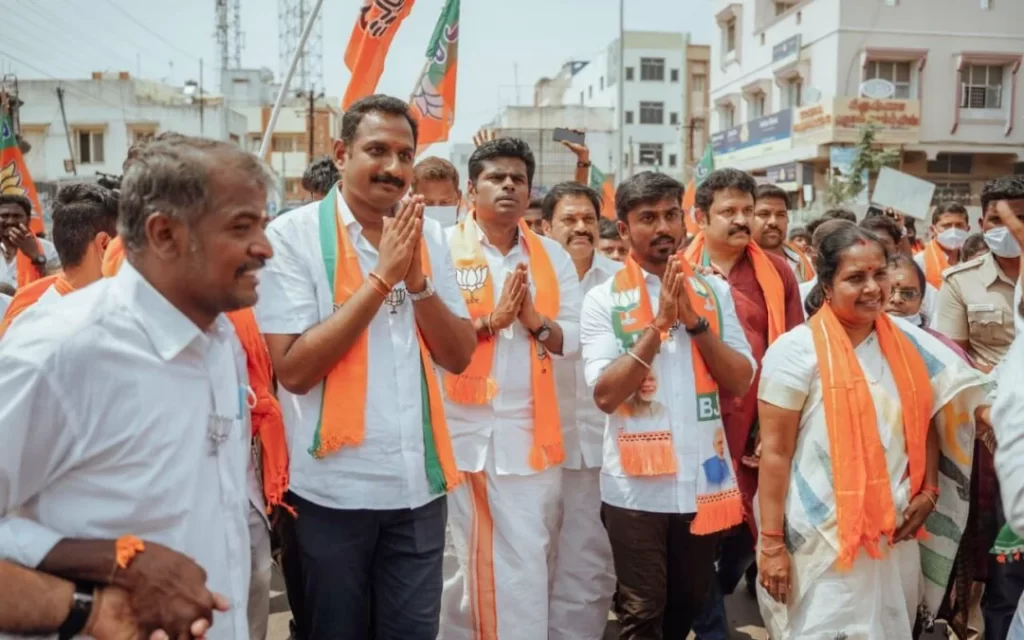
Opinion: Why the BJP’s rise in Tamil Nadu is a boon for the state Opinion: Why the BJP’s rise in Tamil Nadu is a boon for the state Chandrasekaran Balakrishnan March 2, 2022 Tamilnadu Economy Compared to 2011, the BJP has doubled its vote share and got more seats.  Read in : தமிழ் The recently concluded urban local body polls in Tamil Nadu had the BJP going alone for the first time since 2011. Elections in TN often generate much attention. Regional identities, welfare politics and Dravidian ideology rule the narrative in them. Every election comes with a distinctive feature. This time it was the BJP’s move. The party was roundly criticized and made fun of for not aligning with the AIADMK. The BJP has won two consecutive terms at the Center but here the narrative has been that Tamil Nadu voters have rejected the party for its anti-minority stance. For long, BJP cadres have been demanding that the party should face elections alone in Tamil Nadu to test the pulse of the people and build strong local networks. This demand makes sense especially now since the AIADMK is on the verge of losing its voter base due to leadership issues. Further, for decades, it has been the unquestioned dictum that national parties cannot dare to dream of facing elections in the state without an alliance with regional parties. The classical example is the Congress with a declining voter base. Yet, the state leadership surprised many by announcing it will go alone. Must state presidents of the BJP had age factors working against them and they had other baggage. They could never take the risk. The current state president, K Annamalai is younger and can plan for the foreseeable future. The BJP’s campaign themes included NEET, Hindu girl suicide, inferior quality produce in the Pongal hamper, coal scam, arrest of social commentator Maridhas and so on. Since Annamalai became BJP TN president, the narratives it has created in the state are bold and don’t hesitate to expound the party’s ideology. Young people are seeking for clarity and like a clear stance that is based on facts, not vested interests. It must be acknowledged that five decades of Dravidian welfarist politics needs to be countered and it would take some time. The BJP was taking on the entire DMK front across the state in most places in the urban local body polls. Its campaign themes included NEET, Hindu girl suicide, inferior quality produce in the Pongal hamper, coal scam, arrest of social commentator Maridhas and so on. The BJP was able to turn voter attention to some of these issues. The elections have proved that the BJP has bright prospects if it can move forward in creating a positive narrative with local support for the policies and development and welfare programmes of the Union government. Some have maliciously compared the BJP performance with the Congress. But BJP’s voteshare was 2.1 percentage points higher which amounts to a million votes. The rise of the BJP cannot be ignored. The Congress has been crowing that it is the third largest party but its performance comes from riding piggyback on the DMK. A section of the media has backed the Congress narrative while the facts speak otherwise. Compared to 2011, the BJP has doubled its vote share and got more seats. The BJP tally of 308 is spread across several districts including in northern Tamil Nadu. With dynamic leadership, the BJP has come to be a dominating force in Kanniyakumari district. Though the contests were multi-polar, the results in these elections have been largely uni-polar. The Congress is in historical decline across the country. It lost the plot more than five decades ago and has been unable to reclaim it. In the last seven years, Tamil media has confused the people and hidden the facts about the schemes of the Union government. The impact of schemes such as Mudra loans, tap water for individual households, housing for all, Rs 5 lakh medical insurance for a family of five, free cooking gas scheme, girl child scheme, income support to small farmers, direct cash transfer scheme and so on have helped BJP gain a foothold in the state. Future local body elections should be fought on relevant issues. Effective decentralization should be on the agenda. Sections of the media have been pandering to the vested interests of the two main parties. They have helped to indoctrinate young people in Dravidianist ideology. Negative sentiments are being created against the BJP, the Union government and its leaders. In a functional democracy like India, elections need to be fought on improving the governance structure so services and facilities are delivered to the people without bias. In the recent polls, however, national issues were made talking points. Future local body elections should be fought on relevant issues. Effective decentralization should be on the agenda. Only then the common people were get their due from the government apparatus without having to pay bribes. Otherwise elections will be dominated by cash bribes and irrelevant issues. There is a danger that the state’s expanding educated class will be highly knowledgeable without feeling responsibility towards society. This should be averted. (The author is an economist and public policy expert) ClickHere:https://inmathi.com/2022/03/02/opinion-why-the-bjps-rise-in-tamil-nadu-is-a-boon-for-the-state/42611/ Facebook Instagram X-twitter

Opinion: Why the BJP’s rise in Tamil Nadu is a boon for the state Read More »

High time Tamil Nadu walked the talk on decentralization, devolved power to local bodies

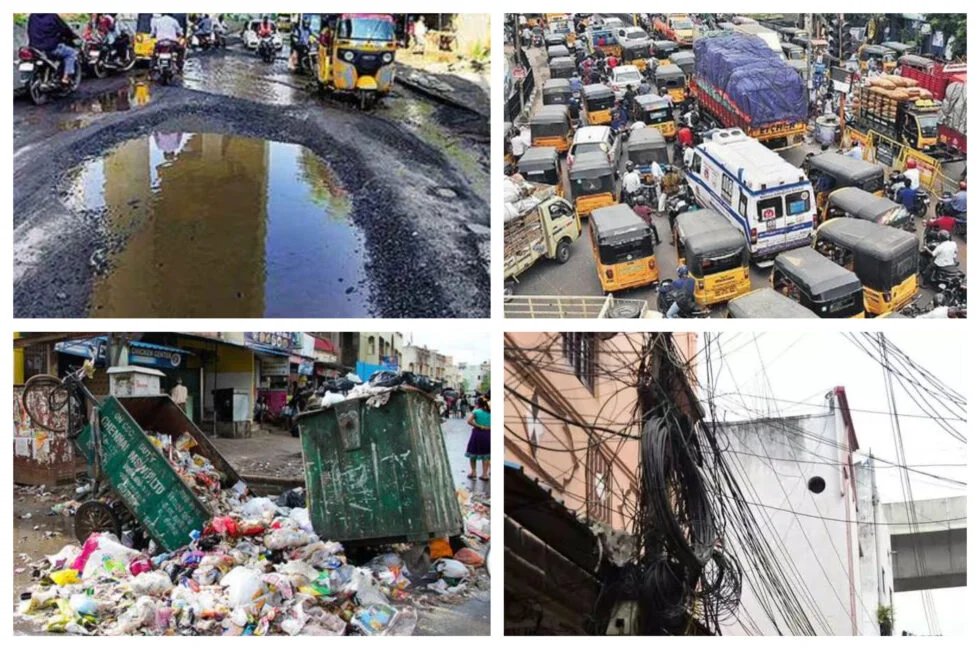
High time Tamil Nadu walked the talk on decentralization, devolved power to local bodies High time Tamil Nadu walked the talk on decentralization, devolved power to local bodies Chandrasekaran Balakrishnan February 22, 2022 Tamilnadu Economy Tamil Nadu has 21 city corporations, 138 municipalities, and 489 town panchayats. Do they have the funds and power to address the civic issues that the residents are facing every day? Read in : தமிழ் The concept of the elected village administration is perhaps more than a millennium old in Tamil Nadu. But the Dravidian political parties, which have often raised the demand for more state autonomy from the union government, have for decades refuse to honor the principles of federalism when it comes to its urban local bodies (ULBs) Tamil Nadu has the third-largest economy and it is also the most urbanized state. As much as 54% of its people live in urban areas today, compared to 34% in 1991. In 2002, the state had only 6 city corporations, 102 municipalities, and 611 town panchayats. Now, there are 21 city corporations—after 6 corporations were added in 2021—138 municipalities, and 489 town panchayats. In the urban local body elections whose results are due today, 12,607 representatives would have been elected by 2.79 crore voters, after a gap of six years. But will this mean anything for local governance, will it empower your elected representatives to improve the facilities in your cities and town? Or is it just a process to get over with? Unfortunately, even in the recent urban local body election campaigns, Dravidian parties have hardly raised civic issues, instead indulging in political slanging matches. They don’t talk about a master plan to address traffic, air, soil and water and pollution, solid waste management, sewage wastewater management, discharge of industrial effluents and so on. PMK leader Anbumani Ramadoss has rightly blamed the Dravidian parties for not paying due attention to urban challenges. In its campaigns, Dravidian parties have hardly raised civic issues, instead indulging in political slanging matches. They don’t talk about a master plan to address traffic, air, soil and water and pollution, solid waste management, sewage wastewater management, discharge of industrial effluents and so on. To bring about a major change in the way cities and towns are administered, local representatives must be given funds and autonomy to carry out plans according to what their wards’ people want. But despite legislation passed three decades ago to give local bodies autonomy, successive state governments have kept a choke-hold on funds and decision-making powers. The 73rd and 74th Constitutional Amendments were passed in 1992, which armed urban and rural local bodies with much-needed autonomy in administrative and financial matters. The amendments aimed at giving the power of decentralised governance to the people themselves to build institutions, to deliver services and to improve standards of living. The state then enacted the Tamil Nadu Panchayats Act, 1994 to replace the earlier Act of 1958. It paved the way for the creation of a district planning committee and the state finance commission (SFC) to aid local bodies. Laws on urban local bodies date back to 1919 and several Acts covering 21 cities now exist. According to Article 243 (A) of the Constitution, the Gram Sabha (village panchayat) has authority equal to the State Legislative Assembly as far as the village administration is concerned. But in reality, state governments have been stifling local self-governance in Tamil Nadu. For example, village panchayat meetings are restricted to just three times a year. As per Schedule 12 of Article 243 (W) of the Constitution, urban local bodies have 18 responsibilities. Of these, they now have a semblance of authority over only 8 issues. In the past, city corporation commissioners in Tamil Nadu had the power to sanction building plans but now that power has been given to the country- and town-planning authorities and the development authorities of cities. A 2011 study by MIDS states: “Devolution of funds to ULBs continues to be a major challenge. Despite recommendations of all three State Finance Commissions and the Central Finance Commission, several grants and assigned revenues have not been transferred to the ULBs or have been inadequately transferred.” Another report, Innovative Resource Mobilisation Practices: A Case of Urban Local Bodies in Tamil Nadu, 2004, states that while the constitutional amendments had mixed results at the national level, Tamil Nadu fared particularly poorly. Comparatively, neighboring Karnataka and Kerala have implemented far better devolution of administrative and financial powers to local bodies. Since 1994, six State Finance Commissions (SFC) have been constituted by the state government. The 6th SFC formed in 2020 had its tenure extended up to December 2021 but its final report is yet to be made public. Tamil Nadu is supposed to provide 10% of State-owned tax revenue (SOTR) to local bodies, of which 56% is to go to village panchayats and 44% to urban local bodies such as corporations, municipalities, and town panchayats. Though successive state finance commissions in Tamil Nadu have recommended for a greater devolution of funds to local bodies, they have been ignored. Tamil Nadu is supposed to provide 10% of State-owned tax revenue (SOTR) to local bodies, of which 56% is to go to village panchayats and 44% to urban local bodies such as corporations, municipalities, and town panchayats. States like Kerala devolve 24% of SOTR to local bodies and Karnataka provides 30%. A 2009 RBI study found Tamil Nadu to be the one of the worst performers when it came to fiscal decentralization. The actual expenditures in local bodies on services and developmental activities continue to be abysmally low. While states like Kerala devolve 24% of SOTR to local bodies and Karnataka provides 30%, even states like Uttar Pradesh and Maharashtra are devolving more funds than Tamil Nadu. A study on Functional and Financial Autonomy of Local Governments (2017) found that “the two fast reforming states, Andhra Pradesh and Tamil Nadu, are strengthening the state-level governments but the same does not seem to happen with decentralization downwards (to local governments).” There is no organic

High time Tamil Nadu walked the talk on decentralization, devolved power to local bodies Read More »

Opinion | Tamil Nadu’s parties oppose NEET over vested interests, not social justice

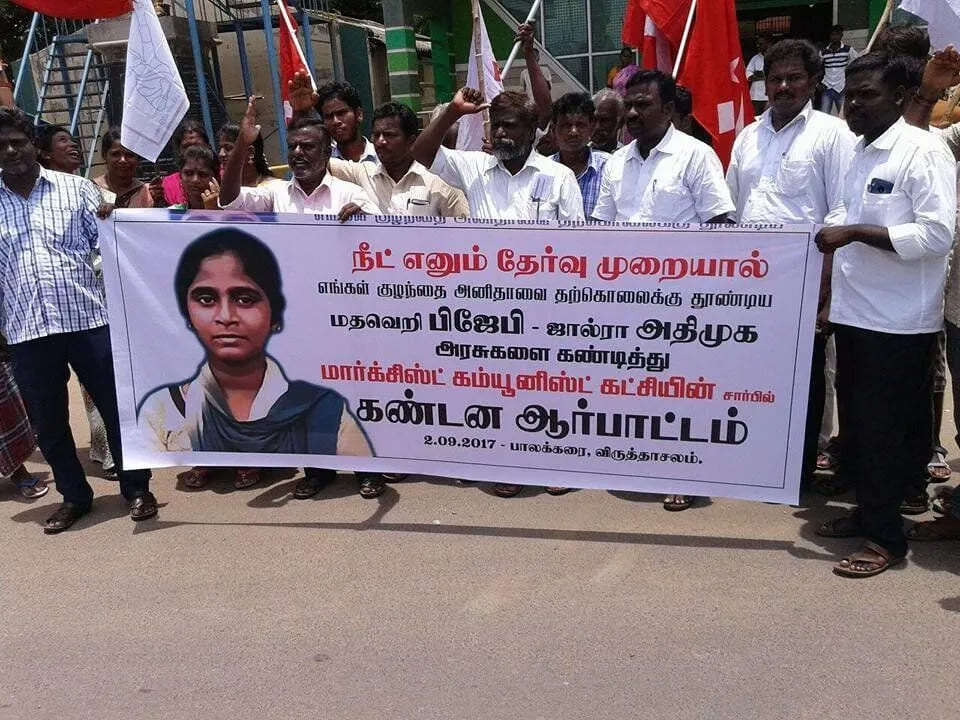
Opinion | Tamil Nadu’s parties oppose NEET over vested interests, not social justice Opinion | Tamil Nadu’s parties oppose NEET over vested interests, not social justice Chandrasekaran Balakrishnan February 10, 2022 Tamilnadu Economy A protest against NEET organized by the CPM after the suicide of Tamil Nadu student Anitha in 2017  Read in : தமிழ் Indian medical education and medical practices date back to ancient times when vaidyas (physicians) in dominant communities and tribal healers in other communities have been treating illnesses. The modern medical profession began to take shape in the nineteenth century in British India. Healthcare personnel were trained in medical courses as apprentices, basically to help treat wounded soldiers during war. From that era to the current times of NEET, there hasn’t been much progress in medical education, even in Tamil Nadu which has one of the highest number of medical colleges. Formal medical education began only a century ago. After independence, India did not witness the same kind of progress in medical education as it did in engineering, law, accountancy and the arts and sciences. Those fields produced thousands of professionals year after year for industry and public services. The global demand also grew as technological advances began being made in the second half of the twentieth century. According to Statistics of the Union Education Ministry (2019-20), Tamil Nadu has a total of 59 universities (6%), of which only 4 are medical institutions. The state has a total of 2,610 colleges which is 6% of colleges in India. Arts and Science, engineering & technology, teachers’ training, and nursing account for 79% of colleges in the state. A total of 2,251 (86%) colleges are in the private sector and only 375 (14%) are government managed. There are 455 engineering and technology colleges in Tamil Nadu which is 17% of the total in the country. Tamil Nadu has two law universities with 44 colleges (6%). Politicians have been misguiding students into thinking that NEET is not a fair process to assess whether they are eligible for medical education. They use the social justice principles of Dravidianism to portray NEET as being elitist, only because they seek to hide the collusion of political parties with vested interest groups who own medical colleges and universities. However, in the past seven decades, medical education, administration of institutions, and regulatory authorities in the country have not grown in the same way that other fields have. Though India’s pharmaceuticals sector has broken the shackles of systemic challenges and achieved significant progress especially in research and development, the same cannot be said about medical education. Medical education slowly but steadily came fully under the control of a few highly influential people. Their nepotism and the vested interests of politicians and greedy business groups eventually deprived millions of students the opportunity to become doctors. Reforms pursued in the last decade, however, have brought hope, especially to first-time learners from rural and economically backward areas and communities across the country. The biggest reform has been the establishment of the National Medical Commission (NMC) in 2019. While piloting the NMC Bill, the then Union Health Minister had said that “the Medical Council of India (MCI) was plagued by corruption”. There was a need to overhaul the corrupt, inefficient and opaque MCI. In 2001, Delhi High Court ordered the removal of Dr Ketan Desai who was then president of MCI over large-scale corruption and malpractice. The court order said, “We are now certain that MCI is a den of corruption”. Further, in 2018, there were CBI cases registered against officials of MCI. It is against this background that one must understand the debate on National Eligibility-cum-Entrance Test (NEET) in Tamil Nadu. NEET is being used by politicians as a tool to accuse the Centre of being against federalism. Politicians have been misguiding students into thinking that NEET is not a fair process to assess whether they are eligible for medical education. They use the social justice principles of Dravidianism to portray NEET as being elitist, only because they seek to hide the collusion of political parties with vested interest groups who own medical colleges and universities. The present ruling party in Tamil Nadu, the DMK, has promised in its election manifesto of 2019 assembly elections that they would get rid of NEET, knowing fully well that they can point to the Supreme Court judgment favoring NEET as an excuse for their failure. The Supreme Court said that NEET ensured a level playing field in medical education for government, private and minority educational institutions in the country. Despite the Supreme Court verdict, the DMK government went ahead and constituted an expert committee to examine the need to exempt Tamil Nadu from NEET, only to serve their own interests. The AK Rajan committee report has been criticized for not providing any data to support the claim that NEET was against social justice. The present ruling party in Tamil Nadu, the DMK, has promised in its election manifesto of 2019 assembly elections that they would get rid of NEET, knowing fully well that they can point to the Supreme Court judgment favoring NEET as an excuse for their failure. Tamil Nadu has one of the highest number of medical colleges in India, 69, with the total seats standing at 10,375. Of these, 37 (54%) are government medical colleges with 5,125 seats (49%) and 32 (46%) are private colleges and universities are with 5,250 seats (51%). The State also added 11 new medical colleges in the government sector with 1,450 seats. Thus, now Tamil Nadu has a total of 6,575 seats in the government sector which accounts for 12% of medical seats in India in 2021. The Governor of Tamil Nadu did the right thing by returning the NEET Bill 2021 passed by the Tamil Nadu Assembly to The Speaker for reconsideration. The Constitutional head is well within his rights in ensuring that only laws in the interest of the people are implemented. The governor said that the proposed Bill is “against the interests of the students, specially the

Opinion | Tamil Nadu’s parties oppose NEET over vested interests, not social justice Read More »

Tamil Nadu power sector urgently needs reforms, should use budget clause on fiscal deficit

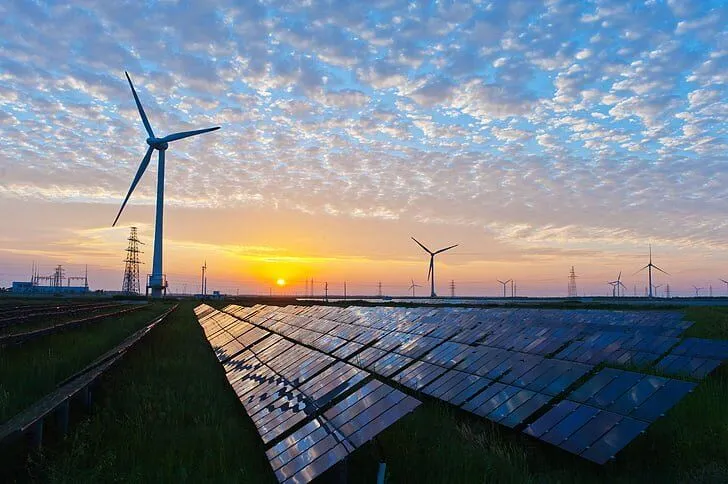
Tamil Nadu power sector urgently needs reforms, should use budget clause on fiscal deficit Tamil Nadu power sector urgently needs reforms, should use budget clause on fiscal deficit Chandrasekaran Balakrishnan February 2, 2022 Tamilnadu Economy Tamil Nadu has great potential for power generation, including renewable energy such as wind and solar power. Private power generators who have invested in wind and solar energy projects during the last few months of the previous regime in Tamil Nadu are now facing challenges in completing the projects and commissioning them. This is something that the DMK government should resolve soon.                                                               Read in : தமிழ் After independence, two of India’s larger states namely Tamil Nadu and Uttar Pradesh had the same per capita income around the year 1957. Since then, the two states have diverged over the years on major development indicators. Now, the prosperity of Tamil Nadu is three times that of Uttar Pradesh. Moreover, there is a sharp contrast between these two states on every parameter of social, economic, environmental and developmental growth. The key transformative role played was the power sector which has far-reaching multiplier effects on economic activities. But at present the power sector is in need of reforms. One of the major drivers of Tamil Nadu’s growth was the social and economic awareness to get support like free power from the government for the welfare of the people across the segments. As a result, in the year 1999-2000, Tamil Nadu, had the highest per capita power consumption in entire South India with 484 kWh, much above the national average. In a 2004 research analysis, Mathew Joseph noted that Tamil Nadu’s prosperity increased due to “the advanced stage of industrialization in the state. The low pricing of electricity to agriculture and domestic sectors and high pricing of industry, over the years has led to the share of the former sectors rising while the share of the latter sector falling particularly as the industrial sector has been moving to captive (sources of power generation).” Now, it is well known that the electrification of the entire state of Tamil Nadu was achieved much before most states in the country. Part of the reason is that the state was able to get capital investments from the private sector for power generation and has built a robust and competitive environment over the years. In a 2004 research analysis, Mathew Joseph noted that Tamil Nadu’s prosperity increased due to “the advanced stage of industrialization in the state. The low pricing of electricity to agriculture and domestic sectors and high pricing of industry, over the years has led to the share of the former sectors rising while the share of the latter sector falling particularly as the industrial sector has been moving to captive (sources of power generation).” However, the state is losing its sectoral advantages in the power sector in recent years entirely due to a lack of vision, political leadership, and poor institutional governance structure. This has affected sectors across the economy. For example, it was reported last year that Uttar Pradesh had overtaken Tamil Nadu in becoming the state with the second highest GSDP. To mitigate the power sector crisis in the country, the Union Finance Minister has announced in her Budget Speech that “in 2022-23, in accordance with the recommendations of the 15th Finance Commission, the states will be allowed a fiscal deficit of 4 per cent of GSDP of which 0.5 per cent will be tied to power sector reforms, for which the conditions have already been communicated in 2021-22.” The announcement made in the Union Budget 2022-23 only reinforces the need for long-overdue power sector reforms especially the unbundling of states’ power distributions agencies, which are mostly debt ridden due to outdated modes of operation and services. General users are suffering due to frequent power cuts in Tamil Nadu. The recent CAG report on performance of power sector in Tamil Nadu has criticized the state for incurring thousands of crores of losses every year and for the purchase of poor quality coal, and so on. The present DMK government has noted in its “White Paper on State Finances” that it is imperative to undertake reforms in the power sector in the state but there has been no progress so far to speak of. The State government has promised to bring out a sector-specific sector-wise White Paper on issues and challenges to overcome, but there is nothing yet with regard to the power sector. There are incidents in the state where private power generators who have invested in wind and solar energy projects during the last few months of the previous regime in Tamil Nadu are now facing challenges in completing the projects and commissioning them. This is something that the DMK government should resolve soon. The announcement made in the Union Budget 2022-23 only reinforces the need for long-overdue power sector reforms especially the unbundling of states’ power distributions agencies, which are mostly debt ridden due to outdated modes of operation and services. The recent CAG report on performance of power sector in Tamil Nadu has criticized the state for incurring thousands of crores of losses every year and for the purchase of poor quality coal, and so on. Another aspect where reforms are needed are with regard to transmission and distribution (T&D) losses. It was 18% in 2021-22 in Tamil Nadu, which is higher than that prescribed by international best practices and also more than that of other major states in India. For the current year, a total provision of Rs 19,873 crore has been made in the Revised Budget Estimates 2021-22 towards subsidies for free supply of agricultural power, domestic supply, and for the takeover of losses made by Tamil Nadu Generation and Distribution Corporation Limited (TANGEDCO). Tamil Nadu has already borrowed up to 3 % of GSDP value to bridge its fiscal

Tamil Nadu power sector urgently needs reforms, should use budget clause on fiscal deficit Read More »

New Chief Economic Adviser Anantha Nageswaran, a right-wing economist, is a Madurai man

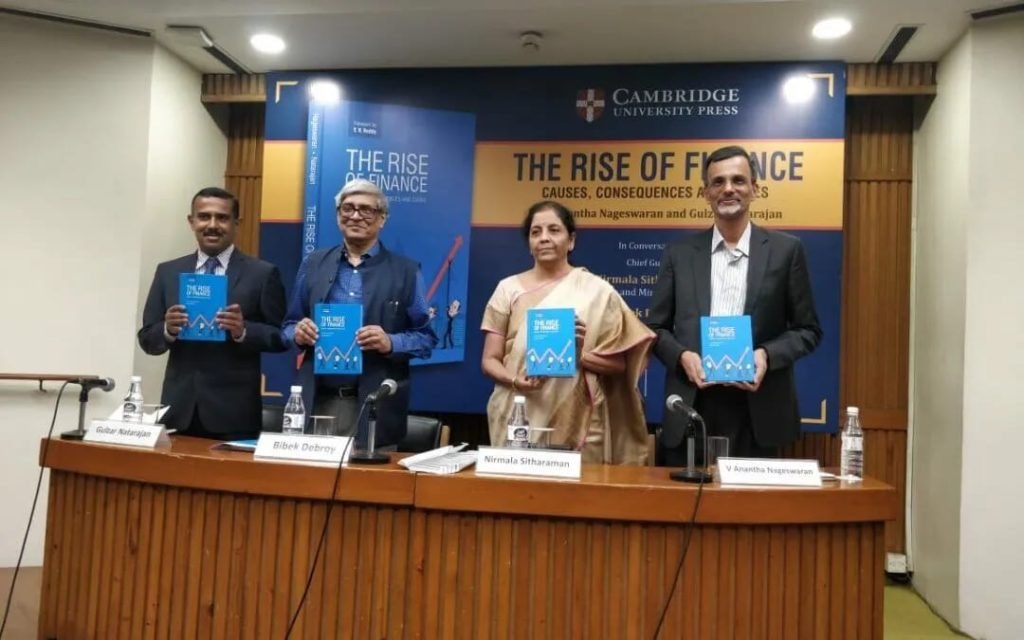
New Chief Economic Adviser Anantha Nageswaran, a right-wing economist, is a Madurai man New Chief Economic Adviser Anantha Nageswaran, a right-wing economist, is a Madurai man Chandrasekaran Balakrishnan February 1, 2022 Tamilnadu Economy Finance Minister Nirmala Sitharaman attends the book launch of ‘The Rise of Finance’ by V Anantha Nageswaran (extreme right) and Gulzar Natarajan on November 10, 2019, as the Chief Guest in New Delhi. Chairman of the Economic Advisory Council to the Hon’ble Prime Minister Bibek Debroy is also present. (Photo Credit: Twitter @nsitharamanoffc)                                                                                                                                    Read in : தமிழ் As the economy recovers from the shackles of the COVID-19 pandemic, the upcoming Union Budget will be looked to as a sign of hope for the year ahead. Along with the Union Budget 2022-2023, the Economic Survey 2021-22 gives the country a chance to improve its economic indices based on the assessment of the previous year through critical data analysis and in-depth research on public policies. In this background, the recent appointment of Dr Venkatraman Anantha Nageswaran as the next Chief Economic Adviser by the Union Finance Ministry is significant. The post had been lying vacant for a month and a half since Dr KV Subramanian demitted office after his three-year term ended December 17, 2021. Anantha Nageswaran is a native of Madurai in Tamil Nadu and is rooted in Indian culture despite having a career that took him across the world over many decades. He is a graduate of commerce from American College, Madurai, who then completed an MBA from the Indian Institute of Management, Ahmedabad in 1985. He has a doctorate from the University of Massachusetts, Amherst, USA. His PhD thesis was on the empirical behavior of exchange rates (1994). Inspired by C Rajagopalachari, B R Ambedkar and B R Shenoy, Anantha Nageswaran subscribes neither to the idea of excessive state control nor unfettered free market systems. He is known to be a pragmatic economist who believes in integrating public policies with Indic ideology. Until recently, he was a part-time Member of the Prime Minister’s Economic Advisory Council from 2019 to 2021. Prior to that, he was the Dean of the IFMR Graduate School of Business, Chennai, and a visiting professor of economics at Krea University, Chennai. He taught financial economics at several business schools and institutes of management in India and Singapore.  He is a member of the Board of Directors in several companies in India, including TVS Logistics and Aparajitha Corporate Services (P) Limited. He co-founded Aavishkaar Venture Capital, an investor venture in Social Enterprises.  He is a co-founder of the Takshashila Institution, a centre for research and education in public policy. The new CEA brings several competencies to the highest level of policymaking in the country, especially at a time when the economy has been fractured by the pandemic, and attempts are being made to stabilise the financial systems with long-lasting governance structures. He comes with optimism about India and its economic fundamentals. Anantha Nageswaran has extensively written about what has been plaguing the Indian economy for years, from the perspective of planning of public policies as well as taking regional economies into consideration. According to Anantha Nageswaran, “The state capability constraint is serious, pervasive, and endemic even as the role of the state remains indispensable to achieving economic prosperity and social stability.” Inspired by C Rajagopalachari, B R Ambedkar and B R Shenoy, Anantha Nageswaran subscribes neither to the idea of excessive state control nor unfettered free market systems. He is known to be a pragmatic economist who believes in integrating public policies with Indic ideology. In 2019, Anantha Nageswaran co-authored a research paper with Gulzar Natarajan titled ‘India’s Quest for Jobs: A Policy Agenda’, published by the Carnegie Endowment for International Peace. “The implementation of any reform is likely to remain suboptimal without a paradigm shift in the way the Indian state views and engages with the private sector,” the paper said. “Instead of taking an adversarial and regulatory-oriented approach, it needs to highlight partnership and facilitation. The anti-big bias reflected in the government and public policy is a problem that has yet to be tackled effectively”. In an article in The Indian Express in November 2020, Anantha Nageswaran wrote: “Demonetization led to formalization of the economy, acted as a catalyst for digitization of financial transactions, stirred a debate about entrenched informality in the economy, and led to re-classification of MSME enterprises and the decriminalization of violations of many penal provisions of the Companies Act.” When many were critiquing the present central government policies, Anantha Nageswaran wrote with optimism in The Indian Express that, “Demonetization led to formalization of the economy, acted as a catalyst for digitization of financial transactions, stirred a debate about entrenched informality in the economy, and led to re-classification of MSME enterprises and the decriminalization of violations of many penal provisions of the Companies Act.” In 2016, he had co-authored a research paper titled “Can India Grow: Challenges, Opportunities, and the Way Forward”. In it, he wrote that “The Indian government should pursue reforms in the areas of higher and lower education; urban governance; housing, land, credit, and labor markets; and infrastructure contracting. It should also seek to shrink the informal economy and expand the tax base, while also improving state capacity and personnel management.” Further, he also stressed the importance of governance at the ground level focusing on district-level delivery mechanisms. This is something most economists ignore. In his analysis, Anantha Nageswaran said, “The district-level bureaucracy, administered by district collectors, has remained virtually the same, both in structure and in personnel deployment, since independence. During the same period, there has been a dramatic expansion in the government’s responsibilities, including development and welfare interventions,

New Chief Economic Adviser Anantha Nageswaran, a right-wing economist, is a Madurai man Read More »