
Articles

Why-its-time-to-go-the-whole-hog-on-online-degrees

Why It’s Time To Go The Whole Hog On Online Degrees Why It’s Time To Go The Whole Hog On Online Degrees Saravanan M April 4, 2021 Articles   The entry of e-commerce giant Amazon into Indian academia provides a few policy takeaways that go beyond the school education sector and well into the higher education space. They are discussed as follows.Two things have grown by leaps and bounds in the last one year: coronavirus and online education.Edu Tech has not just got well entrenched but has also sneaked into the nooks and corners of the world. India too has seen the silent and unplanned transformation in the way virtual classrooms and examinations have been held successfully, given the enormity of the pandemic and the consequent tribulations. In all these, one event deserves the attention of policymakers: Amazon’s recent foray into the Indian school education sector that already has many players. The entry of the e-commerce giant into Indian academia provides a few policy takeaways that go beyond the school education sector and well into the higher education space. One, technology would increasingly run the show henceforth, relegating the traditional brick-and-mortar model to a lower rung. Two, investment into the sector should also be on elevating the digital infrastructure of institutions. Three, customised teaching-learning will be the new norm vis-à-vis the prevalent inflexible and dated one-size-fits-all system. Four, if the employment market recognises the online-offerings of the new-age players, then the relevance and strength of the degree and diplomas offered by hitherto regulated traditional players would dissipate. Five, the challenge of low teaching-learning outcomes of online education, in relation to the traditional offline or in-person method, is not insurmountable and with experience, the quality of online education, except the laboratory based programmes, would significantly improve over time. Six, foreign players, including universities and corporates, would not only have a backdoor entry but by significantly setting academic standards, would partially assume the role of a de-facto regulator. To the credit of the policymakers, the sector already allowed online education in 2017 itself by allowing up to 20 per cent of the total courses through online mode. Within a year, the 2018 Regulation of the UGC allowed online degrees to be granted. With the focus fixed on ensuring the quality of the online programmes, care was taken to let only the top players to participate. It permitted only those institutions that were at least five years in existence, have an institutional accreditation score of at least 3.26 on a scale of 4 and find a place in the Top-100 in overall category in the National Institutional Ranking Framework (NIRF) at least twice in the three previous years. Further, even the eligible institution can only offer a programme from among the bouquet of programmes it is already offering offline. Appreciably, the regulator came up with slightly relaxed norms in September 2020, when the nation was still under the grip of the pandemic. The easing of conditions was marginal: the age of eligible universities was brought down to 3 from 5 years and any university with a NAAC score of at least 3.26 “or” ranking within the top 100 in the preceding 2 out of 3 years was also given the nod to start online programmes. While the regulator deserves commendation for continuously aligning the norms in consonance with the general emerging trend and also for being consistent with its insistence of allowing only the top universities, the ground realities have changed considerably and swiftly. The entry barriers are not just high, but also restrictive. Out of 967 universities, only 100 are eligible, assuming that the 73 universities that have valid NAAC score of 3.26 or above, as of December 2020, find a place in the NIRF top 100 positions. This leaves out almost 90 per cent of the existing universities. Interestingly, 109 universities that do not make the cut have scores between 3 and 3.25. If a university outside the stipulated NAAC or NIRF benchmarks is good enough to teach and award degrees offline, it is equally good enough to do the same online too. Similarly, if a newly established university is capable of delivering conventionally from day one, it can also hit the ground running on online mode. Further, a performing department in an underperforming institution gets rejected, while an underperforming department in a performing institution gets rewarded. When it comes to tech-related reforms, most policy-makers are inevitably and predictably behind the curve. It is so because technology is always in a state of flux, with what is in vogue today becoming obsolete tomorrow. Though constant free-wheeling of policy regulations into effect with every new happening on the ground is neither necessary nor advisable, it is essential to take note of transformative happenings and bring in regulatory facilitation. The prevalent situation is one such case where a decisive policy turn has to be made — which is to unshackle all the existing universities. It is better to fix quality standards of the education provided online than to be fixated on the number of institutional providers to be given the green signal. If quality is the concern, it is better to allow all the existing players that are bound by the rules of the regulator to play the game, than to restrict them and thereby create a void to be only filled up by entities that are beyond the realm of control of the regulator The 2020 Regulation indicates a review after the 2020-21 session. Going full-throttle on online degree programmes will immunise the existing and prospective universities against any foreign bodies.   Facebook Instagram X-twitter

Why-its-time-to-go-the-whole-hog-on-online-degrees Read More »
Chakravarti Vijayaragavachariar – The Lion from The South!

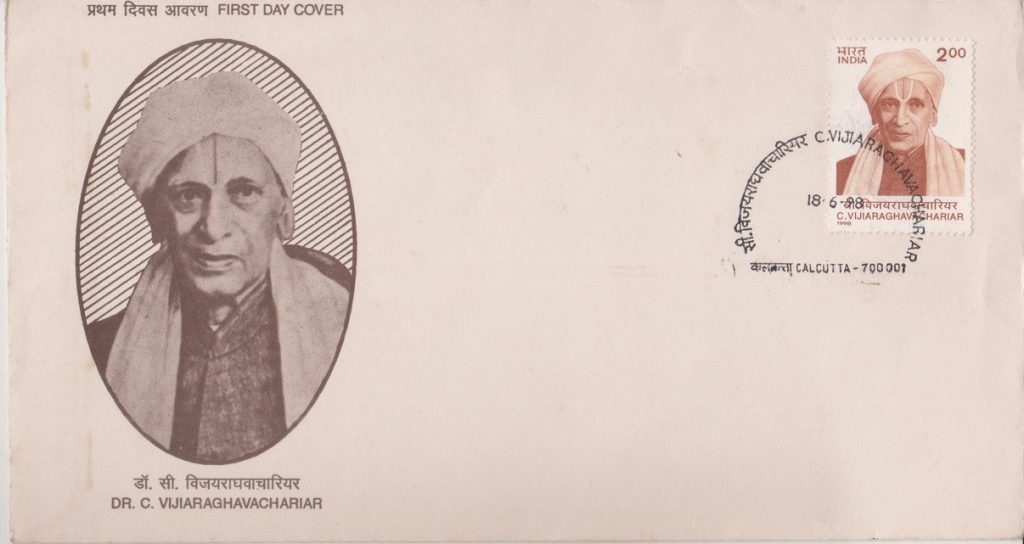
Chakravarti Vijayaragavachariar – The Lion from The South! Chakravarti Vijayaragavachariar – The Lion from The South! Chandrasekaran Balakrishnan October 7, 2020 Articles . The flame of democracy and its wings of fire thrive only if the feathers of democratic institutions function effectively. These institutions, like the power of the people, are entrusted in the execution apparatus of the rule of law and governance under the Constitutional provisions.  Democracy functions to catalyse the achievement of public freedom, liberty and protection of property through the participation of people.  However, the hardwired question is- “do our political parties established under Constitutional democracy work for enlarging the freedom of people?” Do the political parties effectively implement Constitutional schemes after being elected to power and thereby empower decentralized decision making, reaching the grassroots levels of the country?  One prime example is the grand old political party of India, the Indian National Congress; which, in the past, fought for freedom struggles through great freedom fighters and thinkers which included statesmen like Salem Chakravarti Vijayaraghavachariar. He was President of the Indian National Congress Party in 1920. It becomes important to go into some detail to understand the life and times of the great statesman Vijayaraghavachariar.  He was a successful lawyer from the town of Salem in the Madras Presidency (now Tamil Nadu) since 1881. He became a Member of the Legislature in the Madras Presidency in 1895 and served the people until 1901. It was there that he came into close contact with the great liberal thinkers V.S.Srinivasa Sastri, C.Sankaran Nair, V.Bhashyam Iyengar;  and many other eminent freedom fighters. He was a Member of the Imperial Legislature from 1913-1916 and played a historic role in that capacity.  Chakravarti Vijayaraghavachariar was famously called ‘The Roaring Lion of the South.’ He was born on June 18, 1852, at Madurantakam in Chingleput district in Madras Presidency. His father was a priest cum scholar who was adept in Sanskrit and traditional scriptures. Sadagopachariar wanted his son to take up after him. The young Vijayaraghavachariar learned the scriptures but was keen to learn English too. Later, he joined Pachaiyappas High School and stood second in the Matriculation Exams (1871).  He received his B.A degree in 1875 from Madras Presidency College. He was appointed as a Lecturer in the Madras Presidency College in the same year . Later, he was transferred to the Government College, Mangalore, where, after three years of service, he resigned. Those were times when Indians were ill-treated by the Europeans and Vijayaraghavachariar met the same fate with his Principal. He quit the job but was requested to stay back by the Director of Public Instruction. However, the bold youngster resolved to take a stand for himself. He moved to Salem town and taught English and Mathematics at the Salem Municipal College. He left his job and became an advocate in Salem after clearing the law examination. He was married to Lakshmi and had a daughter named Seetha.  Vijayaraghavachariar was involved with the Indian National Congress from day one. He had known A.O.Hume before the founding of the party, and he helped him to go ahead with the same. The first meeting took place in Mumbai (28.12.1895) under W.C.Banerjee (1844 – 1906), and Vijayaraghavachariar also participated along with Dadabhai Naoroji (1825 -1917), Pheroze Shah Mehta (1845 – 1915), Dinshaw Wacha (1844 -1936), S.Subramania Iyer (1842 -1924), G.Subramania Iyer (1855-1916) –  the founder of The Hindu newspaper, etc. At the age of 36, in 1888, Vijayaraghavachariar drafted the Constitution of the Congress Party. He was responsible for making the Congress popular in South India. He persuaded the founders to make the economic and social needs of the people a central concern of the party. It was during this formative period that Vijayaraghavachariar and his friends played a key role in making the Indian National Congress an effective political organization with a focus on national consciousness, unity, and development. In 1899, he was appointed as a member of the Congress Propaganda Committee.  At the Calcutta Session in 1906, Vijayaraghavachariar moved a resolution relating to the Permanent Land Settlement of Land Tenures. He argued that the people owned the land in India since time immemorial, and the ruler was only paid a share of the produce. The ruler never owned everything, and a shift in thought and action was the result of colonial tendencies and reeked of European feudalism. Later this was to become the basis for various Acts connected with land reforms in India.  The Surat session of the Congress in 1908 caused a split between the extremists and moderates. Tilak inspired all the extremists, and Vijayaraghavachariar was with him. The Amritsar Congress (1919) was important for Vijayaraghavachariar who spoke about the Fundamental Rights of the Citizens. The meeting went on for long hours, and he received approval from the members instantly. The Constitution of India was based on this resolution. Vijayaraghavachariar had, thus, always been a foresighted man.    He moved closely with leaders like Mahatma Gandhi, Madan Mohan Malaviya, Surendranath Banerjee, Gopala Krishna Gokhale, etc., The government brought in the Criminal Act Law Amendment Bill in 1913 and Vijayaraghavachariar opposed it vehemently along with Banerjee. They had to face threats but stood by their decision. He actively participated in debates and discussions on several subjects and always argued in favour of human rights. He was astutely well-read and was an expert in parliamentary proceedings. The government was forced to acknowledge his intelligence grudgingly. The Nagpur Session took place in 1920, and Vijayaraghavachariar was made the President of the party. Gandhi also proposed the Non-Cooperation Movement during this session. It was announced in the backdrop of the Rowlatt Act and Jallianwala Bagh tragedy. Vijayaraghavachariar insisted that Gandhi keep Non-Swarajya as the goal of the movement; which he accepted. These details can be found in the autobiography of Gandhi.  Vijayaraghavachariar supported the non-violent approach publicly. Lord Birkenhead, the Secretary of State of India had once stated that Indians were incapable of drafting their own constitution. Vijayaraghavachariar took up the challenge and prepared the Swaraj Constitution of

Chakravarti Vijayaragavachariar – The Lion from The South! Read More »

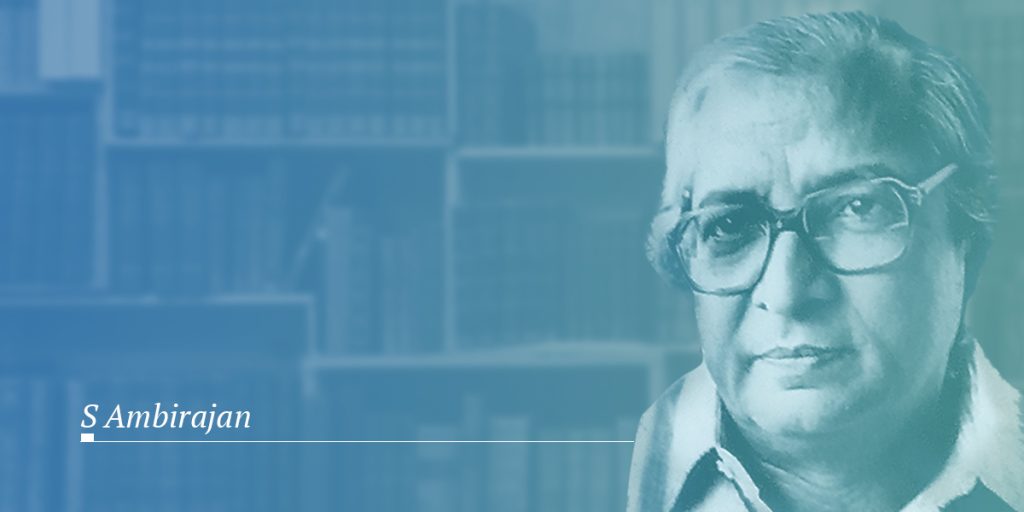
Prof S.Ambirajan’s Thoughts on Development Economics

Prof S.Ambirajan’s Thoughts on Development Economics Prof S.Ambirajan’s Thoughts on Development Economics Chandrasekaran Balakrishnan September 10, 2020 Articles     Development economics is a subject which has evolved over the years primarily post World War II both in terms of theorizing concepts, galvanizing methods, and assumptions over societies, state and markets functions. It also invented tools to frame public policies across the world to promote the development of a gamut of things in society in order to achieve prosperity.  Over the years, some intelligentsia within the domain narrowed down the focus of   development economics by confining it as a system only for developing economies, now fashioned as emerging economies. Now, development economics has been subdivided into many branches of economics. The subject is still growing with specializations. The latest one is behavioural economics which aims at a new dimension of inquiry into causes from poverty to prosperity. After independence especially in countries like India, the policies and methods were structured around development economics through political dictates. This notion was a considerably flawed framework at least from the established basic economics principles like scarcity of resources, demand, and supply, opportunity costs, spontaneous order, liberty, individual freedom, private property rights, trade is positivism game, compatibility of democracy and economic freedom, the institutional framework for good governance to deliver services to people, etc. These were all necessary to promote competition, choice, and efficiency in an economy, whether a nation aims for public goods or private goods. However, in a controlled regime of governance like the one which was under Jawaharlal Nehru, the compartmentalization of policies would impede the progress of any society irrespective of growth of population, lack of natural resources, turbulent political and social systems, etc. Further, in the process to glamorize the art of politics to people on democracy, the goal of building independent institutional networks to promote structural transformations for economic development and  growth were hugly undermined for decades after independence.  Against this background, it is interesting to note Professor Srinivasa Ambirajan’s thoughts on the social and economic development of post-Independent India. He had a profound understanding of the subject of development economics before many theories evolved around it. He had never narrowed either his research or his teaching of economics for several decades both in India and abroad. He had written copiously on the nexus of the interdependence of public policymaking, economic growth, and development, development of social, cultural, and history of economic thoughts for about half a century. His first major book was “The Grammar of Indian Planning (1959)” which is a classic treatise on the Indian political economy of the first decade post-independence. It has systematically dealt with major structural issues and challenges of developing economies, breaking away from the dogmatic thinking of centralized planning, less tested ideas of socialism and communism. He was an awed original thinker like V.S.Srinivasa Sastri, B.R.Ambedkar, Rajaji, Prof.B.R.Shenoy, etc. Prof Ambirajan had provided a profound analysis of the survey of literature in the book. His prophetic warnings on key issues such as population growth and control measures, economic growth and development, pitfalls of deficit financing, promotion of entrepreneurship with limited power of State, liberty, freedom, etc. came true across the developing economies after decades of socialist command and control regimes failed. On the growth of population, Prof Ambirajan firmly believed that “Generally a rapid rise in population accompanies rapid economic development” and “economic development alone can be the effective remedy to the threat of overpopulation.” According to him, “Economic development is but one of the many factors that determine a country’s or a community’s prosperity. Without social betterment and general cultural progress, mere economic development can have no meaning for us.”  And he perceptibly warned the policymakers that “drastic measures to cut birth rates like birth control, abortion, etc. will not help to alleviate human misery; the remedies may actually prove worse than the disease!” He also warned the leaders at the helm of affairs that “Can we efficiently industrialise — for without industrialisation the problem of our age-long poverty cannot be solved — and at the same time avoid the evils of overcrowding, uprootedness, slum-life, bad sanitation, disease, ignorance, gross inequality in standards of life, and chronic insecurity?” Still, Governments in India spend thousands of crores towards population control measures even after the efforts of many decades but with little outcomes. For instance, just 13 states were able to achieve below replacement fertility levels as of 2018, and states like Bihar have to go for years to reach replacement fertility. Instead, the efforts could have been systematically focused on economic and social development fronts which could have effectively arrested the growth of fertility. According to Prof Ambirajan “wealth gives comfort and security; it also provides more leisure. Because economic growth increases efficiency, the necessities of the people could be produced more easily and in a much shorter period, and hence there will be plenty of time or leisure for various liberal arts like music, painting, literature, dance, drama, etc. to flourish. Economic growth enables people to have the advantage of more goods and services, more and more of them, without any foreseeable limit of exhaustion. Thus new types of goods are produced and sold in highly developed economies, and inventive ingenuity, advertisement, and pressure publicity give currency to these newer and still newer goods which people are most eager to possess. Because fewer people are engaged in the production of the necessities, the rich modern societies are able to spare more people for other vocations like medicine, law, music, teaching, etc. Again, man being a rational and intelligent being…gains progressively greater control over his environment and thus increases his freedom”. Countries like India after independence were not able to use natural and human resources towards achieving higher economic growth and this was observed in 1959 by Prof Ambirajan that “what we witness in the underdeveloped countries today is the sorry spectacle of the misuse of the natural resources. Not until resources are used carefully and to the fullest extent can real economic growth be achieved.” Moreover, he believed that “it is also

Prof S.Ambirajan’s Thoughts on Development Economics Read More »

Challenges-of-productive-employment-creation-in-india

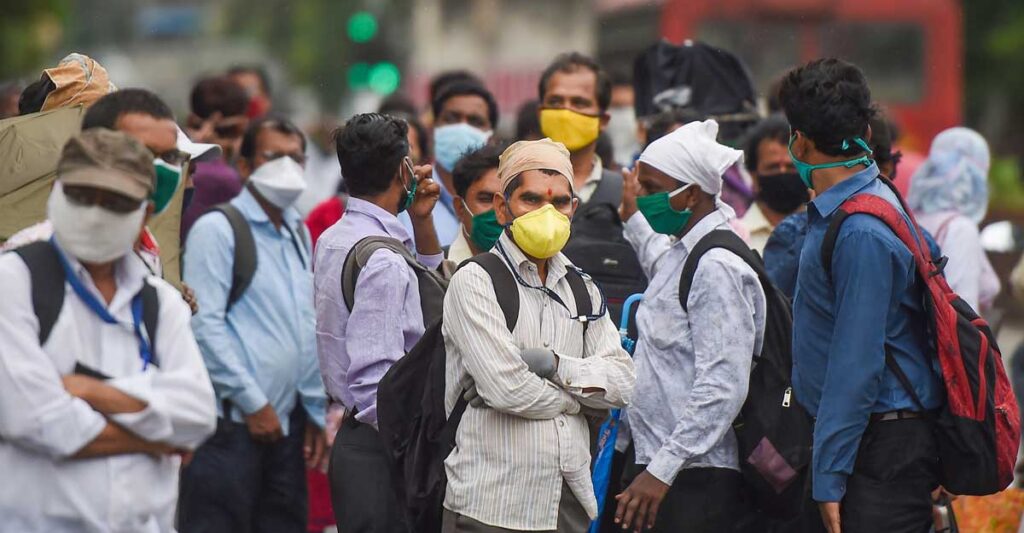
Challenges of Productive Employment Creation in India Chandrasekaran Balakrishnan September 9, 2020 Articles Challenges of Productive Employment Creation in India   During the last eight months, the world has been confronted with an unprecedented catastrophic health crisis in the form of COVID-19 pandemic. It has irrefutably reminded every society across the world to be more open and kind to each other to collectively overcome the crisis that was erupted out of China. The spillover effects of the pandemic have in turn created heavy losses to the real economy and multifold shocks to the financial sectors of countries around the world. Thus, the livelihoods and employment sector have become the most severely hit and it seems that it would take years to recover. The fatalities across the world are approaching one million. For the collective mitigation of the COVID-19 pandemic, each nation has to embark on a new path by reposing faith in the Constitutional provisions along with the international agreements of treaties to safeguard the people who are invulnerable conditions and at the same time explore how best they can help other nations. Economies across the world are also finding it extremely hard to manage the scarce resources and the demands of public healthcare systems. Click on to read the article Chandrasekaran Balakrishnan is Research Fellow (Urban Eco-system and Skill Development) with CPPR. Views expressed are personal and need not reflect or represent the views of Centre for Public Policy Research. The author has shared some of the points discussed in this article at the national level panel discussion webinar on “Productive Employment Creation in India during COVID-19” organised by Ramaiah Public Policy Center, Bangalore, on August 28, 2020. Facebook Instagram X-twitter

Challenges-of-productive-employment-creation-in-india Read More »

Factors of production and land titling polices, the need for reform

Factors of production and land titling polices, the need for reform Factors of production and land titling polices, the need for reform Chandrasekaran Balakrishnan August 25, 2020 Articles To achieve a higher trajectory of economic growth encompassing a comprehensive economic development of a nation requires clearly defined and sound principled public policies on factors of production. The rules of framework permeate the factors of production in the interest of the nation irrespective of any political systems. The fundamental rules of operation would inevitably help us to make use of vital resources effectively such as land, labour, capital, entrepreneurial skills. Among the key factors of production, the labour and capital have more power of portability as compared to the land which is fixed in nature but it has intrinsic value on its locations. Further, few more precious values of factors of production were added in the modern world, the science of management practices, entrepreneurship skills, innovation, and effective use of precise time as a factor with decision making and risk-taking ability are all important besides the use of modern technologies. However, the key challenges remain on the terms of use, and misuse of these vital resources. How do nations make factors of production more efficient? Since independence, the public policies were framed in such a way that challenges posed by the factors of production were not given equal traction to make use of it efficiently and effectively. For instance, for decades, increases in population and human resources were treated as burdensome at worst rather than focal resources for economic development by providing education and skills development. Moreover, soon after independence, the fundamental right of private property rights was removed quite hastily without even contemplating the importance of it for the economic development of the country in the future. The founders of modern India including Dr. B.R.Ambedkar, Sardar Vallabhai Patel, and Rajaji had premised the property rights as paramount to achieve economic development and upliftment of the poor. Similarly, land titling is an enormous systemic issue lingering for decades without amplified governance systems to fix and make effective use of it for nations’ prosperity.  Moreover, the policy of land titling would provide an antidote to most of the urban issues but most government department works in silos. Studies suggest that land-related disputes account for two-thirds of all pending court cases in the country (more than three crores). These land disputes include those related to land titles and records, and rightful ownership (Prachee Mishra, Roopal Suhag, September 10, 2018). It is interesting to note that in his address to the nation on August 15, Prime Minister Narendra Modi did not say anything about the ambitious vision of making India a 5 trillion dollar economy by the year 2024 which was widely discussed until the COVID-19 hit. But, it is understandable that the eruption of the COVID-19 pandemic has devastated the economy and dramatically shifted the priorities of the union government to focus on medium-term goals. Nonetheless, the ramifications of various past and present policies shows that the aggregation of inefficacious factors of production as a systemic factor would be a major challenge posed to the Indian economy apart from the COVID-19 pandemic that would hinder India from achieving its 5 trillion dollar economy vision. One of the major hurdles impinges time and again on the top of the policymaking is that India is still yet to dare dream moving away from the current shackles of land titling systems. India’s manufacturing sector has been stagnated for decades at least since the embarking of major economic reforms in 1991. This is purely due to lack of policy coherence in areas of land, labour, and capital deployment. During the last three decades, India’s total factor productivity (TFP) growth has been more cyclical in nature with few years’ exceptions preceding 2008 (V. Anantha Nageswaran, March 26, 2019, Livemint). For a self-reliant India, there needs to be a sound land titling policy put in place. It’s time to take advantage of technologies to foster the blending of sound public policies with equal weight on factors of production. Another part of the systemic challenge is huge corruption over poor land tilting policies which effectively prevents economic transactions for development and growth. It is especially too complicated in urban areas and cities which restrains every major project for improving facilities and services for the benefits of the entire population. There are several research studies at national, state, and district levels which show that the poor land titling policy impacts negatively on the country’s economic growth quite significantly. Prime Minister Modi spoke about silos prevailing in the government systems and governance structures. The net losers would be the youth who will be deprived of access to opportunities especially the employment in private sector enterprises. The real antidote lies not on merely better governance systems through government alone but the most effective use of technology and communication systems. The land digitization process is underway since 2008, although in a slow space. Under Constitution, the subject of land is in the State list but States are not proactive to enact a comprehensive law to make an appropriate framework to govern on land tilting systems. Hence, there is a dire need for the Union Government to bring model legislation for a comprehensive titling system that can unleash the potential of Indian economy and help us increase the pace of realizing an Atmanirbhar Bharat. Views expressed are personal and need not reflect or represent the views of Centre for Public Policy Research. This article was first published in The Commune website on August 25, 2020.  Featured Image source: thecommunemag.com https://www.cppr.in/articles/factors-of-production-and-land-titling-polices-the-need-for-reform Facebook Instagram X-twitter

Factors of production and land titling polices, the need for reform Read More »

NEP-unaddressed-equity-concerns-in-higher-education

NEP: Unaddressed equity concerns in higher education NEP: Unaddressed equity concerns in higher education Saravanan M August 19, 2020 Articles   That the recently unveiled National Education Policy (NEP) is considered visionary and transformational is now common knowledge. While this is largely right, the Policy, however, has a few gaps as far as the equity aspect goes that have remained unresolved for long. This piece tries to delineate those critical unaddressed challenges, which could be grouped under supply-side inequities.The policy has focussed on improving access, equity, and excellence. However, the equity aspect is centered around the demand side, represented by the student community. Higher education providers on the supply-side of education too have equity issues to grapple with which have not been adequately addressed. The public vs private skew The Policy is explicit in encouraging philanthropic private parties into higher education. It speaks about “transparent mechanisms for fixing of fees with an upper limit” and ensuring “reasonable recovery of cost while ensuring that HEIs discharge their social obligations.”A public higher education institution (HEI) does not bother about its financial health, as it is fully bankrolled by the government. This luxury is not available to any private higher education provider. Even with noble intentions, any attempt to fix upper limits to the fee for private institutions would only dilute transparency, which the Policy aims to promote. Providing education costs and providing quality education costs dearly. As higher education is not a complete public good, it is only proper that the one who benefits from it also pays for it, at least in the private segment.With almost 10.9 lakh Indian students pursuing higher education abroad, affordability is certainly not an issue for a segment of a population. When the Policy is categoric in letting only multi-disciplinary institutions henceforth, providing higher education would cost considerably more. To achieve 50 per cent gross enrolment by 2035, there is a clear need to allow for-profit institutions into the sector, in addition to philanthropic organisations. To profiteer is bad, but to profit is not. Within a short period of time, the sector itself would eliminate profiteering private parties and retain only the performing profiting ones. With public funding severely limited in recent times, it is better to unfetter the private segment fully. Inequity within the private segment The policy has proposed to declutter the structural complexity in university category by stating that the “present complex nomenclature of HEIs in the country such as ‘deemed to be university’, ‘affiliating university’, ‘affiliating technical university’, ‘unitary university’ shall be replaced simply by ‘university’ on fulfilling the criteria as per norms.” A similar decluttering within the private segment concerning minority and non-minority would have been helpful.The prime privileges allowed to private minority institutions include non-applicability of the policy of reservation in the admission of students and employment of teachers, which are otherwise applicable to both private non-minority institutions and public institutions. In addition to these, the private minority institutions also enjoy a few other benefits like freedom to fix reasonable fee structure on their own, putting them ahead of even government institutions in terms of autonomy, administrative ease, relaxation from bureaucratic norms and other legal procedures, etc. De-bureaucratising and extending the same relaxations to the private non-minority institutions would not in any way curtail the protection extended to the minority institutions, but enable the whole private segment to operate better. The number of institutions, both colleges and schools, granted minority status by National Commission for Minority Educational Institutions (NCMEI) in the last 15 years is 13,565. A simple search with the keyword “college” on the NCMEI website retrieved nearly 2000 units, which is almost five per cent of the total colleges in the country. Creating an elite group within the private segment skews the segment and makes it unsustainable and unfair. The NEP could have provided a level-playing field for all the private institutions. Domestic vs foreign private segment The Policy also speaks about facilitating the entry of the top 100 universities in the world into India. This is welcome and needs to be encouraged. In this connection, the Policy also mentions that “such universities will be given special dispensation regarding regulatory, governance, and content norms on par with other autonomous institutions of India.” While this is fair technically, the prevalent constraints on the private segment, including the ones indicated above, make the proposal practically not so fair. The existing barriers need to be eliminated in the first place. Otherwise, only a few autonomous institutions, from both the public and private segment, would be able to compete with the global top 100. The domestic private segment is still not mature in the country and needs assistance to compete with global institutions. Doing away with the barriers of the private segment is essential much before the higher education sector is opened to global competition. The Policy is pathbreaking in its vision and approach. If adopted with adequate zeal, the higher education sector would become globally competitive yet locally rooted. One hopes that the equity issues highlighted above are addressed in some manner. (M Saravanan is a higher education consultant based in New Delhi. Views are personal) Disclaimer: The views expressed above are the author’s own. They do not necessarily reflect the views of DH. Facebook Instagram X-twitter

NEP-unaddressed-equity-concerns-in-higher-education Read More »

Rajaji on Communism and Indian Communists

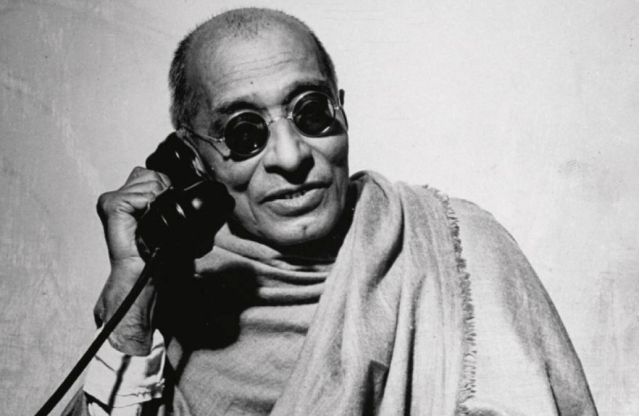
India should Re-Wrap Economic Reforms Rajaji on Communism and Indian Communists Chandrasekaran Balakrishnan August 12, 2020 Articles On August 15, India will celebrate 74th Independence Day amidst the COVID-19 pandemic. Many powerful ideas emerged during the freedom movements, which ended on August 15, 1947, and after. The first three decades (1885-1915) of the Indian National Congress were dominated by moderates or liberals who advanced freedom movements by pursuing constitutional methods largely without violence.  Since the 1920s, some segments of the freedom movements mischievously diverted some of the mainstream political leaders including Jawaharlal Nehru towards the ideas of socialism and communism by underestimating the liberal principles of India centric decentralized ideas advocated by V.S.Srinivasa Sastri, P.S.Sivasamy Aiyer, Gandhi, Rajaji, Patel, etc.    Thus, soon after independence, the ideas of liberal society which nurtured freedom, liberty, decentralization, and free enterprises, however, were subsided by the domination of socialists and communists’ centralization across the public spheres. It was so imbibed that, it took several decades to realize the grave danger of both communism and socialism not just in India but also in the rest of the world. Further, it took decades to accept the fact that only economic freedom with social and political stability would produce wealth to distribute among the community by themselves or through the State. Some people now think especially the youth that after decades of economic reforms and moving away from shackles of command and control regime, where is the question of socialism or communism in contemporary India? Alas, even after three decades of liberalization of the economy, the ideas of socialism and communism continue to thrive on different flames in most political parties, academia, media, publishing industry, N.G.Os and policy-making domain no matter which political party rules the country.  For example, the Union Ministry of Youth Affairs and Sports has a question in the application for National Youth Award (2017-2019) that whether persons or organizations applying for the awards had worked towards the “popularisation of nationally accepted values like national integration, democracy, socialism, etc”. When did we nationally accept the word “socialism” in India as true democracy? And why is the current Union Government indoctrinating the country’s youth and forcing them to popularize the toxic terms like “socialism”?  Indeed, it was so paradoxical to forcefully insert the word “socialism” into the Preamble of our Constitution during the BLOCK days of emergency by Indira Gandhi government through an amendment in 1976. Originally, the Constituent Assembly had rejected the moves to add the words like “socialism” and “secular” in the Constitution after a long debate. Even B.R.Ambedkar had strongly warned against the move to insert the words “socialism” and “secular” in the Indian Constitution which according to him should not force future generations to believe any particular ideology and also not conducive to Indian democracy. Keeping these in mind, Rajaji had perceptibly warned the people in India against the communists who strive always cleverly to brainwash the youth, college students, working-class community, and labourers including farmworkers towards the empty promises either to envy the landowners or wealth creators like private enterprises. Rajaji also wrote repeatedly that Indian communists were always played through gangs of underworld mafia for the distraction of democracy, national unity, and cultural values of people.  In 1955, the Cultural Books Limited, Madras (now Chennai) had published a slim book titled “The Indian Communists” by C.Rajagopalachari or Rajaji, as he was called famously. The book was printed by Swathanthra Press, Madras, and is a collection of speeches of Rajaji as Chief Minister of Madras State, delivered from 1952 to 1954 both in the Madras Legislative Assembly and on the public platforms. Rajaji was one of few Congress leaders who understood not only the communism around the world but also the real nature of Communists in India.  In the postmodern world, there is a very thin line between the idea of communism and socialism. Both ideas have never had consistency with values of freedom and liberty. Rajaji warned that “there is a permanent and inherent conflict in the Communist jargon…The communists believe in the method of producing a dictatorship if possible without violence, but if necessary through violence.” He also warned that “the intellectual instability of the educated classes is used and exploited and that is what gives Communist its strength.” Perhaps, in the history of independent India, Rajaji was the only sitting Chief Minister who publically declared that “to save my country from the traps and the dangers of the Communist Party. That is my policy from A to Z. I consider the Communist Party a great and dangerous trap, a trap not only because of the inherent qualities and policies of the Communist Party but also because of the condition of our country.” He further went on to say that “the illiterate man is often more educated than the very literate man. There is a large amount of ignorance in our country. I consider the Communist Party, therefore, is a great danger to India, greater danger than to any other country…. I place my cards on the table. I tell the Communist Party, “You have to take me as your enemy No.1. May I say you are my enemy No.1.” Rajaji was an astute reader and prolific writer both in English and Tamil languages for several decades. According to him, the communists play very dangerous tactics to confuse the people on public policies and brainwash poor people. He vividly noted that “What is the policy of the Communists Party? Every difficulty in the country, every discontent in the country, every complaint in the country must be taken up, interpreted in the language of opposition to the status quo and to the Government, expanded, exaggerated, repeated, added to and rolled on and made to grow like a snowball so that the Government may get a bad name….Every kind of contradictory satisfaction to every kind of discontented men. This is the technique of communism in India.” Largely, this has been the case of Indian communists and socialists in both pre and post-independence. Rajaji also understood the maligning method of human

Rajaji on Communism and Indian Communists Read More »

India, China: ancient civilisations, different paths

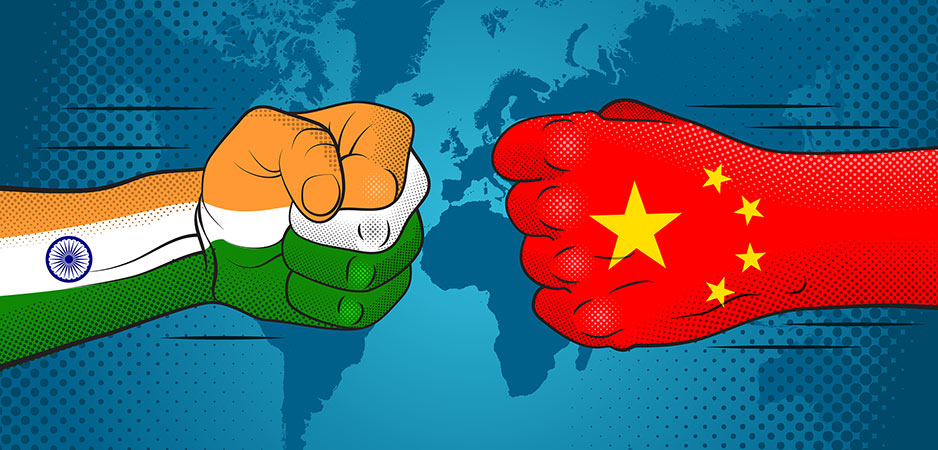
India, China: ancient civilisations, different paths India, China: ancient civilisations, different paths While the mid-June Galwan Valley clash in the Himalayas over an unsettled border dispute between India-China has received worldwide attention, even amid the China-inspired corona crisis, the fact is that Beijing has been persistently pushing its territorial claims across several countries, including India. Chandrasekaran Balakrishnan July 28, 2020 Articles   The world is in turmoil during the last six months, battling against the coronavirus pandemic, which many experts believe, was exported by authoritarian China. Unlike the 1918 Spanish Flu holocaust, when the term became a mill around Spanish necks, China has escaped the opprobrium of Corona being branded a Chinese Flu! It would certainly have gladdened Indian hearts, but, alas, not to be. In the modern world, nearly 200-plus nations on the planet are tackling disputed national boundaries to safeguard natural resources and to ensure the freedom, liberty, peace and prosperity of their citizens. Traditionally, most nations were carved out after disputes over natural resources, since gaining independence from their colonial masters. In some cases, nations were also born out of disputes over religious faith and communal antagonism; such nations, often, ended up with leaderships more interested in power and establishing dictatorships at the cost of peace and prosperity of their citizens. Only a few nations have a long history of civilisation, antiquity and harmony, with peace as the fundamental motive of carving out a national boundary. India is one such country, which continues to strive for world harmony and peace. While the mid-June Galwan Valley clash in the Himalayas over an unsettled border dispute between India-China has received worldwide attention, even amid the China-inspired corona crisis, the fact is that Beijing has been persistently pushing its territorial claims across several countries, including India. The trigger for the current Chinese aggression against India is the outcome of the Big Dragon’s burgeoning economic prowess and its domination of international trade and commerce over the last many decades. What has given China the big window of opportunity is its ability – or perception – that it can take on the United States, both economically and militarily. To be sure, this is not something the modern Chinese visionary, Deng Xiaoping, envisioned for his country when he opened its economy to the global market. It would be interesting to recall the unusual, if accurate, narratives of eminent writers and philosophers in the 20th century, which can be considered relevant to current Sino-Indian ties. One fundamental difference between India and China is vividly encapsulated in the immortal words quoted by William I Chamberlain (1862-1937) in his book, Education in India, (1899). “Chinese educate for practical life, the Indians for the ideal; those (Chinese) for earth, these (Indians) for heaven; those educate their sons for entering the world, these for going out of it; those educate for citizenship, these for priesthood; those for industrial activity, these for knowledge; those teach their sons the laws of the state, these teach them the essence of the Godhead; those lead their sons into the world, these lead them out of the world into themselves; those teach their children to earn and enjoy, these to beg and to renunciate.” How lyrical, representing two world views, but nonetheless, spectacular.Irrespective of agreement or the lack of it, it is difficult to better these words, which capture the difference between India and China in its ethos and antiquity. The economic, social, and political developments in these two countries must be seen through the words of German historian Heinrich Wuttke (1818-1876). During the last century, relations between India and China were never static; it was always dynamic, with China more than keen to play the Big Brother. Eminent Indian historian, Dr. Ramesh Chandar Majumdar’s (1884-1980) warning several decades ago, encapsulates it well. His vivid assessment of Chinese behaviour and thinking, which he penned down for the Diwali issue of Organiser in 1965, is quite telling: “There is, however, one aspect of Chinese culture that is little known outside the circle of professional historians. It is the aggressive imperialism that characterized the politics of China throughout the course of her history at least during the part which is well known to us. Thanks to the systematic recording of historical facts by Chinese themselves, an almost unique achievement in oriental countries … We are in a position to follow the imperial and aggressive policy of China from the third century B.C. to the present day, a period of more than twenty-two hundred years … It is the characteristic of China that if a region once acknowledged her nominal suzerainty even for a short period, she should regard it as a part of her empire forever and would automatically revive her claim over it even after a thousand years whenever there was a chance of enforcing it.” Prophetic, it can be said, from the benefit of hindsight. During the last half-century, this has been proved by China across the territories of no less than 17 nations! The eternal truth is that the West has ignored authoritarian China for far too long. In post-World War II, China has been non-aligned with the world order on crucial subjects like civil liberty, individual liberty, rule-based democracy, transparency in government functions, policies and integrity of data, among other subjects. Consider the prescient summation by none other China’s former strongman and the man who set out his country on the road to economic superstardom, Deng Xiaoping. In a speech at the United Nations on April 10, 1974, Deng said, “China is not a superpower, nor will she ever seek to be one. What is a superpower? A superpower is an imperialist country which everywhere subjects other countries to its aggression, interference, control, subversion, or plunder and strives for world hegemony. If capitalism is restored in a big socialist country, it will inevitably become a superpower …. If one day China should change her colour and turn into a superpower, if she too should play the tyrant in the world,

India, China: ancient civilisations, different paths Read More »

Higher-education-could-be-key-to-strong-india-australia-ties

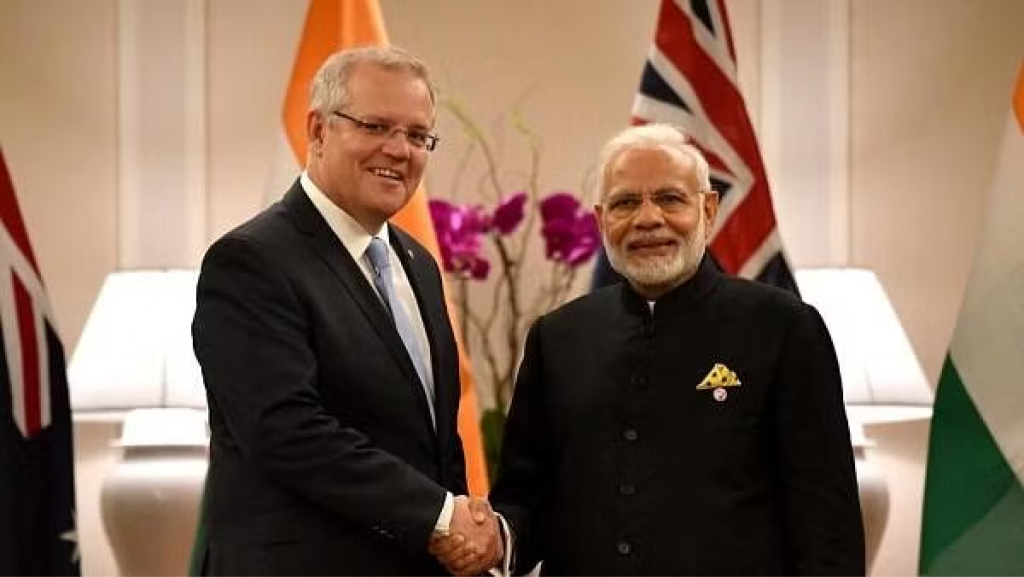
Higher education could be key to strong India-Australia ties Higher education could be key to strong India-Australia ties Saravanan M June 3, 2020 Articles If the primary aim of the first virtual bilateral summit between Prime Minister Narendra Modi and his Australian counterpart Scott Morrison, slated for June 4, is to strengthen the strategic partnership between the two countries, they need to look no further than the higher education sector, where they complement each other.Almost 10.9 lakh Indian students are pursuing higher education abroad and Australia is the third most popular higher-education destination for international students, hosting at least 3.81 lakh international students. Direction of diplomacy Before we delve into the opportunities for India and Australia to strengthen their partnership on the higher education front, let’s look at other key factors playing out in the international scenario.The Chinese Ambassador to Australia opined that its people may not consume Australian wine or beef. He also added: “Maybe the parents of the students would also think whether this place, which they find is not so friendly, even hostile, is the best place to send their children to.” If China sticks to its guns and prevents its students from studying in Australia, then it would certainly imperil the latter’s international higher education exports.At the other end of the spectrum, India might be at the receiving end of visa restrictions from the US, the top destination for Indian students, though the relationship between the two countries is buoyant. US President Donald Trump has said that to protect jobs for American citizens, he “will be signing an Executive Order to temporarily suspend immigration into the United States.”The proposed move to restrict immigration, including for education, would require a rejig within the Indian higher-education sector, as it would need to accommodate more students who would otherwise have crossed borders in pursuit of higher education. Economics of international higher education Australia would be keen on expanding its export base and reduce its dependence on China, which accounts for over 26 percent of its total trade in 2018-19, as per the Australian Trade and Investment Commission. India is its sixth-largest trading partner, along with New Zealand and the UK, contributing 3.4 percent of its total trade.According to the Australian Department of Education, international education, of which higher education is the largest component, is its fourth-largest export earning $37.6 bn in 2018-19, coming only behind iron ore, coal, and natural gas exports. Unlike overall trade, international education export is a duel between China and India, the top two sources for Australia, with the former contributing 32 percent and the latter offering 14.6 percent of Australia’s total education export income.As per the latest statistics, Australia is hosting 1.65 lakh Chinese and 1.05 lakh Indian students. Though the gap between India and China is big, India is contributing increasingly more to Australia’s education export income with an average growth (CAGR) of 27.4 percent,China’s 19.67 percent, for five years since 2013-14. Importantly, India’s year-on-year contribution zoomed 44.3 percent in 2018-19 compared to China’s 9 percent. Therefore, as things stand, the stage is well set for India to capitalise on its contribution to Australia’s higher education sector. Australia would be favourable towards accommodating more Indian students, as that would help eliminate or mitigate the loss of export income if Chinese students don’t arrive in the same numbers as before. Even if there is no abatement in the enrolment of Chinese students, it is prudent for Australia to diversify its higher education consumer basket than to rely predominantly on China. But, why would India send its students overseas, including Australia? The correlation between education, more specifically higher education, and economic growth is strong. Internationalisation of higher education provides benefits to all the stakeholders, including the host and consuming countries. As internationalising higher education at home requires time, developing countries make use of cross-border higher education, by which its human resources get educated abroad, for a price.Post their higher education, these skilled human resources help their nation develop when they repatriate as researchers, teachers, entrepreneurs, innovators, etc. Those students who stay back after higher education offer the benefits of diaspora. Further, Indian students are in any case travelling abroad for higher education and are spending an estimated $6-7 bn or Rs 45,000 crore annually, as per a 2015 study. Win-win solution It is likely that in a couple of academic seasons, Australia may need more international students to keep its export earnings intact. With depletion in the supply from the US, India may have an oversupply of students who would be keen on travelling abroad for higher education, forcing India to look for a better alternative, which could very well be the UK or Australia. As the UK is relatively more affected by the pandemic, Australia seems to be in the pole position. It would be beneficial for India to send more students to Australia and as a trade-off strategically engage Australia to help internationalise its domestic higher education sector, on favourable terms.Morrison has termed India as a natural partner and has recently assured that the “Indian community in Australia, including Indian students, would continue to be valued as a vibrant part of the Australian society,” assuaging any misgivings due to the Indian student crisis of 2009. Recently, after speaking with Modi telephonically, he tweeted: “We shared our experiences on managing the crisis and will continue to share knowledge on treatment for the virus and as we work towards a vaccine.” With universities spearheading research and development of vaccines, it’s hoped that both leaders will hit it off well and use higher education for deepening strategic ties. (M Saravanan is a higher education consultant based in New Delhi. Views are personal) Disclaimer: The views expressed above are the author’s own. They do not necessarily reflect the views of DH. Facebook Instagram X-twitter

Higher-education-could-be-key-to-strong-india-australia-ties Read More »