Indian Liberals

GA Natesan: Liberal Scholar and Publisher

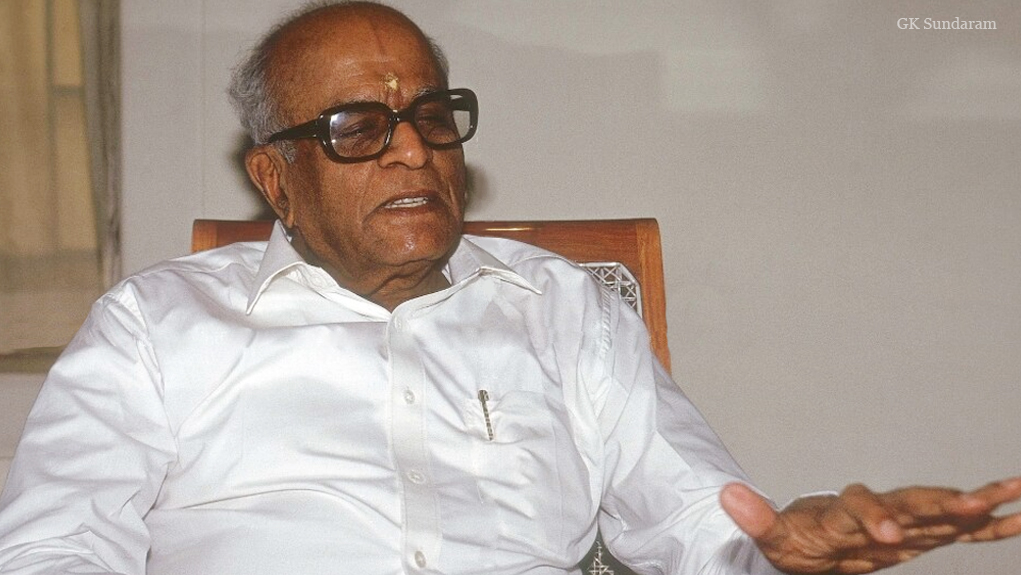
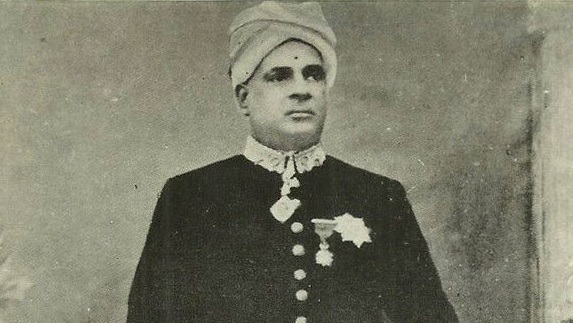
GA Natesan: Liberal Scholar and Publisher GA Natesan: Liberal Scholar and Publisher GA Natesan was the one who introduced Gandhi to Tamil Nadu and South India when Gandhi first visited Madras (now Chennai) in 1915 after returning from South Africa. It must be noted that C Rajagopalachari or Rajaji met Gandhi for the first time at GA Natesan’s home. For more than half of the century, Natesan was very close to Gandhi personally even before Gandhi returned to India. Still, he seldom agreed with his ideas and thoughts on politics and freedom struggles for varied reasons. Chandrasekaran Balakrishnan April 27, 2020 Indian Liberals For some pundits, it may not be so strange to take deep dive into history in distress to learn and understand the hue and cry of some of the current issues like the financial sector crisis in India or the Coronavirus pandemic. History is witness to great thinkers and scholars’ magnificent works which invariably help us to understand the history towards building better humanity in years to come but not without uncertainty. Alas, the epidemics of distorted history and some of the forgotten history of Indian economic thoughts have been the phenomenon for several decades even after the country’s independence. One of the forgotten classical liberal scholars and noted publisher in British India was Ganapathi Agraharam Annadhurai Aiyer Natesan in Madras Presidency.  He was called GA Natesan by many and had played an immense role in the first half of the twentieth century in a different capacity. He was noted classical liberal scholar, writer, journalist, publisher, politician, freedom-fighter, and educationist. He was publisher of nationalist books, pamphlets, monographs, journals, biographies, speeches, and writings of eminent leaders both in English and Tamil languages at much lower prices for more extensive circulation intended towards the national awakening through informed debate and discussion.  GA Natesan was the one who introduced Gandhi to Tamil Nadu and South India when Gandhi first visited Madras (now Chennai) in 1915 after returning from South Africa. GA Natesan was in contact with Gandhi since 1896 while he was studying in College in Madras. Gandhi stayed at his house from 17 April 1915 to 8 May 1915. It must be noted that C Rajagopalachari or Rajaji met Gandhi for the first time at GA Natesan’s home. For more than half of the century, Natesan was very close to Gandhi personally even before Gandhi returned to India. Still, he seldom agreed with his ideas and thoughts on politics and freedom struggles for varied reasons.  After Gandhi’s revolutionary passive resistance movements embarked against British Raj, GA Natesan left the Congress Party. He became the First General Secretary of National Liberal Federation of India, a Liberal Party founded in 1918 by VS Srinivasa Sastri and other like-minded liberals who believed and fought freedom movements through constitutional methods as envisaged by MG Ranade and Gokhale. Natesan was Secretary of Madras Branch of Liberal Party from 1922 to 1947 and had played a significant role in promoting liberal ideas among the educated class.  GA Natesan was born on 25 August 1874 in Ganapathi Agraharam village in Thanjavur district in Madras Presidency, now part of Tamil Nadu. He was schooled at Kumbakonam and went for his higher education at St. Joseph’s College in Tiruchirappalli. He completed his BA in 1897 from Presidency College, Madras. He lost his father when he was two years old and was brought up by his elder brother Vaidyaraman. The latter had a profound influence on him and sent him for higher studies to Glyn Barlow, an Irishman and well-known editor of Madras Times for an apprentice in journalism.  After a short period, GA Natesan joined his elder brother Vaidyaraman in press and publishing activities and founded a company called GA Natesan and Co. in 1897 as proprietor. Soon, along with his brother, he started a monthly journal called the “The Indian Politics”, edited by him. The journal advocated the use of constitutional reforms to attain freedom. In 1900, GA Natesan started another monthly journal called “The Indian Review” which was published and edited by him for about five decades till his death in 1949.  In a short period, the journal had become a voice of intellectuals on all significant public matters across India and England for its informative and instructive contents. The journal had literary reviews, illustrations, and sections on economy and agriculture among others. The journal had published materials on all major issue during the Indian Freedom struggle. It had a detailed analysis and included diverse opinions and commentary. Some of the early contributors to this journal were PS Sivasamy Aiyer, RC Dutt, Gokhale, CP Ramaswamy Aiyer, VS Srinivasa Sastri, V Krishnaswamy Aiyer, and Gandhi.  The Indian Review had a highly praised editorial note by GA Natesan. The note provided a comprehensive review of all aspects of national progress, reflecting Indian thinking and ups and downs of the freedom movement. The journal was published continuously even after Natesan’s death till 1962 by his family and then through different hands, finally ending publication in 1982. GA Natesan was the first person to publish a book on Gandhi in 1909 titled MK Gandhi: A Sketch of His Life and Work by HSL Polak. The publication house of GA Natesan and Co. published any content that could awaken the educated class in India to achieve freedom from the British through constitutional methods. GA Natesan had published most erudite and thought-provoking articles and books for several decades. Apart from his publishing business, GA Natesan had a versatile personality, and he actively participated in the freedom movement and discussions with elected officials of local and national governments. GA Natesan was nominated as Non-Official Member to the Council of States in 1923. He also served another term up to 1931. During his tenure as a Member of the Council of State, he served as Member of the Indian Delegation to the Empire Parliamentary Association in Canada in 1928. He was also a member of the Indian Iron and Steel Tariff Board in 1933-34.  GA Natesan served as Councillor in the Corporation of Madras

GA Natesan: Liberal Scholar and Publisher Read More »

PS Sivaswamy Aiyer: Forgotten Indian Liberal – Part II

PS Sivaswamy Aiyer: Forgotten Indian Liberal – Part II PS Sivaswamy Aiyer: Forgotten Indian Liberal – Part II From the very beginning of Gandhi’s Non-cooperation Movement, PS Sivaswamy Aiyer had been opposed to it but never attacked him personally. Aiyer was very much concerned about how passive resistance movements perused against the British government and Aiyer feared that these mentalities of passive resistances might not spare any governments in future. Chandrasekaran Balakrishnan February 25, 2020 Indian Liberals Editor’s Note: This is the second article in a two-part series paying homage to PS Sivaswamy Aiyer, the forgotten liberal intellectual of pre-independent India. Read the first part here. During the nineteenth century India, freedom movements produced many thought leaders and thinkers who fought for the country’s independence on varied battlegrounds. The common thread that cuts through these movements was British imperialism vs freedom, liberty and nationhood. However, from the beginning of the twentieth century, there were sharp differences of opinion among apex leaders of Indian National Congress on the methods to be pursued for political movements and principles of constitutional reforms to further the goal of complete freedom. The leaders were divided among the Montagu–Chelmsford Reforms announced in 1918-1919 by the British government to introduce self-governing institutions gradually in India.  The Liberals were known as Moderates who supported the Montagu-Chelmsford reforms opposed by extremists, direct actions and revolutionary. The liberalism was defined as “constitutionalism and gradualism” led by Mahadev Govinda Ranade and Gopala Krishna Gokhale. The “extremism, direct action and revolution” was led by Bal Gangadhar Tilak, Bipin Chandra Pal and Lala Lajpat Rai. Many are unaware that the grand champion of Independent India’s liberalism C Rajagopalachari or Rajaji was revolutionary during the freedom movements! Among others, VS Srinivasa Sastri and PS Sivaswamy Aiyer were real faces of Indian liberalism in pre-independence India.   PS Sivaswamy Aiyer on Indian Liberalism PS Sivaswamy Aiyer was a firm believer of liberalism and was influenced by the works of Ranade and Gokhale besides JS Mill, Herbert Spencer and Alexander Bain. According to K Chandrasekharan, “he was never drawn to the allurement of the ultimate ideal by ignoring the practicality of the immediate.” Aiyer was among top leaders of Madras Liberal League and spearheaded the liberalism of the early part of the twentieth century towards advancing the constitutional methods to attain freedom. In 1965, the noted historian KA Nilakanta Sastri (1892-1975) edited a volume on “A Great Liberal: Speeches and Writings of Sir PS Sivaswamy Aiyer” by classifying the speeches and writings of Aiyer into broad themes such as political, economic, military, social, educational, legal fields, etc. In 1919, in his Convocation address at Banaras Hindu University Aiyer remarked that “the spirit of rational investigation has always occupied a place in the history of Indian thought”. One could see the application of this profound thinking in all of his writings and speeches. Sivasamy Aiyer was president of National Liberal Federation of India (NLFI) or Liberal Party of India in 1919 and 1926. In his address at Calcutta in 1919, he openly criticised the Passive Resistance Movement called by Gandhi. Aiyer called Gandhi’s ‘constructive programme’ an impracticable and believed that an “unqualified doctrine of non-violence has never been carried out in practice.” From the very beginning of Gandhi’s Non-cooperation Movement, Aiyer had been opposed to it but never attacked him personally. Aiyer was very much concerned about how passive resistance movements perused against the British government and Aiyer feared that these mentalities of passive resistances might not spare any governments in future. There were some outbreaks of violence after Gandhi’s passive resistance movements which led Sivasamy Aiyer to harp on his apprehensions quite strongly. Aiyer remarked delivering Presidential address: “So long as he (Gandhiji) is the dictator of the non-cooperators and so long as he continues to be, if I may respectfully say so, intoxicated with the incense of adulation paid by his worshippers, and so long as he is anxious to maintain his reputation as a prophet by trying to hasten the event of Swaraj at lightning speed, so long as he maintains the attitude, the unyielding and uncompromising attitude which he does, I am afraid it will not be possible to come to any satisfactory results.” Further, Sivasamy Aiyer’s thoughts reminiscence to the current protests of students’ and few instigated groups which are breaking law and order in the name of the right to protests. Avowedly condemning the Gandhi’s Satyagraha movement Aiyer remarked “But though few believe in the specific articles of his faith, the Gandhi spirit or the mentality which he created has permeated large sections of the masses. The young have lost their respect for their parents and elders; students have lost their respect for their teachers, resent discipline and claim the right to strike work, respect for the laws of the land has sensibly diminished; and the people have become familiarised with the idea that it is right and even laudable to break laws which do not commend themselves to sectional public opinion.” The law-breaking mentality more than the civilised culture denouncement is more dangerous. Aiyer was someone who would educate the youth to fight with ethics and principles rather than encourage for street protests. In 1927, Sivasamy Aiyer delivered eight lectures in the University of Madras in the memory of his late childhood friend V Krishnaswami Aiyer who died prematurely. His lectures titled “Indian Constitutional Problems” were published in 1928. Aiyer emphasises on the systems of responsible government on attaining the independence on all significant aspects of government systems both at centre and state as well as at local body levels. Through these lectures, he had unequivocally dealt with a range of subjects like the role and structure of legislature, executives at the centre and state level, judicial systems, the party systems, the defence, the minorities, etc. As far as the backward classes were concerned, Aiyer was acutely aware of the fact that “the treatment of the backward classes has been in the past a slur upon the social system of India”. In 1913, he remarked, “that any form of Constitution in which the lowest classes are not represented must result in injustice and oppression.” He strongly advocated the decentralised government systems

PS Sivaswamy Aiyer: Forgotten Indian Liberal – Part II Read More »

PS Sivaswamy Aiyer: Forgotten Indian Liberal – Part I

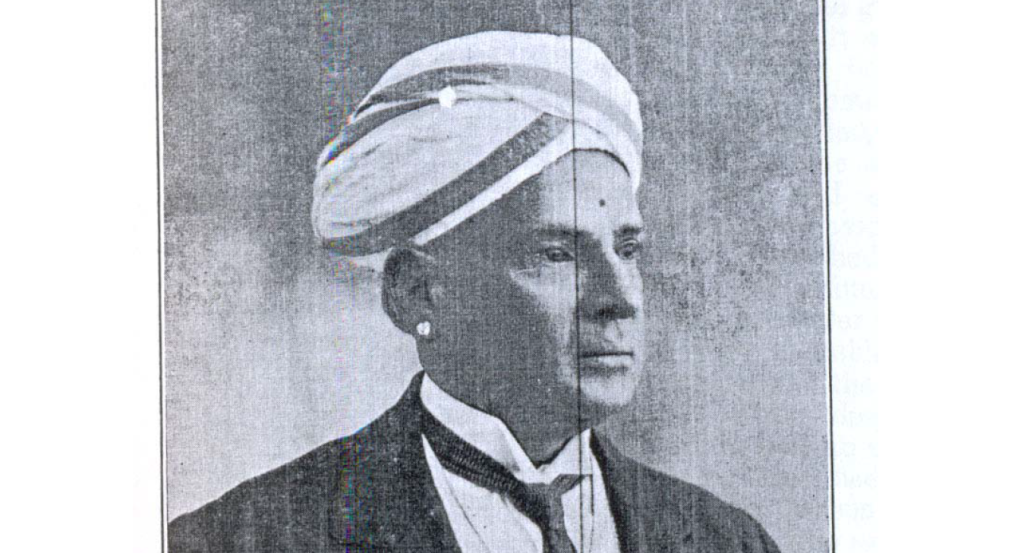
PS Sivaswamy Aiyer: Forgotten Indian Liberal – Part I PS Sivaswamy Aiyer: Forgotten Indian Liberal – Part I PS Sivaswami Aiyer’s life and works are relevant to the contemporary public discourse but completely forgotten, even in his native state. Sivaswamy Aiyer was a prominent legal luminary, administrator, educationist, scholar, liberal thinker and statesman. He was liberal constitutionalist with a firm belief in constitutional rights, individual liberty and freedom. Chandrasekaran Balakrishnan February 17, 2020 Indian Liberals Editor’s Note: This is the first article in a two-part series paying homage to PS Sivaswamy Aiyer, the forgotten liberal intellectual of pre-independent India. Read the second part here. In a fierce debate of contemporary public policies, the better intended few thinkers try to reconnect the relevance of the history of Indian economic thoughts. Alas, often they are underestimated and ignored, the larger meaning of engaging with history to understand better both in logic and sound reasoning are ignored decisively. Recently, Sanjeev Sanyal, who is a Principal Economic Adviser in the Union Ministry of Finance, remarked while delivering the 14th Netaji Subhash Memorial Lecture that – “India needs to begin to revisit its own history. And, what better place to start than by starting with the story of India’s freedom struggle.” However, the retired bureaucrat Anil Swarup who ignored the context and deceptively criticised Sanyal’s argument by stating that – “The guy should focus on job at hand, reviving the economy and stop talking about what needs to be done to Indian history. How long will we hang on to the past? We should certainly learn from history but not get stuck in the past.” Though, Sanyal’s lecture focused on the forgotten revolutionaries of freedom struggles during the British rule and not equally forgotten classical liberals who courageously worked with British Governments and brought out many constitutional reforms without losing the voices for freedom struggles. This is how Indian history has been treated in the last half-century among the well-read and educated class, even after the decades of distorted narratives produced by historians. It is even sobering in south India – Tamil Nadu, the alleged Dravidian movements of last century against the dominance of the upper castes in social and political spheres which irreparably led to undermining the life and works of liberal thinkers who firmly stood for the welfare of all sections of the society through constitutional provisions of schemes. There were several liberal luminaries from Madras (now Chennai) whose works were ignored during the alleged movements of Justice Party and Dravidian polity which paid only lip service to masses in the name of upper castes through its dogmatic tactics. Indeed, these political movements did not produce any scientific, scholarly and civilised literature on the ideas and thoughts of both Tamil literature and Sanskrit. One such liberal thinker was PS Sivaswamy Aiyer whose life and works are relevant to the contemporary public discourse but completely forgotten even in his native state! Sivawsamy Aiyer was a prominent legal luminary, administrator, educationist, scholar, liberal thinker and statesman. He was liberal constitutionalist with a firm belief in constitutional rights, individual liberty and freedom. Indeed, he single-handedly fought for many constitutional reforms through his long association with the British government. His contribution in fields like education, defence and Indianisation of Army was enormous. He was representative of the Indian government to the third session of League of Nations which later became the United Nations. Life and Education of Sivaswamy Aiyer Pazhamaneri Sundaram Sivaswami Aiyer was born on the 7th of February, 1864 in Pazhamaneri village on the south bank of Cauvery River near Thanjavur in Madras Presidency (now Tamil Nadu). His father was Sanskrit Scholar, School Teacher, and Court Pleader. He had three younger brothers and two sisters. He attended SPG Fort Branch High School at Manambuchavadi for schooling. He completed his matriculation in 1878 and secured first class in FA Examination at Government Arts College, Kumbakonam. After a year there, he joined the Presidency College, Madras (now Chennai) and completed his BA in 1882 with major history, philosophy and psychology. In 1883, he joined Madras Law College which was also operated in the same campus of Presidency College, Madras. In 1885, he started the law practice by joining with advocate R Balaji Rao in Madras. Besides law practice, he also worked as an Assistant Professor at Madras Law College to support his family as the eldest son after his father’s death in 1893 and served till 1899.  Sivaswamy Aiyer had a keen interest in politics, economics, sociology, library science besides Sanskrit and English literature. He was a joint editor of Madras Law Journal from 1883 to 1907. He founded the Madras High Court Lawyers Association in 1889. He fervently advocated educating the youth towards constitutional methods to attain freedom from the British. The liberal thinker and better known as Silver Tongue of India VS Srinivasa Sastri (1869-1946) was a student of Sivaswamy Aiyer at Madras Law College. Aiyer wrote many articles in the Servants of India, a weekly magazine founded and edited by Srinivasa Sastri at Servant of India Society, Pune. In 1906, Sivaswamy Aiyer founded a school near to his home town at Thirukkattupalli which is nearby Thanjavur for promotion of school education of children. It is now named as Sir PS Sivaswamy Aiyer Higher Secondary School, but he never allowed for using his name till his death. This school was the co-educational school which was first of its kind in the Madras Presidency at that time. In 1930, he became President of National Girls High School at Mylapore, Madras and adopted the school to promote girls’ education. It now functions with his wife’s name as Lady Sivaswami Aiyer Girl’s Higher Secondary School, Mylapore, Chennai. He made generous contributions to these two schools besides several other institutions and organisations across the country including Vivekananda College, Chennai and Madras Sanskrit College. After his wife’s death in 1939, he had sold the house in which he was living for a long time and donated the entire amount to the above schools and stayed in a rented house. He was President

PS Sivaswamy Aiyer: Forgotten Indian Liberal – Part I Read More »

Centenary of Liberal Thinker Nani Palkhivala

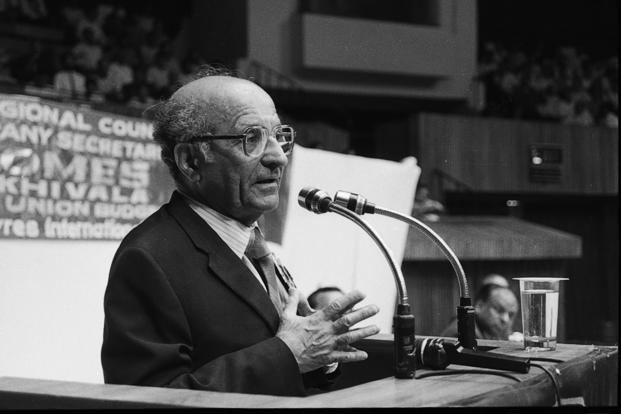
Centenary of Liberal Thinker Nani Palkhivala Centenary of Liberal Thinker Nani Palkhivala Nani Palkhivala was a firm believer in individual liberties, free enterprise, responsible government, economic freedom, constitutional morality, and private property rights. Chandrasekaran Balakrishnan January 20, 2020 Indian Liberals In the sensational waves of contemporary debates on the economy, constitution, and facets of liberal democracy, the common threads invariably cut through these fields are rarely packed with thoughts of eminent liberal thinkers like Nani Palkhivala who was one of the greatest sons of twentieth-century India. He was duly credited with many hats to his long and eventful public life with lasting immersions on the people and intellectuals of the country. His life and works have become one such rare embodiment which needs to be reminded for future generations. Alas, the regional media in India does not bother about the contributions of great thinkers like Nani.  Nani Palkhivala’s contributions to the issues of the Indian economy, constitutionalism, and liberal democracy were immensely obliging to the advancement of the Indian subcontinent in the last seventy years. In the second half of the last century, his legacy was unparalleled to none in the above fields. Moreover, his adherence to the ethical values and liberal principles were more than just guiding forces behind his most illustrated public life. He was deeply rooted and a believer in dharma which encompasses as vast as humanity. Nani Palkhivala was a firm believer in individual liberties, free enterprise, responsible government, economic freedom, constitutional morality, and private property rights. This year marks the 100th Birth Anniversary of Nani Ardeshir Palkhivala who was born on 16th January 1920 in Bombay (now Mumbai). He was called Nanabhoy by his parents and Nani Palkhivala or Nani by most others. His family was a humble working class. He completed his school and higher education in Bombay: School education was at Masters Tutorial High School, Masters Degree in English Literature was at St Xavier College in 1942 and a Law Degree in Government Law College was in 1943. He excelled in academic education despite suffering from a dreadful stammer.  Nani Palkhivala became a household name in India for many reasons. He was a prolific writer and orator on many subjects’ especially economic policies, the constitution of India, civil liberties, and fundamental rights of citizens. He also became a Statesman and Ambassador of the USA during the period 1977-79. Many legal luminaries termed him as a rare personality, the living legend, a revered authority of Law and Practice for several decades. He has written numerous books on Tax systems which were sought after even globally. Liberal scholar and Statesman C Rajagopalachari or Rajaji hailed highly that Nani Palkhivala was a country’s gifted liberal legal pundit who saved the Indian democracy from the government’s tyranny of absolute power to amend the constitution’s basic structure.  Nani Palkhivala’s areas of interest in professional public life varied from being a legal expert, academician, and practitioner of constitutional law, and economic policy, literature, poetry to a Statesman who fought for India’s historical cases, individual liberty, private property right, and civil liberties for the poorest of poor peoples’ interests. He is known for winning many legal battles in the interest of citizens’ fundamental rights and economic freedom for free enterprises. He was witness to the best and worst of the country’s odd events that happened soon after the independence and a Republic with the adoption of the Constitution of India.   What made him become a more vocal critic of the government policies and of the ideas behind those policies was the dogmatic thought process which prevailed at that time and was neither rooted in Indian traditions nor convincing with facts and truths of sound logic and reasoning. Hence, much before the political discourse on the economic reforms of the 1990s, Nani Palkhivala had strongly advocated since 1958 that the Indian economy which was wedded to the idea of socialist, command and control model ought to fail sooner or later.  Nani Palkhivala launched a forum to demystify the policies of the government to educate the citizens. He was termed as peoples’ Finance Minister without Portfolio in the Cabinet of India’s Republic! In 1958, he had initiated a public speech in a small hotel room in Bombay to demystify the jargon of Budget of Union Government to citizens in plain language with alternative sound policy solutions to the issues and challenges faced by the country. In the annual post-budget speech organised by Forum for Free Enterprises, Bombay, the audience rose from the tiny size in a hotel room to more than a lakh people in 1994 in open places in Bombay, Delhi, and Calcutta. His eloquent extempore post-budget speeches were much watch-out for the senses and nonsense of the budget announcements filled with humility and always delivered without a single piece of paper for a couple of hours. Among his writings and speeches, two books are widely known for its relevance for decades. The “We, the People” book was published in 1984, with some of his most important speeches and writings over three decades including some of his post-Union Budget analysis. Another book he published in 1994 was “We, the Nation”, which is a companion volume to “We, the People” also has some of his best speeches and writings on different issues and challenges faced by the Indian economy and society at large.    The following are some of his other works which are must-read for all those who wanted to understand the mainstream debate on the Republic of India and its economy and people in the decades prior to major economic reforms of 1990s: The Global Economy, a North-South Dialogue, 1984: Where the North Meets the South, Imperatives for Development in the Global Economy (1985), The People, the Only Keepers of Freedom (1979), The Constitution and the Common Man (1971), India’s Priceless Heritage (1980), Our Constitution Defaced and Defiled (1974), The Highest Taxed Nation (1965), Essential Unity of All Religions (1990) and his magnum opus, The Law and Practice of Income Tax (1950).  In the interest of promoting free-market

Centenary of Liberal Thinker Nani Palkhivala Read More »

VS Srinivasa Sastri – Forgotten Liberal Intellectual – Part 1

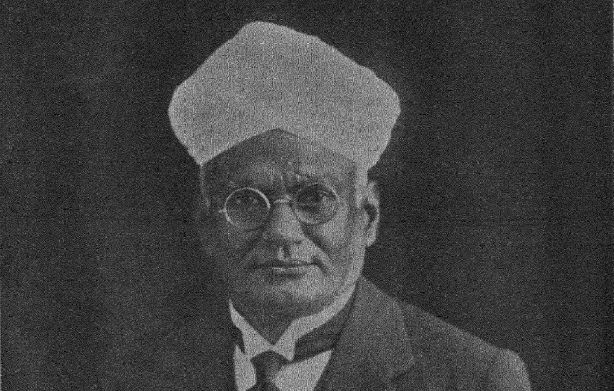
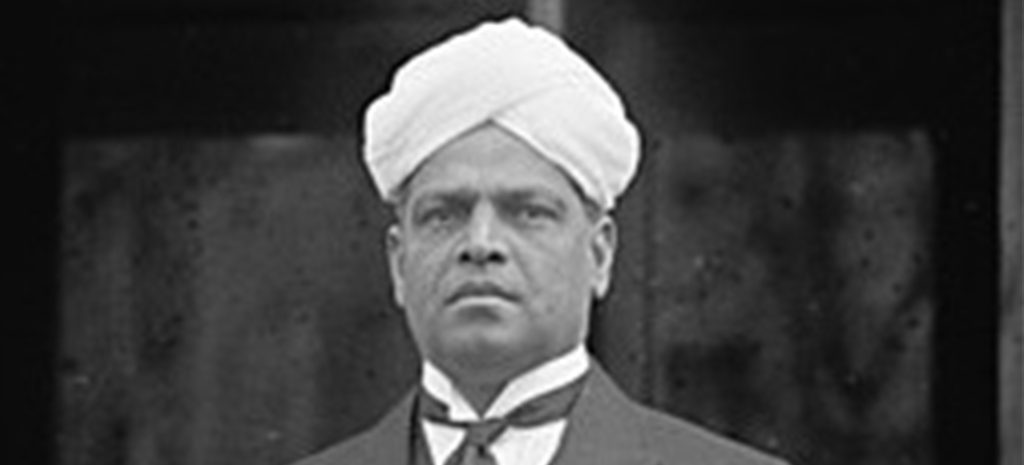
VS Srinivasa Sastri – Forgotten Liberal Intellectual – Part 1 VS Srinivasa Sastri – Forgotten Liberal Intellectual – Part 1 VS Srinivasa Sastri was an astute reader and writer who contributed immensely to the reform policies during the freedom movements of British India. He was an acclaimed intellectual who gave long extempore scholarly speeches, lectures and addresses across the British Empire. Chandrasekaran Balakrishnan January 7, 2020 Indian Liberals Editor’s Note: This is the first article in a two-part series paying homage to VS Srinivasa Sastri, the forgotten liberal intellectual of pre-independent India. Read the second part here. In India, the history of liberalism and constitutionalism of the first half of the twentieth century is barely studied. There is hardly any notable liberal economic historian in India either teaching or carrying out academic research on the history of Indian economic thoughts which has been quite dramatically distorted by Marxism and socialism throughout the twentieth century. Alas, the subject of the history of economic thoughts has been long discarded in the Indian mainstream academia as irrelevant. Many great liberal scholars who have contributed significantly to the freedom movements through constitutionalism for advancing the free and liberal society were ignored. It is absurd to observe, that the Indian economists, social and political scientists who persistently ignored the history of economic thoughts subject at a time when the western and other developed economies around the world have been continuously making efforts to revive their history of economic thoughts and building nexus in the contemporary public policy debates. The much talked about two schools of thought namely the right-wing vis-à-vis left-wing narratives of the contemporary debate were first begun exactly hundred years ago in 1919 after the furious differences of opinions among the top leaders of the Indian National Congress on the Montagu reform policies. These two schools of thought as it was evolved called liberalism, constitutionalists and moderates as right-wing and extremism, direct action and revolutionary as left-wing. The former followed classic liberalism of indigenous and some western conservative ideas and the later stood for Fabian socialism and communism. There is a very thin line between socialism and communism. Thus, after independence, the only school of thought which predominately dominated in the Indian academia, political rule and public policy discourse was communism and socialism by ignoring the views of liberal scholars.  Thus, the great liberals like VS Srinivasa Sastri who has contributed significantly to the freedom movements in British India during the first half of the twentieth century were completely ignored and forgotten in the second half of the twentieth century for no good reasons. This year marks 150th birth anniversary of VS Srinivasa Sastri who was contemporary of MG Ranade, GK Gokhale and Mahatma Gandhi among other makers of Modern India. Probably, Sastri was the only person who has traveled as a reputed Statesman and Ambassador for peacekeeping missions across the British Empires to embrace the pragmatic constitutional method for freedom movements and civil liberties. Professor Mohana Ramanan in his book titled “VS Srinivasa Sastri: A Study” (2007) noted that Sastri “made a mark in public life as a liberal, albeit with a conservative cast of mind….almost forgotten figure…Sastri does not come to mind in this context immediately and that is because he did his work largely in councils, legislatures, delegations, and conferences. This is unglamorous works but there has been grudging acceptance of Sastri’s preeminence in our national struggle.” There is no record why his constitutional strives to attain freedom was ignored in the last seven decades. P Kodanda Rao who worked with Sastri for a decade between 1922 to 1932 wrote: “Sastri was an eminent scholar as well as a statesman, he was one of the elects among the great builders of India and the pillars of the Commonwealth.” Rao has written an excellent elaborated political biography of Sastri in 1963 with enormous efforts to study the intellectual contributions spread over 76 years of tireless life of Sastri. Rao has done great justice by documenting the true patriotism of Sastri along with first-rank formidable thinkers of modern India with whom he was associated throughout his life. Though, C Rajagopalachari wrote a Foreword for the book mentioning as Sastri was his friend “but took different channels of political work”. Ray T. Smith who reviewed Rao’s book in the Journal of Asian Studies in 1964 had observed that Rao made “the first serious attempt to accord Sastri a proper place in the history of the Indian national movement.” Sastri was British India’s Rajaji and both were devoted students of the Ramayana with the scholarly critique of it for the pursuit of thoughts and deliberations. VS Srinivasa Sastri was an astute reader and writer who contributed immensely to the reform policies during the freedom movements of British India. He was an acclaimed intellectual who gave long extempore scholarly speeches, lectures and addresses across the British Empire. He was also a versatile and mesmerizing orator and his English skill was marvelously treated as Silver Tongue in British India. Sastri was rated as one of the five best orators in English in the twentieth century among other stalwarts. In 1915, Sastri succeeded Gopala Krishna Gokhale as a liberal intellectual in the Servants of India Society (SIS) which was founded by Gokhale after his demise. SIS played a vital role in freedom movements and constitutionalism method of attaining self-governance in India. Indeed, it was Mahatma Gandhi who aspired to become President of SIS succeeding Gokhale but Gandhi did not agree with all of the core principles of SIS with which Gokhale envisioned to fight for freedom movements in an orderly manner. Hence, Sastri was the natural choice to become President of SIS and remained for 12 years from 1915-1927. Despite their strong opposition in thoughts and political activism, Sastri and Gandhi were close friends throughout their life. VS Srinivasa Sastri’s Life and Education Valangaiman Sankaranarayana Srinivasa Sastri was born on 22nd September 1869 in a village called Valangaiman near Kumbakonam town, Tamil Nadu (then part of Madras Presidency). He was born as a fourth of seven children to his parents, three elder sisters and three younger brothers. His parents

VS Srinivasa Sastri – Forgotten Liberal Intellectual – Part 1 Read More »

VS Srinivasa Sastri – Forgotten Liberal Intellectual – Part 2

VS Srinivasa Sastri – Forgotten Liberal Intellectual – Part 2 VS Srinivasa Sastri – Forgotten Liberal Intellectual – Part 2 When VS Srinivasa Sastri joined the Servants of Indian Society he renounced all ambitions of acquiring wealth and power and exercising patronage. By the sheer force of his personality, he rose to great eminence and influence in the affairs of India and the Commonwealth. Chandrasekaran Balakrishnan January 7, 2020 Indian Liberals Editor’s Note: This is the second article in a two-part series paying homage to VS Srinivasa Sastri, the forgotten liberal intellectual of pre-independent India. Read the first part here. Sastri and Indian Liberalism Srinivasa Sastri was born ten days before Mahatma Gandhi. But unlike Gandhi, Sastri was born to a very poor family and rose through his hard works to serve the country like his political guru Gopala Krishna Gokhale. In the early part of the twentieth century, both Gokhale and Sastri were the two greatest sons of India who strived for freedom with liberalism. Both were equally respected in British Governments for their foresighted ideas and reform policies. But at home, both faced furious criticisms on their proposed policies but none could critique their commitments to the patriotism of mother India. Sastri assisted Gokhale on his major works in reform policies including Gokhale’s Universal Elementary Education Bill in Indian Legislative Council in 1912. According to P Kodanda Rao who worked with Sastri first as a private secretary for a decade and then a member of Servants of India Society note that “Parallelism between Gokhale and Sastri is indeed very striking. Both were born poor; both were teachers turned statesmen; both played a conspicuous part in the evolution of the Indian Constitution and the legislatures of India, provincial and central; both made several political visits to England; both took a hand in the South African Indian question; both suffered from bitter and unfair attacks from a section of Indians and were sometimes discounted by the British Government; both stood for constitutional methods of political agitation….; both admired the Mahatma personally and differed from him politically.” However, historians have ignored Sastri’s works through the mirror of ideologies. For example, in the book on Gandhi: The Years that Changed the World-1914-1948, Ramachandra Guha notes that “Sastri was Brahminical in both the good and bad senses of the term: deeply learned in the scriptures, but entirely dependent on the labour of others for his sustenance. As a constitutionalist, he abhorred Gandhi’s use- in South Africa-of strikes, fasts and boycotts to make his case. (Page VIII)”. In contrast, Sastri strived for education for all children including those belonging to weaker sections of the society. He has provided financial supports to several poor children and some were adopted by him to nourish in his house. Thus, it is shocking to note that Mr Guha concludes with a single incidence and he never bothered to read the intellectual contributions of the constitutional method of freedom struggles pursued by Sastri. And it was surprising that Zareer Masani who reviewed Guha’s book in the Open Magazine said, “Indian democracy owes more to liberal politicians like Tej Bahadur Sapru and Srinivasa Sastri, who cooperated with the embryonic parliamentary institutions that the Raj introduced in 1919 and 1937.” Even the veteran left-leaning constitutional expert AG Noorani noted in 2012 that “before 1947 neither Gandhi nor Nehru helped in forging a settlement on the minorities’ rights and safeguards or in promoting parliamentary democracy. The studied rewriting of history, which denies the liberals their stupendous contribution in India’s political evolution until the 1920s when the Gandhi-Nehru hegemony came to hold sway, is unworthy and demeaning…. The liberals are mentioned condescendingly. They were more clear-headed, realistic and practical than Gandhi or Nehru and not a whit inferior in political scruples to either.” Sastri was attracted to Ranade’s vision of “To equalise, to humanise, and to spiritualise” with which he strived his entire political career in British India. Ranade was Gokhale’s guru and influenced Sastri to join for freedom movements with liberal ideas. The veteran Telugu scholar, D.Anjaneyulu (1924-1998) vividly noted that Sastri “A Liberal he was, no doubt, from the beginning of his political career (in 1907) to his last day (in 1946). But Sastri chose to spell his “liberalism” with a small “l”. Like most Indian Liberals of the time, he was bred on the 19th century British classics like Mill on “Liberty” and Morley on “Compromise.” In his case, however, liberalism was not a matter of political strategy or public stance but an article of personal faith.” During the period 1916-1918, Sastri played a vital role for declaration of self-governance in British India after decades of struggles by both Ranade and Gokhale. In 1916, Sastri wrote a Pamphlet titled Self-Governance for India under the British Flag which highlighted the constitutional movements for independence of countries like Canada, Australia, etc. and wondered why India’s case was lingering for long with the unjust rule of British imperialists. When the Montague reform Report was released in 1918 for the gradual introduction of self-governing systems in India, there was a strong difference of opinions among top leaders of the Indian National Congress for the first time since 1885. Eventually, the top leadership was split into two groups, one was supporting the Montagu Reforms and the other was opposing it vehemently. Sastri and the Indian Liberal Party The opposition was called “extremist leaders” which included Bipin Chandra Pal, Lala Lajpat Rai, Bal Gangadhar Tilak, Aurbindo Ghosh, etc. And those who supported the reforms was called “moderate leaders with liberal ideas” who have left the Congress and formed a separate political party called “Indian National Liberal Federation” or The Liberal Party on November 1, 1918, mainly led by VS Srinivasa Sastri, Dinshah Wacha, Surendranath Banarjee, Bhupendranath, and Ambica Charan Mazumdar. It also had other prominent liberal leaders like Tej Bahadur Sapru, Pherozeshah Mehta and M.R.Jayakar among others. These liberals have played a major role in bringing about constitutionalism and liberalism from Indian perspectives. Sastri was president of the liberal party in 1922. According to P Kodanda Rao “when he joined the Servants of Indian Society he renounced all ambitions of acquiring wealth and

VS Srinivasa Sastri – Forgotten Liberal Intellectual – Part 2 Read More »

Remembering-C-V-Raman-Swarajya-Magazine

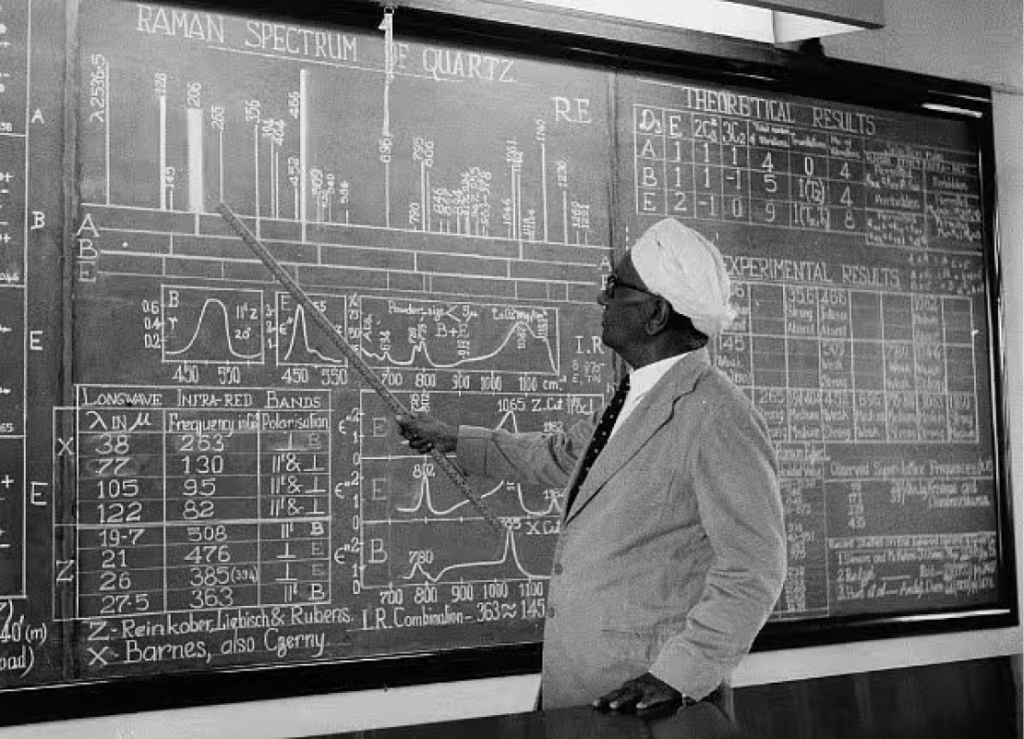
Remembering C V Raman,Swarajya Magazine Remembering C V Raman,Swarajya Magazine Chandrasekaran Balakrishnan March 23, 2019 Indian Liberals Sir C V Raman pointing to information on a large blackboard as he gives a lecture, 5 August 1958. (Keystone Features/Hulton Archive/Getty Images) Contemporary India has poor memory, and one of the victims of it has been the ideas, the life, the works, and the legacy of Sir C V Raman. The nation is almost muted on 7 November and 21 November, which are the birth and death anniversaries, respectively, of one of India’s greatest scientists, Chandrasekhara Venkata Raman (1888-1970) who won the Nobel Prize in Physics (1930) at the age of 42 “for his work on the scattering of light and for the discovery of the effect named after him”. It was said to be a simple experiment which he refused to patent. His Nobel Prize winning research was done on equipment that cost just Rs 500. Within six months of Raman’s discovery of Raman Effect in February 1928, the term “Raman Effect” was coined in Germany by scientists Pringsheim and Rosen. Unlike others, C V Raman is remembered on the anniversary of his great scientific breakthrough. It is for this the Government of India had declared 28 February as National Science Day in 1986. The theme for the National Science Day this year (2019) was “Science for the People and the People for Science”. It is here that we find that Raman’s objective of ‘science for people’ is yet to touch upon all the lives in the country and the world. We need to remind ourselves here of the apathy faced by the legacy of our eminent scientists who had strived for promoting science for economic and social well being of all sections of people. C V Raman and countless other yesteryear scientists, who were acclaimed internationally were ignored at home. The planners who formulated science policies soon after independence unfortunately did not bother to take note of the suggestions of someone like C V Raman. Making of Nobel Raman C V Raman was the India’s first and Asian Nobel Laureatein science. Quick reading reveals that scientists around the world were delighted with Raman’s discovery except the elite group of scientists known as Calcutta-Allahabad School of Science!! Raman was nominated 10 times either as single candidate or along with others scientists for the award of Nobel Prize in physics, Raman works published in the period 1907-1917 was entirely out of his spare time! In this period, he published 30 research papers in journals like Nature, Philosophical Magazine and Physical Review on original works he had done in physics, in addition to his job at the Finance Department in the British Raj. Over the years he trained hundreds of students and many of them went on to do groundbreaking works on various aspects of physics. At the age of 14, Raman completed his B A degree in Presidency College, Madras with English and Physics; in both subjects he secured gold medals. During his Master Degree in the same college, he had begun to work on research problems. He obtained the highest distinctions in M A degree in physics. He was barely 18 years old when he published his first research paper in 1906, in the November issue of Philosophical Magazine. Thereafter, very soon he also published another paper in the Nature. In 1907, Raman joined Financial Civil Service with First Rank in the exam. He was first posted in Calcutta as Assistant Accountant General. Some days later, on his way back from office he figured out the existence of the Indian Association for the Cultivation of Science (IACS), founded by Maherdra Lal Sarcar (1833-1904). At first, he was delighted as he was always interested to do research in basic science. But until Raman took over, the IACS was almost dysfunctional in all respects. He revived the IACS by spending 25 years attracting students who came from all over the country to work with institute. Raman was working on his research problems back and forth from office and home and at IACS. In April 1909, he was transferred to Rangoon as Currency Officer and was reposted back to Calcutta in 1911. During the period 1907-1917, Raman worked with the Finance Department of British Administration in Calcutta. At the same time he had worked independently and established himself as one of the reputed scientists in India and the world. In 1917, Raman resigned from government job and joined as the inaugural Sir Taraknath Palit Professor in Physics in Calcutta University. He was elected as Fellow of Royal Society, London, in 1924 and that followed several other coveted awards/degrees both from India and abroad. Raman’s work on vibrations of strings of violins and other musical instruments led him to bag the F.R.S. in 1933. He then joined the Indian Institute of Science (IISc), Bangalore, as its Indian Director. He was forced to resign from IISc directorship on false grounds but remained as professor of physics until his retirement in 1948. He founded Raman Research Institute (RRI) in the same year and remained with RRI in the rest of his life. He tirelessly worked with students and often lectured around the world. Raman’s Vision of Free Enterprises Systems for Independent India Sir C V Raman’s thoughts on economic and science policies were quite different from that of India’s first Prime Minister, Jawaharlal Nehru. There seems to strong evidence that Raman’s vision on science policy and its nexus with industrial and social development has continued to be ignored. Raman’s “dissenting voice” on science policy in independent India comprised mainly of his comments on Jawaharlal Nehru’s flawed initiatives of lopsided science policies. Raman questioned the approach adopted by Nehru and his associates (or “cronies” as Raman called them) to advance science and industrialisation in the country. Raman’s works in science have more to do with how science contributes to society at large both for peace and prosperity. Raman endorsed the free enterprise economic system over the Soviet

Remembering-C-V-Raman-Swarajya-Magazine Read More »

Ambedkar-the-forgotten-free-market-economist

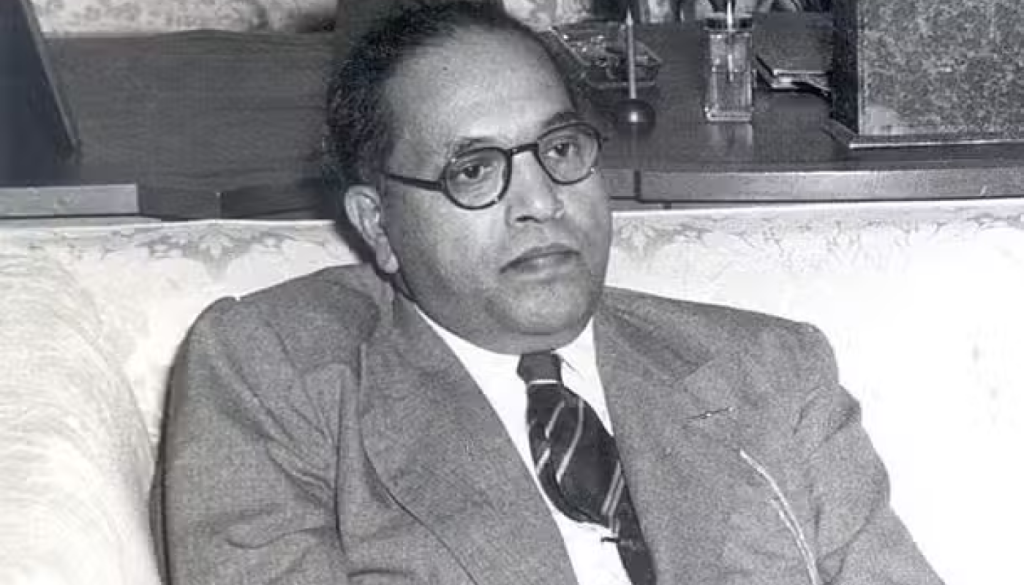
Ambedkar :The Forgotten Free Market Econommist Ambedkar :The Forgotten Free Market Econommist Chandrasekaran Balakrishnan April 14, 2016 Indian Liberals   Overlooking Ambedkar’s free market views, his followers have pigeon-holed him merely as a Dalit icon to suit their own narrow political interests. Two decades ago, India liberated itself from the shackles of socialism and a command economy and put itself on the road to a liberal economic system.n the era of liberalization, strangely, the one obvious thing that should have happened, but did not happen, was unearthing the liberal economic ideas of great personalities like C. Rajagopalachari “Rajaji”, Dr. B.R. Ambedkar, Professor B.R Shenoy, and Professor S.Ambirajan, among others.Since India’s independence in 1947, many of the country’s top institutions and its intelligentsia have suffered from being dominated from the Left. Perhaps this is why even after two decades of liberalization there seems to be much resistance from many who ought to support the basic idea of economic freedom in the country but don’t seem to.Despite this, twentieth century India produced many great classical liberal economists and thinkers such as those named above who pioneered original free market economic ideasIf this comes as a surprise to you, read on.Dr. B.R Ambedkar, best known for his role in drafting India’s constitution, pioneered several pathbreaking free market economic ideas in pre-independent India, scrubbed out of our conscience today.Even self-styled “Ambedkarites” have not taken the trouble to look at his free market economic ideas. In fact, I’d argue that in pre-independent India the one economist whose ideas were global in perspective and close to the Austrian School of Economics (pre-cursor of modern libertarian economics) was none other than Ambedkar. His ideas on economics are relevant today as ever before and in dire need of revival.Ambedkar, before becoming a social reformer and entering politics full time, was a professional practicing economist — a little known fact.But in post-independent India, virtually all of his insightful and powerful economic ideas and writings have been forgotten and neglected, both by Indian intellectuals in general and economic historians and Ambedkarites in particular.A dubious argument put forth by many, especially by “mainstream” Keynesian and Marxist economists, is that Ambedkar’s highly significant contributions in the areas of social reform, political systems and constitution-making have overshadowed his contributions to economics.This makes no sense.Neglect of Ambedkar’s thoughts on economics almost seems deliberate and in many instances, one sees him being referred to as a strong believer of socialism, Marxism and statism which is completely fallacious.Take Anand Teltumbde, Dalit activist and management professor, who argued in an article in Economic & Political Weekly (March 5, 2011) that “Ambedkar, who publicly professed his opposition to capitalism throughout his life, was thus wilfully distorted to be the supporter of neoliberal capitalism, which globalisation is!”Consider the University Grants Commission (UGC) which implements a scheme called “Epoch Making Social Thinkers of India” to conduct research on 24 Indian personalities. Every year the UGC selects several colleges and universities and offers them funding to conduct research on these personalities. Out of 24, Ambedkar is pigeon-holed for research on his “social thoughts”.The real question is: why limit the inquiry to someone’s “social thoughts”?In order to do justice to someone’s contributions to knowledge, serious  and honest research on that individual must be well-rounded and cover all of their contributions, in this case, his economic, social and political thoughts and ideas.In India, there are a total of 29 “Centres for Ambedkar Studies”. This is the second highest, named after a major personality. Not surprisingly, Gandhi merits about 85 centres.It is ironic that there is no department of economics and not even an economics professor, in the Dr. Babasaheb Ambedkar National Institute of Social Sciences,  in his birth place, Mhow!So what was Ambedkar’s contribution to economics?Unlike many of his great contemporaries, Ambedkar was professionally trained in “political economics”, as it was then known. In 1918, at the young age of 27, he became Professor of Political Economy at Sydenham College of Commerce and Economics in Bombay.Ambedkar studied a wide range of economic issues such as international trade and commerce, the Indian currency, provincial finance and planning, small holdings and agricultural productivity. Apart from many research articles published in professional journals, his four theses submitted–for two Master’s Degrees and two Doctorate degrees–were replete with insight and analysis.In 1915, he completed an M.A in economics with a thesis on “Ancient Indian Commerce” at Columbia University in New York. In 1916, he submitted another thesis, “National Dividend for India: A Historic and Analytical Study”, for a Ph.D. degree in Economics, and Columbia awarded him a doctorate in 1917. This thesis was later published as a book, The Evolution of Provincial Finance in British India, in London. Further, in 1921, Ambedkar also received an M.Sc. in economics from the London School of Economics (LSE) for his thesis, “Provincial Decentralisation of Imperial Finance in British India”. In 1922 he completed his now famous thesis, “The Problem of the Rupee: Its Origin and its Solution,” submitted for his D.Sc. degree in Economics from the London School of Economics, both published as books in London.Armed with these four postgraduate degrees, two from an Ivy League university in the U.S. and two from a top university in the U.K., Ambedkar could not not be taken lightly by his upper caste, anglicized peers in the Indian establishment.Further, the prolific Ambedkar produced at least three scholarly contributions to economics, in which he makes many original arguments.These are: (1) “Administration and Finance of the East India Company” (1915); (2) “The Problem of the Rupee: Its Origin and Its Solution” (1923), and (3) “The Evolution of Provincial Finance in British India: A Study in the Provincial Decentralisation of Imperial Finance” (1925).The second and third of these works contain many pro-market ideas which were hardly known then but later gained currency in the second half of the twentieth century. What’s more, through his writings Ambedkar pioneered original ideas like “economic and political decision making in an environment of dispersed knowledge” and “alternative monetary systems (and the) denationalized production

Ambedkar-the-forgotten-free-market-economist Read More »

B.R.Ambedkar, the Greatest Free Market Economist of India

B.R.Ambedkar, the Greatest Free Market Economist of India B.R.Ambedkar, the Greatest Free Market Economist of India Chandrasekaran Balakrishnan January 23, 2014 Indian Liberals Before Ambedkar became a lawyer, social reformer and Constitution maker, he was a professional economist. Strangely, he is now known more as a Dalit leader than as an economist in the Dalit community as well as in the society at large. Socialist myth: when people do talk about his economics, but it is about his opposition to capitalism and socialist leanings. This is a myth forwarded by dalits to further their own agenda.In fact, Ambedkar did not oppose free-markets but was himself an advocate of free-markets!! Dalit politics: his economics is ignored by the mainstream and misrepresented by the dalits community because it is contrary to the socialist politics in India. True free-market capitalist: those who know about his economics downplay it but he was free-market economist even before Austrian Economists like F.A.Hayek, etc. Significance of Ambedkar’s economics today: in the heyday of economic reforms in India, we need to rediscover the Ambedkar’s economics, especially his ideas of free-market principles, to empower the dalits and raise them from deep ignorance. In his article “Dalit Capitalism and Pseudo Dalitism” (5 March 2011, pp 10–11), the civil rights activist Anand Teltumbde makes several dubious claims, one of them being Ambedkar’s opposition to capitalism/free market economics “throughout his life”. In reality, Ambedkar was one of the first-generation economists in India and a leading free-market economist in the early decades of 20th century. He was a trained economist with degrees from Columbia University in U.S.A and the London School of Economics before moving on to law and social theory and practices. The reason for this myth is the poor understanding of the intellectuals among the Dalit community and by the mainstream academia and society. The academic environment both in India and abroad has almost forgotten Ambedkar as an economist (leave alone his contribution to free-market economics). According to eminent economist Narendra Jadhav, the lack of awareness continues due to the “intellectual slavery of the Indian society”. Even today, there is a blatant lack of awareness about Ambedkar’s life and works. We continue to underestimate, or worse ignore, the many original contributions that Ambedkar made to many mainstream economics theories in the latter part of the 20th century. Professor S. Ambirajan (1999:3280) said, “I am somewhat distressed to see that he is portrayed as a leader of the ‘dalit’ community and nothing else.” Dalit activists such as Teltumbde seem to downplay Ambedkar’s free-market economics. For example, Teltumbde says: The protagonists of globalisation have tried to project him as a proponent of the free-market, indeed, as a neoliberal, and have even gone to the extent of painting him as a monetarist (monetarists are supposed to be the intellectual initiators of neoliberalism) to claim him in support of their propaganda. In any case, how many dalits, even among the educated ones, know what monetarism is?  Further, Teltumbde paints Ambedkar as a socialist and Marxist: Ambedkar, who publicly professed his opposition to capitalism throughout his life, was thus willfully distorted to be the supporter of neoliberal capitalism, which globalisation is! This denial of Ambedkar’s free-market credentials seems to be rooted in further propagating Ambedkar’s socialist beliefs for populist reasons and political gain, which is a gross mistake and a misrepresentation of his original arguments. Indeed:  [Ambedkar] rejected the totalitarian approach of Marx in advocating control of all the means of production. He did not accept the Marxian position that the abolition of private ownership of property would bring an end to the poverty and suffering of the have nots. He also did not accept the Marxian prognosis that the state is a temporary institution that will wither away in course of time. (Jadhav, 1991: 982). In fact, in his book States and Minorities, Ambedkar entrusted: …an obligation on the state to plan the economic life of the people on line which would lead to highest point of productivity without closing every avenue to private enterprise, and also provide for equitable distribution ofwealth (ibid 982). To illustrate my core contention that Ambedkar was a free-market economist, I would like to draw the reader’s attention to his early career as a professional economist. Ambedkar wrote at least three scholarly contributions to economics and in which he makes many original arguments. (1) Administration and Finance of the East India Company (1915) (2) The Problem of the Rupee: Its Origin and Its Solution (1923, and (3) The Evolution of Provincial Finance in British India: A Study in the Provincial Decentralisation of Imperial Finance (1925). The Problem of the Rupee was Ambedkar’s magnum opus and was based on his LSE thesis. He emphasized the need for a sound monetary system for trade and its nexus with private property rights, writing in the first chapter (1947: 1-2): Trade is an important apparatus in a society, based on private property and pursuit of individual gain; without it, it would be difficult for its members to distribute the specialized products of their labour. Surely a lottery or an administrative device would be incompatible with its nature. Indeed, if it is to preserve its character, the only mode for the necessary distribution of the products of separate industry is that of private trading. But a trading society is unavoidably a pecuniary society, a society which of necessity carries on its transactions in terms of money. In fact, the distribution is not primarily an exchange of products against products, but products against money. In such a society, money therefore necessarily becomes the pivot on which everything revolves. With money as the focusing-point of all human efforts, interests, desires, and ambitions, a trading society is bound to function in a regime of price, where successes and failures are results of nice calculations of price-outlay as against price-product. He further went on to say: Money is not only necessary to facilitate trade by obviating the difficulties of barter, but is also necessary to sustain production by permitting specialization. For, who would care to specialize if he could not trade his products for those of others which he wanted?

B.R.Ambedkar, the Greatest Free Market Economist of India Read More »

Pseudo-liberals-and-neo-colonisers

Pseudo – Liberals and Neo – Colonisers Pseudo – Liberals and Neo – Colonisers Chandrasekaran Balakrishnan December 23, 2012 Indian Liberals I was recently accused of being a pseudo feminist. Here’s why. While talking on the Sabarimala issue, I said, women who are ready to wait were not anti-feminist, but merely were respecting tradition. A colleague of mine rightly countered me by pointing out how I had made my feelings against triple talaq heard. It really got me thinking. While justifying the need for religious traditions to coexist in a democracy, I might proudly wear the badge of being a liberal. By openly critiquing Mahatma Gandhi and by opposing to Veer Savarkar’s ideology, a section of today’s voters call themselves moderates.But in reality, who are we, if not pseudo liberals or pseudo feminists? In the age of Modi-Trump-Johnson politics (all right-leaning leaders belonging to conservative parties), it definitely feels like the right thing to do, to raise our voice of dissent, of disgruntlement towards the government. The Modi government wants to confer Bharat Ratna on Veer Savarkar? Lets list all the Hindu-oriented ideologies he preached or let’s recall how he justified use of rape as a weapon of war.Article 370 abrogated? Let’s raise voices without considering what people in the state actually want. When a BJP leader urges people to buy swords, while awaiting verdict on the Ayodhya case we cringe; suggest that the land be divided equally and let there be a mosque as well as a temple erected on it. To be honest, I was raised in a household that was proud to be Hindu and did not have high opinions about those belonging to other religions. I was asked not to walk through the ‘Muslim galli’ especially after dark. My husband grew up in Kerala and has some egalitarian ideologies instilled. At least he and his family have no ill feelings or prejudice against people belonging to other religions or other castes. So maybe my thoughts evolved with time and while I am actually a modern feminist who believes in equality and the idea of coexistence, going by my grooming I should be an adarsh nari who is pro BJP? Instead, why can’t I be a moderate. Scores of those belonging to my generation or born between the late 70s and late 80s are surely at a juncture when they are questioning their values. On my last trip to Mumbai, I met with two groups of friends. One, a bunch of women I grew up with, all of them doing quite well career-wise, have a healthy work-family balance, in the thirties. Most of them (to my astonishment) were pro the BJP government. They proudly parroted the economic benefits their beloved Modi sarkaar brought about including lowering corruption (in perceived corruption in the public sector in 2018, India is 78th among 180 countries compared to 85 among 175 countries in the 2014).The other group, the bunch I went to college with, most of them single, living in prime residential areas between Juhu and Bandra, were unhappy with the government, bashed it on numerous issues that affected them locally like potholes that inconvenienced commute and the Aarey issue, drainage problems and more. Personally, I would like to identify myself with the second bunch. Nope, not because they seem the ‘cooler’, ‘more intellectual’ type. Because they seem like a voice of reason and not one derived from emotion. They were talking of everyday issues faced by everyday people, rather than of the parallel changes that make us look good on a macro level— confused? Don’t be. Democracy should not be catering to a single stratum of a society. It should benefit people from all classes. Drainage problems should be resolved so that the homeless who sleep on the street, the stray dogs, the cattle don’t get swept away and thousands of lives aren’t lost. Not just because water causes damage to cars and other vehicles of middle class/ upper middle class families. On the other hand, economic and sustainable housing should be made available to those who cannot afford it so that people aren’t living on the streets in the first place. While, swamps should not be reclaimed nor should trees be cut down illegally to accommodate them, as it could prove to be harmful to the environment and cause the flooding that we want to avoid — makes sense? I hope so!Coming back to my question. Why can’t we belong to a generation who oppose triple talaq, a practice where women have very little or no say, while not agreeing with the Sabarimala verdict because that does not further women’s equality in anyway. Here is to the moderates! Facebook Instagram X-twitter

Pseudo-liberals-and-neo-colonisers Read More »