Tamilnadu Economy

‘ICSSR-funded social science research lacks perspective’

‘ICSSR-funded social science research lacks perspective’ ‘ICSSR-funded social science research lacks perspective’ Chandrasekaran Balakrishnan September 22, 2024 Tamilnadu Economy                                                                                   Read in : தமிழ் Independent India’s founding fathers and mothers had envisioned that any social science research institution’s efforts and its outcomes should reflect the ground realities and struggles of the people, translating into public policy debates to improve living standards across strata. The institutions are paramount pillars for making the right kind of social science research efforts with pertinent research questions to gauge the ground-level challenges faced in society at national, regional, and villages/town levels. This in turn helps to firm up the societal issues which are involved and imperative to make the right kind of policy changes with targeted segments. Soon after independence, successive governments’ set up several national-level institutions to help the government in different capacities to frame public policies. According to J.P. Naik (who as Member-Secretary wrote roles, responsibilities, functions, programmes, & organisation of the Indian Council of Social Science Research [ICSSR] in 1971), the new institutions were entrusted  “to bring about a planned reconstruction of our society…help to provide better insights into our social problems and their solutions…”. One such premier institution in the country is the ICSSR established in 1969. It has been more than 50 years now and the institute still dominates as the major source of funding for academic research of more than two dozen research institutions/centres and thousands of faculty across the country serviced by six regional centres. The coverage of social sciences disciplines has also widened for the larger goal of knowledge sharing, dispersion, and dissemination. These apex institutions were funded out of taxpayers’ money to be part of the overall growth and development of the country as well as bringing about tangible changes in the citizens’ lives with basic services and facilities through policies shifts. One such premier institution in the country is the ICSSR established in 1969. It has been more than 50 years now and the institute still dominates as the major source of funding for academic research of more than two dozen research institutions/centres and thousands of faculty across the country serviced by six regional centres At the international level, in the “Scopus database, India is ranked at 7th position for its social science publications and its share in global publications is nearly 4.25% whereas in Science & Technology publications, India is ranked at 3rd place and its share is around 7%”. It is the qualitative aspects that make a difference in the research outcomes in the basic sciences as opposed to the social sciences in India. However, the issues of quality have become a major concern in the studies and projects funded by the ICSSR both from academic and public policy perspectives. Broadly, the apex institute provides two types of funding such as minor and major projects which range from less than one year for the former and one to two years for the latter.  Other agencies like the University Grants Commission, state governments, and various departments of Union ministries  also provide  grants for social science research. Inmathi.com has covered issues regarding funding constraints of social science thinktanks such as the Chennai-based MIDS, highlighting a steady decline in support for policy-based research. But ICSSR’s decisions are based on well thought out parameters. Also Read: Rs 217 crore — the yearly loss from degrading Pallikaranai marsh During the last 52 years, “the ICSSR has granted 6,793 Major, Minor and Collaborative Research Projects… provided financial assistance to 1,853 scholars for publication of their Doctoral Theses/Projects/Fellowship Reports/Conference Proceedings, financially supported 1,008 social science journals and 374 professional associations involved in social science research activities,” reports the ICSSR’s Annual Report for 2020-21. It is interesting to see that the apex institution has reported that it has “granted” the projects instead of “completed” them, because about 20% of funded projects were not completed on time and about 7% of funded projects (451) were cancelled. During 2016-17 and 2017-18, around 23% or 108 projects and 31% or 112 projects were still not completed respectively. Being an apex institute, the functions of the ICSSR are being questioned from academic and contemporary public policy perspectives for the relevance and contexts in which the studies are conducted, the  methodological approaches, sample size, the authenticity of  primary surveys’ etc. There have also been incidents of lack of accountability and transparency which have been highlighted in the institution’s audit reports, but strangely those have been ignored for several years now. For instance, on the audit report presented in the ICSSR’s Annual Report of 2017-18, the CAG of India had flagged discrepancies in accounts statements. Often the disbursements of funds were found to be opaque. Further, the CAG audit had asked the apex institute to do complete accounting of all of its financial transactions both at the New Delhi office and all its regional offices “since 2009-10 but remedial action has not been taken.” Therefore, the complete accounts statements for the financial year 2017-18 were not done. Several review committees of ICSSR institutes that have time and again recommended improving the governance structure, quality of research outcomes, and independent evaluation of completed research reports for policy implications have been ignored. For instance, the 4th review committee report of the ICSSR, submitted in 2007, emphasised that the “quality of social science research output, its contribution to improving our understanding of socio-economic processes, and to the shaping of public policy, have fallen short of expectations.” Similarly, another review committee in 2011 stressed the governance of ICSSR, quality of research reports, etc. The Department of Secondary and Higher Education, Union Ministry of Education has provided grants to ICSSR of Rs.109.90 crore in 2020-21, Rs.133.06 crores in 2019-20, Rs.124.58 crore in 2018-19, Rs.189.2 crore in 2016-17, Rs.171.72 crore in 2015-16 and Rs.164.97 crores in 2014-15. Thus, the total grants have been steadily falling over

‘ICSSR-funded social science research lacks perspective’ Read More »

Tamil Nadu’s power tariff hike is long overdue after a decade of official mismanagement

Articles Tamil Nadu’s power tariff hike is long overdue after a decade of official mismanagement Chandrasekaran Balakrishnan July 22, 2024 Tamilnadu Economy                                                                                Read in : தமிழ் If Tamil Nadu aims to achieve double-digit economic growth in a sustained manner, the state needs to reform core economic infrastructure sectors like power to break free from its current corrupt practices, the power tariff hike and decades of mis-governance.  Case in point is the Tamil Nadu Generation and Distribution Corporation Ltd (Tangedcco), one of the lowest rated discoms in the country with defaulting consumers. The Tamil Nadu Electricity Department’s total loss was Rs18,954 crore in 2011-2012. During the last decade, it increased to Rs94,312 crore. As on end of March 2022, the accumulated loss was Rs1,13,266 crore. More importantly, the total debt of the Electricity Department was Rs43,493 crore in 2011-12. It increased three-fold to Rs 1,59,823 crore in 2021-22. This amounts to 5% of the state’s GDP. The Department’s interest payments on loans increased from Rs4,588 crore in 2011-22 to Rs16,511 crore in 2020-21, which is an increase of 259% over a decade. Further, due to prolonged delays in new power capital investment projects during the last decade, the interest payment during construction has increased to Rs12,647 crore. A reason for ballooning of debt is the delay in completing power plant projects. The current tariff hike will not necessarily help to overcome the state’s Electricity Department losses and debts. If reforms are not pursued to meet the changing supply and demand scenario in the regional economy, the state will lose its competitive advantages over its neighbours. Karnataka and Andhra Pradesh are moving far ahead even within the region, by taking many market-relevant reforms and steps to become the most competitive economies in the country. Tamil Nadu’s state power sector is on the verge of bankruptcy, and that is why the state government has announced the hike in the power tariff after eight years. Also Read: Power tariff hike should spur decentralised rooftop solar power in Tamil Nadu ‘How DMK govt is to be blamed for power cuts, not Delhi’ The important aspects missing in most media reports are: 1. The Union Government’s Power Ministry had written to the Tamil Nadu government over 28 times insisting upon restructuring of power tariffs and warned that the state would not get the centre’s power subsidy (Rs10,793 crore) without reducing Tangedco’s debt 2. Lending institutions were declining loans to Tangedco. Further, the Union Government had written to the Reserve Bank of India to stop extending loans to Tamil Nadu’s public sector undertakings including Tangedco 3. Without reforms in the power sector, the state is unable to get financial support (0.5% additional borrowing) from the Union Government under the Atma Nirbhar Bharat scheme. Rs30,230 crore was allocated for the state but because it has not undertaken reforms, Rs3,435 crore was not released by the Centre. 4. After restructuring the state power sector under the UDAY scheme, Tamil Nadu benefited by getting Rs22,815 crore during the year 2017-18 to 2020-21. 5. Tangedco’s recent attempts to get an extension for implementing new emission standards for coal-based power plants (15 units) till December 2024 have been rejected by the Central Pollution Control Board’s Task Force for Categorisation of Power Plants. The Centre has written to the RBi to stop extending loans to Tamil Nadu’s public sector undertakings including Tangedco The state Electricity Department says the tariffs in Tamil Nadu are the lowest compared to its southern neighbours — Andhra Pradesh, Kerala, and Karnataka. However, the Aggregate Technical & Commercial (AT&C) losses incurred every year are the highest in Tamil Nadu (18%) as compared to Andhra Pradesh (12%), Kerala (10%), and Karnataka (14%). Other major states like Gujarat (14.58%), Rajasthan (14%), Uttar Pradesh (15%) Haryana (15%), Delhi (12%), Maharashtra (14%), and Madhya Pradesh (15%) too rank lower than Tamil Nadu. Further, the state has not adhered to norms and guidelines while collecting data and calculating AT&C losses accurately as per the methodology prescribed by Central Electricity Authority. The cost of power production was also changed over a period of time but the regulatory policies were not changed with tariffs in a phased manner. This would have been a better method to arrest inefficiencies in the system and ensure reduction of cost escalation measures. Like other states, all free electricity connections should be changed to smart metering to reduce  leakages. Therefore, given the range of problems facing the Department and Tangedco, the current tariff hike will not necessarily help to overcome the state’s Electricity Department losses and debts. However, it is a corrective step to strengthen the dysfunctional system. (The author is an economist and public policy expert)   Facebook Instagram X-twitter

Tamil Nadu’s power tariff hike is long overdue after a decade of official mismanagement Read More »

DMK poll manifesto: Some good, a lot bad

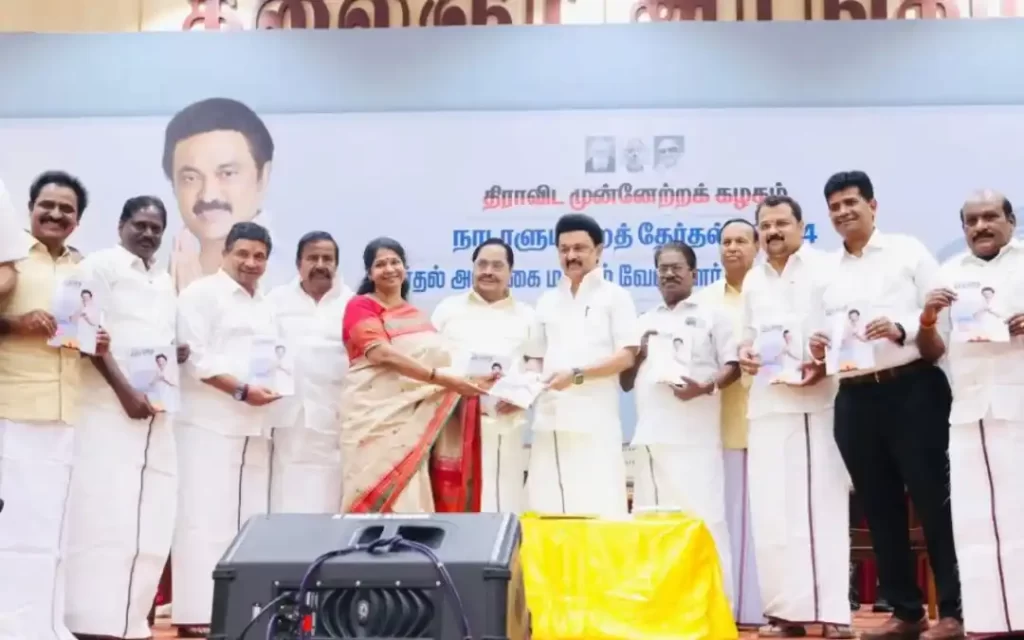
DMK Poll Manifesto:Some Good, a lot Bad DMK Poll Manifesto: Some Good, a lot Bad Chandrasekaran Balakrishnan March 23, 2024 Tamilnadu Economy The DMK manifesto for the 2024 Lok Sabha elections is typical in the sense that it promises loads of freebies even while fleshing out some worthwhile points regarding the long-term needs of the people. Today, the discourse on freebies has evolved to judging freebie promises on two counts: rational and irrational. While this, in and of itself, is highly debatable and whether any freebie is rational at all, it still marks an evolution in political discourse.  Meanwhile, the Supreme Court has assured that it will take up a Public Interest Litigation on freebie promises by political parties ahead of the 2024 general elections. This has put the onus on political parties. They need to explain how the government can mobilize the finances needed to pay for the freebies. Meanwhile, the Supreme Court has assured that it will take up a Public Interest Litigation on freebie promises by political parties ahead of the 2024 general elections. This has put the onus on political parties. They need to explain how the government can mobilize the finances needed to pay for the freebies. Most parties go silent on what rationality or evidence supports their policy proposals in manifestos. If that’s the case with policies, we can only imagine the case with freebies. By and large, actual implementation of schemes and programmes have fallen far short of tall poll eve promises, in any case. The DMK’s manifesto has given importance to youth, women, farmers, and somewhat aged people. Alas, it has not given due importance to the issues of urban growth centres which are the carriers of economic growth and job creation. Reforms of key state PSUs are ignored.  Also Read: When is a freebie welfare expenditure? Reckless freebies are unwarranted, given the overall economic performance and historical decline in poverty levels.  Targeted assistance to specific demographic groups using technological tools to reduce leakages are the need of the hour. Below are the DMK manifesto’s freebie promises. Waiving off loans and interests for farmers in nationalised and scheduled banks. Waiver of educational loans for students. A monthly entitlement of Rs. 1000 for all women in every state. College students will receive a free SIM card with One GB data per month. Free Wi-Fi services will be provided in all important locations state-wide. Interest-free loans up to Rs. 10 lakhs will be provided to women’s self-help groups. Funding for homes built under the PMAY housing scheme will be doubled. Interest-free educational loans up to 4 lakhs will be offered to students. The Naan Mudhalvan and Pudhumai Penn schemes will be expanded to benefit students nationwide. Petrol, diesel, and LPG cylinder prices will be set at Rs. 75, Rs. 65, and Rs. 500, respectively. Women in self-help groups across India will be provided with interest-free vehicle loans up to ₹1 lakh. Through the Employees’ Provident Fund (EPF), the Union government will ensure a minimum pension of Rs. 5000/- per month. The number of working days under the Mahatma Gandhi National Rural Employment Guarantee Act will be increased from 100 to 150 days. A wage of Rs. 400 will be provided across states/union territories nationwide. Solar Panels will be provided with 80% government subsidy and 20% beneficiary contribution to all houses. The new Union government will attempt to increase the funding allocation for the MGNREGA social security scheme to at least 1,50,000 crores per year. The medical insurance amount for families below the poverty line will be increased to Rs. 10 lakhs. Financial assistance under the PM-KISAN scheme will be increased to Rs. 12,000. These freebies will erode the already stressed financial health of the states as well as the centre. Several lakhs of crores would be needed for nationwide implementation. In a mature democratic system of governance, such promises should be supported by specific proposals on how these schemes will be funded, in the interest of accountability. Most parties go silent on what rationality or evidence supports their policy proposals in manifestos. If that’s the case with policies, we can only imagine the case with freebies. By and large, actual implementation of schemes and programmes have fallen far short of tall poll eve promises, in any case. Also Read:  TN needs road map for senior citizens’ welfare The following promises are, however, positive and could contribute to the growth of state economies and the center’s. Like the Planning Commission, a permanent Finance Commission will be established. The Smart City project will be extended to more second and third-tier cities in India. Tourist facilities will be enhanced in towns near major pilgrimage sites to attract more visitors. Urban development including all facilities will be undertaken in towns near places of worship like Madurai, Thiruvarur, Thanjavur, Chidambaram, Nagore, and Velankanni, to attract more tourists. Tamil departments will be established in all universities across India. By 2030, all major Union and state government offices in Tamil Nadu will be converted to operate entirely on solar power. Perhaps, the Supreme Court can direct the Election Commission to appoint an inclusive expert committee that would diligently monitor or evaluate the financial implications of promises in poll manifestos. This would help voters make informed choices. (The author is an economist and public policy expert) Facebook Instagram X-twitter

DMK poll manifesto: Some good, a lot bad Read More »

Lackluster, visionless Tamil Nadu budget mum on poor finances’

Lackluster, visionless Tamil Nadu Budget mum on Poor Finances’ Lackluster, visionless Tamil Nadu budget mum on poor finances’ Chandrasekaran Balakrishnan February 23, 2024 Tamilnadu Economy Tamil Nadu budget 2024-25 has several warning signs for the state economy. While there is no official assessment of the economy through a State Economic Survey, the budget does show that blaming the Center will not camouflage deep set problems.Fiscal deficit has increased by some 18% compared to 2021-22, revenue deficit increased by 19%, and outgo in government salaries has increased by nearly 40% and in pensions and retirement benefits by 50%. Interest payments have increased by a whopping 74% compared to 2021-22 and, for the upcoming financial year, the government intends to borrow Rs 1.55 lakh crore that represents an increase of 43% over 2021-22. The power sector is in deep trouble and other state public sector units continue to be in dire straits with their losses mounting. Fiscal deficit continues to be at a 3.44% high though below limits as per the FRBM Act. The 2024-25 state budget is a welfare budget that promises doles to alleviate the suffering of poor people while not advancing on delivering basic facilities, services and livelihoods for them. A moot point is how the state can claim to be a model state if it cannot do that. Tamil Nadu continues to claim to be the 2nd largest economy among states. But Uttar Pradesh has overtaken India and stands second. This should serve as a warning to the rulers of Tamil Nadu. The power sector is in deep trouble and other state public sector units continue to be in dire straits with their losses mounting. Fiscal deficit continues to be at a 3.44% high though below limits as per the FRBM ActAnother alarming piece of statistics that despite more than 50 years of the existence of a clearance board, some 6 million people continue to live in urban slums. One million live in Chennai slums. The state budget has neatly sidestepped the vision of achieving the one trillion-dollar economy goal by 2030. The budget proposes no structural reforms to help achieve that goal. Also Read: A stronger focus on Chennai in Tamil Nadu budget Tangedco continues to be among the worst managed power utilities in the nation. Its accumulated losses are around Rs 1.5 lakh crore and outstanding loans are another Rs 1.6 lakh crore. Mounting losses and loans are ignored in the state budget. This year the budgetary support to Tangedco is Rs 14, 442 crores.With respect to the tourism sector, the fund allocated is merely Rs.38.20 crore. That’s a big gap in a state that has much potential. District collectors continue to be in charge of tourism promotion committees at the district level. They certainly have other priorities. The promise of providing payroll subsidies to MNCs in service sector is a big blunder. The budget says the state will “incentivise the creation of high paying jobs in new GCCs by providing a payroll subsidy of 30 per cent in the first year, 20 per cent in the second year and 10 per cent in the third year for jobs with pay above Rs.1,00,000 per month.” Tamil Nadu has about 5 million MSMEs enterprises (49.48 lakhs), the 3rd highest share in the country, providing jobs to 1 crore people in the state. The state has allocated merely Rs 1,557 crore for the MSMEs sector.Out of 1,580 GCCs in the country, only 150 GCCs (9 %) with about 47,000 persons are in Tamil Nadu. It is not known how many of them are earning one lakh per month. Instead of this, the state government can identify the key units in MSMEs sector that employ 20 or fewer workers for similar subsidies which will help the sector to revive and face global competitiveness while providing jobs and social security benefits. Tamil Nadu has about 5 million MSMEs enterprises (49.48 lakhs), the 3rd highest share in the country, providing jobs to 1 crore people in the state. The state has allocated merely Rs 1,557 crore for the MSMEs sector.It was announced in the budget that under the Naan Mudalvan scheme, the state has trained 28 lakh students over the last three years out of which only 1.19 lakh students actually got employment opportunities, which is 4.25%. Obviously, this scheme is not working. The skilling programme needs a complete overhaul. Also Read: TN State Budget has no tech solutions for urban issues Structural reforms like decentralization of power, administrative devolution, and financial devolution to local bodies are consistently ignored by the state government. None talks about the non-implementation of State Finance Commission recommendations for local bodies. Due to the highly centralized form of governance from the state capital, road infrastructure, drinking water supply, and street lighting continue to suffer. Water bodies have gradually deteriorated over time due to encroachment and lack of maintenance, and no timely collection and recycling of non-biodegradable waste. S Narayan, former finance secretary in the Union government and now part of the Tamil Nadu Chief Minister’s Economic Advisory Council has said that “the finances of the state heading down the path of unsustainability, but there is little in the budget to address this.” This best sums up the budget. (The author is an economist and public policy expert) Facebook Instagram X-twitter

Lackluster, visionless Tamil Nadu budget mum on poor finances’ Read More »

CMDA crosses 50 years: Time to assess

CMDA crosses 50 years: Time to assess CMDA crosses 50 years: Time to assess Chandrasekaran Balakrishnan January 7, 2024 Tamilnadu Economy Urbanization has reached such a level in Tamil Nadu that the functioning of the CMDA (Chennai Metropolitan Development Authority) is under the lens now.  A failing CMDA is an indication of the poor state of urban governance in the state reflected in declining migration from villages. Seasonal migrations in search of jobs are a thing of the past in Tamil Nadu. The CMDA covers five districts with nearly 20% of the state population. The five districts lead in economic output. Thiruvallur tops the state in share of Gross State Value Addition (GSVA) at 9.6%, followed by Chennai at 8.1%. Similarly, Chennai accounts for 14% of the state’s income from the services sector followed by 9% for Thiruvallur and 7.8 % in Kancheepuram. This year marks the 51st year of the establishment of the CMDA, which is the nodal agency for key regulations and policy coordination among different departments and authorities of the state capital. In 2022, CMDA was expanded by adding 4,715 sq. km (397%) — from 1189 sq. km to 5904 sq. km. After expansion, Chennai CMDA covers the second largest land area, next only to Delhi. The CMDA has four municipal corporations, 12 municipalities, 14 town panchayats, and 22 panchayat unions with 1,321 villages. Also Read: TN’s urban planning ignores climate change threat, causing huge losses The land market has become a focal point for the growth and development of cities, towns, and peripheral areas. And the CMDA is tasked with developing the land market, while maintaining civic priorities and governance demands. The CMDA covers five districts with nearly 20% of the state population. The five districts lead in economic output. Thiruvallur tops the state in share of Gross State Value Addition (GSVA) at 9.6%, followed by Chennai at 8.1%. Similarly, Chennai accounts for 14% of the state’s income from the services sector followed by 9% for Thiruvallur and 7.8 % in Kancheepuram All these indices tell us that CMDA should be a leader with an exemplary performance record. But that has not been the case. Officials and people’s representatives in the CMDA have been persistent failures in building a comprehensive institutional mechanism for good governance. The recent floods are a telling indicator of a failing CMDA that covers hundreds of water bodies, many of which are under threat due to encroachments and dumping of solid waste. Even before the expansion, the CMDA had been facing multiple structural challenges such as in creating institutional structures for new building plan approvals; setting up clear institutional regulatory measures for association with local bodies in and around the CMDA area; and driving people’s participation in framing Master Plans especially in planning of roads, stormwater drains, solid waste handling and footpath design. The CMDA lacks a strong institutional apparatus for effective management of key development projects. The new building plan approval department faces an acute shortage of manpower and technology. Approval processes are often ambiguous which leads to malpractices and corruption. Unauthorized building activities have been increasing mainly due to the cumbersome and complex regulatory systems at multiple levels. Centralization has only exacerbated the problem. The approach to formulation, framing, and implementation of the Master Plan of CMDA has not been in the best interests of the people of Chennai city. The Master Plans neither took stock of what went wrong in the rest of the world nor focused on the sectors critical for growth and development of the CMDA areas in the long term. The First Master Plan period was 1976-1996, second Master Plan period is 2006-2026. The CMDA has already framed the third Master Plan for 2026-2046 without adequate inputs on best practices from lessons learned from the first and second plans.  Also Read: Chennai is a mega construction site but GCC can ease pain points Recently, the Confederation of Real Estate Developers Association of India (CREDAI) wrote to the chief minister asking the government to cut through the bureaucratic red tape impeding the construction of high-rises in the city. The CMDA was entrusted to approve new building plans for highrise buildings until July 2023. Now the state housing department has taken back the power from the CMDA. This centralization hints at dubious vested interests taking control since CMDA regulation promises more transparency to an extent at least. The approach to formulation, framing, and implementation of the Master Plan of CMDA has not been in the best interests of the people of Chennai city   Between 2006 and 2023 (till September), a total of 7296 non highrise buildings were approved by the CMDA. In the current calendar year from January to December 2023, the CMDA had approved a total of 518 non-high rise new building plans as against thousands of applications being received every month. For the same period in 2022, only 422 non-high-rise new building plans were approved. All through the past, total approvals were hovering in this range.  The time taken to approve the new building plans varied from a minimum of a month to a maximum of a year. The process was too time consuming and promoted rent seeking. Regarding highrises, between 2006 and 2023 a total of 1,024 highrise buildings were approved by the CMDA. The CMDA’s approvals given for highrise buildings have varied across the last decade. In the current calendar year (2023), 27 highrise building plans were approved, 58 highrise building plans were approved in 2022, and 66 were approved in 2021 and so on. The spatial growth of the city and its peripheral areas has been underestimated. Concrete steps towards achieving world-class physical infrastructure facilities have not been taken. The peripheral areas of the CMDA have huge potential for growth. Moreover, the CMDA has not paid adequate attention to leveraging tourism, heritage, culture, and civilization values.   (The author is an economist and public policy expert) Facebook Instagram X-twitter

CMDA crosses 50 years: Time to assess Read More »

How online system can root out graft in TN tenders

How online system can root out graft in TN tenders How online system can root out graft in TN Tenders Chandrasekaran Balakrishnan August 8, 2023 Tamilnadu Economy                                                                        Read in : தமிழ் There is a perpetual tussle between the present government in Tamil Nadu and the Governor or anti-corruption crusader NGOs on some social, economic, or cultural issue. Also, the debate gets interesting since the contentious issue of governance is looked at through the prism of ideology for the growth and development of the state. While the outcomes of these debates often are not enriched either through sound reasoning or logical conclusions for public policy reforms for priority sectors, the benefits of debate eventually end with much public money being spent, and weak emphasis on elected power, responsibility and accountability, while the opportunity cost of maintaining status quo remains invisible but huge. It is imperative to have a retrospective assessment of the governance system envisioned by the founding fathers. India became a Republic with a democratic system of governance since independence, effectively guaranteeing the welfare of the people. The elected governments of States and UT are supposed to execute carefully designed welfare and anti-poverty programmes and activities envisaged in the Constitution. Public procurement by government departments for services, facilities, goods, works, project management, consultancy, etc., is an important activity. It accounts for a substantial amount of resources like taxpayers’ money used for public expenditure. The underlying principle is to procure materials/services of specified quality at the most competitive prices in a transparent and non-arbitrary manner According to the Father of the Indian Constitution, Dr. B.R. Ambedkar, the primary duty of the Governor of a state/UT was to ensure “good, efficient, honest administration”. The ideal governance system functions as per the letter and spirit of the Constitution to provide the best services and facilities for welfare of all strata. Public procurement by government departments for services, facilities, goods, works, project management, consultancy, etc., is an important activity. It accounts for a substantial amount of resources like taxpayers’ money used for public expenditure. The underlying principle is to procure materials/services of specified quality at the most competitive prices in a transparent and non-arbitrary manner. The Union and state governments in India derive their authority to contract Goods and Services from Article 298 of the Constitution of India. The latest Manual for Procurement of Works, (June 2022) was issued by the Union government’s Department of Expenditure. The state governments have been encouraged to incorporate similar provisions in their respective tenders. The states have the power to frame their laws regarding procurement, guided by the General Financial Rules. Also Read:  ‘TN Governor Ravi wrong about SC verdict, Constitutional provisions’ The Union Government’s Economic Survey 2020-21 chapter on “Process Reforms: Enabling decision-making under uncertainty” mentions: “The benefits of transparency can be seen from the recent reform in public procurement. The Government in 2016 set up a dedicated e-market known as Government e-Marketplace (GeM) for different goods & services procured or sold by Government/PSUs. Anecdotal evidence suggests that prior to GeM, government procurement prices were much higher than the prices prevailing in the market and there were constant complaints about inefficiency and rent seeking. As the GeM website mentions, use of this e-marketplace has resulted in a substantial reduction in prices in comparison to the tender, rate contract and direct purchase rates that were used previously. The average prices on GeM are lower by at least 15-20% than previously, and in some cases even up to 56%.” The GeM Portal is one of the major reforms undertaken by the Union Government for its department’s procurements from the open market. Several state governments have also taken advantage of the GeM Portal system for procurements of goods and services. However, it is quite strange that the Government of Tamil Nadu has not effectively used reforms like GeM for public procurements from the open market. Tamil Nadu ranks 10th in the use of the GeM Portal for public procurement of goods and services. But, it is ironic to note that Tamil Nadu was ranked 2nd in the NeSDA 2021 Rankings with compliance of more than 85%. Tamil Nadu was one of the first States to enact legislation for public procurements and tender process system for public procurements. The three laws governing public procurement through electronic tenders in Tamil Nadu are, Tamil Nadu Transparency in Tender Act (TTA), 1998, Tamil Nadu Transparency in Tender Rules, 2000 and Tamil Nadu Transparency in Tenders (Public Private Partnership Procurement) Rules, 2012. Though, the practice of electronic tenders has several structural flaws, and vested interested groups often misuse the e-tender system almost in every tendering process. TTA law aimed to ensure open and fair procedures while undertaking construction and during procurement of goods and services by the Government and Governmental organisations. The objectives and aims of TTA laws were defeated by the very state government which got this Act in place.  Further, the state Government had amended the provisions of rule 15(2), rule 16(2), and (3) of the Tamil Nadu Transparency in Tenders Rules, 2000 for the implementation of the eTender system. Over the years, both TT Act and TNTT Rules were amended mindlessly. The latest amendment was on 5th December, 2022 covering all three Acts. Under Tamil Nadu Transparency in Tenders Rules, 2000, Clause 6 mentions that “the tender documents and the contract shall include a clause for payment of liquidated damages and penalty payable by the tenderer in the event of non-fulfillment of any or whole of the contract.” However, these aspects are not followed diligently by the concerned departments/organisations in the state. Tamil Nadu ranks 10th in the use of the GeM Portal for public procurement of goods and services. But, it is ironic to note that Tamil Nadu was ranked 2nd in the NeSDA 2021 Rankings with compliance of more than 85% Recently, the Central Vigilance Commission (CVC), Comptroller and Auditor General (CAG), and NITI Aayog

How online system can root out graft in TN tenders Read More »

Man-animal conflict: Why culling may work well

Man-animal conflict: Why culling may work well Man-animal conflict: Why culling may work well Chandrasekaran Balakrishnan August 5, 2023 Tamilnadu Economy                                                                                     Read in : தமிழ்  The recent incidents involving the tusker Arikomban in Kerala and later in Tamil Nadu have sparked a furore among the public and unsettled government officials in both states. There was an outpouring of sentiment from stakeholders on the rough handling of the elephant. However, the issue of Arikomban is just one incident of hundreds of such incidents every year but there is no comprehensive review of public policies nor coordinated action by relevant government departments in Tamil Nadu to substantially reduce human-wildlife conflicts. Conflict leads to the loss of human life, largely of poor farmers and labourers while guarding agricultural land or crops near the forests while sustainable and integrated solutions to mitigate the problem are yet to be framed by the governments. As early as 2018, a Union Government report on Human-Animal Conflict said: “recent studies revealed that the wild boar damage to different crops varies from 15-40 per cent”. Tamil Nadu has nine major forest types ranging from wet evergreen forest to moist deciduous, dry deciduous, sholas, grasslands, and scrub forest. The Western Ghats, the longest hill range in the State is one of the 25 global biodiversity hotspots and one of the three mega centres of endemism in India. The conflict with animals has affected more than 12,000 acres of non-cultivable land. Due to this, landowners are unable to sell their property for non-agricultural purposes also, causing a financial crisis Administratively, the forest areas are two types: Protected Forest (PF) and Reserved Forest (RF). Wildlife and human conflicts have become increasingly common in Tamil Nadu, with huge damage caused to people especially the farmers and their properties; the animals that cause the highest damage are elephants, wild boar, tigers, leopards, wild pigs, Indian gaur, bonnet macaques, marsh crocodiles and peafowl. The Wildlife Census 2017 revealed that Tamil Nadu was home to 2,761 elephants, about 10% of India’s jumbo population of 29,964. The southern states of Karnataka, Tamil Nadu, and Kerala together have about 44% of the country’s elephant population. Also Read: Kerala caught in storm over Justice for Arikomban According to conservationists, earlier, elephants would only raid villages on the fringes of forests, attracted by standing crops. But elephants are now frequently enter human habitations and fields located more than 5 kilometres from the forest boundary. Major crops raided by elephants are paddy, banana, sorghum, areca nut, sugarcane, coconut, ragi, tomato, and mango though they leave marigolds, sapota, pearl millet, jatropha, and brinjal alone. Every year, large farmers complain to District Collectors and Forests Officials that the juvenile wild boars multiply and continue to affect farmers by destroying crops in over 6,000 acres in Coimbatore district. The animals affected more than 12,000 acres of non-cultivable land. Due to this, landowners are unable to sell their property for non-agricultural purposes also, causing a financial crisis in the district. Further, farmers said it is not only farmers near forest areas but also those in a 10 km radius of forests who are affected. A pack of more than ten wild boar can ruin an acre of cultivation in a single night. There is a structural issue in declaring wild boar as vermin in India. In recent years, Tamil Nadu reported a total of 7,562 incidents of crop-raiding by wild animals over three years. Farmers often complain that the process of availing compensation is tedious. They have to obtain certifications from VAO, the Forest Department, and the Horticulture Department. They said the process was painstaking and the amount paid was too little compared to the losses suffered. So far, the steps taken by the state Forest department have not effectively deterred the wild animals from entering agricultural lands in Tamil Nadu. The measures did not benefit either the wildlife or local communities including farmers. Very often, the farmers are either given inadequate compensation (60% or less) or given compensation too late. Though all affected farmers are not given compensation for all crops with the market price of the crops. Special provisions for providing livelihood, health, and education for the affected children should be considered by the State when farmers or villagers who have lost the sole breadwinner due to Human-Elephant Conflict The Tamil Nadu Agricultural University (TNAU) has undertaken a study (2020) to find solutions with “Herboliv-Wild Animal Repellent” for wild boars raids on crops near forest areas in Coimbatore. But the outcome did not help farmers prevent the entry of wild boar, monkeys, gaur deer, and elephant. Special provisions for providing livelihood, health, and education for the affected children should be considered by the State when farmers or villagers who have lost the sole breadwinner due to Human-Elephant Conflict As compared to Tamil Nadu, Kerala has taken several measures to deter the wild boars: gun licenses of farmers living in vulnerable areas in all districts are being renewed and issued. The state also has empowered local authorities to legally exterminate wild boars that may be posing a threat to life, property, and agriculture. An independent study done by wildlife biologists Kalyanasundaram Ramkumar and Balasundaram Ramakrishnan found that “people’s perception of elephant depredation and conservation around Coimbatore forests has provided very interesting results. About 65% of people had experienced crop damage by elephants at least once in their lifetime”. A large number of people believed that reduced availability of elephant fodder species in the forests was largely responsible for elephant depredation of agricultural land. Also Read: Govt must get off the fence, act on human-animal conflict Based on years of research, veteran ecologist and environmentalist Prof. Madhav Gadgil says India’s Wildlife Protection Act is anti-people in many aspects, which needs to be corrected at the earliest. Prof Madhav Gadgil

Man-animal conflict: Why culling may work well Read More »

Lack of innovative technology could scuttle TN’s aims of enhanced ethanol production

Lack of innovative technology could scuttle TN’s aims of enhanced ethanol production Lack of innovative technology could scuttle TN’s aims of enhanced ethanol production Chandrasekaran Balakrishnan March 29, 2023 Tamilnadu Economy                                                                                     Read in : தமிழ் India aims to reduce imports of fossil fuels by achieving 20% ethanol blending with gasoline from April 2023. A nationwide rollout is planned from 2025-26. At present, India’s ethanol production capacity is 426 crore litres from sugarcane-based distilleries and 258 crore litres from grain-based distilleries. By 2027, the ethanol market in India is estimated to reach Rs.40,593 crore. At present, India is the second largest importer of US ethanol for industrial purposes. The centre has also cut Goods & Service Tax (GST) on ethanol meant for the Ethanol-blended Petrol (EBP) programme from 18% to 5%. To ensure a $1 trillion economy for Tamil Nadu by 2030, multiple efforts are underway to tap the strategic advantages in emerging industries with the timely launch of new policies for facilitation and promotion of investment. The latest one is the Tamil Nadu Ethanol Blending Policy 2023 to generate clean energy from diverse foodgrains other than sugarcane.  The policy aims to attract Rs.5000 crore in new investments to establish molasses/foodgrain-based ethanol plants with a production capacity of 130 crore litres. Tamil Nadu is already a major automobile market with the third largest vehicular population in the country. The State’s petrol requirement is estimated to increase to 474 crore litres by 2024-25. According to the state ethanol policy, Tamil Nadu stands third in the consumption of Motor Spirit (MS) petrol after Uttar Pradesh and Maharashtra with a consumption of about 2.7 million metric tonnes (3.8 billion litres) in 2021-22. The new state ethanol blending policy rightly recognises that “with transportation sector accounting for nearly one-fourth of GHG emissions and considering the projected robust growth of the State’s vehicular fleet, there is an immediate need to transition to alternate cost-effective green fuel that mitigates climate change”. The National Policy on Biofuels (2018), emphasises the production of ethanol from a variety of feed-stock including agricultural residue (rice straw, cotton stalk, corn cobs, saw dust, bagasse etc.); starch containing materials such as maize, cassava, rotten potatoes; damaged food grains apart from sugarcane and other sugar containing materials such as sugar beet. One such major foodgrain identified as feedstock in the state ethanol policy is tapioca, which would also benefit farmers of the starch-rich tuber. Despite Tamil Nadu’s surplus production of tapioca, an ideal feedstock for bioethanol, the state has no plants to use the starch-rich crop At present Tamil Nadu does not have a significant presence on ethanol production and gets its requirement from other states like Maharashtra and Karnataka. The state has 12 molasses projects with an installed capacity of just 17.4 crore litres per annum. Thus, there is huge scope for establishing bioethanol plants for food grains based like tapioca crop.  Tapioca with its high starch content (25 to 35%) and ability to grow under low management conditions has been globally recognised as a potential feedstock for bioethanol production. The state ethanol policy highlights that Tamil Nadu accounts for about 80% of the total acreage under tapioca in the country producing 38.93 lakh metric tonnes from over 91,506 hectares. The tuber is mainly cultivated in Salem, Namakkal, Erode, Cuddalore, Villupuram, Dharmapuri, and Kanyakumari districts. Not surprisingly, the over 800 starch and sago factories, spread over Salem, Erode, Namakkal, and Dharmapuri are flourishing. Also Read: Ethanol blending: Thanjavur awaits this green revolution Kerala, Tamil Nadu, and Andhra Pradesh account for about 96% of the area and 98% of tapioca production in India. While the tuber has been largely used as raw material for starch extraction, Kerala has tapped into the export markets for value-added tapioca products. The processed tapioca with masala from Kerala is in great demand overseas including the US, Australia, and New Zealand. The major countries importing Indian tapioca are the US, Saudi Arabia, UAE, Nepal, and the Netherlands. Given that Tamil Nadu has not diversified into tapioca-based products for export, a recent report stated that its surplus production of over a million tonnes in a year can be used for the generation of bioethanol. Though, the CTCRI in Thiruvananthapuram has developed novel enzyme technology for the production of ethanol from tapioca starch/flour, the technology is yet to be implemented for a pilot study prior to being scaled up. While a plant set up in Palakkad in the late 1990s failed to scale up,  Kerala government has allocated Rs. 2 crore for the research and the production of ethanol from tapioca in its 2022 budget. If the proposal takes off it will help the state’s farmers get a remunerative price for the tuber which has seen a glut with widespread cultivation under the Subiksha Keralam project. The Tamil Nadu Agriculture University (TNAU) established the Tapioca and Castor Research Station in Yethapur near Salem with the stated objective of “development of post-harvest technology, value added products and bio-fuels survey, monitoring and management of major pests”. However, it seems the Research Station has not done any significant work in the area of tapioca value addition. Other states have stolen a march over Tamil Nadu. Andhra Pradesh and Haryana each have 15 foodgrain-based ethanol plants, Maharashtra has 28, Punjab 18, Karnataka 6 and Bihar 5 Tamil Nadu’s ethanol blending policy aims “to maximise its value addition to the State’s natural resources by promoting indigenous ethanol production based on existing locally available agrocentric resources, expansion of these resources as well as utilisation of surplus and damaged produce.” Further, the policy state that “Tamil Nadu to augment biofuel production within the State using indigenous sources which could partly insulate the import price shocks, address the pollution concerns and enhance agricultural output and its utilisation.”

Lack of innovative technology could scuttle TN’s aims of enhanced ethanol production Read More »

TN State Budget has no tech solutions for urban issues

TN State Budget has no tech solutions for urban issues TN State Budget has no tech solutions for urban issues Chandrasekaran Balakrishnan March 23, 2023 Tamilnadu Economy                                                                                      Read in : தமிழ் The State budget is as important as the Union budget, no importance has been given to pre-budget debate on important issues at the district level even in a state like Tamil Nadu, which claims to be a model state for the country. The state government has not decentralised decision-making either. Without reaching out to major stakeholders for their suggestions on what needs to be done at the city and panchayat level, there cannot be equitable distribution of resources. The Tamil Nadu budget for 2023-24 should ideally have presented solutions to the several structural and institutional challenges hindering the prospects of equitable growth and development for all sections of people. The state’s revenue and fiscal data does not, however, give a clear picture on what is possible. Also, there are no transformational schemes and programmes announced in the budget although the government has been harping on about the Dravidian model of economics and social justice. The state is facing multiple challenges with the electricity department (TANGEDCO) and state transport corporations riddled with huge debts, and state-owned enterprises making major losses. Yet, the government, instead of addressing those issues, keeps offering more freebies and subsidies to the people. The state is facing multiple challenges with the electricity department (TANGEDCO) and state transport corporations riddled with huge debts, and state-owned enterprises making major losses. Yet, the government, instead of addressing those issues, keeps offering more freebies and subsidies to the people, and not just to those living below the poverty line. There is no transparency or accountability about the use of funds allocated for such schemes in the budget either. At the outset, the state finance minister mentioned that owing to the unprecedented and difficult reforms undertaken, the government has reduced the annual revenue deficit from Rs 62,000 crore to Rs 30,000 crore in the revised estimates for the current year. The revenue deficit for 2023-24 has been estimated at Rs 37,540.45 crore. Also Read: TN budget: Debate throws up mixed reactions The state’s fiscal deficit has been estimated at Rs 74,524.64 crore in the revised estimates which is 3% of the GSDP for the current year. And for the coming year, the fiscal deficit has been estimated at Rs 92,074.91 crore, which is 3.25% of the GSDP and is an increase of 0.25% of GSDP or Rs 17,550.27 crore. It is even more interesting that for the coming year 2023-24, the state government plans to raise loans and the net borrowings are projected at Rs 91,866.14 crore, including Rs 82,625.96 crore of Net Open Market Borrowings and Rs 9,240.18 crore from other sources. Due to these loans borrowed year after year for the purpose of giving freebies and doles to the people, the yearly payment of interest on loans has been consistently increasing. In the budget, the expenditure on account of staff salaries is a committed expenditure estimated at Rs 77,240.31 crore for 2023-24 which is an increase of 14.14%. Further, the expenditure under salaries will increase to Rs 84,964.34 crore in 2024-25 and Rs 94,460.78 crore in 2025-26, effectively not leaving much for actual development projects. The expenditure outlay for the committed expenditure on pensions and retirement benefits is Rs 36,973.02 crore for 2023-24. It has been projected to increase to Rs 39,930.86 crore in 2024-25 and Rs 45,524.64 in 2025-26. Hence, the increase is consistent. There is not a single word in the budget on managing the increasing amounts of municipal solid waste, e-waste, hazardous waste, industrial effluents, and discharge of sewage wastewater in cities and urban centres. The expenditure on account of subsidies and transfers is estimated to be Rs 1,22,088.19 crore in the budget estimates 2023-24. Further, it has been estimated that the expenditure will increase to Rs 1,25,426.34 crore in 2024-25 and Rs 1,29,204.59 crore in 2025-26. The interest payments on public debt raised in the previous years continue to increase. For 2023-24 it is Rs.55,431.49 crore, and it is projected to increase to Rs 61,876.73 crore in 2024-25 and Rs 68,598.91 crore in 2025-26. Also Read: Tamil Nadu Budget 2023-24: A bit here, a bit there! Tamil Nadu plans to borrow loans of Rs 1,43,197.93 crore for 2023-24 and make a repayment of Rs 51,331.79 crore. However, the budget has not dealt with how the tax revenue would be mobilised to finance these increased expenditures. How can it be a model state if its financial health is poor? The reduction in property registration rates from 4% to 2%, announced in the budget, would generate some additional revenue, but not much. The plans to improve skills ecosystems, including institutional capacity building and fulfilling industry requirements of skilled manpower, is very much the need of the hour. But corruption at the implementation level in district headquarters in imparting market-relevant skills are yet to be addressed. The various new schemes announced in the budget are not growth-oriented institutional reforms and do not employ technologies-based solutions to overcome major challenges. There is not a single word on managing the increasing amounts of municipal solid waste, e-waste, hazardous waste, industrial effluents, and discharge of sewage wastewater in cities and urban centres. The massive pollution they create affects the health of women, children, and elderly people. The state will pay a huge price in the future for ignoring critical issues like solid waste and sewage wastewater management, as the state is highly urbanised with more than 54% of people living in urban areas Though the budget mentions “cleaning activities such as prevention of sewage from entering the river and construction of Sewage Treatment Plants (STPs)”, these are outdated methods. The Tamil Nadu government

TN State Budget has no tech solutions for urban issues Read More »

TN Organic Farming Policy lacks vision and action plans

TN Organic Farming Policy lacks vision and action plans TN Organic Farming Policy lacks vision and action plans Chandrasekaran Balakrishnan March 22, 2023 Tamilnadu Economy                                                                                          Read in : தமிழ் Before the industrial revolution and the large-scale production of chemicals opened up farming to synthetic inputs like fertilisers and pesticides, all farming had been organic farming. In India particularly, the need to become self-sufficient in food production in the years after Independence led to the Green Revolution and the large-scale adoption of chemical inputs to boost agricultural produce. However, in time the use of chemicals to grow food proved harmful to human health and detrimental to the natural ecosystem surrounding food production. This awareness has led to the need for a return to organic methods of growing food, to which end the Tamil Nadu government has come up with a policy aimed at encouraging more organic farming. While the initiative assumes importance, does the policy have the vision to truly effect a positive change? One of the main issues with farming in India, is that the link between farmers and consumers got broken as middlemen came into the picture. In addition, there’s been a wide gulf between farming policies of subsequent governments and the traditional knowledge of the farming community, whether it’s with regard to seed selection, cultivation based on climatic zones and seasons and maintenance of soil health, as well as the incentives and subsidies offered. Hence, the policies of governments themselves are to blame for chemical-based farming becoming the norm and organic farming becoming the exception, leading to a rise in deadly health problems in the population as the use of chemical fertilisers and pesticides became ubiquitous. Over 93% of farmers in Tamil Nadu are small and marginal farmers who need special attention with pragmatic policies and programmes to support them to make farming lucrative while at the same time being sustainable. The Tamil Nadu government released its Organic Farming Policy-2023 on March 14 to promote the growth and sustainability of organic farming in the state within a timeframe of five years. Though the state government claims to have held consultations before formulating the policy over the last one-and-a-half years, the truth is that it did not hold any notable consultations with major stakeholders in the state, nor did it release any draft policy inviting suggestions and comments from the public. There’s been a wide gulf between farming policies of subsequent governments and the traditional knowledge of the farming community, whether it’s with regard to seed selection, cultivation based on climatic zones and seasons and maintenance of soil health, as well as the incentives and subsidies offered We do not even know which division within the Agriculture and Farmers’ Welfare Department framed the policy. It matters because it would give one an idea about what kind of feedback and consultations from the farming community were internalised in the policy. Tamil Nadu occupies the 14th position among states engaged in organic farming, with 31,629 hectares of organic agriculture land, according to the policy document. This includes 14,086 hectares of organic certified area and 17,542 hectares under conversion. Dharmapuri and Krishnagiri districts occupy first and second positions in terms of total area under organic farming in the state. Tamil Nadu holds the 11th position in organic production with 24,826 metric tonnes which include farm and wild produce. The state exported 4,223 MT of organic products which fetched Rs 108 crore in the year 2020-2021”. Also Read: ‘Organic farming policy lacks grasp of grassroots’ According to the Union Ministry of Agriculture and Farmers Welfare’s latest data as on July 26, 2022), however, Tamil Nadu has a total of 52,305.73 hectares of organic farms as certified by the National Programme for Organic Production (NPOP) and 8,240.00 hectares of organic farming as certified under the Participatory Guarantee System (PGS). Since 2015-16, the Union Ministry of Agriculture and Farmers’ Welfare has been promoting organic farming in the country through the Paramparagat Krishi Vikas Yojana (PKVY). The scheme gives support to organic farmers for the entire value chain i.e. from production to certification and marketing. Post-harvest management support including processing, packing, and marketing is an integral part of the scheme to encourage organic farmers. Under this scheme, there are 200 organic farming clusters in Tamil Nadu covering 4,000 hectares benefiting 10,000 farmers, as of August 2, 2022. Thus, it seems as though the state government policy was crafted in a hurry without a comprehensive study of the current status of organic farming in the state, and without looking at various models from other states such as Kerala, Karnataka, and Madhya Pradesh. The policy also fails to set a clear roadmap with achievable targets on key parameters and the efforts needed for it. Having failed to mention the current best practices followed by various stakeholders in producing several crops in various regions in the state, the policy does not aim for qualitative or quantitative improvement. The basic standard principles of organic farming have not been elucidated in the policy document to reach out to all stakeholders. The policy also does not pay enough attention to holistic organic farming management, from how to improve soil health with the right farm inputs for the production of toxin-free farm produce to how the private sector can participate in improving the value chain and market linkages. R&D on new seed varieties is not really under the control of the public sector. The state’s policy should therefore have included ways to overcome the challenge of accessing organic crop seeds and put price caps on certain items that are under the monopoly control of certain seed production companies In the past, farmers and consumers have always had a direct relationship. One knew how their food was produced and what went

TN Organic Farming Policy lacks vision and action plans Read More »