Tamilnadu Economy

New Chief Economic Adviser Anantha Nageswaran, a right-wing economist, is a Madurai man

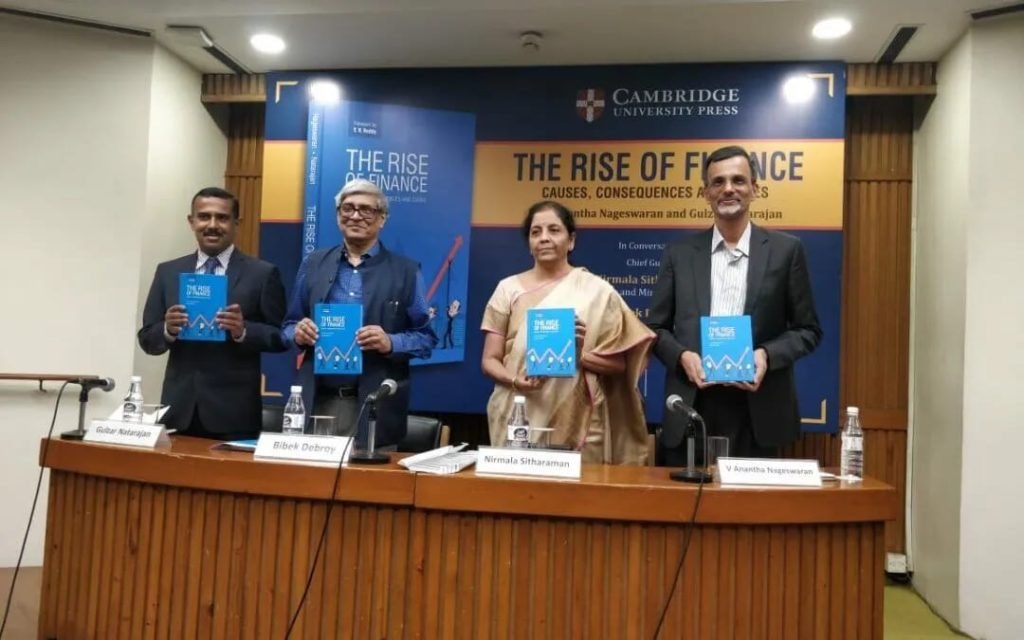
New Chief Economic Adviser Anantha Nageswaran, a right-wing economist, is a Madurai man New Chief Economic Adviser Anantha Nageswaran, a right-wing economist, is a Madurai man Chandrasekaran Balakrishnan February 1, 2022 Tamilnadu Economy Finance Minister Nirmala Sitharaman attends the book launch of ‘The Rise of Finance’ by V Anantha Nageswaran (extreme right) and Gulzar Natarajan on November 10, 2019, as the Chief Guest in New Delhi. Chairman of the Economic Advisory Council to the Hon’ble Prime Minister Bibek Debroy is also present. (Photo Credit: Twitter @nsitharamanoffc)                                                                                                                                    Read in : தமிழ் As the economy recovers from the shackles of the COVID-19 pandemic, the upcoming Union Budget will be looked to as a sign of hope for the year ahead. Along with the Union Budget 2022-2023, the Economic Survey 2021-22 gives the country a chance to improve its economic indices based on the assessment of the previous year through critical data analysis and in-depth research on public policies. In this background, the recent appointment of Dr Venkatraman Anantha Nageswaran as the next Chief Economic Adviser by the Union Finance Ministry is significant. The post had been lying vacant for a month and a half since Dr KV Subramanian demitted office after his three-year term ended December 17, 2021. Anantha Nageswaran is a native of Madurai in Tamil Nadu and is rooted in Indian culture despite having a career that took him across the world over many decades. He is a graduate of commerce from American College, Madurai, who then completed an MBA from the Indian Institute of Management, Ahmedabad in 1985. He has a doctorate from the University of Massachusetts, Amherst, USA. His PhD thesis was on the empirical behavior of exchange rates (1994). Inspired by C Rajagopalachari, B R Ambedkar and B R Shenoy, Anantha Nageswaran subscribes neither to the idea of excessive state control nor unfettered free market systems. He is known to be a pragmatic economist who believes in integrating public policies with Indic ideology. Until recently, he was a part-time Member of the Prime Minister’s Economic Advisory Council from 2019 to 2021. Prior to that, he was the Dean of the IFMR Graduate School of Business, Chennai, and a visiting professor of economics at Krea University, Chennai. He taught financial economics at several business schools and institutes of management in India and Singapore.  He is a member of the Board of Directors in several companies in India, including TVS Logistics and Aparajitha Corporate Services (P) Limited. He co-founded Aavishkaar Venture Capital, an investor venture in Social Enterprises.  He is a co-founder of the Takshashila Institution, a centre for research and education in public policy. The new CEA brings several competencies to the highest level of policymaking in the country, especially at a time when the economy has been fractured by the pandemic, and attempts are being made to stabilise the financial systems with long-lasting governance structures. He comes with optimism about India and its economic fundamentals. Anantha Nageswaran has extensively written about what has been plaguing the Indian economy for years, from the perspective of planning of public policies as well as taking regional economies into consideration. According to Anantha Nageswaran, “The state capability constraint is serious, pervasive, and endemic even as the role of the state remains indispensable to achieving economic prosperity and social stability.” Inspired by C Rajagopalachari, B R Ambedkar and B R Shenoy, Anantha Nageswaran subscribes neither to the idea of excessive state control nor unfettered free market systems. He is known to be a pragmatic economist who believes in integrating public policies with Indic ideology. In 2019, Anantha Nageswaran co-authored a research paper with Gulzar Natarajan titled ‘India’s Quest for Jobs: A Policy Agenda’, published by the Carnegie Endowment for International Peace. “The implementation of any reform is likely to remain suboptimal without a paradigm shift in the way the Indian state views and engages with the private sector,” the paper said. “Instead of taking an adversarial and regulatory-oriented approach, it needs to highlight partnership and facilitation. The anti-big bias reflected in the government and public policy is a problem that has yet to be tackled effectively”. In an article in The Indian Express in November 2020, Anantha Nageswaran wrote: “Demonetization led to formalization of the economy, acted as a catalyst for digitization of financial transactions, stirred a debate about entrenched informality in the economy, and led to re-classification of MSME enterprises and the decriminalization of violations of many penal provisions of the Companies Act.” When many were critiquing the present central government policies, Anantha Nageswaran wrote with optimism in The Indian Express that, “Demonetization led to formalization of the economy, acted as a catalyst for digitization of financial transactions, stirred a debate about entrenched informality in the economy, and led to re-classification of MSME enterprises and the decriminalization of violations of many penal provisions of the Companies Act.” In 2016, he had co-authored a research paper titled “Can India Grow: Challenges, Opportunities, and the Way Forward”. In it, he wrote that “The Indian government should pursue reforms in the areas of higher and lower education; urban governance; housing, land, credit, and labor markets; and infrastructure contracting. It should also seek to shrink the informal economy and expand the tax base, while also improving state capacity and personnel management.” Further, he also stressed the importance of governance at the ground level focusing on district-level delivery mechanisms. This is something most economists ignore. In his analysis, Anantha Nageswaran said, “The district-level bureaucracy, administered by district collectors, has remained virtually the same, both in structure and in personnel deployment, since independence. During the same period, there has been a dramatic expansion in the government’s responsibilities, including development and welfare interventions,

New Chief Economic Adviser Anantha Nageswaran, a right-wing economist, is a Madurai man Read More »

Why TN should fix power sector before shooting for trillion dollar economy

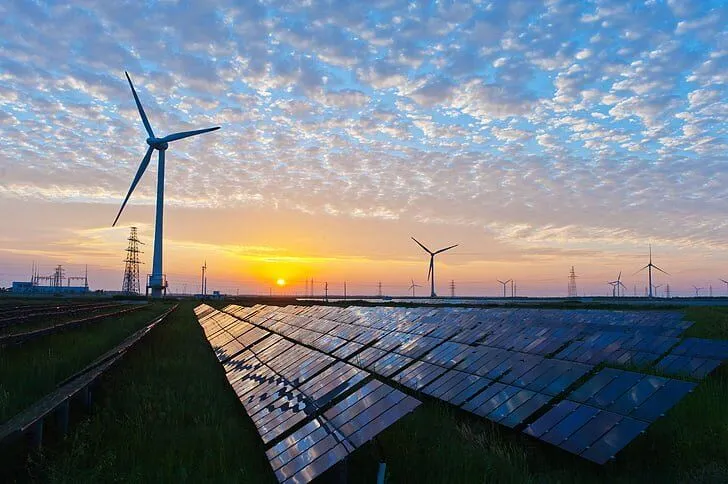
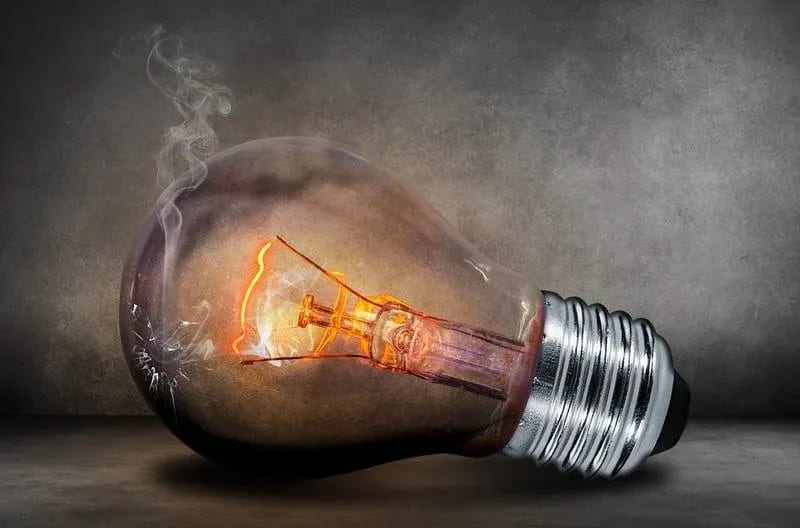
Why TN should fix power sector before shooting for trillion dollar economy Why TN should fix power sector before shooting for trillion dollar economy Chandrasekaran Balakrishnan January 10, 2022 Tamilnadu Economy                                                    TN has to fix its power sector first                                                                    Read in : தமிழ் India as a nation entered the trillion-dollar economy club in 2007. India set a goal in 2018 to become a 5 trillion-dollar economy by 2024-25. Amid this, a few states in India have set a vision of becoming trillion-dollar economies. But this seems overly ambitious even though it is a reflection of the scale of economic activities in India that states can aspire to this goal. Among major states which have set this goal are Uttar Pradesh by 2024, Maharashtra by 2025 and Tamil Nadu by 2030. States like Gujarat, Andhra Pradesh, West Bengal, Karnataka, Rajasthan, Madhya Pradesh are also marching towards the same vision. In the case of Tamil Nadu, in 2020-2021, the state economy stood at $300 billion or approximately Rs 22.2 lakh crore. The state would need investments of an additional Rs 23 lakh crore to reach the trillion dollar mark by 2030 which is double the current size of the economy. A key factor driving economic growth is power generation, distribution, and transmission, which has been in crisis across the country during the last two decades. Despite the efforts of the Union government to address some of the core issues, the states have not recognized the existence of structural flaws and anomalies in their regional economies. In Tamil Nadu, for instance, Technical and Distributional losses are far higher compared to other major states.  In the case of Tamil Nadu, in 2020-2021, the state economy stood at $300 billion or approximately Rs 22.2 lakh crore. The state would need investments of an additional Rs 23 lakh crore to reach the trillion dollar mark by 2030 which is double the current size of the economy.   Tamil Nadu has been a pioneering state in the country in providing power to all sectors. It achieved 100% village electrification much earlier than other states, besides being among the top 10 states in per capita power consumption. In 2018–19, the power sector subsidy in Tamil Nadu was the second largest with 21.1 percent share after food subsidy which was 36.8 percent. Similar magnitudes have been continuing since then. In recent years, there have been several studies that pointed out the importance of the power sector in lubricating regional economies like Tamil Nadu which is the second-largest economy in the country. A study by Delhi-based TERI institute (2017–2030) found that in Tamil Nadu economy “not only did total electricity consumption have high correlation with total GSDP—industrial and agricultural GSDP—but consumption from different sectors was also correlated with the GSDP of the respective sector.” During the last ten years, the cost of power production has increased many fold. Despite several measures, Tangedco’s losses continue to increase on high costs and low recoveries due to a lack of structural and institutional reforms. As Of March 31, 2021, Tamil Nadu’s outstanding debt of power utilities – Tangedco and Tantransco – and STUs was Rs.1.99 lakh crore. The state-owned power generation company’s outstanding debt was Rs.1.24 lakh crore (62.31 percent) (excluding State government loan) and Rs 1.34-lakh crore (67.33 percent) (including State government loan of Rs.4,582.45 crore and UDAY Loan of Rs.4,563.00 crore). Metering farm power The agriculture sector gets free power which is one of the structural flaws in the state. Small farmers are the main losers of most subsidies which only reach big farmers. Also, the domestic sector and the two water boards losses are on a huge scale due to several issues. There is an urgency to set priority to rationalize these sectors as per the guidelines of the Union government which has proposed a robust reform through amendments in the Electricity Act.   The present DMK government’s “White Paper on Tamil Nadu Government Finances” has stressed that public sector undertakings (PSUs) in the State especially the power generation and distribution companies have huge outstanding debts, in the order of 36 percent of GSDP which is significantly higher among major states and greater than the permissible limit of 25 percent. Thus, power sector reform is inevitable if the state doesn’t want to go bankrupt. So far, the state government has been directionless and has no conviction to work towards the vision. Keeping in view of the above aspects, it would be interesting to look at the status of the power sector in Tamil Nadu. As per the Central Electricity Authority, by the end of December 2021, the total installed capacity of power (in MW) of 20 percent is with the State government, 56 percent is with the private sector and 24 percent is with the Union government The State’s share of installed capacity is 9 percent in the country and its share in the southern region is 32 percent. The private sector share is one of the highest in the country and is three times that of the State’s capacity. The State has the largest wind and solar power generation capacity in the country. It would be folly to aim for a trillion-dollar economy without pondering over reforming the institutional governance structure of the power sector which is driving the economy but has not been given enough attention. In any case, the Tamil Nadu government does not seem to be sincerely pursuing the trillion dollar vision. In the two-day Assembly session, out of the dozen bills passed none is related to the trillion dollar vision. Recently, the State government directed all district collectors to identify government land for setting up solar parks to generate

Why TN should fix power sector before shooting for trillion dollar economy Read More »

Maridhas arrest: DMK’s poor record in free speech continues

Maridhas arrest: DMK’s poor record in free speech continues Maridhas arrest: DMK’s poor record in free speech continues Chandrasekaran Balakrishnan December 23, 2021 Tamilnadu Economy Maridhas has been an outspoken person commenting on a wide range of public policy issues                                                                                                                                            Read in : தமிழ் Healthy dissent and public debates are key elements of a vibrant democracy. Bad governance or misgovernance can mar this. Misgovernance is a slow reveal which means that only a few grasp quickly what is going on. Democracy is not a recent import as some believe but has been part of the country’s long history. Unfortunately, in the last two hundred years, the governance model has gone against the decentralized democratic ethos of India. Freedom of expression in a democratic spirit is an important institution as the founding pillar for meaningful debate and discussion. Best-in-class democracies accommodate the views of both sides of the coin without any curbs. In actual practice, elected governments invariably deviate from established constitutional mandates. The outright stifling of freedom of expression in a state like Tamil Nadu is a serious concern. Whenever the DMK has come to power, it has been obsessed with how to manoeuvre laws regulating obscenity, hate speech against one or more communities or religion. The DMK has perfected the methods of influencing the media. The DMK’s interventions in debates have not helped to create consensus. They have abetted rancour. Their nationalist credentials are suspect and they are not committed to the integrity of the country. The newly elected government of Tamil Nadu is no different. The recent arrest of the nationalist writer and commentator Maridhas is an illustration of how power can be predatory. As noted by Prof Arudra Burra (2018) “the discussion of political speech concludes with an account of the 16th amendment in 1963. The amendment made it constitutionally permissible for the state to restrict speech in the interests of protecting the sovereignty and integrity of India: its ostensible aim was to allow for curbs on the advocacy of secession in India, made at the time primarily by the DMK in Tamil Nadu for a separate ‘Dravidistan’. (The advocacy of secession was made officially unlawful only in 1967, which the passage of the Unlawful Activities (Prevention) Act.)…the amendment passed with huge majorities in both houses of parliament, with the sole vote against it from C.M. Annadurai, representing the DMK in the Rajya Sabha”. During the previous tenure, too, there were many attacks on media freedom. News headlines talked about how DMK rule was curbing freedom of expression. Attacks on Thuglak and Kumudham magazines highlighted this. Questions posed by Maridhas related to the political beliefs of then News18 journalists remain unanswered In the last decade, Tamil Nadu has seen a big spurt in street protests instigated by those with Dravidianist agendas. Their main motive is to depolarise the state in the name of protecting Tamil identity. People have the constitutional right to question the affairs of the elected government and its malfunctions. Maridhas was defending the best of our Constitutional mandates in protecting the integrity of the country. He was giving fitting replies to those who were insulting the memory of the martyrs who died in the chopper crash in Nilgiris. Support from court Maridhas had posted a day after the chopper crash that Tamil Nadu is “becoming another Kashmir under the DMK regime” and it gives “freedom to form groups that can do any level of treason against the country”.The tweet added that “in such a state, any kind of conspiracy can be plotted” and that such “separatist elements should be destroyed”. For the above, the police arrested him. However, the Hon’ble Madras High Court Madurai Bench quashed the FIR registered on him by saying that the provisions of sections 153,504, and 505(2) and Section 153 A of IPC were illegally framed. The Madras High Court said that “since the petitioner has been an acerbic critic of the ruling party, he has been falsely implicated”. Further reading the comments of Maridhas, the High Court said that “reading of the petitioner’s tweet only indicates that the petitioner has given a call in favour of national integrity and security. He has taken serious objection to the act committed by certain persons who are undeniably anti-national. The petitioner has called upon the State government to suppress the separatist forces.” The court further went and said that “the petitioner’s intention is that the separatist tendencies must be nipped in the bud…. the petitioner’s tweet was never intended to subvert the Government. On the contrary, it calls for strengthening the foundations of government.” Maridhas has been an outspoken person commenting on a wide range of public policy issues. Maridhas counters the extreme positions taken by the DK and the DMK and“has attacked the ‘holy duo’ of Tamil Nadu relentlessly — Dravidianism and Marxism. With elaborate chart-based presentations, he explains the concepts to his audience. He has become a phenomenal hit among social media users. As of now, Maridhas has been freed from only one case. It is an instance of political vendetta that the ruling government in the State is still chasing him and has registered two more cases in Tirunelveli and Thoothukudi. One case is related to the News18 controversial debates which took place some seventeen months ago. The DMK’s interventions in debates have not helped to create consensus. They have abetted rancour But questions posed by Maridhas related to the political beliefs of then News18 journalists remain unanswered. Another case is related to the spread of COVID-19 in the initial phase when a few people resisted complying with the government’s public health instructions

Maridhas arrest: DMK’s poor record in free speech continues Read More »

Amit Shah language row a needless distraction, non-issue

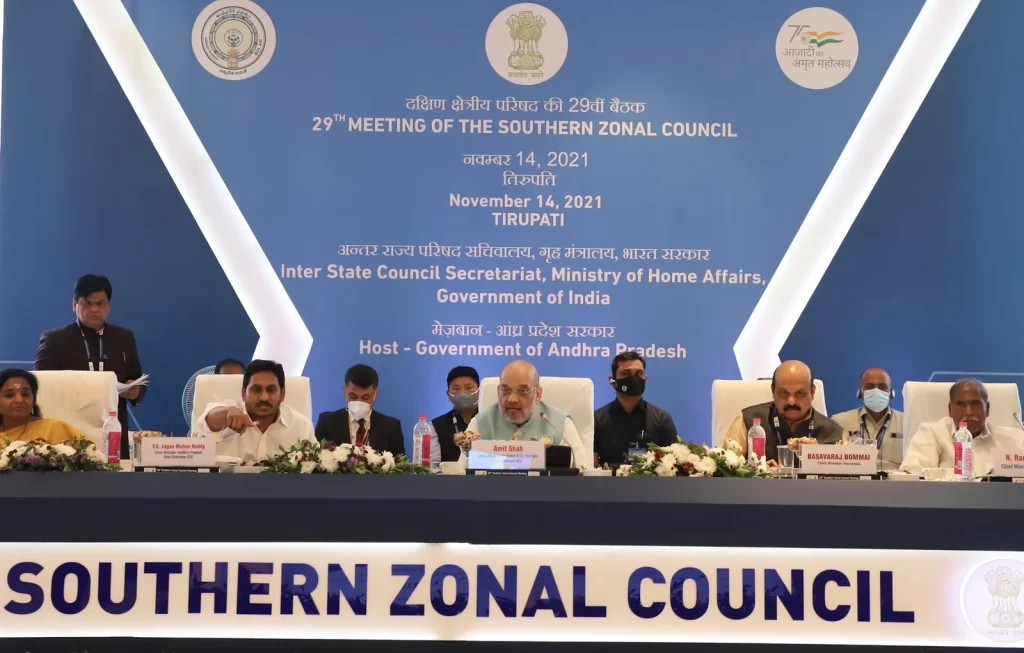
Amit Shah language row a needless distraction, non-issue Amit Shah language row a needless distraction, non-issue Chandrasekaran Balakrishnan December 7, 2021 Tamilnadu Economy Union Home Minister Amit Shah said at the recent Southern Zonal Council meeting that all home ministry files are being written only in Hindi.                                                                                                                                           Read in : தமிழ் Languages evolve and spread when a common cultural norm is created among communities due to social cohesion. This is true of all languages and of Tamil also. No one person or community can claim ownership for the creation and diffusion of languages over time. One may have passion towards a language but obsession is not healthy. This will make people devalue other languages. No language is good or bad. Every language is unique in its own form. People cherish the choice they have to learn and use the language. During the Independence movement, India’s leaders were mostly multilingual in speaking and sometimes in writing as well. But today’s milieu is not conducive to learning one or more languages than the mother tongue. Some crude public debates and discourses have been lingering for several decades now in Tamil Nadu that narrowly propagate one language over others. This goes against the legacy and ethos of the very languages that are promoted. The Tamil vs Hindi or the Tamil vs Sanskrit controversy is doing injustice to the makers of the Constitution of India and its values and principles. The Constitution provides equal opportunities to every citizen to learn their choice of languages without restriction across the country. However, the predatory nature of regional polity is such that one language is mocked. Votebanks are sustained and the media is used to inflame public opinion. These political agencies time and again utterly ignore that Indian society is multilingual and multicultural.   No language is good or bad. Every language is unique in its own form. People cherish the choice they have to learn and use the language The case in point is the reference to the recent remarks made on Hindi language by the current Union home minister at a Southern Zonal Council meeting held at Tirupati. The meeting was attended by southern states’ political representatives and government officials primarily to sort out the underpinning regional and inter-state issues and challenges.Several important aspects were taken up for discussion and were reported that many were resolved (40 out of 51 issues). Unfortunately, the media was interested more in sensationalism to create news and controversy. In a multilingual and multicultural society such as ours, stances on language are bound to be misinterpreted. And the media takes advantage of this to sensationalize. The Indian media has played a key role in sustaining our democracy but in recent times the actual purpose of a vibrant media has got muted. The 29th meeting of the Southern Zonal Council chaired by the Union Home Minister comprised all the southern states and UTs. Today there is a need for a strong Centre-State and inter-state relations in the true spirit of federalism emphasized under the Constitution of India. Five Zonal Councils were set up in 1957 under Section 15-22 of the States Re-organization Act, 1956. The Home Minister is the Chairman of all the five Zonal Councils and the chief ministers of the host state (to be chosen by rotation every year) are the vice-chairmen. Two more ministers from each state are nominated as members by the Governor. The zonal councils primarily aim to resolve disputes and irritants between the Centre and the states and among the states in the zone. The councils discuss a broad range of issues which include boundary-related disputes, security, infrastructure-related matters like road, transport, industries, water, and power, matters about forests and environment, housing, education, food security, tourism, and transport. It has been reported that arrangements were made by the Union government so leaders could speak in their regional languages and their speeches were translated verbatim in English and Hindi. The Tamil Nadu minister for higher education represented the government of Tamil Nadu and “raised the issue of size and capacity of fishing boats to be used in the Indian Exclusive Economic Zone and the transfer of railway lands for Metro Rail projects.” Further, we learn that the Tamil Nadu chief minister had urged the council to “make Tamil one of the official languages of the country” and also to “declare Thirukkural as the National Book”. We do not know whether the state government tried to sort out water sharing issues with states like Kerala. The home minister’s comments about Hindi were not against the spirit of the Constitution nor against regional languages. He said, “Hindi is the friend (sakhee) of all indigenous languages (swabhasha). India’s prosperity lies in the prosperity of our Indian languages”. He also said that “we need to create an environment wherein people take pride in speaking their mother tongue”. Nothing is wrong with these statements. A few people may find fault with this due to their narrow mindset and vested interests though.   When P Chidambaram was home minister during 2008-2012, all the files in the home ministry were written in English, not in Hindi. The reason was that he was comfortable with English. However, his statement, “Today I feel very proud to say that not even a single file is written in English in the Union Home Ministry. We have completely adopted the official language (Hindi)”, become a media sensation and controversial in Tamil media for no valid reason. Those who argue that the above statement is against regional languages tend to forget that when P Chidambaram was home minister during 2008-2012, all the files in the

Amit Shah language row a needless distraction, non-issue Read More »

Mullaiperiyar: A playing field for vested interests in linguistic states

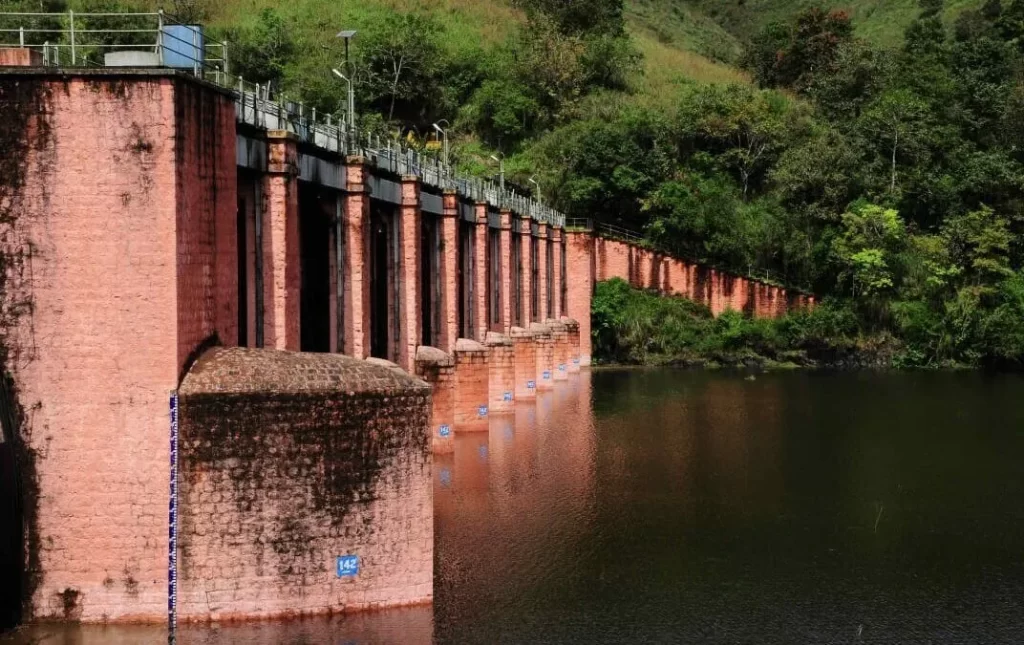
Mullaiperiyar: A playing field for vested interests in linguistic states Mullaiperiyar: A playing field for vested interests in linguistic states Chandrasekaran Balakrishnan November 17, 2021 Tamilnadu Economy Read in : தமிழ் During the freedom struggle against the British, there was a deep sense of oneness among the people. Creation of administratively autonomous states based on language after Independence has become a structural hurdle against national pride.  It has led to miscommunication among the people driven by sentiments. It has also led to a lack of pride in belonging to a diversified civilizational nation with a culture of its own and family value systems. Economic development was pursued based on imported ideas and policies at the cost of environmental, social, and cultural norms. As a result, regional disputes have become festering sores. The Mullaperiyar Dam issue is one such issue that has been persisting since the 1960s showing deeply flawed thinking in Tamil Nadu as well as Kerala.  In a different context, development economist Yamini Aiyar recently stated that “our shared histories, cultures and geographic interconnectedness are a source of great strength and power. But without careful nurturing, these very interconnections and shared histories are a tool for a deep, divisive, and violent politics that is increasingly gaining domestic legitimacy within … across the region. Such a politics will leave each individual nation more vulnerable and at far greater risk of re-living the traumatic violence of its past. A strong, peaceful, connected … is at the heart of protecting national interest within the region.” This is true of the Mullaperiyar dam issue between Kerala and Tamil Nadu as well as the Cauvery water issue between Karnataka and Tamil Nadu and the Krishna water issue between Andhra Pradesh and Tamil Nadu. In 1979, because of the controversy that had erupted, storage level was reduced from a full capacity of 152 ft to 136 ft.   However, as one report rightly stated, “the equation between the two States is far more complex than those of Tamil Nadu with Karnataka. With Kerala,Tamil Nadu has issues on several river waters, such as Parambikulam-Aliyar, Siruvani of the Bhavani sub-basin, Neyyar, and the proposal for linking the Pamba and Achankovil rivers of Kerala with Vaippar of Tamil Nadu. But, in the case of Karnataka, Cauvery is the only river to be considered.” The main dispute is the appropriateness of the dam’s water level. The safety aspects of Mullaperiyar dam trace back to the 1960s when mysterious stories erupted in a national daily after a Kerala flood raising concerns over the safety of the dam. It has been four decades now but safety concerns are yet to be proved scientifically or advanced from the basic features which were cited as main reasons initially. The main dispute is the appropriateness of the dam’s water level. Since the dam commissioning in 1895, almost everything went smoothly for nearly eight decades. In 1979, because of the controversy that had erupted, storage level was reduced from a full capacity of 152 ft to 136 ft. But this did not tamp down fears in Kerala. It is possible there are other factors at work behind the demand for the safety of the dam. Judicial intervention has provided a concrete roadmap for the states. The Supreme Court gave two separate judgments, in 2006 and 2014, and directed that water level can be raised to 152 ft. It also directed the formation of a committee for oversight. So, the system is in place as it should be in a rule-based practicing democracy. Educated, but ill-informed people in academia, a section of the media and film actors are among those who are working against giving the other state its constitutional due, Scientists and experts have gone into the intricacies of dam safety. Courts gave specific mandates for the experts and their opinion formed the basis for judicial intervention. But these have been completely ignored by some media outlets that have launched a campaign against the dam. International forces, academic and non-academic, are working against the interests of both states, thus jeopardizing national interest. Their warnings on dam safety are based on vague estimations and predictions. One such report is “Ageing water infrastructure: An emerging global risk” by United Nations University’s Canada-based Institute for Water, Environment and Health. Instead of producing country-specific working papers and making raw data available in the public domain, the report seeks to make a generic conclusion including on Mullaiperiyar issue that the media in Kerala has recently highlighted as a cause for concern. Poor communication between water management authorities of both states and mismanaging critical situations covering dam water storage, release, maintenance and so on has contributed to the problem. Part of the current controversy is due to the unusual rains and devastating floods in Kerala. Misjudging of the rains and the possibilities of flooding has contributed to the problem. The Mullaperiyar dam comes in handy to divert people’s attention. Poor communication between water management authorities of both states and mismanaging critical situations covering dam water storage, release, maintenance and so on has contributed to the problem. Rejuvenating and restoring hundreds of water bodies like streams, odai, tanks, ponds and lakes, downstream of the dam is not being given enough attention in Tamil Nadu. These measures could boost groundwater and offset the requirement on the water from the dam. But these issues are not given adequate attention. Tamil Nadu and Kerala have much in common and have a shared civilizational journey with many common cultural, family and social values. Both sides should introspect and avoid acrimony while protecting each state’s interests. Unbiased scientific data on dam safety and water use should be the basis of solutions. At present, authorized studies commissioned by governments on dam hydrology, structural stability, and the problem of seismicity are not available in the public domain. One way is for both states to abide by the rule curve set by the Supervisory Committee formed by the Supreme Court. Secondly, bigots on both sides should be quickly punished so distrust between the peoples is

Mullaiperiyar: A playing field for vested interests in linguistic states Read More »

Paying for TN’s welfare budget: Growth projections are a pie in the sky

Paying for TN’s welfare budget: Growth projections are a pie in the sky Paying for TN’s welfare budget: Growth projections are a pie in the sky Chandrasekaran Balakrishnan March 20, 2020 Tamilnadu Economy The state budget has targeted social welfare to create a votebank for the DMK. But achieving overall state prosperity has been ignored.  Read in : தமிழ் The state finance minister, P Thiyagarajan delivered a welfare budget on March 18. But there was little in it to support projections on economic growth and tax buoyancy that would pay for the spending while keeping deficits under control. The budget is not aimed at increasing economic growth and development by leveraging or adding further economic and institutional infrastructures facilities in the state. Several major industrial development projects have been delayed. The broad focus areas highlighted in the budget do not support economic growth. Yet, the budget has projected that the nominal Gross State Domestic Product (GSDP) growth of Tamil Nadu will be 14.0% in 2022-23 and 14.0% in 2023-24. The goal is one trillion dollar economy by 2030. The budget forecasts some 25% growth in tax revenues to pay for welfare expenses and keep deficits under control. This can come only with high economic growth. The announcement made in the budget for setting up of new industrial parks in districts like Coimbatore, Perambalur, Madurai, Vellore, and Thiruvallur is not backed up with specific sector specialisation or tie-up with major industries houses. Growth estimations in the budget are too ambitious and do not match ground realities. The environment is not conducive for rapid economic growth. Economic growth will come from manufacturing and services sectors largely. But the MSME sector has been allocated a measly Rs 911.5 crore. Tamil Nadu has about five million MSMEs which accounts for an 8% share all-India and the third-highest in the country. The sector employs 10 million people (Male-7 million and Female-3 million). According to the Union MSME ministry, as of November 26, 2021, in the Udyam registration portal, 6.23 lakhs units were registered from Tamil Nadu, During the last two years’ pandemic period, the MSMEs sector was most hit by loss of employment, wealth generation, etc. The state budget failed to take into account the severe pains and financial stresses faced by this sector. The budget provision of Rs.100 crore for the Tamil Nadu Credit Guarantee Scheme for MSMEs is just not adequate. There is no indication at all in the state budget that the state has approved the pilot phase scheme on January 4, 2022, through which Rs 100 crore will be disbursed by the end of March 31, 2022. The allocation for industries department, which generates employment directly or indirectly, of Rs.3,267.91 crore is paltry. There is talk about boosting public infrastructure facilities to promote exports from the State with a target of $100 billion by 2030. But the budget has largely ignored this. Service sector has been ignored even more. The announcement made in the budget for setting up of new industrial parks in districts like Coimbatore, Perambalur, Madurai, Vellore, and Thiruvallur is not backed up with specific sector specialisation or tie-up with major industries houses. Except Perambalur, many of these districts already have industries. No fund allocation has been made for the development of parks. In the past, many such announcements were made with or without funds allocation but nothing happened even after years of demands from industries associations and entrepreneurs in the state. The overall allocation of Rs.20,400.24 crore for the Municipal Administration and Water Supply Department which covers more than 54% of the State population is not adequate given the acute shortage of quality urban infrastructure and services. The token amount of Rs 10 crore each allocated in the budget for newly created city corporations like Tambaram, Kanchipuram, Kumbakonam, Karur, Cuddalore, and Sivakasi serves little purpose. The following announcements made in the state budget for urban areas could address long pending structural issues. They can make a difference if implemented properly. State’s share of Rs 2,169 crore allocated for municipal solid waste management to improve sanitation under Swachh Bharat Mission 2.0 scheme of Union Government Rs 2,130 crore for projects of water supply and sewage management under the AMRUT Scheme of Union Government. The Outer Ring Road from Minjur to Vandalur with a length of 62 km proposed to be developed as a Development Corridor with the establishment of large-scale residential complexes, SIPCOT industrial parks, recreational spots, warehouses, horticulture parks, organic food processing zones, and plug-and-play facilities for industrial development along this corridor. Unless the state government rationalises power subsidies through a Direct Beneficiary Scheme, losses cannot be arrested The new scheme, Kalaignar Nagarpura Membattu Thittam, and Singara Chennai 2.0 have been allocated Rs 1,000 crore and Rs 500 crore, respectively. It is not clear how this scheme will be different from the ongoing smart city projects. It could be just that the ruling party wanted to have its own scheme though the budget has allocated Rs 1,875 crore for the Smart Cities Programme. Given the crisis of the power sector in the state, the budget did not talk about promoting alternative energy sources such as solar and wind. The state finance minister did say: “Tamil Nadu Generation and Distribution Company (TANGEDCO) is a matter of grave concern as it continues to incur huge losses every year”. But the budget bore 100% of Tangedco’s losses for the current year (2021-22) and further gave Rs 9,379 crore to reimburse the tariff subsidies being provided by the Government. Unless the state government rationalises the subsidies through a Direct Beneficiary scheme the losses cannot be arrested in the state. The budget announcement of loan waivers of Rs.4,131 crore would erode institutional morality and credit availability for dutiful citizens who repay on time. Loan waivers only give wrong ideas. In sum, the state budget has targeted social welfare to create a votebank for the DMK. But achieving overall state prosperity has been ignored. AI, blockchain, innovations, R&D, specialised recycling centres, eco-friendly processing systems and other cutting edge

Paying for TN’s welfare budget: Growth projections are a pie in the sky Read More »

Global Investors Meet: How the TN govt rolled back its claims

Global Investors Meet: How the TN govt rolled back its claims Global Investors Meet: How the TN govt rolled back its claims Chandrasekaran Balalrishnan February 2, 2014 latest Investors may be drawn to other states by good governance and ease-of-doing business. The Tamil Nadu story is one of human capital, natural resources and good core infrastructure like good roads, ports, airports, waterways, railways and affordable power. Human capital has been depleting because of migration of skilled labour to other states and countries due to the deteriorating social and education institutional infrastructure in the state. Even the former Chief Economic Adviser of India, Arvind Subramanian, and Raghuraman Rajan have raised concerns. Arvind Subramanian has specifically said that “the social infrastructure in Tamil Nadu is not as attractive as Mumbai, Pune, Hyderabad, NCR, and Bangalore”. The liquor policy and monopoly production model have led to the situation. Nevertheless, successive state governments have done their bit in facilitating investment beyond the endemic corruption in the process of getting approvals from the village through district to the capital itself. Recognizing the continued flight of human capital, they’ve endeavored to leverage other strengths such as natural resources and infrastructure. Better law and order, relatively speaking, and less industrial conflict have also been pluses for the state. Meanwhile, state-level global investor meets have become huge publicity events. Gujarat started it in 2003 and has since organized 10 such events. Easy access to the top political leadership has helped the state draw top corporates. Human capital has been depleting because of migration of skilled labour to other states and countries due to the deteriorating social and education institutional infrastructure in the state Tamil Nadu has organized three such summits with the vision of achieving a trillion dollar economy by 2030 – 2015, 2019 and in 2029. According to the department of Guidance Bureau, “in the year 2021-22, Guidance signed MOUs with 130 companies with a committed investment of Rs 68,375 crore and employment generation for 2,05,802 persons and in 2022-23 Guidance has signed 77 MOUs with an investment commitment of Rs 1,54, 834 crore and employment commitment for 1,38,348 persons.” Major Focus Sectors for the latest global investors meet 2024 were “Automobile and Auto Components, Chemicals, Electronics & Hardware, Heavy Engineering, Leather, Textiles, Financial Services, and Software”. The Guidance Bureau has said that a total of 631 MoUs were signed with an investment commitment of Rs 6,64,180 crores which will result in the creation of direct employment opportunities for more than 14.5 lakh persons and total employment for some 27 lakh. The industries department attracted 57 percent of new investments, the energy department attracted 20 percent, housing and urban development attracted 9 percent, and, sadly, IT and Digital services attracted only 3 percent. Also Read: Before Stalin, Edappadi was in Dubai; policy continuity The actual investments attracted from outside the state are Rs 6,00,607 crores. The remaining Rs.63,573 crores have been generated by the MSME sector within the state through the District Industries Centres (DIC). Thus, 10 percent of investments were attracted from within the state which was not highlighted in the meeting. The investments attracted by major sectors as reported by the state government are “advanced electronics manufacturing, Green energy, Non-leather footwear, Automobiles and e-vehicles, Defence and aerospace, Data centres, Global capability centres, Information Technology and Digital services, etc”. This means the state’s core sectors such as chemicals, heavy engineering, and financial services had ceased to be as attractive. Typically, states use such summits for the purpose of image and brand building. Mindless glorification of the current political leadership characterizes the events. There is little transparency regarding how many of these committed investments are actually converted into implemented on the ground. In the TN summit held this year, the exhibition was impressive. The stalls of companies were up to global standards. But the technical sessions were just not weighty enough. Poor planning, inadequate space and time and sequencing were dampeners. The general public were allowed into the technical sessions that cramped the space for policy experts to participate meaningfully in the discussions. The buyer-seller meeting facilitation was poor. The state government said in its press release that “exporters from more than 20 countries interacted with more than 500 MSMEs.” This was not the reality on the ground. Few agencies participated. The atmosphere was that of a vegetable market. In the TN summit held this year, the exhibition was impressive. The stalls of companies were up to global standards. But the technical sessions were just not weighty enough. Poor planning, inadequate space and time and sequencing were dampeners. The State Industries Minister said on Jan 23, days after the summit, that the state government aims to convert “at least 70%” of the MoUs that the state signed in the recent Global Investors Meet 2024. So only some Rs 4.65 lakh is being promised to come to fruition. This means Rs 2 lakh crore of investments will not come through at the very outset. This implies the MoUs were signed without sufficient homework. How many of these were major employment generators that got lost in the adulatory statistics and initial promises?  Tamil Nadu’s economic development continues to be uneven. Districts like Dharmpuri, Villpuruam and some southern districts continue to fare poorly. The quality of new investments has to be assessed in terms of addressing this regional imbalance.  In sum, this summit bears out the fact that the state will not grow at 18% that it needs to notch up every year for the next seven years to achieve the trillion dollar economy target by 2030. A major rethink in strategy is required. Providing digital services to the people matched with good governance can be a significant contributor to growth. Enhanced delivery of welfare and other schemes can be a growth driver and speed up investments. That doesn’t seem to be happening. If things continue, Tamil Nadu may fall behind fast growing states such as Uttar Pradesh in performance.  (The author is an economist and public policy expert)     

Global Investors Meet: How the TN govt rolled back its claims Read More »