Tamilnadu Economy

Paying for TN’s welfare budget: Growth projections are a pie in the sky

Paying for TN’s welfare budget: Growth projections are a pie in the sky Paying for TN’s welfare budget: Growth projections are a pie in the sky Chandrasekaran Balakrishnan March 20, 2020 Tamilnadu Economy The state budget has targeted social welfare to create a votebank for the DMK. But achieving overall state prosperity has been ignored.  Read in : தமிழ் The state finance minister, P Thiyagarajan delivered a welfare budget on March 18. But there was little in it to support projections on economic growth and tax buoyancy that would pay for the spending while keeping deficits under control. The budget is not aimed at increasing economic growth and development by leveraging or adding further economic and institutional infrastructures facilities in the state. Several major industrial development projects have been delayed. The broad focus areas highlighted in the budget do not support economic growth. Yet, the budget has projected that the nominal Gross State Domestic Product (GSDP) growth of Tamil Nadu will be 14.0% in 2022-23 and 14.0% in 2023-24. The goal is one trillion dollar economy by 2030. The budget forecasts some 25% growth in tax revenues to pay for welfare expenses and keep deficits under control. This can come only with high economic growth. The announcement made in the budget for setting up of new industrial parks in districts like Coimbatore, Perambalur, Madurai, Vellore, and Thiruvallur is not backed up with specific sector specialisation or tie-up with major industries houses. Growth estimations in the budget are too ambitious and do not match ground realities. The environment is not conducive for rapid economic growth. Economic growth will come from manufacturing and services sectors largely. But the MSME sector has been allocated a measly Rs 911.5 crore. Tamil Nadu has about five million MSMEs which accounts for an 8% share all-India and the third-highest in the country. The sector employs 10 million people (Male-7 million and Female-3 million). According to the Union MSME ministry, as of November 26, 2021, in the Udyam registration portal, 6.23 lakhs units were registered from Tamil Nadu, During the last two years’ pandemic period, the MSMEs sector was most hit by loss of employment, wealth generation, etc. The state budget failed to take into account the severe pains and financial stresses faced by this sector. The budget provision of Rs.100 crore for the Tamil Nadu Credit Guarantee Scheme for MSMEs is just not adequate. There is no indication at all in the state budget that the state has approved the pilot phase scheme on January 4, 2022, through which Rs 100 crore will be disbursed by the end of March 31, 2022. The allocation for industries department, which generates employment directly or indirectly, of Rs.3,267.91 crore is paltry. There is talk about boosting public infrastructure facilities to promote exports from the State with a target of $100 billion by 2030. But the budget has largely ignored this. Service sector has been ignored even more. The announcement made in the budget for setting up of new industrial parks in districts like Coimbatore, Perambalur, Madurai, Vellore, and Thiruvallur is not backed up with specific sector specialisation or tie-up with major industries houses. Except Perambalur, many of these districts already have industries. No fund allocation has been made for the development of parks. In the past, many such announcements were made with or without funds allocation but nothing happened even after years of demands from industries associations and entrepreneurs in the state. The overall allocation of Rs.20,400.24 crore for the Municipal Administration and Water Supply Department which covers more than 54% of the State population is not adequate given the acute shortage of quality urban infrastructure and services. The token amount of Rs 10 crore each allocated in the budget for newly created city corporations like Tambaram, Kanchipuram, Kumbakonam, Karur, Cuddalore, and Sivakasi serves little purpose. The following announcements made in the state budget for urban areas could address long pending structural issues. They can make a difference if implemented properly. State’s share of Rs 2,169 crore allocated for municipal solid waste management to improve sanitation under Swachh Bharat Mission 2.0 scheme of Union Government Rs 2,130 crore for projects of water supply and sewage management under the AMRUT Scheme of Union Government. The Outer Ring Road from Minjur to Vandalur with a length of 62 km proposed to be developed as a Development Corridor with the establishment of large-scale residential complexes, SIPCOT industrial parks, recreational spots, warehouses, horticulture parks, organic food processing zones, and plug-and-play facilities for industrial development along this corridor. Unless the state government rationalises power subsidies through a Direct Beneficiary Scheme, losses cannot be arrested The new scheme, Kalaignar Nagarpura Membattu Thittam, and Singara Chennai 2.0 have been allocated Rs 1,000 crore and Rs 500 crore, respectively. It is not clear how this scheme will be different from the ongoing smart city projects. It could be just that the ruling party wanted to have its own scheme though the budget has allocated Rs 1,875 crore for the Smart Cities Programme. Given the crisis of the power sector in the state, the budget did not talk about promoting alternative energy sources such as solar and wind. The state finance minister did say: “Tamil Nadu Generation and Distribution Company (TANGEDCO) is a matter of grave concern as it continues to incur huge losses every year”. But the budget bore 100% of Tangedco’s losses for the current year (2021-22) and further gave Rs 9,379 crore to reimburse the tariff subsidies being provided by the Government. Unless the state government rationalises the subsidies through a Direct Beneficiary scheme the losses cannot be arrested in the state. The budget announcement of loan waivers of Rs.4,131 crore would erode institutional morality and credit availability for dutiful citizens who repay on time. Loan waivers only give wrong ideas. In sum, the state budget has targeted social welfare to create a votebank for the DMK. But achieving overall state prosperity has been ignored. AI, blockchain, innovations, R&D, specialised recycling centres, eco-friendly processing systems and other cutting edge

Paying for TN’s welfare budget: Growth projections are a pie in the sky Read More »

Global Investors Meet: How the TN govt rolled back its claims

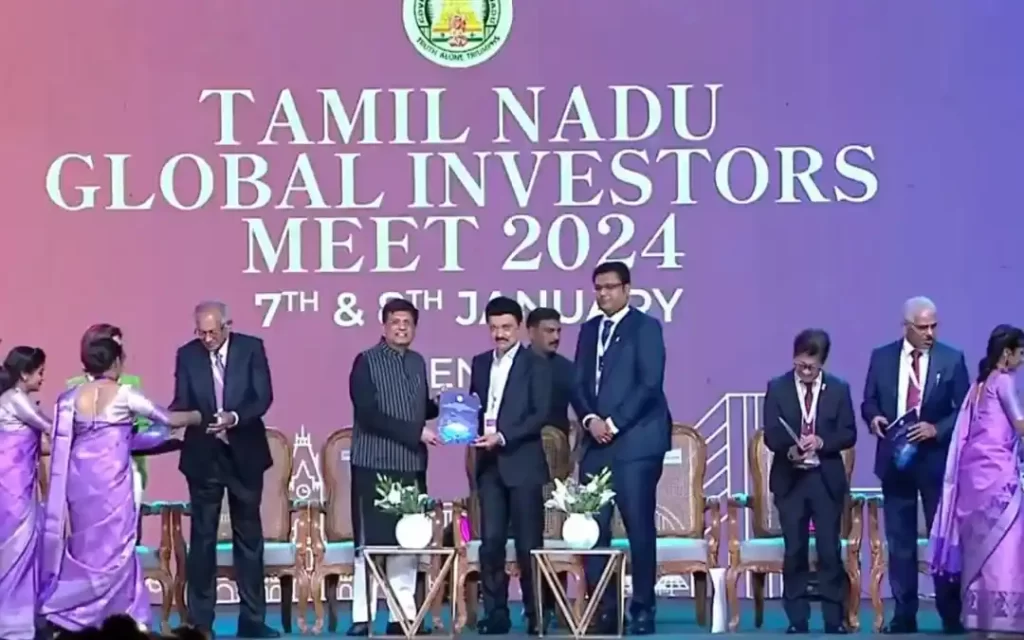
Global Investors Meet: How the TN govt rolled back its claims Global Investors Meet: How the TN govt rolled back its claims Chandrasekaran Balalrishnan February 2, 2014 latest Investors may be drawn to other states by good governance and ease-of-doing business. The Tamil Nadu story is one of human capital, natural resources and good core infrastructure like good roads, ports, airports, waterways, railways and affordable power. Human capital has been depleting because of migration of skilled labour to other states and countries due to the deteriorating social and education institutional infrastructure in the state. Even the former Chief Economic Adviser of India, Arvind Subramanian, and Raghuraman Rajan have raised concerns. Arvind Subramanian has specifically said that “the social infrastructure in Tamil Nadu is not as attractive as Mumbai, Pune, Hyderabad, NCR, and Bangalore”. The liquor policy and monopoly production model have led to the situation. Nevertheless, successive state governments have done their bit in facilitating investment beyond the endemic corruption in the process of getting approvals from the village through district to the capital itself. Recognizing the continued flight of human capital, they’ve endeavored to leverage other strengths such as natural resources and infrastructure. Better law and order, relatively speaking, and less industrial conflict have also been pluses for the state. Meanwhile, state-level global investor meets have become huge publicity events. Gujarat started it in 2003 and has since organized 10 such events. Easy access to the top political leadership has helped the state draw top corporates. Human capital has been depleting because of migration of skilled labour to other states and countries due to the deteriorating social and education institutional infrastructure in the state Tamil Nadu has organized three such summits with the vision of achieving a trillion dollar economy by 2030 – 2015, 2019 and in 2029. According to the department of Guidance Bureau, “in the year 2021-22, Guidance signed MOUs with 130 companies with a committed investment of Rs 68,375 crore and employment generation for 2,05,802 persons and in 2022-23 Guidance has signed 77 MOUs with an investment commitment of Rs 1,54, 834 crore and employment commitment for 1,38,348 persons.” Major Focus Sectors for the latest global investors meet 2024 were “Automobile and Auto Components, Chemicals, Electronics & Hardware, Heavy Engineering, Leather, Textiles, Financial Services, and Software”. The Guidance Bureau has said that a total of 631 MoUs were signed with an investment commitment of Rs 6,64,180 crores which will result in the creation of direct employment opportunities for more than 14.5 lakh persons and total employment for some 27 lakh. The industries department attracted 57 percent of new investments, the energy department attracted 20 percent, housing and urban development attracted 9 percent, and, sadly, IT and Digital services attracted only 3 percent. Also Read: Before Stalin, Edappadi was in Dubai; policy continuity The actual investments attracted from outside the state are Rs 6,00,607 crores. The remaining Rs.63,573 crores have been generated by the MSME sector within the state through the District Industries Centres (DIC). Thus, 10 percent of investments were attracted from within the state which was not highlighted in the meeting. The investments attracted by major sectors as reported by the state government are “advanced electronics manufacturing, Green energy, Non-leather footwear, Automobiles and e-vehicles, Defence and aerospace, Data centres, Global capability centres, Information Technology and Digital services, etc”. This means the state’s core sectors such as chemicals, heavy engineering, and financial services had ceased to be as attractive. Typically, states use such summits for the purpose of image and brand building. Mindless glorification of the current political leadership characterizes the events. There is little transparency regarding how many of these committed investments are actually converted into implemented on the ground. In the TN summit held this year, the exhibition was impressive. The stalls of companies were up to global standards. But the technical sessions were just not weighty enough. Poor planning, inadequate space and time and sequencing were dampeners. The general public were allowed into the technical sessions that cramped the space for policy experts to participate meaningfully in the discussions. The buyer-seller meeting facilitation was poor. The state government said in its press release that “exporters from more than 20 countries interacted with more than 500 MSMEs.” This was not the reality on the ground. Few agencies participated. The atmosphere was that of a vegetable market. In the TN summit held this year, the exhibition was impressive. The stalls of companies were up to global standards. But the technical sessions were just not weighty enough. Poor planning, inadequate space and time and sequencing were dampeners. The State Industries Minister said on Jan 23, days after the summit, that the state government aims to convert “at least 70%” of the MoUs that the state signed in the recent Global Investors Meet 2024. So only some Rs 4.65 lakh is being promised to come to fruition. This means Rs 2 lakh crore of investments will not come through at the very outset. This implies the MoUs were signed without sufficient homework. How many of these were major employment generators that got lost in the adulatory statistics and initial promises?  Tamil Nadu’s economic development continues to be uneven. Districts like Dharmpuri, Villpuruam and some southern districts continue to fare poorly. The quality of new investments has to be assessed in terms of addressing this regional imbalance.  In sum, this summit bears out the fact that the state will not grow at 18% that it needs to notch up every year for the next seven years to achieve the trillion dollar economy target by 2030. A major rethink in strategy is required. Providing digital services to the people matched with good governance can be a significant contributor to growth. Enhanced delivery of welfare and other schemes can be a growth driver and speed up investments. That doesn’t seem to be happening. If things continue, Tamil Nadu may fall behind fast growing states such as Uttar Pradesh in performance.  (The author is an economist and public policy expert)     

Global Investors Meet: How the TN govt rolled back its claims Read More »