
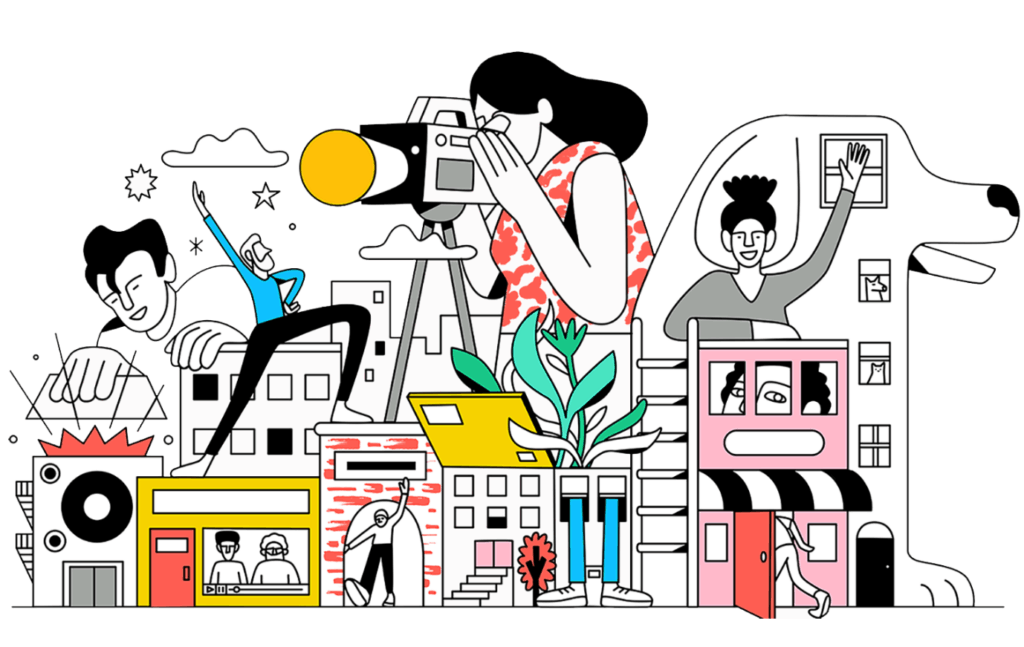
Cultural and Creative Economy is an emerging economic field that offers not only well meaning to creative pursuits but also wealth and soft power. It is like invoking goddesses—Saraswati, Laxmi, and Durga. Culture and creativity are akin to the collective psyche of our nation, which can be seen in every nook and corner of the country as a civilisation, including in grand form during events such as Republic Day or the G20 Summit.
The United Nations Conference on Trade and Development (UNCTAD) defines creative industries as creation, production, and distribution cycles that leverage creativity and intellectual capital. These industries encompass knowledge-based activities focusing on culture and heritage, including tangible and intangible creative products with economic value.
The creative economy is an evolving concept that drives economic growth, supports job creation, and fosters social inclusion and cultural diversity. It emphasises integrating economic, political, cultural, and social aspects with technology and intellectual property. The latest edition of Creative Economy Outlook 2024 by UNCTAD observes that the creative economy is rapidly growing, especially in developing countries, and that it contributes significantly to economic development and job creation.
The creative industry in India is a self-organizing sector. Indian government fully recognizes the importance of the sector including the culture and cultural industries as sources of socio-economic development, livelihood generation, and wealth creation as well as the well-being of individuals.
The creative sector overarches over two dozen or more departments, ministries, and national institutions. By engaging with business organizations, institutions, and experts, the scope and viability of the sector are being explored. However, given the nature of complexities- defining and mapping the creative sector for evidence-based policymaking poses a formidable challenge.
Nevertheless, the sentiment of prioritising the sector echoes in the address of the Prime Minister while inaugurating the World Heritage Committee meeting in New Delhi last year and this year Waves Summit 2025 at Mumbai. He highlighted the vision of linking heritage with growth and development, the Orange Economy. He asserts that the cultural and creative industry would be an important factor in global growth. Eventually, industry bodies and associations have been voicing collective actions towards a policy for the creative sector.
As reported by Creative Economy Outlook 2024; some of India’s advantageous positions include – India tops in film producer position, contributing 29% of the global volume in 2022 and record box office revenues reaching around US$ 1.4 billion in 2023. Among developing economies, India is at 3rd after China, and Hongkong (SAR) in exporting creative goods in 2022. India exported 21 billion USD which is a 2.9% share of world export of creative goods. It is 4.6% of the total exports of our country.
India is in 4th position in the world (both developed and developing countries) after the USA, Germany, and Japan in the publishing industry. India is on top amongst developing countries both in terms of revenue and number of ISBN registrations (281 091) in 2022. India’s growth in the video games segment is projected to grow at 18.3%. It is one of the top ten creative goods importers in 2022 with an import record of 5.6 billion USD which is a 0.9% share of world imports of creative goods and a 2.2% share of creative goods from the country’s total imports.
Some of the concerns are also being raised by some of the multilateral institutions with regard to India. According to ILO data in Arts, entertainment, and recreation, the average share of women in the creative industries fluctuates from 80.5% in the Dominican Republic to 6.5% in India, alongside a global average of around 38% (ILO, 2024).
A study conducted by ADB about India’s economy finds that the concentration of creative jobs is significantly higher in urban areas, with a substantial 67.1% of all creative workers residing there. In contrast, rural areas have a much lower proportion of creative workers at only 29.6%. Moreover, while the creative workforce makes up 8% of India’s overall employment, it constitutes approximately 17% of total urban employment but just 4.1% of total rural employment (Asian Development Bank, 2022b).
The UNCTD reports that several economies, especially developing economies including India do not have adequate services trade data to calculate creative services exports. However, this does not mean India doesn’t export creative services. Lack of robust regulation and enforcement, the Indian entertainment sector experiences an annual revenue loss of approximately US $2.8 billion due to digital piracy.
Culture unites all and is a tool for track-II diplomacy. Given the size and quality of our diaspora; it continues to enable India as a soft power. It is becoming quite foundational in India with the implementation of the New Education Policy that guarantees equal access to creative and cultural experiences to innovate through traditional, conventional as well as in new technological mediums like AI.
For expansion of these creative experiences beyond socio-cultural towards the viable market; component-wise dissection of the creative sector is required to plan for multidimensional interventions. This is possible or viable even in the absence of a clear definition. Innovations and acceleration of activities with market regulations and effective enforcement can help make it a robust sector.
A new report by the Boston Consulting Group (BCG), titled “From Content to Commerce: Mapping India’s Creator Economy”, set to be launched tomorrow (3rd May 2025) at WAVES 2025 in Mumbai, will reveal that India’s creators currently influence over $350 billion in consumer spending annually — a figure expected to surpass $1 trillion by 2030.
- The report highlights that India is home to 2 to 2.5 million active digital creators, defined as individuals with over 1,000 followers.
- The creator ecosystem’s direct revenues, estimated at $20–25 billion today, are projected to reach $100–125 billion by the end of the decade.
- Creators influence more than 30% of consumer decisions, shaping $350–400 billion in spending today.
Moreover, policymaking may be a long and lengthy process but identifying the barriers within the sector is a way to tap the bottlenecks and move towards a framework of actions and interventions in leveraging the economic potentials of the sector for optimum growth and development.
The Author is a Delhi-based Independent Consultant and formerly worked with NITI Aayog and NCPCR, Government of India, New Delhi.
The Author is a Research Fellow at the AgaPuram Policy Research Centre.
Views expressed by the authors are personal and need not reflect or represent the views of the AgaPuram Policy Research Centre.