Education

Time for the Bear to be Bullish on Indian Higher Education

Time for the Bear to be Bullish on Indian Higher Education Time for the Bear to be Bullish on Indian Higher Education Saravanan M January 30, 2026 Education, Higher Education, Public Policy, World Economy In the late 1950s and early 1960s, four Indian Institutes of Technology (IITs) were established with the support of four countries– the Soviet Union (now the Russian Federation), the United States, the United Kingdom, and Germany. While the latter three are amongst the most favourite higher education destinations of Indian students, along with Canada and Australia, Russia still punches below its weight. However, the current global situation presents an opportune moment for Russia to become a top higher education provider, through a strategic educational partnership with India. Why India? India reclaimed its position as the leading country of origin for international students in 2023–24, overtaking China, which had held the top spot since 2009–10. India had also been the largest source of international students for eight successive years prior to that. Together, India and China account for more than 50 per cent of all international students worldwide. Russia has a total student population of about 4 million, of which international students constitute nearly 8 per cent. A majority of these students come from India, China, and CIS countries. Although Russia maintains cordial relations with both India and China, historically it has shared a comparatively more stable and long-standing partnership with India. Moreover, given China’s growing economic presence and its ambition to develop as a global higher education hub, India emerges as a more strategically favourable partner for Russia across sectors, particularly in higher education. In recent years, Russia has been gaining increasing attention among Indian students. The number of Indian students in the country grew from nearly 20,000 in 2022 to over 31,000 in 2024. In contrast to other major destinations such as the US, the UK, and Canada, where Indian student enrolment has fluctuated due to policy changes and other factors, Russia has experienced continuous and gradual growth in the number of Indian students choosing its universities. Global Context Almost all major economic powers are becoming increasingly protectionist. The Make America Great Again (MAGA) movement in the US has intensified tariff barriers against several countries and tightened visa regulations. Consequently, the US may experience structural shifts in its economy and polity, including the higher education sector. The underlying narrative driving these shifts is the belief that immigrants are taking away jobs meant for Americans. While the quality of higher education is a key driver of student mobility, the prospect of post-graduation employment is an equally crucial determinant. With the current headwinds facing immigrants in the US job market, it is unlikely that the inflow of international students into American universities will continue to grow at the same pace. The Canadian and the UK economies are also facing challenges, with reports of rising unemployment among young immigrant graduates in Canada. Australian higher education is expensive compared to Germany and Russia. Given the prevalent situation, Russia would not find a more favourable period to strengthen the international segment of its higher education system. Untapped Indian Higher Education Space The Indian higher education landscape has undergone drastic changes over the years. From being largely an importer of educational services by sending its students abroad, the country is in the process of internationalising its domestic sector. Internationalising the curriculum is at the core of many Indian universities. Following the 2022 UGC regulations, Indian universities have begun collaborating with foreign universities through joint, twinning, and pathway programs. As per news reports, Deakin University, University of Wollongong, Victoria University, Western Sydney University from Australia; Istituto Europeo di Design from Italy; University of Southampton and University of Liverpool from the UK; and Illinois Institute of Technology from the US have received approval to establish their campuses in India, under 2023 UGC regulations. In the near future, these developments are expected to cater to a segment of Indian students, who would otherwise study abroad. Even for those who seek an overseas campus experience, short-term immersion courses can be designed to ensure foreign experience. The unused potential of India for foreign institutions is humongous, and Russia is well-positioned to leverage it for mutual benefit. Russian Strength Russia is reputed for producing world-class mathematicians, doctors, physicists, chemists and programmers, among others. STEM programs account for 55 per cent of total international enrolments. As Russia already offers a bouquet of STEM programs, including programs in English language, Indian students would find Russia very suitable. The decades-old technological and cultural relationship that India and Russia have will facilitate a stronger educational partnership. Russia already has a strong base with the India-specific plan, like Russian-Indian Network, supported by IIT-Bombay. All it needs to do is scale up and expedite the process. Language may not be a major hindrance, as Indian students also study in Germany, France, Japan, China, Korea, where most programs are not taught in English. Win-Win Partnership Russia has already averred its willingness for “no limits” strategic partnership with India, similar to its existing arrangement with China. When intent is positive, the global situation is conducive, and the Indian policy ecosystem is welcoming, there is every reason to believe that the long-neglected sector of higher education would get the attention it deserves. Strengthening this partnership would not only advance education, research, and innovation, but also enhance the soft power of both nations. Dr.M Saravanan, is specialised in Higher Education and Founder Secretary of the AgaPuram Policy Research Centre, Erode. Views expressed by the author are personal and need not reflect or represent the views of the AgaPuram Policy Research Centre.

Time for the Bear to be Bullish on Indian Higher Education Read More »
Use of Artificial Intelligence Tools in Tamil Nadu Government Schools

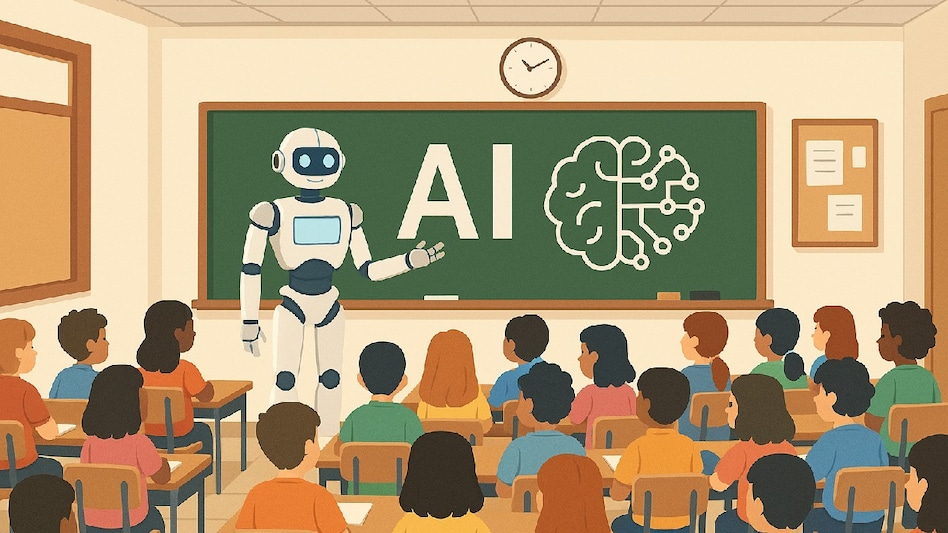
Use of Artificial Intelligence Tools in Tamil Nadu Government Schools Use of Artificial Intelligence Tools in Tamil Nadu Government Schools Charanya T December 18, 2025 Child Development, Education, Public Policy, Skills Development Sector Artificial Intelligence (AI) is becoming an important part of education in many parts of the world. In India, Tamil Nadu has taken several steps to introduce AI and digital technologies in government schools. These initiatives aim to improve learning, administration, and access to modern education, especially for students from government schools. This article examines how AI initiatives in Tamil Nadu government schools are transforming learning while also highlighting the challenges of implementation. As India embarks on its ambitious INDIAai Mission towards the Safe and Trusted AI pillar, which underscores the commitment to ensuring safety, accountability, and ethical practices in AI development and deployment. The mission aims to empower innovators and democratise AI benefits across sectors by promoting indigenous frameworks, robust governance tools, and self-assessment guidelines. One important initiative taken by the government of Tamil Nadu through its Tamil Nadu e-Governance Agency (TNeGA) is the introduction of AI-based attendance systems in schools for students. This system uses technologies such as facial recognition to mark attendance automatically. It helps reduce manual work for teachers and improves accuracy in attendance records. The data collected through this system can help school authorities understand student attendance patterns and take steps to reduce absenteeism and dropouts. Another major development is the decision to introduce AI, coding, and robotics for government students in Classes 6 to 9 starting from the academic year 2025-26. This move brings new technology-based subjects into the regular school curriculum. Learning coding and AI at a young age helps students develop logical thinking, problem-solving skills, and creativity. This is especially beneficial for students in government schools who may not get exposure to such skills outside the classroom. Before implementing these changes across the state, the Government of Tamil Nadu introduced pilot programmes in selected government schools, covering around 3,000 schools across the state. According to official pilot programme reports of the Tamil Nadu School Education Department, these initiatives included the use of robotics kits, AI-based digital tools, and interactive learning platforms. Students used these tools for subjects such as mathematics, science, and languages. As reported in government releases and education department updates, students showed increased interest and engagement in learning, and many became more confident in using technology. The Government of Tamil Nadu’s Department of School Education has partnered with IIT Madras to improve digital assessments and learning experiences in 6029 government schools to improve the learning of 90 lakh students. Under this collaboration, a Learning Management System (LMS) is being developed for thousands of government schools. This system will help teachers track student’s progress, understand learning patterns, and identify areas where students need additional support. Such digital assessment systems can help move away from rote learning and encourage better understanding of concepts. Some schools have also introduced AI-based language labs to improve student’s communication skills. For example, government schools in Kuthalam town in Nagapattinam district have implemented AI tools that help students practice pronunciation, speaking, and language fluency. These tools provide instant feedback, which helps students learn independently and build confidence, especially in English. The Pilot programmes such as Tamil Nadu Schools Programme for AI, Robotics and Knowledge (TNSPARK) would help to bring digital tools and AI-based learning into everyday classroom activities for classes of 6 to 9 covering 3000 government schools by “leveraging 8,209 Hi-Tech Labs and 22,931 Smart Classrooms alreadyestablished statewide”. This pilot programmes are being implemented with collaborations of industry like Microsoft, Intel, Cognizant, Namma School Namma Ooru Palli, and Teach for India (PMU). TN SPARK is expected to benefit over 7 lakh students in its pilot phase. However, there are still challenges in using AI effectively in education. Not all schools have the same level of infrastructure, which reflects the digital divide between different regions and social groups. Schools in rural or economically weaker areas may struggle more with access to devices and internet facilities. Teachers also need proper training to use AI-based technologies efficiently, as their role is central in the socialisation and learning process of students. It is important to ensure that AI acts as a support system rather than replacing teachers, since education is not only about technology but also about human interaction, guidance, and emotional support. Tamil Nadu’s efforts to integrate AI into its education system show a positive step towards modern and inclusive learning. By introducing AI-based attendance, coding and robotics education, digital assessments, and language labs, the state is working towards improving the quality of education in government schools. If these initiatives are implemented properly and equitably across the state, Tamil Nadu can become a strong model for using AI in public education in India. Ms.Charanya.T is Final Year Student of B.A Sociology at VET Institute of Arts and Science, Erode, Tamil Nadu. Views expressed by the author are personal and need not reflect or represent the views of the AgaPuram Policy Research Centre.  

Use of Artificial Intelligence Tools in Tamil Nadu Government Schools Read More »

‘Bolognaising’ Indian Higher €ducation

‘Bolognaising’ Indian Higher €ducation ‘Bolognaising’ Indian Higher €ducation Saravanan M February 16, 2025 Economic Reforms, Education, Higher Education India is a subcontinent with astounding diversity. It is reflected in many aspects including its higher education system, which is as heterogeneous as it gets. However, this heterogeneity stems from the various practices within different State boundaries, due to which the higher education system and institutions operate in silos, restricting even inter-university mobility of students, faculty members, and researchers within a State. Promoting diversity would not only strengthen the higher education system, but also fortify the foundations for re-establishing real world-class institutions in India and internationalising Indian higher education.  Despite the inter-state differences, India is one big, centrally regulated educational space, unlike the European Higher Education Area (EHEA), which is the fruit of the Bologna Process. However, the sector is highly disjointed, with various states and their institutions working separately with different administrative policies, curricula, quality parameters, etc. This is where the Indian Government needs to ‘bolognise’ the sector and anchor a whole plan of creating a practically working national grid for higher education in which all the stakeholders are incentivised and encouraged to improve quality, enhance equity, and determine common and comparable standards for mobility. Bologna Process To this end, India can take a cue from the Bologna Process implemented in Europe, which aimed at aligning various higher education systems of several member countries of Europe into one coherent common system, among other things. The Process also targeted establishing equivalence of higher education provided by various member countries, besides aiming at enhancing the quality of and access to higher education and promoting student mobility. These objectives are the prime goals of any higher education policymaker the world over. While access, excellence, and equity are usually the focus of policymaking in the Indian context, the mobility of students gets hardly any spotlight. A basic comparison between India and Europe would illuminate the feasibility of such a process. There are 28 States in India, just one short of the number of member countries that were originally part of the Bologna initiative in 1999. European Union has 24 official languages vis-à-vis 22 official languages in India. In terms of geography, there are 49 countries as members of the harmonised higher education landscape called European Higher Education Area (EHEA), which is far bigger than India. However, Europe has comparatively a smaller population. With all these challenges, the Bologna Process successfully established one harmonised higher education region, removing unnecessary impediments between member nations and their institutions and promoted mobility. Creating such a practically working mechanism requires two key elements:  A well-functioning system and incentives for stakeholders to onboard the system. Pathways for Mobility Many systemic initiatives introduced by the UGC following the National Education Policy 2020 act as jigsaw pieces, which would fit together to create a system that will promote mobility of students. Take, for instance, Academic Bank of Credit (ABC), which helps in the accumulation, retrieval, and transfer of academic credits. All the students enrolled will get a unique identification number that helps track their progress from the school level itself, regardless of the institutions and programmes they continue to study. This has already been initiated and is at various degrees of achievement across the country. Thus, the pathway for mobility is being created for students to do a single programme from multiple institutions, based on the academic credits on the ABC platform. However, this may not enable the mobility of students even between those institutions that are equally ranked, accredited, and popular, because of lack of incentives to do so. Incentivising Mobility Institutions that promote student mobility may be financially incentivised in terms of annual block grants from the Central government. Or, the grants may be based on the number of students from other institutions enrolled with them for completing a part of a programme. The UGC or the Union Ministry needs to provide financial incentives for mobility, or else the full potential of ABC will remain untapped. Research proposals submitted for Central funding from agencies like UGC, DST, SERB etc may be prioritised for institutions that have a track record on student mobility. Further, joint proposals from faculty members working in multiple institutions may be prioritised over proposals from a single institution. Additional weightage may be given during the accreditation and ranking process to institutions that facilitate student mobility. Regulatory liberty may be accorded to those institutions that encourage the mobility of students, similar to the categorisation of universities by the UGC. Autonomy always helps institutions and is a big motivator. Enhanced student mobility would impact faculty mobility as well. Faculty mobility may be relatively tricky due to legal and monetary issues. However, incentives could certainly be finalised to promote faculty mobility across higher education institutions, and at a later stage between academia and industry or bureaucracy. Conclusion Quality of higher education improves with increased diversity of faculty and students. For this to happen, knowledge creators need to collaborate and interact seamlessly and constantly. An enabling incentivising policy alone could promote a climate conducive to such mobility. With the NEP also according importance to internationalisation of our system, the quality must be improved expeditiously, so that when overseas institutions intensify their plans and increase their presence, domestic universities come up trumps. A highly networked and mobile Indian higher education is a prerequisite for an Indianised internationalisation of the sector. Dr.M Saravanan, is specialised in Higher Education and Founder Secretary of the AgaPuram Policy Research Centre, Erode. Views expressed by the author are personal and need not reflect or represent the views of the AgaPuram Policy Research Centre. This article was originally first published at https://thebangaloremonitor.com/?p=3210

‘Bolognaising’ Indian Higher €ducation Read More »

Promoting Autonomy in Indian Higher Education System

Promoting Autonomy in Indian Higher Education System by Dr. M.Saravanan Promoting Autonomy in Indian Higher Education System Saravanan M February 8, 2025 Education, Higher Education Autonomy is one of the most essential ingredients for the success of an individual or institution. In the context of higher education, the trade-off between granting autonomy and fixing responsibility has been one of the most discussed policy dimensions. The NEP 2020 identified “limited teacher and institutional autonomy” as one of the major problems plaguing the higher education system in India and prescribed enhancing autonomy, following which the UGC undertook various measures to improve autonomy. Since the late 1970s, the UGC has been granting “autonomous” status to colleges. This has freed the colleges from the shackles of the affiliation system by enabling them to finalise their curriculum, syllabi, and conduct evaluations. The 2023 regulation promotes granting of autonomy status to more colleges, yet ensures that only colleges of certain quality—at least 10 years of existence and valid institutional or programmatic accreditation — are given autonomy. However, unlike the previous regulations, exemptions on eligibility regarding the period of existence and accreditation have been allowed to those colleges that offer programs in unique disciplines like special education, Indian Knowledge System, yoga, defence studies, skill development, sports, languages and also programs addressing the strategic needs of the country and engaged in the preservation of Indian cultural heritage. This provides a level playing field for existing specialized colleges to be on par with new greenfield universities. However, the regulation may also have to ensure that these colleges become multidisciplinary in a phased manner, or else it may lead to non-conformity with the expectations of NEP, which is against uni-disciplinarity. Another initiative promoting institutional autonomy is the regulatory changes for granting “Deemed University” status to the existing colleges, wherein existing colleges under different sponsoring bodies are allowed to cluster into a new institution and apply for university status, subject to eligibility conditions. This allows for collaborations and also consolidation of smaller colleges into multi-disciplinary institutions. As teachers of a university, the teachers are immediately bestowed with utmost autonomy in academic matters, which were hitherto not available to them as teachers of a college. The availability of adequate and quality teachers has always been an issue area of concern, given the high vacancies in most universities. Further, there was a policy straightjacket in terms of recruitment and eligibility norms, excluding seasoned industry practitioners from academia. This has been addressed by permitting institutions to hire “Professors of Practice” from industry for three years in an institution. This helps institutions attract precious talent with practical industry experience and infuse new ideas. It also allows practitioners to toggle between industry and academia and pollinate ideas across organisations. Another helpful idea mooted is the usage of summer vacations, which was hitherto used by many institutions mostly for internships and apprenticeships. Henceforth, the institutions are explicitly encouraged to tailor their academic calendar in such a way that evaluations may be conducted on demand. Further, the institutions are encouraged to offer the regular courses during the summer vacation “on a fast-track mode to enable students to do additional courses or complete backlogs in coursework.” In addition, faculty members are encouraged to decide on the pattern of assessments, where a higher proportion of total assessment may be earmarked for internal assessment by the faculty themselves and not depend much on terminal or external evaluations. Thus, any form of internal assessment like class tests, homework assignments, closed-book and open-book tests; problem-based assignments; practical assignment laboratory reports; and observation of practical skills could be adopted. Though these are nothing new, as some institutions have already adopted these, the regulator now explicitly urges the teachers and institutions to exercise their academic autonomy to the fullest. The real autonomy, however, is reserved for students: The UGC has mandated that the Choice-Based Credit System (CBCS), introduced two decades ago, include vocational courses related to the discipline, as part of the new curriculum guidelines, enriching job prospects for interested students in vocational streams and also for those who exit the programs at the end of the first or second year. The general practice is to complete a degree program without a break. However, the new credit and curriculum framework permits a student to take breaks midway and resume the degree program within a maximum duration of seven years. In addition to permitting students to study two degrees simultaneously, including one online degree, students can migrate from one institution to another using credits accumulated on the academic bank of credit, a repository of all the credits earned by the students from all the successfully completed courses. Though the real effect would be felt only when the institutions make necessary facilitations to allow portability into and outside their institutions, the ball has been set rolling in this regard. It is hoped that more autonomy-granting regulations like granting degree awarding powers to the existing colleges, as envisaged in the NEP would be provided at the opportune time. It is also hoped that the institutions and the State governments work towards ensuring that institutions enjoy autonomy and deliver responsibly. Dr.M Saravanan, is specialised in Higher Education and Founder Secretary of the AgaPuram Policy Research Centre, Erode. Views expressed by the author are personal and need not reflect or represent the views of the AgaPuram Policy Research Centre.

Promoting Autonomy in Indian Higher Education System Read More »

Sishu Vatica: A Step Towards Fulfilling NEP 2020 Commitments

Sishu Vatica: A Step Towards Fulfilling NEP 2020 Commitments By Dr. N. K. Sahu and Dushyant Meher Sishu Vatica: A Step Towards Fulfilling NEP 2020 Commitments By Dr. N. K. Sahu and Dushyant Meher Saravanan M January 28, 2025 Child Development, Education, Skills Development Sector School is where a child spends most of its time other than home and it is the platform that offers education, protection, and essential developmental needs of a child. Years 5 to 6 is the critical juncture of development wherein cumulative brain development occurs prior to the age of 6. The recently announced initiative of opening “Sishu Vatika” by the Government of Odisha to accommodate 5-year-old children in primary school must be seen as a progressive step towards implementing the Foundational Stage consisting of 3 years of Pre-primary and 2 years of Grades 1 and 2 of the New Education Policy (NEP)-2020. However, it must also be examined pragmatically through the lens of affordability, viability, and sustainability.   “Sishu Vatika” which literally means children’s garden or garden for children – raises the question of a designated space for an additional classroom in the first place, secondly the play area must be conducive to cognitive and physical development. Needless to say, numerous researches have already emphasized the role of the environment in the overall development of children, especially in the formative age below 6 years along with wholesome nutrition. Furthermore, the safety and security of children to prevent physical and mental harm are also to be looked into. There have been various safety guidelines issued by different national level authorities covering aspects they considered important, which finally have taken shape as a compiled version by the National Commission for Protection of Child Rights under the title – Manual on Safety and Security of Children in Schools. Applying the prescribed safety protocols under this manual is highly necessary. It could be a unique step towards convergence and a smooth transition of children from Anganwadis to the school while the teachers have to be trained suitably enough to glide this transition. A dedicated cadre of teachers with appropriate skill sets to fulfill the objectives envisioned under the NEP is a priority under this initiative. Given the circumstances wherein states including Odisha continue lagging behind in engaging special teachers for children with special needs in compliance with the Right to Education Act; the need for a new cadre of teachers raises the eyebrows. Therefore, administrative will and resource allocations towards this current initiative are to be seen in the days to come. Before that, we must know the gaps that exist in schools at the Foundational Stage. As per UDISE, in Odisha, the government schools having Class-1 were 45,042 in 2023-24, and only 759 schools have pre-primary classes. This means, 44,283 schools are the target to open fully equipped pre-primary classes. This is a daunting task as the position of the existing government schools lack infrastructure and soft components like teachers. For example, there are 1065 single-teacher schools where 50,189 students are enrolled. In the recent past in the name of 5-T, many schools were made attractive lookswise, but the fundamental requirements were not met. Now the present government is trying to fulfill the NEP-2020 and is burdened to open the pre-primary class. As per the National Curriculum Framework for Foundational Stage (NCFFS) prepared under the mentorship of Dr. K. Kasturirangan, a great scientist and visionary of our time, the National Education Policy is a transformative initiative to usher India to prepare itself to meet the challenging demands of a 21st-century knowledge society and this framework enables and energizes this transformation. Since, the framework is what gives the shape and direction towards implementing the policy, Odisha needs to dovetail it on its background of local culture, civilization, tradition, religiosity, and spiritualism at the same time keeping in mind the demands of 21st-century knowledge society and commands of Viksit Bharat.  The curriculum has to be transformative and holistic as well as conceptualized for appropriate transitioning of children’s learning abilities while moving from Anganwadi to the school. A collection of best practices adopted by other states that have demonstrated successful interventions suited for this challenging and promising time have to be studied for adoption, if suitable. The issue of screen time for children, and new-age technological influence on young minds are some of the challenging areas.  This initiative of pre-primary class and curriculum must shed light on it and also educate and guide the parents. Pre-primary preparatory class is not a new concept but framing and aligning it with national policy is of course a genuine initiative in the context of Odisha. The state surely would be interested in building its human capital in the best possible ways against the backdrop of a double-engine Government that is both willing and decisive. Furthermore, having a union minister representing the state has an added advantage of guidance and cooperation in pioneering this initiative. After fiercely fought election season, the state government shaping the destiny of new generations is most welcome in the context of Viksit Bharat. Children may not be the voters but they carry the impressions that mattered to them the most during their growing up period.  As per the latest UDISE data, the State already has 21,179 odd schools with Anganwadi on the campus and 3,472 pre-primary sections on schools that offer a fertile ground to begin sowing the garden of this initiative. Finally, it may be mentioned that school has been the frontline institution that is an integral part of our collective consciousness where unity in diversity begins. Therefore, let the Sishu Vatika bloom with the flowers of all the colours and fragrances in celebrating the spirit of childhood.  Dr. N. K. Sahu is a Former Economic Adviser to the Department of School Education & Literacy, Government of India, New Delhi and Dushyant Meher is a Delhi based Independent Consultant who worked with NITI Aayog and National Commission for Protection of Child Rights (NCPCR), Government of India, New Delhi. Views expressed

Sishu Vatica: A Step Towards Fulfilling NEP 2020 Commitments Read More »

Imperatives of Student-Centric Changes in Indian Higher Education

Imperatives of Student-Centric Changes in Indian Higher Education By Dr. M.Saravanan Imperatives of Student-Centric Changes in Indian Higher Education By Dr. M.Saravanan Saravanan M January 28, 2025 Education, Public Policy, Skills Development Sector The momentous National Education Policy (NEP) 2020 has student-centricity as its core, for the transformational and incremental changes envisaged accord student learning and developmental outcomes the topmost priority. Multiple initiatives undertaken as part of the implementation of the NEP so far have enlarged the range of options available to the students. One of the challenges stifling tertiary education hitherto has been the mandatory forfeiture of all the achievements and efforts of the students in case of discontinuation of the degree before the completion of the requisite duration. This issue has been addressed with the implementation of multiple entry and exit for students. In case a student intends, or is forced due to any unforeseen situation, to drop-out of the programme, say after a year or two, the student can carry the past achievements in the form of credits and rejoin the programme at a later period within the stipulated time, and complete the programme. If a student enrols for a four-year Honours Degree programme but leaves the programme after the successful completion of the first year, the student would be awarded a Certificate. Similarly, for successful completion of two years and three years, a Diploma and Degree would be awarded respectively. The earlier situation of completely losing their credits or marks is not the case anymore. The carrying forward of credits earned till the time of discontinuation and redeeming them later at the time of rejoining the programme is made possible by a mechanism called Academic Bank of Credit, which works similar to a commercial bank. A student is required to open an account on DigiLocker, free of cost, using the Aadhar Number. This student account gets linked to the institution and linked to the programme for which the student is enrolled. Every successful completion of a course in a programme earns credit, which gets accumulated. If a student continues the programmes throughout the duration and the total credit accumulated equals the requisite total credits for the programmes, then the corresponding qualification is awarded. In case the student drops midway, the credits accumulated thus far are retained in the account and can be redeemed whenever the student rejoins the programme and completes it. Until a short while ago, a section of students who are more industrious had a grouse that despite their willingness and aptitude, the rules did not permit them to pursue an additional programme other than the one being pursued. Recent tweaks in regulations have permitted students to take up an online programme along with another regular programme. This allows students to pursue and complete two degrees simultaneously, as online degrees have the same equivalence and validity as that of a regular degree. Post NEP, online education has got more fillip, as the UGC allows up to forty percent of the total credits of a programme through online courses offered under SWAYAM / NPETEL platforms. This allows students two benefits: doing any course of choice even if the same is not available in the institutions where the student is enrolled and accessing the course at any time of choice or convenience. In addition, new regulations have also been introduced to encourage eligible universities to offer online programmes. Further, under the Choice Based Credit System (CBCS), which is in vogue for over two decades, students have some liberty to choose a few courses of their choice under each programme. Post NEP, the UGC has brought in a revised curricular framework to also include skill-based or vocational courses mandatorily in each programme. The emphasis given to making the institutions multidisciplinary automatically expands the horizon of choices for students to choose from. Using English as the medium of instruction for many programmes has posed and continues to pose challenges to students who have had their schooling in their mother language. Following the mandate of NEP to introduce programmes in the languages, degree programmes are offered in languages other than English by many universities. Doing higher studies abroad after graduation, especially doctoral programmes, has been a dream choice for some students. One issue for such students was the structure of the undergraduate students, as the Western countries and those that modelled on that have four-year undergraduate programmes even for humanities and social sciences, whereas in India they were three-year programmes. With the introduction of four-year undergraduate programmes, the structure of Bachelor’s programme is now aligned with the global framework, easing access to higher studies abroad for interested students. There are cases when collaborations result in better services being offered. To enable Indian institutions to associate with globally top-ranked institutions, the UGC has made regulatory changes, whereby the domestic and foreign higher education institutions can now offer a bouquet of programmes together. Further, the best international institutions may also offer their services individually to the students by opening their campuses. While entry into quality international institutions has become possible and easy, the quality of the programmes offered in India has to be of the same quality offered in the main campus of their country. It is hoped that governments and institutions constantly reform the system to remain student-centric, to remain relevant and meaningful. Dr.M Saravanan, is specialised in Higher Education and Founder Secretary of the AgaPuram Policy Research Centre, Erode. Views expressed by the author are personal and need not reflect or represent the views of the AgaPuram Policy Research Centre.  

Imperatives of Student-Centric Changes in Indian Higher Education Read More »

School-education-vouchers-empower-dalits-through-choice

School Education Vouchers Empower Dalits through Choice School Education Vouchers Empower Dalits through Choice Chandrasekaran Balakrishnan June 26, 2019 Education   The poor social and economic status of Dalits in India is of serious concern. There is substantial well-documented evidence that a section of the Hindu community – the Dalits, are at the rock bottom on all social and economic indicators. For example, 37 per cent of people classified as Scheduled Castes (SC) are below the poverty line. In contrast, only 22 per cent of non-SC/Scheduled Tribes (ST) are below the poverty line. In about 84 per cent of Dalit households, the highest earning member earns less than Rs 5,000.However, the good news is that the Dalits have been catching up in recent years. In their paper Caste and Labour Mobility (2010), economists Hnatkovska, Lahiri, and Paul had found significant convergence in occupation distribution, wages and consumption levels of SC/STs toward non-SC/ST levels. For example, they find that SC/STs were over-represented in agricultural jobs as compared to non-SC/STs. However, between 1983 and 2005, the representation of SC/STs in blue and white collar jobs has improved. Similarly, they also find that the wage gap between SC/STs and non-SC/STs has declined for all income groups, except the highest income quintile. They point out that the sharpest decline occurred at the median of the distribution, where the wage gap has fallen by 15 per cent from 36 per cent to 21 per cent. Further, they are able to find that the primary reason for this convergence between SC/STs and non-SC/STs is due to the convergence in education. They find that the gap or relative discrepancy in the average years of education declined between the two groups by 83 per cent from 157 per cent to 74 per cent.“In 1983, the average years of education of non-SC/STs were 3.62 relative to 1.41 years for SC/STs – a 157 per cent relative discrepancy. However, over the same sample period, there was a clear trend toward convergence in education levels of SC/STs toward their non-SC/ST counterparts as the gap declined to just 74 per cent by 2004-2005”These results are important for several reasons. First, they indicate that convergence in income and consumption is possible. Once the class difference between the two social groups is eliminated, and SC/STs are at par with non-SC/STs, social interactions will increase. There are no religious differences. This, coupled with an increasing trend of inter-caste marriages, urbanisation and an overhaul of occupation structure in the modern market economy will ensure that the caste system will collapse eventually. Second, we now know that the education of Dalits is the key to achieve convergence of equality. Hence, there is a need for affirmative action in education for the transformation of the Dalit community rapidly. Unfortunately, the present affirmative action in institutes of higher education is a case of assistance available too late.This is because a majority of Dalits suffer from extreme poverty and young Dalit children are left at the mercy of government schools only. They need to be enabled with multiple choices to get educational services. Several studies have shown that the quality of education provided in government schools is, on average, far below the quality of education provided in private schools. There are several reports of Dalit students facing discrimination in public schools too. Despite the poor quality of education and facing discrimination, Dalit students persist with government schools because they do not have an alternative choice. In rare cases, missionaries driven by their mission to convert, are able to provide some respite.Poor primary education leaves Dalit students ill-equipped to take full advantage of reservations in higher educational institutes in India. They are often unable to compete with non-SC/ST students. Such a reservation policy in higher education also tends to disproportionately benefit the affluent sections within the SC/ST community (who are able to attend higher quality private schools) while completely leaving out the deprived and poor sections (who have to attend government schools only). This could also be a source of discontent in the non-SC/ST sections that sees the benefits of reservations going to affluent children who are well off in all other aspects. There is an imperative to ensure innovative affirmative action reaches all Dalit students as early as possible. In order to negate the caste system, it is critical that Dalit students have access to high quality school education which they will be deprived off if left at the mercy of public schools only.Hence, poor Dalit students should be provided with education vouchers to fund their school education. The idea of vouchers was popularised by Noble Prize-winning economist, Milton Friedman. An education voucher will empower Dalit students to attend a school of his/her choice. If a school provides low quality education or discriminates against students, the student can move to a different school of their choice. This will allow for healthy competition between schools to attract students. The school can simply deposit the voucher to the government and collect school fees. An education voucher will ensure a strong foundation for Dalit students to compete in higher education and employment.TK Sundari Ravindran in her EPW article, Public-Private Partnerships in Maternal Health Services published in 26 November, 2011, argues that voucher schemes are a form of “demand-side-financing”. This can be provided to low-income groups to increase their purchasing power to choose from among a panel of service providers- schools. There is scope for quality assurance by contracting with facilities which meet minimum standards. This policy can be implemented in two ways. Provisions can be made in the Right to Education Act to give preference to Dalit students with vouchers instead of 25 per cent provision under RTE Act. The benefit of this approach is that it will not cost the state exchequer any extra resources.The government can also create a fiscal capacity to finance the school education of Dalit students. There are 20 crore Dalits in India. Assuming one-fourth of them are school going children and the government pays Rs 5,000

School-education-vouchers-empower-dalits-through-choice Read More »

The-unrecognized-schools-under-RTE-regime

The Unrecognized Schools under RTE Regime The Unrecognized Schools under RTE Regime Chandrasekaran Balakrishnan June 21, 2014 Education Introduction Indian school education system especially primary education faces challenges both from demand and supply sides. Primary school education system is beset with serious structural problems, which are reflected in gaps in terms of access, quality and equity. Unfortunately, there is a clear possibility of structural issues getting worse due to implementation of certain provisions pertaining to unrecognized schools in the Right of Children to Free and Compulsory Education Act, 2009. The intervention through the Right to Education Act to provide universal primary education is a novel and historic development. But the attempt made in the Act in respect of unrecognized schools violates the basic freedom of parents in choosing a school for their children and discriminates against a section of private schools.  After Independence, the development of school education in India was primarily a State Subject as per the business allocation of different subjects under the Constitution. The founders of modern India and Constitution makers had clearly understood the advantage of having the subject of school education under the State List rather than the Union List or Concurrent List. However, a constitutional amendment in 1976 brought school education into the Concurrent List, whereby both the State and Central governments can make legislation related to educational planning and management in the country. Though the Central government did not legislate using the Concurrent List provision for years, it became active from the ending years of the last century and in 2009 enacted the Right of Children to Free and Compulsory Education Act, which came into effect from April 1, 2010.  Right of Children to Free and Compulsory Education Act, 2009  The Act provides, inter alia, the following: (i) Right of children to free and compulsory education till completion of elementary education in a neighbourhood school (‘compulsory education’ means obligation of the appropriate government to provide free elementary education and ensure compulsory admission, attendance and completion of elementary education to every child in the six to fourteen age group. ‘Free’ means that no child shall be liable to pay any kind of fee or charges or expenses which may prevent him or her from pursuing and completing elementary education); (ii) all private schools must reserve at least 25 percent of their class strength for students from weaker sections and disadvantaged groups and the cost would be reimbursed by the government at rates fixed by it; (iii) all schools except private unaided schools are to be managed by School Management Committees with 75 percent parents and guardians as members; and (iv) all schools except government schools are required to be recognized with government by meeting specified norms and standards within the time period of 3 years failing which the schools would cease to functions. RTE is indeed a historic change in the primary schooling system in the country. The Act has provisions related to schools, teachers, curriculum, evaluation, access and specific division of duties and responsibilities of different stakeholders and would certainly have implications in terms of access, quality and equity in school education. However, the constraints put on the unrecognized schools would certainly create a real possibility of closure of these schools, resulting in issues related to access, equity and quality. In this context, a brief picture of the growth of and role played by the unrecognized schools would be in order. Growth of Unrecognized Schools  The Constitution of India provides full freedom to parents to send their children to the school of their choice and the admission to any type of schools cannot be denied on the basis of caste, creed or religion. In fact, India was one of the early countries to include in the Constitution the principle of freedom of choice to parents in sending their children to the school of their choice. Fostering school choice to promote competition is an essential condition but not sufficient condition for any school education reforms in order to bring improvements in learning outcomes of children. If the real school choice is to be provided to parents/learners, it must be a choice that can be exercised effectively by all sections in the society. Generally, the primary schools are run by government, public trust, private trust and other global international institutions. In quantitative terms, the penetration of public primary schools is very limited resulting in proliferation of private unrecognized schools. The unrecognized schools are not homogenous in character and are neither affiliated to the education authorities nor registered with any other agency. The unrecognized schools function independently and the grant in aid rules does not apply to them. Mostly, these schools are not required to report anything to the educational authorities. The government has no control on the functioning of such schools in India. Unrecognized schools are usually smaller in size but have a lower pupil teacher ratio and also lower per unit institutional cost as compared to the government schools. Lower pupil teacher ratio is possibly due to the recruitments of large number of teachers at market wages, which are lower than the compensation offered to government school teachers. Though there are several factors for the mushrooming of large unrecognized schools in India, the root cause remains the failure of governments in expanding the network of schools to serve all the areas adequately. Further, the private schools are perceived to be offering a better quality education compared to government run/ aided schools. By expanding horizontally, unrecognized private schools have covered even small habitations and through vertical expansion covered the upper primary and secondary stages of school education. Government Schools versus Private Unrecognized Schools The demand for primary education has increased due to change in aspirations of parents. Studies show that the social rate of return on primary schooling is higher than other levels of education. A conducive environment for learning process plays crucial role in the development of children cognitive skills. The environment for learning process in government schools are hugely different to the one that prevails

The-unrecognized-schools-under-RTE-regime Read More »