
Public Policy

Jatayu and Ideas of Active Citizens for Good Governance

Jatayu and Ideas of Active Citizens for Good Governance Jatayu and Ideas of Active Citizens for Good Governance Prayaga Venkata Rama Vinayak June 12, 2026 Cultural Economics, Democracy and Institutions, Public Policy As Public policy enthusiasts, we often discuss the role of the government and the kind of policies to be implemented. We focus more on the governance. We speak about the rights, but very few talks about the duties. I got a chance to read Aranya Kanda of Ramayan, in which one character inspired me, the most and also made me pause for a while to rethink about my responsibilities as a citizen. In this piece, I would like to discuss about the most iconic character of Ramayana, “Jatayu” and the things we as a citizen of this country can learn from this beautiful character. In the Valmiki Ramayana, Jatayu, the aged king of vultures and a trusted friend of King Dasharatha, witnessed Ravana abducting Maa Sita, carrying her away towards Lanka. Although old and aware of Ravana’s immense strength, Jatayu could not bear to see such an act of “adharma” unfold before his eyes. He confronted Ravana, appealed to him to release Maa Sita, and when his words were ignored, courageously engaged in a battle with the mighty demon king. Jatayu fought with remarkable determination, damaging Ravana’s chariot and attempting with all his strength to rescue Maa Sita despite the overwhelming odds against him. The battle eventually took its toll, and Ravana, enraged by the resistance, struck down Jatayu by severing his wings. Mortally wounded, Jatayu fell to the earth but remained alive long enough to meet Rama and Lakshmana, to whom he recounted the abduction and indicated the direction in which Ravana had fled. Having done everything within his power to protect Maa Sita and aid Rama’s search, Jatayu breathed his last in Rama’s presence, earning the Lord’s deepest respect and gratitude for his selfless sacrifice in the cause of righteousness. The significance of Jatayu’s action extends far beyond the Ramayana. His action offers profound lessons for modern citizens living in an age where many choose silence over responsibility. The old Jatayu had the option of remaining “neutral” and continuing his sleep even after witnessing such a heinous act unfold before him. However, he chose otherwise. He did everything within his capacity to stop the abduction of Maa Sita and, in that process, set a strong benchmark of civic courage. His actions demonstrate that one need not occupy the highest political office or hold a position in the civil services to stand up against injustice. Every citizen has the ability and responsibility to resist wrongdoing and contribute to the larger public good. We need not necessarily take part in a combat fight with the wrongdoers, like how Jatayu acted then. We have provisions in our country to be a responsible whistleblower, adhering to the rule of law and the constitution. In many ways, Jatayu represents the ideal citizen in a constitutional democracy. Democracies do not function merely because governments exist; they function because ordinary citizens remain vigilant, participate in public life, and refuse to be silent when faced with injustice. Whether it is reporting corruption, exposing abuse of power, assisting victims of crime, protecting public property, or standing up against discrimination, the strength of a society depends on the willingness of its citizens to act when circumstances demand it. Public institutions alone cannot ensure justice if citizens choose silence in the face of wrongdoing. The story of Jatayu is also a reminder that success should not be the sole measure of public action. Technically, Jatayu failed in his mission—he could not prevent Ravana from taking Maa Sita to Lanka. Yet, the Ramayana remembers him not for the outcome, but for the courage of his attempt. In public life too, individuals who expose corruption, challenge injustice, or defend constitutional principles may not always achieve immediate success. Nevertheless, their actions strengthen democratic values and inspire others to act with integrity. The moral worth of an action often lies not in its result, but in the commitment to do what is right despite adverse circumstances. At a time when societies across the world face challenges such as corruption, misinformation, declining civic participation, and growing public enthusiasm, the example of Jatayu remains remarkably relevant. His story teaches us that neutrality in the face of injustice is not always a solution. There are moments when silence indirectly benefits the offender and weakens the moral foundations of democracy. Responsible citizenship requires not only the enjoyment of rights but also the willingness to discharge duties towards fellow citizens and the nation. Jatayu’s sacrifice, therefore, deserves to be remembered not merely as an episode from an ancient epic but as a powerful lesson in public ethics. He reminds us that the defence of justice is not the exclusive responsibility of rulers, governments, or law enforcement agencies. It is a shared responsibility of every citizen. In choosing duty over silence and courage over comfort, Jatayu left behind a model of citizenship that continues to hold relevance even in the twenty-first century. The Author is a Public Policy Fellow at AgaPuram Policy Research Centre, Erode The views expressed by the author are personal and do not reflect or represent the views of the AgaPuram Policy Research Centre.  

Jatayu and Ideas of Active Citizens for Good Governance Read More »

New Delimitation and Women’s Reservation Bill: Constitutional Interlinkages and Policy Challenges

New Delimitation and Women’s Reservation Bill New Delimitation and Women’s Reservation Bill: Constitutional Interlinkages and Policy Challenges Prayaga Venkata Rama Vinayak May 12, 2026 Democracy and Institutions, Public Policy, Women Empowerment The defeated Delimitation Bill has been at the centre of political debates, since the last delimitation exercise, which was based on 1971 census, when the population was less by 39% than it is now. Delimitation is the process of redrawing the boundaries of parliamentary and assembly constituencies. This process is constitutionally mandated to ensure equal representation based on population. Article 82 clearly empowers parliament to enact the Delimitation Act to redefine constituency boundaries after every census. So far, the delimitation exercises have been conducted 4 times: 1952, 1963, 1973 and 2002. The delimitation processes have been relatively smooth in the past. In 1976, when the 42nd Constitution Amendment Act was passed, the total number of seats was frozen to the current number of seats, based on the 1971 census. This was done to encourage population control measures and was also brought about by keeping the interests of the southern states in mind, which have effectively implemented the population control measures among other factors like faster economic growth. This aimed to ensure the best performing states in terms of population control would not lose in terms of representation. Initially, this freeze was applicable until 2001 census. Subsequently, the Union Government had enacted the 84th Constitutional Amendment Act, which extended the freeze till 2026 census. It is pertinent to look at the long-overdue women’s reservation bill to critically analyse the delimitation bill, as both are inter-related. The current women’s reservation bill has been demanded for almost 30 years. The women reservation bill mandates 33% of total seats in Lok Sabha and state assemblies to women as their population have crossed over 50% in the country. The first women reservation bill was introduced in 1996 by HD Deva Gowda’s government. But this faced huge criticism from the opposition who demanded quota within the quota, and finally, the bill lapsed. Between the years of 1998 to 2004, there were several attempts made by Atal Bihari Vajpayee’s NDA Government to re-introduce the bill, but it did not materialise due to a lack of support in the parliament. In 2008, the UPA government tried to introduce the 108th Constitutional Amendment bill, which was passed by the Rajya Sabha but failed in the Lok Sabha. The final breakthrough was achieved by Modi’s government when 128th Constitutional Amendment Act was passed in 2023. This women’s reservation is applicable to the current SC/ST seats as well. The reserved constituencies change rotationally over a period of 15 years. But this Act was not immediately enforceable, as it depended on the 2026 census or after the completion of the delimitation process. Technically, after the 2026 census, both women’s reservation and delimitation are unavoidable. The reason for the current stalemate is the Modi government’s intention to implement the women’s reservation before 2029, which the opposition fears might generate some positive sentiments among women voters towards the ruling party. If political mileage is the main factor for derailing the implementation of women’s reservation now, women may be forced to wait till 2034 general election, when the next opportune moment would be available. In that context, the 131st Constitutional Amendment Bill to fast-track women’s reservation process by linking it with the delimitation based on the 2011 census data is timely and welcome. The opposition opposed delimitation based on 2011 census data, as they rightly worried about the decrease of the parliamentary representation of the southern states, where they are politically stronger comparatively. However, the Union Government assuaged the apprehensions by assuring that there will be no decrease in current representation in the parliament for the southern states, by proposing a proportionate 50% increase uniformly for all states. If the current 543 seats are to be increased to 850 seats as per the 50% formula, the individual state’s seats, including the southern states, will remain unchanged, as shown in the below table. The very slight deviation arises due to the rounding off, as decimal number of seats cannot be increased. Southern States Current No. of Seats in Lok Sabha Current % of Representation in Lok Sabha Proposed No. of Seats in Lok Sabha Proposed % of Representation in Lok Sabha   Andhra Pradesh 25 4.60 38 4.47 Telangana 17 3.13 26 3.06 Tamil Nadu 39 7.18 59 6.94 Karnataka 28 5.16 42 4.94 Kerala 20 3.68 30 3.53 Average Representation of Southern States   4.75   4.59 Total Representation of Southern States 129 23.76 195 22.94 Source: Authors Calculations Unfortunately, the delimitation bill introduced in April 2026 did not detail the methodology of delimitation. The verbal assurances do very little when it comes to enforcing. We have seen instances like the announcement of special status to Andhra Pradesh by then Prime Minister Dr.Manmohan Singh in Parliament, which never fructified on the ground. The ruling establishment also argues that the delimitation increases productivity of legislatures as they will have less average population they are representing. It also allows diverse people to have a voice in the parliament. Delimitation is very much essential which in turn triggers the much-awaited women reservation in Parliament. These historic and game changing moments can be achieved with consensus from all stakeholders. The recent rejection of the bill allows our policy makers to rethink and re work on the short comings in the current draft with wider consultations across the country. The Author is Public Policy Fellow at AgaPuram Policy Research Centre, Erode The views expressed by the author are personal and does not reflect or represent the views of the AgaPuram Policy Research Centre.  

New Delimitation and Women’s Reservation Bill: Constitutional Interlinkages and Policy Challenges Read More »

Deep Divides in the Election Promises of Major Parties in Tamil Nadu

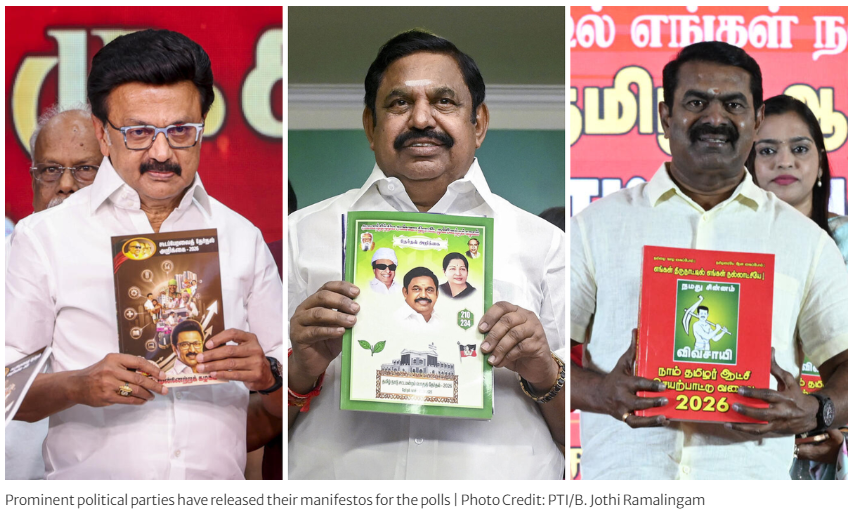
Deep Divides in the Election Promises of Major Parties in Tamil Nadu Deep Divides in the Election Promises of Major Parties in Tamil Nadu Chandrasekaran Balakrishnan April 13, 2026 Public Finance, Public Policy, Tamilnadu Economy Public perceptions about the elections are undergoing drastic changes across regions in India, irrespective of whether States are developed or developing, such that they do not decode governance gaps and last-mile delivery shortcomings in the governance structure and institutional systems’ efficacy. Unfortunately, electioneering by popular political forces tends to believe the manoeuvring of vote motives through short sighted promises and its short-term agenda, which are not in consonance with the spirit the Constitution of India. Hence, the next level of election reforms is imperative at this critical juncture. Currently, election processes are underway in four States (Assam, West Bengal, Kerala and Tamil Nadu) and one Union Territory (Puducherry). The following analysis focuses on the election manifestos announced by the two major regional parties such as AIADMK and DMK for the Tamil Nadu State Assembly elections of 2026. The political parties announce their election manifestos to attract public attention without proper scientific analysis of data. They involve domain experts to better understand the status of developments, aspirations of people and different stakeholders. Almost, no political parties make efforts to understand the issues of governance systems from the institutional structure and systems perspectives entrusted under the Constitution of India because they aim to play a short-term game with the people without long term goals. Major political parties of Tamil Nadu have released its manifestos for assembly election of 2026 including All India Anna Dravida Munnetra Kazhagam (AIADMK), Dravida Munnetra Kazhagam (DMK), Naam Tamilar Katchi (NTK) and Tamilaga Vettri Kazhagam (TVK). The election manifesto of AIADMK is 54 pages in Tamil and 45 pages in English. Similarly, DMK’s election manifesto was released only in Tamil with 98 pages and NTK released its election manifesto in Tamil with 462 pages. However, this analysis mainly focuses on key promises of AIADMK and DMK which are major forces in the race to get swing votes based on the key promises announced. According to some estimates the six major election promises of DMK party would cost exchequer with Rs.57311 crores per year for fulfillment of their election promises. For five year period, this freebie amount to Rs. 2,86,555 crores. AIADMK’s seven major election promises would cost exchequer with Rs.74,969 crore per year. For five year period, this freebie amount to Rs.3,74,845 crore. The TVK party which not contested a single election in the state has promised freebies for Rs.72,765 crores per year for coming to power (Source: Times of India-31.3.2026). For five year period, this freebie amount to Rs.3,63,825 crore. It is said that the public memory of past is very short especially the polarised politics of regions and local level promises made by political parties five years ago. AIADMK has total promises of 297 and DMK has total promises of 525. Both the parties have announced several popular freebies for home care women, youth, working women, farmers, elderly people, economically disadvantages people, etc. The following table shows the major freebies announcements of both AIADMK and DMK parties: Major Election Promises of AIADMK and DMK Major Election Promises of AIADMK and DMK Sl.No AIADMK DMK 1 Special assistance of Rs. 10,000/- to every family to manage the tax burden and price rise. Rs.8,000/- coupon to all “non-Income Tax paying” homemakers to buy any electronic home appliance of their choice from the nearest stores 2 To reduce the household workload of homemakers, a free refrigerator (Fridge) will be provided to rice (PDS) family cardholders. Compensation to farmers for flood disasters from Rs 25,000 to 27,000/- 3 To create economic equality in society, a monthly assistance of Rs. 2,000/- will be provided to all family cardholders through the Kula Vilakku Scheme. This amount will be deposited directly into the bank account of the female head of the family. Health insurance up to Rs 10 lakh for per family   4 Free bus travel scheme for men, similar to women Income assistance increase from Rs 1000 to Rs 2000 pm for women 5 Through the “Amma Illam Scheme,” the government itself will purchase land and build free concrete houses for those in rural areas who do not own a house plot or a house. Similarly, for the homeless poor in urban areas, multi-story apartments will be built and provided free of cost through the “Amma Illam Scheme.” Higher education assistance increased from Rs 1000 to 1500 pm for girls students   6 Steps will be taken to implement this rural development scheme to provide up to 150 days of employment. Old age pension increased from Rs.1200 to 2000   7 Amma two-wheelers will be provided to 5 lakh working women with a subsidy of Rs. 25,000/- Differently abled persons assistance increased Rs 1500 to 2000 Persons With Severe Disabilities will be provided Rs 2000 to 4000 8 The social pension will be increased from Rs. 1,200/- to Rs. 2,000/-.to the elderly, widows, destitute unmarried women, deserted women, differently-abled persons, and transgender persons Labour board assistance will be increased from Rs 1200 to 2000 9 3 free gas cylinders will be provided annually to the family of Rice Cardholders. Rs 1500 for 6 months for skills development after higher education 10 A monthly assistance of Rs. 2,000 will be provided to unemployed graduate youth and young women registered in employment exchanges; Rs. 1,000 per month will be provided to those who have studied up to +2 and registered in employment exchanges. Fishermen assistance Rs 8000 to Rs 12000- reduced fishing period Rs 6000 to 9000 11 The relief assistance currently provided to fishermen during the fishing ban period will be increased from Rs. 8,000 to Rs. 12,000.   12 Along with the Pongal gift hamper provided every year on Thai Pongal, a cash amount of Rs. 1,000/- will be given.   13 Free electricity currently provided to handloom weavers will be increased from 300 units to 450

Deep Divides in the Election Promises of Major Parties in Tamil Nadu Read More »

A Critical Analysis of Tamil Nadu Economic Survey-2025-26

A Critical Analysis of Tamil Nadu Economic Survey-2025-26 A Critical Analysis of Tamil Nadu Economic Survey-2025-26 Chandrasekaran Balakrishnan February 19, 2026 Public Finance, Public Policy, Tamilnadu Economy Among the major states in India, Tamil Nadu becomes a last one to release the annual Economic Survey beginning last year, 2024-25. The second edition of Tamil Nadu Economic Survey 2025-26 were prepared by the State Planning Commission, supported by research institutions, the support of subject experts and the finance department of the state government. The Survey provides the nuanced global perspective of the Tamil Nadu economy and its sector wise progress linking with the Indian economy. The Survey highlights the major strengths of social development, rapid industrialisation and economic prowess. However, the quality of social development and physical infrastructure services is not objectively assessed with robust data. Moreover, inter district and intra district regional challenges are still not given adequate attention by policymakers in the state. Nevertheless, the report also rightly identifies the underpinning key systemic challenges faced by the Tamil Nadu economy, including intra-district disparities. Tamil Nadu aims to achieve a one trillion-dollar economy by the year 2030. This year’s economic survey signals that the ambitious vision may be delayed by a year or two. The Survey notes that “If Tamil Nadu sustains its 2024 25 nominal growth rate of 16% and with an assumption of 2% (medium-term rate) rise in the value of dollar against rupee per annum in the medium term, it can achieve the trillion-dollar milestone by 2031. With 3.5% (short term rate of rise of dollar value), it may be delayed for a year.” In terms of nominal prices, Tamil Nadu’s GSDP is estimated at US $370 billion (Rs. 31.19 lakh crore) for 2024-25, reflecting a strong 15.98% annual growth. Whether the state economy is able to sustain this double-digit and high growth rate for the next few years is a big question because the fiscal challenges are mounting quite alarmingly in recent years. In this regard, the state economic survey also notes that “future pressures arising from pay revisions, pensions, and GST rationalisation could strain fiscal space. Sustaining growth will therefore require disciplined and productive use of resources.” The state has one of the lowest rates of multidimensional poverty (1.43% in 2022 23) and is also the second most urbanised state with 54.72% people living in urban areas in 2025 after Kerala’s 80.08%. However, the “urban infrastructure deficits compound housing stress, with pressure on water supply, sewerage, stormwater drainage, solid waste management, transport, and public spaces, and uneven service levels across urban local bodies (ULBs)”. Further, the survey notes that “climate change has further intensified such vulnerabilities disproportionately affecting low-income households. Institutional constraints—limited fiscal autonomy, capacity gaps, fragmented planning, and rising operation and maintenance liabilities—add to these challenges.” The state economic survey has highlighted the following as key challenges faced by the Tamil Nadu Economy, to which the future government warrants more close attention: The “execution challenges related to coordination, land acquisition, regulatory clearances, and capacity building remain binding constraints” in areas like “transport, logistics, energy, water, and urban and rural services. Investments in public transport, electric mobility, metro expansion, and digital integration demonstrate a people-centric mobility vision, while ports, airports, and logistics parks”. There are structural flaws in the area of urban development in Tamil Nadu. Recently, the state government has announced expansions of rural and urban local bodies without adequate attention on how to mobilise resources for building infrastructure facilities for making ease of living for all sections of society. Keeping this in view, the state economic survey rightly notes that “Going forward, the strategy must shift from a project-centric approach to a systems oriented urban transformation framework. Priorities include expanding affordable and rental housing, improving land and housing market efficiency, embedding climate resilience into planning and building norms, strengthening ULB fiscal sustainability, and enhancing metropolitan governance.” “Tamil Nadu is India’s fastest-growing EV manufacturing hub. Global players such as Ola Electric, Ather Energy, BYD, TVS, Vinfast, Ampere, and several battery companies have set up factories in the state.” However, in terms of the total number of EV buses deployed in Tamil Nadu for public transportations is 380 only, which is small as compared to states like Karnataka (1500) and Maharashtra (4000). It is interesting to note that the Survey emphasises “Environmental governance in Tamil Nadu is institutionally advanced but faces increasing strain from industrialisation, urbanisation, and climate risks. Persistent challenges related to water pollution, waste management, and air quality call for technological upgrading, stricter enforcement, and greater community-based transparency. Institutional fragmentation and data silos weaken policy coherence, indicating the need for deeper coordination and integrated data systems.”In each of these areas, the key issue is the efficacy of policies, rules and regulations at the taluk level, district level and regional level, which were very weak across different departments of the state government. As highlighted by the Survey, finding “quality employment for its youth” is a major challenge for the advanced states like Tamil Nadu and also at the national level in India, in reaping the demographic dividend. A larger number of youth are completing higher education without the employable skills and competences as demanded by markets and industry. The survey also notes that “a persistent shortage of affordable housing for Low Income Groups (LIG), informal workers, and migrants remains a major challenge. Escalating land prices, limited availability of serviced land, financing constraints, and regulatory rigidities have widened the demand supply gap, resulting in the continued prevalence of slums and informal settlements.” Though, Tamil Nadu has slightly more Research and Development (R&D) labs of 906 in the industrial units providing training as compared to Maharashtra (858) and Gujarat (821) but in terms of total R&D spending by industries are more in Maharashtra (Rs. 2,243 crore) and Gujarat (Rs.1,814 crore) as compared to Tamil Nadu (Rs 1,143 crore). Tamil Nadu has more public sector factories (163) providing large-scale employment (38,876) as compared to Maharashtra (98 factories, 26,224 employees) and Gujarat (139 factories, 20320 employees), but

A Critical Analysis of Tamil Nadu Economic Survey-2025-26 Read More »

Time for the Bear to be Bullish on Indian Higher Education

Time for the Bear to be Bullish on Indian Higher Education Time for the Bear to be Bullish on Indian Higher Education Saravanan M January 30, 2026 Education, Higher Education, Public Policy, World Economy In the late 1950s and early 1960s, four Indian Institutes of Technology (IITs) were established with the support of four countries– the Soviet Union (now the Russian Federation), the United States, the United Kingdom, and Germany. While the latter three are amongst the most favourite higher education destinations of Indian students, along with Canada and Australia, Russia still punches below its weight. However, the current global situation presents an opportune moment for Russia to become a top higher education provider, through a strategic educational partnership with India. Why India? India reclaimed its position as the leading country of origin for international students in 2023–24, overtaking China, which had held the top spot since 2009–10. India had also been the largest source of international students for eight successive years prior to that. Together, India and China account for more than 50 per cent of all international students worldwide. Russia has a total student population of about 4 million, of which international students constitute nearly 8 per cent. A majority of these students come from India, China, and CIS countries. Although Russia maintains cordial relations with both India and China, historically it has shared a comparatively more stable and long-standing partnership with India. Moreover, given China’s growing economic presence and its ambition to develop as a global higher education hub, India emerges as a more strategically favourable partner for Russia across sectors, particularly in higher education. In recent years, Russia has been gaining increasing attention among Indian students. The number of Indian students in the country grew from nearly 20,000 in 2022 to over 31,000 in 2024. In contrast to other major destinations such as the US, the UK, and Canada, where Indian student enrolment has fluctuated due to policy changes and other factors, Russia has experienced continuous and gradual growth in the number of Indian students choosing its universities. Global Context Almost all major economic powers are becoming increasingly protectionist. The Make America Great Again (MAGA) movement in the US has intensified tariff barriers against several countries and tightened visa regulations. Consequently, the US may experience structural shifts in its economy and polity, including the higher education sector. The underlying narrative driving these shifts is the belief that immigrants are taking away jobs meant for Americans. While the quality of higher education is a key driver of student mobility, the prospect of post-graduation employment is an equally crucial determinant. With the current headwinds facing immigrants in the US job market, it is unlikely that the inflow of international students into American universities will continue to grow at the same pace. The Canadian and the UK economies are also facing challenges, with reports of rising unemployment among young immigrant graduates in Canada. Australian higher education is expensive compared to Germany and Russia. Given the prevalent situation, Russia would not find a more favourable period to strengthen the international segment of its higher education system. Untapped Indian Higher Education Space The Indian higher education landscape has undergone drastic changes over the years. From being largely an importer of educational services by sending its students abroad, the country is in the process of internationalising its domestic sector. Internationalising the curriculum is at the core of many Indian universities. Following the 2022 UGC regulations, Indian universities have begun collaborating with foreign universities through joint, twinning, and pathway programs. As per news reports, Deakin University, University of Wollongong, Victoria University, Western Sydney University from Australia; Istituto Europeo di Design from Italy; University of Southampton and University of Liverpool from the UK; and Illinois Institute of Technology from the US have received approval to establish their campuses in India, under 2023 UGC regulations. In the near future, these developments are expected to cater to a segment of Indian students, who would otherwise study abroad. Even for those who seek an overseas campus experience, short-term immersion courses can be designed to ensure foreign experience. The unused potential of India for foreign institutions is humongous, and Russia is well-positioned to leverage it for mutual benefit. Russian Strength Russia is reputed for producing world-class mathematicians, doctors, physicists, chemists and programmers, among others. STEM programs account for 55 per cent of total international enrolments. As Russia already offers a bouquet of STEM programs, including programs in English language, Indian students would find Russia very suitable. The decades-old technological and cultural relationship that India and Russia have will facilitate a stronger educational partnership. Russia already has a strong base with the India-specific plan, like Russian-Indian Network, supported by IIT-Bombay. All it needs to do is scale up and expedite the process. Language may not be a major hindrance, as Indian students also study in Germany, France, Japan, China, Korea, where most programs are not taught in English. Win-Win Partnership Russia has already averred its willingness for “no limits” strategic partnership with India, similar to its existing arrangement with China. When intent is positive, the global situation is conducive, and the Indian policy ecosystem is welcoming, there is every reason to believe that the long-neglected sector of higher education would get the attention it deserves. Strengthening this partnership would not only advance education, research, and innovation, but also enhance the soft power of both nations. Dr.M Saravanan, is specialised in Higher Education and Founder Secretary of the AgaPuram Policy Research Centre, Erode. Views expressed by the author are personal and need not reflect or represent the views of the AgaPuram Policy Research Centre.

Time for the Bear to be Bullish on Indian Higher Education Read More »

Use of Artificial Intelligence Tools in Tamil Nadu Government Schools

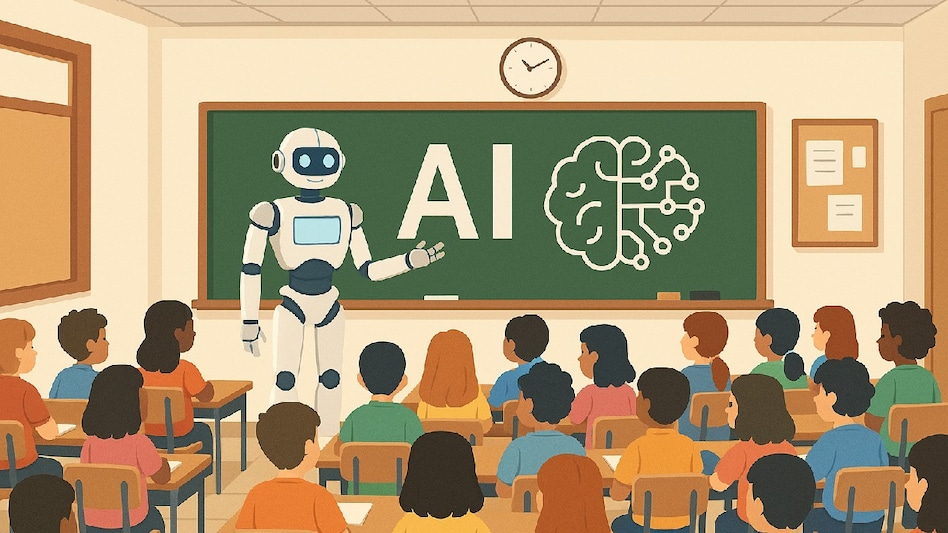
Use of Artificial Intelligence Tools in Tamil Nadu Government Schools Use of Artificial Intelligence Tools in Tamil Nadu Government Schools Charanya T December 18, 2025 Child Development, Education, Public Policy, Skills Development Sector Artificial Intelligence (AI) is becoming an important part of education in many parts of the world. In India, Tamil Nadu has taken several steps to introduce AI and digital technologies in government schools. These initiatives aim to improve learning, administration, and access to modern education, especially for students from government schools. This article examines how AI initiatives in Tamil Nadu government schools are transforming learning while also highlighting the challenges of implementation. As India embarks on its ambitious INDIAai Mission towards the Safe and Trusted AI pillar, which underscores the commitment to ensuring safety, accountability, and ethical practices in AI development and deployment. The mission aims to empower innovators and democratise AI benefits across sectors by promoting indigenous frameworks, robust governance tools, and self-assessment guidelines. One important initiative taken by the government of Tamil Nadu through its Tamil Nadu e-Governance Agency (TNeGA) is the introduction of AI-based attendance systems in schools for students. This system uses technologies such as facial recognition to mark attendance automatically. It helps reduce manual work for teachers and improves accuracy in attendance records. The data collected through this system can help school authorities understand student attendance patterns and take steps to reduce absenteeism and dropouts. Another major development is the decision to introduce AI, coding, and robotics for government students in Classes 6 to 9 starting from the academic year 2025-26. This move brings new technology-based subjects into the regular school curriculum. Learning coding and AI at a young age helps students develop logical thinking, problem-solving skills, and creativity. This is especially beneficial for students in government schools who may not get exposure to such skills outside the classroom. Before implementing these changes across the state, the Government of Tamil Nadu introduced pilot programmes in selected government schools, covering around 3,000 schools across the state. According to official pilot programme reports of the Tamil Nadu School Education Department, these initiatives included the use of robotics kits, AI-based digital tools, and interactive learning platforms. Students used these tools for subjects such as mathematics, science, and languages. As reported in government releases and education department updates, students showed increased interest and engagement in learning, and many became more confident in using technology. The Government of Tamil Nadu’s Department of School Education has partnered with IIT Madras to improve digital assessments and learning experiences in 6029 government schools to improve the learning of 90 lakh students. Under this collaboration, a Learning Management System (LMS) is being developed for thousands of government schools. This system will help teachers track student’s progress, understand learning patterns, and identify areas where students need additional support. Such digital assessment systems can help move away from rote learning and encourage better understanding of concepts. Some schools have also introduced AI-based language labs to improve student’s communication skills. For example, government schools in Kuthalam town in Nagapattinam district have implemented AI tools that help students practice pronunciation, speaking, and language fluency. These tools provide instant feedback, which helps students learn independently and build confidence, especially in English. The Pilot programmes such as Tamil Nadu Schools Programme for AI, Robotics and Knowledge (TNSPARK) would help to bring digital tools and AI-based learning into everyday classroom activities for classes of 6 to 9 covering 3000 government schools by “leveraging 8,209 Hi-Tech Labs and 22,931 Smart Classrooms alreadyestablished statewide”. This pilot programmes are being implemented with collaborations of industry like Microsoft, Intel, Cognizant, Namma School Namma Ooru Palli, and Teach for India (PMU). TN SPARK is expected to benefit over 7 lakh students in its pilot phase. However, there are still challenges in using AI effectively in education. Not all schools have the same level of infrastructure, which reflects the digital divide between different regions and social groups. Schools in rural or economically weaker areas may struggle more with access to devices and internet facilities. Teachers also need proper training to use AI-based technologies efficiently, as their role is central in the socialisation and learning process of students. It is important to ensure that AI acts as a support system rather than replacing teachers, since education is not only about technology but also about human interaction, guidance, and emotional support. Tamil Nadu’s efforts to integrate AI into its education system show a positive step towards modern and inclusive learning. By introducing AI-based attendance, coding and robotics education, digital assessments, and language labs, the state is working towards improving the quality of education in government schools. If these initiatives are implemented properly and equitably across the state, Tamil Nadu can become a strong model for using AI in public education in India. Ms.Charanya.T is Final Year Student of B.A Sociology at VET Institute of Arts and Science, Erode, Tamil Nadu. Views expressed by the author are personal and need not reflect or represent the views of the AgaPuram Policy Research Centre.  

Use of Artificial Intelligence Tools in Tamil Nadu Government Schools Read More »

Bihar’s Flip-Flop on Alcohol Policy

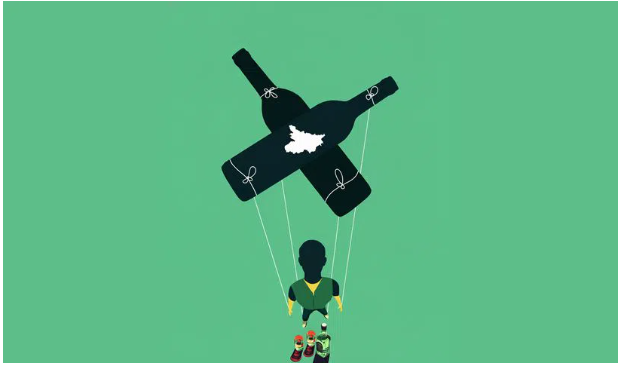
Bihar’s Flip-Flop on Alcohol Policy Bihar’s Flip-Flop on Alcohol Policy Ghanshyam Sharma December 12, 2025 Cultural Economics, Public Policy, State Economies Ironically, the poorest and most corrupt state first increased the number of alcohol addicts by promoting alcohol sales. Then, it arrested over 13 lakh men – for drinking alcohol. Over the past two decades, Bihar has conducted a uniquely absurd experiment in the history of alcohol regulation. Starting in 2006, it actively promoted the sale of alcohol to increase tax collections from alcohol sales. However, in 2016, it reversed course and introduced one of the strictest alcohol bans, which has had significant adverse effects on the people, corruption, and the economy. After the 2005 elections, the Bihar government pursued a policy to open a theka (or liquor shop) in every panchayat. Media reports noted that the number of liquor shops in rural areas tripled, from 779 to 2,360. As a result, tax revenues from alcohol jumped from Rs 87 crore to Rs 3142 crores in 2014-15. This represented 15 percent of the state’s budget. The new thekas increased the proximity to liquor. As a result, the number of men with alcohol addiction increased by 50 percent (NFHS-3 and 4). People develop an addiction to alcohol due to physical or emotional dependence on alcohol. For example, manual labourers drink alcohol to deal with chronic pain, especially in the absence of reliable and accessible healthcare.  Similarly, people who have been exposed to childhood adversity or are dealing with mental health issues are more likely to turn to alcohol for relief. When access to alcohol improves, such people are likely to increase their frequency and volume of alcohol intake. Thus, the policy exploited the vulnerable groups prone to alcohol addiction to raise tax revenue. However, despite the state government’s push to increase alcohol sales, the overall percentage of men in Bihar who drink alcohol actually declined in this period. The proportion of married women who reported that their husband drinks alcohol fell from 39 to 35 percent from 2006 to 2016 (National Family Health Survey-3 & 4). Hence, the alcohol taxes increased sales only because of an increase in demand from vulnerable groups who were prone to addiction. Hence, when Bihar imposed a comprehensive ban on alcohol in 2016, it came as a policy shock because the fraction of men who drink alcohol in Bihar was already declining (despite the government promoting alcohol). Besides, relative to other states, fewer men in Bihar were drinking alcohol. Several rigorous penal provisions of the prohibition law also came as a shock. For example, the provision of ‘guilty until proven innocent’ placed the burden of proof on the accused. According to the Transparency International Report (2019), Bihar is the most corrupt state in India. This law makes citisens vulnerable by vesting indiscriminate powers with the police to arrest people without proof. The law also punished drinking in a public place with life imprisonment. The law penalised possession of knowledge about alcohol with eight years of imprisonment. The law has had several predictable consequences. Since 2016, Bihar has arrested over 13 lakh people (mostly men) under the prohibition law, as only half a percent of women drink alcohol in Bihar (NFHS). The actual conviction rate in these cases is one percent (Indian Express report).  Kumar and Raghavan (2020) found that the SCs & STs faced disproportionate arrests under this law, and many have been awaiting trial for several years. Over 8 lakh prohibition-related cases have clogged the courts and overcrowded prisons. The prohibition has led to thousands of undocumented deaths from spurious alcohol. In April 2023, the Supreme Court raised concerns about the fairness of the law that makes drinking alcohol a non-bailable offence.  The Court also questioned whether the prohibition had been effective in curbing alcohol consumption.  In a study recently published in the journal Economics of Governance, I find that despite such rigorous provisions, there has been only a 6 percentage point decline among men who drink alcohol. I also find empirical evidence for bootlegging. Alcohol consumption has declined less in districts that share a border with other states or Nepal.  Selling alcohol in districts that do not share a border with other states would imply dealing with two police departments, which would increase the price and risk of selling alcohol in such districts. I find further evidence of bootlegging as there is a sharper decline in low alcohol (e.g, beer) drinkers compared to high alcohol spirits (e.g., whiskey). This is because high-alcohol spirits such as whiskey are easier to store and last longer compared to low-alcohol drinks, which may need cold storage. I also find evidence of a decline in branded alcohol drinkers, but no decline in spurious alcohol drinkers. This could be because branded alcohol is imported from outside the state, while spurious liquor can be sourced locally. Branded alcohol is relatively less harmful to drink than locally made liquor. Bootleggers use methanol to increase the potency of unbranded liquor, which can have severe health complications such as blindness or death. The alcohol ban has resulted in thousands of undocumented deaths from the consumption of spurious liquor. I also discovered that the prohibition has only deterred occasional drinkers – people whose frequency of alcohol consumption is less than weekly. The ban has not deterred people who drink daily. There is only a 1 to 2 percent decline in men who drink alcohol daily. This again highlights the wide availability of alcohol and the limitation of the policy. Governments globally have realised that educating people is more effective than bans. For example, the US government had to reverse its alcohol ban in the 1930s. Several US states have recently amended their “War on Drugs” policy and legalised their use. Prohibitions only lead to black markets, unfair arrests, targeting of vulnerable groups, an increase in corruption, loss of tax revenues, and the strengthening of criminal gangs/mafia. Bihar’s ban on alcohol has been a colossal policy failure. The ban is an attack on personal freedom.

Bihar’s Flip-Flop on Alcohol Policy Read More »

Karnataka’s Menstrual Leave Policy: Women Empowerment or Unintended Bias?

Karnataka’s Menstrual Leave Policy: Women Empowerment or Unintended Bias? Karnataka’s Menstrual Leave Policy: Women Empowerment or Unintended Bias? Prayaga Venkata Rama Vinayak November 14, 2025 Child Development, Cultural Economics, Public Policy, State Economies, Women Empowerment In a welcome move, the Government of Karnataka recently approved Menstrual Leave Policy, 2025, allowing female employees throughout the State to avail one day paid leave every month, in addition to other paid leaves sanctioned by their organisation. This policy applies to all women employees both in the public and private sectors across the State. Further, this leave does not require any pre-approvals from employers, but only prior intimation by the employees to their respective authorities. This move is worthy of emulation, as the State Government’s intention is to create a work environment that enhances women’s participation in the workforce. States such as Bihar, Kerala, and Odisha have implemented similar policies in the past. However, Karnataka’s policy explicitly covers both government and private sector employees, unlike those of the other States. Nevertheless, the initiative also warrants an analysis of its effectiveness in achieving the intended objective of women’s empowerment. One of the shortcomings of the policy is that it appears to apply only to employees in the organised sector, as no government currently has adequate mechanisms to implement such a policy in the unorganised sector, which employs a larger workforce. As of October 2025, Karnataka has approximately 10.96 million (1,09,61,042) unorganised sector workers registered on the e-Shram portal, of whom 58.1 percent (about 6.36 million) are women. However, many more women workers remain unregistered on the portal. Consequently, a majority of women employees in the State are unlikely to benefit from the policy. For micro, small, and medium enterprises (MSMEs), granting 12 additional paid leaves may lead to more absenteeism and payroll costs. From the women labour force point of view, the new leave policy may worsen the hiring bias, especially in micro and small firms that operate on very rigid workforce margins. Moreover, the state government has not proposed any reimbursement or tax offset to encourage small employers to implement the policy. The private sector may view women as costlier or less reliable employees due to additional leave entitlements like maternity, childcare and now menstrual leave. The “Voice of Women” Survey Report (2024) by Aon sheds light on how women employees view workplace equity and flexibility, which is pertinent while evaluating policies like menstrual leave. The survey mentions that findings reinforce years of research showing that women face microaggressions at work in the form of subtle and seemingly innocuous comments based on stereotypes. Nearly 42 percent women reported that they face judgmental comments or expressions on leaving work early or working remotely. Furthermore, one in three mothers reported facing career setbacks after returning from maternity leave — for 75 percent of them, the impact lasted up to two years, while 25 percent experienced setbacks lasting more than three years. We can understand from the above-mentioned survey that women are already going through lot of unavoidable discrimination in their workplace irrespective of many DEI (Diversity, Equity and inclusion) friendly policies. These kinds of policies will even amplify the ongoing discrimination to next level and, it’s worth noting that without awareness among the people in the work environment about female menstrual health and it’s impacts this kind of policies just pay a lip service to the concept of women empowerment. The periodic Labour Force Survey Report (2023-24) reveals that Karnataka’s Labour Force Participation Rate (LFPR), which indicates how many people are either working or looking to work out of the total population, is 49.9 percent for rural women, lower than the nation’s average of 51.2 percent. For urban women it is 33.5 percent, slightly above the nation’s average of 31.2 percent. The consolidated LFPR of women in Karnataka is 43.6 percent lower than the nation’s average of 45.2 percent. Further, Karnataka’s Worker Population Ratio (WPR), which indicates the proportion of working population, is 49.5 percent for rural women, a tad below the nation’s average of 50 percent. For urban women, it is 32 percent, considerably above than nation’s average of 28.8 percent. The consolidated WPR of women in Karnataka is 42.7 percent, slightly lower than the nation’s average of 43.7 percent. If the state government policy is implemented without addressing the recruitment bias faced by women in the private sector, especially in small firms, the already existing gap between the Karnataka’s LFPR and WPR of rural women will be widen, weakening the State’s efforts towards women empowerment. The policy may be modified to make it easier to implement. Instead of mandating complete paid leave, the governments can incentives organisations to grant remote work facilities for at least 3-4 consecutive days, wherever feasible. This will allow women to take proper care of their menstrual health. Also, the state government may consider this an opportune time to strictly enforce menstrual-friendly infrastructure in all workplaces with adequate hygienic and sanitation facilities across the public and private sectors. It would be commendable if the State Government could find convergence between schemes such as Koosina Mane, which empower local bodies and promote decentralization, and the implementation of new policies related to women’s menstrual health. Such an integrated approach would be mutually beneficial to both employees and employers. Further, it is essential to consult as many stakeholders as possible, including women, before implementation of the policy. The Karnataka State Menstrual leave policy is a welcome move, but it also brings some real concerns that may be overlooked. The matter requires a holistic understanding. It should aim to incentivise organisations instead of making them more hesitant to hire women, especially in smaller companies. The State Government should make sure the new policy supports both women and workplaces, without benefitting one at the cost of the other. Real inclusion means creating equal opportunities, not in offering special provisions that may inadvertently widen the very gap the policy seeks to close. The Author is Public Policy Fellow at AgaPuram Policy Research Centre, Erode The

Karnataka’s Menstrual Leave Policy: Women Empowerment or Unintended Bias? Read More »

Tamil Nadu’s bumpy road to $1-trillion economy

Tamil Nadu’s bumpy road to $1-trillion economy Tamil Nadu’s bumpy road to $1-trillion economy by Chandrasekaran Balakrishnan October 31, 2025 Public Policy, State Economies, Tamilnadu Economy Though Centre-state devolution gets public attention, little light is shed on intra-state devolution to rural and urban local bodies. If Tamil Nadu is to reach its goal of being a $1-trillion economy soon, the new State Finance Commission will have to address such issues The Tamil Nadu government accepted 259 out of 280 recommendations made by the sixth State Finance Commission without changing the ratio of devolution amount between rural and urban local bodies (Photo | Express) Updated on: 30 Oct 2025, 2:17 am 4 min read Tamil Nadu aspires to become a $1-trillion economy by 2030. However, it seems feasible only after 2031-32 given the amount of work needed on multiple fronts, ranging from effective decentralised governance and sectoral growth challenges to addressing intra-state regional disparities. While the state’s strength of being a global hub for manufacturing and its significant contribution to the services sector make the headlines, certain challenges remain under-discussed. Almost two years have passed since the release of a plan titled ‘Tamil Nadu Vision $1 trillion’, which aimed to “ensure that all districts and regions of the state emerge as growth centres, while driving prosperity for all sections of the society”. Yet, there has been a little visible change in implementing its key recommendations. In a dynamic federal country like India, state governments often tussle with the Centre seeking more regional autonomy. Ironically, some of the same states fare poorly in decentralisation of administrative power and financial autonomy within, despite a mandate for it under the 73rd and 74th constitutional amendments in 1992. The challenges faced by Tamil Nadu, especially its urban and rural local bodies, including its limited capacity to meet the aspirations of the people for better civic infrastructure facilities and services could be mostly attributed to inadequate institutional mechanisms. One of the biggest institutional and structural lacunae is that despite about 55 percent of people living in urban areas, the devolution of funds continues to be higher for rural local bodies (51 percent) as compared to urban local bodies (49 percent). Against this background, the state government has constituted its 7th State Finance Commission (SFC) under the chairmanship of K Allaudin, a retired IAS officer, to “review the financial position of various urban and rural local bodies and make appropriate recommendations on the distribution of funds to be provided by the state government” for a five-year period from April 1, 2027. This surpasses the target to become a $1-trillion economy by two years. The three-member commission has been asked to submit its report by August 31, 2026. Unlike states like Assam and Kerala, Tamil Nadu has not involved any subject experts on its SFC this time too, as has been the case since its inception in 1997. While the first, sixth and the recently-constituted seventh SFCs have been headed by retired IAS officers, others were headed by serving IAS officers. The key recommendations of the SFCs are mandated to be implemented within a year after the submission of action taken reports. However, there are no such publicly available reports on actual implementation until the next SFC is constituted. The state has accepted many of the past SFC proposals, ranging 80-96 percent of the recommendations. However, for the third SFC, the state government accepted only 240 out of the 308—or about 78 percent—of the recommendations. This gives a clue about how bound the state feels about acting on the proposals. The actions are important for the SFCs’ functions, which include a wider consultative process, examination of various data sets of rural and urban local bodies, and time taken to submit the report So it is instructive to look at the time taken by each SFC to make their final submissions. The state’s first SFC took 19 months, second 15 months, third 22 months, fourth 22 months, fifth 24 months, and the sixth took 24 months to submit the final report to the government. Most often, the reasons for delay are not mentioned. It is also important to note that public discourse has been largely silent on the SFCs’ functions, operations, effectiveness, quality, and implementation. With all this in the backdrop, here are five critical challenges before Tamil Nadu’s seventh SFC Decentralisation of real administrative and financial autonomy from the state capital to district administrations, city corporations, and town and village panchayats is still a distant reality. Though the administrative coverage of urban local bodies has expanded to 25 cities from 16, the availability and quality of basic civic infrastructure and services remain inadequate and substandard. 1.Decentralisation of real administrative and financial autonomy from the state capital to district administrations, city corporations, and town and village panchayats is still a distant reality. 2.Though the administrative coverage of urban local bodies has expanded to 25 cities from 16, the availability and quality of basic civic infrastructure and services remain inadequate and substandard. 3. Increased regional disparities within districts have become a major challenge. The average per capita incomes in the western and northern parts of the state are significantly higher than those in the eastern and southern parts. 4.Another major hurdle is the lack of coordination among key departments, insufficient public consultation, and ineffective programme design in crucial sectors such as sanitation, water supply, electricity, roads, transport, policing, waste management, and wastewater disposal. These gaps create avoidable hardships, especially for the young. 5. Although there is significant scope to enhance revenue streams for local bodies in urban or rural administrations, state-level centralisation continues to constrain their autonomy in decision-making and their ability to address local issues and challenges. While neighbouring states Karnataka and Kerala have made significant progress in addressing challenges related to devolution of administrative power, these aspects have often been given piecemeal attention by Tamil Nadu’s SFCs and no commission has taken a holistic view of the structural challenges faced by the local bodies. The prayer is that this time

Tamil Nadu’s bumpy road to $1-trillion economy Read More »

Reward Citizens to Bring a Paradigm Shift in Civic Behaviour

Reward Citizens to Bring a Paradigm Shift in Civic Behaviour Reward Citizens to Bring a Paradigm Shift in Civic Behaviour Prayaga Venkata Rama Vinayak October 13, 2025 Public Policy, Urban Development, Youth Entrepreneurship India is known for its rich cultural practices, family values, hospitality, and ethics. It was an economic superpower for over a millennium and is on the verge of regaining its rightful stature soon. One of the major bottlenecks in the development of our country is the lack of good civic sense among Indians. Despite improvements in literacy and enrollment in higher education, unfortunately, there has not been any perceptible improvement in the civic sense of the public. As per the latest Swachh Survekshan Report (2024-25), not even a single city from Kerala, one of the most literate states in India, is ranked among the top 50 cities. Mattanur, the top-ranked city in Kerala, is ranked 53rd nationally, followed by Alappuzha at the 80th position. Furthermore, organising awareness campaigns alone is hardly effective without decentralization and community-driven efforts at the local level. The NITI Aayog report on ‘Reforms in Urban Planning Capacity in India’, released in 2021, mentioned that during the period 2011–2036, urban growth would account for 73% of the total population increase. There is a saying my father often quotes: “We can wake up someone who is in a deep sleep, but we can never wake up someone who is pretending to be asleep.” The awareness campaigns are beneficial to someone who is unaware of their wrongdoing. These campaigns help them understand and rectify their mistakes, but in our country, that’s not the case. We can relate the above-mentioned findings to the recent Gross Domestic Behaviour Survey by India Today (2025). The Survey presented a few statements to the respondents from 21 states and 1 union territory, requesting them to either agree or disagree with the statements. Based on the responses, the States were ranked. The statements were broadly categorized in the following themes: “Civic Behaviour”, “Public safety”, “Gender attitudes” and “Diversity & discriminations”. Under the Civic Behaviour theme, Tamil Nadu secured 1st place followed by West Bengal, Odisha, Delhi and Kerala in 2nd, 3rd, 4th and 5th places respectively. In the remaining 3 themes, “Public safety”, “Gender attitudes” and “Diversity & discriminations” Kerala secured the 1st place. In overall rankings too, Kerala secured 1st Place in the Gross Domestic Behaviour survey. Under the Civic Behaviour theme, the survey asked the respondents to agree or disagree with the following statement: “It is ok to throw litter on the road/public place, if there is no public garbage bin available”.  Almost 99% of respondents in Kerala either strongly or somewhat disagreed with the statement, helping the state secure the first position for the statement. This clearly indicates that people are well aware that throwing litter on the road is wrong, which is actually a matter of common sense. Yet not even a single city in Kerala featured among the top 50 places in Swachh Survekshan, demonstrating that awareness alone does not guarantee responsible civic behaviour. While strict measures such as bans and prohibitions may be very effective in certain cases, they are not as sustainable as the efforts driven by voluntary participation. Hence, there is a need to promote and ensure the active involvement of citizens in civic matters. China is a case in point, having figured out that the antidote for irresponsible civic behaviour is decentralization and community participation. The country has achieved significant results through its community-based governance. At the neighbourhood committee levels, residents participate in committees that handle disputes, cleanliness and local events. It also employs other measures like Civilized City Rankings, social credit rewards, and public shaming for civic violations. Though Kerala is renowned for its decentralization, it lacks behavioural governance tools like China’s reward – punish civic systems that transform awareness into actions. It is high time we adopt a pragmatic citizen-reward mechanism to encourage better civic sense among our youth and the general public. For example, governments could introduce a “Good Citizen Card (GCC)”. This GCC could be awarded to individuals who pay loans, electricity bills, and property taxes on time; follow traffic rules properly; have no criminal records, especially against children, parents, women, or the elderly; refrain from creating public disturbances; and maintain public hygiene. Additionally, the GCC could include parameters related to education, health, environment, skill development, cultural values, and other aspects that promote responsible citizenship. An autonomous body could be tasked with implementing this citizen-reward initiative to ensure transparency and neutrality. Governments could incentivise the holders of GCC with various benefits, such as preferential allocation of seats in trains, priority or relaxation in cooking gas connection, electricity connection, property registration, or other services. The governments could also consider holding of GCC a prerequisite for government jobs at all levels. It is pertinent to note the similar initiative of the Indian Railway—Lucky Yatri Yojana—a privately sponsored initiative that turned every valid train ticket into a lottery entry, offering daily cash prizes of Rs. 10,000 and a weekly jackpot of Rs. 50,000 to incentivize commuters to travel with a ticket and curb fare evasion. Though the scheme did not take off as intended, the takeaway from the scheme is that incentives encourage people positively. Governments can formulate a robust rewarding mechanism to improve civic sense of our citizens, in addition to the existing stringent laws. The Union Government, in its Budget for 2025-26 has announced the setting up of “Urban Challenge Fund”, wherein “the Government will set up an Urban Challenge Fund of Rs.1 lakh crore to implement the proposals for ‘Cities as Growth Hubs’, ‘Creative Redevelopment of Cities’ and ‘Water and Sanitation’.” For the current year, the Union Government allocated Rs. 10,000 crore under the proposed Fund. The government could implement a citizen-reward initiatives, such as GCC, under this Fund and encourage responsible civic behaviour from its citizens. The Author is Public Policy Fellow at AgaPuram Policy Research Centre, Erode The views expressed by the author are personal and does

Reward Citizens to Bring a Paradigm Shift in Civic Behaviour Read More »