
Urban Development

Reward Citizens to Bring a Paradigm Shift in Civic Behaviour

Reward Citizens to Bring a Paradigm Shift in Civic Behaviour Reward Citizens to Bring a Paradigm Shift in Civic Behaviour Prayaga Venkata Rama Vinayak October 13, 2025 Public Policy, Urban Development, Youth Entrepreneurship India is known for its rich cultural practices, family values, hospitality, and ethics. It was an economic superpower for over a millennium and is on the verge of regaining its rightful stature soon. One of the major bottlenecks in the development of our country is the lack of good civic sense among Indians. Despite improvements in literacy and enrollment in higher education, unfortunately, there has not been any perceptible improvement in the civic sense of the public. As per the latest Swachh Survekshan Report (2024-25), not even a single city from Kerala, one of the most literate states in India, is ranked among the top 50 cities. Mattanur, the top-ranked city in Kerala, is ranked 53rd nationally, followed by Alappuzha at the 80th position. Furthermore, organising awareness campaigns alone is hardly effective without decentralization and community-driven efforts at the local level. The NITI Aayog report on ‘Reforms in Urban Planning Capacity in India’, released in 2021, mentioned that during the period 2011–2036, urban growth would account for 73% of the total population increase. There is a saying my father often quotes: “We can wake up someone who is in a deep sleep, but we can never wake up someone who is pretending to be asleep.” The awareness campaigns are beneficial to someone who is unaware of their wrongdoing. These campaigns help them understand and rectify their mistakes, but in our country, that’s not the case. We can relate the above-mentioned findings to the recent Gross Domestic Behaviour Survey by India Today (2025). The Survey presented a few statements to the respondents from 21 states and 1 union territory, requesting them to either agree or disagree with the statements. Based on the responses, the States were ranked. The statements were broadly categorized in the following themes: “Civic Behaviour”, “Public safety”, “Gender attitudes” and “Diversity & discriminations”. Under the Civic Behaviour theme, Tamil Nadu secured 1st place followed by West Bengal, Odisha, Delhi and Kerala in 2nd, 3rd, 4th and 5th places respectively. In the remaining 3 themes, “Public safety”, “Gender attitudes” and “Diversity & discriminations” Kerala secured the 1st place. In overall rankings too, Kerala secured 1st Place in the Gross Domestic Behaviour survey. Under the Civic Behaviour theme, the survey asked the respondents to agree or disagree with the following statement: “It is ok to throw litter on the road/public place, if there is no public garbage bin available”.  Almost 99% of respondents in Kerala either strongly or somewhat disagreed with the statement, helping the state secure the first position for the statement. This clearly indicates that people are well aware that throwing litter on the road is wrong, which is actually a matter of common sense. Yet not even a single city in Kerala featured among the top 50 places in Swachh Survekshan, demonstrating that awareness alone does not guarantee responsible civic behaviour. While strict measures such as bans and prohibitions may be very effective in certain cases, they are not as sustainable as the efforts driven by voluntary participation. Hence, there is a need to promote and ensure the active involvement of citizens in civic matters. China is a case in point, having figured out that the antidote for irresponsible civic behaviour is decentralization and community participation. The country has achieved significant results through its community-based governance. At the neighbourhood committee levels, residents participate in committees that handle disputes, cleanliness and local events. It also employs other measures like Civilized City Rankings, social credit rewards, and public shaming for civic violations. Though Kerala is renowned for its decentralization, it lacks behavioural governance tools like China’s reward – punish civic systems that transform awareness into actions. It is high time we adopt a pragmatic citizen-reward mechanism to encourage better civic sense among our youth and the general public. For example, governments could introduce a “Good Citizen Card (GCC)”. This GCC could be awarded to individuals who pay loans, electricity bills, and property taxes on time; follow traffic rules properly; have no criminal records, especially against children, parents, women, or the elderly; refrain from creating public disturbances; and maintain public hygiene. Additionally, the GCC could include parameters related to education, health, environment, skill development, cultural values, and other aspects that promote responsible citizenship. An autonomous body could be tasked with implementing this citizen-reward initiative to ensure transparency and neutrality. Governments could incentivise the holders of GCC with various benefits, such as preferential allocation of seats in trains, priority or relaxation in cooking gas connection, electricity connection, property registration, or other services. The governments could also consider holding of GCC a prerequisite for government jobs at all levels. It is pertinent to note the similar initiative of the Indian Railway—Lucky Yatri Yojana—a privately sponsored initiative that turned every valid train ticket into a lottery entry, offering daily cash prizes of Rs. 10,000 and a weekly jackpot of Rs. 50,000 to incentivize commuters to travel with a ticket and curb fare evasion. Though the scheme did not take off as intended, the takeaway from the scheme is that incentives encourage people positively. Governments can formulate a robust rewarding mechanism to improve civic sense of our citizens, in addition to the existing stringent laws. The Union Government, in its Budget for 2025-26 has announced the setting up of “Urban Challenge Fund”, wherein “the Government will set up an Urban Challenge Fund of Rs.1 lakh crore to implement the proposals for ‘Cities as Growth Hubs’, ‘Creative Redevelopment of Cities’ and ‘Water and Sanitation’.” For the current year, the Union Government allocated Rs. 10,000 crore under the proposed Fund. The government could implement a citizen-reward initiatives, such as GCC, under this Fund and encourage responsible civic behaviour from its citizens. The Author is Public Policy Fellow at AgaPuram Policy Research Centre, Erode The views expressed by the author are personal and does

Reward Citizens to Bring a Paradigm Shift in Civic Behaviour Read More »

Status of Finance Health of Urban Local Bodies in Odisha

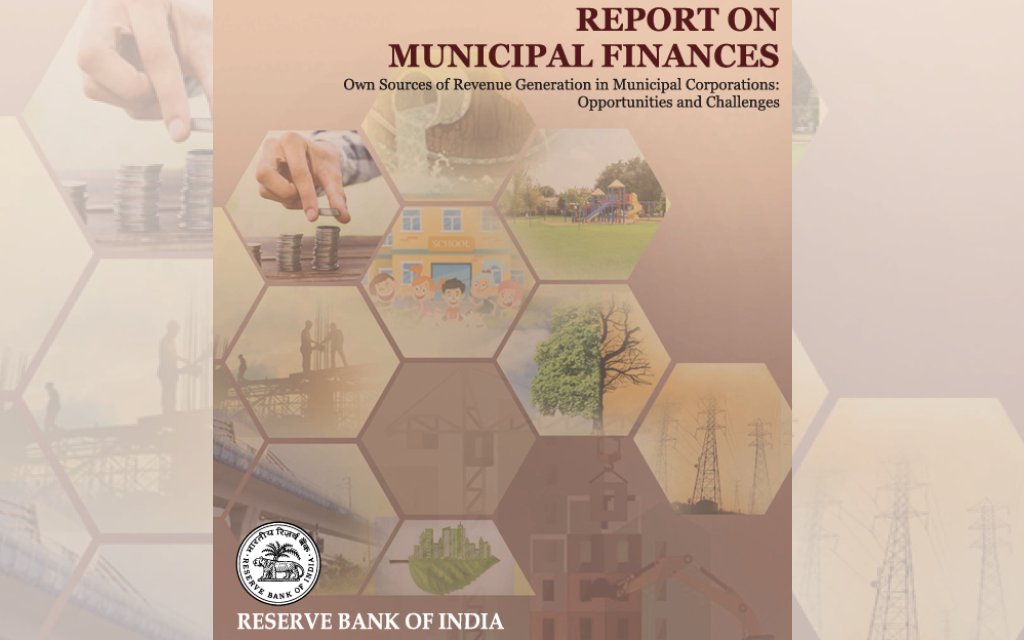
Status of Finance Health of Urban Local Bodies in Odisha Status of Finance Health of Urban Local Bodies in Odisha Dushyant Meher February 22, 2025 Indian Economy, Public Policy, Urban Development Fiscal Excellence of Odisha Financial health is the key indicator of capability, opportunities and challenges of an individual, family, institution or a government. Urban Local Bodies (ULB) like city corporations, municipalities and town panchayats are belong to the third tier of our governance structure responsible for urban growth centres that plays a crucial role in the era of aspirational India. The third tier of governance was enforced through 73rd and 74th Amendments Act in 1993 – an early stage of our economic reforms gradually becoming part of policy discourse because of its mandate and functions entrusted upon. On the backdrop of the latest report on “Fiscal Health Index 2023” to assess the fiscal health of the States; it is also a matter of imperative to look at the   state of municipal finances as reported by Reserve Bank of India in its “Report on Municipal Finances 2024”. This report delineates the sources of revenue generation, opportunities and challenges by the municipal corporations of the states. In the context of “Odisha” that stood on top of the list of States in India due to its fiscal prudence obtained through a systematic financial management over a period of time as per “Fiscal Health Index 2023” by NITI AAYOG; an analysis of the financial health of MC may help further strengthening the overall financial wellbeing of the State through its municipal governance. There are 5 MCs in Odisha namely- Berhampur, Bhubaneswar, Cuttack, Sambalpur and Rourkela situated in eastern, western and northern region of the state. As per 2011 Census, Odisha was one of the least urbanized states in India, however, it is catching up in urbanisation as in 2024; 34 new notified area councils (NCCs) and upgradation of 5 municipalities added to the list of local urban governments. The NITI AAYOG Report on Fiscal Health Index 2023 highlighted that “Odisha excels in fiscal health with the highest overall index score of 67.8. It tops the Debt Index (99.0) and Debt Sustainability (64.0) rankings with better than average scores under Quality of Expenditure and Revenue Mobilization. The state has maintained low Fiscal Deficits, a good debt profile, and an above average Capital Outlay/GSDP ratio.” Also “the top five high-performing states are Odisha, Chhattisgarh, Goa, Jharkhand, and Gujarat.” Further, the report stated that “Odisha and Chhattisgarh have performed well under Revenue Mobilization, with their Own Non-Tax Revenue growing significantly due to high revenue collection from mining.” The Reserve bank of India, started focusing on the financial health of MCs by releasing state-wise reports in 2022 and 2024 that delve into fiscal position. Since, MCs are responsible for the provision of vital public services like health, education, water, sanitation, street lighting, public parks registration of births and deaths under their jurisdictions; they have a crucial role to play in effective urban management, urban development and upgradation of urban infrastructure. Odisha is also mineral rich state which supports for manufacturing sector across different region. Odisha publishes monthly fiscal report. According to RBI report “Odisha was one of the most fiscally stressed States in the early 2000s, with a debt-GSDP ratio of 57.3% in 2002-03 – well above the consolidated debt-GDP ratio of 32.1% for all States. The interest payments to revenue receipts ratio (IP/RR) was 34.2% in 2002-03, imposing a significant strain on the State’s finances. Over the subsequent two decades, there has been a turnaround in the fiscal position of the State, with the debt-GSDP ratio declining to 16.0% in 2023-24 –the lowest among the Indian States”. RBI Report also highlights that “during the challenging times of COVID-19, Odisha maintained prudent fiscal practices like periodic revision of the rates/user charges of various tax and non-tax sources and monthly reviews of revenue collection. Odisha is the only State to register a revenue surplus (1.7% of GSDP) during the pandemic year of 2020-21, which increased to 6.5% of GSDP in 2021-22 on account of higher realisation of non-tax revenue.” Status of MCs in Odisha The RBI report primarily highlights the revenue account, revenue sources and reforms being undertaken by MCs. In the context of Odisha – the following observations convey the status of its MCs: The size of revenue receipts of MCs in Odisha has increased substantially in last five years period from Rs.612.36 crore in 2019-20 to Rs.1266.96 Crore in 2023-24 (BE). Total revenue expenditure of 2023-24 (BE) is Rs.1060.89 crore. Ratio of Municipal Corporations’ Revenue Receipts to State Government’s Revenue Receipts comes to 0.7 Ratio of Municipal Corporations’ Tax and Non-Tax Revenue to State Government’s Tax and Non-Tax Revenue is 0.3. The percentage of Revenue Grants, Contribution and Subsidies has marked an increase by 21.6% which doubled from 22.27% in 2019-20 to 43.87 in 2023-24 (BE). In terms of capital receipts; there is a marked increase in Finance Commission grant from 6.17 % out of total receipts for specific purposes in 2019-20 to 21.28 % in 2023-24 (BE). Similarly, the State Finance Commission grant increased by 10.26% from 21.17 % to 31.43 % for specific purposes. Capital expenditure of the MCs in Odisha has been consistently above 95% throughout in last five years under evaluation. The ratio of capital expenditure to total expenditure for MCs is more than 50%. The own tax ratio of MCs in Odisha was only 14.98 % in 2023-24 (BE) as compared to the highest level at 53.8% in Karnataka and 50.3% in Telangana. A trend of decreasing in percentage of own tax revenue (OTR) was observed in last three years from 22.86 % in 2021-22 to 16.00 % in 2022-23 and a further decrease to 14.98 % in 2023-24 (BE). Similarly, sources like- “income from investment” and “interest earned on loans” have reported a decrease from 4.13 % in 2019-20 to 1.72 % in 2023-24 (BE) and from 4.08 % to 1.45 % respectively. RBI Report Highlighted the following Institutional

Status of Finance Health of Urban Local Bodies in Odisha Read More »

Open Defecation, Stray Dogs, and Child Stunting

Open Defecation, Stray Dogs, and Child Stunting Open Defecation, Stray Dogs, and Child Stunting Ghanshyam Sharma February 21, 2025 Child Development, Public Policy, Urban Development Child stunting—the phenomenon of children not being able to grow to their potential heights—is an acute problem in India. India is ranked 132nd out of 152 countries and outperformed by neighboring countries such as Nepal and Bangladesh. This means that over some time, children in Nepal and Bangladesh will be taller than children in India. Open defecation and malnutrition are the primary causes of child stunting. In a recently published research focused on India, Indonesia, Mali, and Tanzania, scientists found that a sanitization program designed to eliminate open defecation has led to much-improved child health and height.  This is because open defecation leads to fecal contamination of water and food supplies with parasitic worms and causes diarrhea and parasitic infection among children under 5 years old. In this context, the Prime Minister’s drive to eliminate open defecation and promote cleanliness is a welcome step. However, Indian laws promote mass open defecations and unhygienic conditions – by encouraging stray dogs. As per the law, stray dogs can neither be euthanized nor displaced from their locations. Dog shelters are not an adequate solution. The stray dogs can breed quickly, and the only limiting factor is food availability. The apathy of municipal corporations towards garbage disposal ensures an uninterrupted food supply.  In elite neighborhoods, such as Lutyens Delhi – the abode of the political class, stray dogs are rare. In elite neighborhoods, municipal corporations are more efficient. However, municipal corporations are less sympathetic to middle-class and economically poor neighborhoods. Poor waste disposal mechanisms in these neighborhoods lead to a higher stray population and more defecations— – none of which gets removed. Children play in the same spaces where dogs defecate – thus exposing them to infections, dog bites, and reduced heights. The problem is acute in slums where waste disposal mechanisms are non-existent. In metropolitan cities, poor migrants and stray dogs occupy the same space on the roads, leading to several health and safety hazards. Such laws put middle-income and poor neighborhoods at the greatest risk. As per the World Health Organization, India accounts for 36 percent of deaths due to rabies which translates to 18,000 to 20,000 deaths a year. In several instances, stray dogs have attacked, injured, and even killed small children and older adults. People walking with sticks to ward off attacks from stray dogs are a common sight. Stray dogs create a problem of externalities in local communities. While dog lovers feed stray dogs, they do not allow them inside their homes like pets. This creates a positive externality for dog lovers who enjoy the company of dogs without taking responsibility for them. On the other hand, stray dogs create a negative externality for people who do not feed them and are vulnerable to dog attacks, particularly senior citizens and young children. Developed countries have addressed the problem with massive public funding. However, developing countries such as India need to prioritize public spending towards malnutrition among children, among other issues. Therefore, we need innovative ways to address the matter. This can be done by incentivizing the Resident Welfare Associations (RWAs) and panchayats to find solutions they find appropriate. However, according to the Supreme Court, municipal authorities cannot be granted unbridled discretionary powers to address the issue of stray dogs. Such judgments are unfortunate because they further centralize the Indian governance structure. India’s political elites suffer from what Noble Prize-winning economist Friedrich Hayek called the ‘fatal conceit’ – the belief among the elites that ordinary people and local communities are inferior to them and, therefore, incapable of self-governance. Thus, the elites should enact laws. India’s over-centralized governance structure is based on the belief that local governments cannot self-govern, even on matters related to stray dogs. In India, the central and state governments make laws even on local homeless dog populations. When it comes to dealing with stray dogs, even the local MPs and MLAs are powerless. India should move towards decentralization and allow local authorities such as RWAs and other local residential groups jurisdiction over local matters because local authorities are more likely to reflect local preferences.  Further, Section 291 of the Bhartiya Nyay Sanhita provides six months imprisonment and five thousand rupees in fine for the individual whose pet attacks another individual. Section 291 should be interpreted to consider stray dog feeders as dog owners and face penalties under the law if the stray dogs attack others. Such an interpretation will correct the incentives faced by dog lovers, and they will accept the full responsibility of dog ownership. The author is an Associate Professor at the School of Economics and Public Policy, RV University, Bengaluru. The Author is a Honourary Research Fellow at AgaPuram Policy Research Centre. Views expressed by the author are personal and need not reflect or represent the views of the AgaPuram Policy Research Centre. This article was originally first published by Deccanherald at https://www.deccanherald.com/opinion/child-stunting-a-public-health-crisis-fuelled-by-stray-dogs-open-defecation-3405071?utm_source=whatsapp&utm_medium=referral&utm_campaign=socialshare

Open Defecation, Stray Dogs, and Child Stunting Read More »

Expansion of City Corporations and Municipalities Merely Does Not Guaranty Quality of Services and Facilities in Tamil Nadu

Expansion of City Corporations and Municipalities Merely Does Not Guaranty Quality of Services and Facilities in Tamil Nadu By B.Chandrasekaran Expansion of City Corporations and Municipalities Merely Does Not Guaranty Quality of Services and Facilities in Tamil Nadu By B.Chandrasekaran Chandrasekaran Balakrishnan January 28, 2025 Democracy and Institutions, Public Policy, Tamilnadu Economy, Urban Development As the nation embarks on Viksit Bharat@2047, its ambitious plan to make India a developed country by 2047, it is imperative that the country develops organically with the local bodies driving the economic development and also benefitting from it. If this opportunity is missed, the gains derived from the 73rd and 74th Constitutional amendments would dissipate. To this end, the second-generation institutional reforms of urban local bodies (ULBs) need to be taken up. Despite new initiatives like Smart City Mission, AMRUT, etc., the ULBs continue to face challenges in providing basic civic facilities like water supply, sanitation, urban public transport, all-weather road connectivity, stormwater and drainage, solid waste management, sewage, public sanitary facility, street lights, safety, and security, etc. Hamstrung by inadequate decentralisation, the local governments are unable to raise funds and channelise development projects to solve physical infrastructure facilities. Moreover, the funds allocated by the states are always disproportionate to the requirements and spending on developmental projects is scarce and riddled with quality issues. Status of Local Bodies in Tamil Nadu Take the case of Tamil Nadu, which envisions becoming a trillion-dollar economy by 2030. While the State is the most urbanised (53% population) in the country, the civic facilities that its cities and town offer to its residents are no different from any other poorly managed cities and towns in the country. The predominant reason is the lack of financial and administrative autonomy of the ULBs. The recent efforts to improve some of the services have also not yielded sustainable results. Given this background, the government of Tamil Nadu has recently announced proposals to expand the existing geographical coverage of urban ULBs limits by merging nearby municipalities into city corporations, town panchayats into municipalities, and village panchayats into town panchayats. Some of the major factors for the expansion of urban areas include increase in population, popular demand from people, and an increase in tax revenues. The following are the key announcements of the Government of Tamil Nadu’s Department of Municipal Administration through the issue of G.Os notified on 31st December 2024: Expansion of 16 municipal corporations including Greater Chennai, Coimbatore, Cuddalore, Dindigul, Erode, Karur, Hosur, Madurai, Salem, Tiruchirapalli, Tiruppur, Avadi, Kumbakonam, Thanjavur, Thoothukudi, and Sivakasi by annexing 4 municipalities, 5 town panchayats and 149 village panchayats; 41 municipalities including Tiruvarur, Tiruvallur, and Chidambaram, are to be expanded by annexing 1 town panchayats and 147 village panchayats; Formation of 13 new municipalities including Kanyakumari, Harur, and Perundurai; Formation of 25 new town panchayats including Yercaud, Kalayar Koil and Thirumayam; and Annexation of 29 village panchayats with 25 town panchayats. Advantages of Geographic Expansion Expansion through mergers increases land values thereby boosting the real estate and related sectors. The expanded city corporations and municipalities may get relatively higher fund allocation for improving the infrastructure development facilities and services. Decentralised regulation of planned development of the city at least on paper if not for implementation in letter and spirit. Disadvantages of Geographic Expansion The citizens of expanded ULBs may bear higher taxes for services like water, property tax, municipal waste disposal, etc. The expansion may result in parent ULBs being unable to cater to the needs of its newer territory. The newly added areas either continue with existing services or face neglect having lost its erstwhile independent identity. Incompatibility between the vision of the parent ULBs and the needs of the merging units. Issues with Expansion through Mergers Often ULBs are expanded for political reasons or to obtain approvals from the Centre for new projects, like metro train services, which require a particular size of population. Further, ULBs are already financially stressed and the state governments do not give adequate funds after the merger, aggravating their financial position. Furthermore, expansion through merger goes against the principle of local governance where small is considered beautiful. There is absolutely no need for mergers just to develop infrastructure, which may be developed as there are. Prerequisites for Expansion Any merger of ULBs should be done only after existing areas of an ULB achieve the desired levels of reasonable, minimum standards of urban infrastructure and quality of life. Further, a thorough study has to be made on the likely benefits and issues with prospective mergers from administrative, financial and other perspectives. If ULBs are really empowered through adequate decentralisation, mergers may be proposed by the ULBs themselves or, they may explore partnerships and sharing of resources without formal mergers. All the decision-making process has to be decentralised, moving closer to the local level and ward level for the participation of people. Only the technical aspects have to be decided at the state or regional level to support ULBs effectively and on timely. Anything on the contrary would create chaos as witnessed in big cities. like recent floods and inundations during regular monsoons. Several years ago, the scheme on Providing Urban Amenities to Rural Areas (PURA), a vision of Dr APJ Abdul Kalam, was implemented in a few states like Andhra Pradesh, Kerala, Maharashtra, Puducherry, Rajasthan, and Uttarakhand. It is a Public Private Partnership scheme with a clear framework for governments, state governments, the private sector, and local government to take advantage of improving facilities and services with 10 years of maintenance services. Why not try something like this new scheme to make our semi-urban and rural areas with all infrastructure facilities? B.Chandrasekaran is an Economist and Founder Chairman of the AgaPuram Policy Research Centre, Erode. Views expressed by the author are personal and need not reflect or represent the views of the AgaPuram Policy Research Centre.  

Expansion of City Corporations and Municipalities Merely Does Not Guaranty Quality of Services and Facilities in Tamil Nadu Read More »

Financial Health of Municipal Corporations in Tamil Nadu by B.Chandrasekaran

Financial Health of Municipal Corporations in Tamil Nadu by B.Chandrasekaran Financial Health of Municipal Corporations in Tamil Nadu by B.Chandrasekaran Chandrasekaran Balakrishnan January 3, 2025 Public Policy, Tamilnadu Economy, Urban Development Introduction The federal governance structure has envisaged a three-tier institutional mechanism for national, State-level, and local-level governance. While the system looks theoretically sound, the issue with the local bodies is that they exist only for elections, where political parties compete to have a maximum number of their members in office. Lacking institutional, administration, and financial autonomies and the associated responsibility and accountability, the local bodies exist as mere extensions of state governments with elected office-bearers having limited authority. One of the prime reasons for this unfortunate reality is the continuing colonial mindset, which promoted centralised governance. Contrary to the widely held belief that the rural local bodies (Village Panchayats) and urban local bodies (Town Panchayats, Municipal Corporations, and City Corporations) became functional only after the 73rd and 74th Constitutional Amendments, India has a long history of local governance, with panchayati system traced back to ancient vedic era. As for modern Indian references, Shri.VS Srinivasa Sastri, a freedom fighter and classical liberal thinker wrote a pamphlet titled “Self-Government for India-Under British Flag” in 1916, delineating the existence of local governance in India for long and listed 18 major subjects of local governance for administration and delivery of services for people’s welfare. Financial Autonomy of Local Bodies To exercise institutional autonomy, the local bodies need financial strength. An analysis of the financial status of the local bodies reveals the actual achievements and challenges of the local bodies. In this connection, the reports of Reserve Bank of India on the Municipal Corporations (MCs) and Panchayati Raj Institutions (PRIs), throw adequate light on their financial status and challenges. The latest RBI’s Report on Municipal Finances released on November 13, 2024, with the theme of “Own Sources of Revenue Generation in Municipal Corporations: Opportunities and Challenges” provides a first-of-a-kind analysis of the budgetary data for 232 municipal corporations (MCs), which covers more than 90% of total MCs in the country. The main findings are reproduced below: While the revenue account of the MCs has remained in surplus, their heavy reliance on transfers and grants from upper tiers of government continues. The own revenue sources are not adequate for meeting the revenue expenditure of most of the MCs, thereby affecting their functional and financial autonomy. Comprehensive reforms, including the adoption of technologies like GIS mapping and digital payments, rate rationalisation and their periodic revisions as well as better monitoring to plug leakages can help in the augmentation of their own source revenues. Key statistics The following are the key data reproduced from the report: MCs in Maharashtra, Gujarat, Karnataka, Madhya Pradesh, Haryana, and Telangana have surplus budget of above Rs.1,000 crore in 2023-24. MCs in Delhi, Andhra Pradesh, Rajasthan, Odisha, West Bengal, and Tamil Nadu have surplus budget of above Rs.100 crore. However, some MCs in Tripura, Jharkhand, Himachal Pradesh, Bihar, Chhattisgarh, Jammu and Kashmir, Uttar Pradesh, and Kerala have deficit budget, ranging from Rs.2 crore to over Rs.700 crore. Interestingly, Kerala, which is widely believed to have a strong local body system, has budgeted for a revenue deficit of Rs.789 crore for 2023-24. The revenues of MCs as a proportion of the revenues of the respective State governments vary widely. Delhi (34.5%), Maharashtra (14.1%), and Gujarat (7.8%). The revenue receipts of MCs amounted to 0.6% of GDP in 2023-24. Tax revenues are the largest source of revenue of the MCs (30%) followed by revenue grants, contributions, and subsidies (24.9%) and fees and user charges (20.2%). The ratio of MCs’ tax and non-tax revenue to the respective State government’s tax and non-tax revenue varied across States, indicating a vertical imbalance. Property taxes are a major source of own tax revenue of the MCs in India, constituting more than 16% of revenue receipts and more than 60% of their own tax revenue. The total expenditure of the MCs was at 1.3% of GDP. The revenue expenditure/GDP ratio hovered around 0.5 per cent of GDP, while the capital expenditure/ GDP ratio was 0.8%. The share of revenue expenditure in total expenditure was at 38.5% The proportion of capital expenditure in total expenditure for the MCs was 61.5% as compared with 24.8% and 21.4% for State governments and the Central government, respectively. The ratio of revenue expenditure to capital expenditure was 0.63 for the MCs as against 3.7 for the Centre and 3.0 for the States. Status of MCs in Tamil Nadu By the end of the financial year 2023-24, Tamil Nadu had a total of 21 MCs, up from 15 MCs in 2020-21. By mid of 2024-25, the state has 25 MCs. The own tax ratio of MCs in Tamil Nadu was 44.3% as compared to the highest level at 53.8% in Karnataka and 50.3% in Telangana. The MCs in Tamil Nadu were able to maintain the ratio of capital expenditure with more than 50% in 2023-24 (BE) like in Maharashtra, Andhra Pradesh, Telangana, Jharkhand, Uttar Pradesh, Odisha, and Bihar. The per capita capital expenditure of the MCs in Maharashtra, Uttar Pradesh, and Tamil Nadu exceeded the All-India level (Rs.11,532/-) during 2023-24. However, per capita spending by MCs in Tamil Nadu was far behind the level of Maharashtra. The ratio of Revenue Expenditure to Capital Expenditure in 2023-24 (BE) for MCs in Tamil Nadu was below the All-India Level (0.63). Also, Own Source Revenue as a Ratio of Revenue Expenditure (Average of 2020-21 to 2022-23) in Tamil Nadu was below the All-India Level. MCs’ Tax revenues increased by 10.28% to 44.27% in 2023-24 from 33.99% in 2019-20. Revenue expenditures for operations and maintenance increased by 7.29% to 34.72% from 27.43% during the same period. Tables 1 and 2 show the details of the same. Table.1: Revenue Receipts of Municipal Corporations in Tamil Nadu (Figures in %)     2019-20 Accounts) 2020-21 (Accounts) 2021-2022 (Accounts) 2022-23 (Revised Estimates) 2023-24 (Budget Estimates) A. Tax Revenue 33.99 31.13 34.26 45.61

Financial Health of Municipal Corporations in Tamil Nadu by B.Chandrasekaran Read More »

Cities-need-to-adopt-a-bundle-of-fundamentals-case-study-of-erode-in-tamil-nadu

Cities need to adopt a bundle of fundamentals: Case study of Erode in Tamil Nadu Cities need to adopt a bundle of fundamentals: Case study of Erode in Tamil Nadu Chandrasekaran Balakrishnan May 18, 2021 Urban Development   The developmental pedals of a country or state or even a city depends upon its people’s democratic exercise of the bundle of fundamentals or the desire to fulfil their objectives in life and work. When the matters pertaining to the progress of a region are left entirely to the government or state machinery, it leads to dismay and destruction of everything they do in the name of development. One does not require a Ph.D. to realise this grave reality.We have a written Constitution premised on ‘We, the People of India’. But in times of crisis, the people’s representatives often turn out to be undemocratic; deviating from the constitutional provisions and eventually failing to live upto the aspirations of the people who elected them.It was not hard to discuss and compare Indian cities with the best cities around the world until two decades ago. Though in theory, there were ultra comparative narratives printed on the walls of the academic domain, the underlying truth was far removed from those narratives which are even now the anathema of the public policy-making domain. The fundamental flaw, which has become institutionalised over the years, is the non-availability of comprehensive data about the affairs of cities’ development and status of citizens’ services listed in the constitutional amendments, which was enacted nearly three decades ago. Over the years, the institutionalisation of delivery mechanisms in cities or urban growth centres were treated as a slave to the State and Union governments. Both the State and Union Governments were time and again deprived of the administration of Cities and its governance systems by not devolving the powers of administrative and financial autonomy which are essential for for the local governments to directly deal with people. On the other hand, the finance commissions were directly providing financial allocations to local governments without even taking cognizance of the evaluation done by The Comptroller and Auditor General of India (CAG) and its recommendations to change in the structural governance system and services deliveries.   Practically, if a city aims to thrive on all aspects of development it needs to put a few fundamentals into order to support the dynamic role perpetually to play a thriving growth and development of the city. The basics are 1. Availability of comprehensive data on the City in the public domain 2. Collaboration with public or private research/academic institutions to  analyse data 3. Effective implementation of city administration’s own professionally commissioned reports and committees recommendations 4. City’s governance systems have to upgrade to the latest information and communication technology tools to enhance its efficiency and transparency; and 5. a proper grievance redressal system to address the concerns of city residents           These aspects are no way idealistic but basic and an essential transformative way to help cities grow organically instead of vaguely serving the vested interest groups such as real estate agencies, ruled and ruling elite political class, unfair trade, and business networks, etc. These groups operate hand in glove with the city’s bureaucracy mainly to dilute the city governance systems perpetually and to degrade it over a period of time.Public policies in cities need to provide an enabling environment and a level-playing field to promote and nurture its      common identities with a strong governance system in place and to protect the interests of all. However, a tiny city like Erode in the western part of Tamil Nadu indicates anything but this  in the sense of good governance. Recently, there was news that the district administration of Erode has invited suggestions from the public to improve its road traffic systems, although the district administration has a very limited role in the growth and development of city administration and reforms. The GIZ supported project (2018) on “Land Use Planning and Management Project (LUPM)” for the State of Tamil Nadu- Coimbatore Regional Plan – 2038 Volume 2 Erode Sub Region emphasis that “Erode is also a part of the upcoming Coimbatore-Salem Industrial Corridor, where Erode plays an important part in the Manufacturing and Business Investment Region II as a strategic location for energy industries and logistic services and in Agri-Business Investment Region.” Erode District Administration announced a research project has been given to the National Transportation Planning and Research Center (NATPAC), Government of Kerala. The project would be funded by a local NGO in public interest. Any best-equipped institution with a track record can be given the opportunity to study and provide solutions to city traffic challenges with scientific data and analysis of logical conclusions.However, given the capacity of the state and the city concerned, it is important to raise a few pertinent questions. Why is the project not funded by Erode City Corporation or Erode District Administration themselves? Why was the project given to NATPAC of Kerala Government instead of Tamil Nadu Government’s Institute of Road Transport (                in 1976), which has domain experts in the field of road traffic issues.  On the face of it, one can presume that the IRT was not effectively supporting cities in the State facing road congestions. Further, urban development agencies in the state such as the Tamil Nadu Urban Infrastructure Financial Services Limited (TNUIFSL) or The Institute of Road and Transport Technology (IRTT), an engineering college established in 1984 by the state government, are also not given opportunity to do the project. The IRTT is based out of Erode District and is part of Erode City but found to be irrelevant to the realities of cities. These essentially indicate that these agencies are not in collaboration with city or district administrations in order to reduce road traffic challenges in the state.  Further, it is well-known that during the last two decades, several Expert Reports were commissioned on the affairs of Erode city development including on reducing the road traffic congestions, funded by both the Erode

Cities-need-to-adopt-a-bundle-of-fundamentals-case-study-of-erode-in-tamil-nadu Read More »

Can Good Governance Fetch better Ranking for Erode City?

Can Good Governance Fetch better Ranking for Erode City? Can Good Governance Fetch better Ranking for Erode City? Chandrasekaran Balakrishnan February 14, 2020 Urban Development   The article discusses different factors that have led to the poor performance ranking of Erode City at the national level on different parameters assessed over the past years and puts forward a few suggestions for improvement. Poor Ranking of Erode City In the last few years, both the State and Central Governments have been sanctioning a huge amount of money for several schemes and programmes aimed at improving essential services provided to its people. Funds were also sanctioned for a few special projects for improving city development through innovative pilot schemes. It would be interesting to look at Erode city’s performance at the national level ranking on different parameters over the years. In 2010, the Union Ministry of Urban Development had ranked Indian Cities on sanitation with a reference to Review the National Urban Sanitation Policy 2009–2010. Erode city was ranked 60 out of 423 cities. The City scored just 43 out of 100 marks. Other cities of Tamil Nadu that ranked better than Erode were Trichy (6), Chennai13), Alandur (20), Thanjavur (26), Neyveli (31), Thirunalveli (38), Pallavaram (39), Tambaram (40) and Nagercoil (53). Click on to read the article Views expressed by the author are personal and need not reflect or represent the views of Centre for Public Policy Research https://www.cppr.in/articles/can-good-governance-fetch-better-ranking-for-erode-city Facebook Instagram X-twitter

Can Good Governance Fetch better Ranking for Erode City? Read More »

The Planned Chaos of Erode City

The Planned Chaos of Erode City The Planned Chaos of Erode City Chandrasekaran Balakrishnan December 23, 2019 Urban Development Unsound Cities Out of 100 big cities in India, 10 cities are in the State of Tamil Nadu (Chennai, Madurai, Coimbatore, Salem, Tiruchirappalli, Tirupur, Erode, Thirunalveli, Vellore and Thoothukkudi) in terms of population size with four lakhs and above. Tamil Nadu is the most urbanised state in the country. These cities are Tier I, Tier II and Tier III and have become rattled with many challenges and critical issues that were debated for decades. But few were piloted for plausibility in implementation and fixing the gaps to scale it up. In the last 25 years, hardly anything achieved in Tier I cities in Tamil Nadu substantially to showcase as “The Model” for Tier II &III cities and towns for implementing the so-called “Best Practices” on public civic deliverables. The age-old centralisation of power and control mechanisms are still a daunting factor to defeat the 18 delegated functions envisaged in the 74thConstitutional Amendments made in 1992 to strengthen urban local bodies.   However, in order to shackle the redundant decades-old challenges and critical issues of cities such as solid waste management, construction of toilets for individual houses/community, quality drinking water, hygiene and sanitation, sewerage management, protecting water streams from pollution, streamlining streets for all kind of people and not merely for mighty vehicles, Green Parks, streets lights, etc., there were few initiatives in the last five years mainly driven by the Government of India’s initiatives to identify ways and means to address by streamlining city governance structure with the aid of technology and institutional collaborations. Tamil Nadu has 12 city corporations and 11 of them were included under the Smart City Mission of the Government of India in different stages between 2016 and 2018. How many cities in Tamil Nadu have taken effective measures to address the issues and challenges identified under the Smart City Mission or Swachh Bharat Mission? Hardly, except Chennai, all other cities are still at an early stage. Out of the total funds provided for the Smart Cities projects in Tamil Nadu (including the State Government share), the city corporations could only spend about 1 per cent in the last three years. The officials openly recognised that most of the delays were mainly due to governance failure. And it was evident that there was no sign of urgency among top bureaucracy to get involved themselves to become a change-maker. Also, the capacity of city engineers and planners was unable to cope up with cutting edge solutions to align with the innovative ideas for planning and execution of projects. Click on to read the article B Chandrasekaran is Research Fellow at CPPR. He is an economist and public policy expert working in the areas of city development, urban governance, urban community development, civic awareness, education and skills development.  Views expressed by the author are personal and need not reflect or represent the views of Centre for Public Policy Research https://www.cppr.in/articles/the-planned-chaos-of-erode-city     Facebook Instagram X-twitter

The Planned Chaos of Erode City Read More »