
Youth Entrepreneurship

Reward Citizens to Bring a Paradigm Shift in Civic Behaviour

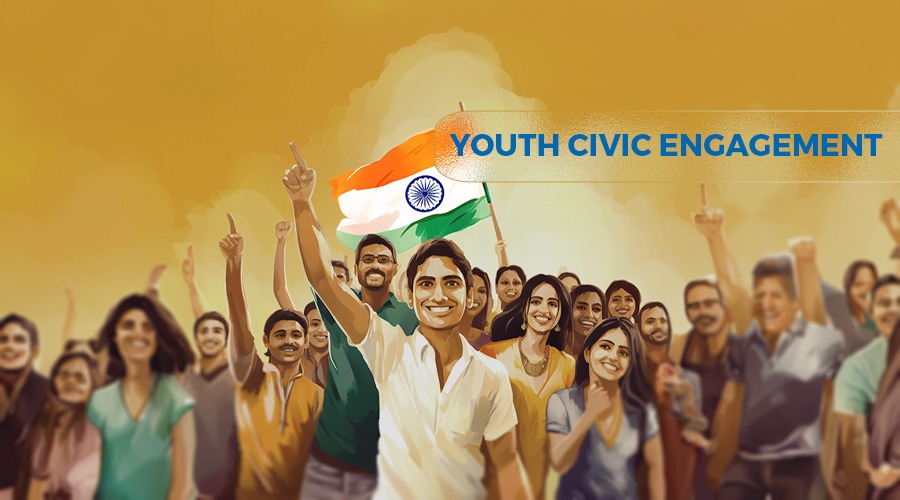
Reward Citizens to Bring a Paradigm Shift in Civic Behaviour Reward Citizens to Bring a Paradigm Shift in Civic Behaviour Prayaga Venkata Rama Vinayak October 13, 2025 Public Policy, Urban Development, Youth Entrepreneurship India is known for its rich cultural practices, family values, hospitality, and ethics. It was an economic superpower for over a millennium and is on the verge of regaining its rightful stature soon. One of the major bottlenecks in the development of our country is the lack of good civic sense among Indians. Despite improvements in literacy and enrollment in higher education, unfortunately, there has not been any perceptible improvement in the civic sense of the public. As per the latest Swachh Survekshan Report (2024-25), not even a single city from Kerala, one of the most literate states in India, is ranked among the top 50 cities. Mattanur, the top-ranked city in Kerala, is ranked 53rd nationally, followed by Alappuzha at the 80th position. Furthermore, organising awareness campaigns alone is hardly effective without decentralization and community-driven efforts at the local level. The NITI Aayog report on ‘Reforms in Urban Planning Capacity in India’, released in 2021, mentioned that during the period 2011–2036, urban growth would account for 73% of the total population increase. There is a saying my father often quotes: “We can wake up someone who is in a deep sleep, but we can never wake up someone who is pretending to be asleep.” The awareness campaigns are beneficial to someone who is unaware of their wrongdoing. These campaigns help them understand and rectify their mistakes, but in our country, that’s not the case. We can relate the above-mentioned findings to the recent Gross Domestic Behaviour Survey by India Today (2025). The Survey presented a few statements to the respondents from 21 states and 1 union territory, requesting them to either agree or disagree with the statements. Based on the responses, the States were ranked. The statements were broadly categorized in the following themes: “Civic Behaviour”, “Public safety”, “Gender attitudes” and “Diversity & discriminations”. Under the Civic Behaviour theme, Tamil Nadu secured 1st place followed by West Bengal, Odisha, Delhi and Kerala in 2nd, 3rd, 4th and 5th places respectively. In the remaining 3 themes, “Public safety”, “Gender attitudes” and “Diversity & discriminations” Kerala secured the 1st place. In overall rankings too, Kerala secured 1st Place in the Gross Domestic Behaviour survey. Under the Civic Behaviour theme, the survey asked the respondents to agree or disagree with the following statement: “It is ok to throw litter on the road/public place, if there is no public garbage bin available”.  Almost 99% of respondents in Kerala either strongly or somewhat disagreed with the statement, helping the state secure the first position for the statement. This clearly indicates that people are well aware that throwing litter on the road is wrong, which is actually a matter of common sense. Yet not even a single city in Kerala featured among the top 50 places in Swachh Survekshan, demonstrating that awareness alone does not guarantee responsible civic behaviour. While strict measures such as bans and prohibitions may be very effective in certain cases, they are not as sustainable as the efforts driven by voluntary participation. Hence, there is a need to promote and ensure the active involvement of citizens in civic matters. China is a case in point, having figured out that the antidote for irresponsible civic behaviour is decentralization and community participation. The country has achieved significant results through its community-based governance. At the neighbourhood committee levels, residents participate in committees that handle disputes, cleanliness and local events. It also employs other measures like Civilized City Rankings, social credit rewards, and public shaming for civic violations. Though Kerala is renowned for its decentralization, it lacks behavioural governance tools like China’s reward – punish civic systems that transform awareness into actions. It is high time we adopt a pragmatic citizen-reward mechanism to encourage better civic sense among our youth and the general public. For example, governments could introduce a “Good Citizen Card (GCC)”. This GCC could be awarded to individuals who pay loans, electricity bills, and property taxes on time; follow traffic rules properly; have no criminal records, especially against children, parents, women, or the elderly; refrain from creating public disturbances; and maintain public hygiene. Additionally, the GCC could include parameters related to education, health, environment, skill development, cultural values, and other aspects that promote responsible citizenship. An autonomous body could be tasked with implementing this citizen-reward initiative to ensure transparency and neutrality. Governments could incentivise the holders of GCC with various benefits, such as preferential allocation of seats in trains, priority or relaxation in cooking gas connection, electricity connection, property registration, or other services. The governments could also consider holding of GCC a prerequisite for government jobs at all levels. It is pertinent to note the similar initiative of the Indian Railway—Lucky Yatri Yojana—a privately sponsored initiative that turned every valid train ticket into a lottery entry, offering daily cash prizes of Rs. 10,000 and a weekly jackpot of Rs. 50,000 to incentivize commuters to travel with a ticket and curb fare evasion. Though the scheme did not take off as intended, the takeaway from the scheme is that incentives encourage people positively. Governments can formulate a robust rewarding mechanism to improve civic sense of our citizens, in addition to the existing stringent laws. The Union Government, in its Budget for 2025-26 has announced the setting up of “Urban Challenge Fund”, wherein “the Government will set up an Urban Challenge Fund of Rs.1 lakh crore to implement the proposals for ‘Cities as Growth Hubs’, ‘Creative Redevelopment of Cities’ and ‘Water and Sanitation’.” For the current year, the Union Government allocated Rs. 10,000 crore under the proposed Fund. The government could implement a citizen-reward initiatives, such as GCC, under this Fund and encourage responsible civic behaviour from its citizens. The Author is Public Policy Fellow at AgaPuram Policy Research Centre, Erode The views expressed by the author are personal and does

Reward Citizens to Bring a Paradigm Shift in Civic Behaviour Read More »
Entrepreneurial Biases and Resilience: Building Sustainable Start-Ups

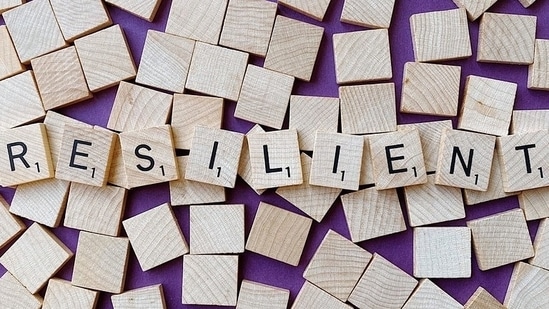
Entrepreneurial Biases and Resilience: Building Sustainable Start-Ups Entrepreneurial Biases and Resilience: Building Sustainable Start-Ups Dr Anbu Selvi S September 29, 2025 Youth Entrepreneurship Resilience is the ability of a business to withstand, adapt, and thrive in the face of shocks that are internal and external, as well as known and unanticipated. (Pixabay) India’s Growing Start-up Ecosystem Entrepreneurship has reemerged as one of the foremost drivers of economic growth in India during the 21st Century. With nearly 1.92 lakhs recognized start-ups and a rapidly expanding community of young innovators, India now stands as the world’s third-largest start-up ecosystem. This growth has been fostered by government initiatives designed to nurture entrepreneurial skills and resilience from the grassroots to higher education. Programmes like the School Innovation Development Programme (SIDP) encourage creativity and problem-solving among young learners, while Innovation and Incubation Centers (IICs) at universities and colleges provide critical platforms for transforming ideas into viable ventures through mentorship and industry connections. These efforts have laid the foundation for a dynamic entrepreneurial culture capable of driving progress across diverse sectors such as technology, healthcare, and agriculture. The Psychological Journey of Entrepreneurship However, entrepreneurship is not simply a matter of having the right idea or sufficient capital. It is a profoundly psychological journey fraught with uncertainty, volatility, and social pressures. Research shows that many promising start-ups fail not because of a lack of innovation or resources but due to cognitive and psychological biases that distort how entrepreneurs assess risks, make decisions, and respond to failures. Recognizing and managing these biases is essential to fostering resilience, i.e., the capacity to adapt, recover, and sustain momentum despite setbacks.  Biases Across the Entrepreneurial Lifecycle  Entrepreneurs are subject to different biases throughout the lifecycle of their ventures. Before launching, many face pre-entry biases such as fear of failure, doubts about their readiness, or an overemphasis on resource scarcity, which discourage participation in entrepreneurial activities. During the execution phase, overconfidence and distorted optimism often lead founders to overlook risks or ignore warning signs. When ventures fail, entrepreneurs may succumb to stigma, regret, or pessimism, preventing them from learning from their experiences and trying again. Even after success, biases such as complacency and social pressure to scale quickly can jeopardize long-term sustainability.  The Complexities of Entrepreneurship in the Digital Era  In today’s digital era, entrepreneurship is both empowered and complicated by technology. Digital platforms provide unprecedented access to markets and resources, but also amplify biases such as herd mentality and fear of missing out (FOMO). Social media algorithms often reinforce confirmation biases by highlighting positive signals while filtering out critical feedback, leading entrepreneurs to overvalue hype and short-term growth. High-profile cases of rapid valuation collapses among unicorns like Byju’s illustrate the dangers of prioritizing scale over sustainability. Hence, critical digital literacy becomes a vital skill, enabling entrepreneurs to discern between genuine opportunities and transient trends, and to build ventures that endure beyond viral success.  The Case Studies of Post-Failure Biases To understand how psychological biases shape entrepreneurial resilience after failure, the following real-life case narratives offer concrete insights. These examples reveal how entrepreneurs internalise setbacks and develop specific cognitive distortions that influence their future decisions and behaviours. Case Study-One: an entrepreneur who faced repeated failures in multiple small ventures during the early 1990s, illustrates self-attribution bias and regret aversion. Despite eventually achieving long-term success in the media industry (cable television), in his early losses led to deep-seated self-doubt and a tendency to attribute success to luck rather than skills. This also resulted in status quo bias and pessimism bias, making him overly cautious about new opportunities. Case Study-Two: a textile trader, experienced betrayal aversion after being deceived by a co-founder who embezzled funds. Though he recovered financially with a new garment business, his outlook became defined by confirmation bias and generalization bias, where mistrust toward one partner extended to all future collaborators. His heightened protective instincts also led to overcompensation bias, creating rigid systems that stifled flexibility and growth. Case Study Three: a garment exporter in Tiruppur, represents the psychological toll of external shocks like the COVID-19 pandemic. His experience highlights normalcy bias, optimism bias, and illusion of control, as he underestimated the long-term impact of the pandemic and overestimated his ability to manage macroeconomic forces. Even as his business began recovering, complacency bias returned, leaving him vulnerable to future disruptions. These narratives underscore that entrepreneurial failure is not merely a financial even, as it becomes a deeply psychological experience. The nature of the failure, be it self-inflicted, relational, or circumstantial, shapes the type of bias that may emerge. Recognizing these patterns is crucial for designing interventions that help entrepreneurs rebuild not just their ventures, but also their confidence, mindset, and decision-making frameworks. Policy Interventions for Resilience and Sustainability: The following recommendations may be adopted in the higher educational institutions to foster: Pre-Entry Support: Role-model campaigns (e.g., showcasing women like Falguni Nayar of Nykaa), micro-seeding grants, and student innovation programmes to reduce fear and stigma. Resilience Training: Embedding coping strategies, mindfulness, and reflective practices in incubation curricula. Post-Failure Support: Second-chance finance (like Mudra loans), peer-support clinics, and counseling networks. Post-Success Awareness: Structured mentorship for scaling responsibly, preventing overconfidence traps. Inclusive Ecosystems: Gender-sensitive incubators (such as Her&Now by GIZ), rural accelerators, and equitable policy support. Well-Being Support: On-campus psychologists and behavioural mentors in IICs. Ethics and Sustainability: Embedding Environmental, Social, and Governance (ESG) and case studies of responsible start-ups like SELCO Solar (affordable renewable energy for rural India). Conclusion Entrepreneurship is as much a psychological journey as it is a financial and technical one. Biases, if unmanaged, distort decision-making and weaken resilience. By embedding resilience training, ethical awareness, and mental well-being support into education and incubation systems, India can create entrepreneurs who adapt and innovate. Normalising failure (as in Paytm’s founder’s journey), celebrating sustainable models (like SELCO and Phool), and institutionalising second-chance mechanisms will empower entrepreneurs to take risks in healthier and more sustainable ways. Ultimately, the entrepreneurs who will build enduring ventures are not those who avoid bias or failure, but

Entrepreneurial Biases and Resilience: Building Sustainable Start-Ups Read More »