Chandrasekaran Balakrishnan

MoU Signed with Erode Arts and Science College

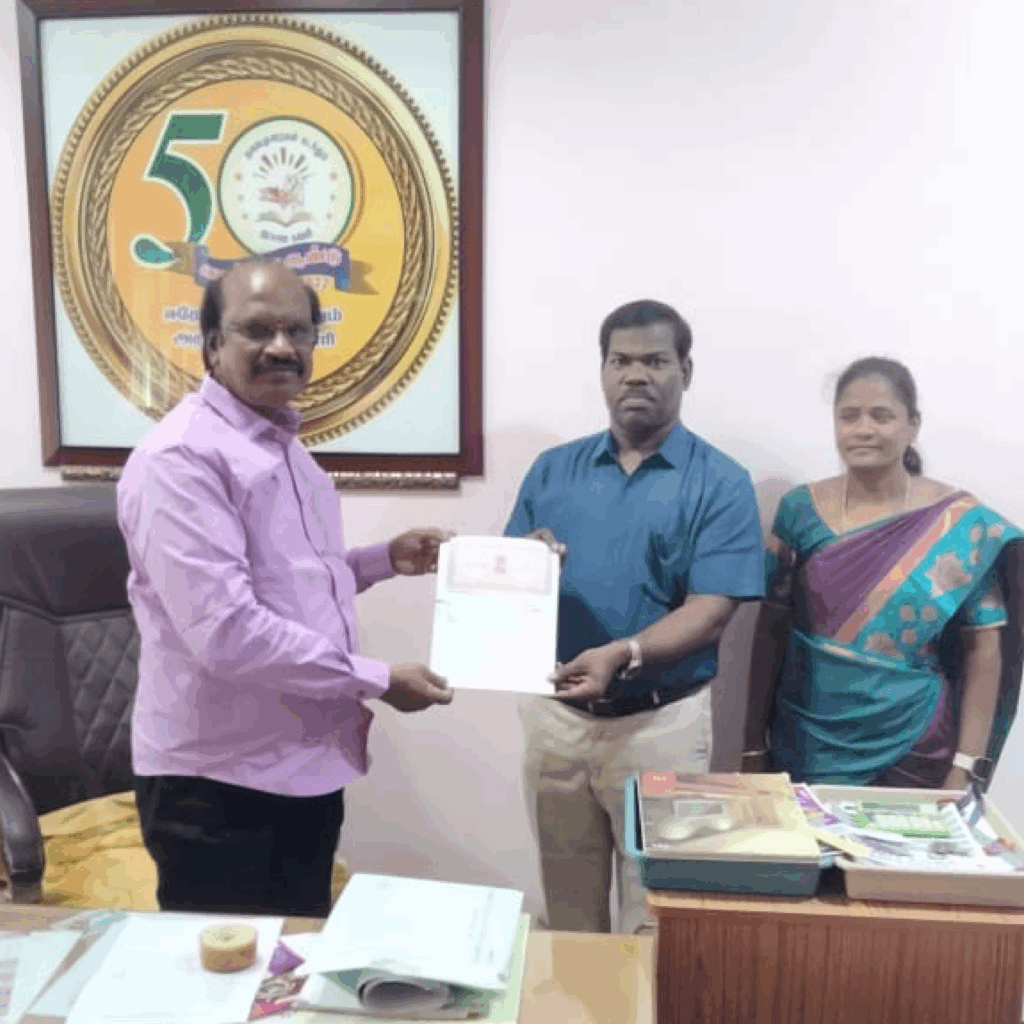
MoU Signed with Erode Arts and Science College MoU Signed with Erode Arts and Science College Chandrasekaran Balakrishnan July 30, 2025 events AgaPuram Policy Research Centre (APRC), Erode and Erode Arts and Science College, has signed a Memorandum of Understanding (MoU) for training the economics graduates on job markets prospects and multi-disciplinary approach to learning economics and public policy frameworks. B.Chandrasekaran, Founder Chairman received the copies of MoU from Dr.R. Sankarasubramanian, Principal, Erode Arts and Science College in the presence of Dr. V. Mallika, Head of Department of Economics.

MoU Signed with Erode Arts and Science College Read More »

Behavioural Economics in Focus: Global Experts Meet in Madurai

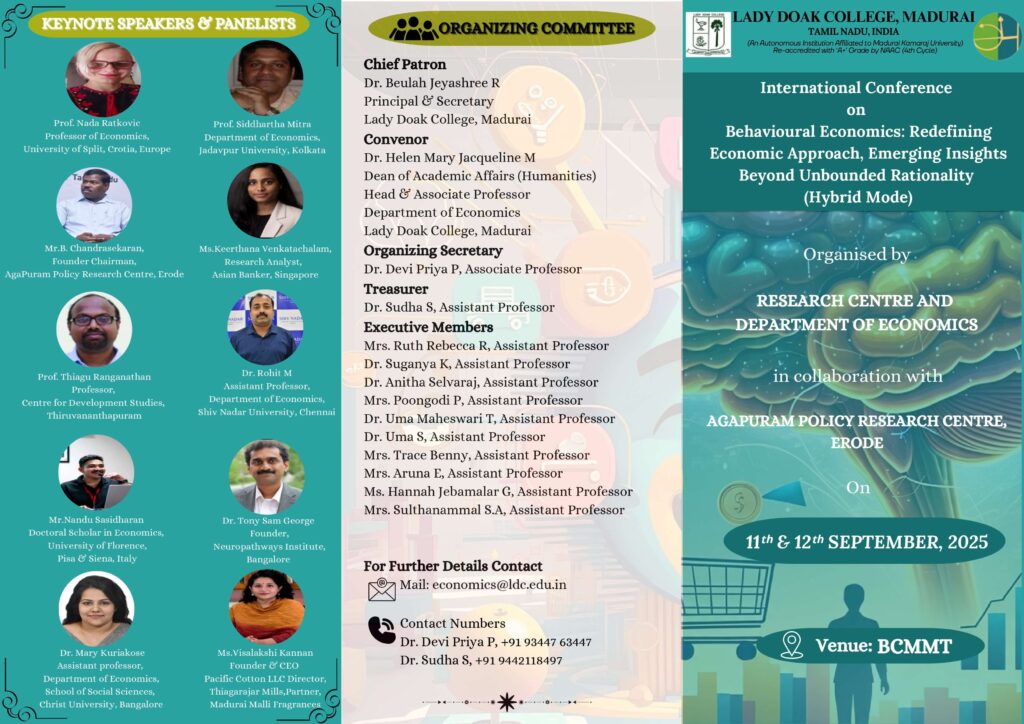
Behavioural Economics in Focus: Global Experts Meet in Madurai Behavioural Economics in Focus: Global Experts Meet in Madurai Chandrasekaran Balakrishnan June 26, 2025 events   Join us for the International Conference on Behavioural Economics: Redefining Economic Approach, Emerging Insights Beyond Unbounded Rationality, organized by the Research Centre and Department of Economics, Lady Doak College, Madurai, in collaboration with Agapuram Policy Research Centre, Erode. This hybrid-mode conference, taking place on 11th and 12th September 2025 at BCMMT, brings together renowned speakers, economists, researchers, and industry experts from around the world to explore new dimensions in behavioural economics and its impact on modern economic thought.

Behavioural Economics in Focus: Global Experts Meet in Madurai Read More »

Tamil Nadu Lacks Institutional Mechanisms to Promote Holistic Tourism

Tamil Nadu Lacks Institutional Mechanisms to Promote Holistic Tourism B Chandrasekaran Tamil Nadu Lacks Institutional Mechanisms to Promote Holistic Tourism B Chandrasekaran Chandrasekaran Balakrishnan June 5, 2025 Cultural Economics, Public Policy, Tamilnadu Economy Tourism plays a crucial role in the economy, contributing 6.23% to the national GDP and providing 8.78% of total employment. For Tamil Nadu, 8% of its GDP comes from the tourism sector and the State aims to increase it to 12% by 2030. In 2019, Tamil Nadu had 49.5 crore domestic tourist arrivals and 0.69 crore foreign tourist arrivals. Between 2013 and 2019, Tamil Nadu was the most visited State by domestic tourists garnering 22.1% of total domestic tourists in India. However, this trend declined significantly in 2020 and 2021 due to the pandemic and continues with the trend. The overall experiences experience of any tourist to the State is a disappointing given the kind of state’s industrialisation and urbanisation achievements. Despite several new steps taken in recent times to promote the tourism sector by the government, the state’s tourism infrastructure continues to be substandard with a lack of integrated mobility; lack of basic civic facilities like water, hygiene and sanitation; lack of adequate safety and security facilities etc. This reflects lapses in holistically developing the sector. In 2003, the Union Ministry of Tourism and Culture released a study titled “20 Years Perspective Tourism Plan for the State of Tamil Nadu” to promote holistic tourism in Tamil Nadu. The study stated that “Tamil Nadu is a magical blend of timeless traditions and colourful festivals – a seat of cultural heritage.” It also stated, “Tamil Nadu, with its picturesque hills, beaches, waterfalls, wildlife sanctuaries, temples, ancient monuments, places of worship for all faiths and centres of art and culture has a lot to offer to the domestic and international tourists”. The following findings were highlighted in the study, which are still relevant as far as the challenges faced by the tourism sector of the State are concerned: Inadequate infrastructure like roads, water, electricity, and transport at some tourist destinations, and increasing pollution arising out of tourism. The bottlenecks at the state level have been identified as lack of accommodation (51%), water supply and sanitation (46%), poor connectivity (43%), power supply (37%), lack of life garbage disposal (30%), lack of travel booking (16%), and insecurity (8.3%). Hence, the average spending by a foreign and domestic tourist is less in Tamil Nadu as compared to some other northern states. There is an absence of heritage hotels, paying guest accommodations, and dormitories at pilgrim destinations. It is estimated that 1.2 international tourist visits provide employment to one person, whereas 17 domestic tourists generate employment for one person. Hence, the employment multiplier is 1.358”. It is estimated that Rs.10.00 lakh invested in tourism created 47.5 jobs against 44.7 in agriculture and 12.6 in manufacturing… In respect of the hotel industry, an investment of Rs.10.00 lakh will give direct employment for 12 persons and five rooms in a five-star hotel at an average gives direct employment to eight persons.”  The study recommended the following measures to develop holistic tourism in Tamil Nadu: Tamil Nadu has a long sea coast (ECR) which can be used to connect places on the East coast and provide added attraction for tourists. Possibilities of inland cruise service on the river/ canals are also suggested to be explored. Tourism plays an important role in the socio-economic development of any country. It is one of the major sources earning foreign exchange. Tourism promotion also generates employment in urban as well as rural areas that may arrest the large scale migration of rural mass to urban centres and in turn help avoid formation of more slums. Tourism can yield positive results provided it satisfies the requirements of sustainable eco-development and is managed scientifically and gainfully. Local people should be made to participate in planning and development of tourism so that they can bring new ideas, support and influence the decisions, and in turn be a part of it. Develop training content and capability to strengthen passenger services at transport interchanges (bus, railway, ferry, ship and air plane terminals); Promote the application of universal design principles to improve the accessibility of tourism sites, especially cultural, heritage and pilgrimage sites. To develop in tandem with allied departments like HR and CE, Transport, Rural Development, Municipal Administration, Water Supply, Department of Art and Culture, NGOs involved in tourism and cultural activities;” Tamil Nadu has just 2 cruises at present, despite having 13% of India’s total coastline. Tourism is highly labour-intensive, but the employment generation has decline in tourism sector in the state recently. Some reasons for the failure are: The statutory powers and other delivery systems to support tourism development (infrastructure development), are vested with various government departments/ agencies which operate in silos with hardly any coordination. Tamil Nadu Tourism Development Corporation (TTDC), incorporated in 1971, has not developed adequate institutional facilities and services for the tourism sector to cater to the demands of inbound domestic and foreign tourists. It has 51 hotels with 852 rooms, which is not adequate. The Institute of Hotel Management, Catering Technology & Applied Nutrition in Chennai and The State Institute of Hotel Management & Catering Technology in Tiruchirappalli are still not adequately equipped with state-of-the-art infrastructure facilities for training skilled manpower for the tourism sector of the state, resulting in failure to produce enough semi-skilled or skilled tourist guides with proficiency in different regions of India and international languages. As the State aims to achieve a one trillion-dollar economy in 2030, tourism presents a significant opportunity for growth. The State’s Tourism Policy 2023 aims to attract new investments of Rs. 20,000 crores and achieve employment generation of 25 lakhs by 2028. It also aims to achieve a tourism sector contribution of 12% of the GSDP share in the state economy. It envisions to develop all the tourism destinations through Tamil Nadu Integrated Tourism Promotion Project (TNITPP). It also announced Focus Tourism Destinations (FTDs) and Focus Tourism Corridors

Tamil Nadu Lacks Institutional Mechanisms to Promote Holistic Tourism Read More »

CBSE Class 12 Results 2025: JNVs and KVs Lead with High Pass Rates, Private Schools Lag Behind

CBSE Class 12 Results 2025: JNVs and KVs Lead with High Pass Rates, Private Schools Lag Behind CBSE Class 12 Results 2025: JNVs and KVs Lead with High Pass Rates, Private Schools Lag Behind Chandrasekaran Balakrishnan May 19, 2025 media Public schools like Jawahar Navodaya and Kendriya Vidyalayas lead with over 99% pass rates, while private schools record the lowest performance; girls continue to outperform boys by nearly 6%. Read More

CBSE Class 12 Results 2025: JNVs and KVs Lead with High Pass Rates, Private Schools Lag Behind Read More »

Interview of Advisor of AgaPuram Policy Research Centre.

Interview of Advisor of AgaPuram Policy Research Centre. Interview of Advisor of AgaPuram Policy Research Centre. Chandrasekaran Balakrishnan April 17, 2025 media Above interview by N Shanmuganathan is Member in Board of Advisor in AgaPuram Policy Research Centre click here to watch In this insightful interview aired on Sun News, N Shanmuganathan, Member of the Board of Advisors at AgaPuram Policy Research Centre, shares his expert views on the long-term trends of gold prices and the recent surge in the market. His analysis delves deep into the economic factors influencing gold rates, comparing India and China’s market behavior, and offering a strategic perspective on what the future might hold. A must-watch for anyone interested in economics, investment trends, and global market dynamics.

Interview of Advisor of AgaPuram Policy Research Centre. Read More »

Distinguished Indian Economists-Initiative of Azim Premji University

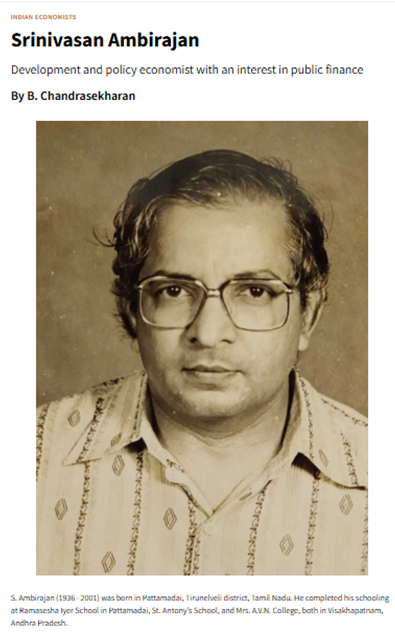
Distinguished Indian Economists-Initiative of Azim Premji University Distinguished Indian Economists-Initiative of Azim Premji University Mr B Chandrasekaran, Founder Chairman, AgaPuram Policy Research Centre (APRC) has contributed to the Initiative of Azim Premji University on Prof S Ambirajan’s life and works. This project explores the contributions of modern Indian economists, whose ideas and analyses have not only shaped India’s economic trajectory but also generated a deeper understanding of development and growth in the country. Chandrasekaran Balakrishnan April 17, 2025 Indian Economy, Indian Liberals Full Article is at: https://azimpremjiuniversity.edu.in/indian-economists/s-ambirajan                               https://azimpremjiuniversity.edu.in/distinguished-indian-economists

Distinguished Indian Economists-Initiative of Azim Premji University Read More »

Tamil Nadu Budget 2025-26 Aims High But Fall Shorts

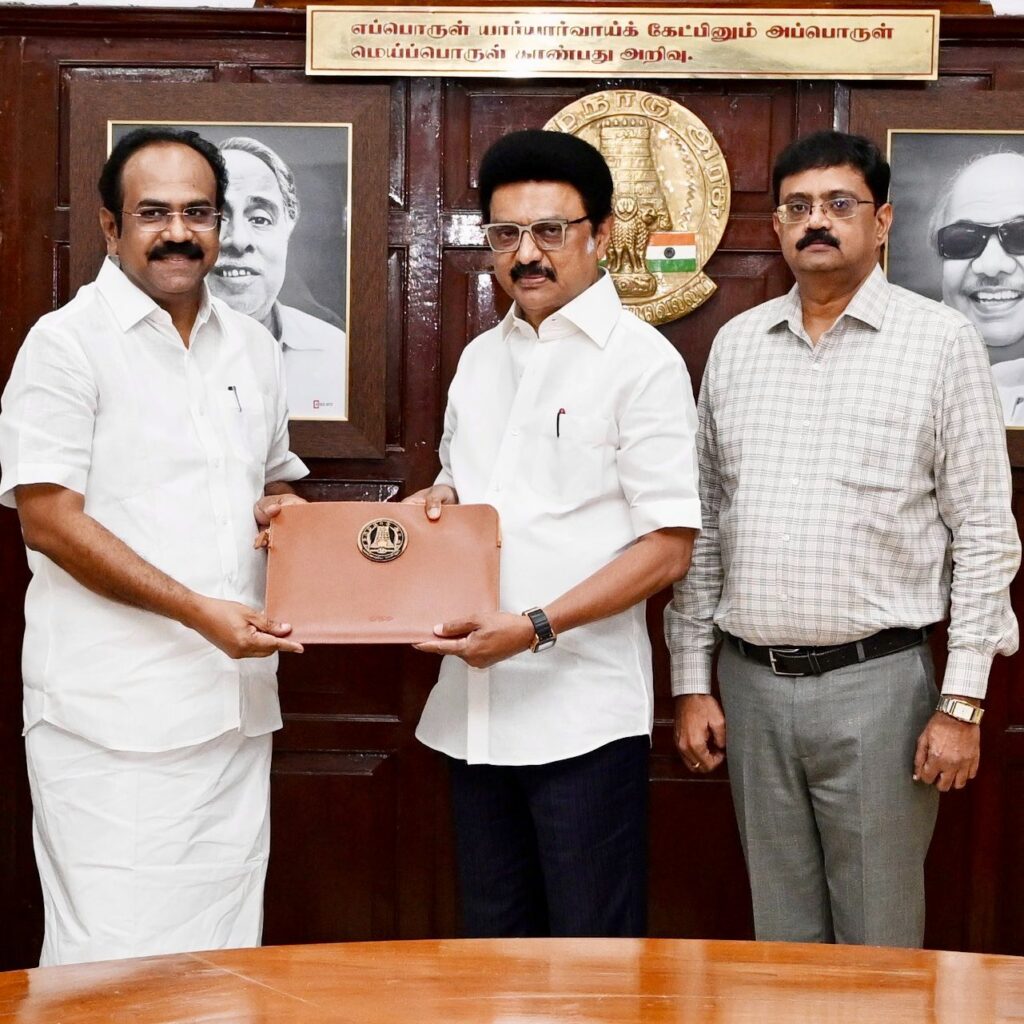
Tamil Nadu Budget 2025-26 Aims High But Fall Shorts Tamil Nadu Budget 2025-26 Aims High But Fall Shorts Chandrasekaran Balakrishnan April 8, 2025 Public Policy, State Economies, Tamilnadu Economy Few State Government Budgets are closely watched at the national and regional level for their key announcements and pragmatic policies on emerging sectors. Tamil Nadu state budget is one such. During the last four years, two finance ministers have presented the state budgets. This year’s state budget is the last full budget as the state assembly elections are due by early next year. We need to appreciate the state government for bringing out the first Economic Survey Report of 2024-25. Tamil Nadu is one of the major industrialised states in the country and has set a target of becoming a one trillion-dollar economy. By not addressing issues related to faster urbanisation, slow paced structural and institutional reforms, lack of decentralisation of governance, rationalisation of overall state’s debts and debts of energy department, the State Budget for 2025-26 may be termed as a missed opportunity. Further, there are several low-hanging fruits to which the state budget did not pay enough attention. Moreover, the state’s window of demographic dividend is already over and faces a shortage of workforce across sectors, which is a major cause of concern. Therefore, the aims to achieve a one trillion-dollar economy dream by 2030 may not be feasible. Indian economy is on the verge of pushing its growth trajectory upwards given the global challenges. Tamil Nadu economy has a major role to play at national level contributions, hence the state budgets should aim and leverage for strengthening the institutional delivery system and decentralised approach of governance. The Budget for the current financial year focuses on social welfare measures which were highlighted most predominately for building popular narratives on distributive political economy. Nevertheless, few pragmatic policies were announced in the Tamil Nadu budget 2025-26 which includes new policies in frontier sectors like Tamil Nadu Semiconductor Mission-2030, Tamil Nadu Maritime Transport Manufacturing Policy 2025, A policy on Animation, Visual Effects, Gaming, Comics and Extended Reality (AVGC-XR), and Integrated Renewable Energy Policy. These are welcome steps. On healthcare, there are measures proposed to prevent and completely eradicate cervical cancer in Tamil Nadu. The Government has planned to provide HPV vaccination to all girls aged 14 years progressively. Further, the state has also proposed to set up “Chennai Science Centre” with the allocation of Rs.100 crore and 2 Basic Sciences and Mathematics Research Centres in Chennai and Coimbatore, in collaboration with renowned research institutes like the Indian Institute of Science (IISc) and Tata Institute of Fundamental Research (TIFR) respectively. Further, the State Budget for 2025-26 also announced a few welcome measures like raising of Municipal Bonds to the extent of Rs.200 crore for the Greater Chennai Corporation, Rs.120 crore for the Coimbatore Corporation, Rs.100 crore for the Trichy Corporation, and Rs.100 crore for the Tiruppur Corporation for increased capital expenditures to bridge gaps in civic facilities. However, the state has been facing multiple challenges on fiscal health indicators, which is a serious concern. As a result, the state faces a number of sectoral challenges, as highlighted by the Economic Survey. Rapid urbanization drives demand for infrastructure services such as transportation, housing, sanitation, and utilities- energy sector, use of technology in service deliveries, etc. However, the budget has given little attention to contemporary issues of lack of public infrastructure for industrial development and urban mobility aspects. Tamil Nadu is the second most urbanized state (54.13% in 2024) after Kerala. The state budget allocated funds for the urban sector are only Rs.34,396 crore under the Municipal Administration and Water Supply Department (Rs.26,678 crore) and Housing and Urban Development Department (Rs.7,718 crore). While, in 2023-24, 54.63% of Tamil Nadu’s urban workforce was employed in the service sector, close to the national average of 58.07%. The state government trained about 41.38 lakh students in the last 4 years, but only 2% of them are employable as per their assessment. Tamil Nadu is ranked 2nd nationally in 2023-24 with 35.56 lakh Udyam-registered Micro, Small, and Medium Enterprises (MSMEs). Of these 10.69 lakh (30%) were in manufacturing MSMEs, while 24.87 lakh (70%) were services-oriented MSMEs. These MSMEs provide employment to 2.56 crore workers in the state. While the budget allocations for industrial development are very meager. A total of Rs.3,915 crore allocated to the Industries, Investment Promotion, and Commerce Department, and a total of Rs.1,918 crore has been allocated to the Micro, Small, and Medium Enterprises Department. Thus, a total of Rs.5833 crore for industrial development. Another important sector is mobility, which is a growth driver for the state. The state has a population of 8.3 crore, but the total number of public transport buses is only 20,260 in 2023-24. Daily passengers travelling in public transport was 1.76 crore in 2023-24 increasing from 1.31 crore in 2019-20. As per the state economic survey, the state government has planned to introduce 8,682 new buses and has placed orders for 8,182 buses with financial support from KfW, the World Bank, SADP, and the state. MTC, a public-sector organisation, will procure 625 more e-buses as a component of the World Bank. However, the State Budget announced that about 1,125 electric buses will be deployed for public use starting this year: 950 electric buses in Chennai, 75 electric buses in Coimbatore, and 100 electric buses in Madurai, A total of Rs.12,964 crore has been allocated to the Transport Department. Also, Rs.20,722 crore has been allocated for Highways and the Minor Ports Department. The number of startups in Tamil Nadu has increased fivefold over the past four years, surpassing the 10,000 marks. But their presence is restricted to a few districts like Chennai, Kanchipuram, Thiruvalluvar, and Coimbatore. The start-ups are not diverse in sectoral focus and also not as dispersed across the districts in the south, east, and central parts of the state. In terms of sectoral fund allocations, only Rs.131 crore has been earmarked for the Information Technology and Digital Services

Tamil Nadu Budget 2025-26 Aims High But Fall Shorts Read More »

2025-26 மத்திய பட்ஜெட்: பொருளாதாரம், சந்தைகள் மற்றும் நடுத்தர வர்க்கத்துக்கு எதிர்பார்ப்புகள்

2025-26 மத்திய பட்ஜெட்: பொருளாதாரம், சந்தைகள் மற்றும் நடுத்தர வர்க்கத்துக்கு எதிர்பார்ப்புகள் 2025-26 மத்திய பட்ஜெட்: பொருளாதாரம், சந்தைகள் மற்றும் நடுத்தர வர்க்கத்துக்கு எதிர்பார்ப்புகள் Chandrasekaran Balakrishnan April 3, 2025 media  

2025-26 மத்திய பட்ஜெட்: பொருளாதாரம், சந்தைகள் மற்றும் நடுத்தர வர்க்கத்துக்கு எதிர்பார்ப்புகள் Read More »

2025-26 மத்திய பட்ஜெட் குறித்த கருத்தரங்கு: பொருளாதாரம், சந்தைகள் மற்றும் நடுத்தர வர்க்கம் பற்றிய நுண்ணறிவுகள்

2025-26 மத்திய பட்ஜெட் குறித்த கருத்தரங்கு: பொருளாதாரம், சந்தைகள் மற்றும் நடுத்தர வர்க்கம் பற்றிய நுண்ணறிவுகள் 2025-26 மத்திய பட்ஜெட் குறித்த கருத்தரங்கு: பொருளாதாரம், சந்தைகள் மற்றும் நடுத்தர வர்க்கம் பற்றிய நுண்ணறிவுகள் Chandrasekaran Balakrishnan April 3, 2025 media ஈரோடு கொங்கு பொறியியல் கல்லூரியில் கொங்கு பொறியியல் கல்லூரியின் மேலாண்மை ஆய்வுகள் துறை மற்றும் அகப்புறம் கொள்கை ஆராய்ச்சி மையம் (APRC) இணைந்து “மத்திய பட்ஜெட் 2025-26 குறித்த ஒரு நாள் கருத்தரங்கு: நுண்ணறிவு மற்றும் கலந்துரையாடல்கள்” ஒன்றை நடத்தியது. ஏராளமான எம் பிஎமற்றும் எம்சிஎ மாணவர்கள் கருத்தரங்கில் பங்கேற்றார்கள். துறை தலைவர் டாக்டர் பி. கார்த்திகேயன் பேச்சாளர்களையும் பங்கேற்பாளர்களையும் வரவேற்றார். Read More

2025-26 மத்திய பட்ஜெட் குறித்த கருத்தரங்கு: பொருளாதாரம், சந்தைகள் மற்றும் நடுத்தர வர்க்கம் பற்றிய நுண்ணறிவுகள் Read More »