
Highlights of Tamil Nadu’s First Economic Survey – 2024-25
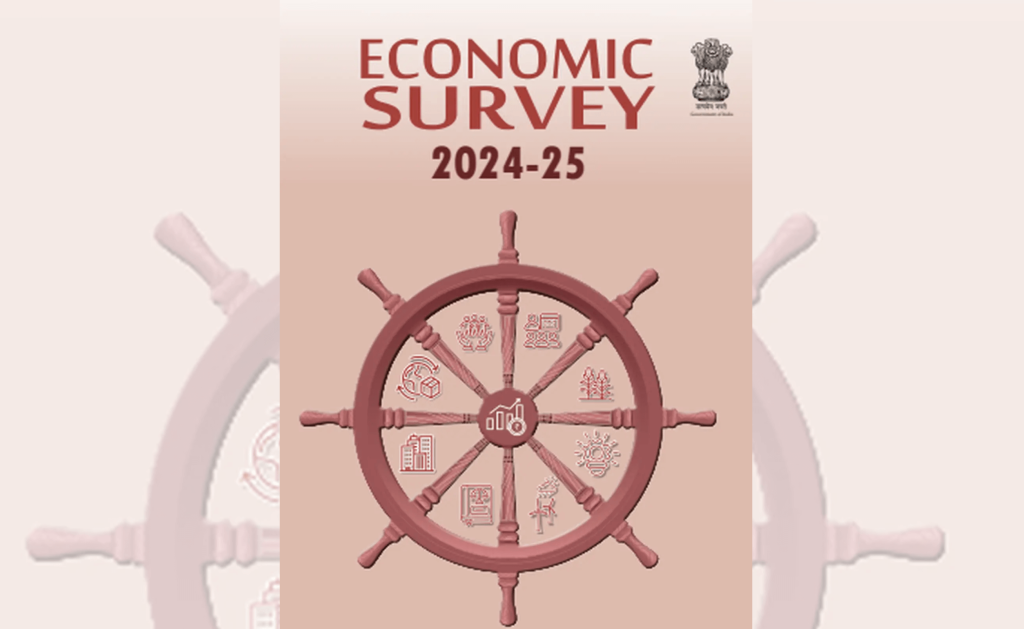
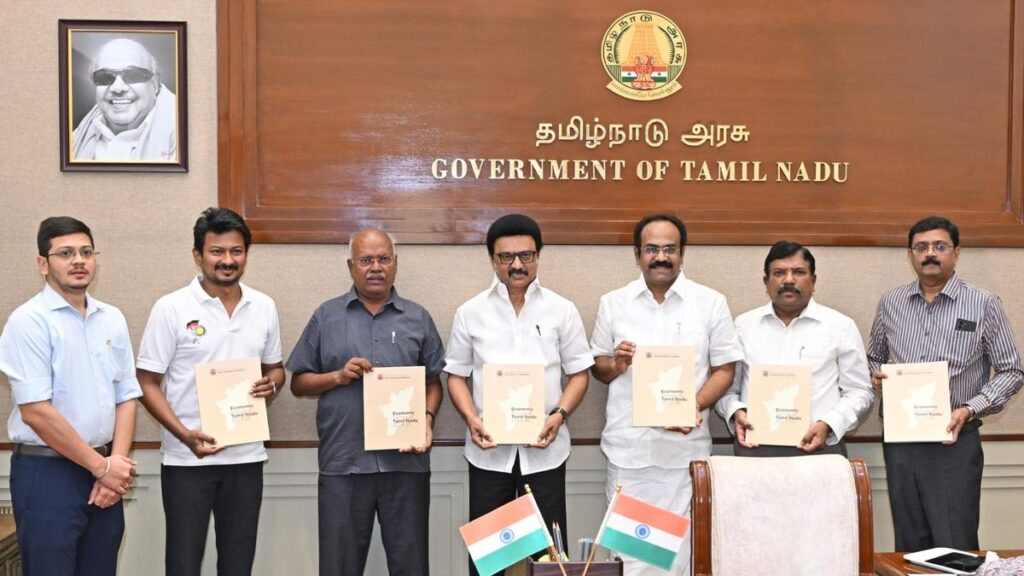
Highlights of Tamil Nadu’s First Economic Survey – 2024-25 Highlights of Tamil Nadu’s First Economic Survey – 2024-25 Chandrasekaran Balakrishnan April 1, 2025 Public Policy, State Economies, Tamilnadu Economy The economy consists of several components, including both institutional and individual people. Studying the progress of those components individually and collectively helps the governments, economy, and society to make future policies. The study of sectoral and sub-sectoral progress is an important exercise for the government to plan for its resource allocation and the economy to identify the growth potentials to be harnessed by the people and the private sector. After the Independence, the Union Government introduced the Annual Economic Survey Report along with Budget announcements in the year 1950-51. Given the importance of the economic survey analysis and perspectives on global and domestic policies on sectoral areas, the then Union Government separated the Union Budget and Economic Survey Report in 1964, which is being followed. Since the major economic reforms of 1991, the States embarked on building their growth and development path by bringing out a detailed analysis of sectoral, regional, intra-state district-wise, and block-wise progress of development. Like the Union Economic Survey, many State Governments have also started publishing their own economic survey to present a review of the major developments of the economy and make policy suggestions for the future. For many years, all the Southern States have been publishing their annual economic surveys while presenting the budgets. The State of Tamil Nadu, the sole exception for years, has joined the bandwagon by publishing its “First State Economic Survey 2024-25” on 13th March, 2025, a day before the Budget Announcement for the financial year 2025-26 on 14th March, 2025. The survey was prepared by the Tamil Nadu State Planning Commission, led by a team of experts. The Government of Tamil Nadu used to bring out the “Economic Appraisal” report published by the Department of Evaluation and Applied Research (DEAR), with time lags. These reports were a kind of review of progress with little attention for public policy perspectives. This analysis focuses on key highlights of the Tamil Nadu’s First Economic Survey 2024-25 in terms of its presentation, and analysis of key issues. The state has set an ambitious goal of achieving a $1 trillion economy by 2030. As a highly industrialized and urbanized economy with strong linkages of global value chains on key sectors, Tamil Nadu’s economy has demonstrated remarkable economic resilience, consistently achieving growth rates of 8% or more since 2021-22. The state is estimated to grow above 8% in 2024-25. Further, the State achieved an average growth rate of 6.37% as compared to the national average of 6.1% during the period from 2012-13 to 2023-24. In the last two years from 2022-23 to 2023-24, this growth trajectory accelerated and the state achieved an average growth rate of 8.18%. The state did not estimate the likely growth rate for the financial year 2025-26 stating the economic situation is “unstable”. In terms of Per Capita Income at current prices, Tamil Nadu has Rs.2.78 lakhs which is 1.6 times more than the national average of Rs.1.69 lakhs in 2022-23 and is 4th largest state in per capita income ranks. While, in real terms, Tamil Nadu ranked 7th among major states in 2022-23, with a per capita income of Rs.1.66 lakh. However, there are huge variations among the districts within the state of Tamil Nadu. The district-wise per capita income highlights major variations among districts in Tamil Nadu. Chengalpattu district has the highest per capita income at Rs 6.48 lakh in 2022-23, followed by Kancheepuram (Rs.6.47 lakh) and Chennai (Rs 5.19 lakh). Notably, in 8 out of the state’s 38 districts, the per capita income exceeds the state average of Rs.2.78 lakh. These top-performing districts surpass the per capita income levels of several major Indian states, including Telangana, Haryana, and Karnataka. At the same time, the districts of Villupuram and Tiruvarur has per capita income of Rs.1.48 lakh each which is lowest in the state. Also, 7 districts (Ramanathapuram, Thiruvarur, Myiladuthurai, Ariyalur, Perambalur, Kallakurichi and Villupuram) have per capita incomes below the national average. Rapid urbanization drives demand for infrastructure services such as transportation, housing, sanitation, and utilities but in each of these areas, Tamil Nadu lags and is unable to provide good quality of facilities and services. Let’s look at the sectoral growth of Tamil Nadu’s Economy as emphasized in the Economic Survey: Tamil Nadu’s agriculture heavily depends on monsoons. The sector contributes Rs.1.5 lakh crore (6% of GSVA) and ranks as the 5th largest sector. It employs 41.1% of the rural workforce. In 2021-22, the state had 92.3 lakh farmers cultivating 64.6 lakh hectares of land. Notably, 93.5% of these farmers (86.3 lakh) are small and marginal, collectively farming 62.7% of the total cultivated area, with an average landholding size of only 0.7 hectares. Tamil Nadu’s 62% of the total cropped area includes major food grains, like paddy, maize, jowar, bajra, ragi, and millets, while non-food crops such as oilseeds, sugarcane, and cotton account for the remaining 38%. Paddy continues to dominate the cropping pattern, with its share in the total cropped area increasing from 32.1% in 2019-20 to 34.4% in 2023-24. The state’s consumption of fertilizers increased by 1.03 lakh MT to 10.68 lakh MT in 2023-24 from 9.65 lakh MT in 2019-20. Power consumption in agriculture also increased by 4146 million units to 17,957 million units and from 13,811 million units during the same period. The state government has allocated Rs.7,216 crore for the subsidy on three phases of free power in 2024-25 which needs to be rationalized by undertaking institutional reforms to eliminate power thefts and losses. The rise in the productivity of key crops in Tamil Nadu has been largely driven by the extensive use of chemical fertilizers and groundwater. The state has a total of 268 cold storage units with a combined capacity of 19,856 metric tonnes which is still inadequate given the expansions. The state’s organic farming has nearly doubled, rising from
Highlights of Tamil Nadu’s First Economic Survey – 2024-25 Read More »