Ghanshyam Sharma

Another Caste Count for…? 

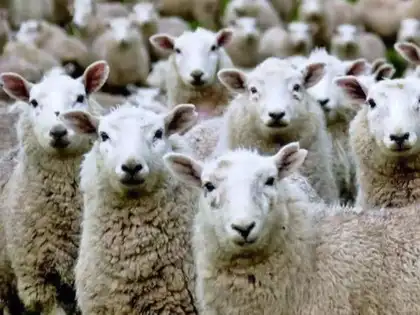
Another Caste Count for…? Another Caste Count for…? Ghanshyam Sharma May 19, 2025 Cultural Economics, Indian Economy, Public Policy                                                                                        Herd instinct If the primary purpose of conducting the caste census is to justify higher reservations for SCs/STs/OBCs, then this information already exists. The National Family Health Survey (NFHS) suggests that the share of SC/ST/OBC sections in the country’s population exceeds 50%. The NFHS are nationally representative periodic surveys that provide information on the caste composition of the population. This data can be used to estimate the caste composition at the district and state level. NFHS estimates are based on scientific sampling methods that help to infer information about the population based on a sample of households. NFHS provides reliable estimates often used in scientific research, government reports, and the industry. The reported results from the Telangana Caste Census are remarkably similar to the NFHS estimates. For example, according to NFHS, 27.8% of the Telangana population identifies as SC/ST, 54.1% as OBC, and 17.4% as general category. Telangana Caste Census reports that 27.8% of the population identify as SC/ST, 56.7% as OBC, and 16% as general category. The NFHS data is available for all other states. For example, NFHS indicates that in UP, the share of SC/ST/OBC population in the total population is 78.9%. In Gujarat, this share is 74.7%. In the states of Maharashtra and Karnataka, this share is 56.3% and 85.7% respectively. Since NFHS also asks people the religion they most identify with, this caste data can be seen across religions as well. Besides, the NSS / NFHS surveys also collect rich information on various social and economic indicators such as wealth, education, employment, health, alcohol use, tobacco use, condition of women, etc. Since these surveys have been conducted over time, they have been used to check for convergence in the economic and social status across caste groups. Several prominent studies like K Munshi (2019) and Hnatkovska & Lahiri (2012) have documented that while gaps in economic status between caste groups exist, there has been a remarkable convergence over time. In other words, the SC, the ST, the OBC, and the General category groups have become more equal. The socially marginalized sections of the population are catching up. It is unrealistic that the proposed Caste Census would collect such diverse data on socio-economic indicators for the entire country. Even if the caste census collects such information, it will be available every ten years. NFHS / NSS can be done every 3-4 years. Moreover, NFHS / NSS / India Human Development Survey data is already used in public policy-making. In that case, what does the proposed caste census intend to achieve? Will the caste census collect data on the population size and socioeconomic indicators for every sub-caste (which NSS/NFHS doesn’t do)? What will this information be used for? If the purpose of the caste census is to unbundle the castes within the SC, the ST, and the OBC groups, this can stir a hornet’s nest. The caste census will likely rattle the SC, ST, and OBC groups which receive caste based benefits, rather than the general castes. It may pit social groups within the broader ST, SC, and OBC communities against each other. The caste census can be used to strip a caste or a sub-caste of its reservation privileges if its social and economic indicators are comparable to the general category. Caste census can provide information to fix the quantum of reservation based on the population size or economic status of each caste and sub-caste within the reserved categories. This will be a deviation from the current policy where all the castes categorized as ST have equal claims at 7.5% reservation. Even if this is not the intended objective of the caste census, it will motivate demands from caste groups for higher reservations within the reserved seats. Census data can selectively target specific social groups within the broader Scheduled Caste and Scheduled Tribe categories. For example, the Pre-Matric Scholarship Scheme for ST Students be replaced with the Pre-Matric Scholarship Scheme for only Meena students leaving out other ST caste groups. Despite its promise of superior targeting of specific social groups based on social exclusion, it is also impossible for a caste census to realistically capture social stratification. This is because caste isn’t the only factor that socially stratifies India. Caste intricacies intersect with class, language, and gotra differences. There are hundreds or even thousands of sub-castes within Brahmins. Saraswat Brahmins in Tamil Nadu may be similar to other Tamil Brahmins as compared to Saraswat Brahmins from Uttar Pradesh. There seem to be no substantive reasons for conducting the census. The Government of India hasn’t specified the objectives of conducting the Caste Census. Most purposes of conducting a caste census are speculative. The UPA and NDA governments have not disseminated the 2011 caste census data. Bihar and Telangana have recently conducted caste censuses. But neither have they disseminated census data, nor framed policies based on it. Therefore, it is worthwhile to ponder over the usefulness of conducting a caste census.  The author is currently an Associate Professor of Economics at RV University, Bengaluru.  The Author is a Research Fellow at AgaPuram Policy Research Centre.  Views expressed by the author are personal and need not reflect or represent the views of the AgaPuram Policy Research Centre. This article was originally first published by The Economic Times at https://economictimes.indiatimes.com/opinion/et-commentary/another-caste-count-for-/articleshow/120906704.cms

Another Caste Count for…?  Read More »

War Against Tariffs, Not a Tariff War

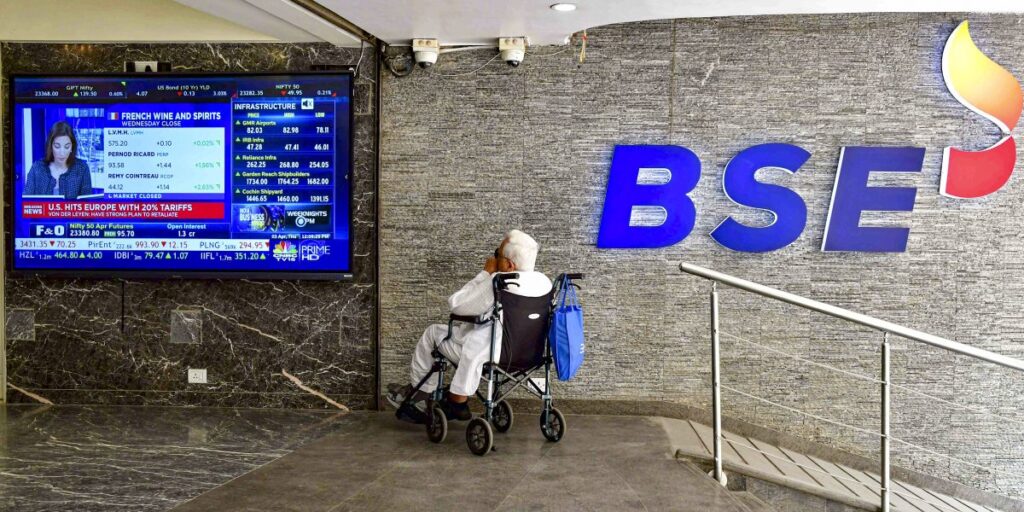
War Against Tariffs, Not a Tariff War War Against Tariffs, Not a Tariff War Ghanshyam Sharma April 17, 2025 Economic Reforms, Indian Economy, World Economy An elderly person watches the stock prices on a digital screen at the Bombay Stock Exchange (BSE) building in Mumbai. Indian equity markets slipped during Thursday’s trade after Trump announced tariffs on foreign imports to the US. Photo: PTI India has the third highest tariff rates among major countries. Iran and Venezuela are the other major countries with higher tariffs than India. According to the World Bank, India imposes a weighted average tariff rate of 11.5%. In comparison, China has a tariff of 3%, Pakistan has a tariff of 8%, Vietnam has a tariff of 1%, and Sri Lanka has a tariff of 4.4%. The countries in the European Union have a tariff of 1.3%. Australia has a tariff of 1%. The US has a tariff of 1.5%. Tariffs make imported goods expensive and force citizens to pay higher prices for low-quality local goods. For example, in India, laptops are 30% more expensive than in the United States. An average American is 33 times richer than an average Indian (USD 82,000 vs USD 2,500 GDP per capita). Coupled with this growing income disparity, such a steep price differential hampers skill development among youth. It’s been a fear for centuries that foreign competition threatens local industry and employment. In 1845, Frederic Bastiat petitioned the French government to protect the domestic candle manufacturing industry from foreign competition – the Sun. Bastiat argued that the Sun lights up people’s homes for free and reduces the candle demand. If the government could enact trade barriers such as prohibiting windows and blocking the Sun, people would be forced to purchase candles! Hence, protecting the domestic industry from foreign competition will increase demand, employment, and GDP. While Bastiat wrote a satire, a prominent labour union in the United States actually filed a grievance against goats in 2017. Western Michigan University had replaced the union members with goats to clear vegetation and landscape their campus. However, the labour union argued that the use of goats cost them their jobs and threatened their livelihoods. In a free world, people are paid somewhat proportionate to the value they add. Should we support policies that block the sun or bar the goats from grazing so people can have jobs even if these jobs add no value? Trade barriers such as tariffs do not contribute to human prosperity. They may generate employment in the short run but lead to long-term economic stagnation and decline. In reality, tariffs facilitate a transfer of resources from domestic consumers to affluent domestic industrialists. Tariffs safeguard the interests of domestic industrialists at the expense of common citizens. After the 1991 economic reforms, several business houses floundered in the face of foreign competition. The presence of tariffs eliminates competition for domestic industry and disincentivizes them from improving quality and reducing prices. Protected by tariffs, domestic industrialists use their resources to lobby with politicians rather than investing in research to increase competitiveness. Tariffs exist because domestic big businesses lobby for them. George Stigler (1982 Nobel Prize recipient in Economics) pointed out that big companies capture regulation at the expense of consumers. It is easier and more lucrative for a few big business houses to unite as an interest group and lobby for a favorable policy (such as tariffs). They face lower costs of coming together and a limited free rider problem. Further, the benefits are also concentrated. In contrast to big businesses, it is costly and difficult for millions of consumers to unite against unfair tariffs. The price increase due to tariffs is not enough to motivate them to skip their jobs or businesses to oppose the policy.  For example, while the United States imposes zero taxes on Indian drugs, India poses a 10% tax on US-made drugs. A 10% tax on imported drugs benefits a few pharmaceutical firms and hurts millions of Indian consumers. However, while the benefits accrue to a few pharma firms, the costs are distributed among millions of consumers. Hence, the people are unlikely to protest as it is rational for individuals to accept the unfair tariffs. India has been lowering tariffs since 1991. However, the tariffs have increased in the last 10 years. In 1991, India’s tariff rate on imports was 56.4%. India gradually lowered its tariffs to 26.5% in 2001. By 2015, India lowered the tariffs further to 7.3%. However, as per WTO estimates, the tariff rate had increased to 11.5% in 2022. In addition to increasing tariffs, India has increased non-tariff barriers to support organized producers. According to UNCTAD, India has increased the number of Non-tariff Measures (NTMs) against imports from 389 in 2012 to 582 in 2022. To make matters worse, India has increased the Frequency Ratio (the percent of imported products subject to NTMs) from 31.2% in 2010 to about 47%. It has also increased the Coverage Ratio (the percent of import value subject to non-tariff measures) from 42.5% in 2010 to 69 percent. Such measures have benefitted the organized producers at the cost of unorganized consumers. When India lowered tariffs in 1991, productivity, employment, and GDP growth increased. High-value jobs replaced the existing jobs. Several domestic firms became key players in global markets. Citizens were able to buy high-quality goods at lower prices. Therefore, India should lower its tariffs in response to President Trump’s threat of reciprocal tariffs. A stronger trade relationship between India and the United States will translate into an improved geo-political partnership between the two countries. Low import tariffs will benefit firms that manufacture exports as imported goods are used to manufacture exports. This may create short-term temporary job losses but will lead to long-term high-value employment and prosperity. The author is currently an Associate Professor of Economics at RV University, Bengaluru. The Author is a Honourary Research Fellow at AgaPuram Policy Research Centre.  Views expressed by the author are personal and need not reflect or represent the views

War Against Tariffs, Not a Tariff War Read More »

High Tax Rates Do Not Translate into Higher Tax Revenues

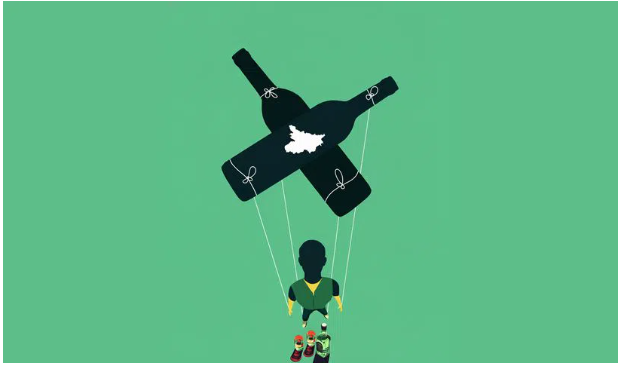
High Tax Rates Do Not Translate into Higher Tax Revenues High Tax Rates Do Not Translate into Higher Tax Revenues Ghanshyam Sharma March 4, 2025 Economic Reforms, Indian Economy, Public Policy The irony of India’s high tax policy is that while it imposes the highest tax rates globally, it collects very low tax revenues compared to other countries. India has the highest GST of 28%. If we include cess and other charges, the actual tax rates are even higher.  However, India’s tax revenue as a percentage of GDP is only 11.7%. In contrast, China raises 12.5% of its GDP in tax revenues while having the highest GST of only 13%. Vietnam has the highest GST of 8% and raises 11.4% of its GDP in tax revenues. Indonesia collects 11.9% of its GDP in tax revenues with the highest GST rate of 11%. An African country, Botswana, raises 34% of its GDP in tax revenues with the highest GST rate of 14%. The figure suggests that India does poorly on tax efficiency and is an outlier with the highest GST rate and low tax revenues. India imposes the highest tax in the world on its domestic sectors that account for a quarter of the Indian GDP and employs 17% of India’s workforce. These critical sectors are automobiles, construction (cement is taxed at 31.36%), electronic items such as air conditioners and refrigerators, luxury hotels, etc. These sectors cumulatively generate employment for over 100 million people. The high tax policy has jeopardized the livelihood of people in these sectors. India also has one of the highest marginal income tax rates in the world. Most European countries with high-income taxes have low inflation compared to India. Inflation reduces the purchasing power of nominal income. In an era of stagnant incomes, the real income tax is substantially higher than the general perception. It is an economic fallacy that increasing the tax rates leads to higher tax revenues.  On the contrary, there is theoretical and empirical evidence that high rates can lead to lower revenues. This is because of several reasons. First, high tax rates reduce economic activity. High tax rates lead to lower sales, a fall in production, and a decline in employment. As the economic activity comes down, tax revenues come down. For example, the cumulative tax on cars is more than 40%. The Federation of Automobile Dealers Association has raised the alarm that there is an inventory of 8 lakh unsold cars worth Rs.78,000 crore. Even the two-wheelers purchased by the price-sensitive middle class attract a tax of 28%. All the auto firms are struggling because the high tax policy has deterred people from buying automobiles. The policy also threatens the livelihood of 37 million people employed in the sector. Second, high tax rates encourage smuggling and black markets. For example, the government levies a 53% tax on cigarettes to curb smoking and generate tax revenues. However, ITC Ltd. recently estimated a potential tax revenue loss of 21,000 crore rupees because of smuggled cigarettes. This policy also hurts Indian tobacco farmers because tobacco in the smuggled cigarettes is grown abroad. Excessive tax rates on cigarettes can also be a health hazard as they force people to switch to unregulated and unbranded products. A sharp increase in the Securities Transaction Tax (STT), Short-term Capital Gains Tax (SCGT), and Long-term Capital Gains Tax (LCGT) has led to dabba trading or trading outside the legally recognized stock exchanges. Informal estimates suggest that the volume of trading in informal exchanges is almost 25% of formal exchanges. The STT was introduced in 2004 as an alternative to LCGT. However, when the government introduced the LCGT in 2018, it did not scrap the STT. To rub salt in the wounds, it increased the STT by almost 60% in 2024. Even the SCGT and LCGT increased by 33% and 25% respectively. Third, a high tax policy penalizes honest taxpayers and encourages under-reporting of income and profits. Thousands of clean millionaires who could have contributed to the wealth generation have left India with their wealth. The only beneficiary of high tax rates is the tax bureaucracy. This is because high tax rates incentivize the industry to offer bribes to tax inspectors. Hence, it was an institutional oversight that the GST’s rate-fixing committee has been left completely to the bureaucrats with no political representation. Bureaucracy has no accountability and benefits from increasing tax rates. The Union Finance Minister has suggested that the average GST rate is only 11.6%. However, a more appropriate measure would be an average GST rate weighted by the relative importance of a good in the overall GDP.   Since the government does not disseminate the GST data to compute the average weighted GST rate, these claims are unverified. It is a fact that high tax rates hurt the economy. Nevertheless, to raise tax revenues, the government has raised tax rates to the point where India has the highest tax rates worldwide. As a consequence, India’s GDP growth has crashed. Experts suggest a structural slowdown and low growth rates in the coming several quarters. India needs to increase its tax rate efficiency, not its tax rates. However, the former is conditional on a broader economic reform agenda. The knee-jerk reaction to raise tax rates will only hurt the economy and destroy long-term tax revenue generation. In India, the government is growing at the expense of its people. While the economic growth is slowing down, the pace of tax collections is increasing. It may be desirable to increase the tax revenues, but it should not jeopardize the people’s long-term progress. The author has a PhD in Economics from Clemson University, USA. He is currently an Associate Professor of Economics at RV University, Bengaluru. The Author is a Honourary Research Fellow at AgaPuram Policy Research Centre.  Views expressed by the author are personal and need not reflect or represent the views of the AgaPuram Policy Research Centre. This article was originally first published by The Economic Times https://m.economictimes.com/opinion/et-commentary/indias-high-tax-rates-boon-for-bureaucrats-bane-for-the-economy/amp_articleshow/118609436.cms

High Tax Rates Do Not Translate into Higher Tax Revenues Read More »

Open Defecation, Stray Dogs, and Child Stunting

Open Defecation, Stray Dogs, and Child Stunting Open Defecation, Stray Dogs, and Child Stunting Ghanshyam Sharma February 21, 2025 Child Development, Public Policy, Urban Development Child stunting—the phenomenon of children not being able to grow to their potential heights—is an acute problem in India. India is ranked 132nd out of 152 countries and outperformed by neighboring countries such as Nepal and Bangladesh. This means that over some time, children in Nepal and Bangladesh will be taller than children in India. Open defecation and malnutrition are the primary causes of child stunting. In a recently published research focused on India, Indonesia, Mali, and Tanzania, scientists found that a sanitization program designed to eliminate open defecation has led to much-improved child health and height.  This is because open defecation leads to fecal contamination of water and food supplies with parasitic worms and causes diarrhea and parasitic infection among children under 5 years old. In this context, the Prime Minister’s drive to eliminate open defecation and promote cleanliness is a welcome step. However, Indian laws promote mass open defecations and unhygienic conditions – by encouraging stray dogs. As per the law, stray dogs can neither be euthanized nor displaced from their locations. Dog shelters are not an adequate solution. The stray dogs can breed quickly, and the only limiting factor is food availability. The apathy of municipal corporations towards garbage disposal ensures an uninterrupted food supply.  In elite neighborhoods, such as Lutyens Delhi – the abode of the political class, stray dogs are rare. In elite neighborhoods, municipal corporations are more efficient. However, municipal corporations are less sympathetic to middle-class and economically poor neighborhoods. Poor waste disposal mechanisms in these neighborhoods lead to a higher stray population and more defecations— – none of which gets removed. Children play in the same spaces where dogs defecate – thus exposing them to infections, dog bites, and reduced heights. The problem is acute in slums where waste disposal mechanisms are non-existent. In metropolitan cities, poor migrants and stray dogs occupy the same space on the roads, leading to several health and safety hazards. Such laws put middle-income and poor neighborhoods at the greatest risk. As per the World Health Organization, India accounts for 36 percent of deaths due to rabies which translates to 18,000 to 20,000 deaths a year. In several instances, stray dogs have attacked, injured, and even killed small children and older adults. People walking with sticks to ward off attacks from stray dogs are a common sight. Stray dogs create a problem of externalities in local communities. While dog lovers feed stray dogs, they do not allow them inside their homes like pets. This creates a positive externality for dog lovers who enjoy the company of dogs without taking responsibility for them. On the other hand, stray dogs create a negative externality for people who do not feed them and are vulnerable to dog attacks, particularly senior citizens and young children. Developed countries have addressed the problem with massive public funding. However, developing countries such as India need to prioritize public spending towards malnutrition among children, among other issues. Therefore, we need innovative ways to address the matter. This can be done by incentivizing the Resident Welfare Associations (RWAs) and panchayats to find solutions they find appropriate. However, according to the Supreme Court, municipal authorities cannot be granted unbridled discretionary powers to address the issue of stray dogs. Such judgments are unfortunate because they further centralize the Indian governance structure. India’s political elites suffer from what Noble Prize-winning economist Friedrich Hayek called the ‘fatal conceit’ – the belief among the elites that ordinary people and local communities are inferior to them and, therefore, incapable of self-governance. Thus, the elites should enact laws. India’s over-centralized governance structure is based on the belief that local governments cannot self-govern, even on matters related to stray dogs. In India, the central and state governments make laws even on local homeless dog populations. When it comes to dealing with stray dogs, even the local MPs and MLAs are powerless. India should move towards decentralization and allow local authorities such as RWAs and other local residential groups jurisdiction over local matters because local authorities are more likely to reflect local preferences.  Further, Section 291 of the Bhartiya Nyay Sanhita provides six months imprisonment and five thousand rupees in fine for the individual whose pet attacks another individual. Section 291 should be interpreted to consider stray dog feeders as dog owners and face penalties under the law if the stray dogs attack others. Such an interpretation will correct the incentives faced by dog lovers, and they will accept the full responsibility of dog ownership. The author is an Associate Professor at the School of Economics and Public Policy, RV University, Bengaluru. The Author is a Honourary Research Fellow at AgaPuram Policy Research Centre. Views expressed by the author are personal and need not reflect or represent the views of the AgaPuram Policy Research Centre. This article was originally first published by Deccanherald at https://www.deccanherald.com/opinion/child-stunting-a-public-health-crisis-fuelled-by-stray-dogs-open-defecation-3405071?utm_source=whatsapp&utm_medium=referral&utm_campaign=socialshare

Open Defecation, Stray Dogs, and Child Stunting Read More »