
Child Development

Karnataka’s Menstrual Leave Policy: Women Empowerment or Unintended Bias?

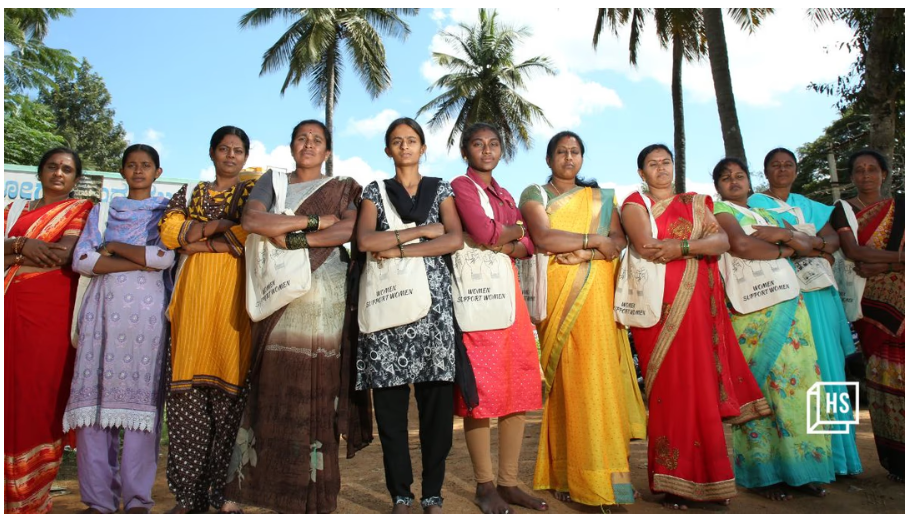
Karnataka’s Menstrual Leave Policy: Women Empowerment or Unintended Bias? Karnataka’s Menstrual Leave Policy: Women Empowerment or Unintended Bias? Prayaga Venkata Rama Vinayak November 14, 2025 Child Development, Cultural Economics, Public Policy, State Economies, Women Empowerment In a welcome move, the Government of Karnataka recently approved Menstrual Leave Policy, 2025, allowing female employees throughout the State to avail one day paid leave every month, in addition to other paid leaves sanctioned by their organisation. This policy applies to all women employees both in the public and private sectors across the State. Further, this leave does not require any pre-approvals from employers, but only prior intimation by the employees to their respective authorities. This move is worthy of emulation, as the State Government’s intention is to create a work environment that enhances women’s participation in the workforce. States such as Bihar, Kerala, and Odisha have implemented similar policies in the past. However, Karnataka’s policy explicitly covers both government and private sector employees, unlike those of the other States. Nevertheless, the initiative also warrants an analysis of its effectiveness in achieving the intended objective of women’s empowerment. One of the shortcomings of the policy is that it appears to apply only to employees in the organised sector, as no government currently has adequate mechanisms to implement such a policy in the unorganised sector, which employs a larger workforce. As of October 2025, Karnataka has approximately 10.96 million (1,09,61,042) unorganised sector workers registered on the e-Shram portal, of whom 58.1 percent (about 6.36 million) are women. However, many more women workers remain unregistered on the portal. Consequently, a majority of women employees in the State are unlikely to benefit from the policy. For micro, small, and medium enterprises (MSMEs), granting 12 additional paid leaves may lead to more absenteeism and payroll costs. From the women labour force point of view, the new leave policy may worsen the hiring bias, especially in micro and small firms that operate on very rigid workforce margins. Moreover, the state government has not proposed any reimbursement or tax offset to encourage small employers to implement the policy. The private sector may view women as costlier or less reliable employees due to additional leave entitlements like maternity, childcare and now menstrual leave. The “Voice of Women” Survey Report (2024) by Aon sheds light on how women employees view workplace equity and flexibility, which is pertinent while evaluating policies like menstrual leave. The survey mentions that findings reinforce years of research showing that women face microaggressions at work in the form of subtle and seemingly innocuous comments based on stereotypes. Nearly 42 percent women reported that they face judgmental comments or expressions on leaving work early or working remotely. Furthermore, one in three mothers reported facing career setbacks after returning from maternity leave — for 75 percent of them, the impact lasted up to two years, while 25 percent experienced setbacks lasting more than three years. We can understand from the above-mentioned survey that women are already going through lot of unavoidable discrimination in their workplace irrespective of many DEI (Diversity, Equity and inclusion) friendly policies. These kinds of policies will even amplify the ongoing discrimination to next level and, it’s worth noting that without awareness among the people in the work environment about female menstrual health and it’s impacts this kind of policies just pay a lip service to the concept of women empowerment. The periodic Labour Force Survey Report (2023-24) reveals that Karnataka’s Labour Force Participation Rate (LFPR), which indicates how many people are either working or looking to work out of the total population, is 49.9 percent for rural women, lower than the nation’s average of 51.2 percent. For urban women it is 33.5 percent, slightly above the nation’s average of 31.2 percent. The consolidated LFPR of women in Karnataka is 43.6 percent lower than the nation’s average of 45.2 percent. Further, Karnataka’s Worker Population Ratio (WPR), which indicates the proportion of working population, is 49.5 percent for rural women, a tad below the nation’s average of 50 percent. For urban women, it is 32 percent, considerably above than nation’s average of 28.8 percent. The consolidated WPR of women in Karnataka is 42.7 percent, slightly lower than the nation’s average of 43.7 percent. If the state government policy is implemented without addressing the recruitment bias faced by women in the private sector, especially in small firms, the already existing gap between the Karnataka’s LFPR and WPR of rural women will be widen, weakening the State’s efforts towards women empowerment. The policy may be modified to make it easier to implement. Instead of mandating complete paid leave, the governments can incentives organisations to grant remote work facilities for at least 3-4 consecutive days, wherever feasible. This will allow women to take proper care of their menstrual health. Also, the state government may consider this an opportune time to strictly enforce menstrual-friendly infrastructure in all workplaces with adequate hygienic and sanitation facilities across the public and private sectors. It would be commendable if the State Government could find convergence between schemes such as Koosina Mane, which empower local bodies and promote decentralization, and the implementation of new policies related to women’s menstrual health. Such an integrated approach would be mutually beneficial to both employees and employers. Further, it is essential to consult as many stakeholders as possible, including women, before implementation of the policy. The Karnataka State Menstrual leave policy is a welcome move, but it also brings some real concerns that may be overlooked. The matter requires a holistic understanding. It should aim to incentivise organisations instead of making them more hesitant to hire women, especially in smaller companies. The State Government should make sure the new policy supports both women and workplaces, without benefitting one at the cost of the other. Real inclusion means creating equal opportunities, not in offering special provisions that may inadvertently widen the very gap the policy seeks to close. The Author is Public Policy Fellow at AgaPuram Policy Research Centre, Erode The

Karnataka’s Menstrual Leave Policy: Women Empowerment or Unintended Bias? Read More »

Open Defecation, Stray Dogs, and Child Stunting

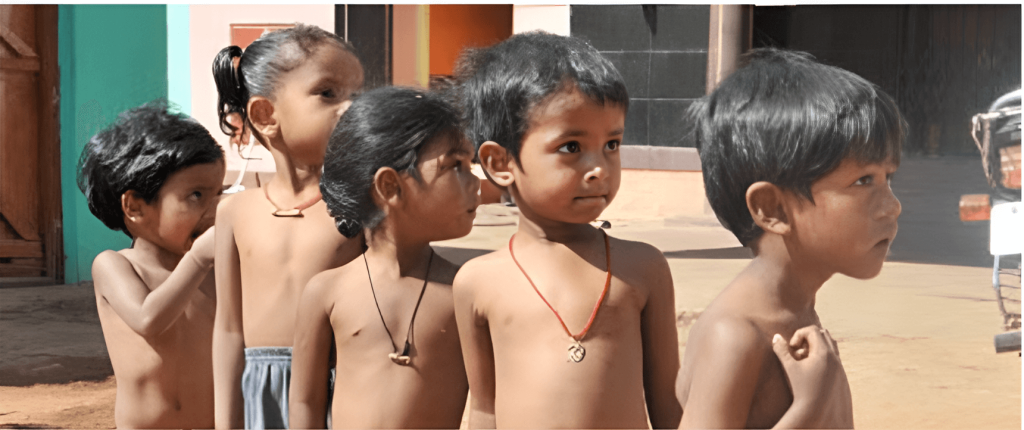
Open Defecation, Stray Dogs, and Child Stunting Open Defecation, Stray Dogs, and Child Stunting Ghanshyam Sharma February 21, 2025 Child Development, Public Policy, Urban Development Child stunting—the phenomenon of children not being able to grow to their potential heights—is an acute problem in India. India is ranked 132nd out of 152 countries and outperformed by neighboring countries such as Nepal and Bangladesh. This means that over some time, children in Nepal and Bangladesh will be taller than children in India. Open defecation and malnutrition are the primary causes of child stunting. In a recently published research focused on India, Indonesia, Mali, and Tanzania, scientists found that a sanitization program designed to eliminate open defecation has led to much-improved child health and height.  This is because open defecation leads to fecal contamination of water and food supplies with parasitic worms and causes diarrhea and parasitic infection among children under 5 years old. In this context, the Prime Minister’s drive to eliminate open defecation and promote cleanliness is a welcome step. However, Indian laws promote mass open defecations and unhygienic conditions – by encouraging stray dogs. As per the law, stray dogs can neither be euthanized nor displaced from their locations. Dog shelters are not an adequate solution. The stray dogs can breed quickly, and the only limiting factor is food availability. The apathy of municipal corporations towards garbage disposal ensures an uninterrupted food supply.  In elite neighborhoods, such as Lutyens Delhi – the abode of the political class, stray dogs are rare. In elite neighborhoods, municipal corporations are more efficient. However, municipal corporations are less sympathetic to middle-class and economically poor neighborhoods. Poor waste disposal mechanisms in these neighborhoods lead to a higher stray population and more defecations— – none of which gets removed. Children play in the same spaces where dogs defecate – thus exposing them to infections, dog bites, and reduced heights. The problem is acute in slums where waste disposal mechanisms are non-existent. In metropolitan cities, poor migrants and stray dogs occupy the same space on the roads, leading to several health and safety hazards. Such laws put middle-income and poor neighborhoods at the greatest risk. As per the World Health Organization, India accounts for 36 percent of deaths due to rabies which translates to 18,000 to 20,000 deaths a year. In several instances, stray dogs have attacked, injured, and even killed small children and older adults. People walking with sticks to ward off attacks from stray dogs are a common sight. Stray dogs create a problem of externalities in local communities. While dog lovers feed stray dogs, they do not allow them inside their homes like pets. This creates a positive externality for dog lovers who enjoy the company of dogs without taking responsibility for them. On the other hand, stray dogs create a negative externality for people who do not feed them and are vulnerable to dog attacks, particularly senior citizens and young children. Developed countries have addressed the problem with massive public funding. However, developing countries such as India need to prioritize public spending towards malnutrition among children, among other issues. Therefore, we need innovative ways to address the matter. This can be done by incentivizing the Resident Welfare Associations (RWAs) and panchayats to find solutions they find appropriate. However, according to the Supreme Court, municipal authorities cannot be granted unbridled discretionary powers to address the issue of stray dogs. Such judgments are unfortunate because they further centralize the Indian governance structure. India’s political elites suffer from what Noble Prize-winning economist Friedrich Hayek called the ‘fatal conceit’ – the belief among the elites that ordinary people and local communities are inferior to them and, therefore, incapable of self-governance. Thus, the elites should enact laws. India’s over-centralized governance structure is based on the belief that local governments cannot self-govern, even on matters related to stray dogs. In India, the central and state governments make laws even on local homeless dog populations. When it comes to dealing with stray dogs, even the local MPs and MLAs are powerless. India should move towards decentralization and allow local authorities such as RWAs and other local residential groups jurisdiction over local matters because local authorities are more likely to reflect local preferences.  Further, Section 291 of the Bhartiya Nyay Sanhita provides six months imprisonment and five thousand rupees in fine for the individual whose pet attacks another individual. Section 291 should be interpreted to consider stray dog feeders as dog owners and face penalties under the law if the stray dogs attack others. Such an interpretation will correct the incentives faced by dog lovers, and they will accept the full responsibility of dog ownership. The author is an Associate Professor at the School of Economics and Public Policy, RV University, Bengaluru. The Author is a Honourary Research Fellow at AgaPuram Policy Research Centre. Views expressed by the author are personal and need not reflect or represent the views of the AgaPuram Policy Research Centre. This article was originally first published by Deccanherald at https://www.deccanherald.com/opinion/child-stunting-a-public-health-crisis-fuelled-by-stray-dogs-open-defecation-3405071?utm_source=whatsapp&utm_medium=referral&utm_campaign=socialshare

Open Defecation, Stray Dogs, and Child Stunting Read More »

Sishu Vatica: A Step Towards Fulfilling NEP 2020 Commitments

Sishu Vatica: A Step Towards Fulfilling NEP 2020 Commitments By Dr. N. K. Sahu and Dushyant Meher Sishu Vatica: A Step Towards Fulfilling NEP 2020 Commitments By Dr. N. K. Sahu and Dushyant Meher Saravanan M January 28, 2025 Child Development, Education, Skills Development Sector School is where a child spends most of its time other than home and it is the platform that offers education, protection, and essential developmental needs of a child. Years 5 to 6 is the critical juncture of development wherein cumulative brain development occurs prior to the age of 6. The recently announced initiative of opening “Sishu Vatika” by the Government of Odisha to accommodate 5-year-old children in primary school must be seen as a progressive step towards implementing the Foundational Stage consisting of 3 years of Pre-primary and 2 years of Grades 1 and 2 of the New Education Policy (NEP)-2020. However, it must also be examined pragmatically through the lens of affordability, viability, and sustainability.   “Sishu Vatika” which literally means children’s garden or garden for children – raises the question of a designated space for an additional classroom in the first place, secondly the play area must be conducive to cognitive and physical development. Needless to say, numerous researches have already emphasized the role of the environment in the overall development of children, especially in the formative age below 6 years along with wholesome nutrition. Furthermore, the safety and security of children to prevent physical and mental harm are also to be looked into. There have been various safety guidelines issued by different national level authorities covering aspects they considered important, which finally have taken shape as a compiled version by the National Commission for Protection of Child Rights under the title – Manual on Safety and Security of Children in Schools. Applying the prescribed safety protocols under this manual is highly necessary. It could be a unique step towards convergence and a smooth transition of children from Anganwadis to the school while the teachers have to be trained suitably enough to glide this transition. A dedicated cadre of teachers with appropriate skill sets to fulfill the objectives envisioned under the NEP is a priority under this initiative. Given the circumstances wherein states including Odisha continue lagging behind in engaging special teachers for children with special needs in compliance with the Right to Education Act; the need for a new cadre of teachers raises the eyebrows. Therefore, administrative will and resource allocations towards this current initiative are to be seen in the days to come. Before that, we must know the gaps that exist in schools at the Foundational Stage. As per UDISE, in Odisha, the government schools having Class-1 were 45,042 in 2023-24, and only 759 schools have pre-primary classes. This means, 44,283 schools are the target to open fully equipped pre-primary classes. This is a daunting task as the position of the existing government schools lack infrastructure and soft components like teachers. For example, there are 1065 single-teacher schools where 50,189 students are enrolled. In the recent past in the name of 5-T, many schools were made attractive lookswise, but the fundamental requirements were not met. Now the present government is trying to fulfill the NEP-2020 and is burdened to open the pre-primary class. As per the National Curriculum Framework for Foundational Stage (NCFFS) prepared under the mentorship of Dr. K. Kasturirangan, a great scientist and visionary of our time, the National Education Policy is a transformative initiative to usher India to prepare itself to meet the challenging demands of a 21st-century knowledge society and this framework enables and energizes this transformation. Since, the framework is what gives the shape and direction towards implementing the policy, Odisha needs to dovetail it on its background of local culture, civilization, tradition, religiosity, and spiritualism at the same time keeping in mind the demands of 21st-century knowledge society and commands of Viksit Bharat.  The curriculum has to be transformative and holistic as well as conceptualized for appropriate transitioning of children’s learning abilities while moving from Anganwadi to the school. A collection of best practices adopted by other states that have demonstrated successful interventions suited for this challenging and promising time have to be studied for adoption, if suitable. The issue of screen time for children, and new-age technological influence on young minds are some of the challenging areas.  This initiative of pre-primary class and curriculum must shed light on it and also educate and guide the parents. Pre-primary preparatory class is not a new concept but framing and aligning it with national policy is of course a genuine initiative in the context of Odisha. The state surely would be interested in building its human capital in the best possible ways against the backdrop of a double-engine Government that is both willing and decisive. Furthermore, having a union minister representing the state has an added advantage of guidance and cooperation in pioneering this initiative. After fiercely fought election season, the state government shaping the destiny of new generations is most welcome in the context of Viksit Bharat. Children may not be the voters but they carry the impressions that mattered to them the most during their growing up period.  As per the latest UDISE data, the State already has 21,179 odd schools with Anganwadi on the campus and 3,472 pre-primary sections on schools that offer a fertile ground to begin sowing the garden of this initiative. Finally, it may be mentioned that school has been the frontline institution that is an integral part of our collective consciousness where unity in diversity begins. Therefore, let the Sishu Vatika bloom with the flowers of all the colours and fragrances in celebrating the spirit of childhood.  Dr. N. K. Sahu is a Former Economic Adviser to the Department of School Education & Literacy, Government of India, New Delhi and Dushyant Meher is a Delhi based Independent Consultant who worked with NITI Aayog and National Commission for Protection of Child Rights (NCPCR), Government of India, New Delhi. Views expressed

Sishu Vatica: A Step Towards Fulfilling NEP 2020 Commitments Read More »