Economic Reforms

India Ranks 15th in FDI -UNCTAD Report 2025

India Ranks 15th in FDI -UNCTAD Report 2025 India Ranks 15th in FDI -UNCTAD Report 2025 Madhusudhanan S July 30, 2025 Economic Reforms, Indian Economy, Public Policy, World Economy On June 19, 2025, the World Investment Report for 2025 was released by the United Nations Conference on Trade and Development (UNCTAD), highlighting a negative outlook due to trade tensions, geopolitical issues, and economic volatility. This has led to a decline in Foreign Direct Investment (FDI) prospects, impacting GDP growth, capital formation, trade flows, financial stability, and investor confidence. Global Investment Trends The World Investment Report 2025, launched by Secretary-General Rebeca Grynspan, highlights a concerning trend where foreign direct investment (FDI) is decreasing in countries and sectors that need it the most. Productive FDI declined by 11% in 2024, marking the second year of decline. This decline is not just a temporary setback but a consistent pattern, according to Ms. Grynspan. The report revealed a significant drop in productive FDI by 11% in 2024, marking a concerning trend. The US remains a top source and destination for FDI, with Asian economies also prominent in FDI outflows.                                          Foreign Direct Investment  – Top 10 Destination Economies Rank Economies/ Countries Billions in Dollars 1 United States 279 2 Singapore 143 3 Hong Kong SAR, China 126 4 China 116 5 Luxembourg 106 6 Canada 64 7 Brazil 59 8 Australia 53 9 Egypt 47 10 United Arab Emirates 46 Source: UN Trade based  on Information from The Financial Times, fDI markets – Authour converted image to Table Key sectors like renewable energy, water, sanitation, and agrifood systems have seen declines, hindering development efforts. Investment in key sectors like renewable energy has dropped by 31%, water and sanitation by 30%, and agrifood systems by 19%. Health investment has increased by nearly 20%, but the global total is still below $15 billion. These shortfalls are hindering progress in critical areas, highlighting the need for urgent action to ensure sustainable development for all. Developing Asia attracted $605 billion in FDI in 2024 but faces challenges like declining infrastructure investment and policy uncertainty. India’s Possition in Foreign Direct Investment India ranked 15th  globally for FDI inflows in 2024, with $27.6 billion, and 4th in Greenfield project announcements with 1,080 projects unveild in 2024. The country also saw growth in international project finance deals and outward investments. India’s 97 international project finance deals placed it among the top five global economies. With $24 billion in outward foreign investment, the country climbed to 18th place globally in FDI outflows.  There was an improvement in the rankings for both India and Saudi Arabia. The US and India led in greenfield activities in sectors like semiconductors and automobiles, with new battery and electric vehicle projects announced globally. The report ends with recommendations for channeling capital to areas in need by implementing reforms in global financial systems, expanding the use of blended finance, and adopting investment regulations that promote digital and clean transitions. Conclusion The Government of India’s policies have played a key role in making the economy one of the fastest-growing in the world and a top destination for foreign direct investment (FDI). Despite global economic challenges and changing supply chains, India’s stability and investment potential remain robust. India’s consistent implementation of policies and clear vision have attracted significant FDI over the past decade, showcasing confidence in the country’s institutions, skilled workforce, and future prospects. The Author is a Research Fellow at AgaPuram Policy Research Centre.  Views expressed by the author are personal and need not reflect or represent the views of the AgaPuram Policy Research Centre. https://thebangaloremonitor.com/india-ranks-15-in-global-fdi-attraction-unctad-report-2025/

India Ranks 15th in FDI -UNCTAD Report 2025 Read More »

War Against Tariffs, Not a Tariff War

War Against Tariffs, Not a Tariff War War Against Tariffs, Not a Tariff War Ghanshyam Sharma April 17, 2025 Economic Reforms, Indian Economy, World Economy An elderly person watches the stock prices on a digital screen at the Bombay Stock Exchange (BSE) building in Mumbai. Indian equity markets slipped during Thursday’s trade after Trump announced tariffs on foreign imports to the US. Photo: PTI India has the third highest tariff rates among major countries. Iran and Venezuela are the other major countries with higher tariffs than India. According to the World Bank, India imposes a weighted average tariff rate of 11.5%. In comparison, China has a tariff of 3%, Pakistan has a tariff of 8%, Vietnam has a tariff of 1%, and Sri Lanka has a tariff of 4.4%. The countries in the European Union have a tariff of 1.3%. Australia has a tariff of 1%. The US has a tariff of 1.5%. Tariffs make imported goods expensive and force citizens to pay higher prices for low-quality local goods. For example, in India, laptops are 30% more expensive than in the United States. An average American is 33 times richer than an average Indian (USD 82,000 vs USD 2,500 GDP per capita). Coupled with this growing income disparity, such a steep price differential hampers skill development among youth. It’s been a fear for centuries that foreign competition threatens local industry and employment. In 1845, Frederic Bastiat petitioned the French government to protect the domestic candle manufacturing industry from foreign competition – the Sun. Bastiat argued that the Sun lights up people’s homes for free and reduces the candle demand. If the government could enact trade barriers such as prohibiting windows and blocking the Sun, people would be forced to purchase candles! Hence, protecting the domestic industry from foreign competition will increase demand, employment, and GDP. While Bastiat wrote a satire, a prominent labour union in the United States actually filed a grievance against goats in 2017. Western Michigan University had replaced the union members with goats to clear vegetation and landscape their campus. However, the labour union argued that the use of goats cost them their jobs and threatened their livelihoods. In a free world, people are paid somewhat proportionate to the value they add. Should we support policies that block the sun or bar the goats from grazing so people can have jobs even if these jobs add no value? Trade barriers such as tariffs do not contribute to human prosperity. They may generate employment in the short run but lead to long-term economic stagnation and decline. In reality, tariffs facilitate a transfer of resources from domestic consumers to affluent domestic industrialists. Tariffs safeguard the interests of domestic industrialists at the expense of common citizens. After the 1991 economic reforms, several business houses floundered in the face of foreign competition. The presence of tariffs eliminates competition for domestic industry and disincentivizes them from improving quality and reducing prices. Protected by tariffs, domestic industrialists use their resources to lobby with politicians rather than investing in research to increase competitiveness. Tariffs exist because domestic big businesses lobby for them. George Stigler (1982 Nobel Prize recipient in Economics) pointed out that big companies capture regulation at the expense of consumers. It is easier and more lucrative for a few big business houses to unite as an interest group and lobby for a favorable policy (such as tariffs). They face lower costs of coming together and a limited free rider problem. Further, the benefits are also concentrated. In contrast to big businesses, it is costly and difficult for millions of consumers to unite against unfair tariffs. The price increase due to tariffs is not enough to motivate them to skip their jobs or businesses to oppose the policy.  For example, while the United States imposes zero taxes on Indian drugs, India poses a 10% tax on US-made drugs. A 10% tax on imported drugs benefits a few pharmaceutical firms and hurts millions of Indian consumers. However, while the benefits accrue to a few pharma firms, the costs are distributed among millions of consumers. Hence, the people are unlikely to protest as it is rational for individuals to accept the unfair tariffs. India has been lowering tariffs since 1991. However, the tariffs have increased in the last 10 years. In 1991, India’s tariff rate on imports was 56.4%. India gradually lowered its tariffs to 26.5% in 2001. By 2015, India lowered the tariffs further to 7.3%. However, as per WTO estimates, the tariff rate had increased to 11.5% in 2022. In addition to increasing tariffs, India has increased non-tariff barriers to support organized producers. According to UNCTAD, India has increased the number of Non-tariff Measures (NTMs) against imports from 389 in 2012 to 582 in 2022. To make matters worse, India has increased the Frequency Ratio (the percent of imported products subject to NTMs) from 31.2% in 2010 to about 47%. It has also increased the Coverage Ratio (the percent of import value subject to non-tariff measures) from 42.5% in 2010 to 69 percent. Such measures have benefitted the organized producers at the cost of unorganized consumers. When India lowered tariffs in 1991, productivity, employment, and GDP growth increased. High-value jobs replaced the existing jobs. Several domestic firms became key players in global markets. Citizens were able to buy high-quality goods at lower prices. Therefore, India should lower its tariffs in response to President Trump’s threat of reciprocal tariffs. A stronger trade relationship between India and the United States will translate into an improved geo-political partnership between the two countries. Low import tariffs will benefit firms that manufacture exports as imported goods are used to manufacture exports. This may create short-term temporary job losses but will lead to long-term high-value employment and prosperity. The author is currently an Associate Professor of Economics at RV University, Bengaluru. The Author is a Honourary Research Fellow at AgaPuram Policy Research Centre.  Views expressed by the author are personal and need not reflect or represent the views

War Against Tariffs, Not a Tariff War Read More »

GOLD – Is $3,000/Oz in 2025 Cheaper than $35/Oz in 1971?

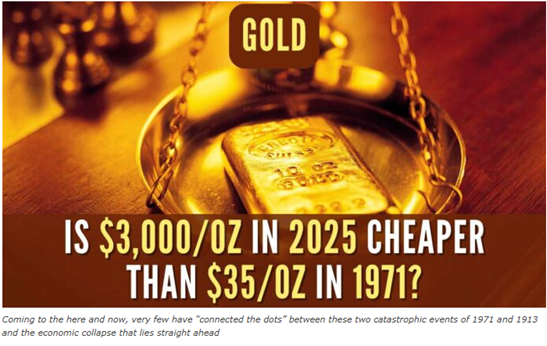
GOLD – Is $3,000/Oz in 2025 Cheaper than $35/Oz in 1971? GOLD – Is $3,000/Oz in 2025 Cheaper than $35/Oz in 1971? by Shanmuganathan N March 19, 2025 Economic Reforms, Indian Liberals, World Economy Gold prices have nearly doubled in the last 18 months from the lows of $1575/oz in September 2022. Despite the heady returns in a safe-haven asset, we are still in the early days of a super cycle that will last a decade or longer. As I explain in this article, gold prices are headed for levels most analysts cannot conceive of today.   What does “Cheaper than in 1971?” imply? During the decade starting 1971, Gold prices rose nearly 25 times to top at $850/oz by 1980. That is a 25-fold return in 10 years; a similar performance would mean a $75,000/oz price by 2035. What is the probability of that happening in the decade ahead? As I explain in this article, it’s a probable event but not a certainty. At least, not yet. What is almost certain is the target of $24,000/oz, as explained in the book “RIP USD: 1971-202X …and the Way Forward”. Undeniably, even the much lower target of $24,000/oz would still be a spectacular bull market in Gold. What caused gold prices to go up 25 times during the 1970s? DeepSeek gave several reasons: the end of the Bretton Woods System, High Inflation and Stagflation, US Dollar Weakness, Geopolitical Uncertainty, Increased Investment Demand, and Central bank policies. All of these are indeed valid proximate reasons, yet DeepSeek misses out on THE fundamental reason, i.e., Price catching up with Value. The proximate reasons are nearly irrelevant in the big picture. Without the deep discount between Price and Value as it prevailed back then, none of the proximate reasons would have increased gold prices appreciably. Gold was money from about 2800 BC until 1971. In 1980, the market priced gold at a level that would have allowed for the restoration of the Gold Standard, enabling Gold-Dollar convertibility at a fixed rate. This property of being the free market choice of money determined the value of gold in dollar terms during the 1970s; it is the same reason that is playing out today. Incidentally, when the gold window was closed in 1971, all the paper economists (i.e., the Communists, Keynesians, and the Friedmanites) unanimously predicted that the price of gold would fall well below $35/oz. It was forecasted that the price of gold would fall to $10/oz, accounting only for the industrial demand. Only to see gold prices go up 25 times in the next 10 years. The graph shows that the markets had priced gold at a level where the value of gold held at Fort Knox would have backed about 55% of the US money supply (M1). The US Federal Government could have restored the Gold-Dollar convertibility standard, with the US Dollar defined as 1/600th of an ounce of gold in 1980 / 1981. Most forms of the Gold Standard have operated with a 40% backing by bullion, and technically, the US could have transitioned to the Gold Exchange Standard that prevailed before 1971. Incidentally, the Bank of England had operated on a Gold Standard from 1717 to 1931 using a 40% reserve ratio. Ronald Reagan, a supporter of limited government and the Gold Standard, missed the last opportunity to close the Pandora’s box that Richard Nixon had opened in 1971. It is not to argue here that a 40% reserve ratio is the correct adaptation of the Gold Standard. Anything less than 100% backing is “stealth inflation”, and as long as Governments are in charge of the money supply (either through a Central Bank or with a regulatory system as was the case in the US before 1913), we are going to have the Fractional Reserve Banking system. There is no getting away from that. The point to be recognized is that even this 40% backing is vastly superior to our current unbacked paper monetary system. How high can gold prices go? – What does the above “Gold Stock – M1” graph imply for a return to the Gold Standard today? The ratio as of Q1 2025 is 0.035, and to achieve a 40% backing of the current money supply (M1), gold prices have to be about $35,000/oz. At this point, the key question is, what would the money supply be 10 years later?  That would indicate whether the current bull market in gold can rival what happened during the 1970s. Forecasting M1 Growth Two factors account for the substantive increase of M1 since 2008. Increase in National Debt: The accumulated National Debt from 1789 to the end of 2007 was a little over $9 trillion. In the subsequent 16 years, starting in January 2008, we have increased it by $27 trillion, and the National Debt today stands at $36 trillion. Increase in Federal Reserve Ownership of the National Debt: The US Fed owned less than 5% of the National Debt until 2007. However, since the 2008 GFC, the US Fed has monetized an increasingly more significant portion of the federal deficits, and this percentage increased to 10% by 2010 and 20% by 2022. The trend of the US Federal Reserve owning an increasing percentage of the National Debt will likely continue. This is for geopolitical reasons, as the US Government has practically weaponized the US Dollar since the Ukraine conflict. Most countries have their price inflation / recessionary issues to deal with. So, the tendency to either pay down the National debt (e.g., Japan) or stimulate the economy (e.g., Germany) by selling the US Dollars held would only increasingly leave the US Fed as the only buyer for the US National Debt. To project this forward, even if we assume that the M1 is set to grow at a CAGR of 10%, it will grow from the current $18.5 trillion to $48 trillion over the next 10 years. With a 40% reserve backing, gold prices would have to be well

GOLD – Is $3,000/Oz in 2025 Cheaper than $35/Oz in 1971? Read More »

Odisha Budget-2025-26- Aspirations for Samruddha

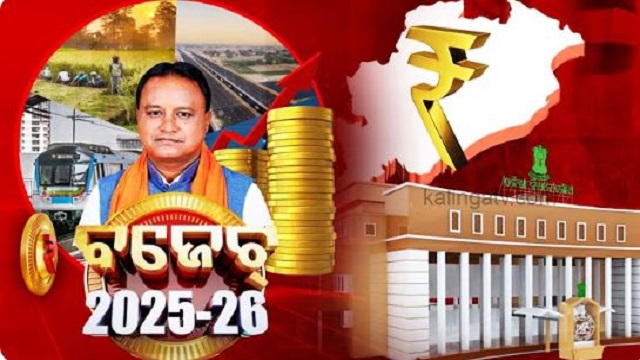
Odisha Budget-2025-26- Aspirations for Samruddha by 2036 Odisha Budget-2025-26- Aspirations for Samruddha by 2036 Chandrasekaran Balakrishnan March 18, 2025 Economic Reforms, Public Policy, State Economies Three decades of major economic reforms in India showcase the structural and institutional paradigm shifts, and thereby results witnessed higher growth, efficiency, competition, and making choices available across different sectors. As the country embarks on Viksit Bharath@2027, many pandits now turn to the regional economies of States to leverage their capacity by empowering institutional reforms towards the achievements of aspirations of people and empowering cities as focal points for new growth engines. It’s also high time for timely implementation of State level institutional and decentralisation reforms for the next level of higher growth in India. The Odisha Budget for 2025-26 is a case in point where the State aspires to become Samruddha or Viksit Odisha by 2036 which is in alignment with national goals. By 2036, Odisha aims to become a USD 500 Billion economy and a USD 1.5 Trillion economy by 2047. This is not an easy task in any yardstick because the State has quite low urbanisation and aims to increase it to 22% by 2030 from 19% at present. However, Case studies by experts highlighted that “process reforms in Odisha reduced the number of steps needed to access funds” by a programme implementing agencies at ground level and hence, the state has high optimism. During the last three years the Odisha economy grew by 7.2% GSDP in 2024-25, 9.6% GSDP in 2023-24, 6% GSDP in 2022-23, and achieved average growth of 7.6% GSDP.  The State has allocated 22.4% (6.1% GSDP) of the total budget outlay to capital expenditures which will boost the State economy. However, the State is still predominantly agriculture-driven and catching up fast in industries and services sector growth. In 2024-25, agriculture, manufacturing, and services sectors are estimated to contribute 28%, 35%, and 37% of Odisha’s economy, respectively (at current prices). The State’s fiscal parameters have been bolstered with an uptick in recent times with many institutional reforms. The fiscal deficit of the State is estimated at Rs 34,200 crore for 2025-26, 3.2% of GSDP which is higher than the revised estimate of 3.1% GSDP for 2024-25. In 2024-25, the revised fiscal deficit of the State is 3.1% of GSDP which is lower than the budgeted 3.5% of GSDP. Also, it is estimated that the State aims to achieve a revenue surplus of Rs 31,800 crore, 3% of GSDP in 2025-26, as compared to a revenue surplus of 2.9% of GSDP in 2024-25 (RE). Odisha has abundant mineral resources, fertile agricultural land, and a 480 km-long coastline, with uniquely positioned to leverage its urban centres as growth engine development as a key driver. By population size, the state is comparable to countries like Argentina, Spain, and Uganda. What the State economies have to do is to find out the complementarity of central government support on top of governance and urban growth centres at a decentralised level of effective governance on the ground to make Samruddha Odisha realistic.  The State budget for 2025-26 has emphasised many emerging sectors as transformative and focusing on urban centres for the establishment of new industries both manufacturing and services sectors supported by state-of-the-art infrastructure facilities by empowering the Tier–II and Tier–III cities in the State. Besides, the State is also giving impetus to social infrastructure facilities including “Skilled in Odisha” a global brand name by “Skilling for the World”. The State is also empowering women as one of key drivers of development and inclusion in the process of growth. In 2025-26, the State has allocated 72% of the total expenditure for social sector development and 1% less than the previous year.   The State’s pragmatic steps to bring a future-ready industrial landscape are aimed at a comprehensive range of incentives being offered to Semiconductor, Compound Semiconductor units, and Display Fabs under the Semiconductor sector which makes Odisha the fourth state in the country to offer dedicated incentives to semiconductor units. The Budget announced that the State would collaborate with IIT, Madras for developing a comprehensive Odisha Maritime Perspective Plan to develop new ports at Inchuri and Bahuda. Mahanadi Riverine Port for Ship repair and building. Further, Odisha is poised to become a leading producer of Green Hydrogen/Green Ammonia for the decarbonisation of industries and the heavy transport sector for which the State is collaborating with IIT Bhubaneswar to establish a Testing-cum-Research facility for Green Hydrogen. Odisha has announced several transformative infrastructure projects that will not only strengthen Odisha’s logistics network but also fuel industrial expansion, trade, and employment, enabling for realization of the Samruddha or Viksit Odisha by 2036. The major initiatives announced in the Odisha Budget includes: comprehensive plan seeks to transform Odisha’s urban landscape into five engines of growth, powered by innovation, sustainability, and inclusivity, a Comprehensive City Road Decongestion Plan for Bhubaneswar city on 322 hectares in first phase and 3600 hectares in second phase with focus on service industry, IT, and R&D, establish a metropolitan development region of about 7000 Sq Km encompassing Bhubaneswar, Khurda, Jatni, Cuttack, Paradip and Puri, 2 key tourism development projects at Hirakud and Satkosia, improvement of 3000 Km of Road and development of Berhampur-Jeypore 6 lane Green Field Expressway, a ring road would be built in Barbil, a Greenfield Airport at Paradip for enabling to commence direct flight services to ten new domestic and three new international destinations making significantly enhanced air connectivity, new railway projects worth Rs.73,000 crore, an industrial corridor connecting Paradip– Choudwar – Dhenkanal – Angul -Sambalpur – Jharsuguda – Sundergarh –Rourkela region for seamless multi-modal transport services and develop Gopalpur and Paradeep as Blue Flag Beach. As highlighted in the State Budget “these projects mark a significant step toward building a future-ready Odisha, ensuring seamless mobility, robust infrastructure, and sustainable urban growth”. Also, the vision of Samruddha Odisha by 2036 is achievable provided it is imperative that the State needs to ensure the efforts to maintain financial stability at the State

Odisha Budget-2025-26- Aspirations for Samruddha Read More »

High Tax Rates Do Not Translate into Higher Tax Revenues

High Tax Rates Do Not Translate into Higher Tax Revenues High Tax Rates Do Not Translate into Higher Tax Revenues Ghanshyam Sharma March 4, 2025 Economic Reforms, Indian Economy, Public Policy The irony of India’s high tax policy is that while it imposes the highest tax rates globally, it collects very low tax revenues compared to other countries. India has the highest GST of 28%. If we include cess and other charges, the actual tax rates are even higher.  However, India’s tax revenue as a percentage of GDP is only 11.7%. In contrast, China raises 12.5% of its GDP in tax revenues while having the highest GST of only 13%. Vietnam has the highest GST of 8% and raises 11.4% of its GDP in tax revenues. Indonesia collects 11.9% of its GDP in tax revenues with the highest GST rate of 11%. An African country, Botswana, raises 34% of its GDP in tax revenues with the highest GST rate of 14%. The figure suggests that India does poorly on tax efficiency and is an outlier with the highest GST rate and low tax revenues. India imposes the highest tax in the world on its domestic sectors that account for a quarter of the Indian GDP and employs 17% of India’s workforce. These critical sectors are automobiles, construction (cement is taxed at 31.36%), electronic items such as air conditioners and refrigerators, luxury hotels, etc. These sectors cumulatively generate employment for over 100 million people. The high tax policy has jeopardized the livelihood of people in these sectors. India also has one of the highest marginal income tax rates in the world. Most European countries with high-income taxes have low inflation compared to India. Inflation reduces the purchasing power of nominal income. In an era of stagnant incomes, the real income tax is substantially higher than the general perception. It is an economic fallacy that increasing the tax rates leads to higher tax revenues.  On the contrary, there is theoretical and empirical evidence that high rates can lead to lower revenues. This is because of several reasons. First, high tax rates reduce economic activity. High tax rates lead to lower sales, a fall in production, and a decline in employment. As the economic activity comes down, tax revenues come down. For example, the cumulative tax on cars is more than 40%. The Federation of Automobile Dealers Association has raised the alarm that there is an inventory of 8 lakh unsold cars worth Rs.78,000 crore. Even the two-wheelers purchased by the price-sensitive middle class attract a tax of 28%. All the auto firms are struggling because the high tax policy has deterred people from buying automobiles. The policy also threatens the livelihood of 37 million people employed in the sector. Second, high tax rates encourage smuggling and black markets. For example, the government levies a 53% tax on cigarettes to curb smoking and generate tax revenues. However, ITC Ltd. recently estimated a potential tax revenue loss of 21,000 crore rupees because of smuggled cigarettes. This policy also hurts Indian tobacco farmers because tobacco in the smuggled cigarettes is grown abroad. Excessive tax rates on cigarettes can also be a health hazard as they force people to switch to unregulated and unbranded products. A sharp increase in the Securities Transaction Tax (STT), Short-term Capital Gains Tax (SCGT), and Long-term Capital Gains Tax (LCGT) has led to dabba trading or trading outside the legally recognized stock exchanges. Informal estimates suggest that the volume of trading in informal exchanges is almost 25% of formal exchanges. The STT was introduced in 2004 as an alternative to LCGT. However, when the government introduced the LCGT in 2018, it did not scrap the STT. To rub salt in the wounds, it increased the STT by almost 60% in 2024. Even the SCGT and LCGT increased by 33% and 25% respectively. Third, a high tax policy penalizes honest taxpayers and encourages under-reporting of income and profits. Thousands of clean millionaires who could have contributed to the wealth generation have left India with their wealth. The only beneficiary of high tax rates is the tax bureaucracy. This is because high tax rates incentivize the industry to offer bribes to tax inspectors. Hence, it was an institutional oversight that the GST’s rate-fixing committee has been left completely to the bureaucrats with no political representation. Bureaucracy has no accountability and benefits from increasing tax rates. The Union Finance Minister has suggested that the average GST rate is only 11.6%. However, a more appropriate measure would be an average GST rate weighted by the relative importance of a good in the overall GDP.   Since the government does not disseminate the GST data to compute the average weighted GST rate, these claims are unverified. It is a fact that high tax rates hurt the economy. Nevertheless, to raise tax revenues, the government has raised tax rates to the point where India has the highest tax rates worldwide. As a consequence, India’s GDP growth has crashed. Experts suggest a structural slowdown and low growth rates in the coming several quarters. India needs to increase its tax rate efficiency, not its tax rates. However, the former is conditional on a broader economic reform agenda. The knee-jerk reaction to raise tax rates will only hurt the economy and destroy long-term tax revenue generation. In India, the government is growing at the expense of its people. While the economic growth is slowing down, the pace of tax collections is increasing. It may be desirable to increase the tax revenues, but it should not jeopardize the people’s long-term progress. The author has a PhD in Economics from Clemson University, USA. He is currently an Associate Professor of Economics at RV University, Bengaluru. The Author is a Honourary Research Fellow at AgaPuram Policy Research Centre.  Views expressed by the author are personal and need not reflect or represent the views of the AgaPuram Policy Research Centre. This article was originally first published by The Economic Times https://m.economictimes.com/opinion/et-commentary/indias-high-tax-rates-boon-for-bureaucrats-bane-for-the-economy/amp_articleshow/118609436.cms

High Tax Rates Do Not Translate into Higher Tax Revenues Read More »

Deregulation Begins at Home

Deregulation Begins at Home Deregulation Begins at Home Shanmuganathan Nagasundaram February 21, 2025 Economic Reforms, Indian Economy, Indian Liberals CEA Dr. Anantha Nageswaran eloquently distinguished between digitization and deregulation, emphasizing that digitization does not necessarily imply deregulation Our Chief Economic Advisor (CEA), Dr.Anantha Nageswaran, has made a dispassionate plea for Deregulation. He was eloquent enough to distinguish between digitization and deregulation, indicating that the former need not imply the latter. The memo to bureaucrats- Eliminate, Not Automate. Kudos indeed. If I were to add something specific on this front, it would reinforce the urgency and importance of Deregulation. The poster boy of “Free Market Economics,” Javier Milei, did not set up a committee to study Deregulation but just started on day 1 with a “Department of Deregulation”. It’s been just about a year that Milei has been in office, and they have eliminated, on average, about 5 regulations/day—and Argentina started with far fewer regulations than India has. Milei is not even a career politician. He is an Economics Professor turned President who overcame the formal collegial indoctrination on Economics by reading Rothbard and Mises. The world indeed has a role model and a roadmap to adopt. This article is about the most important Deregulation that our CEA has entirely skipped. In fact, on this aspect, we are doing the exact opposite of Deregulation and no matter what happens in all other departments/functions of the Government, unless this is fixed, nothing else will matter. I am, of course, talking about the elephant in the room, i.e. the fiscal deficit or the Deregulation equivalent in this case of running “balanced budgets”. The distortions and malinvestments caused by our deficit spending for decades (practically since 1947) has kept Indians poor. Forget Austrian Economics; even if one studies history, it will be very easy to observe that no nation has ever managed to become prosperous by continually debasing the currency. It is indeed very amusing (if not for the tragic consequences) to see a deficit-to-GDP ratio of 4%+ described as “fiscal consolidation” by economists and supposedly independent market observers. If this is the definition of consolidation, I shudder to think what expansion would look like. What is Deregulation about? Deregulation refers to removing or reducing government controls on a country’s economic functioning. It is based on the fundamental premise that market regulations offer the best protection to consumers. All transactions in the market occur ONLY because of a consensual agreement between two parties, and hence, there is no need for the Government to impose its wisdom on such issues. At a more generic level, I would look at Deregulation as the process of handing over economic control to the citizens and away from the hands of the bureaucrats and politicians.    It’s not that the markets are a utopia; it’s just that Government regulations worsen the situation. Let me take the example of a universally accepted regulation, “Minimum Wages,” and how it hurts the workers it is supposed to help. At the outset, Wages are the “price of labor”. In much the same way that we don’t want the government to determine the price of tomatoes and cars, we shouldn’t have the government determine the price of labour. The market forces of supply and demand determine wages. An employer has a choice from the labour pool of potential employees, and the employee chooses from the pool of potential employers. A “Free Market” is a voluntary transaction between two consenting parties. Nobody is forcing—neither does the employee have to work below what he thinks is his correct wage, nor does the employer have to overpay compared to what is available in the open market for that particular skill. Now, let us take the case where the “Minimum Wage” is kept above what the market would pay for that activity. Just to make the case more realistic, we will use Cognizant’s Rs.20,000 per month (that’s less than $250/month at current exchange rates) salary offer to engineering graduates. Thankfully, no minimum wage laws apply to the software industry at this point, and so despite the expected uproar of comrades, there was little traction in the market for such protests. But let us suppose that the Indian Government stipulates that the software industry’s minimum wage should be Rs.30,000 per month. How would that affect engineering graduates? Would it not improve their lives? Firstly, let us put the market size in perspective and understand the limited role that Cognizant would have in affecting the outcomes of engineering graduates. The total worldwide employee count of Cognizant is about 3.5 lakhs, and perhaps the maximum they can recruit at the entry level would be about 10% of the workforce or about 35,000. The total number of engineering graduates produced annually in India is about 15,00,000 (15 lakhs). So even if the top 10 software companies in India colluded on this Rs.20,000 pm offer, the number of potential employees it would affect is less than 25% of the workforce. Realistically, it is likely to be less than 10%. The point is that no company is large enough to affect the outcome of the industry. So, if Cognizant is offering Rs.20,000, these are indeed the prices at which these individuals can be utilized to add value for their clients in a profitable manner. So, if the government had intervened to fix the minimum wage at a higher level, then most of these graduates would have remained unemployed. Instead of recruiting X number of people at a salary of Rs.20,000, Cognizant would have recruited only a fraction at Rs.30,000 per month. But the point is not the Rs.20,000 per month lost to those unemployed due to the wage restriction. An entry-level position’s most important value to an employee is the skills they acquire in the starting years, which provide upward mobility in the industry. With their restrictions, the Government unintentionally ensures the lack of skills development that would permit a higher market wage in the future. I have used the software industry as

Deregulation Begins at Home Read More »

Fiscal Prudence of Southern States

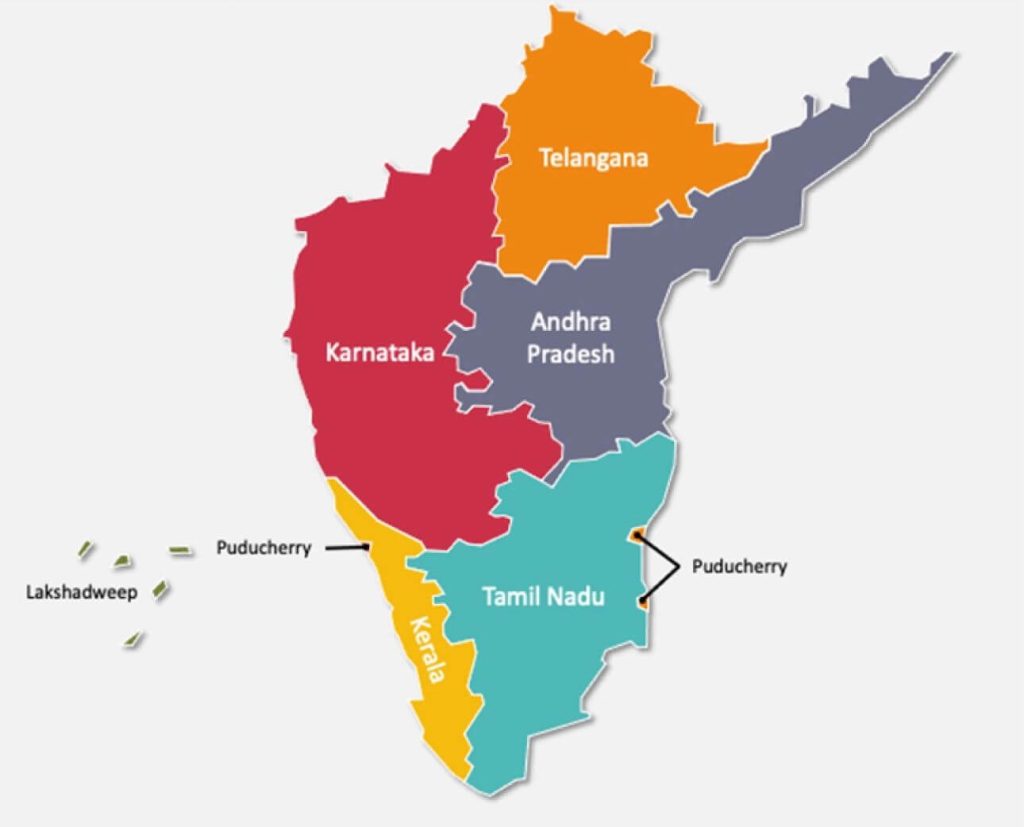
Fiscal Prudence of Southern States Fiscal Prudence of Southern States Madhusudhanan S February 19, 2025 Economic Reforms, Indian Economy, Tamilnadu Economy Among the Southern States, Karnataka leads and Tamil Nadu lags in fiscal prudence. Telangana shows strong improvement, while Andhra Pradesh remains almost stagnant. Kerala has improved its fiscal position, but still not healthy. Introduction The NITI Aayog published its report on fiscal status titled “Fiscal Health Index (FHI) 2025,” which was released on January 25, 2025. This report assesses the following five essential sub-indices that are combined to create the Fiscal Health Index: 1. Quality of Expenditure, 2. Revenue Mobilisation, 3. Fiscal Prudence, 4. Debt Index, and 5. Debt Sustainability The fiscal health of 18 major states receives a thorough assessment in the report, which provides insights into the unique challenges and potential improvements in each state. In this article, we will focus exclusively on the fiscal prudence of 5 Southern States. 1. Andhra Pradesh The report states that Andhra Pradesh has always been in fiscal and revenue deficit for the past five years. The Fiscal Deficit to GSDP ratio in 2022–2023 was 4%, falling within the target of 4.5%. The State allocates only about 10% of the total developmental expenditure to capital expenditure. The State amends the Fiscal Responsibility and Budget Management Act (FRBM), from time to time and it is required to achieve specified fiscal targets within the specified periods.  The report suggests that Andhra Pradesh “may focus on enhancing capital expenditure efficiency, optimize committed spending, diversifying revenue sources for greater resilience, and may enforce strict fiscal discipline.” Andhra Pradesh’s rank has come down from 16th position to 17th in 2022-23. It faces high fiscal deficits and lags in the quality of expenditure and revenue mobilisation. The state needs to increase its resource mobilisation and improve its quality of expenditure, while adhering to the FRBM target. 2.Karnataka The report notes that with a revenue surplus of 0.6% in 2022–2023, the State has met its target. Against the 3.5% target set by the FRBM Act, the fiscal deficit was much lower at 2.1%. Further, compared to the previous year (i.e. 2021-22), the Fiscal Deficit to GSDP also declined from 4.1% to 2.1%, due to revenue surplus. While 2022-23 saw a decrease in the quality of expenditure from 54.5% (the 2014-15 to 2018-19 average) to 47.4%, the fiscal prudence score increased from 31.1% to 43.9%. The report suggested that the State may “focus on reallocating expenditure toward education and health. It may need to focus on increasing the revenues of the state.” Karnataka leads the Southern States in fiscal prudence. In 2022-23, the State has slipped from 3rd rank to 10th rank, though it is the best of the southern States, indicating an unfavorable fiscal situation of all the Southern States.  Except for revenue mobilization, Karnataka excelled across all parameters of the Fiscal Health Index. To better its position, Karnataka needs to review its expenditure pattern and increase its revenue mobilisation.  3.Kerala In 2022–2023, the revenue deficit declined to 0.9% of GSDP from 3.3% in 2021–2022. As a result of the decline in the revenue deficit, Kerala’s fiscal deficit also showed a downward trend. In terms of GSDP, the fiscal deficit declined from 5% in 2021–2022 to 2.5% in 2022–2023. The States’ reliance on non-tax revenue is affecting its fiscal stability. While observing that “the fiscal responsibility targets mandated by the Kerala Fiscal Responsibility (Amendment) Act, 2022, aim for the elimination of Revenue Deficits by 2025-26, with specific annual Revenue Surplus goals” the report suggests that the State “may focus on enhancing revenue mobilization through effective tax and Non-Tax strategies, optimizing resource efficiency, increasing Capital Expenditure in the Social Services Sector are increased, and rationalizing expenditures to improve its fiscal health.” Kerala has continuously encountered fiscal challenges for the past nine years. The State is lagging much behind in terms of quality of expenditure and debt sustainability. It is also burdened with substantial interest payments, inefficient capital expenditure and limited resource mobilisation. The State has to improve in terms of quality of expenditure, and find out new sources for resource mobilisation. It should also aim to curtail its debt and interest payments, which are already eating up major sources of income for the state. 4.Tamil Nadu From 2018–19 to 2022–23, the fiscal deficit as a percentage of GSDP increased from 2.9% to 3.4%. Since 2013–14, the revenue deficit has been increasing, with the State’s Own Tax Revenue to GSDP remaining stationary at 6% in the last 5 years. Though the State aimed to eliminate revenue deficit by 2021-22, it decreased only by around 22.2% in 2022-23 over the previous year. The State has set targets to maintain the ratio of total outstanding debt to GSDP at specific levels under the Tamil Nadu Fiscal Responsibility Act, 2003. However, it has exceeded these limits and witnessed an average ratio of 29% over the past 3 years. The report noted that Tamil Nadu “has witnessed significant growth in revenue and capital expenditure, with fiscal deficits and debt levels exceeding the FRBM target.” Tamil Nadu lags in fiscal prudence and needs to reduce its existing liabilities and non-essential spending. The State should strive to keep its fiscal deficit within the limits set by the FRBM Act, without any relaxation. It should also improve the quality of expenditure and need to look for more investments for development. 5.Telangana Although the state’s fiscal deficit target was set at 5% of GSDP, it managed to reduce the deficit to 2.48% in 2022–2023. The State achieved revenue surplus “after three years of deficits and remained compliant with the FRBM targets for both fiscal and revenue deficits in 2022-23.” The report observes that Telangana’s revenue growth is strong and encouraging and suggests that it spends more on increasing Capital Expenditure, especially in the health and education sectors. Telangana has maintained a healthy fiscal positions, due to an effective tax collection system, balanced approach to expenditure and resource mobilisation efforts. It tops in resource mobilisation for all periods.

Fiscal Prudence of Southern States Read More »

‘Bolognaising’ Indian Higher €ducation

‘Bolognaising’ Indian Higher €ducation ‘Bolognaising’ Indian Higher €ducation Saravanan M February 16, 2025 Economic Reforms, Education, Higher Education India is a subcontinent with astounding diversity. It is reflected in many aspects including its higher education system, which is as heterogeneous as it gets. However, this heterogeneity stems from the various practices within different State boundaries, due to which the higher education system and institutions operate in silos, restricting even inter-university mobility of students, faculty members, and researchers within a State. Promoting diversity would not only strengthen the higher education system, but also fortify the foundations for re-establishing real world-class institutions in India and internationalising Indian higher education.  Despite the inter-state differences, India is one big, centrally regulated educational space, unlike the European Higher Education Area (EHEA), which is the fruit of the Bologna Process. However, the sector is highly disjointed, with various states and their institutions working separately with different administrative policies, curricula, quality parameters, etc. This is where the Indian Government needs to ‘bolognise’ the sector and anchor a whole plan of creating a practically working national grid for higher education in which all the stakeholders are incentivised and encouraged to improve quality, enhance equity, and determine common and comparable standards for mobility. Bologna Process To this end, India can take a cue from the Bologna Process implemented in Europe, which aimed at aligning various higher education systems of several member countries of Europe into one coherent common system, among other things. The Process also targeted establishing equivalence of higher education provided by various member countries, besides aiming at enhancing the quality of and access to higher education and promoting student mobility. These objectives are the prime goals of any higher education policymaker the world over. While access, excellence, and equity are usually the focus of policymaking in the Indian context, the mobility of students gets hardly any spotlight. A basic comparison between India and Europe would illuminate the feasibility of such a process. There are 28 States in India, just one short of the number of member countries that were originally part of the Bologna initiative in 1999. European Union has 24 official languages vis-à-vis 22 official languages in India. In terms of geography, there are 49 countries as members of the harmonised higher education landscape called European Higher Education Area (EHEA), which is far bigger than India. However, Europe has comparatively a smaller population. With all these challenges, the Bologna Process successfully established one harmonised higher education region, removing unnecessary impediments between member nations and their institutions and promoted mobility. Creating such a practically working mechanism requires two key elements:  A well-functioning system and incentives for stakeholders to onboard the system. Pathways for Mobility Many systemic initiatives introduced by the UGC following the National Education Policy 2020 act as jigsaw pieces, which would fit together to create a system that will promote mobility of students. Take, for instance, Academic Bank of Credit (ABC), which helps in the accumulation, retrieval, and transfer of academic credits. All the students enrolled will get a unique identification number that helps track their progress from the school level itself, regardless of the institutions and programmes they continue to study. This has already been initiated and is at various degrees of achievement across the country. Thus, the pathway for mobility is being created for students to do a single programme from multiple institutions, based on the academic credits on the ABC platform. However, this may not enable the mobility of students even between those institutions that are equally ranked, accredited, and popular, because of lack of incentives to do so. Incentivising Mobility Institutions that promote student mobility may be financially incentivised in terms of annual block grants from the Central government. Or, the grants may be based on the number of students from other institutions enrolled with them for completing a part of a programme. The UGC or the Union Ministry needs to provide financial incentives for mobility, or else the full potential of ABC will remain untapped. Research proposals submitted for Central funding from agencies like UGC, DST, SERB etc may be prioritised for institutions that have a track record on student mobility. Further, joint proposals from faculty members working in multiple institutions may be prioritised over proposals from a single institution. Additional weightage may be given during the accreditation and ranking process to institutions that facilitate student mobility. Regulatory liberty may be accorded to those institutions that encourage the mobility of students, similar to the categorisation of universities by the UGC. Autonomy always helps institutions and is a big motivator. Enhanced student mobility would impact faculty mobility as well. Faculty mobility may be relatively tricky due to legal and monetary issues. However, incentives could certainly be finalised to promote faculty mobility across higher education institutions, and at a later stage between academia and industry or bureaucracy. Conclusion Quality of higher education improves with increased diversity of faculty and students. For this to happen, knowledge creators need to collaborate and interact seamlessly and constantly. An enabling incentivising policy alone could promote a climate conducive to such mobility. With the NEP also according importance to internationalisation of our system, the quality must be improved expeditiously, so that when overseas institutions intensify their plans and increase their presence, domestic universities come up trumps. A highly networked and mobile Indian higher education is a prerequisite for an Indianised internationalisation of the sector. Dr.M Saravanan, is specialised in Higher Education and Founder Secretary of the AgaPuram Policy Research Centre, Erode. Views expressed by the author are personal and need not reflect or represent the views of the AgaPuram Policy Research Centre. This article was originally first published at https://thebangaloremonitor.com/?p=3210

‘Bolognaising’ Indian Higher €ducation Read More »

Economic Survey of India 2024-25: MajorHighlights by Madhusudhanan S

Economic Survey of India 2024-25: Major Highlights by Madhusudhanan S Economic Survey of India 2024-25: Major Highlights Madhusudhanan S February 8, 2025 Economic Reforms, Indian Economy, Public Policy On 31 January, 2025, the Union Finance Minister tabled the Economic Survey 2024-25 in Parliament. Before going into the major highlights of the Economic Survey, it is pertinent to know what an economic survey is, its preparation and presentation, and its importance. Economic Survey Every year, the Finance Ministry releases the Economic Survey of India, an annual report that evaluates the country’s economic performance during the previous year. It draws attention to macroeconomic indicators, economic development, and the possible future challenges for India. To handle those economic challenges, the economic survey recommends necessary policy changes. Preparation & Presentation The Economic Survey of India is prepared under the supervision of the Chief Economic Advisor (CEA), Department of Economic Affairs, Ministry of Finance. Until 1964, the Economic Survey was presented in parliament along with the Union Budget, after which it was tabled one day before the Union Budget. The first Economic Survey was released in the Fiscal Year (FY) 1950-51. Importance  of Economic Survey The Economic Survey is the most comprehensive and reliable official analysis of the Indian economy. Economic Survey provides the Government’s official framework for decision-making and economic policy considerations. Economic Survey’s recommendations are suggestive and not binding. Economic Survey 2024 – 2025 – Major Highlights  The Economic Survey 2024-25, contains 13 chapters and includes a chapter which talks about whether the Artificial Intelligence era is Crisis or Catalyst for Labour (Labour in the AI era: Crisis or Catalyst). As the Survey is comprehensive, this article summarises the key points into the following seven major themes: State of the Economy Medium-Term Outlook: Deregulation Drives Growth Investment and Infrastructure Industry Service Sector Agriculture and Allied Activities Employment and Skill Development……To read more, download the PDF DOWNLOAD PDF

Economic Survey of India 2024-25: MajorHighlights by Madhusudhanan S Read More »

Highlights of Economic Survey 2024-25 on Success Stories of Tamil Nadu By B Chandrasekaran

Highlights of Economic Survey 2024-25 on Success Stories of Tamil Nadu By B Chandrasekaran Highlights of Economic Survey 2024-25 on Success Stories of Tamil Nadu By B Chandrasekaran Chandrasekaran Balakrishnan February 5, 2025 Economic Reforms, Indian Economy, Tamilnadu Economy The Indian economy has been growing at a faster pace than many developed and developing economies. India has a massive goal of becoming a developed nation by 2050. Ascertaining the current status of economies is crucial for planning. Hence, the document of the Economic Survey report plays a vital role in bringing, a nuanced sectoral analysis that is fully packed with qualitative and quantitative data on the overall Indian economy and the regional economies of states. The latest economic survey 2024-25 focuses on “Driving domestic growth and resilience through deregulation” and deals with a wide range of segments like enhancing the productivity in agriculture and manufacturing; targeted measures of climate mitigations; decentralised urban governance; environmental protection by blending of technological innovations, MSMEs, etc. There is essential to understand that there is more need for the deregulation of governance itself as centralized governance in a country like India would be inefficient compared to decentralized local governance. The Survey Report notes, “The demand for state capability and capacity to respond to these developments and make progress on social and economic indicators amidst rising geopolitical conflicts will be unlike anything we have experienced since independence. Meeting that demand is a priority above all else.” Economic Survey also highlights the best practices, good governance, and innovative initiatives of regional economies of states. This exercise helps for replications by other states and bridge the gaps in welfare efforts to improve the lives of people. This analysis focuses on the case of Tamil Nadu whose many works have been highlighted in the Economic Survey 2024-25 as a success stories. Good governance at the regional level provides necessary fillip to growth and development of the region. The survey report highlights that “States have also participated in deregulation by reducing compliance burdens and simplifying and digitising processes. States have tried to reduce the cost of regulations by engaging with businesses to identify pain points. For example, Haryana and Tamil Nadu amended their building regulations 12 times in the past decade to make it easier to build”. In the age of digital revolution, ease of regulations for business operations especially financial operations helps industries to innovate for faster growth of MSMEs. The economic survey highlights that “The Governments of Goa and Tamil Nadu have set an example by adopting the TReDS platform to ensure timely payments to their MSME suppliers. Goa, heavily reliant on tourism, leveraged TReDS during the COVID-19 disruption to enhance supplier liquidity, facilitating payments for over 250 MSMEs since October 2020, with invoice discounts. Tamil Nadu joined TReDS in 2022 under the Raising and Accelerating MSME Performance (RAMP) program, supporting MSMEs in significant numbers. Their proactive adoption has inspired other states to follow suit.” Share of Value Additions Regional economies of states are emerging with competitive edges. About 43% of the total industrial Gross State Value Added (GSVA) during the financial year of 2022-23 at constant 2011-12 prices, comes from just four states such as the western states of Gujarat and Maharashtra and the southern states of Karnataka and Tamil Nadu. For the financial year 2022-23, more than one-fourth of the total services sector GSVA comes from Karnataka and Maharashtra. More than 50% of the total service sector GSVA comes from just a few states like Karnataka, Maharashtra, Tamil Nadu, Utter Pradesh, and Gujarat. These states also have more than 50% of the total industrial GSVA, suggesting that both feed into each other. Financial, real estate, and professional services have very high levels of concentration in a few states. Within the service sector, financial services are highly concentrated with Maharashtra (Mumbai), Tamil Nadu, Gujarat (GIFT City), and Karnataka accounting for more than 50% of total financial services GSVA. Further, more than one-third of real estate, ownership of dwelling, and professional services value added (GSVA) are from Karnataka, Maharashtra, Telangana, Haryana, and Tamil Nadu. Dual strengths–industrial and service: Maharashtra and Tamil Nadu typically represent states with reasonably strong industrial and service sectors. Their diversified economies integrate manufacturing with trade, financial services, real estate, and professional services. Among the larger states, “Tamil Nadu leads the pack with the highest concentration of factories per person, followed by Gujarat. Bihar hardly has any factories, while Uttar Pradesh hardly has any smaller enterprises.” The survey highlights Tamil Nadu’s Strategic Initiatives to Foster Footwear Manufacturing Growth. According to the Economic Survey 2024-25, Tamil Nadu is a leader in the traditional leather sector and now championing the growth of non-leather footwear. The state contributes to a 38% share in India’s footwear and leather products output, contributing to about 47% share in India’s total leather export. This sector generates more than 2 lakh employments. Agriculture and Transforming Rural Economies Economic Survey highlights, states have diversified towards crops where yield is high. For example, Andhra Pradesh diversified towards jowar, Madhya Pradesh towards moong, and Tamil Nadu towards maize. Diversity is also seen in inter-state variations in growth observed from 2011-12 to 2020-21. Andhra Pradesh was the leading performer with a CAGR of 8.8% in agriculture and allied sectors, excluding forestry and logging. Madhya Pradesh followed with 6.3%, and Tamil Nadu came in third with 4.8% among major states. The shift from cultivating traditional flowers to export-focused cut flowers highlights the industry’s transformation. Entrepreneurs across states like Tamil Nadu, Karnataka, Madhya Pradesh, West Bengal, Uttar Pradesh, and Maharashtra have capitalized on this opportunity, establishing sophisticated export-oriented floriculture units. The Rise of Horticulture India’s horticulture sector is more productive and profitable than traditional agriculture, emerging as a fast-growing industry. This can be seen from the fact that India is also a leading exporter, shipping 343,982.34 MT of fresh grapes worth Rs.3,460.70 crore (USD 417.07 million) globally in 2023-2410. Key grape-growing states are Maharashtra, Karnataka, Tamil Nadu, and Mizoram. Maharashtra leads in production, contributing over 67% of total

Highlights of Economic Survey 2024-25 on Success Stories of Tamil Nadu By B Chandrasekaran Read More »