
Indian Economy

Bitcoin’s Achilles’ Heel

Bitcoin’s Achilles’ Heel Bitcoin’s Achilles’ Heel by Shanmuganathan N December 3, 2025 Indian Economy, Public Finance, World Economy While almost all market participants have an opinion on the value of Bitcoin, or the lack thereof, the most vocal proponents for both sides of the argument have come from the same ideological community of Laissez-faire Economists/Libertarians. To that extent, I will be drawing on the work of Rothbard, Menger, and Greenspan in this article. The objective is not to convert the Comrades or the Keynesians. Perhaps ironically, and to paraphrase Greenspan, “They (comrades/keynesians) seem to sense – perhaps more clearly and subtly than many consistent defenders of laissez-faire – that Bitcoin does not have the required monetary characteristics. And a restraining force on the reckless spending habits of government, it cannot be”. Trump, with his “Big, Beautiful Bill,” would not be embracing Bitcoin if it would. Let me start with the conclusions, and the rest of the article is a praxeological explanation of why it is indeed the case. Bitcoin’s Achilles’ Heel, as I have captioned it, is not the lack of widespread adoption as a monetary medium, as one might expect.  It is the lack of any non-monetary utility whatsoever that disqualifies its usage as a monetary medium. Even if Bitcoin is adopted by a few countries as a medium of exchange, either through legal tender laws or by the willing use of market participants, it would ultimately fail the test of “desirability.” The Origins of Money The society transitioned from a direct exchange (barter) to an indirect one (using a medium of exchange), as it was more efficient from a transactional standpoint. It permitted greater, easier, and granular exchanges as compared to the prevailing barter system. Consequently, the division of labour could be greater when the medium of exchange was more “marketable” as compared to direct exchanges. The entire process did not originate through an overnight discovery, but a gradual transition of members accepting and using the medium of exchange for conducting their transactions. This medium of exchange had to be a highly valued good under the barter system before it became accepted for its monetary value in indirect exchanges. Or, in other words, the monetary property of a commodity was a consequence of widespread non-monetary utility within a community. It couldn’t have been otherwise. Many textbooks would define money as a “medium of exchange” and a “store of value” (i.e., retains purchasing power). However, as readers would realize, a good medium of exchange would also be a store of value. Greenspan summarizes it best in terms of the advantages of moving from a barter system to using money as a mechanism for conducting transactions. Reproducing his quote from Gold and Economic Freedom, “The existence of such a commodity is a precondition of a division of labor economy. If men did not have some commodity of objective value which was generally acceptable as money, they would have to resort to primitive barter or be forced to live on self-sufficient farms and forgo the inestimable advantages of specialization. If men had no means to store value, i.e., to save, neither long-range planning nor exchange would be possible.” While all commodities possess varying degrees of acceptability as a monetary medium, it was the non-monetary utility that determined their widespread market acceptance for monetary purposes. Literally hundreds of commodities have been experimented with as a medium of exchange in the free markets, and only three have met the market test across countries and for extended periods of time. This is depicted in the table below. So, why did society start using wheat as a medium of exchange and subsequently transition to iron/copper, and eventually gold/silver? Once again, we turn to Greenspan for a pithy summarization “…the commodity chosen as a medium must be a luxury. Human desires for luxuries are unlimited and, therefore, luxury goods are always in demand and will always be acceptable. Wheat is a luxury in underfed civilizations, but not in a prosperous society. Cigarettes ordinarily would not serve as money, but they did in post-World War II Europe, where they were considered a luxury. The term “luxury good” implies scarcity and high unit value. Having a high unit value, such a good is easily portable; for instance, an ounce of gold is worth a half-ton of pig iron.” So not only should the object used as a medium of exchange have widespread non-monetary utility, but it should be a very highly desired commodity as well. The transitions over thousands of years reflect this, as increasing productivity, induced by the specialization of labour, turned what were once luxury items (e.g., wheat, iron, and copper) into basic, everyday goods. Why only Gold / Silver? While societies have experimented with hundreds of commodities, we eventually settled on gold/silver, as they best met the requirements desired of money. The authors mentioned in the beginning (Rothbard, Menger, and Greenspan) have extensively documented the rationale, and a summary table is included below. While desirability (i.e., a luxury good on account of its non-monetary utility) has been expanded earlier, a brief overview of the other four properties is provided below: Durable: An ability to retain its essential property over prolonged periods of time. Gold and Silver, even under the most corrosive conditions (e.g., the ocean floor), retain their essential properties over thousands of years. While proponents have argued that bitcoin is durable (as it is nothing more than an algorithmic token), durability refers to not merely the extended physical/virtual existence but the continued desirability of the object over that time period. Even assuming some non-monetary utility (i.e., desirability) is found for bitcoin in the years ahead, how can we remotely suppose that a better algorithm will not come along that will serve the same purpose better than bitcoin? Divisible: An ability to subdivide into tiny units, with the divided unit retaining its fractional value of the whole. While gold can be divided into units of 0.001 gram with the unit retaining its value by

Bitcoin’s Achilles’ Heel Read More »

Interest Rate Cuts – A Sinker to a Plunging Dollar

Interest Rate Cuts – A Sinker to a Plunging Dollar Interest Rate Cuts – A Sinker to a Plunging Dollar Chandrasekaran Balakrishnan September 26, 2025 Indian Economy, Public Policy, World Economy The US Dollar has been in a rapid decline since 2022, and the series of hikes initiated by Powell has merely stemmed the rate of decline rather than reversing the trend. This pattern has accelerated since Trump assumed office at the start of the year. It is in this context that we should view the 25bps cut effected by Powell with a promise of two more similar cuts to be made in the remainder of this year. Gold prices have more than doubled since January 2022 (from $1,800/oz to $3,700/oz) while DXY has declined by nearly 15% (112 to 97) in the same period. This indicates that the US Dollar is not only losing purchasing power against the market standard of gold, but also against the currencies of its trading partners. In this environment, what a rate cut(s) would do is to accelerate the decline of the Dollar – most certainly against gold but even vis-à-vis other currencies. What the cut signifies to the markets is the greater preference of the US Fed for its employment mandate over price stability (which was, incidentally, the only mandate of the US Fed when it was formed in 1913). As an aside, I should point out that in the book “RIP USD: 1971-202X …and the Way Forward”, it was explained why gold prices will touch $24,000/oz by the end of this decade. So, though the rate cuts pave the way for higher gold prices, these are merely proximate reasons within the larger context of the world reverting to some form of a gold monetary system over the next few years. Do Rate Cuts Always Lead to a Lower Dollar? On the contrary, the converse is true more often than not. Apart from the 4-year period between 2007 and 2011, interest rate movements and gold price changes are positively correlated; that is, when interest rates rise, gold prices tend to increase and vice versa. The reasons are manifold. At the outset, explaining gold prices with a single factor such as interest rates is academically a flawed proposition. We will have to consider at least 3 factors – interest rates, price inflation and Cantillon effects to explain the movements in gold prices. Without delving into a detailed discussion of the factors mentioned above, the prevailing high price inflation rates today lead to a situation where a reduction in interest rates results in increasing gold prices. So, while we are in an environment where gold prices are structurally positioned to go multiples higher from the current levels, the Fed action of cutting interest rates would be the equivalent of throwing gasoline on an inferno. What should the Fed do? Whether Bernanke acknowledges it or not, the US is in a stagflationary economic situation. The growth and employment numbers are below par, while the price inflation numbers are admittedly much higher than their targets. This is despite accepting the government numbers at face value, and we have repeatedly seen the systemic reporting bias in painting a rosier picture than is actually the case. What did the Fed do when it was previously in such a situation, i.e., a stagflation? We will have to go back to the 1970s, and as one can observe in the table above, the Fed hiked rates substantially to 20%. That begs the question – What is different in the environment back then that warranted hiking rates, while under a similar environment today, the Fed is embarking on a path of lower rates? Between the two issues – the stability of the dollar (price inflation or stable prices) and employment, the former must take precedence. There is no historical record of any country achieving prosperity by devaluing its currency. This was precisely the hard choice in the 1970s as well, and the US Fed under Paul Volcker raised interest rates high enough to quell the monetary as well as price inflationary forces and bring stability to the US Dollar. For context, the US annual price inflation has been above 2% since 2020. So why is the exact opposite monetary path being attempted today? The elephant in the room is obviously the $37 trillion National debt that is bankrupting the US Federal Government. Despite previous claims that the US Fed managed the impossible (i.e., raised interest rates without affecting employment), recent trends have exposed the flawed data basis on which the Fed had made the claims. It is only a matter of time before the GDP is also revised downwards in line with the employment data. The Economic Forecast – What does all this indicate? The only question now is “how long and how deep will the stagflation be?” Given the massive imbalances in the US Economy (multi-trillion-dollar budget deficits, trillion-dollar trade deficits, and debt-to-GDP above 125%), we should not be surprised by an economic playbook that is much worse than the 1970s. That is the best-case scenario, and in my opinion, it is not a very high-probability event. The most probable forecast would have to be a high-inflationary depression, with a possibility of hyperinflation depending on how the Fed / Trump choose to respond to the emerging situation. If they continue to prioritize temporary economic stimulus over price stability, then hyperinflation would become a probable scenario. For 2026, we should not be surprised to see gold prices in the $5,000 – $6,000 range. This is assuming none of the asset bubbles burst (the AI bubble, Housing Bubble 2.0, and the US Bond Bubble). It is pretty unlikely that the Fed can postpone the bursting of these asset bubbles, and in that case, we should witness even higher gold prices depending on the size of the QE in store. About the Author: Shanmuganathan N (aka Shan) is an Austrian/Libertarian Economist based in Chennai, India. He is the author of the recently published

Interest Rate Cuts – A Sinker to a Plunging Dollar Read More »

The Euphoria of Tamil Nadu GSDP Growth Rate!!

The Euphoria of Tamil Nadu GSDP Growth Rate!! The Euphoria of Tamil Nadu GSDP Growth Rate!! Chandrasekaran Balakrishnan September 4, 2025 Indian Economy, Public Policy, Tamilnadu Economy The regional economies in India are still largely evolving and have their own pace of sectoral growth trends. The evolution of the state economy is dependent on the pattern of institutional governance, services, and facilities deliveries, which plays a vital role for achieving the national dream of Viksit Bharath@2047. The degree of economic freedom between and within States varies across India, indicating disparity. The Gross State Domestic Product (GSDP) is an aggregate of all sectors, broadly consisting of agriculture and allied activities considered as the primary sector; manufacturing, including construction, etc., as the secondary sector; and financial services, transports, hotels, etc., as the services sector. Each sub sector has its own significance for achieving a balanced regional growth as well as intra-regional growth within a State and contributing to the national growth rate. When politicians or policymakers become passionate about achieving a year’s GSDP growth rate as the biggest achievement, leaving the growth trends and other inferences, it becomes detrimental for economic development, which accounts for a sustained and overall improvement in welfare. Further, at the regional level, some of the sub-sectors’ growth trends are undermined while focusing only on the overall GSDP growth rates, which leads to not only misinterpretations but wrong conclusions for short term political gains. It is pertinent to note that Ludwig Von Mises, a prominent figure in the Austrian School of Economic Thought, saw statistics as descriptive rather than explanatory, and he cautioned against interpreting statistical regularities for political milage. He argued that statistics deal with past events and historical facts, lacking the ability to predict future outcomes or reveal causal relationships in the realm of human action. In April, 2025 when the Union Ministry of Statistics and Programme Implementation (MoSPI) had released the state-wise GSDP data, there was a huge celebration among a section with the claim that the one-year growth rate of Tamil Nadu state (9.69% for 2024-25) was an extraordinary achievement. The truth is that one year growth rate data cannot give a true picture for a trend analysis- short run, medium run, and long run. The macroeconomic growth rate discourse in the State missed an important point that Tamil Nadu’s agriculture and allied sector witnessed in negative growth of -0.15% in 2024-25 (provisional). As per the provisional data, the average GSDP Growth rate of Tamil Nadu in the last four years (2021-22 to 2024-25) was 8.48%, which was way below the growth rates of States like Odisha (9.80%) and Maharashtra (8.99), and Karnataka (8.73%). Moreover, more than a dozen States’ provisional GSDP data were not even released for the year 2024-25 in April, 2025. Similarly, the MoSPI released the revised State-wise GSDP data on 1st August, 2025, for the financial year 2024-25. One-year GDP data is important, but it is the trend which is more important. There is another dubious claim of a 14-year break of the Tamil Nadu State GSDP! Let’s look at what the actual average trend data reveals. In the current regime of DMK rule in Tamil Nadu, the average growth rate of State GSDP for last four years (2021-22 to 2024-25) is 8.63% which is lower than states like Assam (9.05%), Bihar (9.59%), Karnataka (8.73%), Maharashtra (8.99%), Meghalaya (9.54%), and Uttara Pradesh (9.15%). It is also interesting to look at the data of the first four years’ average state GSDP growth rate of the previous DMK regime. Tamil Nadu’s economy performed far better than comparatively. The average state GDP growth rate for the first four years was 9.41% (2006-7 to 2009-10). Further, even then, States like Bihar (10.41%), Chhattisgarh (9.76%), Haryana (9.89%), etc. outperformed Tamil Nadu. It is pertinent to note that Tamil Nadu’s share of GDP at all India level over the last 7 decades increased only by 0.2% from 8.7 % in 1960-61 to 8.9% 2023-24. Maharashtra’s economic performance has remained relatively steady throughout the period (from 12.5% to 13.3%). According to recent NCAER Analysis (2025), the state of public finance of Tamil Nadu is worrisome. Debt Sustainability Analysis, a method used to assess whether a state (or country) can meet its debt obligations without resorting to excessive borrowing or facing financial instability, expects an upward and increasing trajectory, during the period from 2022-23 to 2026-27. In recent years, what Tamil Nadu missed is the following key drivers of economic growth and creation of employments opportunities, which is at par with States of Karnataka and Maharashtra. Attracting FDI: Analysis of major states’ attractions of Foreign Direct Investments (FDI) Trends of the last decade (2015-16 to 2024–25) shows Gujarat’s share increased from 6% to 11%, while Tamil Nadu’s share declined from 11% to 7%. Tamil Nadu is still lacking what Karnataka and Maharashtra have nurtured for decades, including improved infrastructure policy stability and mature industrial ecosystems across the departments and across the region/districts within the State. The latest FDI data analysis for 2024-25 reveals that among the top ten states, Maharashtra accounts for 39%, followed by Karnataka (13%) and Delhi (12%). Tamil Nadu ranks 5th with FDI inflow of Rs. 31,103 crores. Under-utilised Coastal economy: The strategic geo-economic coastal advantage of Tamil Nadu has not yet been harnessed. Mobility: In the area of mobility as a key driver of the economy, Tamil Nadu has done some concrete efforts in terms of policy for the attraction of new investments for the production of Electric Vehicles, but it has been lacking consistently over the years in terms of adoption of EVs in public transportations across the state. Sub-par urban civic amenities: Urban Population in Tamil Nadu has consistently exceeded the national estimates, and the gap between the two has widened, particularly over the past three decades. Now, Tamil Nadu has 54% of its urban population, but basic urban civic facilities are very poor across the state, without decentralisation Diversification: Tamil Nadu predominantly concentrates on some services sectors, agriculture, forestry, and

The Euphoria of Tamil Nadu GSDP Growth Rate!! Read More »

India Ranks 15th in FDI -UNCTAD Report 2025

India Ranks 15th in FDI -UNCTAD Report 2025 India Ranks 15th in FDI -UNCTAD Report 2025 Madhusudhanan S July 30, 2025 Economic Reforms, Indian Economy, Public Policy, World Economy On June 19, 2025, the World Investment Report for 2025 was released by the United Nations Conference on Trade and Development (UNCTAD), highlighting a negative outlook due to trade tensions, geopolitical issues, and economic volatility. This has led to a decline in Foreign Direct Investment (FDI) prospects, impacting GDP growth, capital formation, trade flows, financial stability, and investor confidence. Global Investment Trends The World Investment Report 2025, launched by Secretary-General Rebeca Grynspan, highlights a concerning trend where foreign direct investment (FDI) is decreasing in countries and sectors that need it the most. Productive FDI declined by 11% in 2024, marking the second year of decline. This decline is not just a temporary setback but a consistent pattern, according to Ms. Grynspan. The report revealed a significant drop in productive FDI by 11% in 2024, marking a concerning trend. The US remains a top source and destination for FDI, with Asian economies also prominent in FDI outflows.                                          Foreign Direct Investment  – Top 10 Destination Economies Rank Economies/ Countries Billions in Dollars 1 United States 279 2 Singapore 143 3 Hong Kong SAR, China 126 4 China 116 5 Luxembourg 106 6 Canada 64 7 Brazil 59 8 Australia 53 9 Egypt 47 10 United Arab Emirates 46 Source: UN Trade based  on Information from The Financial Times, fDI markets – Authour converted image to Table Key sectors like renewable energy, water, sanitation, and agrifood systems have seen declines, hindering development efforts. Investment in key sectors like renewable energy has dropped by 31%, water and sanitation by 30%, and agrifood systems by 19%. Health investment has increased by nearly 20%, but the global total is still below $15 billion. These shortfalls are hindering progress in critical areas, highlighting the need for urgent action to ensure sustainable development for all. Developing Asia attracted $605 billion in FDI in 2024 but faces challenges like declining infrastructure investment and policy uncertainty. India’s Possition in Foreign Direct Investment India ranked 15th  globally for FDI inflows in 2024, with $27.6 billion, and 4th in Greenfield project announcements with 1,080 projects unveild in 2024. The country also saw growth in international project finance deals and outward investments. India’s 97 international project finance deals placed it among the top five global economies. With $24 billion in outward foreign investment, the country climbed to 18th place globally in FDI outflows.  There was an improvement in the rankings for both India and Saudi Arabia. The US and India led in greenfield activities in sectors like semiconductors and automobiles, with new battery and electric vehicle projects announced globally. The report ends with recommendations for channeling capital to areas in need by implementing reforms in global financial systems, expanding the use of blended finance, and adopting investment regulations that promote digital and clean transitions. Conclusion The Government of India’s policies have played a key role in making the economy one of the fastest-growing in the world and a top destination for foreign direct investment (FDI). Despite global economic challenges and changing supply chains, India’s stability and investment potential remain robust. India’s consistent implementation of policies and clear vision have attracted significant FDI over the past decade, showcasing confidence in the country’s institutions, skilled workforce, and future prospects. The Author is a Research Fellow at AgaPuram Policy Research Centre.  Views expressed by the author are personal and need not reflect or represent the views of the AgaPuram Policy Research Centre. https://thebangaloremonitor.com/india-ranks-15-in-global-fdi-attraction-unctad-report-2025/

India Ranks 15th in FDI -UNCTAD Report 2025 Read More »

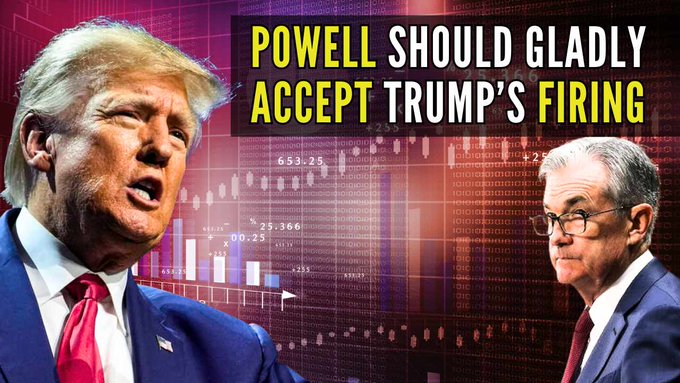
Powell Should Gladly Accept Trump’s Firing

Powell Should Gladly Accept Trump’s Firing Powell Should Gladly Accept Trump’s Firing by Shanmuganathan N July 30, 2025 Indian Economy, World Economy If Powell had any sense for what lies ahead, he would accept Trump’s firing gladly.  Accompanied by the academic protests lamenting the lack of the Fed’s independence, etc, for the record books. If Trump had any sense for what lies ahead, he would allow Powell to remain in the chair and blame him subsequently when the US Housing Bubble 2.0 comes crashing down. Trump can at least have the satisfaction of saying “I told you so”. Why is Trump desperate to get the Fed funds rate down to 1% from the current 4.25 to 4.50% range? Two massive icebergs are on an imminent and direct collision course with the US Economy at this juncture, and these are: Bursting of the US Housing Bubble 2.0 Interest Expense as a % of Federal Income Headed into Uncharted Waters As Trump sees it, the only way to avoid the above issues is to lower the interest rates substantially. Readers should be aware that the current rate, aside from the ZIRP era following the GFC in 2008, is low from a historical perspective. But even these are not sufficient to maintain the bubbles. Trump Challenge 1 – The Housing Bubble 2.0 The peak of the median housing prices in the current cycle occurred in Q4 2022 at $442,600. As of Q1 2025, the median sale price was $416,900. While a 5% drop is not a significant correction, two factors do not bode well for a meaningful recovery: that this drop has occurred over 30 months, and the persistent high mortgage rates are keeping affordability at an all-time low for US consumers.    The previous 30-month period’s drop in housing prices occurred from Q4 2017 to Q2 2020 (a period during which the Fed funds rate increased from 1% to 2.5%), after which the COVID-19 stimulus and a return to ZIRP reversed the declining trend in housing prices. Trump wants to orchestrate a similar move now – reduce interest rates and inject massive fiscal stimulus through the Big Beautiful Bill. The only other period in which we have witnessed an extended drop in housing prices this century was during the 2008 housing bubble. Between Q1 2007 and Q1 2009, housing prices declined by more than 20%. Only a combination of ZIRP and QE – both unprecedented monetary measures – halted this decline. So as far as Trump’s eye can see, the solution to the problem of a housing crisis is a combination of ultra-low interest rates and expansion of the Fed balance sheet. The fact that, on the two occasions this was done – done after 2008 GFC and during Covid-19 – there were no deleterious consequences to talk about – would probably make Trump conclude that this extraordinary monetary stimulus can be done today as well. But why can’t the housing process recover without the above measures? The housing price increases have far outpaced the growth in median incomes. The Atlanta Fed’s Home Ownership Affordability Index (HOAI) – a composite index that takes into account housing prices, principal and interest payments, as well as taxes and insurance – is at an all-time low. This index is even below the levels that led to the bursting of the housing bubble in 2008. A level of 100 indicates that housing prices are affordable to buyers, given the current mortgage rates. The current score as of Apr 2025 is 65 – well below what makes the median house affordable to the median buyer. There are only two acceptable ways to increase affordability – either increase median wages or reduce interest rates. As Trump sees, all roads seem to lead to lower interest rates. There is, of course, a third way (an unacceptable one, though) to increase affordability – a dramatic decline in housing prices. Given that a housing bust will be accompanied by a decrease in employment, wages, and taxes, housing price declines must rival the effects of the above to lead to an increase in the Affordability Index. A drop of at least 30% would be required to bring the index into the affordable category. A 20% decline caused the 2008 crisis, and that too, from much lower levels of housing prices. Once again, it is easy to see why Trump is arguing vehemently in favour of substantially lower rates to stimulate the housing market. Trump Challenge 2 – Interest Expense as a % of Federal Income If the housing bubble bursting is an imminent danger in the months ahead, the Interest expense of the federal government is a current millstone around Trump’s neck. From less than 20% during Q1 2022, the interest expense as a % of Federal revenues has increased to 35% during Q1 2025. Readers might recall that the Fed hiked rates from nearly 0% during March 2022 to nearly 5.5% by July 2023. The US National debt has also increased from $30 trillion in Q1 2022 to more than $37 trillion today. A legitimate question would be whether this is not the first time we have crossed 30%, as there were two earlier periods: the 1980s decade, when this averaged more than 40%, and the years immediately prior to the 2008 GFC. 1980s was a period in which the debt-to-GDP was less than 40% – less than one-third the current debt-to-GDP ratio of 125%. The interest expense was high primarily because the Fed funds rate was in the double digits. As these rates declined, despite the debt growing faster than the GDP throughout the 1980s, the government was quite able to manage the interest obligations without threatening to take over the Fed’s primary role. Today, we are in a situation that the Fed would prefer to call “Fiscal Dominance,” i.e., the rates must necessarily be held low due to excessive government debt. Regarding the years preceding the GFC in 2008, the debt-to-GDP ratio was still less than 60%, allowing

Powell Should Gladly Accept Trump’s Firing Read More »

Missing Markets for Managing Stubble Burning in Punjab and Haryana

Missing Markets for Managing Stubble Burning in Punjab and Haryana Missing Markets for Managing Stubble Burning in Punjab and Haryana Naimitya Sharma June 5, 2025 Indian Economy, Public Policy, State Economies India’s quest for food security led to the development and consolidation of the rice and wheat cropping cycle in states like Punjab and Haryana. The Union government intervened in the agriculture sector to incentivise farmers with the help of Minimum Support Price (MSP) to ensure the adoption of the rice and wheat cropping cycle. Technological advancements in the form of a better variety of seeds ensured India, was able to feed its burgeoning population. Any intervention by the Government comes with associated costs over and above the direct fiscal costs. The specialisation in rice and wheat cropping pattern has led to huge environmental impacts.   In Punjab, there is an acceleration of groundwater depletion due to its greater utilisation for irrigating rice crops sown in the summer months. The government intervened again with a law forcing farmers to delay the sowing of rice. As a result, the gap between rice and wheat crop was reduced significantly. With a short window available and with increased use of combine harvesters for harvesting rice, the amount of stubble or crop residue increased and the time available to manage it reduced. The past few years have witnessed a consistent presence of air pollution in the Punjab and Haryana regions because of this stubble burning. To think about this important problem, we may utilise economic ideas of negative and positive externality. Air pollution created by stubble burning is an example of a negative externality. Economic theory predicts that there will be overproduction of activities leading to negative externality since all the costs involved are not accruing to the producers. Instead, some costs are being borne by society in the form of air pollution. As economic costs do not incorporate all social costs, stubble burning continues unabated. Conversely, Stubble management is an example of a positive externality. Economic theory predicts that there will be underproduction of activities generating positive externalities. The benefits of stopping a farm fire accrue to not just the farmer concerned but also to everyone around the farm. There are external positive benefits enjoyed by society, but these are not part of the demand for the management of stubble, therefore the overall demand is less and in effect, the production of the management of stubble is less than the ideal amount. The challenge for policymakers thus, is to balance the generation of negative externality, i.e., air pollution emerging from stubble burning, and the production of positive externality, i.e., management of crop residue to ensure governance of this market failure. To reduce the production of stubble, the Government is attempting various initiatives ranging from an outright ban on burning, to incentivise farmers to produce other crops or adopt shorter-duration seeds. To promote the management of crop residue, the government is providing subsidies on equipment to manage crop residue along with promoting productive usage of crop residue by creating supply chains and demand for upcycled products. At the end of the day, we can look at the problem of overproduction of stubble and underproduction of the management of stubble as a problem of missing markets. Intervention by the Government needs to focus on finding and nurturing these missing markets through carefully designed policies. How to find the missing markets? To find these missing markets, the first step is to identify key players and processes. These include innovators, scientists, environmentalists, entrepreneurs, concerned citizens, farmers, and communities trying to find productive uses for stubble. To understand how key players are productively using stubble we need to identify, collate, and replicate successful case studies of converting stubble into productive usage. This exercise can lead to capacity building, thereby generating and nurturing the missing markets. To demonstrate this strategy, we may observe one example of productive usage of stubble. Two young people, Arpit Dhupar and Anand Bodha of Dharaksha Eco-solutions have found an interesting use for stubble. They are using bio-fabrication to convert stubble into packaging material with the help of mushrooms. Observing this process of finding productive use of stubble reveals that there are layers of phenomenon, interplaying with each other to generate this productive usage. The social phenomenon of Arpit observing his nephew painting the sky grey, Arpit’s own lived experience of surviving in Delhi, along with traveling across North India and interacting with the farming community plays an important role in this success. The second ingredient of this process is the observation of the ecological or physical phenomenon by Arpit and his team where they identify the bio-fabrication carried out by root-like structures of Mushrooms on Stubble thereby converting stubble into a sturdier product. The interplay between these two phenomena, social need and ecological possibility generates a potentially sustainable solution for the management of stubble. When the founders of Dharaksha Eco-solutions reach a famous startup pitch competition, the repeated questioning by one of the investors leads to a further interplay, this time between economic reality and ecological possibilities. After facing questions about the monetary potential of his idea, Arpit responds by suggesting that it is possible not just to make packaging material but also alternatives of timber with the help of this bio-fabrication. This interplay led to the establishment of a more financially sustainable future pathway for Dharaksha Eco-solutions. The learning from Arpit’s journey suggests that one critical ingredient of finding the missing markets is finding opportunities for upcycling stubble by identifying productive usage. Concerned individuals will become key players if they have had meaningful social exposure to these problems, along with an understanding of ecological processes that might generate solutions. Additionally, scaling and financial sustainability require interplay with economic reality and ideas. We can focus on these observations to generate more key players and processes in the system by empowering individuals with travel and research grants to develop a deep understanding of such problems. Exposing concerned individuals to ecological and environmental education to

Missing Markets for Managing Stubble Burning in Punjab and Haryana Read More »

Another Caste Count for…? 

Another Caste Count for…? Another Caste Count for…? Ghanshyam Sharma May 19, 2025 Cultural Economics, Indian Economy, Public Policy                                                                                        Herd instinct If the primary purpose of conducting the caste census is to justify higher reservations for SCs/STs/OBCs, then this information already exists. The National Family Health Survey (NFHS) suggests that the share of SC/ST/OBC sections in the country’s population exceeds 50%. The NFHS are nationally representative periodic surveys that provide information on the caste composition of the population. This data can be used to estimate the caste composition at the district and state level. NFHS estimates are based on scientific sampling methods that help to infer information about the population based on a sample of households. NFHS provides reliable estimates often used in scientific research, government reports, and the industry. The reported results from the Telangana Caste Census are remarkably similar to the NFHS estimates. For example, according to NFHS, 27.8% of the Telangana population identifies as SC/ST, 54.1% as OBC, and 17.4% as general category. Telangana Caste Census reports that 27.8% of the population identify as SC/ST, 56.7% as OBC, and 16% as general category. The NFHS data is available for all other states. For example, NFHS indicates that in UP, the share of SC/ST/OBC population in the total population is 78.9%. In Gujarat, this share is 74.7%. In the states of Maharashtra and Karnataka, this share is 56.3% and 85.7% respectively. Since NFHS also asks people the religion they most identify with, this caste data can be seen across religions as well. Besides, the NSS / NFHS surveys also collect rich information on various social and economic indicators such as wealth, education, employment, health, alcohol use, tobacco use, condition of women, etc. Since these surveys have been conducted over time, they have been used to check for convergence in the economic and social status across caste groups. Several prominent studies like K Munshi (2019) and Hnatkovska & Lahiri (2012) have documented that while gaps in economic status between caste groups exist, there has been a remarkable convergence over time. In other words, the SC, the ST, the OBC, and the General category groups have become more equal. The socially marginalized sections of the population are catching up. It is unrealistic that the proposed Caste Census would collect such diverse data on socio-economic indicators for the entire country. Even if the caste census collects such information, it will be available every ten years. NFHS / NSS can be done every 3-4 years. Moreover, NFHS / NSS / India Human Development Survey data is already used in public policy-making. In that case, what does the proposed caste census intend to achieve? Will the caste census collect data on the population size and socioeconomic indicators for every sub-caste (which NSS/NFHS doesn’t do)? What will this information be used for? If the purpose of the caste census is to unbundle the castes within the SC, the ST, and the OBC groups, this can stir a hornet’s nest. The caste census will likely rattle the SC, ST, and OBC groups which receive caste based benefits, rather than the general castes. It may pit social groups within the broader ST, SC, and OBC communities against each other. The caste census can be used to strip a caste or a sub-caste of its reservation privileges if its social and economic indicators are comparable to the general category. Caste census can provide information to fix the quantum of reservation based on the population size or economic status of each caste and sub-caste within the reserved categories. This will be a deviation from the current policy where all the castes categorized as ST have equal claims at 7.5% reservation. Even if this is not the intended objective of the caste census, it will motivate demands from caste groups for higher reservations within the reserved seats. Census data can selectively target specific social groups within the broader Scheduled Caste and Scheduled Tribe categories. For example, the Pre-Matric Scholarship Scheme for ST Students be replaced with the Pre-Matric Scholarship Scheme for only Meena students leaving out other ST caste groups. Despite its promise of superior targeting of specific social groups based on social exclusion, it is also impossible for a caste census to realistically capture social stratification. This is because caste isn’t the only factor that socially stratifies India. Caste intricacies intersect with class, language, and gotra differences. There are hundreds or even thousands of sub-castes within Brahmins. Saraswat Brahmins in Tamil Nadu may be similar to other Tamil Brahmins as compared to Saraswat Brahmins from Uttar Pradesh. There seem to be no substantive reasons for conducting the census. The Government of India hasn’t specified the objectives of conducting the Caste Census. Most purposes of conducting a caste census are speculative. The UPA and NDA governments have not disseminated the 2011 caste census data. Bihar and Telangana have recently conducted caste censuses. But neither have they disseminated census data, nor framed policies based on it. Therefore, it is worthwhile to ponder over the usefulness of conducting a caste census.  The author is currently an Associate Professor of Economics at RV University, Bengaluru.  The Author is a Research Fellow at AgaPuram Policy Research Centre.  Views expressed by the author are personal and need not reflect or represent the views of the AgaPuram Policy Research Centre. This article was originally first published by The Economic Times at https://economictimes.indiatimes.com/opinion/et-commentary/another-caste-count-for-/articleshow/120906704.cms

Another Caste Count for…?  Read More »

India’s Cultural and Creative Aspirations for Vikist Bharath

India’s Cultural and Creative Aspirations for Vikist Bharath India’s Cultural and Creative Aspirations for Vikist Bharath Dushyant Meher May 2, 2025 Cultural Economics, Indian Economy, Public Policy Cultural and Creative Economy is an emerging economic field that offers not only well meaning to creative pursuits but also wealth and soft power. It is like invoking goddesses—Saraswati, Laxmi, and Durga. Culture and creativity are akin to the collective psyche of our nation, which can be seen in every nook and corner of the country as a civilisation, including in grand form during events such as Republic Day or the G20 Summit. The United Nations Conference on Trade and Development (UNCTAD) defines creative industries as creation, production, and distribution cycles that leverage creativity and intellectual capital. These industries encompass knowledge-based activities focusing on culture and heritage, including tangible and intangible creative products with economic value. The creative economy is an evolving concept that drives economic growth, supports job creation, and fosters social inclusion and cultural diversity. It emphasises integrating economic, political, cultural, and social aspects with technology and intellectual property. The latest edition of Creative Economy Outlook 2024 by UNCTAD observes that the creative economy is rapidly growing, especially in developing countries, and that it contributes significantly to economic development and job creation. The creative industry in India is a self-organizing sector. Indian government fully recognizes the importance of the sector including the culture and cultural industries as sources of socio-economic development, livelihood generation, and wealth creation as well as the well-being of individuals. The creative sector overarches over two dozen or more departments, ministries, and national institutions. By engaging with business organizations, institutions, and experts, the scope and viability of the sector are being explored. However, given the nature of complexities- defining and mapping the creative sector for evidence-based policymaking poses a formidable challenge. Nevertheless, the sentiment of prioritising the sector echoes in the address of the Prime Minister while inaugurating the World Heritage Committee meeting in New Delhi last year and this year Waves Summit 2025 at Mumbai. He highlighted the vision of linking heritage with growth and development, the Orange Economy. He asserts that the cultural and creative industry would be an important factor in global growth. Eventually, industry bodies and associations have been voicing collective actions towards a policy for the creative sector. As reported by Creative Economy Outlook 2024; some of India’s advantageous positions include – India tops in film producer position, contributing 29% of the global volume in 2022 and record box office revenues reaching around US$ 1.4 billion in 2023. Among developing economies, India is at 3rd after China, and Hongkong (SAR) in exporting creative goods in 2022. India exported 21 billion USD which is a 2.9% share of world export of creative goods. It is 4.6% of the total exports of our country. India is in 4th position in the world (both developed and developing countries) after the USA, Germany, and Japan in the publishing industry. India is on top amongst developing countries both in terms of revenue and number of ISBN registrations (281 091) in 2022. India’s growth in the video games segment is projected to grow at 18.3%. It is one of the top ten creative goods importers in 2022 with an import record of 5.6 billion USD which is a 0.9% share of world imports of creative goods and a 2.2% share of creative goods from the country’s total imports. Some of the concerns are also being raised by some of the multilateral institutions with regard to India. According to ILO data in Arts, entertainment, and recreation, the average share of women in the creative industries fluctuates from 80.5% in the Dominican Republic to 6.5% in India, alongside a global average of around 38% (ILO, 2024). A study conducted by ADB about India’s economy finds that the concentration of creative jobs is significantly higher in urban areas, with a substantial 67.1% of all creative workers residing there. In contrast, rural areas have a much lower proportion of creative workers at only 29.6%. Moreover, while the creative workforce makes up 8% of India’s overall employment, it constitutes approximately 17% of total urban employment but just 4.1% of total rural employment (Asian Development Bank, 2022b). The UNCTD reports that several economies, especially developing economies including India do not have adequate services trade data to calculate creative services exports. However, this does not mean India doesn’t export creative services. Lack of robust regulation and enforcement, the Indian entertainment sector experiences an annual revenue loss of approximately US $2.8 billion due to digital piracy. Culture unites all and is a tool for track-II diplomacy. Given the size and quality of our diaspora; it continues to enable India as a soft power. It is becoming quite foundational in India with the implementation of the New Education Policy that guarantees equal access to creative and cultural experiences to innovate through traditional, conventional as well as in new technological mediums like AI. For expansion of these creative experiences beyond socio-cultural towards the viable market; component-wise dissection of the creative sector is required to plan for multidimensional interventions. This is possible or viable even in the absence of a clear definition. Innovations and acceleration of activities with market regulations and effective enforcement can help make it a robust sector. A new report by the Boston Consulting Group (BCG), titled “From Content to Commerce: Mapping India’s Creator Economy”, set to be launched tomorrow (3rd May 2025) at WAVES 2025 in Mumbai, will reveal that India’s creators currently influence over $350 billion in consumer spending annually — a figure expected to surpass $1 trillion by 2030. The report highlights that India is home to 2 to 2.5 million active digital creators, defined as individuals with over 1,000 followers. The creator ecosystem’s direct revenues, estimated at $20–25 billion today, are projected to reach $100–125 billion by the end of the decade. Creators influence more than 30% of consumer decisions, shaping $350–400 billion in spending today. Moreover, policymaking may be a long and lengthy process

India’s Cultural and Creative Aspirations for Vikist Bharath Read More »

“China Vs US” Tariff Wars – A Repeat of “David Vs Goliath”

Highlights of Tamil Nadu’s First Economic Survey – 2024-25 “China Vs US” Tariff Wars – A Repeat of “David Vs Goliath” by Shanmuganathan N May 2, 2025 Indian Economy, Indian Liberals, World Economy Like the David-Goliath battle, China is poised to emerge victorious—once economic fundamentals are clear, it’s evident the real sinking ship is the US economy The world is in the middle of an escalating tariff war between US and China. The reverberations have been felt in most markets worldwide, and with no signs of a backdown by either country, the road ahead appears murky. However, that is only if one does not understand the principles of trade, currencies, and economics. As I see it, there is only one way this war will end – By China replacing the US as the dominant economic force on this planet and the US Dollar being replaced by Gold as the world’s reserve asset. The competitive advantage that China has created will stay for decades, similar to the US enjoying the dominant position during the entirety of the 20th century. Another definitive consequence of the trade wars is going to be downgrading of US treasuries from what is seen as the safest asset on the planet today to several notches below the current grade. The end game would be when the treasuries get downgraded to “near junk” status, but that is still a few years away. The decline of the US – both the economy and the Dollar – started almost very early in the 20th century, i.e., 1913, with the formation of the US Federal Reserve. But there was so much momentum and lead that the US had built up over the previous century under the classical gold standard that the decline was hardly noticeable. Similar to what Max Weber outlines in his chronicle of the decline of the Roman Empire, the culture of rugged individualism and liberty that the US was known for was conquered from within. The seeds of the precipitous part of the decline were sown much later in 1971 with the closure of the Gold Window. This ability to create “currency out of thin air” provided a carte blanche to the US Government to expand its powers within and outside the US.  This growth in government came at the expense of the private sector, which is the productive part of the economy. This restraint of gold on the government was first unshackled in 1913 with the formation of the Federal Reserve – and eventually removed entirely in 1971. Many readers may not be aware that the US Government was funded almost entirely through Tariffs on imports until 1914. Income Tax was introduced as a “soak the rich” plan to eliminate tariffs that were paid for by everybody, and instead, a small fraction of the population would pay Income Taxes. Donald Trump is right when he says Tariffs were used to fund the Government entirely at some point. But what he doesn’t know, or at least doesn’t reveal, is that Government expenses as a percentage of the economy used to be less than 2% at that point in time and not 24% as they are today. Trade – Who Benefits? With so much misinformation, it is better to start from the basics. At the outset, a trade benefits both parties involved in the transaction. When one buys a cake of soap from a retailer, it is because one prefers the soap to the currency used to purchase it. Similar is the case with the retailer who prefers your currency to the cake of soap. This is an immutable truth that trade benefits both parties involved, as otherwise, it would not happen. The trade occurs even in extreme cases of ransom/extortion because both benefit. A trade doesn’t imply that both parties benefit equally or even near equally. This is not only valid for the extortionist case above but also for legitimate transactions. For example, many customers have railed against NVIDIA for the exorbitant pricing using its “temporary” monopoly power in a specific category of chips. But in all these cases, it is indeed a voluntary transaction as NVIDIA is not forcing any company to buy its chips. Customers are buying ONLY because they are better-off with these “overpriced” chips than without. Similarly, the US imports products from China only because the citizens/residents/users benefit. The follow-on question should be obvious at this stage: If trade benefits both parties, does it stand to reason that “tariffs” hurt both parties? Of course, yes. But in very unequal ways, as I will explain in this article. Now, before getting into the details of tariffs, it’s good to correct certain misperceptions regarding the popular biblical fable of “David vs Goliath”. The usual narrative of a “victory of the underdog” is a complete misrepresentation. The truth is that Goliath never stood a remote chance of defeating David in this battle. Before explaining, think of how to defeat Bruce Lee in a one-on-one duel: the answer is simple. While Bruce Lee might come with his karate paraphernalia, you go with a loaded rifle that has a 100m range, and shoot before Bruce Lee gets anywhere near you. Another example, how can one defeat Messi? Simple again: engage him in a game of chess. The path to victory lies in making the opponent’s strengths irrelevant in the battle. Change the frame of reference. That’s what happens in David Vs Goliath as well. The latter, Goliath, is a lumbering giant figure who comes to the battle with heavy armour, shields, and swords – essentially prepared for a short-range combat. David is an expert at defending his flock of sheep from lions and wolves using his sling with devastating effect. David can very accurately aim from hundreds of yards away and that’s exactly what happens in the famed battle. Goliath lasted all of a few seconds and did not stand a chance of getting anywhere near David to use his sword. For somebody who understands military warfare, Goliath

“China Vs US” Tariff Wars – A Repeat of “David Vs Goliath” Read More »

Distinguished Indian Economists-Initiative of Azim Premji University

Distinguished Indian Economists-Initiative of Azim Premji University Distinguished Indian Economists-Initiative of Azim Premji University Mr B Chandrasekaran, Founder Chairman, AgaPuram Policy Research Centre (APRC) has contributed to the Initiative of Azim Premji University on Prof S Ambirajan’s life and works. This project explores the contributions of modern Indian economists, whose ideas and analyses have not only shaped India’s economic trajectory but also generated a deeper understanding of development and growth in the country. Chandrasekaran Balakrishnan April 17, 2025 Indian Economy, Indian Liberals Full Article is at: https://azimpremjiuniversity.edu.in/indian-economists/s-ambirajan                               https://azimpremjiuniversity.edu.in/distinguished-indian-economists

Distinguished Indian Economists-Initiative of Azim Premji University Read More »