Indian Economy

War Against Tariffs, Not a Tariff War

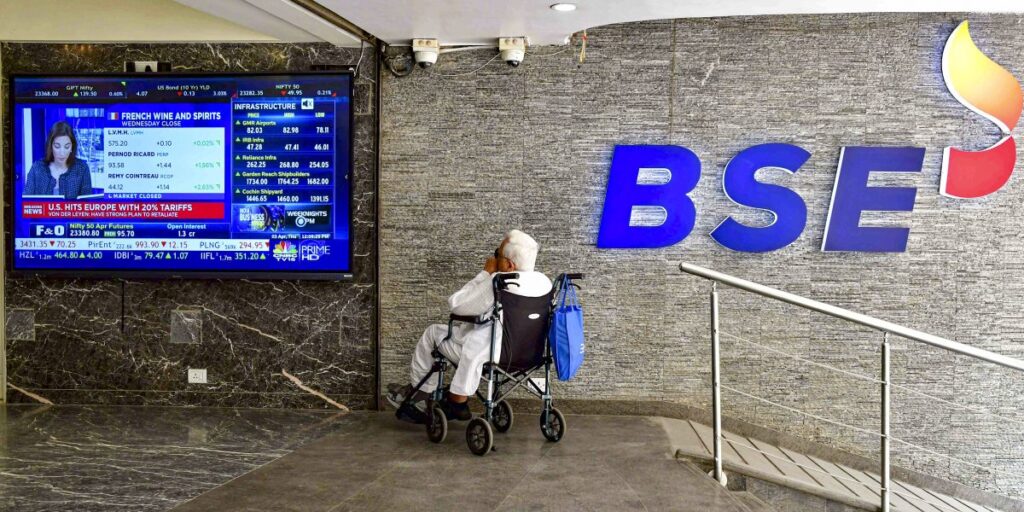
War Against Tariffs, Not a Tariff War War Against Tariffs, Not a Tariff War Ghanshyam Sharma April 17, 2025 Economic Reforms, Indian Economy, World Economy An elderly person watches the stock prices on a digital screen at the Bombay Stock Exchange (BSE) building in Mumbai. Indian equity markets slipped during Thursday’s trade after Trump announced tariffs on foreign imports to the US. Photo: PTI India has the third highest tariff rates among major countries. Iran and Venezuela are the other major countries with higher tariffs than India. According to the World Bank, India imposes a weighted average tariff rate of 11.5%. In comparison, China has a tariff of 3%, Pakistan has a tariff of 8%, Vietnam has a tariff of 1%, and Sri Lanka has a tariff of 4.4%. The countries in the European Union have a tariff of 1.3%. Australia has a tariff of 1%. The US has a tariff of 1.5%. Tariffs make imported goods expensive and force citizens to pay higher prices for low-quality local goods. For example, in India, laptops are 30% more expensive than in the United States. An average American is 33 times richer than an average Indian (USD 82,000 vs USD 2,500 GDP per capita). Coupled with this growing income disparity, such a steep price differential hampers skill development among youth. It’s been a fear for centuries that foreign competition threatens local industry and employment. In 1845, Frederic Bastiat petitioned the French government to protect the domestic candle manufacturing industry from foreign competition – the Sun. Bastiat argued that the Sun lights up people’s homes for free and reduces the candle demand. If the government could enact trade barriers such as prohibiting windows and blocking the Sun, people would be forced to purchase candles! Hence, protecting the domestic industry from foreign competition will increase demand, employment, and GDP. While Bastiat wrote a satire, a prominent labour union in the United States actually filed a grievance against goats in 2017. Western Michigan University had replaced the union members with goats to clear vegetation and landscape their campus. However, the labour union argued that the use of goats cost them their jobs and threatened their livelihoods. In a free world, people are paid somewhat proportionate to the value they add. Should we support policies that block the sun or bar the goats from grazing so people can have jobs even if these jobs add no value? Trade barriers such as tariffs do not contribute to human prosperity. They may generate employment in the short run but lead to long-term economic stagnation and decline. In reality, tariffs facilitate a transfer of resources from domestic consumers to affluent domestic industrialists. Tariffs safeguard the interests of domestic industrialists at the expense of common citizens. After the 1991 economic reforms, several business houses floundered in the face of foreign competition. The presence of tariffs eliminates competition for domestic industry and disincentivizes them from improving quality and reducing prices. Protected by tariffs, domestic industrialists use their resources to lobby with politicians rather than investing in research to increase competitiveness. Tariffs exist because domestic big businesses lobby for them. George Stigler (1982 Nobel Prize recipient in Economics) pointed out that big companies capture regulation at the expense of consumers. It is easier and more lucrative for a few big business houses to unite as an interest group and lobby for a favorable policy (such as tariffs). They face lower costs of coming together and a limited free rider problem. Further, the benefits are also concentrated. In contrast to big businesses, it is costly and difficult for millions of consumers to unite against unfair tariffs. The price increase due to tariffs is not enough to motivate them to skip their jobs or businesses to oppose the policy.  For example, while the United States imposes zero taxes on Indian drugs, India poses a 10% tax on US-made drugs. A 10% tax on imported drugs benefits a few pharmaceutical firms and hurts millions of Indian consumers. However, while the benefits accrue to a few pharma firms, the costs are distributed among millions of consumers. Hence, the people are unlikely to protest as it is rational for individuals to accept the unfair tariffs. India has been lowering tariffs since 1991. However, the tariffs have increased in the last 10 years. In 1991, India’s tariff rate on imports was 56.4%. India gradually lowered its tariffs to 26.5% in 2001. By 2015, India lowered the tariffs further to 7.3%. However, as per WTO estimates, the tariff rate had increased to 11.5% in 2022. In addition to increasing tariffs, India has increased non-tariff barriers to support organized producers. According to UNCTAD, India has increased the number of Non-tariff Measures (NTMs) against imports from 389 in 2012 to 582 in 2022. To make matters worse, India has increased the Frequency Ratio (the percent of imported products subject to NTMs) from 31.2% in 2010 to about 47%. It has also increased the Coverage Ratio (the percent of import value subject to non-tariff measures) from 42.5% in 2010 to 69 percent. Such measures have benefitted the organized producers at the cost of unorganized consumers. When India lowered tariffs in 1991, productivity, employment, and GDP growth increased. High-value jobs replaced the existing jobs. Several domestic firms became key players in global markets. Citizens were able to buy high-quality goods at lower prices. Therefore, India should lower its tariffs in response to President Trump’s threat of reciprocal tariffs. A stronger trade relationship between India and the United States will translate into an improved geo-political partnership between the two countries. Low import tariffs will benefit firms that manufacture exports as imported goods are used to manufacture exports. This may create short-term temporary job losses but will lead to long-term high-value employment and prosperity. The author is currently an Associate Professor of Economics at RV University, Bengaluru. The Author is a Honourary Research Fellow at AgaPuram Policy Research Centre.  Views expressed by the author are personal and need not reflect or represent the views

War Against Tariffs, Not a Tariff War Read More »

The Kumbhanomics 2025

The Kumbhanomics 2025 The Kumbhanomics 2025 Dr S Narayanan March 6, 2025 Cultural Economics, latest, State Economies Economic Pulse of the World’s Largest Gathering For India, a nation with one of the oldest civilizations, the Kumbh Mela is more than just a religious festival—it is a cultural, social, and economic spectacle that has endured for millennia. Held at the Triveni Sangam in Prayagraj, Uttar Pradesh, this grand event exemplifies the deep connection between culture and economic activity. It happened during a certain celestial alignment of the Sun, Moon, Jupiter and Saturn – a rare event occurring once every 144 years. The Maha Kumbh Mela 2025, spanning 45 days from January 13 to February 26, is estimated to have drawn a humungous 66.30 crore pilgrims across India and around the world, making it one of the largest religious congregations. It is also estimated that nearly 47% of India’s population of 140 crores visited this holy site. Prayagraj, also referred to as the “TIRTHRAJ”, has been a centre of spiritual and cultural significance for centuries. The Chinese Traveller Xuanzang, in 644 CE described Prayagraj as a region of immense natural beauty, prosperity and cultural depth attracting over 5 lakh people including the rulers and wealthy merchants. The over 2000 years old rituals of taking a holy dip in the Maha Kumbh Mela is believed to elevate spiritual thoughts. The confluence of Ganga, Yamuna and Saraswathi rivers at the Triveni Sangam adds to the sanctity of this unique location. Besides being a cultural and spiritual happening, the festival also creates immense economic activities for the region and the state, which is the crux of this piece. Mahakumbh Nagar: A Temporary City with World-Class Facilities To accommodate the massive influx of pilgrims, a temporary city with state-of-the-art facilities, Mahakumbh Nagar, was set up. Key infrastructure developments include: The renovation of 92 roads and beautification of 17 major roads, construction of 30 pontoons bridges using 3308 pontoons, erection of 800 plus multi-language signages (Hindi, English, and regional languages), Installation of 233 Water ATMs to provide pure drinking water 24/7, construction of 1.5 lakh mobile toilets, implementation of AI-powered crowd density monitoring system with over 350 experts at key locations, installation of 3000 plus CCTV cameras and drones, adoption of facial recognition technology, installation of water towers for fire safety, Employment of underwater drones capable of diving up to 100 meters to provide round the clock surveillance, usage of a dedicated app for real-time updates on crowd density, employment of 56 cyber warriors, availability of state-of-the-art Multi Disaster Response Vehicle for safety and disaster readiness, construction of temporary hospitals equipped with surgical and diagnostic facilities, and setting up of 3 temporary sewage treatment plants for river protection etc. Logistics and Infrastructure Managing a crowd of this magnitude involves strategic planning for transportation, accommodation, basic amenities like water, sanitation, food, and healthcare. The Swachh Bharat Mission has played a crucial role in ensuring cleanliness. The government welcomed the domestic institutions / think tanks / policy makers to make the next time bigger and better. Many research institutions, including over 20 global institutions like Harvard, Standford, London School of Economics, Gates foundation, Kyoto University, AIIMS, IIM Ahmedabad, IIM Bangalore, IIT Kanpur, IIT Madras, JNU were invited to cover the event, right from planning to execution. The Union Ministry of Housing and Urban Affairs has tied up with institutions of international repute to study waste management through Harvard Business School – Food and Beverage Management, operations of the event, inter-city connectivity, Multimodal transport Hubs and public transport system.  Standford University – Solid Waste Management, efficiency and waste disposal.  IIM – Indore – Internationals related to behaviour change, sanitation.  IFC – Gates foundation – -economic impact in six districts.   The event highlighted India’s prowess in efficiently and innovatively organizing the world’s largest human gathering. The state government also achieved a Guinness World Record in Ganga Cleaning Drive and Mass Cleaning Initiative which set new benchmarks in mass sanitation and environmental efforts. Economic Impact &Technological Innovations The governments have always recognized the economic potential of the Kumbh Mela. In 2019, the state government spent around Rs.3,700 crore, attracting 25 crore visitors. This year, the allocation was doubled to Rs.7,500 crore. Advanced technologies such as artificial intelligence, robotics, and expert consultations have been employed to ensure smooth execution. The government’s investment of Rs.7,500 crore is expected to generate revenue of around Rs.3 lakh crore.  Key innovations include: Accommodation options ranged from Rs.2,000/- to Rs.2,00,000/- catering to diverse visitors, including the President, Prime Minister, ministers, VIPs, and international guests. The event has also boosted tourism in nearby religious sites such as Ayodhya and the Kashi Vishwanath Temple, further stimulating local economies. The Union Ministry of AYUSH provided quality healthcare services to over 2.5 devotees at the site of the event. Over 15,953 metric tonnes of waste were removed from the Mela area to keep it clean and plastic-free. It is estimated that the state witnessed a GST growth rate of 11% and 14% growth in the months of January and February, respectively, during Mahakumbh, generating over ₹1,000 crore increase in GST collections over the corresponding period last year. Further, the Chief Minister has stated in the Assembly that the Mela has rewarded the state economically too. He stated that a boatman family earned Rs 30 crore in 45 days with 130 boats, at Rs 23 lakh per boat & approximately Rs 52,000 a day. A definitive estimate may be expected when the official growth figures are published. Faith to Finance Projections suggest this surge in religious and spiritual tourism would have generated over Rs. 3.5 lakh crore in revenue (more than USD 360 Million), significantly uplifting the state’s economic landscape, benefiting everyone from small-scale vendors like cycle-borne tea sellers, bike-pool operators, boatmen, pilgrimage guides, casual laborers to local traders and corporate stakeholders. The beneficiary sectors include food and beverages, religious offerings (such as lamps, idols, Ganga water, and incense sticks), pilgrimage guides, travel packages, ayurvedic products, and promotional merchandise. This multifaceted

The Kumbhanomics 2025 Read More »

High Tax Rates Do Not Translate into Higher Tax Revenues

High Tax Rates Do Not Translate into Higher Tax Revenues High Tax Rates Do Not Translate into Higher Tax Revenues Ghanshyam Sharma March 4, 2025 Economic Reforms, Indian Economy, Public Policy The irony of India’s high tax policy is that while it imposes the highest tax rates globally, it collects very low tax revenues compared to other countries. India has the highest GST of 28%. If we include cess and other charges, the actual tax rates are even higher.  However, India’s tax revenue as a percentage of GDP is only 11.7%. In contrast, China raises 12.5% of its GDP in tax revenues while having the highest GST of only 13%. Vietnam has the highest GST of 8% and raises 11.4% of its GDP in tax revenues. Indonesia collects 11.9% of its GDP in tax revenues with the highest GST rate of 11%. An African country, Botswana, raises 34% of its GDP in tax revenues with the highest GST rate of 14%. The figure suggests that India does poorly on tax efficiency and is an outlier with the highest GST rate and low tax revenues. India imposes the highest tax in the world on its domestic sectors that account for a quarter of the Indian GDP and employs 17% of India’s workforce. These critical sectors are automobiles, construction (cement is taxed at 31.36%), electronic items such as air conditioners and refrigerators, luxury hotels, etc. These sectors cumulatively generate employment for over 100 million people. The high tax policy has jeopardized the livelihood of people in these sectors. India also has one of the highest marginal income tax rates in the world. Most European countries with high-income taxes have low inflation compared to India. Inflation reduces the purchasing power of nominal income. In an era of stagnant incomes, the real income tax is substantially higher than the general perception. It is an economic fallacy that increasing the tax rates leads to higher tax revenues.  On the contrary, there is theoretical and empirical evidence that high rates can lead to lower revenues. This is because of several reasons. First, high tax rates reduce economic activity. High tax rates lead to lower sales, a fall in production, and a decline in employment. As the economic activity comes down, tax revenues come down. For example, the cumulative tax on cars is more than 40%. The Federation of Automobile Dealers Association has raised the alarm that there is an inventory of 8 lakh unsold cars worth Rs.78,000 crore. Even the two-wheelers purchased by the price-sensitive middle class attract a tax of 28%. All the auto firms are struggling because the high tax policy has deterred people from buying automobiles. The policy also threatens the livelihood of 37 million people employed in the sector. Second, high tax rates encourage smuggling and black markets. For example, the government levies a 53% tax on cigarettes to curb smoking and generate tax revenues. However, ITC Ltd. recently estimated a potential tax revenue loss of 21,000 crore rupees because of smuggled cigarettes. This policy also hurts Indian tobacco farmers because tobacco in the smuggled cigarettes is grown abroad. Excessive tax rates on cigarettes can also be a health hazard as they force people to switch to unregulated and unbranded products. A sharp increase in the Securities Transaction Tax (STT), Short-term Capital Gains Tax (SCGT), and Long-term Capital Gains Tax (LCGT) has led to dabba trading or trading outside the legally recognized stock exchanges. Informal estimates suggest that the volume of trading in informal exchanges is almost 25% of formal exchanges. The STT was introduced in 2004 as an alternative to LCGT. However, when the government introduced the LCGT in 2018, it did not scrap the STT. To rub salt in the wounds, it increased the STT by almost 60% in 2024. Even the SCGT and LCGT increased by 33% and 25% respectively. Third, a high tax policy penalizes honest taxpayers and encourages under-reporting of income and profits. Thousands of clean millionaires who could have contributed to the wealth generation have left India with their wealth. The only beneficiary of high tax rates is the tax bureaucracy. This is because high tax rates incentivize the industry to offer bribes to tax inspectors. Hence, it was an institutional oversight that the GST’s rate-fixing committee has been left completely to the bureaucrats with no political representation. Bureaucracy has no accountability and benefits from increasing tax rates. The Union Finance Minister has suggested that the average GST rate is only 11.6%. However, a more appropriate measure would be an average GST rate weighted by the relative importance of a good in the overall GDP.   Since the government does not disseminate the GST data to compute the average weighted GST rate, these claims are unverified. It is a fact that high tax rates hurt the economy. Nevertheless, to raise tax revenues, the government has raised tax rates to the point where India has the highest tax rates worldwide. As a consequence, India’s GDP growth has crashed. Experts suggest a structural slowdown and low growth rates in the coming several quarters. India needs to increase its tax rate efficiency, not its tax rates. However, the former is conditional on a broader economic reform agenda. The knee-jerk reaction to raise tax rates will only hurt the economy and destroy long-term tax revenue generation. In India, the government is growing at the expense of its people. While the economic growth is slowing down, the pace of tax collections is increasing. It may be desirable to increase the tax revenues, but it should not jeopardize the people’s long-term progress. The author has a PhD in Economics from Clemson University, USA. He is currently an Associate Professor of Economics at RV University, Bengaluru. The Author is a Honourary Research Fellow at AgaPuram Policy Research Centre.  Views expressed by the author are personal and need not reflect or represent the views of the AgaPuram Policy Research Centre. This article was originally first published by The Economic Times https://m.economictimes.com/opinion/et-commentary/indias-high-tax-rates-boon-for-bureaucrats-bane-for-the-economy/amp_articleshow/118609436.cms

High Tax Rates Do Not Translate into Higher Tax Revenues Read More »

Status of Finance Health of Urban Local Bodies in Odisha

Status of Finance Health of Urban Local Bodies in Odisha Status of Finance Health of Urban Local Bodies in Odisha Dushyant Meher February 22, 2025 Indian Economy, Public Policy, Urban Development Fiscal Excellence of Odisha Financial health is the key indicator of capability, opportunities and challenges of an individual, family, institution or a government. Urban Local Bodies (ULB) like city corporations, municipalities and town panchayats are belong to the third tier of our governance structure responsible for urban growth centres that plays a crucial role in the era of aspirational India. The third tier of governance was enforced through 73rd and 74th Amendments Act in 1993 – an early stage of our economic reforms gradually becoming part of policy discourse because of its mandate and functions entrusted upon. On the backdrop of the latest report on “Fiscal Health Index 2023” to assess the fiscal health of the States; it is also a matter of imperative to look at the   state of municipal finances as reported by Reserve Bank of India in its “Report on Municipal Finances 2024”. This report delineates the sources of revenue generation, opportunities and challenges by the municipal corporations of the states. In the context of “Odisha” that stood on top of the list of States in India due to its fiscal prudence obtained through a systematic financial management over a period of time as per “Fiscal Health Index 2023” by NITI AAYOG; an analysis of the financial health of MC may help further strengthening the overall financial wellbeing of the State through its municipal governance. There are 5 MCs in Odisha namely- Berhampur, Bhubaneswar, Cuttack, Sambalpur and Rourkela situated in eastern, western and northern region of the state. As per 2011 Census, Odisha was one of the least urbanized states in India, however, it is catching up in urbanisation as in 2024; 34 new notified area councils (NCCs) and upgradation of 5 municipalities added to the list of local urban governments. The NITI AAYOG Report on Fiscal Health Index 2023 highlighted that “Odisha excels in fiscal health with the highest overall index score of 67.8. It tops the Debt Index (99.0) and Debt Sustainability (64.0) rankings with better than average scores under Quality of Expenditure and Revenue Mobilization. The state has maintained low Fiscal Deficits, a good debt profile, and an above average Capital Outlay/GSDP ratio.” Also “the top five high-performing states are Odisha, Chhattisgarh, Goa, Jharkhand, and Gujarat.” Further, the report stated that “Odisha and Chhattisgarh have performed well under Revenue Mobilization, with their Own Non-Tax Revenue growing significantly due to high revenue collection from mining.” The Reserve bank of India, started focusing on the financial health of MCs by releasing state-wise reports in 2022 and 2024 that delve into fiscal position. Since, MCs are responsible for the provision of vital public services like health, education, water, sanitation, street lighting, public parks registration of births and deaths under their jurisdictions; they have a crucial role to play in effective urban management, urban development and upgradation of urban infrastructure. Odisha is also mineral rich state which supports for manufacturing sector across different region. Odisha publishes monthly fiscal report. According to RBI report “Odisha was one of the most fiscally stressed States in the early 2000s, with a debt-GSDP ratio of 57.3% in 2002-03 – well above the consolidated debt-GDP ratio of 32.1% for all States. The interest payments to revenue receipts ratio (IP/RR) was 34.2% in 2002-03, imposing a significant strain on the State’s finances. Over the subsequent two decades, there has been a turnaround in the fiscal position of the State, with the debt-GSDP ratio declining to 16.0% in 2023-24 –the lowest among the Indian States”. RBI Report also highlights that “during the challenging times of COVID-19, Odisha maintained prudent fiscal practices like periodic revision of the rates/user charges of various tax and non-tax sources and monthly reviews of revenue collection. Odisha is the only State to register a revenue surplus (1.7% of GSDP) during the pandemic year of 2020-21, which increased to 6.5% of GSDP in 2021-22 on account of higher realisation of non-tax revenue.” Status of MCs in Odisha The RBI report primarily highlights the revenue account, revenue sources and reforms being undertaken by MCs. In the context of Odisha – the following observations convey the status of its MCs: The size of revenue receipts of MCs in Odisha has increased substantially in last five years period from Rs.612.36 crore in 2019-20 to Rs.1266.96 Crore in 2023-24 (BE). Total revenue expenditure of 2023-24 (BE) is Rs.1060.89 crore. Ratio of Municipal Corporations’ Revenue Receipts to State Government’s Revenue Receipts comes to 0.7 Ratio of Municipal Corporations’ Tax and Non-Tax Revenue to State Government’s Tax and Non-Tax Revenue is 0.3. The percentage of Revenue Grants, Contribution and Subsidies has marked an increase by 21.6% which doubled from 22.27% in 2019-20 to 43.87 in 2023-24 (BE). In terms of capital receipts; there is a marked increase in Finance Commission grant from 6.17 % out of total receipts for specific purposes in 2019-20 to 21.28 % in 2023-24 (BE). Similarly, the State Finance Commission grant increased by 10.26% from 21.17 % to 31.43 % for specific purposes. Capital expenditure of the MCs in Odisha has been consistently above 95% throughout in last five years under evaluation. The ratio of capital expenditure to total expenditure for MCs is more than 50%. The own tax ratio of MCs in Odisha was only 14.98 % in 2023-24 (BE) as compared to the highest level at 53.8% in Karnataka and 50.3% in Telangana. A trend of decreasing in percentage of own tax revenue (OTR) was observed in last three years from 22.86 % in 2021-22 to 16.00 % in 2022-23 and a further decrease to 14.98 % in 2023-24 (BE). Similarly, sources like- “income from investment” and “interest earned on loans” have reported a decrease from 4.13 % in 2019-20 to 1.72 % in 2023-24 (BE) and from 4.08 % to 1.45 % respectively. RBI Report Highlighted the following Institutional

Status of Finance Health of Urban Local Bodies in Odisha Read More »

Deregulation Begins at Home

Deregulation Begins at Home Deregulation Begins at Home Shanmuganathan Nagasundaram February 21, 2025 Economic Reforms, Indian Economy, Indian Liberals CEA Dr. Anantha Nageswaran eloquently distinguished between digitization and deregulation, emphasizing that digitization does not necessarily imply deregulation Our Chief Economic Advisor (CEA), Dr.Anantha Nageswaran, has made a dispassionate plea for Deregulation. He was eloquent enough to distinguish between digitization and deregulation, indicating that the former need not imply the latter. The memo to bureaucrats- Eliminate, Not Automate. Kudos indeed. If I were to add something specific on this front, it would reinforce the urgency and importance of Deregulation. The poster boy of “Free Market Economics,” Javier Milei, did not set up a committee to study Deregulation but just started on day 1 with a “Department of Deregulation”. It’s been just about a year that Milei has been in office, and they have eliminated, on average, about 5 regulations/day—and Argentina started with far fewer regulations than India has. Milei is not even a career politician. He is an Economics Professor turned President who overcame the formal collegial indoctrination on Economics by reading Rothbard and Mises. The world indeed has a role model and a roadmap to adopt. This article is about the most important Deregulation that our CEA has entirely skipped. In fact, on this aspect, we are doing the exact opposite of Deregulation and no matter what happens in all other departments/functions of the Government, unless this is fixed, nothing else will matter. I am, of course, talking about the elephant in the room, i.e. the fiscal deficit or the Deregulation equivalent in this case of running “balanced budgets”. The distortions and malinvestments caused by our deficit spending for decades (practically since 1947) has kept Indians poor. Forget Austrian Economics; even if one studies history, it will be very easy to observe that no nation has ever managed to become prosperous by continually debasing the currency. It is indeed very amusing (if not for the tragic consequences) to see a deficit-to-GDP ratio of 4%+ described as “fiscal consolidation” by economists and supposedly independent market observers. If this is the definition of consolidation, I shudder to think what expansion would look like. What is Deregulation about? Deregulation refers to removing or reducing government controls on a country’s economic functioning. It is based on the fundamental premise that market regulations offer the best protection to consumers. All transactions in the market occur ONLY because of a consensual agreement between two parties, and hence, there is no need for the Government to impose its wisdom on such issues. At a more generic level, I would look at Deregulation as the process of handing over economic control to the citizens and away from the hands of the bureaucrats and politicians.    It’s not that the markets are a utopia; it’s just that Government regulations worsen the situation. Let me take the example of a universally accepted regulation, “Minimum Wages,” and how it hurts the workers it is supposed to help. At the outset, Wages are the “price of labor”. In much the same way that we don’t want the government to determine the price of tomatoes and cars, we shouldn’t have the government determine the price of labour. The market forces of supply and demand determine wages. An employer has a choice from the labour pool of potential employees, and the employee chooses from the pool of potential employers. A “Free Market” is a voluntary transaction between two consenting parties. Nobody is forcing—neither does the employee have to work below what he thinks is his correct wage, nor does the employer have to overpay compared to what is available in the open market for that particular skill. Now, let us take the case where the “Minimum Wage” is kept above what the market would pay for that activity. Just to make the case more realistic, we will use Cognizant’s Rs.20,000 per month (that’s less than $250/month at current exchange rates) salary offer to engineering graduates. Thankfully, no minimum wage laws apply to the software industry at this point, and so despite the expected uproar of comrades, there was little traction in the market for such protests. But let us suppose that the Indian Government stipulates that the software industry’s minimum wage should be Rs.30,000 per month. How would that affect engineering graduates? Would it not improve their lives? Firstly, let us put the market size in perspective and understand the limited role that Cognizant would have in affecting the outcomes of engineering graduates. The total worldwide employee count of Cognizant is about 3.5 lakhs, and perhaps the maximum they can recruit at the entry level would be about 10% of the workforce or about 35,000. The total number of engineering graduates produced annually in India is about 15,00,000 (15 lakhs). So even if the top 10 software companies in India colluded on this Rs.20,000 pm offer, the number of potential employees it would affect is less than 25% of the workforce. Realistically, it is likely to be less than 10%. The point is that no company is large enough to affect the outcome of the industry. So, if Cognizant is offering Rs.20,000, these are indeed the prices at which these individuals can be utilized to add value for their clients in a profitable manner. So, if the government had intervened to fix the minimum wage at a higher level, then most of these graduates would have remained unemployed. Instead of recruiting X number of people at a salary of Rs.20,000, Cognizant would have recruited only a fraction at Rs.30,000 per month. But the point is not the Rs.20,000 per month lost to those unemployed due to the wage restriction. An entry-level position’s most important value to an employee is the skills they acquire in the starting years, which provide upward mobility in the industry. With their restrictions, the Government unintentionally ensures the lack of skills development that would permit a higher market wage in the future. I have used the software industry as

Deregulation Begins at Home Read More »

Fiscal Prudence of Southern States

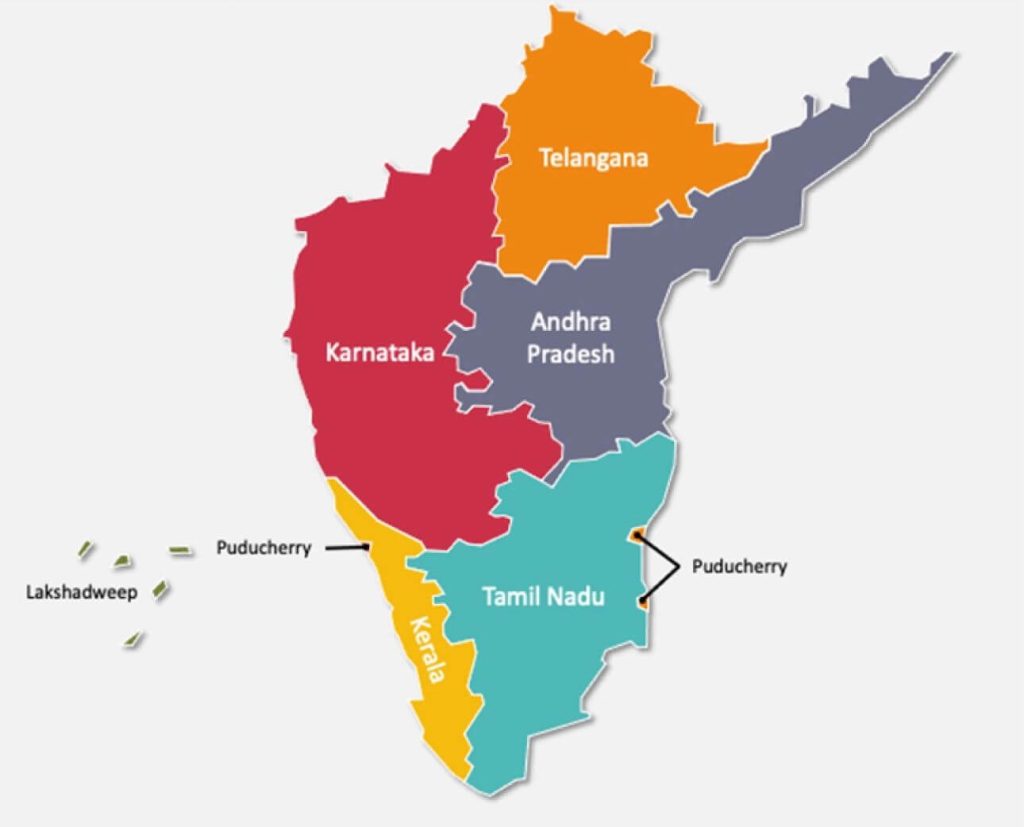
Fiscal Prudence of Southern States Fiscal Prudence of Southern States Madhusudhanan S February 19, 2025 Economic Reforms, Indian Economy, Tamilnadu Economy Among the Southern States, Karnataka leads and Tamil Nadu lags in fiscal prudence. Telangana shows strong improvement, while Andhra Pradesh remains almost stagnant. Kerala has improved its fiscal position, but still not healthy. Introduction The NITI Aayog published its report on fiscal status titled “Fiscal Health Index (FHI) 2025,” which was released on January 25, 2025. This report assesses the following five essential sub-indices that are combined to create the Fiscal Health Index: 1. Quality of Expenditure, 2. Revenue Mobilisation, 3. Fiscal Prudence, 4. Debt Index, and 5. Debt Sustainability The fiscal health of 18 major states receives a thorough assessment in the report, which provides insights into the unique challenges and potential improvements in each state. In this article, we will focus exclusively on the fiscal prudence of 5 Southern States. 1. Andhra Pradesh The report states that Andhra Pradesh has always been in fiscal and revenue deficit for the past five years. The Fiscal Deficit to GSDP ratio in 2022–2023 was 4%, falling within the target of 4.5%. The State allocates only about 10% of the total developmental expenditure to capital expenditure. The State amends the Fiscal Responsibility and Budget Management Act (FRBM), from time to time and it is required to achieve specified fiscal targets within the specified periods.  The report suggests that Andhra Pradesh “may focus on enhancing capital expenditure efficiency, optimize committed spending, diversifying revenue sources for greater resilience, and may enforce strict fiscal discipline.” Andhra Pradesh’s rank has come down from 16th position to 17th in 2022-23. It faces high fiscal deficits and lags in the quality of expenditure and revenue mobilisation. The state needs to increase its resource mobilisation and improve its quality of expenditure, while adhering to the FRBM target. 2.Karnataka The report notes that with a revenue surplus of 0.6% in 2022–2023, the State has met its target. Against the 3.5% target set by the FRBM Act, the fiscal deficit was much lower at 2.1%. Further, compared to the previous year (i.e. 2021-22), the Fiscal Deficit to GSDP also declined from 4.1% to 2.1%, due to revenue surplus. While 2022-23 saw a decrease in the quality of expenditure from 54.5% (the 2014-15 to 2018-19 average) to 47.4%, the fiscal prudence score increased from 31.1% to 43.9%. The report suggested that the State may “focus on reallocating expenditure toward education and health. It may need to focus on increasing the revenues of the state.” Karnataka leads the Southern States in fiscal prudence. In 2022-23, the State has slipped from 3rd rank to 10th rank, though it is the best of the southern States, indicating an unfavorable fiscal situation of all the Southern States.  Except for revenue mobilization, Karnataka excelled across all parameters of the Fiscal Health Index. To better its position, Karnataka needs to review its expenditure pattern and increase its revenue mobilisation.  3.Kerala In 2022–2023, the revenue deficit declined to 0.9% of GSDP from 3.3% in 2021–2022. As a result of the decline in the revenue deficit, Kerala’s fiscal deficit also showed a downward trend. In terms of GSDP, the fiscal deficit declined from 5% in 2021–2022 to 2.5% in 2022–2023. The States’ reliance on non-tax revenue is affecting its fiscal stability. While observing that “the fiscal responsibility targets mandated by the Kerala Fiscal Responsibility (Amendment) Act, 2022, aim for the elimination of Revenue Deficits by 2025-26, with specific annual Revenue Surplus goals” the report suggests that the State “may focus on enhancing revenue mobilization through effective tax and Non-Tax strategies, optimizing resource efficiency, increasing Capital Expenditure in the Social Services Sector are increased, and rationalizing expenditures to improve its fiscal health.” Kerala has continuously encountered fiscal challenges for the past nine years. The State is lagging much behind in terms of quality of expenditure and debt sustainability. It is also burdened with substantial interest payments, inefficient capital expenditure and limited resource mobilisation. The State has to improve in terms of quality of expenditure, and find out new sources for resource mobilisation. It should also aim to curtail its debt and interest payments, which are already eating up major sources of income for the state. 4.Tamil Nadu From 2018–19 to 2022–23, the fiscal deficit as a percentage of GSDP increased from 2.9% to 3.4%. Since 2013–14, the revenue deficit has been increasing, with the State’s Own Tax Revenue to GSDP remaining stationary at 6% in the last 5 years. Though the State aimed to eliminate revenue deficit by 2021-22, it decreased only by around 22.2% in 2022-23 over the previous year. The State has set targets to maintain the ratio of total outstanding debt to GSDP at specific levels under the Tamil Nadu Fiscal Responsibility Act, 2003. However, it has exceeded these limits and witnessed an average ratio of 29% over the past 3 years. The report noted that Tamil Nadu “has witnessed significant growth in revenue and capital expenditure, with fiscal deficits and debt levels exceeding the FRBM target.” Tamil Nadu lags in fiscal prudence and needs to reduce its existing liabilities and non-essential spending. The State should strive to keep its fiscal deficit within the limits set by the FRBM Act, without any relaxation. It should also improve the quality of expenditure and need to look for more investments for development. 5.Telangana Although the state’s fiscal deficit target was set at 5% of GSDP, it managed to reduce the deficit to 2.48% in 2022–2023. The State achieved revenue surplus “after three years of deficits and remained compliant with the FRBM targets for both fiscal and revenue deficits in 2022-23.” The report observes that Telangana’s revenue growth is strong and encouraging and suggests that it spends more on increasing Capital Expenditure, especially in the health and education sectors. Telangana has maintained a healthy fiscal positions, due to an effective tax collection system, balanced approach to expenditure and resource mobilisation efforts. It tops in resource mobilisation for all periods.

Fiscal Prudence of Southern States Read More »

Economic Survey of India 2024-25: MajorHighlights by Madhusudhanan S

Economic Survey of India 2024-25: Major Highlights by Madhusudhanan S Economic Survey of India 2024-25: Major Highlights Madhusudhanan S February 8, 2025 Economic Reforms, Indian Economy, Public Policy On 31 January, 2025, the Union Finance Minister tabled the Economic Survey 2024-25 in Parliament. Before going into the major highlights of the Economic Survey, it is pertinent to know what an economic survey is, its preparation and presentation, and its importance. Economic Survey Every year, the Finance Ministry releases the Economic Survey of India, an annual report that evaluates the country’s economic performance during the previous year. It draws attention to macroeconomic indicators, economic development, and the possible future challenges for India. To handle those economic challenges, the economic survey recommends necessary policy changes. Preparation & Presentation The Economic Survey of India is prepared under the supervision of the Chief Economic Advisor (CEA), Department of Economic Affairs, Ministry of Finance. Until 1964, the Economic Survey was presented in parliament along with the Union Budget, after which it was tabled one day before the Union Budget. The first Economic Survey was released in the Fiscal Year (FY) 1950-51. Importance  of Economic Survey The Economic Survey is the most comprehensive and reliable official analysis of the Indian economy. Economic Survey provides the Government’s official framework for decision-making and economic policy considerations. Economic Survey’s recommendations are suggestive and not binding. Economic Survey 2024 – 2025 – Major Highlights  The Economic Survey 2024-25, contains 13 chapters and includes a chapter which talks about whether the Artificial Intelligence era is Crisis or Catalyst for Labour (Labour in the AI era: Crisis or Catalyst). As the Survey is comprehensive, this article summarises the key points into the following seven major themes: State of the Economy Medium-Term Outlook: Deregulation Drives Growth Investment and Infrastructure Industry Service Sector Agriculture and Allied Activities Employment and Skill Development……To read more, download the PDF DOWNLOAD PDF

Economic Survey of India 2024-25: MajorHighlights by Madhusudhanan S Read More »

Highlights of Economic Survey 2024-25 on Success Stories of Tamil Nadu By B Chandrasekaran

Highlights of Economic Survey 2024-25 on Success Stories of Tamil Nadu By B Chandrasekaran Highlights of Economic Survey 2024-25 on Success Stories of Tamil Nadu By B Chandrasekaran Chandrasekaran Balakrishnan February 5, 2025 Economic Reforms, Indian Economy, Tamilnadu Economy The Indian economy has been growing at a faster pace than many developed and developing economies. India has a massive goal of becoming a developed nation by 2050. Ascertaining the current status of economies is crucial for planning. Hence, the document of the Economic Survey report plays a vital role in bringing, a nuanced sectoral analysis that is fully packed with qualitative and quantitative data on the overall Indian economy and the regional economies of states. The latest economic survey 2024-25 focuses on “Driving domestic growth and resilience through deregulation” and deals with a wide range of segments like enhancing the productivity in agriculture and manufacturing; targeted measures of climate mitigations; decentralised urban governance; environmental protection by blending of technological innovations, MSMEs, etc. There is essential to understand that there is more need for the deregulation of governance itself as centralized governance in a country like India would be inefficient compared to decentralized local governance. The Survey Report notes, “The demand for state capability and capacity to respond to these developments and make progress on social and economic indicators amidst rising geopolitical conflicts will be unlike anything we have experienced since independence. Meeting that demand is a priority above all else.” Economic Survey also highlights the best practices, good governance, and innovative initiatives of regional economies of states. This exercise helps for replications by other states and bridge the gaps in welfare efforts to improve the lives of people. This analysis focuses on the case of Tamil Nadu whose many works have been highlighted in the Economic Survey 2024-25 as a success stories. Good governance at the regional level provides necessary fillip to growth and development of the region. The survey report highlights that “States have also participated in deregulation by reducing compliance burdens and simplifying and digitising processes. States have tried to reduce the cost of regulations by engaging with businesses to identify pain points. For example, Haryana and Tamil Nadu amended their building regulations 12 times in the past decade to make it easier to build”. In the age of digital revolution, ease of regulations for business operations especially financial operations helps industries to innovate for faster growth of MSMEs. The economic survey highlights that “The Governments of Goa and Tamil Nadu have set an example by adopting the TReDS platform to ensure timely payments to their MSME suppliers. Goa, heavily reliant on tourism, leveraged TReDS during the COVID-19 disruption to enhance supplier liquidity, facilitating payments for over 250 MSMEs since October 2020, with invoice discounts. Tamil Nadu joined TReDS in 2022 under the Raising and Accelerating MSME Performance (RAMP) program, supporting MSMEs in significant numbers. Their proactive adoption has inspired other states to follow suit.” Share of Value Additions Regional economies of states are emerging with competitive edges. About 43% of the total industrial Gross State Value Added (GSVA) during the financial year of 2022-23 at constant 2011-12 prices, comes from just four states such as the western states of Gujarat and Maharashtra and the southern states of Karnataka and Tamil Nadu. For the financial year 2022-23, more than one-fourth of the total services sector GSVA comes from Karnataka and Maharashtra. More than 50% of the total service sector GSVA comes from just a few states like Karnataka, Maharashtra, Tamil Nadu, Utter Pradesh, and Gujarat. These states also have more than 50% of the total industrial GSVA, suggesting that both feed into each other. Financial, real estate, and professional services have very high levels of concentration in a few states. Within the service sector, financial services are highly concentrated with Maharashtra (Mumbai), Tamil Nadu, Gujarat (GIFT City), and Karnataka accounting for more than 50% of total financial services GSVA. Further, more than one-third of real estate, ownership of dwelling, and professional services value added (GSVA) are from Karnataka, Maharashtra, Telangana, Haryana, and Tamil Nadu. Dual strengths–industrial and service: Maharashtra and Tamil Nadu typically represent states with reasonably strong industrial and service sectors. Their diversified economies integrate manufacturing with trade, financial services, real estate, and professional services. Among the larger states, “Tamil Nadu leads the pack with the highest concentration of factories per person, followed by Gujarat. Bihar hardly has any factories, while Uttar Pradesh hardly has any smaller enterprises.” The survey highlights Tamil Nadu’s Strategic Initiatives to Foster Footwear Manufacturing Growth. According to the Economic Survey 2024-25, Tamil Nadu is a leader in the traditional leather sector and now championing the growth of non-leather footwear. The state contributes to a 38% share in India’s footwear and leather products output, contributing to about 47% share in India’s total leather export. This sector generates more than 2 lakh employments. Agriculture and Transforming Rural Economies Economic Survey highlights, states have diversified towards crops where yield is high. For example, Andhra Pradesh diversified towards jowar, Madhya Pradesh towards moong, and Tamil Nadu towards maize. Diversity is also seen in inter-state variations in growth observed from 2011-12 to 2020-21. Andhra Pradesh was the leading performer with a CAGR of 8.8% in agriculture and allied sectors, excluding forestry and logging. Madhya Pradesh followed with 6.3%, and Tamil Nadu came in third with 4.8% among major states. The shift from cultivating traditional flowers to export-focused cut flowers highlights the industry’s transformation. Entrepreneurs across states like Tamil Nadu, Karnataka, Madhya Pradesh, West Bengal, Uttar Pradesh, and Maharashtra have capitalized on this opportunity, establishing sophisticated export-oriented floriculture units. The Rise of Horticulture India’s horticulture sector is more productive and profitable than traditional agriculture, emerging as a fast-growing industry. This can be seen from the fact that India is also a leading exporter, shipping 343,982.34 MT of fresh grapes worth Rs.3,460.70 crore (USD 417.07 million) globally in 2023-2410. Key grape-growing states are Maharashtra, Karnataka, Tamil Nadu, and Mizoram. Maharashtra leads in production, contributing over 67% of total

Highlights of Economic Survey 2024-25 on Success Stories of Tamil Nadu By B Chandrasekaran Read More »

Indian Budgets – Missing the Forest For the Trees by Shanmuganathan N

Indian Budgets – Missing the Forest For the Trees by Shanmuganathan N Indian Budgets – Missing the Forest For the Trees by Shanmuganathan N by Shanmuganathan N February 4, 2025 Economic Reforms, Indian Economy, Indian Liberals I have consciously avoided commenting on Indian budgets despite writing extensively on various macroeconomic issues over the years. For a nation whose economic advisors have been steeped in the Keynesian witchcraft, it would have been easy to dismiss my arguments in favour of individual liberty, limited government and sound money as preposterous, or worse, anti-poor or anti-growth. What has changed now? Today, we have a Javier Milei (current Argentina President democratically elected 1 year back) demonstrating real time that ONLY Libertarianism works. I no longer have to go back to the days of the Classical Gold Standard or Patrick Henry to justify my arguments. So here it is..  On the budget passed – I can discuss income tax exemptions, the supposed ease of doing business, FDI hikes etc. Countless experts have opined but all of those discussions miss the “Forest For The Trees.”   The criticism in this article is valid for all Indian budgets without exception. In fact, there is hardly any difference whatsoever between the UPA and NDA budgets. Incidentally, Congress could have presented the same budget as Ms.Sitharaman did, and the BJP would have dismissed it as anti-growth and Inflationary (…or whatever). If I were to summarize the issue in one phrase that plagues the Indian Economic policy making since Independence, it is “Interventionism” – from a fiscal, monetary, and regulatory perspective. Starting from 1947 would be difficult for this article. However, we supposedly have adopted a reformist path since 1991 and so will start there. How has China leapfrogged India when we were both at the same level in 1991? Should we not even question the basic premise of Indian budgets and the philosophical leanings of our economic advisors? How is it that the Yuan has appreciated over the last three decades vis-à-vis the US Dollar while the Rupee has virtually plummeted with no end in sight? China has a trillion-dollar Annual trade surplus while we run trade deficits—so much for the arguments that a cheaper currency helps in promoting exports. As a country, we have buried our heads in the sands of “The General Theory of Employment, Interest, and Money.” When we should have followed Mises and Rothbard, we have chosen to borrow from Keynes and Karl Marx. In fact, from an economic policy perspective, we are closer to Marx than Keynes today. There is nothing remotely close in our budgets to describe the BJP as a “Right of Center” or “Far Right” party. Economically speaking, it’s even to the left of what the Congress was between 2005 and 2014. Right of Center used to mean something – balanced budgets, reducing regulations, minimum government etc. Today it is a political slogan. But this was the case even with Ronald Reagan so I don’t find any point in picking on current day conservatives. For the record, even Keynes never advocated running deficits during periods of growth. But this is like leaving a bottle of booze unchaperoned in a school and telling kids to drink only in an emergency. No prizes for guessing what would have happened next. Governments around the world, lead by the US, have spent like there is no tomorrow. Fiscal Deficits – The Cancer of Our Economy Firstly, we need to understand the gargantuan size of our deficits. Reporting the deficits as a % of the GDP, notwithstanding the international consensus on this, is a very disingenuous move on the part of Governments. It hides the extent to which the Governments are living beyond their means. Let’s take our FY2025 numbers: Government revenues were Rs.31 Lakh Crore, expenditures were Rs.48 Lakh Crore, and the interest component was Rs.11 Lakh Crore. I am using whole numbers because decimals are truly rounding off errors in the scheme of things. The fiscal deficit was 4.8% of the GDP as reported. I can pick several holes in the accounting principles used to report a lower deficit than is really the case, but I am skipping all of it and jumping ahead. Here is the big picture – The Total Amount available to Government after paying interest on current borrowings was Rs.20 Lakh Crore and they spent Rs.37 Lakh Crore. The Indian Government has overspent to the tune of 85% as compared to what was available to them. So, how does the Government fund the balance of Rs.17 Lakh Crore? That comes through the “Inflation Tax” (though it’s euphemistically referred to as borrowings from the Central Bank). I am simplifying here, but this is not far from the truth. At the end of the day, in essence, what doesn’t get funded directly through taxation gets indirectly funded through inflation. So the cost of Government to the citizens is not what it taxes but what it spends. The above 85% is not an exception. This would be the ballpark from 1991, perhaps even 1947. So what are the consequences of this Interventionism on the Fiscal front by the Government? There is one hallmark of Interventionism that is just plainly obvious to somebody who understands Laissez-Faire economics, but in reality, almost everybody seems to be oblivious to the fact. That Interventionism begets more Interventionism and this begets even more Interventionism becoming an infinite loop. So here are the follow-on effects. Not an exhaustive one by any standards. The deficit is met by the RBI monetization and this is “the monetary Inflation (MI)”. One of the consequences of MI is Price Inflation and this results in high interest rates. RBI then “intervenes” to lower the interest rates below what would be the “Natural Rate of interest”. This artificially low interest rate leads to the business cycle (refer “Austrian Business Cycle Theory”) or what is more commonly known as the boom-bust cycle. This leads to artificially high asset prices eventually resulting in the bursting of

Indian Budgets – Missing the Forest For the Trees by Shanmuganathan N Read More »

A-liberal-vision-for-india

A liberal Vision for India A liberal Vision for India Indian Economy February 23, 2012 Chandrasekaran Balakrishnan  In 2011, India made a distinct turn away from economic freedom with the failure of FDI in retail and the Cabinet nod for the so-called Food Security Bill—‘food’ for none, job ‘security’ for babus and a ‘bill’ for the rest of us. This turn towards statism will not be without terrible consequences. In spite of the two decades of progress brought about by a marginal increase in economic freedom, India has lost the plot. The question is why. At least in part it is because economic freedom is not, and was not even in 1991, defended as a matter of principle. To defend opening up of the retail sector to foreign investors or doing away with import duties on used cars as singular measures is playing in socialist terrain, for those against liberty will point to specific gains from curtailing freedoms while promoters of freedom have only yet unknown gains to offer. There is an urgent need to change the very terrain of public policy debate in India, and we must begin by paying heed to the following passage from Nobel Prize winner, F A Hayek’s book The Constitution of Liberty: “…freedom is almost certain to be destroyed by piecemeal encroachments. For in each particular instance it will be possible to promise concrete and tangible advantages as a result of curtailment of freedom, while the benefits sacrificed will in their nature always be unknown and uncertain. If freedom were not treated as the supreme principal, the fact that the promises which a free society has to offer can always be only chances and not certainties, only opportunities and not definite gifts to particular individuals, would inevitably prove a fatal weakness and lead to its slow erosion”. And a defence of liberty as a principle ought to offer a vision for India—a vision with answers to three fundamental questions. One, how can India become rich? Two, what about income-inequality? And three, what about the caste-system? We look at each in turn. One, how can India become rich? Modern economic growth happens through widespread application of science to production processes. And this happens not by government intervention but by entrepreneurship. Simon Kuznets, who won the Nobel Prize in 1971, tells us that “many economically important inventions of the late nineteenth and early twentieth centuries were the results of attempts to apply new scientific discoveries, attempts by people like Edison and Marconi who were no scientists but who understood the scientific advances and were impelled to look for practical applications”. The Soviet Union despite having had a very high number of PhDs per capita at one point did not produce a single innovation in consumer goods! This is because entrepreneurs bloom only in free market economies. Economists James D. Gwartney, Randall G. Holcombe, and Robert A. Lawson in a cross-country study of 99 countries for the period 1980-2000 find that “holding constant geographic factors and changes in human and physical capital, a one-unit increase in a country’s EFW [an index of economic freedom] rating increases the growth of per capita GDP by about 1.24 percentage points.” And 1.24 is not a small number; with the magic of compound interest a two unit increase in EFW could by itself double incomes in 29 years. In short, both theory and history tell us that the only – and yes only – way ordinary Indians can become wealthy is through a market economy. Two, what about income distribution? The market process is a leveling process both on the production and consumption side. A characteristic feature of a laissez faire economy is the introduction of new products and new production methods. This means capital employed in old production methods continuously become obsolete, and the wealth of owners of that capital depreciates in value. New entrepreneurs rise to riches and old fall, Vilfredo Pareto called this the “circulation of elites”. The elite in capitalism (unlike in Feudalism or Communism) are like the occupants of a hotel, the hotel is always full but never of the same people! That is the story on the production side. As for the consumption side, suffice it to quote the great Joseph Schumpeter: “the capitalist achievement does not typically consist in providing more silk stockings for the queen but in bringing them within the reach of factory girls…” The vast majority of government redistribution plans appear pale in contrast to the capitalist redistributive process. And redistribution through profit- motive rewards success in serving others unlike redistribution through vote-motive which reflects success in stealing from others. Lastly, what about the caste system? Capitalism nailed feudalism in the Western Europe, and it promises to do far worse to the caste system in India. Kuznets tells us that “Amongst the concomitants of modern economic growth are…an increase in the non-personal forms of economic organisation, and a rise in the relative important of economic achievement in the scale of social values”. Non-personal forms of economic organisation—no city dweller knows the caste of her milk producer—limits the domain of discrimination. And the growing influence of economic achievement flies in the face of by- birth social values. Interesting fairly modest increases in economic freedom seems to have brought above significant improvements for Dalits in India. In a 2011 paper, University of British Columbia scholars Hnatkovska, Lahiri and Paul find that wage gaps between Scheduled Castes (people from the bottom rung of the Hindu caste system) and non- Scheduled Castes have declined since the 1980s. This is no surprise, profit seeking firms link wages to worker productivity, not caste! Progress however is not merely an income- story. A recent survey of 19,087 Dalit families in two districts of Uttar Pradesh found that access to markets had improved Dalit grooming and eating practices, and increased access to jobs traditionally considered to be non-Dalit. In short, a market economy is the antidote to the age old caste system. And unlike the government’s lets-enlighten-the- masses

A-liberal-vision-for-india Read More »