Public Policy

Internationalising Indian Higher Education by Dr. M.Saravanan

Internationalising Indian Higher Education by Dr. M.Saravanan Internationalising Indian Higher Education Saravanan M January 31, 2025 Higher Education, Public Policy The National Education Policy (NEP) 2020 marks a historic shift in the policymaking for higher education as it aims to internationalise the quality of higher education, while simultaneously attempting to Indianise the sector. Various policy prescriptions of NEP encompass promoting Indian languages, conferring primacy to the mother-tongue at primary schooling, and covering Indian knowledge systems, including tribal knowledge and indigenous and traditional ways of learning, in various disciplines. These would instil a sense of rootedness and pride in India and its rich, diverse, and ancient culture. A detailed discussion about the policy paths for Indianisation would require a devoted space. However, a nation that intends to internationalise its higher education needs to focus on its indigenous strengths to offer a unique and real international learning experience and avoid being a clone of another international education model. The NEP has green-signalled a formal process to internationalise higher education, a topic hitherto witnessed at the margins of policymaking and not as the core. Further, the NEP aims to the improve mobility of students, teachers and researchers across nations, establish highest global standards in education, and nurture young minds to be global citizens exposed to diverse cultures. To this end, it has defined the purpose of education at the sectoral and institutional level, highlighted the different roles institutions of different quality and focus are expected to play, and how knowledge is to be created and disseminated. This perfectly aligns with the definition of the internationalisation of higher education by the eminent scholar, Prof. Jane Knight. While under the ongoing Pradhan Mantri Uchchatar Shiksha Abhiyan (PM-USHA) scheme, some public universities are being supported to enhance their quality and also to collaborate with foreign universities, just as was done in the previous avatar of the scheme, where it went with the name of Rashtriya Uchchatar Shiksha Abhiyan (RUSA), efforts have also been taken up to improve the quality and global standing of institutions under Institutions of Excellence (IoE) programme. While these are generic efforts to improve institutions that would also lead to internationalisation, the UGC has come up with targeted measures to promote internationalisation. In May 2022, the UGC introduced its Regulation delineating the various options of higher education programmes that domestic and foreign institutions can offer collaboratively, like twinning programmes, joint-degrees, dual degrees etc. It also set the conditions for such collaborations and set eligibility standards for the institutions in terms of NAAC accreditation, NIRF or global rankings, to ensure that only institutions of certain proven quality are allowed to collaborate with globally reputed and well-ranked foreign institutions. The UGC also urged all the institutions to set up an Office of International Affairs to function as a single point of contact to take up all necessary action for collaborations with foreign institutions and teacher-student mobility. As per the information available on the website of the UGC, a total of 235 Indian higher education institutions are eligible to collaborate with foreign institutions to offer Twinning, Joint Degree, and Dual Degree Programmes. While collaboration between Indian and foreign institutions is one way to internationalise, the UGC has also embarked upon facilitating the entry of foreign institutions to set-up their own institutions in India, either individually or in association with any other foreign or Indian institution, by notifying another Regulation in November, 2023. It allows Foreign Higher Educational Institution (FHEI) within the top five hundred in the overall category or subject-wise category of global rankings or the institution that possesses outstanding expertise in a particular area. The FHEI has the autonomy to determine the qualifications, salary structure, and other conditions of service for appointing faculty and staff, provided the qualifications of the faculty appointed are at par with the main campus in the country of origin and the international faculty appointed serves at least a semester at the Indian campus. The qualifications awarded by the FHEI in the Indian campus will have the same recognition, equivalence and status that the qualification awarded by the FHEI enjoys in its country of origin. The qualifications awarded by it will also be equivalent to any corresponding degree by any Indian Higher Educational Institution for all purposes. To make the Indian degree programmes comparable to the globally accepted structure, curricular changes have been made like offering four-year undergraduate degree programmes across disciplines, with multiple entry and exit; one-year postgraduate programme, platform for credit accumulation, transfer and redemption by students, etc. A major focus is on constant faculty development and research and innovation, which would lead to enhancement in the quality of higher education. Further, cultural aspects of the diverse Indian sub-continent are also being included in the curriculum, in addition to developing right attitude and skills in students to become a global citizen. Post introduction of NEP, the various measures have been taken to improve quality to international standards, increase global mobility of students and teachers and embed cultural inclusiveness in the mainstream education, which is expected to internationalise Indian higher education holistically. Already few universities have established (or in the process of establishing) their campuses in India including Australia’s Deakin University, which is the first foreign university campus in India, followed by the University of Southampton. It is only expected that the trickle would be followed by a deluge soon. Dr.M Saravanan, is specialised in Higher Education and Founder Secretary of the AgaPuram Policy Research Centre, Erode. Views expressed by the author are personal and need not reflect or represent the views of the AgaPuram Policy Research Centre.

Internationalising Indian Higher Education by Dr. M.Saravanan Read More »

Imperatives of Student-Centric Changes in Indian Higher Education

Imperatives of Student-Centric Changes in Indian Higher Education By Dr. M.Saravanan Imperatives of Student-Centric Changes in Indian Higher Education By Dr. M.Saravanan Saravanan M January 28, 2025 Education, Public Policy, Skills Development Sector The momentous National Education Policy (NEP) 2020 has student-centricity as its core, for the transformational and incremental changes envisaged accord student learning and developmental outcomes the topmost priority. Multiple initiatives undertaken as part of the implementation of the NEP so far have enlarged the range of options available to the students. One of the challenges stifling tertiary education hitherto has been the mandatory forfeiture of all the achievements and efforts of the students in case of discontinuation of the degree before the completion of the requisite duration. This issue has been addressed with the implementation of multiple entry and exit for students. In case a student intends, or is forced due to any unforeseen situation, to drop-out of the programme, say after a year or two, the student can carry the past achievements in the form of credits and rejoin the programme at a later period within the stipulated time, and complete the programme. If a student enrols for a four-year Honours Degree programme but leaves the programme after the successful completion of the first year, the student would be awarded a Certificate. Similarly, for successful completion of two years and three years, a Diploma and Degree would be awarded respectively. The earlier situation of completely losing their credits or marks is not the case anymore. The carrying forward of credits earned till the time of discontinuation and redeeming them later at the time of rejoining the programme is made possible by a mechanism called Academic Bank of Credit, which works similar to a commercial bank. A student is required to open an account on DigiLocker, free of cost, using the Aadhar Number. This student account gets linked to the institution and linked to the programme for which the student is enrolled. Every successful completion of a course in a programme earns credit, which gets accumulated. If a student continues the programmes throughout the duration and the total credit accumulated equals the requisite total credits for the programmes, then the corresponding qualification is awarded. In case the student drops midway, the credits accumulated thus far are retained in the account and can be redeemed whenever the student rejoins the programme and completes it. Until a short while ago, a section of students who are more industrious had a grouse that despite their willingness and aptitude, the rules did not permit them to pursue an additional programme other than the one being pursued. Recent tweaks in regulations have permitted students to take up an online programme along with another regular programme. This allows students to pursue and complete two degrees simultaneously, as online degrees have the same equivalence and validity as that of a regular degree. Post NEP, online education has got more fillip, as the UGC allows up to forty percent of the total credits of a programme through online courses offered under SWAYAM / NPETEL platforms. This allows students two benefits: doing any course of choice even if the same is not available in the institutions where the student is enrolled and accessing the course at any time of choice or convenience. In addition, new regulations have also been introduced to encourage eligible universities to offer online programmes. Further, under the Choice Based Credit System (CBCS), which is in vogue for over two decades, students have some liberty to choose a few courses of their choice under each programme. Post NEP, the UGC has brought in a revised curricular framework to also include skill-based or vocational courses mandatorily in each programme. The emphasis given to making the institutions multidisciplinary automatically expands the horizon of choices for students to choose from. Using English as the medium of instruction for many programmes has posed and continues to pose challenges to students who have had their schooling in their mother language. Following the mandate of NEP to introduce programmes in the languages, degree programmes are offered in languages other than English by many universities. Doing higher studies abroad after graduation, especially doctoral programmes, has been a dream choice for some students. One issue for such students was the structure of the undergraduate students, as the Western countries and those that modelled on that have four-year undergraduate programmes even for humanities and social sciences, whereas in India they were three-year programmes. With the introduction of four-year undergraduate programmes, the structure of Bachelor’s programme is now aligned with the global framework, easing access to higher studies abroad for interested students. There are cases when collaborations result in better services being offered. To enable Indian institutions to associate with globally top-ranked institutions, the UGC has made regulatory changes, whereby the domestic and foreign higher education institutions can now offer a bouquet of programmes together. Further, the best international institutions may also offer their services individually to the students by opening their campuses. While entry into quality international institutions has become possible and easy, the quality of the programmes offered in India has to be of the same quality offered in the main campus of their country. It is hoped that governments and institutions constantly reform the system to remain student-centric, to remain relevant and meaningful. Dr.M Saravanan, is specialised in Higher Education and Founder Secretary of the AgaPuram Policy Research Centre, Erode. Views expressed by the author are personal and need not reflect or represent the views of the AgaPuram Policy Research Centre.  

Imperatives of Student-Centric Changes in Indian Higher Education Read More »

Expansion of City Corporations and Municipalities Merely Does Not Guaranty Quality of Services and Facilities in Tamil Nadu

Expansion of City Corporations and Municipalities Merely Does Not Guaranty Quality of Services and Facilities in Tamil Nadu By B.Chandrasekaran Expansion of City Corporations and Municipalities Merely Does Not Guaranty Quality of Services and Facilities in Tamil Nadu By B.Chandrasekaran Chandrasekaran Balakrishnan January 28, 2025 Democracy and Institutions, Public Policy, Tamilnadu Economy, Urban Development As the nation embarks on Viksit Bharat@2047, its ambitious plan to make India a developed country by 2047, it is imperative that the country develops organically with the local bodies driving the economic development and also benefitting from it. If this opportunity is missed, the gains derived from the 73rd and 74th Constitutional amendments would dissipate. To this end, the second-generation institutional reforms of urban local bodies (ULBs) need to be taken up. Despite new initiatives like Smart City Mission, AMRUT, etc., the ULBs continue to face challenges in providing basic civic facilities like water supply, sanitation, urban public transport, all-weather road connectivity, stormwater and drainage, solid waste management, sewage, public sanitary facility, street lights, safety, and security, etc. Hamstrung by inadequate decentralisation, the local governments are unable to raise funds and channelise development projects to solve physical infrastructure facilities. Moreover, the funds allocated by the states are always disproportionate to the requirements and spending on developmental projects is scarce and riddled with quality issues. Status of Local Bodies in Tamil Nadu Take the case of Tamil Nadu, which envisions becoming a trillion-dollar economy by 2030. While the State is the most urbanised (53% population) in the country, the civic facilities that its cities and town offer to its residents are no different from any other poorly managed cities and towns in the country. The predominant reason is the lack of financial and administrative autonomy of the ULBs. The recent efforts to improve some of the services have also not yielded sustainable results. Given this background, the government of Tamil Nadu has recently announced proposals to expand the existing geographical coverage of urban ULBs limits by merging nearby municipalities into city corporations, town panchayats into municipalities, and village panchayats into town panchayats. Some of the major factors for the expansion of urban areas include increase in population, popular demand from people, and an increase in tax revenues. The following are the key announcements of the Government of Tamil Nadu’s Department of Municipal Administration through the issue of G.Os notified on 31st December 2024: Expansion of 16 municipal corporations including Greater Chennai, Coimbatore, Cuddalore, Dindigul, Erode, Karur, Hosur, Madurai, Salem, Tiruchirapalli, Tiruppur, Avadi, Kumbakonam, Thanjavur, Thoothukudi, and Sivakasi by annexing 4 municipalities, 5 town panchayats and 149 village panchayats; 41 municipalities including Tiruvarur, Tiruvallur, and Chidambaram, are to be expanded by annexing 1 town panchayats and 147 village panchayats; Formation of 13 new municipalities including Kanyakumari, Harur, and Perundurai; Formation of 25 new town panchayats including Yercaud, Kalayar Koil and Thirumayam; and Annexation of 29 village panchayats with 25 town panchayats. Advantages of Geographic Expansion Expansion through mergers increases land values thereby boosting the real estate and related sectors. The expanded city corporations and municipalities may get relatively higher fund allocation for improving the infrastructure development facilities and services. Decentralised regulation of planned development of the city at least on paper if not for implementation in letter and spirit. Disadvantages of Geographic Expansion The citizens of expanded ULBs may bear higher taxes for services like water, property tax, municipal waste disposal, etc. The expansion may result in parent ULBs being unable to cater to the needs of its newer territory. The newly added areas either continue with existing services or face neglect having lost its erstwhile independent identity. Incompatibility between the vision of the parent ULBs and the needs of the merging units. Issues with Expansion through Mergers Often ULBs are expanded for political reasons or to obtain approvals from the Centre for new projects, like metro train services, which require a particular size of population. Further, ULBs are already financially stressed and the state governments do not give adequate funds after the merger, aggravating their financial position. Furthermore, expansion through merger goes against the principle of local governance where small is considered beautiful. There is absolutely no need for mergers just to develop infrastructure, which may be developed as there are. Prerequisites for Expansion Any merger of ULBs should be done only after existing areas of an ULB achieve the desired levels of reasonable, minimum standards of urban infrastructure and quality of life. Further, a thorough study has to be made on the likely benefits and issues with prospective mergers from administrative, financial and other perspectives. If ULBs are really empowered through adequate decentralisation, mergers may be proposed by the ULBs themselves or, they may explore partnerships and sharing of resources without formal mergers. All the decision-making process has to be decentralised, moving closer to the local level and ward level for the participation of people. Only the technical aspects have to be decided at the state or regional level to support ULBs effectively and on timely. Anything on the contrary would create chaos as witnessed in big cities. like recent floods and inundations during regular monsoons. Several years ago, the scheme on Providing Urban Amenities to Rural Areas (PURA), a vision of Dr APJ Abdul Kalam, was implemented in a few states like Andhra Pradesh, Kerala, Maharashtra, Puducherry, Rajasthan, and Uttarakhand. It is a Public Private Partnership scheme with a clear framework for governments, state governments, the private sector, and local government to take advantage of improving facilities and services with 10 years of maintenance services. Why not try something like this new scheme to make our semi-urban and rural areas with all infrastructure facilities? B.Chandrasekaran is an Economist and Founder Chairman of the AgaPuram Policy Research Centre, Erode. Views expressed by the author are personal and need not reflect or represent the views of the AgaPuram Policy Research Centre.  

Expansion of City Corporations and Municipalities Merely Does Not Guaranty Quality of Services and Facilities in Tamil Nadu Read More »

Financial Health of Municipal Corporations in Tamil Nadu by B.Chandrasekaran

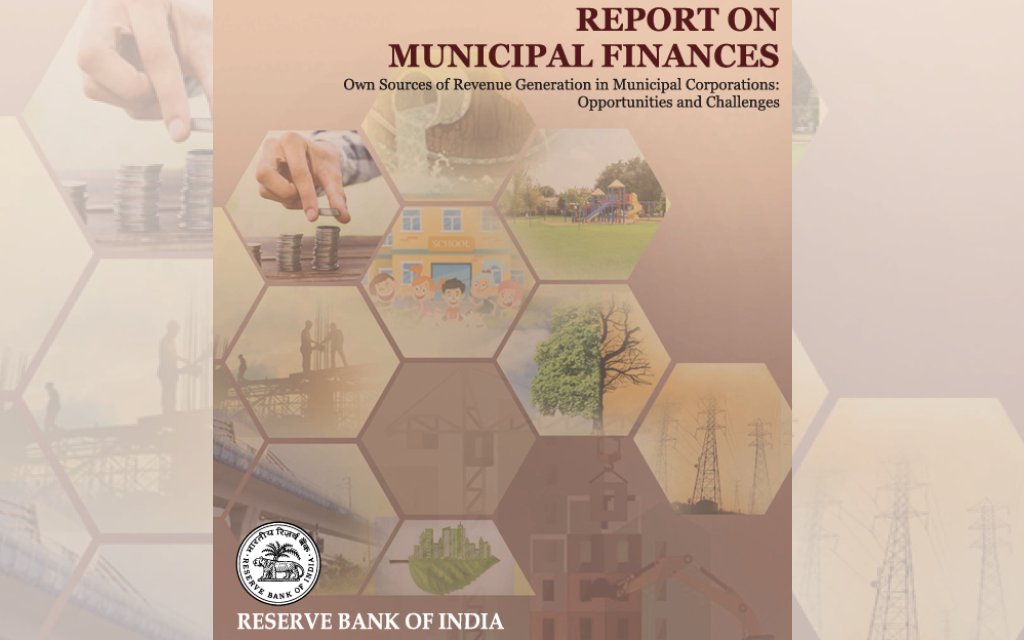
Financial Health of Municipal Corporations in Tamil Nadu by B.Chandrasekaran Financial Health of Municipal Corporations in Tamil Nadu by B.Chandrasekaran Chandrasekaran Balakrishnan January 3, 2025 Public Policy, Tamilnadu Economy, Urban Development Introduction The federal governance structure has envisaged a three-tier institutional mechanism for national, State-level, and local-level governance. While the system looks theoretically sound, the issue with the local bodies is that they exist only for elections, where political parties compete to have a maximum number of their members in office. Lacking institutional, administration, and financial autonomies and the associated responsibility and accountability, the local bodies exist as mere extensions of state governments with elected office-bearers having limited authority. One of the prime reasons for this unfortunate reality is the continuing colonial mindset, which promoted centralised governance. Contrary to the widely held belief that the rural local bodies (Village Panchayats) and urban local bodies (Town Panchayats, Municipal Corporations, and City Corporations) became functional only after the 73rd and 74th Constitutional Amendments, India has a long history of local governance, with panchayati system traced back to ancient vedic era. As for modern Indian references, Shri.VS Srinivasa Sastri, a freedom fighter and classical liberal thinker wrote a pamphlet titled “Self-Government for India-Under British Flag” in 1916, delineating the existence of local governance in India for long and listed 18 major subjects of local governance for administration and delivery of services for people’s welfare. Financial Autonomy of Local Bodies To exercise institutional autonomy, the local bodies need financial strength. An analysis of the financial status of the local bodies reveals the actual achievements and challenges of the local bodies. In this connection, the reports of Reserve Bank of India on the Municipal Corporations (MCs) and Panchayati Raj Institutions (PRIs), throw adequate light on their financial status and challenges. The latest RBI’s Report on Municipal Finances released on November 13, 2024, with the theme of “Own Sources of Revenue Generation in Municipal Corporations: Opportunities and Challenges” provides a first-of-a-kind analysis of the budgetary data for 232 municipal corporations (MCs), which covers more than 90% of total MCs in the country. The main findings are reproduced below: While the revenue account of the MCs has remained in surplus, their heavy reliance on transfers and grants from upper tiers of government continues. The own revenue sources are not adequate for meeting the revenue expenditure of most of the MCs, thereby affecting their functional and financial autonomy. Comprehensive reforms, including the adoption of technologies like GIS mapping and digital payments, rate rationalisation and their periodic revisions as well as better monitoring to plug leakages can help in the augmentation of their own source revenues. Key statistics The following are the key data reproduced from the report: MCs in Maharashtra, Gujarat, Karnataka, Madhya Pradesh, Haryana, and Telangana have surplus budget of above Rs.1,000 crore in 2023-24. MCs in Delhi, Andhra Pradesh, Rajasthan, Odisha, West Bengal, and Tamil Nadu have surplus budget of above Rs.100 crore. However, some MCs in Tripura, Jharkhand, Himachal Pradesh, Bihar, Chhattisgarh, Jammu and Kashmir, Uttar Pradesh, and Kerala have deficit budget, ranging from Rs.2 crore to over Rs.700 crore. Interestingly, Kerala, which is widely believed to have a strong local body system, has budgeted for a revenue deficit of Rs.789 crore for 2023-24. The revenues of MCs as a proportion of the revenues of the respective State governments vary widely. Delhi (34.5%), Maharashtra (14.1%), and Gujarat (7.8%). The revenue receipts of MCs amounted to 0.6% of GDP in 2023-24. Tax revenues are the largest source of revenue of the MCs (30%) followed by revenue grants, contributions, and subsidies (24.9%) and fees and user charges (20.2%). The ratio of MCs’ tax and non-tax revenue to the respective State government’s tax and non-tax revenue varied across States, indicating a vertical imbalance. Property taxes are a major source of own tax revenue of the MCs in India, constituting more than 16% of revenue receipts and more than 60% of their own tax revenue. The total expenditure of the MCs was at 1.3% of GDP. The revenue expenditure/GDP ratio hovered around 0.5 per cent of GDP, while the capital expenditure/ GDP ratio was 0.8%. The share of revenue expenditure in total expenditure was at 38.5% The proportion of capital expenditure in total expenditure for the MCs was 61.5% as compared with 24.8% and 21.4% for State governments and the Central government, respectively. The ratio of revenue expenditure to capital expenditure was 0.63 for the MCs as against 3.7 for the Centre and 3.0 for the States. Status of MCs in Tamil Nadu By the end of the financial year 2023-24, Tamil Nadu had a total of 21 MCs, up from 15 MCs in 2020-21. By mid of 2024-25, the state has 25 MCs. The own tax ratio of MCs in Tamil Nadu was 44.3% as compared to the highest level at 53.8% in Karnataka and 50.3% in Telangana. The MCs in Tamil Nadu were able to maintain the ratio of capital expenditure with more than 50% in 2023-24 (BE) like in Maharashtra, Andhra Pradesh, Telangana, Jharkhand, Uttar Pradesh, Odisha, and Bihar. The per capita capital expenditure of the MCs in Maharashtra, Uttar Pradesh, and Tamil Nadu exceeded the All-India level (Rs.11,532/-) during 2023-24. However, per capita spending by MCs in Tamil Nadu was far behind the level of Maharashtra. The ratio of Revenue Expenditure to Capital Expenditure in 2023-24 (BE) for MCs in Tamil Nadu was below the All-India Level (0.63). Also, Own Source Revenue as a Ratio of Revenue Expenditure (Average of 2020-21 to 2022-23) in Tamil Nadu was below the All-India Level. MCs’ Tax revenues increased by 10.28% to 44.27% in 2023-24 from 33.99% in 2019-20. Revenue expenditures for operations and maintenance increased by 7.29% to 34.72% from 27.43% during the same period. Tables 1 and 2 show the details of the same. Table.1: Revenue Receipts of Municipal Corporations in Tamil Nadu (Figures in %)     2019-20 Accounts) 2020-21 (Accounts) 2021-2022 (Accounts) 2022-23 (Revised Estimates) 2023-24 (Budget Estimates) A. Tax Revenue 33.99 31.13 34.26 45.61

Financial Health of Municipal Corporations in Tamil Nadu by B.Chandrasekaran Read More »

BJP Manifesto 2024 Lacks Major Structural Reforms

BJP Manifesto 2024 Lacks Major Structural Reforms BJP Manifesto 2024 Lacks Major Structural Reforms Chandrasekaran Balakrishnan May 17, 2024 Public Policy The major political parties’ election manifesto provides their approach, thinking, and understanding of the current issues and challenges faced by the economy, society, and geopolitical nexus with national and international scenarios. However, what is apparently missing from both the Congress and BJP election manifestos are the intentions to address the long overdue structural reforms, which are embedded with institutional reforms and have huge potential for positive impacts on the economy, society, and welfare of the people. Most election manifestos’ promises are designed as deceptive ploys for perception changes among voters in general and targeted segments in particular. Bharatiya Janata Party’s 76-page manifesto for the 2024 general elections broadly outlines its intention for the continuity and expansion of its several welfare initiatives of the last decade. The party’s manifesto focuses on key segments like rural areas, youth, farmers, women, and the middle class. The party counters last decade’s performance with that of the decade before 2014, wherein the country faced corruption, policy paralysis, and governance failures by the government of those times. In these fierce debates, there is not much the Congress party can defend itself with since its weaknesses are at multiple levels, from organisational to leadership at national and regional levels. Unlike the Congress Party manifesto, the BJP has largely avoided any upfront freebie announcements in their manifesto. Nevertheless, there is a huge contrast in terms of aspirations of the segments vs the facilities and services available at present for these segments. However, evaluating each of the initiatives of the BJP is inevitable because ascertaining the long-term impacts created has to be done independently. The party might have touched every other aspect of  society and the economy, but the institutionalisation of some of the aspects, like decentralisation and empowering the local bodies, especially the urban local bodies, the party, or the government, has not done much yet. Inadequate institutional reforms lead to a lack of accountability, causing delays and resource wastage year after year for quite a long time. Given the mixed performance in urban and city development initiatives over the last decade, the BJP’s promises to shift the urban landscape towards providing world-class infrastructure and promoting sustainable living are ambitious undertakings. Accomplishing these goals within five years is no small feat and would require significant efforts from the government machinery, particularly in addressing the existing challenges within the local urban governance structure. These challenges include bureaucratic hurdles, rent-seeking practices, inadequate efforts to engage urban communities, a lack of independent evaluations, and the underutilization of technological tools in service delivery. It appears that the BJP’s election manifesto was crafted by individuals or a team with ambitious goals, possibly overlooking the complexities and obstacles inherent in achieving such sweeping changes within the specified timeframe. Despite these challenges, the BJP has promised the following sweeping announcements made in the manifesto, which are impossible to achieve in a matter of few years without decentralisation and institutional reforms for cities’ overall governance systems: 1. Creation of new satellite townships near metro cities across India through a combination of reforms and policy initiatives. 2. Create unified metropolitan transport systems that integrate multi-modal transport facilities and reduce commute time in cities. 3. Create water-secure cities, leveraging best practices for wastewater treatment, aquifer recharge, and smart metering for bulk consumers. 4. Long-term infrastructure projects with centre-state-city partnerships with a vision to revitalise our urban landscapes and enhance the quality of life for our citizens. 5. Develop more green spaces like parks, playgrounds, etc., reviving water bodies and developing natural spaces to make cities more adaptable, sustainable, and people-friendly. 6. Continue eliminating open landfills to manage all kinds of waste being produced in Bharat through ‘The Waste to Wealth Mission’. 7. Undertake the creation of the Digital Urban Land Records System.   8. Work with state governments and cities to encourage them to create a modern set of legislation, by-laws, and urban planning processes using technology.” The central government has to initiate a vibrant public policy dialogue with state governments and local governments for effective implementation of each of the above aspects of bringing about transformational changes in the urban landscape. Moreover, without institutional and decentralised reforms to empower the urban local bodies to deliver social, physical and digital infrastructure, the BJP’s following promises would end up in a nightmare in years to come: “We have initiated metro in 20+ cities over the past decade; we will expand the metro network in major urban centres, ensuring last mile connectivity…We will construct ring roads around major cities to improve mobility and decongest cities…effective use of PM Gatishakti National Master Plan. We will undertake the creation of the Digital Urban Land Records System. We will work with state governments and cities to encourage them to create a modern set of legislation, by-laws and urban planning processes using technology.” However, the BJP party manifesto assures that “we will undertake more institutional reforms and simplify processes using technology to ensure that citizen-government interaction is significantly improved,”  but it is not all that easy to do urban governance reforms without learning from the past. Any government, whether central, state or local, has to first recognise the facts of what went wrong for all these years in terms of the inadequate delivery of services and facilities that the people have demanded and the rise of aspirations. also, it is strange that even after a quarter century, the major political parties are not openly advocating implementing the 73rd and 74th Constitutional Amendments in true letter and spirit on not just the funds and functions but reasonable administrative and execution autonomy. The BJP’s promises should have been more substantive on concrete steps for decentralisation and institutional reforms rather than the currently proposed several bunch of guarantees with overambitious minimum governance guarantees at the local body level. The party has promised to “take further steps to facilitate the fiscal autonomy and sustainability of Panchayati Raj Institutions.” While these institutions are already distanced from

BJP Manifesto 2024 Lacks Major Structural Reforms Read More »

Same-Old-slogans-and-Appeasement-Politics-in-Congress-Manifesto

Same old slogans and appeasement politics in congress manifesto Same old Slogans and Appeasement Politics in Congress Manifesto Chandrasekaran Balakrishnan April 30, 2024 Public Policy The Indian National Congress Party recently released its 48-page manifesto, titled “Nyay Patra,” for the general elections of 2024. As we examine the manifesto, it’s apparent that the party has adhered to traditional formats reminiscent of past manifestos. The Nyay Patra is a mix of old rhetoric and questionable policy directions that raise serious concerns.The manifesto’s overarching theme seems rooted in the party’s traditional approach to governance, prioritising welfare schemes over robust economic growth strategies and development-driven governance. While the intention to uplift the socio-economically disadvantaged is noble, the reliance on handouts and appeasement politics may not address the root causes of poverty and inequality. There is room for a broader perspective that encompasses not just wealth distribution but also strategies for wealth creation and equitable growth.Instead of focusing on institutional reforms to strengthen the nation’s governance framework, the manifesto appears to propagate a divide-and-rule mentality, emphasising identity-based politics rather than inclusive nation-building. This is evident in the party’s insistence on long-standing minority appeasement policies, which risk perpetuating social divisions rather than fostering genuine integration. (Refer to pages of 4, 6, 7, and 11 of the Congress Manifesto-2024 on Equity, Religious, and Linguistic Minorities).Furthermore, the manifesto’s lack of emphasis on economic reforms and job creation reflects a worrying disconnect from the realities of the global economy. The proposal to create three million government jobs without addressing the need for a conducive environment for private sector growth is shortsighted and could exacerbate fiscal pressures. The manifesto’s failure to address the dynamics of Indian labour markets, particularly in sectors like rural-based agriculture, allied activities, and urban development, is a glaring oversight. Southern and Western states, which are relatively more developed, already face a significant shortage of semi-skilled and skilled manpower across sectors. Moreover, historical evidence highlights the adverse effects of artificial wage increases under schemes like MGNREGA, contributing to inflationary pressures. Despite these well-documented challenges, the Congress Party’s manifesto fails to learn from past failures, reflecting a lack of foresight and concrete developmental focuses.Additionally, the manifesto overlooks emerging challenges such as technological disruption and the need for digital infrastructure development. Amidst a dynamic technological revolution reshaping social and economic landscapes, the Congress Party’s manifesto appears disconnected from emerging realities. The traditional social stigma of caste dominance, which is gradually fading, remains unaddressed on the party’s agenda. The market process has the potential to mitigate caste-based disparities by ensuring equitable access to essential services and opportunities, yet the manifesto fails to recognise this transformative potential.Furthermore, the party’s oversight of emerging growth centres and the pressing need for world-class social and economic infrastructure underscore a lack of vision for rural-urban transformations. However, this aspect seems overlooked in the party’s agenda While some initiatives outlined in the manifesto, such as enhancing institutional credit to SC and ST for home-building, starting businesses, and purchasing assets, providing sports scholarships of Rs 10,000 per month for talented and budding sportspersons, and introducing reforms in industrial and labour laws, deserve recognition, they are overshadowed by the overall lack of vision and strategic direction.Moreover, it is crucial for the manifesto to outline concrete strategies for key areas such as constitutional reforms, judiciary strengthening, anti-corruption measures, and environmental protection. Emphasising national security, including measures to counter terrorism, should also be a priority. Lip service paid to these concerns without concrete action plans undermines the credibility of the document and the party’s commitment to effective governance.It’s worth noting that the Congress Party’s manifesto reflects an activist approach rather than embodying the maturity expected of a longstanding political party’s document. While the manifesto outlines several initiatives, some of its proposals, which are listed below, raise concerns: 2024 Congress Manifesto Promises Consequences Caste Census     In 21st-century India, the caste census is not the first principle for empowering the different communities. Unlike in the past, today we have many better ways of empowering the underprivileged communities in India through more decentralization, community participation, and blended technological use in the delivery of services and facilities. We must learn from history how we must not use poor people with caste tags as the only tool to woo them for anything but for vote sake. To raise the 50% cap on reservations for SC, ST and OBC   The rise of reservation caps cannot be the only solution but better quality of education and facilitating productive employment opportunities are actual empowerment for communities. Reservation of 10% in jobs and educational institutions for Economically Weaker Sections (EWS) will be implemented for all castes and communities without discrimination    This is a very vague promise. Stating “all castes and communities without discrimination” does not make any sense. Without improvements in the quality of education affirmative action measures will not achieve the desired goals even after a few decades.   Reservation in private educational institutions for SC, ST, and OBC   This is a very dangerous promise that will destroy the freedom of enterprises and economic freedom that we have unleashed after the 1991 reforms. Whatever the quality of education is found in the private educational institutions will be faced with grave situations for undermining the quality. Public Procurement Policy will be expanded to award more public works contracts to contractors belonging to the SC and ST communities.    This has not helped the targeted communities for decades. From these same communities, there are enterprises that are supplying goods and services to world-class projects with high quality and innovations in the products. Economic empowerment of minorities is a necessary step for India to realise its full potential  Without improving the quality of education to the communities including minorities, the promise of economic empowerment will not be feasible. The Rajasthan Model of cashless insurance up to Rs. 25 lakhs will be adopted for universal healthcare.    This promise for entire country coverage would not be feasible given the fiscal constraints faced already. However, the promise can be targeted at the needy people like the elderly population

Same-Old-slogans-and-Appeasement-Politics-in-Congress-Manifesto Read More »

State-of-Kerala-State-Budget-for-2023-24

Kerala Budget 2023 Kerala Budget 2023 Chandrasekaran Balakrishnan March 20, 2023 Public Policy   The Kerala Budget for the year 2023-24 aims to “improve the standard of living of the people and create a sustainable and modern ‘Nava Kerala’ (New Kerala).” The state says that in the past year, more than one lakh new enterprises have been launched in Kerala. The state is also striving to achieve a higher economic growth rate in the current financial year. Since the state has a large segment of elderly population, with aged 60 years and above comprising16.50% in 2021 and it is projected to increase to 20% by 2031. With this large aged population, ensuring social safety would be an enormous challenge given the constraints of state finance. It is predicted that very soon Kerala may become the highest dependency-population ratio state in the country. Most youth in Kerala either migrate to other states or immigrate to other countries either for education or for employment as the prospects for fulfilling their aspirations are limited within the state. Kerala’s economy grew by 12.01% GSDP in 2021-2022. For the first time in recent history, the state agriculture-allied sector and industry-allied sector have achieved a growth rate of 6.7% and 17.3% respectively. Within the industrial sector, an impressive growth rate of 18.9% has been achieved in the manufacturing sector due to the low level of the base in the previous year. Though there is a marginal increase in its own tax revenue but the exorbitant increase in the Kerala government’s committed expenditures like employee salary and pension liabilities pose serious threats to the state budget, leaving not much for the welfare of the state for long-term assets creation through capital expenditure. Capital expenditure allocation for 2023-24 is proposed to be INR 14,606 crore, a decrease of 2% over the revised estimate of 2022-23.  In 2020-21, INR 46,754 crore was incurred as expenditure for salary and pension benefits. It has further increased to INR 71,393 crore in 2021-22, which is an increase of INR 24,639 crores and an increase of 53%. As per actual expenditure, 81% of revenue receipts was spent towards committed expenditure in 2021-22, leaving only 19% of funds for development projects/schemes. Further, Kerala’s committed expenditure is expected to increase by 5% over the revised estimate of 2022-23. In 2023-24, Kerala is estimated to spend INR 94,649 crore on committed expenditure, which is 70% of its estimated revenue receipts. This comprises spending on salaries (30% of revenue receipts), pension (21%), and interest payments (19%). According to RBI Report (2022), Kerala state is one of the highest debt burdens based on the debt-GSDP ratio in 2020-21. It is one of the top 10 states with fiscal vulnerability in the country. The growing revenue deficit would be worrisome for the state economy. Kerala’s revenue deficit is estimated to be 2.1% of GSDP (INR 23,942 crore) in 2023-24, marginally higher than the revised estimates of 2% of GSDP for 2022-23. Though, the revenue deficit is expected to be lower than the budget estimate with 2.3% of GSDP in 2022-23. The fiscal deficit for 2023-24 is targeted at 3.5% of GSDP (INR 39,662 crore), which is the highest limit prescribed by the Union Government for states. In 2022-23, as per the revised estimates, the fiscal deficit is expected to be 3.6% of GSDP, marginally lower than the budget estimate of 3.9% of GSDP.  Kerala Budget 2023-24 announced to increase in revenue augmentation in stamp duties, electricity duty, and taxes on vehicles will all be increased. Property tax and royalty on minor minerals will also be revised for revenue augmentation to bridge the shortfall of revenues. A Social Security Cess of INR 2 per litre will be charged on liquor, petrol, and diesel to generate revenue of INR 1,150 crore and will be used for the Social Security Seed Fund.The Kerala budget has also announced a few interesting initiatives like Life Science Park and 3 Digital Sciences Parks, which will be a major boost to the state with an investment of INR1000 crores for the promotion of higher education. While one could see the State Budget largely blames the Union Government for various aspects like low state share of tax, etc., Kerala’s budget for 2023-24 has actually been inspired by the Government of India’s Make in India announcement of “Make in Kerala” through which the state aims “to increase domestic production, employment/entrepreneur/investment opportunities in Kerala”. The Budget also announced sponsoring 100 research students for short-term fellowship projects in international universities across the globe. To implement ‘Make in Kerala’, the state has done a scientific study to find ways to pursue it. A study by the Centre for Development Studies found that “Kerala imported products worth around INR1,28,000 crore in 2021-2022. Out of this, 92% was from other states. During this period, the state’s exports were around INR74,000 crore. Out of this, 70% was to other states. From this, it has to be understood that the trade deficit of Kerala is very high. In this context, the study aims to find out the imported products which can be produced locally.”   However, the state should take cautious steps and promote the production of goods within the state through ‘Make in Kerala’ only if the state has comparative advantages on essential resources over other states, both in terms of cost of production and its capability to scale up. Otherwise, it would not able to mark any difference even if the specific profitable products are promising in a short-term period. Institutional structure and means of financing large investments from the private sector are weak in the state. There is a poor nexus among factors of production across different sectors in the Kerala economy. Though, it is quite interesting that the state has mentioned in its budget that “there has been a huge boom in the infrastructure development sector in Kerala. Construction activities for a length of 1931 km worth around INR 1,33,000 crore including National Highway 66 and other National Highways are progressing at various stages.”  The urban population of Kerala is about 70% but the civic facilities and

State-of-Kerala-State-Budget-for-2023-24 Read More »

New-guidelines-bets-on-apj-abdul-kalams-bio-digester-technologies-for-decentralised-solutions-to-manage-sewage-wastewater-in-tamil-nadu

New Guidelines bets on APJ Abdul Kalam’s Bio-Digester Technologies for decentralised solutions to manage sewage wastewater in Tamil Nadu New Guidelines bets on APJ Abdul Kalam’s Bio-Digester Technologies for decentralised solutions to manage sewage wastewater in Tamil Nadu Chandrasekaran Balakrishnan March 15, 2023 Public Policy   The changing public policies related to waste management has been widespread across states in India including Tamil Nadu. The government authorities were always urged to recognise the increasing pollution issues and diseases caused by it to find effective technological solutions. Sewage pollution poses multi-pronged challenges with the spread of diseases and it is a menace that continues to proliferate in rural and urban centres which are called growth centres attracting billions of new investments. Of late, Tamil Nadu has received some attention in this regard.  The state has more than 50% of its population living in urban areas which is the highest in the country. Recently, the state government notified the new “Septage Management Regulation & Operative Guidelines” on January 1, 2023, advocating many interesting new technologies for effectively managing the sewage wastewater challenges in the state. Further, the state government also framed the Tamil Nadu Urban Local Bodies and Chennai Metropolitan Area Septage Management (Regulation) Rules, 2022 which was notified to take effect from January 1, 2023. The new Septage Management Regulations and Operative Guidelines emphasis the removal of septage from unsewered areas in existing buildings, regulation of sewage tanker lorries operating in the local bodies with fixing GPS to track them, monitoring to prevent illegal discharge of sewage and to protect the water bodies from pollution. Although, the new Guidelines do not increase the penalties for violation and illegal transportation of sewage by taker lorries. However, it is imperative that the Greater Chennai Corporation, Chennai Metropolitan Water Supply and Sewerage Board and the Department of Municipal Administration and Water Supply, and also the Director of Town Panchayat covering all local bodies have to implement the above guidelines strictly to save the water bodies which are facing severe threats of sewage pollution and thereby outbreak of diseases.Sewage management has two broad challenges: (1) what happens after toilet-use? (2) Where does all the toilet wastewater go? Toilets are either connected to the underground sewer (off-site sanitation system) or pit latrines or septic tanks (on-site sanitation system) from which the sewage wastewater is transported through tanker lorries to the common sewage treatment plants. Eventually, all sewage ends up polluting the groundwater, waterbodies, river, agricultural land, etc.  According to the new Guidelines, every building owner must construct a septic tank or have such on-site sanitation septic tank system. The new Guidelines identify the DRDO Bio-Digester Septic Tank Technology as one of the best technologies to process toilet wastewater organically and in a decentralised system within the septic tank itself and produce clean water which can be used for irrigation like gardening or groundwater recharge and prevent pollution.The new Guideline’s Technical Options for Toilets Under SBM (Urban) identifies the Bio-Digester Septic Tank Technology for toilet wastewater treatment with organic bacteria called Inoculum through the scientific method of Anaerobic digestor – developed by DRDO. This Bio-Digester Septic Tank Technology of DRDO was developed by a team of scientists under the guidance of APJ Abdul Kalam when he was the Chairman of DRDO during the period from 1992-1997.APJ Abdul Kalam advocated the NIP-IT-AT-THE-BUD concept for all sewage pollution with a one-stop solution where the sewage is generated. The DRDO Bio-Digester Septic Tank Technology was opened to the public in 2013 through the Transfer of Technology after decades of successful implementation by the Indian Army in the remote hilly areas as well as in sub-zero temperatures of the Himalayan region. Tamil Nadu was the first state to get the license of the DRDO Technology with private sector support (MAK India Limited, a long-time technology associate of DRDO and known as indigenous technology developer since 1973) and has been supplying bio-digester septic tanks in a readymade system for different models and  different sectors across South India. The Government of Tamil Nadu for the first time recognises in its official policy, new Guidelines, and regulatory system that DRDO’s Bio-Digester Septic Tank Technology is widely used to provide 80% treatment of wastewater from Individual Household Latrine (IHHL), household clusters or institutional buildings where there is no sewerage network, the effluent should be passed through a reed bed or soak pit before discharge, and for soak pits to function soil conditions must be suitable for infiltration of effluent from septic tanks. As per the new Guidelines, “a simple type of treatment system by combining a septic tank and a soak pit, or a biodigester toilet (aerobic and anaerobic)” methods can be constructed in new buildings for onsite toilet wastewater management for sustainable solutions. Further, the new Guidelines mention that: As per the Guidelines, the key advantages of a DRDO Bio-digester septic tank are – 1) There is no sludge formation, there is no need for de-sludging and treatment. It is therefore more economical in the long-term as it conserves water and has minimum O&M; 2) Night soil degradation occurs through microbial reaction which converts it into biogas and odourless water; 3) DRDO Technology is environmentally friendly, maintenance-free, efficient and does not depend on conventional energy sources; 4) Permits use of toilet cleansing agents; 5) Suitable for mobile and stationary platforms; 6) Lifelong usage of bio-digester tank does not need recharging, re-shifting, or maintenance; 7) More cost effective than conventional toilets; 8) Easy to transport and install; 9) One-third to one-fourth capacity of a septic tank as compared to the conventional septic tank; and 10) Space requirement is less. The DRDO Bio Digester septic tank is most suitable for all water-deficient areas and drought-prone blocks and districts in the state.During the last two years, the current state government in Tamil Nadu has brought out many novel policies and regulations, and schemes in the areas of cities and towns towards clean and green for ease of living for all. Alas, many of these new programmes and schemes were not implemented effectively to reach the intended

New-guidelines-bets-on-apj-abdul-kalams-bio-digester-technologies-for-decentralised-solutions-to-manage-sewage-wastewater-in-tamil-nadu Read More »

ICSSR-funded-social-science-research-lacks-perspective

ICSSR-funded Social Science Research lacks Perspective ICSSR-funded Social Science Research lacks Perspective Chandrasekaran Balakrishnan September 29, 2022 Public Policy Independent India’s founding fathers and mothers had envisioned that any social science research institution’s efforts and its outcomes should reflect the ground realities and struggles of the people, translating into public policy debates to improve living standards across strata.The institutions are paramount pillars for making the right kind of social science research efforts with pertinent research questions to gauge the ground-level challenges faced in society at national, regional, and villages/town levels. This in turn helps to firm up the societal issues which are involved and imperative to make the right kind of policy changes with targeted segments.Soon after independence, successive governments’ set up several national-level institutions to help the government in different capacities to frame public policies. According to J.P. Naik (who as Member-Secretary wrote roles, responsibilities, functions, programmes, & organisation of the Indian Council of Social Science Research [ICSSR] in 1971), the new institutions were entrusted  “to bring about a planned reconstruction of our society…help to provide better insights into our social problems and their solutions…”. One such premier institution in the country is the ICSSR established in 1969. It has been more than 50 years now and the institute still dominates as the major source of funding for academic research of more than two dozen research institutions/centres and thousands of faculty across the country serviced by six regional centres. The coverage of social sciences disciplines has also widened for the larger goal of knowledge sharing, dispersion, and dissemination.These apex institutions were funded out of taxpayers’ money to be part of the overall growth and development of the country as well as bringing about tangible changes in the citizens’ lives with basic services and facilities through policy shifts.At the international level, in the “Scopus database, India is ranked at 7th position for its social science publications and its share in global publications is nearly 4.25% whereas in Science & Technology publications, India is ranked at 3rd place and its share is around 7%”. It is the qualitative aspects that make a difference in the research outcomes in the basic sciences as opposed to the social sciences in India. However, the issues of quality have become a major concern in the studies and projects funded by the ICSSR both from academic and public policy perspectives. Broadly, the apex institute provides two types of funding such as minor and major projects which range from less than one year for the former and one to two years for the latter.  Other agencies like the University Grants Commission, state governments, and various departments of Union ministries also provide grants for social science research.Issues regarding funding constraints of social science think tanks such as the Chennai-based MIDS, highlighting a steady decline in support for policy-based research, have been highlighted by many. But ICSSR’s decisions are based on well-thought-out parameters. During the last 52 years, “the ICSSR has granted 6,793 Major, Minor and Collaborative Research Projects… provided financial assistance to 1,853 scholars for publication of their Doctoral Theses/Projects/Fellowship Reports/Conference Proceedings, financially supported 1,008 social science journals and 374 professional associations involved in social science research activities,” reports the ICSSR’s Annual Report for 2020-21.It is interesting to see that the apex institution has reported that it has “granted” the projects instead of “completed” them because about 20% of funded projects were not completed on time and about 7% of funded projects (451) were cancelled. During 2016-17 and 2017-18, around 23% or 108 projects and 31% or 112 projects were still not completed respectively. Being an apex institute, the functions of the ICSSR are being questioned from academic and contemporary public policy perspectives for the relevance and contexts in which the studies are conducted, the methodological approaches, sample size, the authenticity of primary surveys’ etc.There have also been incidents of lack of accountability and transparency which have been highlighted in the institution’s audit reports, but strangely those have been ignored for several years now. For instance, on the audit report presented in the ICSSR’s Annual Report of 2017-18, the CAG of India had flagged discrepancies in accounts statements. Often the disbursements of funds were found to be opaque. Further, the CAG audit had asked the apex institute to do complete accounting of all of its financial transactions both at the New Delhi office and all its regional offices “since 2009-10 but remedial action has not been taken.” Therefore, the complete accounts statements for the financial year 2017-18 were not done. Several review committees of ICSSR institutes that have time and again recommended improving the governance structure, quality of research outcomes, and independent evaluation of completed research reports for policy implications have been ignored.For instance, the 4th review committee report of the ICSSR, submitted in 2007, emphasised that the “quality of social science research output, its contribution to improving our understanding of socio-economic processes, and to the shaping of public policy, have fallen short of expectations.” Similarly, another review committee in 2011 stressed the governance of ICSSR, quality of research reports, etc. The Department of Secondary and Higher Education, Union Ministry of Education has provided grants to ICSSR of Rs.109.90 crore in 2020-21, Rs.133.06 crores in 2019-20, Rs.124.58 crore in 2018-19, Rs.189.2 crore in 2016-17, Rs.171.72 crore in 2015-16 and Rs.164.97 crores in 2014-15. Thus, the total grants have been steadily falling over since 2014-15.The ICSSR has launched a new research funding scheme called “Impactful Policy Research in Social Science” (IMPRESS) which aims to provide a research-based roadmap to address policy challenges of society and consequently the social science research landscape. The new scheme was launched in 2018 with a fund outlay of Rs.414 crore for a three-year period. The key thematic areas covered under this scheme are quite different from the usual areas funded by the ICSSR.So far, two sets of studies were provided with financial support. In the first and second tranches of projects, Tamil Nadu  got the maximum number of projects in the country. About 20% of research applications received (677) in the second tranche were from Tamil Nadu which was

ICSSR-funded-social-science-research-lacks-perspective Read More »

Skills-for-Atmanirbhartha-2

Skills for Atmanirbhartha Skills for Atmanirbhartha Chandrasekaran Balakrishnan September 2, 2022 Public Policy Piecemeal efforts For years, the governments have made piecemeal efforts to empower youth with skills. For instance, ₹3,000 crore has been allocated in the Union Budget 2021-22 to “realign the existing scheme of National Apprenticeship Training Scheme (NATS) for providing post-education apprenticeship, training of graduates and diploma holders in Engineering.” This piecemeal approach restricts apprenticeship to only engineering stream and not to others.Further, the Union Ministry of Skills Development and Entrepreneurship has launched the third version of Pradhan Mantri Kaushal Vikas Yojana recently to impart skills development to over 8 lakh persons in 2020-21 and allocated ₹948.9 crore. One lacuna of the scheme is its excessive reliance on District Skills Development Committee, chaired by District Collector, whowould not be able to prioritise this role, given other assignments. The National Skill Development Agency (NSDA), created in 2013, essentially for resolving the inter-ministerial and inter-departmental issues and avoiding duplications of skills development efforts of the Union Government, has been now subsumed as part of the National Council for Vocational Training (NCVT). This reflects not only discontinuity in policy process, but also obfuscation among policy makers.The UN’s Human Development Report-2020 found that in India only 21.1 per cent of the labour force was skilled in 2010-2019. According to a 2019 study by the National Skills Development Corporation (NSDC), 7 crore additional people in 15-59 age-group are expected to enter the labour force by 2023, of which 5.9 crore or 84.3 per cent will be in the age group 15-30 years, and half of this are expected to come from the age cohort of 15-20 years. The number of expected entrants is projected to peak to 1.29 crore in 2023 alone. Six States alone (Uttar Pradesh, Maharashtra, Madhya Pradesh, Bihar, Tamil Nadu, and Karnataka) account for 50 per cent (about 3 crores) of the new youth entrants (15-30 years). Given the sheer magnitude of youth to be skilled, it is paramount that the policy efforts are adequate in all respects.The New Education Policy emphasises on integration of vocational and formal education both at school and higher education levels. A pilot ‘hub-n-spoke’ model is being implemented in two States where an ITI will become a ‘hub’ for providing training to 5-7 adjoining schools. This is a good beginning which should mark the end of the artificial separation between the formal and vocational.Hence, we really need to start working at school level, be it private or government, and create an institutional framework with holistic approach towards of development skills and competences. For achieving an Atmanirbhar Bharat, all the skilling efforts need to be brought under one platform to eliminate silos and duplications. A sturdy institutional framework with practical and real pathways to change course between mainstream and vocational programmes needs to be made. Views expressed by the author are personal and need not reflect or represent the views of Centre for Public Policy Research.  Facebook Instagram X-twitter

Skills-for-Atmanirbhartha-2 Read More »