State Economies

Karnataka’s Menstrual Leave Policy: Women Empowerment or Unintended Bias?

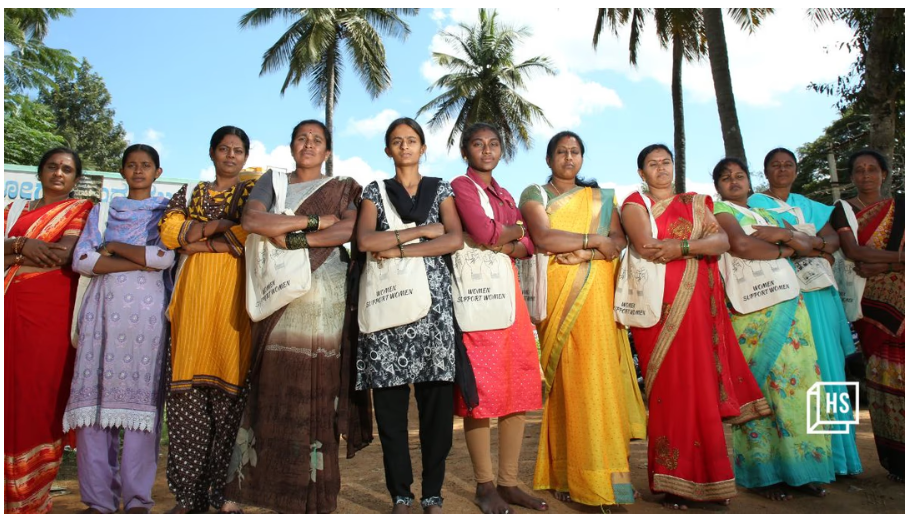
Karnataka’s Menstrual Leave Policy: Women Empowerment or Unintended Bias? Karnataka’s Menstrual Leave Policy: Women Empowerment or Unintended Bias? Prayaga Venkata Rama Vinayak November 14, 2025 Child Development, Cultural Economics, Public Policy, State Economies, Women Empowerment In a welcome move, the Government of Karnataka recently approved Menstrual Leave Policy, 2025, allowing female employees throughout the State to avail one day paid leave every month, in addition to other paid leaves sanctioned by their organisation. This policy applies to all women employees both in the public and private sectors across the State. Further, this leave does not require any pre-approvals from employers, but only prior intimation by the employees to their respective authorities. This move is worthy of emulation, as the State Government’s intention is to create a work environment that enhances women’s participation in the workforce. States such as Bihar, Kerala, and Odisha have implemented similar policies in the past. However, Karnataka’s policy explicitly covers both government and private sector employees, unlike those of the other States. Nevertheless, the initiative also warrants an analysis of its effectiveness in achieving the intended objective of women’s empowerment. One of the shortcomings of the policy is that it appears to apply only to employees in the organised sector, as no government currently has adequate mechanisms to implement such a policy in the unorganised sector, which employs a larger workforce. As of October 2025, Karnataka has approximately 10.96 million (1,09,61,042) unorganised sector workers registered on the e-Shram portal, of whom 58.1 percent (about 6.36 million) are women. However, many more women workers remain unregistered on the portal. Consequently, a majority of women employees in the State are unlikely to benefit from the policy. For micro, small, and medium enterprises (MSMEs), granting 12 additional paid leaves may lead to more absenteeism and payroll costs. From the women labour force point of view, the new leave policy may worsen the hiring bias, especially in micro and small firms that operate on very rigid workforce margins. Moreover, the state government has not proposed any reimbursement or tax offset to encourage small employers to implement the policy. The private sector may view women as costlier or less reliable employees due to additional leave entitlements like maternity, childcare and now menstrual leave. The “Voice of Women” Survey Report (2024) by Aon sheds light on how women employees view workplace equity and flexibility, which is pertinent while evaluating policies like menstrual leave. The survey mentions that findings reinforce years of research showing that women face microaggressions at work in the form of subtle and seemingly innocuous comments based on stereotypes. Nearly 42 percent women reported that they face judgmental comments or expressions on leaving work early or working remotely. Furthermore, one in three mothers reported facing career setbacks after returning from maternity leave — for 75 percent of them, the impact lasted up to two years, while 25 percent experienced setbacks lasting more than three years. We can understand from the above-mentioned survey that women are already going through lot of unavoidable discrimination in their workplace irrespective of many DEI (Diversity, Equity and inclusion) friendly policies. These kinds of policies will even amplify the ongoing discrimination to next level and, it’s worth noting that without awareness among the people in the work environment about female menstrual health and it’s impacts this kind of policies just pay a lip service to the concept of women empowerment. The periodic Labour Force Survey Report (2023-24) reveals that Karnataka’s Labour Force Participation Rate (LFPR), which indicates how many people are either working or looking to work out of the total population, is 49.9 percent for rural women, lower than the nation’s average of 51.2 percent. For urban women it is 33.5 percent, slightly above the nation’s average of 31.2 percent. The consolidated LFPR of women in Karnataka is 43.6 percent lower than the nation’s average of 45.2 percent. Further, Karnataka’s Worker Population Ratio (WPR), which indicates the proportion of working population, is 49.5 percent for rural women, a tad below the nation’s average of 50 percent. For urban women, it is 32 percent, considerably above than nation’s average of 28.8 percent. The consolidated WPR of women in Karnataka is 42.7 percent, slightly lower than the nation’s average of 43.7 percent. If the state government policy is implemented without addressing the recruitment bias faced by women in the private sector, especially in small firms, the already existing gap between the Karnataka’s LFPR and WPR of rural women will be widen, weakening the State’s efforts towards women empowerment. The policy may be modified to make it easier to implement. Instead of mandating complete paid leave, the governments can incentives organisations to grant remote work facilities for at least 3-4 consecutive days, wherever feasible. This will allow women to take proper care of their menstrual health. Also, the state government may consider this an opportune time to strictly enforce menstrual-friendly infrastructure in all workplaces with adequate hygienic and sanitation facilities across the public and private sectors. It would be commendable if the State Government could find convergence between schemes such as Koosina Mane, which empower local bodies and promote decentralization, and the implementation of new policies related to women’s menstrual health. Such an integrated approach would be mutually beneficial to both employees and employers. Further, it is essential to consult as many stakeholders as possible, including women, before implementation of the policy. The Karnataka State Menstrual leave policy is a welcome move, but it also brings some real concerns that may be overlooked. The matter requires a holistic understanding. It should aim to incentivise organisations instead of making them more hesitant to hire women, especially in smaller companies. The State Government should make sure the new policy supports both women and workplaces, without benefitting one at the cost of the other. Real inclusion means creating equal opportunities, not in offering special provisions that may inadvertently widen the very gap the policy seeks to close. The Author is Public Policy Fellow at AgaPuram Policy Research Centre, Erode The

Karnataka’s Menstrual Leave Policy: Women Empowerment or Unintended Bias? Read More »

Tamil Nadu’s bumpy road to $1-trillion economy

Tamil Nadu’s bumpy road to $1-trillion economy Tamil Nadu’s bumpy road to $1-trillion economy by Chandrasekaran Balakrishnan October 31, 2025 Public Policy, State Economies, Tamilnadu Economy Though Centre-state devolution gets public attention, little light is shed on intra-state devolution to rural and urban local bodies. If Tamil Nadu is to reach its goal of being a $1-trillion economy soon, the new State Finance Commission will have to address such issues The Tamil Nadu government accepted 259 out of 280 recommendations made by the sixth State Finance Commission without changing the ratio of devolution amount between rural and urban local bodies (Photo | Express) Updated on: 30 Oct 2025, 2:17 am 4 min read Tamil Nadu aspires to become a $1-trillion economy by 2030. However, it seems feasible only after 2031-32 given the amount of work needed on multiple fronts, ranging from effective decentralised governance and sectoral growth challenges to addressing intra-state regional disparities. While the state’s strength of being a global hub for manufacturing and its significant contribution to the services sector make the headlines, certain challenges remain under-discussed. Almost two years have passed since the release of a plan titled ‘Tamil Nadu Vision $1 trillion’, which aimed to “ensure that all districts and regions of the state emerge as growth centres, while driving prosperity for all sections of the society”. Yet, there has been a little visible change in implementing its key recommendations. In a dynamic federal country like India, state governments often tussle with the Centre seeking more regional autonomy. Ironically, some of the same states fare poorly in decentralisation of administrative power and financial autonomy within, despite a mandate for it under the 73rd and 74th constitutional amendments in 1992. The challenges faced by Tamil Nadu, especially its urban and rural local bodies, including its limited capacity to meet the aspirations of the people for better civic infrastructure facilities and services could be mostly attributed to inadequate institutional mechanisms. One of the biggest institutional and structural lacunae is that despite about 55 percent of people living in urban areas, the devolution of funds continues to be higher for rural local bodies (51 percent) as compared to urban local bodies (49 percent). Against this background, the state government has constituted its 7th State Finance Commission (SFC) under the chairmanship of K Allaudin, a retired IAS officer, to “review the financial position of various urban and rural local bodies and make appropriate recommendations on the distribution of funds to be provided by the state government” for a five-year period from April 1, 2027. This surpasses the target to become a $1-trillion economy by two years. The three-member commission has been asked to submit its report by August 31, 2026. Unlike states like Assam and Kerala, Tamil Nadu has not involved any subject experts on its SFC this time too, as has been the case since its inception in 1997. While the first, sixth and the recently-constituted seventh SFCs have been headed by retired IAS officers, others were headed by serving IAS officers. The key recommendations of the SFCs are mandated to be implemented within a year after the submission of action taken reports. However, there are no such publicly available reports on actual implementation until the next SFC is constituted. The state has accepted many of the past SFC proposals, ranging 80-96 percent of the recommendations. However, for the third SFC, the state government accepted only 240 out of the 308—or about 78 percent—of the recommendations. This gives a clue about how bound the state feels about acting on the proposals. The actions are important for the SFCs’ functions, which include a wider consultative process, examination of various data sets of rural and urban local bodies, and time taken to submit the report So it is instructive to look at the time taken by each SFC to make their final submissions. The state’s first SFC took 19 months, second 15 months, third 22 months, fourth 22 months, fifth 24 months, and the sixth took 24 months to submit the final report to the government. Most often, the reasons for delay are not mentioned. It is also important to note that public discourse has been largely silent on the SFCs’ functions, operations, effectiveness, quality, and implementation. With all this in the backdrop, here are five critical challenges before Tamil Nadu’s seventh SFC Decentralisation of real administrative and financial autonomy from the state capital to district administrations, city corporations, and town and village panchayats is still a distant reality. Though the administrative coverage of urban local bodies has expanded to 25 cities from 16, the availability and quality of basic civic infrastructure and services remain inadequate and substandard. 1.Decentralisation of real administrative and financial autonomy from the state capital to district administrations, city corporations, and town and village panchayats is still a distant reality. 2.Though the administrative coverage of urban local bodies has expanded to 25 cities from 16, the availability and quality of basic civic infrastructure and services remain inadequate and substandard. 3. Increased regional disparities within districts have become a major challenge. The average per capita incomes in the western and northern parts of the state are significantly higher than those in the eastern and southern parts. 4.Another major hurdle is the lack of coordination among key departments, insufficient public consultation, and ineffective programme design in crucial sectors such as sanitation, water supply, electricity, roads, transport, policing, waste management, and wastewater disposal. These gaps create avoidable hardships, especially for the young. 5. Although there is significant scope to enhance revenue streams for local bodies in urban or rural administrations, state-level centralisation continues to constrain their autonomy in decision-making and their ability to address local issues and challenges. While neighbouring states Karnataka and Kerala have made significant progress in addressing challenges related to devolution of administrative power, these aspects have often been given piecemeal attention by Tamil Nadu’s SFCs and no commission has taken a holistic view of the structural challenges faced by the local bodies. The prayer is that this time

Tamil Nadu’s bumpy road to $1-trillion economy Read More »

Missing Markets for Managing Stubble Burning in Punjab and Haryana

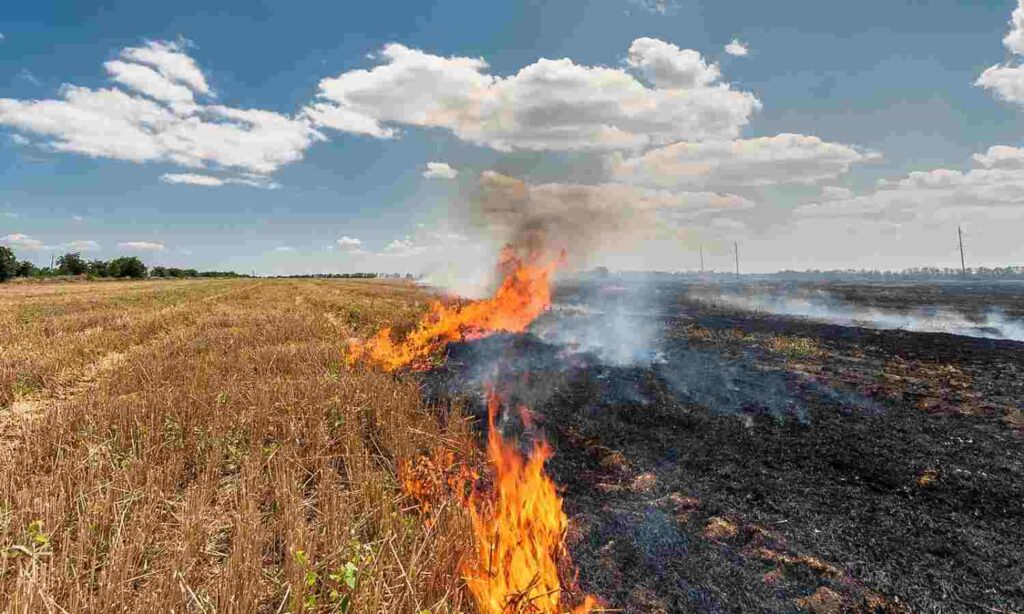
Missing Markets for Managing Stubble Burning in Punjab and Haryana Missing Markets for Managing Stubble Burning in Punjab and Haryana Naimitya Sharma June 5, 2025 Indian Economy, Public Policy, State Economies India’s quest for food security led to the development and consolidation of the rice and wheat cropping cycle in states like Punjab and Haryana. The Union government intervened in the agriculture sector to incentivise farmers with the help of Minimum Support Price (MSP) to ensure the adoption of the rice and wheat cropping cycle. Technological advancements in the form of a better variety of seeds ensured India, was able to feed its burgeoning population. Any intervention by the Government comes with associated costs over and above the direct fiscal costs. The specialisation in rice and wheat cropping pattern has led to huge environmental impacts.   In Punjab, there is an acceleration of groundwater depletion due to its greater utilisation for irrigating rice crops sown in the summer months. The government intervened again with a law forcing farmers to delay the sowing of rice. As a result, the gap between rice and wheat crop was reduced significantly. With a short window available and with increased use of combine harvesters for harvesting rice, the amount of stubble or crop residue increased and the time available to manage it reduced. The past few years have witnessed a consistent presence of air pollution in the Punjab and Haryana regions because of this stubble burning. To think about this important problem, we may utilise economic ideas of negative and positive externality. Air pollution created by stubble burning is an example of a negative externality. Economic theory predicts that there will be overproduction of activities leading to negative externality since all the costs involved are not accruing to the producers. Instead, some costs are being borne by society in the form of air pollution. As economic costs do not incorporate all social costs, stubble burning continues unabated. Conversely, Stubble management is an example of a positive externality. Economic theory predicts that there will be underproduction of activities generating positive externalities. The benefits of stopping a farm fire accrue to not just the farmer concerned but also to everyone around the farm. There are external positive benefits enjoyed by society, but these are not part of the demand for the management of stubble, therefore the overall demand is less and in effect, the production of the management of stubble is less than the ideal amount. The challenge for policymakers thus, is to balance the generation of negative externality, i.e., air pollution emerging from stubble burning, and the production of positive externality, i.e., management of crop residue to ensure governance of this market failure. To reduce the production of stubble, the Government is attempting various initiatives ranging from an outright ban on burning, to incentivise farmers to produce other crops or adopt shorter-duration seeds. To promote the management of crop residue, the government is providing subsidies on equipment to manage crop residue along with promoting productive usage of crop residue by creating supply chains and demand for upcycled products. At the end of the day, we can look at the problem of overproduction of stubble and underproduction of the management of stubble as a problem of missing markets. Intervention by the Government needs to focus on finding and nurturing these missing markets through carefully designed policies. How to find the missing markets? To find these missing markets, the first step is to identify key players and processes. These include innovators, scientists, environmentalists, entrepreneurs, concerned citizens, farmers, and communities trying to find productive uses for stubble. To understand how key players are productively using stubble we need to identify, collate, and replicate successful case studies of converting stubble into productive usage. This exercise can lead to capacity building, thereby generating and nurturing the missing markets. To demonstrate this strategy, we may observe one example of productive usage of stubble. Two young people, Arpit Dhupar and Anand Bodha of Dharaksha Eco-solutions have found an interesting use for stubble. They are using bio-fabrication to convert stubble into packaging material with the help of mushrooms. Observing this process of finding productive use of stubble reveals that there are layers of phenomenon, interplaying with each other to generate this productive usage. The social phenomenon of Arpit observing his nephew painting the sky grey, Arpit’s own lived experience of surviving in Delhi, along with traveling across North India and interacting with the farming community plays an important role in this success. The second ingredient of this process is the observation of the ecological or physical phenomenon by Arpit and his team where they identify the bio-fabrication carried out by root-like structures of Mushrooms on Stubble thereby converting stubble into a sturdier product. The interplay between these two phenomena, social need and ecological possibility generates a potentially sustainable solution for the management of stubble. When the founders of Dharaksha Eco-solutions reach a famous startup pitch competition, the repeated questioning by one of the investors leads to a further interplay, this time between economic reality and ecological possibilities. After facing questions about the monetary potential of his idea, Arpit responds by suggesting that it is possible not just to make packaging material but also alternatives of timber with the help of this bio-fabrication. This interplay led to the establishment of a more financially sustainable future pathway for Dharaksha Eco-solutions. The learning from Arpit’s journey suggests that one critical ingredient of finding the missing markets is finding opportunities for upcycling stubble by identifying productive usage. Concerned individuals will become key players if they have had meaningful social exposure to these problems, along with an understanding of ecological processes that might generate solutions. Additionally, scaling and financial sustainability require interplay with economic reality and ideas. We can focus on these observations to generate more key players and processes in the system by empowering individuals with travel and research grants to develop a deep understanding of such problems. Exposing concerned individuals to ecological and environmental education to

Missing Markets for Managing Stubble Burning in Punjab and Haryana Read More »

Tamil Nadu Budget 2025-26 Aims High But Fall Shorts

Tamil Nadu Budget 2025-26 Aims High But Fall Shorts Tamil Nadu Budget 2025-26 Aims High But Fall Shorts Chandrasekaran Balakrishnan April 8, 2025 Public Policy, State Economies, Tamilnadu Economy Few State Government Budgets are closely watched at the national and regional level for their key announcements and pragmatic policies on emerging sectors. Tamil Nadu state budget is one such. During the last four years, two finance ministers have presented the state budgets. This year’s state budget is the last full budget as the state assembly elections are due by early next year. We need to appreciate the state government for bringing out the first Economic Survey Report of 2024-25. Tamil Nadu is one of the major industrialised states in the country and has set a target of becoming a one trillion-dollar economy. By not addressing issues related to faster urbanisation, slow paced structural and institutional reforms, lack of decentralisation of governance, rationalisation of overall state’s debts and debts of energy department, the State Budget for 2025-26 may be termed as a missed opportunity. Further, there are several low-hanging fruits to which the state budget did not pay enough attention. Moreover, the state’s window of demographic dividend is already over and faces a shortage of workforce across sectors, which is a major cause of concern. Therefore, the aims to achieve a one trillion-dollar economy dream by 2030 may not be feasible. Indian economy is on the verge of pushing its growth trajectory upwards given the global challenges. Tamil Nadu economy has a major role to play at national level contributions, hence the state budgets should aim and leverage for strengthening the institutional delivery system and decentralised approach of governance. The Budget for the current financial year focuses on social welfare measures which were highlighted most predominately for building popular narratives on distributive political economy. Nevertheless, few pragmatic policies were announced in the Tamil Nadu budget 2025-26 which includes new policies in frontier sectors like Tamil Nadu Semiconductor Mission-2030, Tamil Nadu Maritime Transport Manufacturing Policy 2025, A policy on Animation, Visual Effects, Gaming, Comics and Extended Reality (AVGC-XR), and Integrated Renewable Energy Policy. These are welcome steps. On healthcare, there are measures proposed to prevent and completely eradicate cervical cancer in Tamil Nadu. The Government has planned to provide HPV vaccination to all girls aged 14 years progressively. Further, the state has also proposed to set up “Chennai Science Centre” with the allocation of Rs.100 crore and 2 Basic Sciences and Mathematics Research Centres in Chennai and Coimbatore, in collaboration with renowned research institutes like the Indian Institute of Science (IISc) and Tata Institute of Fundamental Research (TIFR) respectively. Further, the State Budget for 2025-26 also announced a few welcome measures like raising of Municipal Bonds to the extent of Rs.200 crore for the Greater Chennai Corporation, Rs.120 crore for the Coimbatore Corporation, Rs.100 crore for the Trichy Corporation, and Rs.100 crore for the Tiruppur Corporation for increased capital expenditures to bridge gaps in civic facilities. However, the state has been facing multiple challenges on fiscal health indicators, which is a serious concern. As a result, the state faces a number of sectoral challenges, as highlighted by the Economic Survey. Rapid urbanization drives demand for infrastructure services such as transportation, housing, sanitation, and utilities- energy sector, use of technology in service deliveries, etc. However, the budget has given little attention to contemporary issues of lack of public infrastructure for industrial development and urban mobility aspects. Tamil Nadu is the second most urbanized state (54.13% in 2024) after Kerala. The state budget allocated funds for the urban sector are only Rs.34,396 crore under the Municipal Administration and Water Supply Department (Rs.26,678 crore) and Housing and Urban Development Department (Rs.7,718 crore). While, in 2023-24, 54.63% of Tamil Nadu’s urban workforce was employed in the service sector, close to the national average of 58.07%. The state government trained about 41.38 lakh students in the last 4 years, but only 2% of them are employable as per their assessment. Tamil Nadu is ranked 2nd nationally in 2023-24 with 35.56 lakh Udyam-registered Micro, Small, and Medium Enterprises (MSMEs). Of these 10.69 lakh (30%) were in manufacturing MSMEs, while 24.87 lakh (70%) were services-oriented MSMEs. These MSMEs provide employment to 2.56 crore workers in the state. While the budget allocations for industrial development are very meager. A total of Rs.3,915 crore allocated to the Industries, Investment Promotion, and Commerce Department, and a total of Rs.1,918 crore has been allocated to the Micro, Small, and Medium Enterprises Department. Thus, a total of Rs.5833 crore for industrial development. Another important sector is mobility, which is a growth driver for the state. The state has a population of 8.3 crore, but the total number of public transport buses is only 20,260 in 2023-24. Daily passengers travelling in public transport was 1.76 crore in 2023-24 increasing from 1.31 crore in 2019-20. As per the state economic survey, the state government has planned to introduce 8,682 new buses and has placed orders for 8,182 buses with financial support from KfW, the World Bank, SADP, and the state. MTC, a public-sector organisation, will procure 625 more e-buses as a component of the World Bank. However, the State Budget announced that about 1,125 electric buses will be deployed for public use starting this year: 950 electric buses in Chennai, 75 electric buses in Coimbatore, and 100 electric buses in Madurai, A total of Rs.12,964 crore has been allocated to the Transport Department. Also, Rs.20,722 crore has been allocated for Highways and the Minor Ports Department. The number of startups in Tamil Nadu has increased fivefold over the past four years, surpassing the 10,000 marks. But their presence is restricted to a few districts like Chennai, Kanchipuram, Thiruvalluvar, and Coimbatore. The start-ups are not diverse in sectoral focus and also not as dispersed across the districts in the south, east, and central parts of the state. In terms of sectoral fund allocations, only Rs.131 crore has been earmarked for the Information Technology and Digital Services

Tamil Nadu Budget 2025-26 Aims High But Fall Shorts Read More »

Highlights of Tamil Nadu’s First Economic Survey – 2024-25

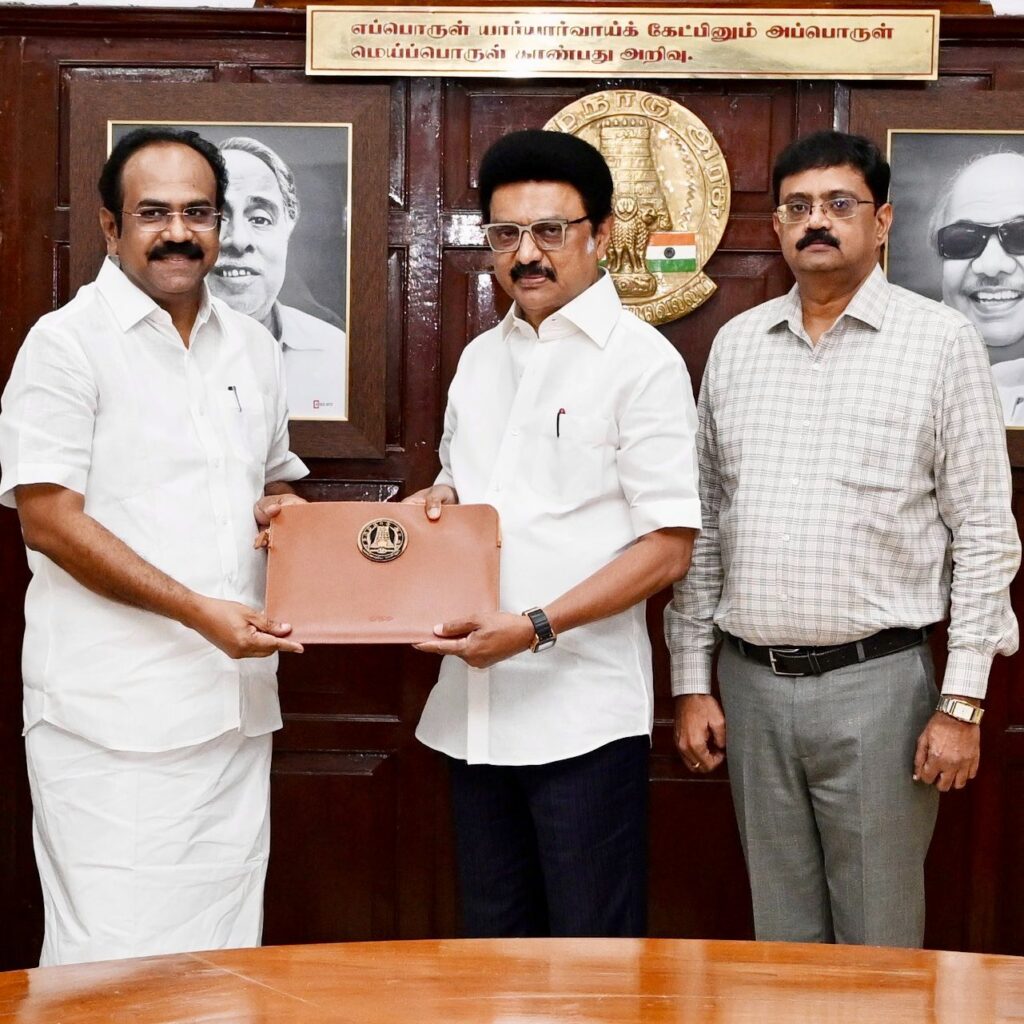
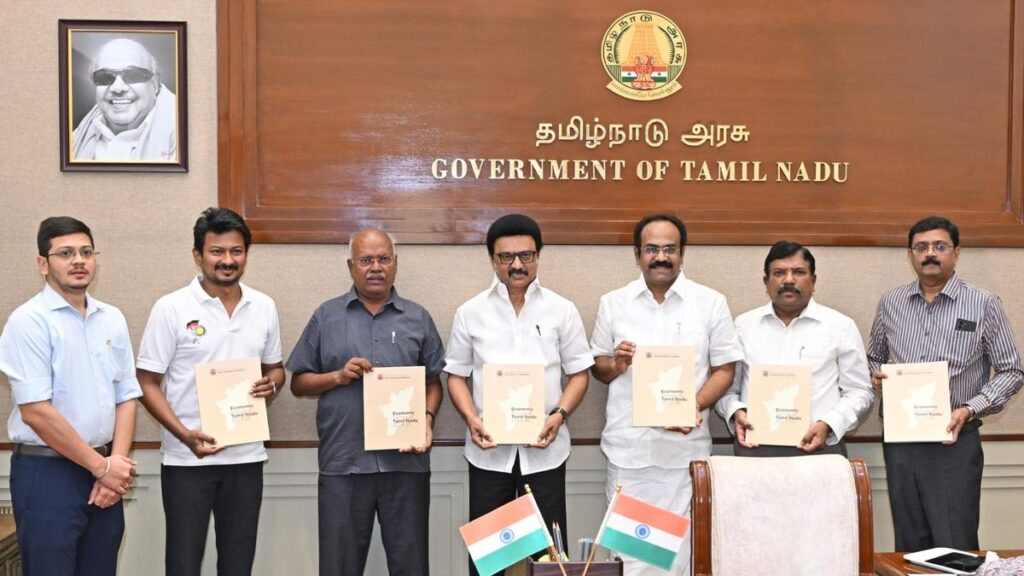
Highlights of Tamil Nadu’s First Economic Survey – 2024-25 Highlights of Tamil Nadu’s First Economic Survey – 2024-25 Chandrasekaran Balakrishnan April 1, 2025 Public Policy, State Economies, Tamilnadu Economy The economy consists of several components, including both institutional and individual people. Studying the progress of those components individually and collectively helps the governments, economy, and society to make future policies. The study of sectoral and sub-sectoral progress is an important exercise for the government to plan for its resource allocation and the economy to identify the growth potentials to be harnessed by the people and the private sector. After the Independence, the Union Government introduced the Annual Economic Survey Report along with Budget announcements in the year 1950-51. Given the importance of the economic survey analysis and perspectives on global and domestic policies on sectoral areas, the then Union Government separated the Union Budget and Economic Survey Report in 1964, which is being followed. Since the major economic reforms of 1991, the States embarked on building their growth and development path by bringing out a detailed analysis of sectoral, regional, intra-state district-wise, and block-wise progress of development. Like the Union Economic Survey, many State Governments have also started publishing their own economic survey to present a review of the major developments of the economy and make policy suggestions for the future.  For many years, all the Southern States have been publishing their annual economic surveys while presenting the budgets. The State of Tamil Nadu, the sole exception for years, has joined the bandwagon by publishing its “First State Economic Survey 2024-25” on 13th March, 2025, a day before the Budget Announcement for the financial year 2025-26 on 14th March, 2025. The survey was prepared by the Tamil Nadu State Planning Commission, led by a team of experts. The Government of Tamil Nadu used to bring out the “Economic Appraisal” report published by the Department of Evaluation and Applied Research (DEAR), with time lags. These reports were a kind of review of progress with little attention for public policy perspectives. This analysis focuses on key highlights of the Tamil Nadu’s First Economic Survey 2024-25 in terms of its presentation, and analysis of key issues. The state has set an ambitious goal of achieving a $1 trillion economy by 2030. As a highly industrialized and urbanized economy with strong linkages of global value chains on key sectors, Tamil Nadu’s economy has demonstrated remarkable economic resilience, consistently achieving growth rates of 8% or more since 2021-22. The state is estimated to grow above 8% in 2024-25. Further, the State achieved an average growth rate of 6.37% as compared to the national average of 6.1% during the period from 2012-13 to 2023-24. In the last two years from 2022-23 to 2023-24, this growth trajectory accelerated and the state achieved an average growth rate of 8.18%. The state did not estimate the likely growth rate for the financial year 2025-26 stating the economic situation is “unstable”. In terms of Per Capita Income at current prices, Tamil Nadu has Rs.2.78 lakhs which is 1.6 times more than the national average of Rs.1.69 lakhs in 2022-23 and is 4th largest state in per capita income ranks. While, in real terms, Tamil Nadu ranked 7th among major states in 2022-23, with a per capita income of Rs.1.66 lakh. However, there are huge variations among the districts within the state of Tamil Nadu. The district-wise per capita income highlights major variations among districts in Tamil Nadu. Chengalpattu district has the highest per capita income at Rs 6.48 lakh in 2022-23, followed by Kancheepuram (Rs.6.47 lakh) and Chennai (Rs 5.19 lakh). Notably, in 8 out of the state’s 38 districts, the per capita income exceeds the state average of Rs.2.78 lakh. These top-performing districts surpass the per capita income levels of several major Indian states, including Telangana, Haryana, and Karnataka. At the same time, the districts of Villupuram and Tiruvarur has per capita income of Rs.1.48 lakh each which is lowest in the state. Also, 7 districts (Ramanathapuram, Thiruvarur, Myiladuthurai, Ariyalur, Perambalur, Kallakurichi and Villupuram) have per capita incomes below the national average. Rapid urbanization drives demand for infrastructure services such as transportation, housing, sanitation, and utilities but in each of these areas, Tamil Nadu lags and is unable to provide good quality of facilities and services. Let’s look at the sectoral growth of Tamil Nadu’s Economy as emphasized in the Economic Survey: Tamil Nadu’s agriculture heavily depends on monsoons. The sector contributes Rs.1.5 lakh crore (6% of GSVA) and ranks as the 5th largest sector. It employs 41.1% of the rural workforce. In 2021-22, the state had 92.3 lakh farmers cultivating 64.6 lakh hectares of land. Notably, 93.5% of these farmers (86.3 lakh) are small and marginal, collectively farming 62.7% of the total cultivated area, with an average landholding size of only 0.7 hectares. Tamil Nadu’s 62% of the total cropped area includes major food grains, like paddy, maize, jowar, bajra, ragi, and millets, while non-food crops such as oilseeds, sugarcane, and cotton account for the remaining 38%. Paddy continues to dominate the cropping pattern, with its share in the total cropped area increasing from 32.1% in 2019-20 to 34.4% in 2023-24. The state’s consumption of fertilizers increased by 1.03 lakh MT to 10.68 lakh MT in 2023-24 from 9.65 lakh MT in 2019-20. Power consumption in agriculture also increased by 4146 million units to 17,957 million units and from 13,811 million units during the same period. The state government has allocated Rs.7,216 crore for the subsidy on three phases of free power in 2024-25 which needs to be rationalized by undertaking institutional reforms to eliminate power thefts and losses. The rise in the productivity of key crops in Tamil Nadu has been largely driven by the extensive use of chemical fertilizers and groundwater. The state has a total of 268 cold storage units with a combined capacity of 19,856 metric tonnes which is still inadequate given the expansions. The state’s organic farming has nearly doubled, rising from

Highlights of Tamil Nadu’s First Economic Survey – 2024-25 Read More »

Odisha Budget-2025-26- Aspirations for Samruddha

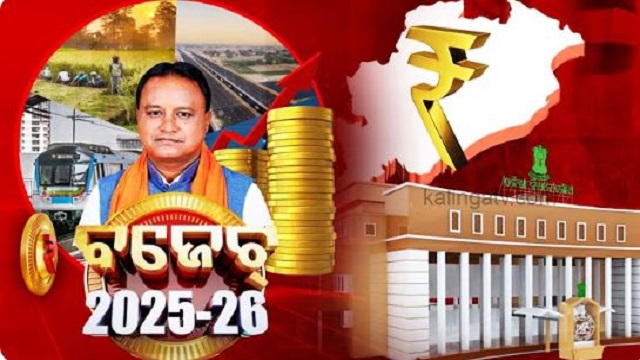
Odisha Budget-2025-26- Aspirations for Samruddha by 2036 Odisha Budget-2025-26- Aspirations for Samruddha by 2036 Chandrasekaran Balakrishnan March 18, 2025 Economic Reforms, Public Policy, State Economies Three decades of major economic reforms in India showcase the structural and institutional paradigm shifts, and thereby results witnessed higher growth, efficiency, competition, and making choices available across different sectors. As the country embarks on Viksit Bharath@2027, many pandits now turn to the regional economies of States to leverage their capacity by empowering institutional reforms towards the achievements of aspirations of people and empowering cities as focal points for new growth engines. It’s also high time for timely implementation of State level institutional and decentralisation reforms for the next level of higher growth in India. The Odisha Budget for 2025-26 is a case in point where the State aspires to become Samruddha or Viksit Odisha by 2036 which is in alignment with national goals. By 2036, Odisha aims to become a USD 500 Billion economy and a USD 1.5 Trillion economy by 2047. This is not an easy task in any yardstick because the State has quite low urbanisation and aims to increase it to 22% by 2030 from 19% at present. However, Case studies by experts highlighted that “process reforms in Odisha reduced the number of steps needed to access funds” by a programme implementing agencies at ground level and hence, the state has high optimism. During the last three years the Odisha economy grew by 7.2% GSDP in 2024-25, 9.6% GSDP in 2023-24, 6% GSDP in 2022-23, and achieved average growth of 7.6% GSDP.  The State has allocated 22.4% (6.1% GSDP) of the total budget outlay to capital expenditures which will boost the State economy. However, the State is still predominantly agriculture-driven and catching up fast in industries and services sector growth. In 2024-25, agriculture, manufacturing, and services sectors are estimated to contribute 28%, 35%, and 37% of Odisha’s economy, respectively (at current prices). The State’s fiscal parameters have been bolstered with an uptick in recent times with many institutional reforms. The fiscal deficit of the State is estimated at Rs 34,200 crore for 2025-26, 3.2% of GSDP which is higher than the revised estimate of 3.1% GSDP for 2024-25. In 2024-25, the revised fiscal deficit of the State is 3.1% of GSDP which is lower than the budgeted 3.5% of GSDP. Also, it is estimated that the State aims to achieve a revenue surplus of Rs 31,800 crore, 3% of GSDP in 2025-26, as compared to a revenue surplus of 2.9% of GSDP in 2024-25 (RE). Odisha has abundant mineral resources, fertile agricultural land, and a 480 km-long coastline, with uniquely positioned to leverage its urban centres as growth engine development as a key driver. By population size, the state is comparable to countries like Argentina, Spain, and Uganda. What the State economies have to do is to find out the complementarity of central government support on top of governance and urban growth centres at a decentralised level of effective governance on the ground to make Samruddha Odisha realistic.  The State budget for 2025-26 has emphasised many emerging sectors as transformative and focusing on urban centres for the establishment of new industries both manufacturing and services sectors supported by state-of-the-art infrastructure facilities by empowering the Tier–II and Tier–III cities in the State. Besides, the State is also giving impetus to social infrastructure facilities including “Skilled in Odisha” a global brand name by “Skilling for the World”. The State is also empowering women as one of key drivers of development and inclusion in the process of growth. In 2025-26, the State has allocated 72% of the total expenditure for social sector development and 1% less than the previous year.   The State’s pragmatic steps to bring a future-ready industrial landscape are aimed at a comprehensive range of incentives being offered to Semiconductor, Compound Semiconductor units, and Display Fabs under the Semiconductor sector which makes Odisha the fourth state in the country to offer dedicated incentives to semiconductor units. The Budget announced that the State would collaborate with IIT, Madras for developing a comprehensive Odisha Maritime Perspective Plan to develop new ports at Inchuri and Bahuda. Mahanadi Riverine Port for Ship repair and building. Further, Odisha is poised to become a leading producer of Green Hydrogen/Green Ammonia for the decarbonisation of industries and the heavy transport sector for which the State is collaborating with IIT Bhubaneswar to establish a Testing-cum-Research facility for Green Hydrogen. Odisha has announced several transformative infrastructure projects that will not only strengthen Odisha’s logistics network but also fuel industrial expansion, trade, and employment, enabling for realization of the Samruddha or Viksit Odisha by 2036. The major initiatives announced in the Odisha Budget includes: comprehensive plan seeks to transform Odisha’s urban landscape into five engines of growth, powered by innovation, sustainability, and inclusivity, a Comprehensive City Road Decongestion Plan for Bhubaneswar city on 322 hectares in first phase and 3600 hectares in second phase with focus on service industry, IT, and R&D, establish a metropolitan development region of about 7000 Sq Km encompassing Bhubaneswar, Khurda, Jatni, Cuttack, Paradip and Puri, 2 key tourism development projects at Hirakud and Satkosia, improvement of 3000 Km of Road and development of Berhampur-Jeypore 6 lane Green Field Expressway, a ring road would be built in Barbil, a Greenfield Airport at Paradip for enabling to commence direct flight services to ten new domestic and three new international destinations making significantly enhanced air connectivity, new railway projects worth Rs.73,000 crore, an industrial corridor connecting Paradip– Choudwar – Dhenkanal – Angul -Sambalpur – Jharsuguda – Sundergarh –Rourkela region for seamless multi-modal transport services and develop Gopalpur and Paradeep as Blue Flag Beach. As highlighted in the State Budget “these projects mark a significant step toward building a future-ready Odisha, ensuring seamless mobility, robust infrastructure, and sustainable urban growth”. Also, the vision of Samruddha Odisha by 2036 is achievable provided it is imperative that the State needs to ensure the efforts to maintain financial stability at the State

Odisha Budget-2025-26- Aspirations for Samruddha Read More »

The Kumbhanomics 2025

The Kumbhanomics 2025 The Kumbhanomics 2025 Dr S Narayanan March 6, 2025 Cultural Economics, latest, State Economies Economic Pulse of the World’s Largest Gathering For India, a nation with one of the oldest civilizations, the Kumbh Mela is more than just a religious festival—it is a cultural, social, and economic spectacle that has endured for millennia. Held at the Triveni Sangam in Prayagraj, Uttar Pradesh, this grand event exemplifies the deep connection between culture and economic activity. It happened during a certain celestial alignment of the Sun, Moon, Jupiter and Saturn – a rare event occurring once every 144 years. The Maha Kumbh Mela 2025, spanning 45 days from January 13 to February 26, is estimated to have drawn a humungous 66.30 crore pilgrims across India and around the world, making it one of the largest religious congregations. It is also estimated that nearly 47% of India’s population of 140 crores visited this holy site. Prayagraj, also referred to as the “TIRTHRAJ”, has been a centre of spiritual and cultural significance for centuries. The Chinese Traveller Xuanzang, in 644 CE described Prayagraj as a region of immense natural beauty, prosperity and cultural depth attracting over 5 lakh people including the rulers and wealthy merchants. The over 2000 years old rituals of taking a holy dip in the Maha Kumbh Mela is believed to elevate spiritual thoughts. The confluence of Ganga, Yamuna and Saraswathi rivers at the Triveni Sangam adds to the sanctity of this unique location. Besides being a cultural and spiritual happening, the festival also creates immense economic activities for the region and the state, which is the crux of this piece. Mahakumbh Nagar: A Temporary City with World-Class Facilities To accommodate the massive influx of pilgrims, a temporary city with state-of-the-art facilities, Mahakumbh Nagar, was set up. Key infrastructure developments include: The renovation of 92 roads and beautification of 17 major roads, construction of 30 pontoons bridges using 3308 pontoons, erection of 800 plus multi-language signages (Hindi, English, and regional languages), Installation of 233 Water ATMs to provide pure drinking water 24/7, construction of 1.5 lakh mobile toilets, implementation of AI-powered crowd density monitoring system with over 350 experts at key locations, installation of 3000 plus CCTV cameras and drones, adoption of facial recognition technology, installation of water towers for fire safety, Employment of underwater drones capable of diving up to 100 meters to provide round the clock surveillance, usage of a dedicated app for real-time updates on crowd density, employment of 56 cyber warriors, availability of state-of-the-art Multi Disaster Response Vehicle for safety and disaster readiness, construction of temporary hospitals equipped with surgical and diagnostic facilities, and setting up of 3 temporary sewage treatment plants for river protection etc. Logistics and Infrastructure Managing a crowd of this magnitude involves strategic planning for transportation, accommodation, basic amenities like water, sanitation, food, and healthcare. The Swachh Bharat Mission has played a crucial role in ensuring cleanliness. The government welcomed the domestic institutions / think tanks / policy makers to make the next time bigger and better. Many research institutions, including over 20 global institutions like Harvard, Standford, London School of Economics, Gates foundation, Kyoto University, AIIMS, IIM Ahmedabad, IIM Bangalore, IIT Kanpur, IIT Madras, JNU were invited to cover the event, right from planning to execution. The Union Ministry of Housing and Urban Affairs has tied up with institutions of international repute to study waste management through Harvard Business School – Food and Beverage Management, operations of the event, inter-city connectivity, Multimodal transport Hubs and public transport system.  Standford University – Solid Waste Management, efficiency and waste disposal.  IIM – Indore – Internationals related to behaviour change, sanitation.  IFC – Gates foundation – -economic impact in six districts.   The event highlighted India’s prowess in efficiently and innovatively organizing the world’s largest human gathering. The state government also achieved a Guinness World Record in Ganga Cleaning Drive and Mass Cleaning Initiative which set new benchmarks in mass sanitation and environmental efforts. Economic Impact &Technological Innovations The governments have always recognized the economic potential of the Kumbh Mela. In 2019, the state government spent around Rs.3,700 crore, attracting 25 crore visitors. This year, the allocation was doubled to Rs.7,500 crore. Advanced technologies such as artificial intelligence, robotics, and expert consultations have been employed to ensure smooth execution. The government’s investment of Rs.7,500 crore is expected to generate revenue of around Rs.3 lakh crore.  Key innovations include: Accommodation options ranged from Rs.2,000/- to Rs.2,00,000/- catering to diverse visitors, including the President, Prime Minister, ministers, VIPs, and international guests. The event has also boosted tourism in nearby religious sites such as Ayodhya and the Kashi Vishwanath Temple, further stimulating local economies. The Union Ministry of AYUSH provided quality healthcare services to over 2.5 devotees at the site of the event. Over 15,953 metric tonnes of waste were removed from the Mela area to keep it clean and plastic-free. It is estimated that the state witnessed a GST growth rate of 11% and 14% growth in the months of January and February, respectively, during Mahakumbh, generating over ₹1,000 crore increase in GST collections over the corresponding period last year. Further, the Chief Minister has stated in the Assembly that the Mela has rewarded the state economically too. He stated that a boatman family earned Rs 30 crore in 45 days with 130 boats, at Rs 23 lakh per boat & approximately Rs 52,000 a day. A definitive estimate may be expected when the official growth figures are published. Faith to Finance Projections suggest this surge in religious and spiritual tourism would have generated over Rs. 3.5 lakh crore in revenue (more than USD 360 Million), significantly uplifting the state’s economic landscape, benefiting everyone from small-scale vendors like cycle-borne tea sellers, bike-pool operators, boatmen, pilgrimage guides, casual laborers to local traders and corporate stakeholders. The beneficiary sectors include food and beverages, religious offerings (such as lamps, idols, Ganga water, and incense sticks), pilgrimage guides, travel packages, ayurvedic products, and promotional merchandise. This multifaceted

The Kumbhanomics 2025 Read More »