
State Economies

Odisha Budget-2025-26- Aspirations for Samruddha

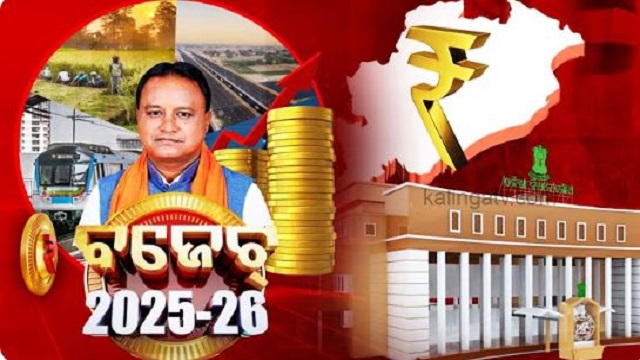
Odisha Budget-2025-26- Aspirations for Samruddha by 2036 Odisha Budget-2025-26- Aspirations for Samruddha by 2036 Chandrasekaran Balakrishnan March 18, 2025 Economic Reforms, Public Policy, State Economies Three decades of major economic reforms in India showcase the structural and institutional paradigm shifts, and thereby results witnessed higher growth, efficiency, competition, and making choices available across different sectors. As the country embarks on Viksit Bharath@2027, many pandits now turn to the regional economies of States to leverage their capacity by empowering institutional reforms towards the achievements of aspirations of people and empowering cities as focal points for new growth engines. It’s also high time for timely implementation of State level institutional and decentralisation reforms for the next level of higher growth in India. The Odisha Budget for 2025-26 is a case in point where the State aspires to become Samruddha or Viksit Odisha by 2036 which is in alignment with national goals. By 2036, Odisha aims to become a USD 500 Billion economy and a USD 1.5 Trillion economy by 2047. This is not an easy task in any yardstick because the State has quite low urbanisation and aims to increase it to 22% by 2030 from 19% at present. However, Case studies by experts highlighted that “process reforms in Odisha reduced the number of steps needed to access funds” by a programme implementing agencies at ground level and hence, the state has high optimism. During the last three years the Odisha economy grew by 7.2% GSDP in 2024-25, 9.6% GSDP in 2023-24, 6% GSDP in 2022-23, and achieved average growth of 7.6% GSDP.  The State has allocated 22.4% (6.1% GSDP) of the total budget outlay to capital expenditures which will boost the State economy. However, the State is still predominantly agriculture-driven and catching up fast in industries and services sector growth. In 2024-25, agriculture, manufacturing, and services sectors are estimated to contribute 28%, 35%, and 37% of Odisha’s economy, respectively (at current prices). The State’s fiscal parameters have been bolstered with an uptick in recent times with many institutional reforms. The fiscal deficit of the State is estimated at Rs 34,200 crore for 2025-26, 3.2% of GSDP which is higher than the revised estimate of 3.1% GSDP for 2024-25. In 2024-25, the revised fiscal deficit of the State is 3.1% of GSDP which is lower than the budgeted 3.5% of GSDP. Also, it is estimated that the State aims to achieve a revenue surplus of Rs 31,800 crore, 3% of GSDP in 2025-26, as compared to a revenue surplus of 2.9% of GSDP in 2024-25 (RE). Odisha has abundant mineral resources, fertile agricultural land, and a 480 km-long coastline, with uniquely positioned to leverage its urban centres as growth engine development as a key driver. By population size, the state is comparable to countries like Argentina, Spain, and Uganda. What the State economies have to do is to find out the complementarity of central government support on top of governance and urban growth centres at a decentralised level of effective governance on the ground to make Samruddha Odisha realistic.  The State budget for 2025-26 has emphasised many emerging sectors as transformative and focusing on urban centres for the establishment of new industries both manufacturing and services sectors supported by state-of-the-art infrastructure facilities by empowering the Tier–II and Tier–III cities in the State. Besides, the State is also giving impetus to social infrastructure facilities including “Skilled in Odisha” a global brand name by “Skilling for the World”. The State is also empowering women as one of key drivers of development and inclusion in the process of growth. In 2025-26, the State has allocated 72% of the total expenditure for social sector development and 1% less than the previous year.   The State’s pragmatic steps to bring a future-ready industrial landscape are aimed at a comprehensive range of incentives being offered to Semiconductor, Compound Semiconductor units, and Display Fabs under the Semiconductor sector which makes Odisha the fourth state in the country to offer dedicated incentives to semiconductor units. The Budget announced that the State would collaborate with IIT, Madras for developing a comprehensive Odisha Maritime Perspective Plan to develop new ports at Inchuri and Bahuda. Mahanadi Riverine Port for Ship repair and building. Further, Odisha is poised to become a leading producer of Green Hydrogen/Green Ammonia for the decarbonisation of industries and the heavy transport sector for which the State is collaborating with IIT Bhubaneswar to establish a Testing-cum-Research facility for Green Hydrogen. Odisha has announced several transformative infrastructure projects that will not only strengthen Odisha’s logistics network but also fuel industrial expansion, trade, and employment, enabling for realization of the Samruddha or Viksit Odisha by 2036. The major initiatives announced in the Odisha Budget includes: comprehensive plan seeks to transform Odisha’s urban landscape into five engines of growth, powered by innovation, sustainability, and inclusivity, a Comprehensive City Road Decongestion Plan for Bhubaneswar city on 322 hectares in first phase and 3600 hectares in second phase with focus on service industry, IT, and R&D, establish a metropolitan development region of about 7000 Sq Km encompassing Bhubaneswar, Khurda, Jatni, Cuttack, Paradip and Puri, 2 key tourism development projects at Hirakud and Satkosia, improvement of 3000 Km of Road and development of Berhampur-Jeypore 6 lane Green Field Expressway, a ring road would be built in Barbil, a Greenfield Airport at Paradip for enabling to commence direct flight services to ten new domestic and three new international destinations making significantly enhanced air connectivity, new railway projects worth Rs.73,000 crore, an industrial corridor connecting Paradip– Choudwar – Dhenkanal – Angul -Sambalpur – Jharsuguda – Sundergarh –Rourkela region for seamless multi-modal transport services and develop Gopalpur and Paradeep as Blue Flag Beach. As highlighted in the State Budget “these projects mark a significant step toward building a future-ready Odisha, ensuring seamless mobility, robust infrastructure, and sustainable urban growth”. Also, the vision of Samruddha Odisha by 2036 is achievable provided it is imperative that the State needs to ensure the efforts to maintain financial stability at the State

Odisha Budget-2025-26- Aspirations for Samruddha Read More »

The Kumbhanomics 2025

The Kumbhanomics 2025 The Kumbhanomics 2025 Dr S Narayanan March 6, 2025 Cultural Economics, latest, State Economies Economic Pulse of the World’s Largest Gathering For India, a nation with one of the oldest civilizations, the Kumbh Mela is more than just a religious festival—it is a cultural, social, and economic spectacle that has endured for millennia. Held at the Triveni Sangam in Prayagraj, Uttar Pradesh, this grand event exemplifies the deep connection between culture and economic activity. It happened during a certain celestial alignment of the Sun, Moon, Jupiter and Saturn – a rare event occurring once every 144 years. The Maha Kumbh Mela 2025, spanning 45 days from January 13 to February 26, is estimated to have drawn a humungous 66.30 crore pilgrims across India and around the world, making it one of the largest religious congregations. It is also estimated that nearly 47% of India’s population of 140 crores visited this holy site. Prayagraj, also referred to as the “TIRTHRAJ”, has been a centre of spiritual and cultural significance for centuries. The Chinese Traveller Xuanzang, in 644 CE described Prayagraj as a region of immense natural beauty, prosperity and cultural depth attracting over 5 lakh people including the rulers and wealthy merchants. The over 2000 years old rituals of taking a holy dip in the Maha Kumbh Mela is believed to elevate spiritual thoughts. The confluence of Ganga, Yamuna and Saraswathi rivers at the Triveni Sangam adds to the sanctity of this unique location. Besides being a cultural and spiritual happening, the festival also creates immense economic activities for the region and the state, which is the crux of this piece. Mahakumbh Nagar: A Temporary City with World-Class Facilities To accommodate the massive influx of pilgrims, a temporary city with state-of-the-art facilities, Mahakumbh Nagar, was set up. Key infrastructure developments include: The renovation of 92 roads and beautification of 17 major roads, construction of 30 pontoons bridges using 3308 pontoons, erection of 800 plus multi-language signages (Hindi, English, and regional languages), Installation of 233 Water ATMs to provide pure drinking water 24/7, construction of 1.5 lakh mobile toilets, implementation of AI-powered crowd density monitoring system with over 350 experts at key locations, installation of 3000 plus CCTV cameras and drones, adoption of facial recognition technology, installation of water towers for fire safety, Employment of underwater drones capable of diving up to 100 meters to provide round the clock surveillance, usage of a dedicated app for real-time updates on crowd density, employment of 56 cyber warriors, availability of state-of-the-art Multi Disaster Response Vehicle for safety and disaster readiness, construction of temporary hospitals equipped with surgical and diagnostic facilities, and setting up of 3 temporary sewage treatment plants for river protection etc. Logistics and Infrastructure Managing a crowd of this magnitude involves strategic planning for transportation, accommodation, basic amenities like water, sanitation, food, and healthcare. The Swachh Bharat Mission has played a crucial role in ensuring cleanliness. The government welcomed the domestic institutions / think tanks / policy makers to make the next time bigger and better. Many research institutions, including over 20 global institutions like Harvard, Standford, London School of Economics, Gates foundation, Kyoto University, AIIMS, IIM Ahmedabad, IIM Bangalore, IIT Kanpur, IIT Madras, JNU were invited to cover the event, right from planning to execution. The Union Ministry of Housing and Urban Affairs has tied up with institutions of international repute to study waste management through Harvard Business School – Food and Beverage Management, operations of the event, inter-city connectivity, Multimodal transport Hubs and public transport system.  Standford University – Solid Waste Management, efficiency and waste disposal.  IIM – Indore – Internationals related to behaviour change, sanitation.  IFC – Gates foundation – -economic impact in six districts.   The event highlighted India’s prowess in efficiently and innovatively organizing the world’s largest human gathering. The state government also achieved a Guinness World Record in Ganga Cleaning Drive and Mass Cleaning Initiative which set new benchmarks in mass sanitation and environmental efforts. Economic Impact &Technological Innovations The governments have always recognized the economic potential of the Kumbh Mela. In 2019, the state government spent around Rs.3,700 crore, attracting 25 crore visitors. This year, the allocation was doubled to Rs.7,500 crore. Advanced technologies such as artificial intelligence, robotics, and expert consultations have been employed to ensure smooth execution. The government’s investment of Rs.7,500 crore is expected to generate revenue of around Rs.3 lakh crore.  Key innovations include: Accommodation options ranged from Rs.2,000/- to Rs.2,00,000/- catering to diverse visitors, including the President, Prime Minister, ministers, VIPs, and international guests. The event has also boosted tourism in nearby religious sites such as Ayodhya and the Kashi Vishwanath Temple, further stimulating local economies. The Union Ministry of AYUSH provided quality healthcare services to over 2.5 devotees at the site of the event. Over 15,953 metric tonnes of waste were removed from the Mela area to keep it clean and plastic-free. It is estimated that the state witnessed a GST growth rate of 11% and 14% growth in the months of January and February, respectively, during Mahakumbh, generating over ₹1,000 crore increase in GST collections over the corresponding period last year. Further, the Chief Minister has stated in the Assembly that the Mela has rewarded the state economically too. He stated that a boatman family earned Rs 30 crore in 45 days with 130 boats, at Rs 23 lakh per boat & approximately Rs 52,000 a day. A definitive estimate may be expected when the official growth figures are published. Faith to Finance Projections suggest this surge in religious and spiritual tourism would have generated over Rs. 3.5 lakh crore in revenue (more than USD 360 Million), significantly uplifting the state’s economic landscape, benefiting everyone from small-scale vendors like cycle-borne tea sellers, bike-pool operators, boatmen, pilgrimage guides, casual laborers to local traders and corporate stakeholders. The beneficiary sectors include food and beverages, religious offerings (such as lamps, idols, Ganga water, and incense sticks), pilgrimage guides, travel packages, ayurvedic products, and promotional merchandise. This multifaceted

The Kumbhanomics 2025 Read More »