

Analysis of India’s Labour Codes Reforms with Multi-Stakeholders Perspectives
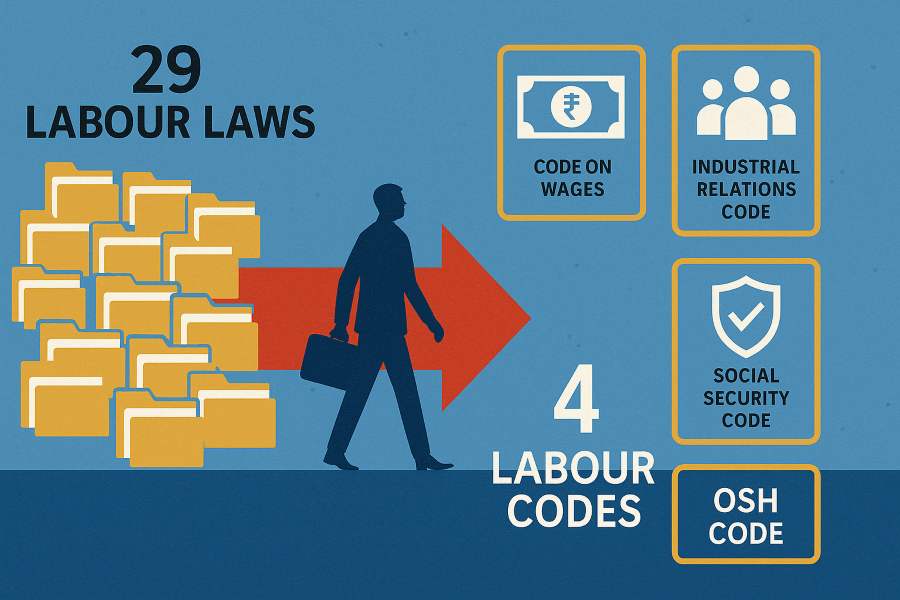
Analysis of India’s Labour Code Reforms: A Multi-Stakeholder Perspective Analysis of India’s Labour Code Reforms: A Multi-Stakeholder Perspective R. Subramoniam September 23, 2026 Indian Economy, Public Policy, Skills Development Sector, State Economies, Women Empowerment Key Highlights The nationwide implementation of India’s four consolidated Labour Codes from November 2025 marks the most significant restructuring of the country’s labour law regulations since independence. The Codes aim to simplify compliance, extend social protection, and introduce labour market flexibility. Yet implementation faces challenges of federal fragmentation, uneven digital readiness, and contested power dynamics. This article offers a multi-stakeholder analysis of the new reforms through qualitative perspectives. It assesses the doctrinal overhaul of wage structures, social security, industrial relations, and working conditions, with particular attention to gig, platform, and informal workers. The article contributes an Integrated Labour Governance Readiness Model (ILGRM) and recommendations for policymakers, enterprises, and researchers. Introduction Prior to 2025, India’s labour regulatory framework comprised approximately 29 Union laws and over 100 State-level statutes, many of colonial origin. This fragmentation imposed heavy compliance burdens on businesses, especially MSMEs, while leaving nearly 90% of the workforce in the informal sector inadequately protected (NSSO, 2024). Global integration, the rise of the platform-based gig economy, and the demand for greater labour market flexibility made modernisation essential. The reform process, initiated by the Second National Commission on Labour (2002), culminated on 21 November 2025 with the Gazette notification implementing four consolidated Labour Codes. This shift moved from a fragmented, sectoral approach to a holistic, worker-centric framework seeking to balance ease of doing business with enhanced worker welfare and social security. The Four Codes: An Overview The reform consolidates existing laws into four comprehensive Codes: The Code on Wages, 2019: Unifies laws on wages, bonuses, and minimum wages. It introduces a standardised definition of ‘wages’ requiring basic pay to constitute at least 50% of total remuneration, a National Floor Wage, and stricter payment timelines. The Code on Social Security, 2020: Extends provident fund, health insurance, and gratuity to unorganised, gig, and platform workers. Aggregators must contribute 1–2% of turnover to a social security fund. Gratuity eligibility for fixed-term employees is reduced from five years to one year. The Industrial Relations Code, 2020: Raises the threshold for prior government permission for lay-off, retrenchment, and closure from 100 to 300 workers. It extends strike notice periods (to 60 days in public utility services) and requires 51% support for a sole negotiating union. A Reskilling Fund is financed by employers’ 15-day wage contribution per retrenched worker. The Occupational Safety, Health and Working Conditions Code, 2020: Consolidates safety, health, and working-condition standards. It formalises work-from-home, permits night shifts for women with safeguards, reduces annual leave eligibility from 240 to 180 days, mandates health check-ups for workers over 40, and recognises commute accidents for compensation. Key Doctrinal Changes and Implications The 50% wage rule increases long-term social security savings but may reduce take-home pay in the short term and requires payroll restructuring. The inclusion of gig and platform workers is historic, yet delivery through a government fund rather than direct employer contributions creates implementation distance. Raising the retrenchment threshold grants operational flexibility to mid-sized firms while eroding job security for workers in that band. Stricter strike conditions and the sole-negotiating-agent rule are viewed by unions as curtailing collective bargaining power. On the positive side, formal recognition of remote work, expanded leave eligibility, and equal-pay principles for contract labour modernise working-condition norms. Stakeholder Perspectives and Implementation Challenges Employer Concerns Industry bodies acknowledge long-term simplification benefits but highlight short-term cost increases of 4–10% for MSMEs arising from the 50% wage rule, expanded gratuity, and social-security contributions. Federal fragmentation is acute: labour is a concurrent Subject under the Constitution of India, and uneven State rule-making (Gujarat and Karnataka are progressing, others lagging) creates a compliance patchwork for multi-State organisations. Many small employers lack digital readiness for portals such as Shram Suvidha and E-Shram. Worker and Union Concerns Trade unions have labelled the reforms “anti-worker.” The raised retrenchment threshold is seen as facilitating easier lay-offs; fixed-term contracts are viewed as institutionalising temporary work; and the 51% threshold plus extended strike notice periods are perceived as weakening union voice. Gig workers remain outside the Industrial Relations Code’s definition of ‘worker,’ limiting collective bargaining. Delays in E-Shram registration and unclear fund utilisation raise doubts that promised benefits will materialise. Federal and Digital Challenges Divergent States rules produce regulatory uncertainty, uneven worker protections, and inconsistent enforcement under the ‘inspector-cum-facilitator’ model. Mandatory digital compliance risks creating a new digital divide: large corporates and tech-savvy workers may benefit, while rural MSMEs and older informal workers risk exclusion. Managerial Governance and HR Implications: The ILGRM Framework Any successful organisational adaptation requires synchronising five dimensions of the Integrated Labour Governance Readiness Model (ILGRM): Regulatory Readiness: Master Union Codes and relevant State rules. Operational Readiness: Restructure payroll, contracts, policies, and compliance calendars. Technological Readiness: Upgrade HRMS for digital filing and government-portal integration. Financial Readiness: Budget for higher statutory contributions, safety upgrades, and reskilling liabilities. Cultural Readiness: Train managers and communicate changes transparently to build trust. Immediate HR actions include conducting a 50% basic-pay audit, classifying all workers correctly (employee, worker, gig, contract labour), updating contracts and handbooks for remote-work and night-shift provisions, forming grievance-redressal committees where required, and launching E-Shram registration drives. Transparent communication on take-home-pay impacts is essential to mitigate anxiety. Flexibility Vs Security The Codes attempt a flexicurity bargain—greater hiring and firing flexibility in exchange for broader social security. In the initial phase the bargain appears asymmetric: flexibility provisions take effect immediately, while security mechanisms (gig-worker funds, benefit portability) are institutionally complex and will take time to operationalise. Workers may therefore experience the costs of flexibility before the benefits of security materialise, fuelling discontents. Digitalisation is a double-edged sword. It promises reduced corruption and greater transparency, yet presupposes digital access and literacy that remain uneven. Large corporates may gain; many MSMEs and informal workers risk exclusion. Sustainable success also requires revitalised tripartite dialogue on continuous mode. The reform process has been criticised
Analysis of India’s Labour Codes Reforms with Multi-Stakeholders Perspectives Read More »