Public Policy

Another Caste Count for…? 

Another Caste Count for…? Another Caste Count for…? Ghanshyam Sharma May 19, 2025 Cultural Economics, Indian Economy, Public Policy                                                                                        Herd instinct If the primary purpose of conducting the caste census is to justify higher reservations for SCs/STs/OBCs, then this information already exists. The National Family Health Survey (NFHS) suggests that the share of SC/ST/OBC sections in the country’s population exceeds 50%. The NFHS are nationally representative periodic surveys that provide information on the caste composition of the population. This data can be used to estimate the caste composition at the district and state level. NFHS estimates are based on scientific sampling methods that help to infer information about the population based on a sample of households. NFHS provides reliable estimates often used in scientific research, government reports, and the industry. The reported results from the Telangana Caste Census are remarkably similar to the NFHS estimates. For example, according to NFHS, 27.8% of the Telangana population identifies as SC/ST, 54.1% as OBC, and 17.4% as general category. Telangana Caste Census reports that 27.8% of the population identify as SC/ST, 56.7% as OBC, and 16% as general category. The NFHS data is available for all other states. For example, NFHS indicates that in UP, the share of SC/ST/OBC population in the total population is 78.9%. In Gujarat, this share is 74.7%. In the states of Maharashtra and Karnataka, this share is 56.3% and 85.7% respectively. Since NFHS also asks people the religion they most identify with, this caste data can be seen across religions as well. Besides, the NSS / NFHS surveys also collect rich information on various social and economic indicators such as wealth, education, employment, health, alcohol use, tobacco use, condition of women, etc. Since these surveys have been conducted over time, they have been used to check for convergence in the economic and social status across caste groups. Several prominent studies like K Munshi (2019) and Hnatkovska & Lahiri (2012) have documented that while gaps in economic status between caste groups exist, there has been a remarkable convergence over time. In other words, the SC, the ST, the OBC, and the General category groups have become more equal. The socially marginalized sections of the population are catching up. It is unrealistic that the proposed Caste Census would collect such diverse data on socio-economic indicators for the entire country. Even if the caste census collects such information, it will be available every ten years. NFHS / NSS can be done every 3-4 years. Moreover, NFHS / NSS / India Human Development Survey data is already used in public policy-making. In that case, what does the proposed caste census intend to achieve? Will the caste census collect data on the population size and socioeconomic indicators for every sub-caste (which NSS/NFHS doesn’t do)? What will this information be used for? If the purpose of the caste census is to unbundle the castes within the SC, the ST, and the OBC groups, this can stir a hornet’s nest. The caste census will likely rattle the SC, ST, and OBC groups which receive caste based benefits, rather than the general castes. It may pit social groups within the broader ST, SC, and OBC communities against each other. The caste census can be used to strip a caste or a sub-caste of its reservation privileges if its social and economic indicators are comparable to the general category. Caste census can provide information to fix the quantum of reservation based on the population size or economic status of each caste and sub-caste within the reserved categories. This will be a deviation from the current policy where all the castes categorized as ST have equal claims at 7.5% reservation. Even if this is not the intended objective of the caste census, it will motivate demands from caste groups for higher reservations within the reserved seats. Census data can selectively target specific social groups within the broader Scheduled Caste and Scheduled Tribe categories. For example, the Pre-Matric Scholarship Scheme for ST Students be replaced with the Pre-Matric Scholarship Scheme for only Meena students leaving out other ST caste groups. Despite its promise of superior targeting of specific social groups based on social exclusion, it is also impossible for a caste census to realistically capture social stratification. This is because caste isn’t the only factor that socially stratifies India. Caste intricacies intersect with class, language, and gotra differences. There are hundreds or even thousands of sub-castes within Brahmins. Saraswat Brahmins in Tamil Nadu may be similar to other Tamil Brahmins as compared to Saraswat Brahmins from Uttar Pradesh. There seem to be no substantive reasons for conducting the census. The Government of India hasn’t specified the objectives of conducting the Caste Census. Most purposes of conducting a caste census are speculative. The UPA and NDA governments have not disseminated the 2011 caste census data. Bihar and Telangana have recently conducted caste censuses. But neither have they disseminated census data, nor framed policies based on it. Therefore, it is worthwhile to ponder over the usefulness of conducting a caste census.  The author is currently an Associate Professor of Economics at RV University, Bengaluru.  The Author is a Research Fellow at AgaPuram Policy Research Centre.  Views expressed by the author are personal and need not reflect or represent the views of the AgaPuram Policy Research Centre. This article was originally first published by The Economic Times at https://economictimes.indiatimes.com/opinion/et-commentary/another-caste-count-for-/articleshow/120906704.cms

Another Caste Count for…?  Read More »

India’s Cultural and Creative Aspirations for Vikist Bharath

India’s Cultural and Creative Aspirations for Vikist Bharath India’s Cultural and Creative Aspirations for Vikist Bharath Dushyant Meher May 2, 2025 Cultural Economics, Indian Economy, Public Policy Cultural and Creative Economy is an emerging economic field that offers not only well meaning to creative pursuits but also wealth and soft power. It is like invoking goddesses—Saraswati, Laxmi, and Durga. Culture and creativity are akin to the collective psyche of our nation, which can be seen in every nook and corner of the country as a civilisation, including in grand form during events such as Republic Day or the G20 Summit. The United Nations Conference on Trade and Development (UNCTAD) defines creative industries as creation, production, and distribution cycles that leverage creativity and intellectual capital. These industries encompass knowledge-based activities focusing on culture and heritage, including tangible and intangible creative products with economic value. The creative economy is an evolving concept that drives economic growth, supports job creation, and fosters social inclusion and cultural diversity. It emphasises integrating economic, political, cultural, and social aspects with technology and intellectual property. The latest edition of Creative Economy Outlook 2024 by UNCTAD observes that the creative economy is rapidly growing, especially in developing countries, and that it contributes significantly to economic development and job creation. The creative industry in India is a self-organizing sector. Indian government fully recognizes the importance of the sector including the culture and cultural industries as sources of socio-economic development, livelihood generation, and wealth creation as well as the well-being of individuals. The creative sector overarches over two dozen or more departments, ministries, and national institutions. By engaging with business organizations, institutions, and experts, the scope and viability of the sector are being explored. However, given the nature of complexities- defining and mapping the creative sector for evidence-based policymaking poses a formidable challenge. Nevertheless, the sentiment of prioritising the sector echoes in the address of the Prime Minister while inaugurating the World Heritage Committee meeting in New Delhi last year and this year Waves Summit 2025 at Mumbai. He highlighted the vision of linking heritage with growth and development, the Orange Economy. He asserts that the cultural and creative industry would be an important factor in global growth. Eventually, industry bodies and associations have been voicing collective actions towards a policy for the creative sector. As reported by Creative Economy Outlook 2024; some of India’s advantageous positions include – India tops in film producer position, contributing 29% of the global volume in 2022 and record box office revenues reaching around US$ 1.4 billion in 2023. Among developing economies, India is at 3rd after China, and Hongkong (SAR) in exporting creative goods in 2022. India exported 21 billion USD which is a 2.9% share of world export of creative goods. It is 4.6% of the total exports of our country. India is in 4th position in the world (both developed and developing countries) after the USA, Germany, and Japan in the publishing industry. India is on top amongst developing countries both in terms of revenue and number of ISBN registrations (281 091) in 2022. India’s growth in the video games segment is projected to grow at 18.3%. It is one of the top ten creative goods importers in 2022 with an import record of 5.6 billion USD which is a 0.9% share of world imports of creative goods and a 2.2% share of creative goods from the country’s total imports. Some of the concerns are also being raised by some of the multilateral institutions with regard to India. According to ILO data in Arts, entertainment, and recreation, the average share of women in the creative industries fluctuates from 80.5% in the Dominican Republic to 6.5% in India, alongside a global average of around 38% (ILO, 2024). A study conducted by ADB about India’s economy finds that the concentration of creative jobs is significantly higher in urban areas, with a substantial 67.1% of all creative workers residing there. In contrast, rural areas have a much lower proportion of creative workers at only 29.6%. Moreover, while the creative workforce makes up 8% of India’s overall employment, it constitutes approximately 17% of total urban employment but just 4.1% of total rural employment (Asian Development Bank, 2022b). The UNCTD reports that several economies, especially developing economies including India do not have adequate services trade data to calculate creative services exports. However, this does not mean India doesn’t export creative services. Lack of robust regulation and enforcement, the Indian entertainment sector experiences an annual revenue loss of approximately US $2.8 billion due to digital piracy. Culture unites all and is a tool for track-II diplomacy. Given the size and quality of our diaspora; it continues to enable India as a soft power. It is becoming quite foundational in India with the implementation of the New Education Policy that guarantees equal access to creative and cultural experiences to innovate through traditional, conventional as well as in new technological mediums like AI. For expansion of these creative experiences beyond socio-cultural towards the viable market; component-wise dissection of the creative sector is required to plan for multidimensional interventions. This is possible or viable even in the absence of a clear definition. Innovations and acceleration of activities with market regulations and effective enforcement can help make it a robust sector. A new report by the Boston Consulting Group (BCG), titled “From Content to Commerce: Mapping India’s Creator Economy”, set to be launched tomorrow (3rd May 2025) at WAVES 2025 in Mumbai, will reveal that India’s creators currently influence over $350 billion in consumer spending annually — a figure expected to surpass $1 trillion by 2030. The report highlights that India is home to 2 to 2.5 million active digital creators, defined as individuals with over 1,000 followers. The creator ecosystem’s direct revenues, estimated at $20–25 billion today, are projected to reach $100–125 billion by the end of the decade. Creators influence more than 30% of consumer decisions, shaping $350–400 billion in spending today. Moreover, policymaking may be a long and lengthy process

India’s Cultural and Creative Aspirations for Vikist Bharath Read More »

Tamil Nadu Budget 2025-26 Aims High But Fall Shorts

Tamil Nadu Budget 2025-26 Aims High But Fall Shorts Tamil Nadu Budget 2025-26 Aims High But Fall Shorts Chandrasekaran Balakrishnan April 8, 2025 Public Policy, State Economies, Tamilnadu Economy Few State Government Budgets are closely watched at the national and regional level for their key announcements and pragmatic policies on emerging sectors. Tamil Nadu state budget is one such. During the last four years, two finance ministers have presented the state budgets. This year’s state budget is the last full budget as the state assembly elections are due by early next year. We need to appreciate the state government for bringing out the first Economic Survey Report of 2024-25. Tamil Nadu is one of the major industrialised states in the country and has set a target of becoming a one trillion-dollar economy. By not addressing issues related to faster urbanisation, slow paced structural and institutional reforms, lack of decentralisation of governance, rationalisation of overall state’s debts and debts of energy department, the State Budget for 2025-26 may be termed as a missed opportunity. Further, there are several low-hanging fruits to which the state budget did not pay enough attention. Moreover, the state’s window of demographic dividend is already over and faces a shortage of workforce across sectors, which is a major cause of concern. Therefore, the aims to achieve a one trillion-dollar economy dream by 2030 may not be feasible. Indian economy is on the verge of pushing its growth trajectory upwards given the global challenges. Tamil Nadu economy has a major role to play at national level contributions, hence the state budgets should aim and leverage for strengthening the institutional delivery system and decentralised approach of governance. The Budget for the current financial year focuses on social welfare measures which were highlighted most predominately for building popular narratives on distributive political economy. Nevertheless, few pragmatic policies were announced in the Tamil Nadu budget 2025-26 which includes new policies in frontier sectors like Tamil Nadu Semiconductor Mission-2030, Tamil Nadu Maritime Transport Manufacturing Policy 2025, A policy on Animation, Visual Effects, Gaming, Comics and Extended Reality (AVGC-XR), and Integrated Renewable Energy Policy. These are welcome steps. On healthcare, there are measures proposed to prevent and completely eradicate cervical cancer in Tamil Nadu. The Government has planned to provide HPV vaccination to all girls aged 14 years progressively. Further, the state has also proposed to set up “Chennai Science Centre” with the allocation of Rs.100 crore and 2 Basic Sciences and Mathematics Research Centres in Chennai and Coimbatore, in collaboration with renowned research institutes like the Indian Institute of Science (IISc) and Tata Institute of Fundamental Research (TIFR) respectively. Further, the State Budget for 2025-26 also announced a few welcome measures like raising of Municipal Bonds to the extent of Rs.200 crore for the Greater Chennai Corporation, Rs.120 crore for the Coimbatore Corporation, Rs.100 crore for the Trichy Corporation, and Rs.100 crore for the Tiruppur Corporation for increased capital expenditures to bridge gaps in civic facilities. However, the state has been facing multiple challenges on fiscal health indicators, which is a serious concern. As a result, the state faces a number of sectoral challenges, as highlighted by the Economic Survey. Rapid urbanization drives demand for infrastructure services such as transportation, housing, sanitation, and utilities- energy sector, use of technology in service deliveries, etc. However, the budget has given little attention to contemporary issues of lack of public infrastructure for industrial development and urban mobility aspects. Tamil Nadu is the second most urbanized state (54.13% in 2024) after Kerala. The state budget allocated funds for the urban sector are only Rs.34,396 crore under the Municipal Administration and Water Supply Department (Rs.26,678 crore) and Housing and Urban Development Department (Rs.7,718 crore). While, in 2023-24, 54.63% of Tamil Nadu’s urban workforce was employed in the service sector, close to the national average of 58.07%. The state government trained about 41.38 lakh students in the last 4 years, but only 2% of them are employable as per their assessment. Tamil Nadu is ranked 2nd nationally in 2023-24 with 35.56 lakh Udyam-registered Micro, Small, and Medium Enterprises (MSMEs). Of these 10.69 lakh (30%) were in manufacturing MSMEs, while 24.87 lakh (70%) were services-oriented MSMEs. These MSMEs provide employment to 2.56 crore workers in the state. While the budget allocations for industrial development are very meager. A total of Rs.3,915 crore allocated to the Industries, Investment Promotion, and Commerce Department, and a total of Rs.1,918 crore has been allocated to the Micro, Small, and Medium Enterprises Department. Thus, a total of Rs.5833 crore for industrial development. Another important sector is mobility, which is a growth driver for the state. The state has a population of 8.3 crore, but the total number of public transport buses is only 20,260 in 2023-24. Daily passengers travelling in public transport was 1.76 crore in 2023-24 increasing from 1.31 crore in 2019-20. As per the state economic survey, the state government has planned to introduce 8,682 new buses and has placed orders for 8,182 buses with financial support from KfW, the World Bank, SADP, and the state. MTC, a public-sector organisation, will procure 625 more e-buses as a component of the World Bank. However, the State Budget announced that about 1,125 electric buses will be deployed for public use starting this year: 950 electric buses in Chennai, 75 electric buses in Coimbatore, and 100 electric buses in Madurai, A total of Rs.12,964 crore has been allocated to the Transport Department. Also, Rs.20,722 crore has been allocated for Highways and the Minor Ports Department. The number of startups in Tamil Nadu has increased fivefold over the past four years, surpassing the 10,000 marks. But their presence is restricted to a few districts like Chennai, Kanchipuram, Thiruvalluvar, and Coimbatore. The start-ups are not diverse in sectoral focus and also not as dispersed across the districts in the south, east, and central parts of the state. In terms of sectoral fund allocations, only Rs.131 crore has been earmarked for the Information Technology and Digital Services

Tamil Nadu Budget 2025-26 Aims High But Fall Shorts Read More »

Highlights of Tamil Nadu’s First Economic Survey – 2024-25

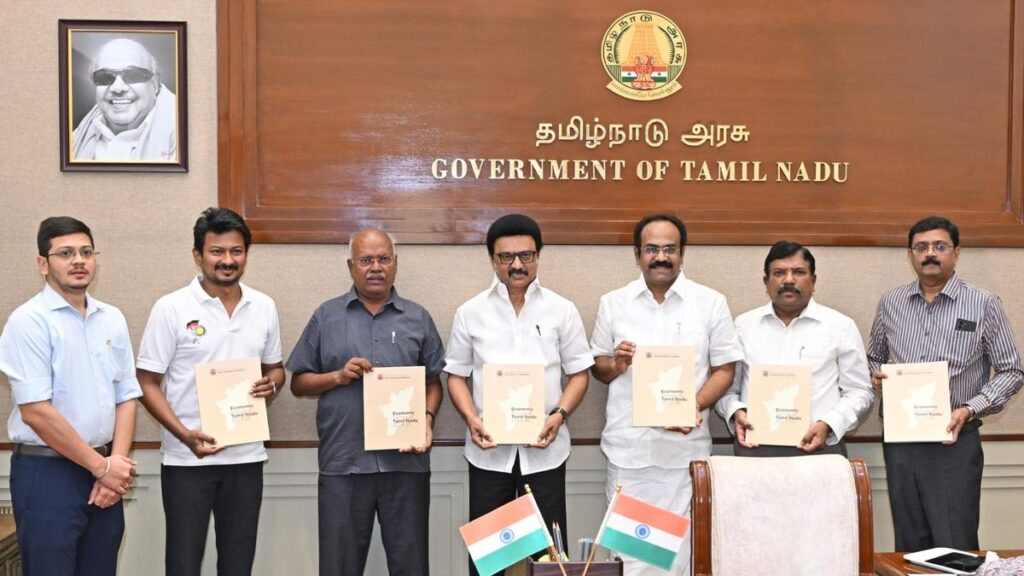
Highlights of Tamil Nadu’s First Economic Survey – 2024-25 Highlights of Tamil Nadu’s First Economic Survey – 2024-25 Chandrasekaran Balakrishnan April 1, 2025 Public Policy, State Economies, Tamilnadu Economy The economy consists of several components, including both institutional and individual people. Studying the progress of those components individually and collectively helps the governments, economy, and society to make future policies. The study of sectoral and sub-sectoral progress is an important exercise for the government to plan for its resource allocation and the economy to identify the growth potentials to be harnessed by the people and the private sector. After the Independence, the Union Government introduced the Annual Economic Survey Report along with Budget announcements in the year 1950-51. Given the importance of the economic survey analysis and perspectives on global and domestic policies on sectoral areas, the then Union Government separated the Union Budget and Economic Survey Report in 1964, which is being followed. Since the major economic reforms of 1991, the States embarked on building their growth and development path by bringing out a detailed analysis of sectoral, regional, intra-state district-wise, and block-wise progress of development. Like the Union Economic Survey, many State Governments have also started publishing their own economic survey to present a review of the major developments of the economy and make policy suggestions for the future.  For many years, all the Southern States have been publishing their annual economic surveys while presenting the budgets. The State of Tamil Nadu, the sole exception for years, has joined the bandwagon by publishing its “First State Economic Survey 2024-25” on 13th March, 2025, a day before the Budget Announcement for the financial year 2025-26 on 14th March, 2025. The survey was prepared by the Tamil Nadu State Planning Commission, led by a team of experts. The Government of Tamil Nadu used to bring out the “Economic Appraisal” report published by the Department of Evaluation and Applied Research (DEAR), with time lags. These reports were a kind of review of progress with little attention for public policy perspectives. This analysis focuses on key highlights of the Tamil Nadu’s First Economic Survey 2024-25 in terms of its presentation, and analysis of key issues. The state has set an ambitious goal of achieving a $1 trillion economy by 2030. As a highly industrialized and urbanized economy with strong linkages of global value chains on key sectors, Tamil Nadu’s economy has demonstrated remarkable economic resilience, consistently achieving growth rates of 8% or more since 2021-22. The state is estimated to grow above 8% in 2024-25. Further, the State achieved an average growth rate of 6.37% as compared to the national average of 6.1% during the period from 2012-13 to 2023-24. In the last two years from 2022-23 to 2023-24, this growth trajectory accelerated and the state achieved an average growth rate of 8.18%. The state did not estimate the likely growth rate for the financial year 2025-26 stating the economic situation is “unstable”. In terms of Per Capita Income at current prices, Tamil Nadu has Rs.2.78 lakhs which is 1.6 times more than the national average of Rs.1.69 lakhs in 2022-23 and is 4th largest state in per capita income ranks. While, in real terms, Tamil Nadu ranked 7th among major states in 2022-23, with a per capita income of Rs.1.66 lakh. However, there are huge variations among the districts within the state of Tamil Nadu. The district-wise per capita income highlights major variations among districts in Tamil Nadu. Chengalpattu district has the highest per capita income at Rs 6.48 lakh in 2022-23, followed by Kancheepuram (Rs.6.47 lakh) and Chennai (Rs 5.19 lakh). Notably, in 8 out of the state’s 38 districts, the per capita income exceeds the state average of Rs.2.78 lakh. These top-performing districts surpass the per capita income levels of several major Indian states, including Telangana, Haryana, and Karnataka. At the same time, the districts of Villupuram and Tiruvarur has per capita income of Rs.1.48 lakh each which is lowest in the state. Also, 7 districts (Ramanathapuram, Thiruvarur, Myiladuthurai, Ariyalur, Perambalur, Kallakurichi and Villupuram) have per capita incomes below the national average. Rapid urbanization drives demand for infrastructure services such as transportation, housing, sanitation, and utilities but in each of these areas, Tamil Nadu lags and is unable to provide good quality of facilities and services. Let’s look at the sectoral growth of Tamil Nadu’s Economy as emphasized in the Economic Survey: Tamil Nadu’s agriculture heavily depends on monsoons. The sector contributes Rs.1.5 lakh crore (6% of GSVA) and ranks as the 5th largest sector. It employs 41.1% of the rural workforce. In 2021-22, the state had 92.3 lakh farmers cultivating 64.6 lakh hectares of land. Notably, 93.5% of these farmers (86.3 lakh) are small and marginal, collectively farming 62.7% of the total cultivated area, with an average landholding size of only 0.7 hectares. Tamil Nadu’s 62% of the total cropped area includes major food grains, like paddy, maize, jowar, bajra, ragi, and millets, while non-food crops such as oilseeds, sugarcane, and cotton account for the remaining 38%. Paddy continues to dominate the cropping pattern, with its share in the total cropped area increasing from 32.1% in 2019-20 to 34.4% in 2023-24. The state’s consumption of fertilizers increased by 1.03 lakh MT to 10.68 lakh MT in 2023-24 from 9.65 lakh MT in 2019-20. Power consumption in agriculture also increased by 4146 million units to 17,957 million units and from 13,811 million units during the same period. The state government has allocated Rs.7,216 crore for the subsidy on three phases of free power in 2024-25 which needs to be rationalized by undertaking institutional reforms to eliminate power thefts and losses. The rise in the productivity of key crops in Tamil Nadu has been largely driven by the extensive use of chemical fertilizers and groundwater. The state has a total of 268 cold storage units with a combined capacity of 19,856 metric tonnes which is still inadequate given the expansions. The state’s organic farming has nearly doubled, rising from

Highlights of Tamil Nadu’s First Economic Survey – 2024-25 Read More »

Odisha Budget-2025-26- Aspirations for Samruddha

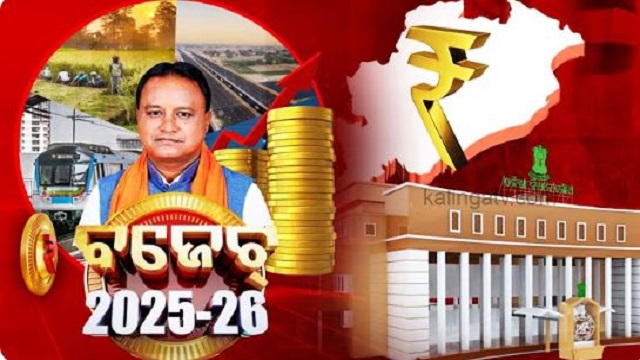
Odisha Budget-2025-26- Aspirations for Samruddha by 2036 Odisha Budget-2025-26- Aspirations for Samruddha by 2036 Chandrasekaran Balakrishnan March 18, 2025 Economic Reforms, Public Policy, State Economies Three decades of major economic reforms in India showcase the structural and institutional paradigm shifts, and thereby results witnessed higher growth, efficiency, competition, and making choices available across different sectors. As the country embarks on Viksit Bharath@2027, many pandits now turn to the regional economies of States to leverage their capacity by empowering institutional reforms towards the achievements of aspirations of people and empowering cities as focal points for new growth engines. It’s also high time for timely implementation of State level institutional and decentralisation reforms for the next level of higher growth in India. The Odisha Budget for 2025-26 is a case in point where the State aspires to become Samruddha or Viksit Odisha by 2036 which is in alignment with national goals. By 2036, Odisha aims to become a USD 500 Billion economy and a USD 1.5 Trillion economy by 2047. This is not an easy task in any yardstick because the State has quite low urbanisation and aims to increase it to 22% by 2030 from 19% at present. However, Case studies by experts highlighted that “process reforms in Odisha reduced the number of steps needed to access funds” by a programme implementing agencies at ground level and hence, the state has high optimism. During the last three years the Odisha economy grew by 7.2% GSDP in 2024-25, 9.6% GSDP in 2023-24, 6% GSDP in 2022-23, and achieved average growth of 7.6% GSDP.  The State has allocated 22.4% (6.1% GSDP) of the total budget outlay to capital expenditures which will boost the State economy. However, the State is still predominantly agriculture-driven and catching up fast in industries and services sector growth. In 2024-25, agriculture, manufacturing, and services sectors are estimated to contribute 28%, 35%, and 37% of Odisha’s economy, respectively (at current prices). The State’s fiscal parameters have been bolstered with an uptick in recent times with many institutional reforms. The fiscal deficit of the State is estimated at Rs 34,200 crore for 2025-26, 3.2% of GSDP which is higher than the revised estimate of 3.1% GSDP for 2024-25. In 2024-25, the revised fiscal deficit of the State is 3.1% of GSDP which is lower than the budgeted 3.5% of GSDP. Also, it is estimated that the State aims to achieve a revenue surplus of Rs 31,800 crore, 3% of GSDP in 2025-26, as compared to a revenue surplus of 2.9% of GSDP in 2024-25 (RE). Odisha has abundant mineral resources, fertile agricultural land, and a 480 km-long coastline, with uniquely positioned to leverage its urban centres as growth engine development as a key driver. By population size, the state is comparable to countries like Argentina, Spain, and Uganda. What the State economies have to do is to find out the complementarity of central government support on top of governance and urban growth centres at a decentralised level of effective governance on the ground to make Samruddha Odisha realistic.  The State budget for 2025-26 has emphasised many emerging sectors as transformative and focusing on urban centres for the establishment of new industries both manufacturing and services sectors supported by state-of-the-art infrastructure facilities by empowering the Tier–II and Tier–III cities in the State. Besides, the State is also giving impetus to social infrastructure facilities including “Skilled in Odisha” a global brand name by “Skilling for the World”. The State is also empowering women as one of key drivers of development and inclusion in the process of growth. In 2025-26, the State has allocated 72% of the total expenditure for social sector development and 1% less than the previous year.   The State’s pragmatic steps to bring a future-ready industrial landscape are aimed at a comprehensive range of incentives being offered to Semiconductor, Compound Semiconductor units, and Display Fabs under the Semiconductor sector which makes Odisha the fourth state in the country to offer dedicated incentives to semiconductor units. The Budget announced that the State would collaborate with IIT, Madras for developing a comprehensive Odisha Maritime Perspective Plan to develop new ports at Inchuri and Bahuda. Mahanadi Riverine Port for Ship repair and building. Further, Odisha is poised to become a leading producer of Green Hydrogen/Green Ammonia for the decarbonisation of industries and the heavy transport sector for which the State is collaborating with IIT Bhubaneswar to establish a Testing-cum-Research facility for Green Hydrogen. Odisha has announced several transformative infrastructure projects that will not only strengthen Odisha’s logistics network but also fuel industrial expansion, trade, and employment, enabling for realization of the Samruddha or Viksit Odisha by 2036. The major initiatives announced in the Odisha Budget includes: comprehensive plan seeks to transform Odisha’s urban landscape into five engines of growth, powered by innovation, sustainability, and inclusivity, a Comprehensive City Road Decongestion Plan for Bhubaneswar city on 322 hectares in first phase and 3600 hectares in second phase with focus on service industry, IT, and R&D, establish a metropolitan development region of about 7000 Sq Km encompassing Bhubaneswar, Khurda, Jatni, Cuttack, Paradip and Puri, 2 key tourism development projects at Hirakud and Satkosia, improvement of 3000 Km of Road and development of Berhampur-Jeypore 6 lane Green Field Expressway, a ring road would be built in Barbil, a Greenfield Airport at Paradip for enabling to commence direct flight services to ten new domestic and three new international destinations making significantly enhanced air connectivity, new railway projects worth Rs.73,000 crore, an industrial corridor connecting Paradip– Choudwar – Dhenkanal – Angul -Sambalpur – Jharsuguda – Sundergarh –Rourkela region for seamless multi-modal transport services and develop Gopalpur and Paradeep as Blue Flag Beach. As highlighted in the State Budget “these projects mark a significant step toward building a future-ready Odisha, ensuring seamless mobility, robust infrastructure, and sustainable urban growth”. Also, the vision of Samruddha Odisha by 2036 is achievable provided it is imperative that the State needs to ensure the efforts to maintain financial stability at the State

Odisha Budget-2025-26- Aspirations for Samruddha Read More »

High Tax Rates Do Not Translate into Higher Tax Revenues

High Tax Rates Do Not Translate into Higher Tax Revenues High Tax Rates Do Not Translate into Higher Tax Revenues Ghanshyam Sharma March 4, 2025 Economic Reforms, Indian Economy, Public Policy The irony of India’s high tax policy is that while it imposes the highest tax rates globally, it collects very low tax revenues compared to other countries. India has the highest GST of 28%. If we include cess and other charges, the actual tax rates are even higher.  However, India’s tax revenue as a percentage of GDP is only 11.7%. In contrast, China raises 12.5% of its GDP in tax revenues while having the highest GST of only 13%. Vietnam has the highest GST of 8% and raises 11.4% of its GDP in tax revenues. Indonesia collects 11.9% of its GDP in tax revenues with the highest GST rate of 11%. An African country, Botswana, raises 34% of its GDP in tax revenues with the highest GST rate of 14%. The figure suggests that India does poorly on tax efficiency and is an outlier with the highest GST rate and low tax revenues. India imposes the highest tax in the world on its domestic sectors that account for a quarter of the Indian GDP and employs 17% of India’s workforce. These critical sectors are automobiles, construction (cement is taxed at 31.36%), electronic items such as air conditioners and refrigerators, luxury hotels, etc. These sectors cumulatively generate employment for over 100 million people. The high tax policy has jeopardized the livelihood of people in these sectors. India also has one of the highest marginal income tax rates in the world. Most European countries with high-income taxes have low inflation compared to India. Inflation reduces the purchasing power of nominal income. In an era of stagnant incomes, the real income tax is substantially higher than the general perception. It is an economic fallacy that increasing the tax rates leads to higher tax revenues.  On the contrary, there is theoretical and empirical evidence that high rates can lead to lower revenues. This is because of several reasons. First, high tax rates reduce economic activity. High tax rates lead to lower sales, a fall in production, and a decline in employment. As the economic activity comes down, tax revenues come down. For example, the cumulative tax on cars is more than 40%. The Federation of Automobile Dealers Association has raised the alarm that there is an inventory of 8 lakh unsold cars worth Rs.78,000 crore. Even the two-wheelers purchased by the price-sensitive middle class attract a tax of 28%. All the auto firms are struggling because the high tax policy has deterred people from buying automobiles. The policy also threatens the livelihood of 37 million people employed in the sector. Second, high tax rates encourage smuggling and black markets. For example, the government levies a 53% tax on cigarettes to curb smoking and generate tax revenues. However, ITC Ltd. recently estimated a potential tax revenue loss of 21,000 crore rupees because of smuggled cigarettes. This policy also hurts Indian tobacco farmers because tobacco in the smuggled cigarettes is grown abroad. Excessive tax rates on cigarettes can also be a health hazard as they force people to switch to unregulated and unbranded products. A sharp increase in the Securities Transaction Tax (STT), Short-term Capital Gains Tax (SCGT), and Long-term Capital Gains Tax (LCGT) has led to dabba trading or trading outside the legally recognized stock exchanges. Informal estimates suggest that the volume of trading in informal exchanges is almost 25% of formal exchanges. The STT was introduced in 2004 as an alternative to LCGT. However, when the government introduced the LCGT in 2018, it did not scrap the STT. To rub salt in the wounds, it increased the STT by almost 60% in 2024. Even the SCGT and LCGT increased by 33% and 25% respectively. Third, a high tax policy penalizes honest taxpayers and encourages under-reporting of income and profits. Thousands of clean millionaires who could have contributed to the wealth generation have left India with their wealth. The only beneficiary of high tax rates is the tax bureaucracy. This is because high tax rates incentivize the industry to offer bribes to tax inspectors. Hence, it was an institutional oversight that the GST’s rate-fixing committee has been left completely to the bureaucrats with no political representation. Bureaucracy has no accountability and benefits from increasing tax rates. The Union Finance Minister has suggested that the average GST rate is only 11.6%. However, a more appropriate measure would be an average GST rate weighted by the relative importance of a good in the overall GDP.   Since the government does not disseminate the GST data to compute the average weighted GST rate, these claims are unverified. It is a fact that high tax rates hurt the economy. Nevertheless, to raise tax revenues, the government has raised tax rates to the point where India has the highest tax rates worldwide. As a consequence, India’s GDP growth has crashed. Experts suggest a structural slowdown and low growth rates in the coming several quarters. India needs to increase its tax rate efficiency, not its tax rates. However, the former is conditional on a broader economic reform agenda. The knee-jerk reaction to raise tax rates will only hurt the economy and destroy long-term tax revenue generation. In India, the government is growing at the expense of its people. While the economic growth is slowing down, the pace of tax collections is increasing. It may be desirable to increase the tax revenues, but it should not jeopardize the people’s long-term progress. The author has a PhD in Economics from Clemson University, USA. He is currently an Associate Professor of Economics at RV University, Bengaluru. The Author is a Honourary Research Fellow at AgaPuram Policy Research Centre.  Views expressed by the author are personal and need not reflect or represent the views of the AgaPuram Policy Research Centre. This article was originally first published by The Economic Times https://m.economictimes.com/opinion/et-commentary/indias-high-tax-rates-boon-for-bureaucrats-bane-for-the-economy/amp_articleshow/118609436.cms

High Tax Rates Do Not Translate into Higher Tax Revenues Read More »

Status of Finance Health of Urban Local Bodies in Odisha

Status of Finance Health of Urban Local Bodies in Odisha Status of Finance Health of Urban Local Bodies in Odisha Dushyant Meher February 22, 2025 Indian Economy, Public Policy, Urban Development Fiscal Excellence of Odisha Financial health is the key indicator of capability, opportunities and challenges of an individual, family, institution or a government. Urban Local Bodies (ULB) like city corporations, municipalities and town panchayats are belong to the third tier of our governance structure responsible for urban growth centres that plays a crucial role in the era of aspirational India. The third tier of governance was enforced through 73rd and 74th Amendments Act in 1993 – an early stage of our economic reforms gradually becoming part of policy discourse because of its mandate and functions entrusted upon. On the backdrop of the latest report on “Fiscal Health Index 2023” to assess the fiscal health of the States; it is also a matter of imperative to look at the   state of municipal finances as reported by Reserve Bank of India in its “Report on Municipal Finances 2024”. This report delineates the sources of revenue generation, opportunities and challenges by the municipal corporations of the states. In the context of “Odisha” that stood on top of the list of States in India due to its fiscal prudence obtained through a systematic financial management over a period of time as per “Fiscal Health Index 2023” by NITI AAYOG; an analysis of the financial health of MC may help further strengthening the overall financial wellbeing of the State through its municipal governance. There are 5 MCs in Odisha namely- Berhampur, Bhubaneswar, Cuttack, Sambalpur and Rourkela situated in eastern, western and northern region of the state. As per 2011 Census, Odisha was one of the least urbanized states in India, however, it is catching up in urbanisation as in 2024; 34 new notified area councils (NCCs) and upgradation of 5 municipalities added to the list of local urban governments. The NITI AAYOG Report on Fiscal Health Index 2023 highlighted that “Odisha excels in fiscal health with the highest overall index score of 67.8. It tops the Debt Index (99.0) and Debt Sustainability (64.0) rankings with better than average scores under Quality of Expenditure and Revenue Mobilization. The state has maintained low Fiscal Deficits, a good debt profile, and an above average Capital Outlay/GSDP ratio.” Also “the top five high-performing states are Odisha, Chhattisgarh, Goa, Jharkhand, and Gujarat.” Further, the report stated that “Odisha and Chhattisgarh have performed well under Revenue Mobilization, with their Own Non-Tax Revenue growing significantly due to high revenue collection from mining.” The Reserve bank of India, started focusing on the financial health of MCs by releasing state-wise reports in 2022 and 2024 that delve into fiscal position. Since, MCs are responsible for the provision of vital public services like health, education, water, sanitation, street lighting, public parks registration of births and deaths under their jurisdictions; they have a crucial role to play in effective urban management, urban development and upgradation of urban infrastructure. Odisha is also mineral rich state which supports for manufacturing sector across different region. Odisha publishes monthly fiscal report. According to RBI report “Odisha was one of the most fiscally stressed States in the early 2000s, with a debt-GSDP ratio of 57.3% in 2002-03 – well above the consolidated debt-GDP ratio of 32.1% for all States. The interest payments to revenue receipts ratio (IP/RR) was 34.2% in 2002-03, imposing a significant strain on the State’s finances. Over the subsequent two decades, there has been a turnaround in the fiscal position of the State, with the debt-GSDP ratio declining to 16.0% in 2023-24 –the lowest among the Indian States”. RBI Report also highlights that “during the challenging times of COVID-19, Odisha maintained prudent fiscal practices like periodic revision of the rates/user charges of various tax and non-tax sources and monthly reviews of revenue collection. Odisha is the only State to register a revenue surplus (1.7% of GSDP) during the pandemic year of 2020-21, which increased to 6.5% of GSDP in 2021-22 on account of higher realisation of non-tax revenue.” Status of MCs in Odisha The RBI report primarily highlights the revenue account, revenue sources and reforms being undertaken by MCs. In the context of Odisha – the following observations convey the status of its MCs: The size of revenue receipts of MCs in Odisha has increased substantially in last five years period from Rs.612.36 crore in 2019-20 to Rs.1266.96 Crore in 2023-24 (BE). Total revenue expenditure of 2023-24 (BE) is Rs.1060.89 crore. Ratio of Municipal Corporations’ Revenue Receipts to State Government’s Revenue Receipts comes to 0.7 Ratio of Municipal Corporations’ Tax and Non-Tax Revenue to State Government’s Tax and Non-Tax Revenue is 0.3. The percentage of Revenue Grants, Contribution and Subsidies has marked an increase by 21.6% which doubled from 22.27% in 2019-20 to 43.87 in 2023-24 (BE). In terms of capital receipts; there is a marked increase in Finance Commission grant from 6.17 % out of total receipts for specific purposes in 2019-20 to 21.28 % in 2023-24 (BE). Similarly, the State Finance Commission grant increased by 10.26% from 21.17 % to 31.43 % for specific purposes. Capital expenditure of the MCs in Odisha has been consistently above 95% throughout in last five years under evaluation. The ratio of capital expenditure to total expenditure for MCs is more than 50%. The own tax ratio of MCs in Odisha was only 14.98 % in 2023-24 (BE) as compared to the highest level at 53.8% in Karnataka and 50.3% in Telangana. A trend of decreasing in percentage of own tax revenue (OTR) was observed in last three years from 22.86 % in 2021-22 to 16.00 % in 2022-23 and a further decrease to 14.98 % in 2023-24 (BE). Similarly, sources like- “income from investment” and “interest earned on loans” have reported a decrease from 4.13 % in 2019-20 to 1.72 % in 2023-24 (BE) and from 4.08 % to 1.45 % respectively. RBI Report Highlighted the following Institutional

Status of Finance Health of Urban Local Bodies in Odisha Read More »

Open Defecation, Stray Dogs, and Child Stunting

Open Defecation, Stray Dogs, and Child Stunting Open Defecation, Stray Dogs, and Child Stunting Ghanshyam Sharma February 21, 2025 Child Development, Public Policy, Urban Development Child stunting—the phenomenon of children not being able to grow to their potential heights—is an acute problem in India. India is ranked 132nd out of 152 countries and outperformed by neighboring countries such as Nepal and Bangladesh. This means that over some time, children in Nepal and Bangladesh will be taller than children in India. Open defecation and malnutrition are the primary causes of child stunting. In a recently published research focused on India, Indonesia, Mali, and Tanzania, scientists found that a sanitization program designed to eliminate open defecation has led to much-improved child health and height.  This is because open defecation leads to fecal contamination of water and food supplies with parasitic worms and causes diarrhea and parasitic infection among children under 5 years old. In this context, the Prime Minister’s drive to eliminate open defecation and promote cleanliness is a welcome step. However, Indian laws promote mass open defecations and unhygienic conditions – by encouraging stray dogs. As per the law, stray dogs can neither be euthanized nor displaced from their locations. Dog shelters are not an adequate solution. The stray dogs can breed quickly, and the only limiting factor is food availability. The apathy of municipal corporations towards garbage disposal ensures an uninterrupted food supply.  In elite neighborhoods, such as Lutyens Delhi – the abode of the political class, stray dogs are rare. In elite neighborhoods, municipal corporations are more efficient. However, municipal corporations are less sympathetic to middle-class and economically poor neighborhoods. Poor waste disposal mechanisms in these neighborhoods lead to a higher stray population and more defecations— – none of which gets removed. Children play in the same spaces where dogs defecate – thus exposing them to infections, dog bites, and reduced heights. The problem is acute in slums where waste disposal mechanisms are non-existent. In metropolitan cities, poor migrants and stray dogs occupy the same space on the roads, leading to several health and safety hazards. Such laws put middle-income and poor neighborhoods at the greatest risk. As per the World Health Organization, India accounts for 36 percent of deaths due to rabies which translates to 18,000 to 20,000 deaths a year. In several instances, stray dogs have attacked, injured, and even killed small children and older adults. People walking with sticks to ward off attacks from stray dogs are a common sight. Stray dogs create a problem of externalities in local communities. While dog lovers feed stray dogs, they do not allow them inside their homes like pets. This creates a positive externality for dog lovers who enjoy the company of dogs without taking responsibility for them. On the other hand, stray dogs create a negative externality for people who do not feed them and are vulnerable to dog attacks, particularly senior citizens and young children. Developed countries have addressed the problem with massive public funding. However, developing countries such as India need to prioritize public spending towards malnutrition among children, among other issues. Therefore, we need innovative ways to address the matter. This can be done by incentivizing the Resident Welfare Associations (RWAs) and panchayats to find solutions they find appropriate. However, according to the Supreme Court, municipal authorities cannot be granted unbridled discretionary powers to address the issue of stray dogs. Such judgments are unfortunate because they further centralize the Indian governance structure. India’s political elites suffer from what Noble Prize-winning economist Friedrich Hayek called the ‘fatal conceit’ – the belief among the elites that ordinary people and local communities are inferior to them and, therefore, incapable of self-governance. Thus, the elites should enact laws. India’s over-centralized governance structure is based on the belief that local governments cannot self-govern, even on matters related to stray dogs. In India, the central and state governments make laws even on local homeless dog populations. When it comes to dealing with stray dogs, even the local MPs and MLAs are powerless. India should move towards decentralization and allow local authorities such as RWAs and other local residential groups jurisdiction over local matters because local authorities are more likely to reflect local preferences.  Further, Section 291 of the Bhartiya Nyay Sanhita provides six months imprisonment and five thousand rupees in fine for the individual whose pet attacks another individual. Section 291 should be interpreted to consider stray dog feeders as dog owners and face penalties under the law if the stray dogs attack others. Such an interpretation will correct the incentives faced by dog lovers, and they will accept the full responsibility of dog ownership. The author is an Associate Professor at the School of Economics and Public Policy, RV University, Bengaluru. The Author is a Honourary Research Fellow at AgaPuram Policy Research Centre. Views expressed by the author are personal and need not reflect or represent the views of the AgaPuram Policy Research Centre. This article was originally first published by Deccanherald at https://www.deccanherald.com/opinion/child-stunting-a-public-health-crisis-fuelled-by-stray-dogs-open-defecation-3405071?utm_source=whatsapp&utm_medium=referral&utm_campaign=socialshare

Open Defecation, Stray Dogs, and Child Stunting Read More »

Economic Survey of India 2024-25: MajorHighlights by Madhusudhanan S

Economic Survey of India 2024-25: Major Highlights by Madhusudhanan S Economic Survey of India 2024-25: Major Highlights Madhusudhanan S February 8, 2025 Economic Reforms, Indian Economy, Public Policy On 31 January, 2025, the Union Finance Minister tabled the Economic Survey 2024-25 in Parliament. Before going into the major highlights of the Economic Survey, it is pertinent to know what an economic survey is, its preparation and presentation, and its importance. Economic Survey Every year, the Finance Ministry releases the Economic Survey of India, an annual report that evaluates the country’s economic performance during the previous year. It draws attention to macroeconomic indicators, economic development, and the possible future challenges for India. To handle those economic challenges, the economic survey recommends necessary policy changes. Preparation & Presentation The Economic Survey of India is prepared under the supervision of the Chief Economic Advisor (CEA), Department of Economic Affairs, Ministry of Finance. Until 1964, the Economic Survey was presented in parliament along with the Union Budget, after which it was tabled one day before the Union Budget. The first Economic Survey was released in the Fiscal Year (FY) 1950-51. Importance  of Economic Survey The Economic Survey is the most comprehensive and reliable official analysis of the Indian economy. Economic Survey provides the Government’s official framework for decision-making and economic policy considerations. Economic Survey’s recommendations are suggestive and not binding. Economic Survey 2024 – 2025 – Major Highlights  The Economic Survey 2024-25, contains 13 chapters and includes a chapter which talks about whether the Artificial Intelligence era is Crisis or Catalyst for Labour (Labour in the AI era: Crisis or Catalyst). As the Survey is comprehensive, this article summarises the key points into the following seven major themes: State of the Economy Medium-Term Outlook: Deregulation Drives Growth Investment and Infrastructure Industry Service Sector Agriculture and Allied Activities Employment and Skill Development……To read more, download the PDF DOWNLOAD PDF

Economic Survey of India 2024-25: MajorHighlights by Madhusudhanan S Read More »

Deterioration of State Finances of Tamil Nadu

By B.Chandrasekaran Deterioration of State Finances of Tamil Nadu By B.Chandrasekaran Deterioration of State Finances of Tamil Nadu By B.Chandrasekaran Chandrasekaran Balakrishnan January 31, 2025 Economic Reforms, Public Policy, Tamilnadu Economy In recent years, the Government of Tamil Nadu’s steadily increasing overall debts and excess borrowings for financing the welfare programmes has sparked fierce debate among ruling party leaders and opposition leaders. The opposition leaders argue that despite increased tax collections, the state government has continuously borrowed loans for funding the welfare programmes alone and is not able to fund increased capital expenditures, which would help the state economy to also fund the urban civic infrastructure facilities and services that are lagging. During the last few years, the fiscal management of Tamil Nadu has increasingly become a concern. However, the ruling government has not accorded adequate attention to the worrying trend of rising fiscal debt. In this context, it is very pertinent to look at the recently released report of the Reserve Bank of India (RBI) on “State Finances: A Study of Budgets of 2024-25- Fiscal Reforms by States” in December, 2024, with respect to the state of Tamil Nadu. The report contains fiscal data for the years 2021-22 (actuals), 2022-23 (revised estimates), and 2023-24 (Budget Estimates) besides other key data. The RBI report highlights that the states should make efforts towards strengthening fiscal prudence with the following measures on priority: “State-specific Fiscal Responsibility Legislations (FRLs) along with tax and expenditure reforms have strengthened their finances over the past two decades. In view of high debt levels, contingent liabilities, and the rising subsidy burden, State government finances would benefit from the adoption of a risk-based fiscal framework with provisions for counter-cyclical fiscal policy actions; A prudent medium-term expenditure framework; A clear, transparent, and time-bound glide path for debt consolidation; and Enhanced data dissemination and communication policies, including on reporting of outstanding liabilities, off-budget borrowings, and guarantees. Strengthening of State Finance Commissions is also critical for ensuring adequate and timely fund transfers to local bodies.” DISCOM drags down Finances of Tamil Nadu The level of revenue deficit in States such as Haryana, Kerala, Punjab, Rajasthan, Tamil Nadu, and West Bengal witnessed a level much higher than the all-state average during the period of 2021-22 to 2023-24. With respect to Tamil Nadu, the revenue deficit for 2021-22, 2022-23, 2023-24 (RE) and 2024-25 (BE) were 2.2%, 1.5%, 1.7% and 1.6% in GSDP respectively. These are higher than all India levels. One of the major indicators of the deterioration of state financial health is the continuous losses incurred by the state electricity department and the failure to undertake institutional reforms apart from funding freebie schemes. According to the RBI Report, six states contribute 75% of the total national losses incurred by electricity distribution companies (DISCOMs) which amounts to Rs. 6.5 lakh crores (2.4% of GDP) by 2022-23. Tamil Nadu is one of six states with the largest share of 26% in national level losses, followed by Rajasthan (15%), Uttar Pradesh (15%), Madhya Pradesh (10%), Telangana (10%) and Maharashtra (5%). The RBI Study on State Finances-2023-24 observed that “Power distribution has strained State finances due to persistent operational inefficiencies and significant under-recoveries. Receipts from the power sector constitute less than a tenth of the corresponding revenue expenditure incurred by the States.” By March 2023, Tamil Nadu DISCOM reported losses of over Rs. 1.6 lakh crores. The major issues in the context of DISCOM finances highlighted are low tariff rates, high procurement costs of power, cross-subsidisation, and the dominance of State authorities which limits decision-making autonomy (Pinaki Chakraborty and Kaushik Bhadra, 2024). One of the remedies suggested by experts is to increase tariffs in electricity utility rates across different categories and reduce AT&D losses with smart meter systems and institutional reforms. In fact, analysis shows that more than a 50% increase in tariffs would be required in Madhya Pradesh, Tamil Nadu, and Rajasthan where tariffs are already higher than the national average. However, Tamil Nadu has linked tariff increases to inflation for automatic annual adjustments (MERC, 2023; TNERC, 2023). In order to finance the expenditures of states over and above the revenues, the state governments borrow loans. As per RBI Report, the net market borrowings of States rose by 38.2% to Rs.7.17 lakh crore in 2023-24, with Uttar Pradesh, Maharashtra, Tamil Nadu, Karnataka, Andhra Pradesh, Rajasthan, West Bengal, and Telangana amongst the major borrowing States. Also, States such as Madhya Pradesh, Maharashtra, Puducherry, Punjab, Rajasthan, Tamil Nadu, and Uttar Pradesh undertook re-issuances of loans during the year (2024-25). Overall, for the states with an increasing focus on capital expenditure, the ratio of revenue expenditure to capital outlay (RECO) of the States has seen a welcome decline from 6.3% in 2021-22 to 5.2% in 2024-25 (BE). Unfortunately, a state like Tamil Nadu has 7.3%, which is higher compared to states like Gujarat (2.9), Karnataka (5.5), Maharashtra (6.1), and Telangana (6.6). Total Revenues of Tamil Nadu Over the last three years period from 2022-23 to 2024-25, the overall revenue of Tamil Nadu increased by 22.7%. Similarly, the total tax revenues and Tamil Nadu‘s Own Tax revenues increased by 29.6% and 29.9% respectively during the same period (See Figure 1).                                                        Source: RBI Report on State Finances 2024-25 Capital Outlay and Expenditure The capital outlay of Tamil Nadu has not increased substantially over the last three years. The share of capital outlay in development expenditure has declined from 19.1% in 2022-23 to 18.6% in 2024-25 (BE). Figures 2 and 3 reveal the substantially decreased overall capital expenditure over the last three years. This shows the poor attention given by the state government during the period.                                                             Source: RBI Report on State Finances 2024-25      

Deterioration of State Finances of Tamil Nadu Read More »