Public Policy

Highlights of Tamil Nadu’s First Economic Survey – 2024-25

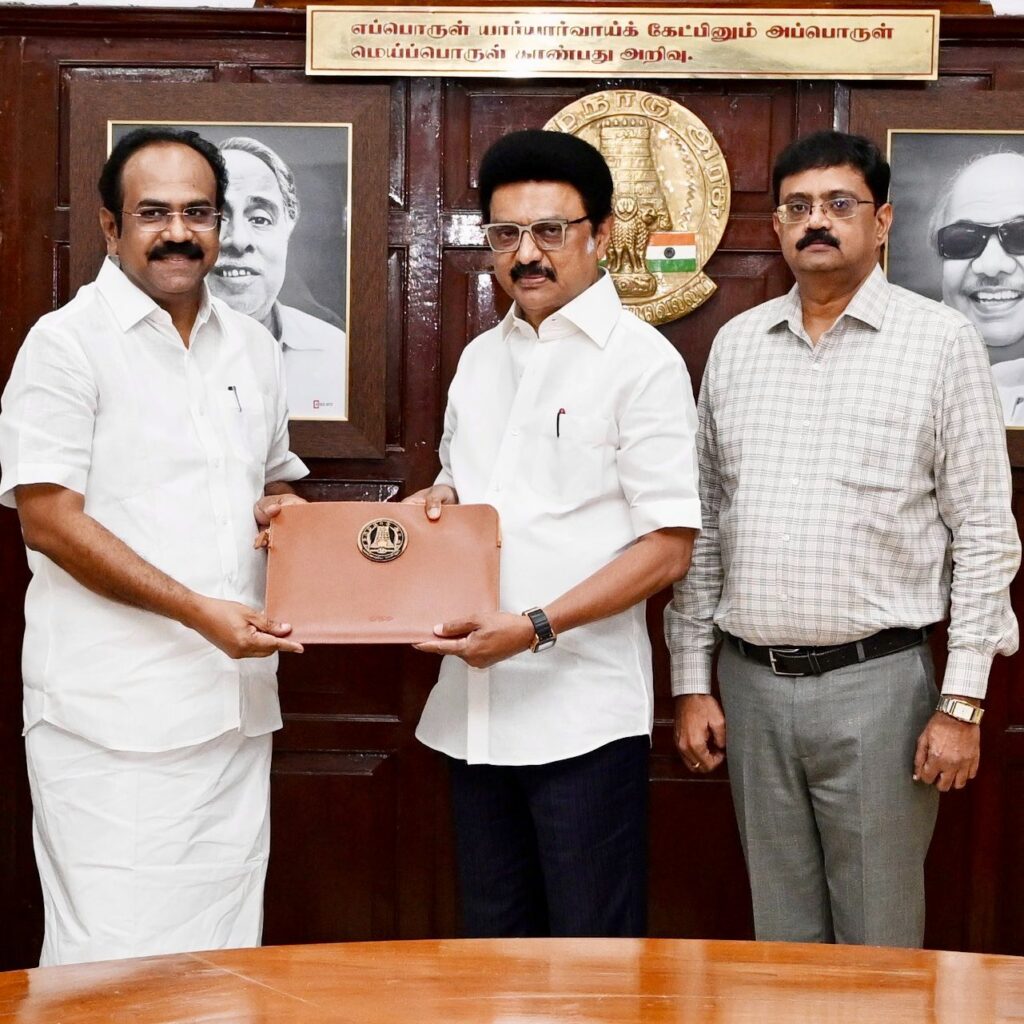
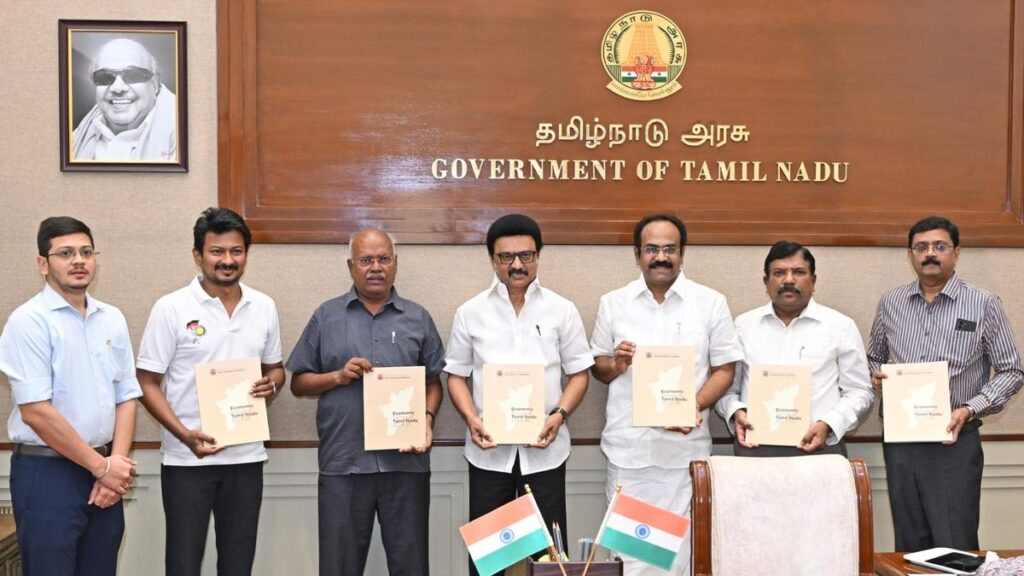
Highlights of Tamil Nadu’s First Economic Survey – 2024-25 Highlights of Tamil Nadu’s First Economic Survey – 2024-25 Chandrasekaran Balakrishnan April 1, 2025 Public Policy, State Economies, Tamilnadu Economy The economy consists of several components, including both institutional and individual people. Studying the progress of those components individually and collectively helps the governments, economy, and society to make future policies. The study of sectoral and sub-sectoral progress is an important exercise for the government to plan for its resource allocation and the economy to identify the growth potentials to be harnessed by the people and the private sector. After the Independence, the Union Government introduced the Annual Economic Survey Report along with Budget announcements in the year 1950-51. Given the importance of the economic survey analysis and perspectives on global and domestic policies on sectoral areas, the then Union Government separated the Union Budget and Economic Survey Report in 1964, which is being followed. Since the major economic reforms of 1991, the States embarked on building their growth and development path by bringing out a detailed analysis of sectoral, regional, intra-state district-wise, and block-wise progress of development. Like the Union Economic Survey, many State Governments have also started publishing their own economic survey to present a review of the major developments of the economy and make policy suggestions for the future.  For many years, all the Southern States have been publishing their annual economic surveys while presenting the budgets. The State of Tamil Nadu, the sole exception for years, has joined the bandwagon by publishing its “First State Economic Survey 2024-25” on 13th March, 2025, a day before the Budget Announcement for the financial year 2025-26 on 14th March, 2025. The survey was prepared by the Tamil Nadu State Planning Commission, led by a team of experts. The Government of Tamil Nadu used to bring out the “Economic Appraisal” report published by the Department of Evaluation and Applied Research (DEAR), with time lags. These reports were a kind of review of progress with little attention for public policy perspectives. This analysis focuses on key highlights of the Tamil Nadu’s First Economic Survey 2024-25 in terms of its presentation, and analysis of key issues. The state has set an ambitious goal of achieving a $1 trillion economy by 2030. As a highly industrialized and urbanized economy with strong linkages of global value chains on key sectors, Tamil Nadu’s economy has demonstrated remarkable economic resilience, consistently achieving growth rates of 8% or more since 2021-22. The state is estimated to grow above 8% in 2024-25. Further, the State achieved an average growth rate of 6.37% as compared to the national average of 6.1% during the period from 2012-13 to 2023-24. In the last two years from 2022-23 to 2023-24, this growth trajectory accelerated and the state achieved an average growth rate of 8.18%. The state did not estimate the likely growth rate for the financial year 2025-26 stating the economic situation is “unstable”. In terms of Per Capita Income at current prices, Tamil Nadu has Rs.2.78 lakhs which is 1.6 times more than the national average of Rs.1.69 lakhs in 2022-23 and is 4th largest state in per capita income ranks. While, in real terms, Tamil Nadu ranked 7th among major states in 2022-23, with a per capita income of Rs.1.66 lakh. However, there are huge variations among the districts within the state of Tamil Nadu. The district-wise per capita income highlights major variations among districts in Tamil Nadu. Chengalpattu district has the highest per capita income at Rs 6.48 lakh in 2022-23, followed by Kancheepuram (Rs.6.47 lakh) and Chennai (Rs 5.19 lakh). Notably, in 8 out of the state’s 38 districts, the per capita income exceeds the state average of Rs.2.78 lakh. These top-performing districts surpass the per capita income levels of several major Indian states, including Telangana, Haryana, and Karnataka. At the same time, the districts of Villupuram and Tiruvarur has per capita income of Rs.1.48 lakh each which is lowest in the state. Also, 7 districts (Ramanathapuram, Thiruvarur, Myiladuthurai, Ariyalur, Perambalur, Kallakurichi and Villupuram) have per capita incomes below the national average. Rapid urbanization drives demand for infrastructure services such as transportation, housing, sanitation, and utilities but in each of these areas, Tamil Nadu lags and is unable to provide good quality of facilities and services. Let’s look at the sectoral growth of Tamil Nadu’s Economy as emphasized in the Economic Survey: Tamil Nadu’s agriculture heavily depends on monsoons. The sector contributes Rs.1.5 lakh crore (6% of GSVA) and ranks as the 5th largest sector. It employs 41.1% of the rural workforce. In 2021-22, the state had 92.3 lakh farmers cultivating 64.6 lakh hectares of land. Notably, 93.5% of these farmers (86.3 lakh) are small and marginal, collectively farming 62.7% of the total cultivated area, with an average landholding size of only 0.7 hectares. Tamil Nadu’s 62% of the total cropped area includes major food grains, like paddy, maize, jowar, bajra, ragi, and millets, while non-food crops such as oilseeds, sugarcane, and cotton account for the remaining 38%. Paddy continues to dominate the cropping pattern, with its share in the total cropped area increasing from 32.1% in 2019-20 to 34.4% in 2023-24. The state’s consumption of fertilizers increased by 1.03 lakh MT to 10.68 lakh MT in 2023-24 from 9.65 lakh MT in 2019-20. Power consumption in agriculture also increased by 4146 million units to 17,957 million units and from 13,811 million units during the same period. The state government has allocated Rs.7,216 crore for the subsidy on three phases of free power in 2024-25 which needs to be rationalized by undertaking institutional reforms to eliminate power thefts and losses. The rise in the productivity of key crops in Tamil Nadu has been largely driven by the extensive use of chemical fertilizers and groundwater. The state has a total of 268 cold storage units with a combined capacity of 19,856 metric tonnes which is still inadequate given the expansions. The state’s organic farming has nearly doubled, rising from

Highlights of Tamil Nadu’s First Economic Survey – 2024-25 Read More »

Odisha Budget-2025-26- Aspirations for Samruddha

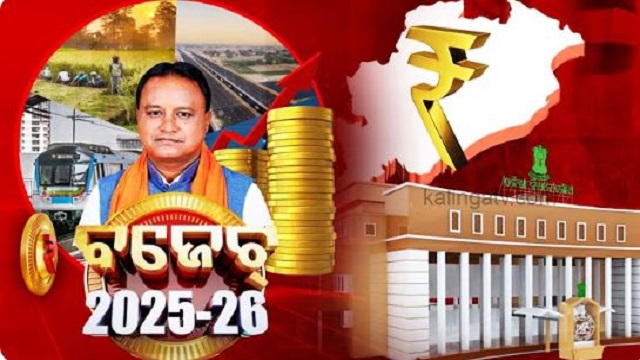
Odisha Budget-2025-26- Aspirations for Samruddha by 2036 Odisha Budget-2025-26- Aspirations for Samruddha by 2036 Chandrasekaran Balakrishnan March 18, 2025 Economic Reforms, Public Policy, State Economies Three decades of major economic reforms in India showcase the structural and institutional paradigm shifts, and thereby results witnessed higher growth, efficiency, competition, and making choices available across different sectors. As the country embarks on Viksit Bharath@2027, many pandits now turn to the regional economies of States to leverage their capacity by empowering institutional reforms towards the achievements of aspirations of people and empowering cities as focal points for new growth engines. It’s also high time for timely implementation of State level institutional and decentralisation reforms for the next level of higher growth in India. The Odisha Budget for 2025-26 is a case in point where the State aspires to become Samruddha or Viksit Odisha by 2036 which is in alignment with national goals. By 2036, Odisha aims to become a USD 500 Billion economy and a USD 1.5 Trillion economy by 2047. This is not an easy task in any yardstick because the State has quite low urbanisation and aims to increase it to 22% by 2030 from 19% at present. However, Case studies by experts highlighted that “process reforms in Odisha reduced the number of steps needed to access funds” by a programme implementing agencies at ground level and hence, the state has high optimism. During the last three years the Odisha economy grew by 7.2% GSDP in 2024-25, 9.6% GSDP in 2023-24, 6% GSDP in 2022-23, and achieved average growth of 7.6% GSDP.  The State has allocated 22.4% (6.1% GSDP) of the total budget outlay to capital expenditures which will boost the State economy. However, the State is still predominantly agriculture-driven and catching up fast in industries and services sector growth. In 2024-25, agriculture, manufacturing, and services sectors are estimated to contribute 28%, 35%, and 37% of Odisha’s economy, respectively (at current prices). The State’s fiscal parameters have been bolstered with an uptick in recent times with many institutional reforms. The fiscal deficit of the State is estimated at Rs 34,200 crore for 2025-26, 3.2% of GSDP which is higher than the revised estimate of 3.1% GSDP for 2024-25. In 2024-25, the revised fiscal deficit of the State is 3.1% of GSDP which is lower than the budgeted 3.5% of GSDP. Also, it is estimated that the State aims to achieve a revenue surplus of Rs 31,800 crore, 3% of GSDP in 2025-26, as compared to a revenue surplus of 2.9% of GSDP in 2024-25 (RE). Odisha has abundant mineral resources, fertile agricultural land, and a 480 km-long coastline, with uniquely positioned to leverage its urban centres as growth engine development as a key driver. By population size, the state is comparable to countries like Argentina, Spain, and Uganda. What the State economies have to do is to find out the complementarity of central government support on top of governance and urban growth centres at a decentralised level of effective governance on the ground to make Samruddha Odisha realistic.  The State budget for 2025-26 has emphasised many emerging sectors as transformative and focusing on urban centres for the establishment of new industries both manufacturing and services sectors supported by state-of-the-art infrastructure facilities by empowering the Tier–II and Tier–III cities in the State. Besides, the State is also giving impetus to social infrastructure facilities including “Skilled in Odisha” a global brand name by “Skilling for the World”. The State is also empowering women as one of key drivers of development and inclusion in the process of growth. In 2025-26, the State has allocated 72% of the total expenditure for social sector development and 1% less than the previous year.   The State’s pragmatic steps to bring a future-ready industrial landscape are aimed at a comprehensive range of incentives being offered to Semiconductor, Compound Semiconductor units, and Display Fabs under the Semiconductor sector which makes Odisha the fourth state in the country to offer dedicated incentives to semiconductor units. The Budget announced that the State would collaborate with IIT, Madras for developing a comprehensive Odisha Maritime Perspective Plan to develop new ports at Inchuri and Bahuda. Mahanadi Riverine Port for Ship repair and building. Further, Odisha is poised to become a leading producer of Green Hydrogen/Green Ammonia for the decarbonisation of industries and the heavy transport sector for which the State is collaborating with IIT Bhubaneswar to establish a Testing-cum-Research facility for Green Hydrogen. Odisha has announced several transformative infrastructure projects that will not only strengthen Odisha’s logistics network but also fuel industrial expansion, trade, and employment, enabling for realization of the Samruddha or Viksit Odisha by 2036. The major initiatives announced in the Odisha Budget includes: comprehensive plan seeks to transform Odisha’s urban landscape into five engines of growth, powered by innovation, sustainability, and inclusivity, a Comprehensive City Road Decongestion Plan for Bhubaneswar city on 322 hectares in first phase and 3600 hectares in second phase with focus on service industry, IT, and R&D, establish a metropolitan development region of about 7000 Sq Km encompassing Bhubaneswar, Khurda, Jatni, Cuttack, Paradip and Puri, 2 key tourism development projects at Hirakud and Satkosia, improvement of 3000 Km of Road and development of Berhampur-Jeypore 6 lane Green Field Expressway, a ring road would be built in Barbil, a Greenfield Airport at Paradip for enabling to commence direct flight services to ten new domestic and three new international destinations making significantly enhanced air connectivity, new railway projects worth Rs.73,000 crore, an industrial corridor connecting Paradip– Choudwar – Dhenkanal – Angul -Sambalpur – Jharsuguda – Sundergarh –Rourkela region for seamless multi-modal transport services and develop Gopalpur and Paradeep as Blue Flag Beach. As highlighted in the State Budget “these projects mark a significant step toward building a future-ready Odisha, ensuring seamless mobility, robust infrastructure, and sustainable urban growth”. Also, the vision of Samruddha Odisha by 2036 is achievable provided it is imperative that the State needs to ensure the efforts to maintain financial stability at the State

Odisha Budget-2025-26- Aspirations for Samruddha Read More »

High Tax Rates Do Not Translate into Higher Tax Revenues

High Tax Rates Do Not Translate into Higher Tax Revenues High Tax Rates Do Not Translate into Higher Tax Revenues Ghanshyam Sharma March 4, 2025 Economic Reforms, Indian Economy, Public Policy The irony of India’s high tax policy is that while it imposes the highest tax rates globally, it collects very low tax revenues compared to other countries. India has the highest GST of 28%. If we include cess and other charges, the actual tax rates are even higher.  However, India’s tax revenue as a percentage of GDP is only 11.7%. In contrast, China raises 12.5% of its GDP in tax revenues while having the highest GST of only 13%. Vietnam has the highest GST of 8% and raises 11.4% of its GDP in tax revenues. Indonesia collects 11.9% of its GDP in tax revenues with the highest GST rate of 11%. An African country, Botswana, raises 34% of its GDP in tax revenues with the highest GST rate of 14%. The figure suggests that India does poorly on tax efficiency and is an outlier with the highest GST rate and low tax revenues. India imposes the highest tax in the world on its domestic sectors that account for a quarter of the Indian GDP and employs 17% of India’s workforce. These critical sectors are automobiles, construction (cement is taxed at 31.36%), electronic items such as air conditioners and refrigerators, luxury hotels, etc. These sectors cumulatively generate employment for over 100 million people. The high tax policy has jeopardized the livelihood of people in these sectors. India also has one of the highest marginal income tax rates in the world. Most European countries with high-income taxes have low inflation compared to India. Inflation reduces the purchasing power of nominal income. In an era of stagnant incomes, the real income tax is substantially higher than the general perception. It is an economic fallacy that increasing the tax rates leads to higher tax revenues.  On the contrary, there is theoretical and empirical evidence that high rates can lead to lower revenues. This is because of several reasons. First, high tax rates reduce economic activity. High tax rates lead to lower sales, a fall in production, and a decline in employment. As the economic activity comes down, tax revenues come down. For example, the cumulative tax on cars is more than 40%. The Federation of Automobile Dealers Association has raised the alarm that there is an inventory of 8 lakh unsold cars worth Rs.78,000 crore. Even the two-wheelers purchased by the price-sensitive middle class attract a tax of 28%. All the auto firms are struggling because the high tax policy has deterred people from buying automobiles. The policy also threatens the livelihood of 37 million people employed in the sector. Second, high tax rates encourage smuggling and black markets. For example, the government levies a 53% tax on cigarettes to curb smoking and generate tax revenues. However, ITC Ltd. recently estimated a potential tax revenue loss of 21,000 crore rupees because of smuggled cigarettes. This policy also hurts Indian tobacco farmers because tobacco in the smuggled cigarettes is grown abroad. Excessive tax rates on cigarettes can also be a health hazard as they force people to switch to unregulated and unbranded products. A sharp increase in the Securities Transaction Tax (STT), Short-term Capital Gains Tax (SCGT), and Long-term Capital Gains Tax (LCGT) has led to dabba trading or trading outside the legally recognized stock exchanges. Informal estimates suggest that the volume of trading in informal exchanges is almost 25% of formal exchanges. The STT was introduced in 2004 as an alternative to LCGT. However, when the government introduced the LCGT in 2018, it did not scrap the STT. To rub salt in the wounds, it increased the STT by almost 60% in 2024. Even the SCGT and LCGT increased by 33% and 25% respectively. Third, a high tax policy penalizes honest taxpayers and encourages under-reporting of income and profits. Thousands of clean millionaires who could have contributed to the wealth generation have left India with their wealth. The only beneficiary of high tax rates is the tax bureaucracy. This is because high tax rates incentivize the industry to offer bribes to tax inspectors. Hence, it was an institutional oversight that the GST’s rate-fixing committee has been left completely to the bureaucrats with no political representation. Bureaucracy has no accountability and benefits from increasing tax rates. The Union Finance Minister has suggested that the average GST rate is only 11.6%. However, a more appropriate measure would be an average GST rate weighted by the relative importance of a good in the overall GDP.   Since the government does not disseminate the GST data to compute the average weighted GST rate, these claims are unverified. It is a fact that high tax rates hurt the economy. Nevertheless, to raise tax revenues, the government has raised tax rates to the point where India has the highest tax rates worldwide. As a consequence, India’s GDP growth has crashed. Experts suggest a structural slowdown and low growth rates in the coming several quarters. India needs to increase its tax rate efficiency, not its tax rates. However, the former is conditional on a broader economic reform agenda. The knee-jerk reaction to raise tax rates will only hurt the economy and destroy long-term tax revenue generation. In India, the government is growing at the expense of its people. While the economic growth is slowing down, the pace of tax collections is increasing. It may be desirable to increase the tax revenues, but it should not jeopardize the people’s long-term progress. The author has a PhD in Economics from Clemson University, USA. He is currently an Associate Professor of Economics at RV University, Bengaluru. The Author is a Honourary Research Fellow at AgaPuram Policy Research Centre.  Views expressed by the author are personal and need not reflect or represent the views of the AgaPuram Policy Research Centre. This article was originally first published by The Economic Times https://m.economictimes.com/opinion/et-commentary/indias-high-tax-rates-boon-for-bureaucrats-bane-for-the-economy/amp_articleshow/118609436.cms

High Tax Rates Do Not Translate into Higher Tax Revenues Read More »

Status of Finance Health of Urban Local Bodies in Odisha

Status of Finance Health of Urban Local Bodies in Odisha Status of Finance Health of Urban Local Bodies in Odisha Dushyant Meher February 22, 2025 Indian Economy, Public Policy, Urban Development Fiscal Excellence of Odisha Financial health is the key indicator of capability, opportunities and challenges of an individual, family, institution or a government. Urban Local Bodies (ULB) like city corporations, municipalities and town panchayats are belong to the third tier of our governance structure responsible for urban growth centres that plays a crucial role in the era of aspirational India. The third tier of governance was enforced through 73rd and 74th Amendments Act in 1993 – an early stage of our economic reforms gradually becoming part of policy discourse because of its mandate and functions entrusted upon. On the backdrop of the latest report on “Fiscal Health Index 2023” to assess the fiscal health of the States; it is also a matter of imperative to look at the   state of municipal finances as reported by Reserve Bank of India in its “Report on Municipal Finances 2024”. This report delineates the sources of revenue generation, opportunities and challenges by the municipal corporations of the states. In the context of “Odisha” that stood on top of the list of States in India due to its fiscal prudence obtained through a systematic financial management over a period of time as per “Fiscal Health Index 2023” by NITI AAYOG; an analysis of the financial health of MC may help further strengthening the overall financial wellbeing of the State through its municipal governance. There are 5 MCs in Odisha namely- Berhampur, Bhubaneswar, Cuttack, Sambalpur and Rourkela situated in eastern, western and northern region of the state. As per 2011 Census, Odisha was one of the least urbanized states in India, however, it is catching up in urbanisation as in 2024; 34 new notified area councils (NCCs) and upgradation of 5 municipalities added to the list of local urban governments. The NITI AAYOG Report on Fiscal Health Index 2023 highlighted that “Odisha excels in fiscal health with the highest overall index score of 67.8. It tops the Debt Index (99.0) and Debt Sustainability (64.0) rankings with better than average scores under Quality of Expenditure and Revenue Mobilization. The state has maintained low Fiscal Deficits, a good debt profile, and an above average Capital Outlay/GSDP ratio.” Also “the top five high-performing states are Odisha, Chhattisgarh, Goa, Jharkhand, and Gujarat.” Further, the report stated that “Odisha and Chhattisgarh have performed well under Revenue Mobilization, with their Own Non-Tax Revenue growing significantly due to high revenue collection from mining.” The Reserve bank of India, started focusing on the financial health of MCs by releasing state-wise reports in 2022 and 2024 that delve into fiscal position. Since, MCs are responsible for the provision of vital public services like health, education, water, sanitation, street lighting, public parks registration of births and deaths under their jurisdictions; they have a crucial role to play in effective urban management, urban development and upgradation of urban infrastructure. Odisha is also mineral rich state which supports for manufacturing sector across different region. Odisha publishes monthly fiscal report. According to RBI report “Odisha was one of the most fiscally stressed States in the early 2000s, with a debt-GSDP ratio of 57.3% in 2002-03 – well above the consolidated debt-GDP ratio of 32.1% for all States. The interest payments to revenue receipts ratio (IP/RR) was 34.2% in 2002-03, imposing a significant strain on the State’s finances. Over the subsequent two decades, there has been a turnaround in the fiscal position of the State, with the debt-GSDP ratio declining to 16.0% in 2023-24 –the lowest among the Indian States”. RBI Report also highlights that “during the challenging times of COVID-19, Odisha maintained prudent fiscal practices like periodic revision of the rates/user charges of various tax and non-tax sources and monthly reviews of revenue collection. Odisha is the only State to register a revenue surplus (1.7% of GSDP) during the pandemic year of 2020-21, which increased to 6.5% of GSDP in 2021-22 on account of higher realisation of non-tax revenue.” Status of MCs in Odisha The RBI report primarily highlights the revenue account, revenue sources and reforms being undertaken by MCs. In the context of Odisha – the following observations convey the status of its MCs: The size of revenue receipts of MCs in Odisha has increased substantially in last five years period from Rs.612.36 crore in 2019-20 to Rs.1266.96 Crore in 2023-24 (BE). Total revenue expenditure of 2023-24 (BE) is Rs.1060.89 crore. Ratio of Municipal Corporations’ Revenue Receipts to State Government’s Revenue Receipts comes to 0.7 Ratio of Municipal Corporations’ Tax and Non-Tax Revenue to State Government’s Tax and Non-Tax Revenue is 0.3. The percentage of Revenue Grants, Contribution and Subsidies has marked an increase by 21.6% which doubled from 22.27% in 2019-20 to 43.87 in 2023-24 (BE). In terms of capital receipts; there is a marked increase in Finance Commission grant from 6.17 % out of total receipts for specific purposes in 2019-20 to 21.28 % in 2023-24 (BE). Similarly, the State Finance Commission grant increased by 10.26% from 21.17 % to 31.43 % for specific purposes. Capital expenditure of the MCs in Odisha has been consistently above 95% throughout in last five years under evaluation. The ratio of capital expenditure to total expenditure for MCs is more than 50%. The own tax ratio of MCs in Odisha was only 14.98 % in 2023-24 (BE) as compared to the highest level at 53.8% in Karnataka and 50.3% in Telangana. A trend of decreasing in percentage of own tax revenue (OTR) was observed in last three years from 22.86 % in 2021-22 to 16.00 % in 2022-23 and a further decrease to 14.98 % in 2023-24 (BE). Similarly, sources like- “income from investment” and “interest earned on loans” have reported a decrease from 4.13 % in 2019-20 to 1.72 % in 2023-24 (BE) and from 4.08 % to 1.45 % respectively. RBI Report Highlighted the following Institutional

Status of Finance Health of Urban Local Bodies in Odisha Read More »

Open Defecation, Stray Dogs, and Child Stunting

Open Defecation, Stray Dogs, and Child Stunting Open Defecation, Stray Dogs, and Child Stunting Ghanshyam Sharma February 21, 2025 Child Development, Public Policy, Urban Development Child stunting—the phenomenon of children not being able to grow to their potential heights—is an acute problem in India. India is ranked 132nd out of 152 countries and outperformed by neighboring countries such as Nepal and Bangladesh. This means that over some time, children in Nepal and Bangladesh will be taller than children in India. Open defecation and malnutrition are the primary causes of child stunting. In a recently published research focused on India, Indonesia, Mali, and Tanzania, scientists found that a sanitization program designed to eliminate open defecation has led to much-improved child health and height.  This is because open defecation leads to fecal contamination of water and food supplies with parasitic worms and causes diarrhea and parasitic infection among children under 5 years old. In this context, the Prime Minister’s drive to eliminate open defecation and promote cleanliness is a welcome step. However, Indian laws promote mass open defecations and unhygienic conditions – by encouraging stray dogs. As per the law, stray dogs can neither be euthanized nor displaced from their locations. Dog shelters are not an adequate solution. The stray dogs can breed quickly, and the only limiting factor is food availability. The apathy of municipal corporations towards garbage disposal ensures an uninterrupted food supply.  In elite neighborhoods, such as Lutyens Delhi – the abode of the political class, stray dogs are rare. In elite neighborhoods, municipal corporations are more efficient. However, municipal corporations are less sympathetic to middle-class and economically poor neighborhoods. Poor waste disposal mechanisms in these neighborhoods lead to a higher stray population and more defecations— – none of which gets removed. Children play in the same spaces where dogs defecate – thus exposing them to infections, dog bites, and reduced heights. The problem is acute in slums where waste disposal mechanisms are non-existent. In metropolitan cities, poor migrants and stray dogs occupy the same space on the roads, leading to several health and safety hazards. Such laws put middle-income and poor neighborhoods at the greatest risk. As per the World Health Organization, India accounts for 36 percent of deaths due to rabies which translates to 18,000 to 20,000 deaths a year. In several instances, stray dogs have attacked, injured, and even killed small children and older adults. People walking with sticks to ward off attacks from stray dogs are a common sight. Stray dogs create a problem of externalities in local communities. While dog lovers feed stray dogs, they do not allow them inside their homes like pets. This creates a positive externality for dog lovers who enjoy the company of dogs without taking responsibility for them. On the other hand, stray dogs create a negative externality for people who do not feed them and are vulnerable to dog attacks, particularly senior citizens and young children. Developed countries have addressed the problem with massive public funding. However, developing countries such as India need to prioritize public spending towards malnutrition among children, among other issues. Therefore, we need innovative ways to address the matter. This can be done by incentivizing the Resident Welfare Associations (RWAs) and panchayats to find solutions they find appropriate. However, according to the Supreme Court, municipal authorities cannot be granted unbridled discretionary powers to address the issue of stray dogs. Such judgments are unfortunate because they further centralize the Indian governance structure. India’s political elites suffer from what Noble Prize-winning economist Friedrich Hayek called the ‘fatal conceit’ – the belief among the elites that ordinary people and local communities are inferior to them and, therefore, incapable of self-governance. Thus, the elites should enact laws. India’s over-centralized governance structure is based on the belief that local governments cannot self-govern, even on matters related to stray dogs. In India, the central and state governments make laws even on local homeless dog populations. When it comes to dealing with stray dogs, even the local MPs and MLAs are powerless. India should move towards decentralization and allow local authorities such as RWAs and other local residential groups jurisdiction over local matters because local authorities are more likely to reflect local preferences.  Further, Section 291 of the Bhartiya Nyay Sanhita provides six months imprisonment and five thousand rupees in fine for the individual whose pet attacks another individual. Section 291 should be interpreted to consider stray dog feeders as dog owners and face penalties under the law if the stray dogs attack others. Such an interpretation will correct the incentives faced by dog lovers, and they will accept the full responsibility of dog ownership. The author is an Associate Professor at the School of Economics and Public Policy, RV University, Bengaluru. The Author is a Honourary Research Fellow at AgaPuram Policy Research Centre. Views expressed by the author are personal and need not reflect or represent the views of the AgaPuram Policy Research Centre. This article was originally first published by Deccanherald at https://www.deccanherald.com/opinion/child-stunting-a-public-health-crisis-fuelled-by-stray-dogs-open-defecation-3405071?utm_source=whatsapp&utm_medium=referral&utm_campaign=socialshare

Open Defecation, Stray Dogs, and Child Stunting Read More »

Economic Survey of India 2024-25: MajorHighlights by Madhusudhanan S

Economic Survey of India 2024-25: Major Highlights by Madhusudhanan S Economic Survey of India 2024-25: Major Highlights Madhusudhanan S February 8, 2025 Economic Reforms, Indian Economy, Public Policy On 31 January, 2025, the Union Finance Minister tabled the Economic Survey 2024-25 in Parliament. Before going into the major highlights of the Economic Survey, it is pertinent to know what an economic survey is, its preparation and presentation, and its importance. Economic Survey Every year, the Finance Ministry releases the Economic Survey of India, an annual report that evaluates the country’s economic performance during the previous year. It draws attention to macroeconomic indicators, economic development, and the possible future challenges for India. To handle those economic challenges, the economic survey recommends necessary policy changes. Preparation & Presentation The Economic Survey of India is prepared under the supervision of the Chief Economic Advisor (CEA), Department of Economic Affairs, Ministry of Finance. Until 1964, the Economic Survey was presented in parliament along with the Union Budget, after which it was tabled one day before the Union Budget. The first Economic Survey was released in the Fiscal Year (FY) 1950-51. Importance  of Economic Survey The Economic Survey is the most comprehensive and reliable official analysis of the Indian economy. Economic Survey provides the Government’s official framework for decision-making and economic policy considerations. Economic Survey’s recommendations are suggestive and not binding. Economic Survey 2024 – 2025 – Major Highlights  The Economic Survey 2024-25, contains 13 chapters and includes a chapter which talks about whether the Artificial Intelligence era is Crisis or Catalyst for Labour (Labour in the AI era: Crisis or Catalyst). As the Survey is comprehensive, this article summarises the key points into the following seven major themes: State of the Economy Medium-Term Outlook: Deregulation Drives Growth Investment and Infrastructure Industry Service Sector Agriculture and Allied Activities Employment and Skill Development……To read more, download the PDF DOWNLOAD PDF

Economic Survey of India 2024-25: MajorHighlights by Madhusudhanan S Read More »

Deterioration of State Finances of Tamil Nadu

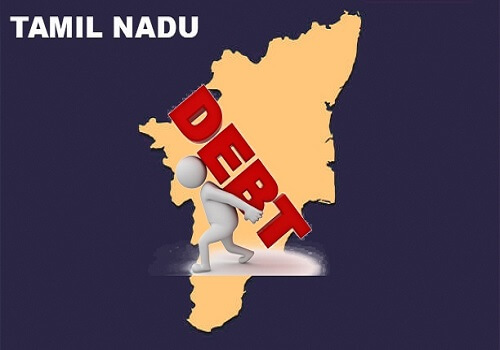
By B.Chandrasekaran Deterioration of State Finances of Tamil Nadu By B.Chandrasekaran Deterioration of State Finances of Tamil Nadu By B.Chandrasekaran Chandrasekaran Balakrishnan January 31, 2025 Economic Reforms, Public Policy, Tamilnadu Economy In recent years, the Government of Tamil Nadu’s steadily increasing overall debts and excess borrowings for financing the welfare programmes has sparked fierce debate among ruling party leaders and opposition leaders. The opposition leaders argue that despite increased tax collections, the state government has continuously borrowed loans for funding the welfare programmes alone and is not able to fund increased capital expenditures, which would help the state economy to also fund the urban civic infrastructure facilities and services that are lagging. During the last few years, the fiscal management of Tamil Nadu has increasingly become a concern. However, the ruling government has not accorded adequate attention to the worrying trend of rising fiscal debt. In this context, it is very pertinent to look at the recently released report of the Reserve Bank of India (RBI) on “State Finances: A Study of Budgets of 2024-25- Fiscal Reforms by States” in December, 2024, with respect to the state of Tamil Nadu. The report contains fiscal data for the years 2021-22 (actuals), 2022-23 (revised estimates), and 2023-24 (Budget Estimates) besides other key data. The RBI report highlights that the states should make efforts towards strengthening fiscal prudence with the following measures on priority: “State-specific Fiscal Responsibility Legislations (FRLs) along with tax and expenditure reforms have strengthened their finances over the past two decades. In view of high debt levels, contingent liabilities, and the rising subsidy burden, State government finances would benefit from the adoption of a risk-based fiscal framework with provisions for counter-cyclical fiscal policy actions; A prudent medium-term expenditure framework; A clear, transparent, and time-bound glide path for debt consolidation; and Enhanced data dissemination and communication policies, including on reporting of outstanding liabilities, off-budget borrowings, and guarantees. Strengthening of State Finance Commissions is also critical for ensuring adequate and timely fund transfers to local bodies.” DISCOM drags down Finances of Tamil Nadu The level of revenue deficit in States such as Haryana, Kerala, Punjab, Rajasthan, Tamil Nadu, and West Bengal witnessed a level much higher than the all-state average during the period of 2021-22 to 2023-24. With respect to Tamil Nadu, the revenue deficit for 2021-22, 2022-23, 2023-24 (RE) and 2024-25 (BE) were 2.2%, 1.5%, 1.7% and 1.6% in GSDP respectively. These are higher than all India levels. One of the major indicators of the deterioration of state financial health is the continuous losses incurred by the state electricity department and the failure to undertake institutional reforms apart from funding freebie schemes. According to the RBI Report, six states contribute 75% of the total national losses incurred by electricity distribution companies (DISCOMs) which amounts to Rs. 6.5 lakh crores (2.4% of GDP) by 2022-23. Tamil Nadu is one of six states with the largest share of 26% in national level losses, followed by Rajasthan (15%), Uttar Pradesh (15%), Madhya Pradesh (10%), Telangana (10%) and Maharashtra (5%). The RBI Study on State Finances-2023-24 observed that “Power distribution has strained State finances due to persistent operational inefficiencies and significant under-recoveries. Receipts from the power sector constitute less than a tenth of the corresponding revenue expenditure incurred by the States.” By March 2023, Tamil Nadu DISCOM reported losses of over Rs. 1.6 lakh crores. The major issues in the context of DISCOM finances highlighted are low tariff rates, high procurement costs of power, cross-subsidisation, and the dominance of State authorities which limits decision-making autonomy (Pinaki Chakraborty and Kaushik Bhadra, 2024). One of the remedies suggested by experts is to increase tariffs in electricity utility rates across different categories and reduce AT&D losses with smart meter systems and institutional reforms. In fact, analysis shows that more than a 50% increase in tariffs would be required in Madhya Pradesh, Tamil Nadu, and Rajasthan where tariffs are already higher than the national average. However, Tamil Nadu has linked tariff increases to inflation for automatic annual adjustments (MERC, 2023; TNERC, 2023). In order to finance the expenditures of states over and above the revenues, the state governments borrow loans. As per RBI Report, the net market borrowings of States rose by 38.2% to Rs.7.17 lakh crore in 2023-24, with Uttar Pradesh, Maharashtra, Tamil Nadu, Karnataka, Andhra Pradesh, Rajasthan, West Bengal, and Telangana amongst the major borrowing States. Also, States such as Madhya Pradesh, Maharashtra, Puducherry, Punjab, Rajasthan, Tamil Nadu, and Uttar Pradesh undertook re-issuances of loans during the year (2024-25). Overall, for the states with an increasing focus on capital expenditure, the ratio of revenue expenditure to capital outlay (RECO) of the States has seen a welcome decline from 6.3% in 2021-22 to 5.2% in 2024-25 (BE). Unfortunately, a state like Tamil Nadu has 7.3%, which is higher compared to states like Gujarat (2.9), Karnataka (5.5), Maharashtra (6.1), and Telangana (6.6). Total Revenues of Tamil Nadu Over the last three years period from 2022-23 to 2024-25, the overall revenue of Tamil Nadu increased by 22.7%. Similarly, the total tax revenues and Tamil Nadu‘s Own Tax revenues increased by 29.6% and 29.9% respectively during the same period (See Figure 1).                                                        Source: RBI Report on State Finances 2024-25 Capital Outlay and Expenditure The capital outlay of Tamil Nadu has not increased substantially over the last three years. The share of capital outlay in development expenditure has declined from 19.1% in 2022-23 to 18.6% in 2024-25 (BE). Figures 2 and 3 reveal the substantially decreased overall capital expenditure over the last three years. This shows the poor attention given by the state government during the period.                                                             Source: RBI Report on State Finances 2024-25      

Deterioration of State Finances of Tamil Nadu Read More »

Internationalising Indian Higher Education by Dr. M.Saravanan

Internationalising Indian Higher Education by Dr. M.Saravanan Internationalising Indian Higher Education Saravanan M January 31, 2025 Higher Education, Public Policy The National Education Policy (NEP) 2020 marks a historic shift in the policymaking for higher education as it aims to internationalise the quality of higher education, while simultaneously attempting to Indianise the sector. Various policy prescriptions of NEP encompass promoting Indian languages, conferring primacy to the mother-tongue at primary schooling, and covering Indian knowledge systems, including tribal knowledge and indigenous and traditional ways of learning, in various disciplines. These would instil a sense of rootedness and pride in India and its rich, diverse, and ancient culture. A detailed discussion about the policy paths for Indianisation would require a devoted space. However, a nation that intends to internationalise its higher education needs to focus on its indigenous strengths to offer a unique and real international learning experience and avoid being a clone of another international education model. The NEP has green-signalled a formal process to internationalise higher education, a topic hitherto witnessed at the margins of policymaking and not as the core. Further, the NEP aims to the improve mobility of students, teachers and researchers across nations, establish highest global standards in education, and nurture young minds to be global citizens exposed to diverse cultures. To this end, it has defined the purpose of education at the sectoral and institutional level, highlighted the different roles institutions of different quality and focus are expected to play, and how knowledge is to be created and disseminated. This perfectly aligns with the definition of the internationalisation of higher education by the eminent scholar, Prof. Jane Knight. While under the ongoing Pradhan Mantri Uchchatar Shiksha Abhiyan (PM-USHA) scheme, some public universities are being supported to enhance their quality and also to collaborate with foreign universities, just as was done in the previous avatar of the scheme, where it went with the name of Rashtriya Uchchatar Shiksha Abhiyan (RUSA), efforts have also been taken up to improve the quality and global standing of institutions under Institutions of Excellence (IoE) programme. While these are generic efforts to improve institutions that would also lead to internationalisation, the UGC has come up with targeted measures to promote internationalisation. In May 2022, the UGC introduced its Regulation delineating the various options of higher education programmes that domestic and foreign institutions can offer collaboratively, like twinning programmes, joint-degrees, dual degrees etc. It also set the conditions for such collaborations and set eligibility standards for the institutions in terms of NAAC accreditation, NIRF or global rankings, to ensure that only institutions of certain proven quality are allowed to collaborate with globally reputed and well-ranked foreign institutions. The UGC also urged all the institutions to set up an Office of International Affairs to function as a single point of contact to take up all necessary action for collaborations with foreign institutions and teacher-student mobility. As per the information available on the website of the UGC, a total of 235 Indian higher education institutions are eligible to collaborate with foreign institutions to offer Twinning, Joint Degree, and Dual Degree Programmes. While collaboration between Indian and foreign institutions is one way to internationalise, the UGC has also embarked upon facilitating the entry of foreign institutions to set-up their own institutions in India, either individually or in association with any other foreign or Indian institution, by notifying another Regulation in November, 2023. It allows Foreign Higher Educational Institution (FHEI) within the top five hundred in the overall category or subject-wise category of global rankings or the institution that possesses outstanding expertise in a particular area. The FHEI has the autonomy to determine the qualifications, salary structure, and other conditions of service for appointing faculty and staff, provided the qualifications of the faculty appointed are at par with the main campus in the country of origin and the international faculty appointed serves at least a semester at the Indian campus. The qualifications awarded by the FHEI in the Indian campus will have the same recognition, equivalence and status that the qualification awarded by the FHEI enjoys in its country of origin. The qualifications awarded by it will also be equivalent to any corresponding degree by any Indian Higher Educational Institution for all purposes. To make the Indian degree programmes comparable to the globally accepted structure, curricular changes have been made like offering four-year undergraduate degree programmes across disciplines, with multiple entry and exit; one-year postgraduate programme, platform for credit accumulation, transfer and redemption by students, etc. A major focus is on constant faculty development and research and innovation, which would lead to enhancement in the quality of higher education. Further, cultural aspects of the diverse Indian sub-continent are also being included in the curriculum, in addition to developing right attitude and skills in students to become a global citizen. Post introduction of NEP, the various measures have been taken to improve quality to international standards, increase global mobility of students and teachers and embed cultural inclusiveness in the mainstream education, which is expected to internationalise Indian higher education holistically. Already few universities have established (or in the process of establishing) their campuses in India including Australia’s Deakin University, which is the first foreign university campus in India, followed by the University of Southampton. It is only expected that the trickle would be followed by a deluge soon. Dr.M Saravanan, is specialised in Higher Education and Founder Secretary of the AgaPuram Policy Research Centre, Erode. Views expressed by the author are personal and need not reflect or represent the views of the AgaPuram Policy Research Centre.

Internationalising Indian Higher Education by Dr. M.Saravanan Read More »

Imperatives of Student-Centric Changes in Indian Higher Education

Imperatives of Student-Centric Changes in Indian Higher Education By Dr. M.Saravanan Imperatives of Student-Centric Changes in Indian Higher Education By Dr. M.Saravanan Saravanan M January 28, 2025 Education, Public Policy, Skills Development Sector The momentous National Education Policy (NEP) 2020 has student-centricity as its core, for the transformational and incremental changes envisaged accord student learning and developmental outcomes the topmost priority. Multiple initiatives undertaken as part of the implementation of the NEP so far have enlarged the range of options available to the students. One of the challenges stifling tertiary education hitherto has been the mandatory forfeiture of all the achievements and efforts of the students in case of discontinuation of the degree before the completion of the requisite duration. This issue has been addressed with the implementation of multiple entry and exit for students. In case a student intends, or is forced due to any unforeseen situation, to drop-out of the programme, say after a year or two, the student can carry the past achievements in the form of credits and rejoin the programme at a later period within the stipulated time, and complete the programme. If a student enrols for a four-year Honours Degree programme but leaves the programme after the successful completion of the first year, the student would be awarded a Certificate. Similarly, for successful completion of two years and three years, a Diploma and Degree would be awarded respectively. The earlier situation of completely losing their credits or marks is not the case anymore. The carrying forward of credits earned till the time of discontinuation and redeeming them later at the time of rejoining the programme is made possible by a mechanism called Academic Bank of Credit, which works similar to a commercial bank. A student is required to open an account on DigiLocker, free of cost, using the Aadhar Number. This student account gets linked to the institution and linked to the programme for which the student is enrolled. Every successful completion of a course in a programme earns credit, which gets accumulated. If a student continues the programmes throughout the duration and the total credit accumulated equals the requisite total credits for the programmes, then the corresponding qualification is awarded. In case the student drops midway, the credits accumulated thus far are retained in the account and can be redeemed whenever the student rejoins the programme and completes it. Until a short while ago, a section of students who are more industrious had a grouse that despite their willingness and aptitude, the rules did not permit them to pursue an additional programme other than the one being pursued. Recent tweaks in regulations have permitted students to take up an online programme along with another regular programme. This allows students to pursue and complete two degrees simultaneously, as online degrees have the same equivalence and validity as that of a regular degree. Post NEP, online education has got more fillip, as the UGC allows up to forty percent of the total credits of a programme through online courses offered under SWAYAM / NPETEL platforms. This allows students two benefits: doing any course of choice even if the same is not available in the institutions where the student is enrolled and accessing the course at any time of choice or convenience. In addition, new regulations have also been introduced to encourage eligible universities to offer online programmes. Further, under the Choice Based Credit System (CBCS), which is in vogue for over two decades, students have some liberty to choose a few courses of their choice under each programme. Post NEP, the UGC has brought in a revised curricular framework to also include skill-based or vocational courses mandatorily in each programme. The emphasis given to making the institutions multidisciplinary automatically expands the horizon of choices for students to choose from. Using English as the medium of instruction for many programmes has posed and continues to pose challenges to students who have had their schooling in their mother language. Following the mandate of NEP to introduce programmes in the languages, degree programmes are offered in languages other than English by many universities. Doing higher studies abroad after graduation, especially doctoral programmes, has been a dream choice for some students. One issue for such students was the structure of the undergraduate students, as the Western countries and those that modelled on that have four-year undergraduate programmes even for humanities and social sciences, whereas in India they were three-year programmes. With the introduction of four-year undergraduate programmes, the structure of Bachelor’s programme is now aligned with the global framework, easing access to higher studies abroad for interested students. There are cases when collaborations result in better services being offered. To enable Indian institutions to associate with globally top-ranked institutions, the UGC has made regulatory changes, whereby the domestic and foreign higher education institutions can now offer a bouquet of programmes together. Further, the best international institutions may also offer their services individually to the students by opening their campuses. While entry into quality international institutions has become possible and easy, the quality of the programmes offered in India has to be of the same quality offered in the main campus of their country. It is hoped that governments and institutions constantly reform the system to remain student-centric, to remain relevant and meaningful. Dr.M Saravanan, is specialised in Higher Education and Founder Secretary of the AgaPuram Policy Research Centre, Erode. Views expressed by the author are personal and need not reflect or represent the views of the AgaPuram Policy Research Centre.  

Imperatives of Student-Centric Changes in Indian Higher Education Read More »

Expansion of City Corporations and Municipalities Merely Does Not Guaranty Quality of Services and Facilities in Tamil Nadu

Expansion of City Corporations and Municipalities Merely Does Not Guaranty Quality of Services and Facilities in Tamil Nadu By B.Chandrasekaran Expansion of City Corporations and Municipalities Merely Does Not Guaranty Quality of Services and Facilities in Tamil Nadu By B.Chandrasekaran Chandrasekaran Balakrishnan January 28, 2025 Democracy and Institutions, Public Policy, Tamilnadu Economy, Urban Development As the nation embarks on Viksit Bharat@2047, its ambitious plan to make India a developed country by 2047, it is imperative that the country develops organically with the local bodies driving the economic development and also benefitting from it. If this opportunity is missed, the gains derived from the 73rd and 74th Constitutional amendments would dissipate. To this end, the second-generation institutional reforms of urban local bodies (ULBs) need to be taken up. Despite new initiatives like Smart City Mission, AMRUT, etc., the ULBs continue to face challenges in providing basic civic facilities like water supply, sanitation, urban public transport, all-weather road connectivity, stormwater and drainage, solid waste management, sewage, public sanitary facility, street lights, safety, and security, etc. Hamstrung by inadequate decentralisation, the local governments are unable to raise funds and channelise development projects to solve physical infrastructure facilities. Moreover, the funds allocated by the states are always disproportionate to the requirements and spending on developmental projects is scarce and riddled with quality issues. Status of Local Bodies in Tamil Nadu Take the case of Tamil Nadu, which envisions becoming a trillion-dollar economy by 2030. While the State is the most urbanised (53% population) in the country, the civic facilities that its cities and town offer to its residents are no different from any other poorly managed cities and towns in the country. The predominant reason is the lack of financial and administrative autonomy of the ULBs. The recent efforts to improve some of the services have also not yielded sustainable results. Given this background, the government of Tamil Nadu has recently announced proposals to expand the existing geographical coverage of urban ULBs limits by merging nearby municipalities into city corporations, town panchayats into municipalities, and village panchayats into town panchayats. Some of the major factors for the expansion of urban areas include increase in population, popular demand from people, and an increase in tax revenues. The following are the key announcements of the Government of Tamil Nadu’s Department of Municipal Administration through the issue of G.Os notified on 31st December 2024: Expansion of 16 municipal corporations including Greater Chennai, Coimbatore, Cuddalore, Dindigul, Erode, Karur, Hosur, Madurai, Salem, Tiruchirapalli, Tiruppur, Avadi, Kumbakonam, Thanjavur, Thoothukudi, and Sivakasi by annexing 4 municipalities, 5 town panchayats and 149 village panchayats; 41 municipalities including Tiruvarur, Tiruvallur, and Chidambaram, are to be expanded by annexing 1 town panchayats and 147 village panchayats; Formation of 13 new municipalities including Kanyakumari, Harur, and Perundurai; Formation of 25 new town panchayats including Yercaud, Kalayar Koil and Thirumayam; and Annexation of 29 village panchayats with 25 town panchayats. Advantages of Geographic Expansion Expansion through mergers increases land values thereby boosting the real estate and related sectors. The expanded city corporations and municipalities may get relatively higher fund allocation for improving the infrastructure development facilities and services. Decentralised regulation of planned development of the city at least on paper if not for implementation in letter and spirit. Disadvantages of Geographic Expansion The citizens of expanded ULBs may bear higher taxes for services like water, property tax, municipal waste disposal, etc. The expansion may result in parent ULBs being unable to cater to the needs of its newer territory. The newly added areas either continue with existing services or face neglect having lost its erstwhile independent identity. Incompatibility between the vision of the parent ULBs and the needs of the merging units. Issues with Expansion through Mergers Often ULBs are expanded for political reasons or to obtain approvals from the Centre for new projects, like metro train services, which require a particular size of population. Further, ULBs are already financially stressed and the state governments do not give adequate funds after the merger, aggravating their financial position. Furthermore, expansion through merger goes against the principle of local governance where small is considered beautiful. There is absolutely no need for mergers just to develop infrastructure, which may be developed as there are. Prerequisites for Expansion Any merger of ULBs should be done only after existing areas of an ULB achieve the desired levels of reasonable, minimum standards of urban infrastructure and quality of life. Further, a thorough study has to be made on the likely benefits and issues with prospective mergers from administrative, financial and other perspectives. If ULBs are really empowered through adequate decentralisation, mergers may be proposed by the ULBs themselves or, they may explore partnerships and sharing of resources without formal mergers. All the decision-making process has to be decentralised, moving closer to the local level and ward level for the participation of people. Only the technical aspects have to be decided at the state or regional level to support ULBs effectively and on timely. Anything on the contrary would create chaos as witnessed in big cities. like recent floods and inundations during regular monsoons. Several years ago, the scheme on Providing Urban Amenities to Rural Areas (PURA), a vision of Dr APJ Abdul Kalam, was implemented in a few states like Andhra Pradesh, Kerala, Maharashtra, Puducherry, Rajasthan, and Uttarakhand. It is a Public Private Partnership scheme with a clear framework for governments, state governments, the private sector, and local government to take advantage of improving facilities and services with 10 years of maintenance services. Why not try something like this new scheme to make our semi-urban and rural areas with all infrastructure facilities? B.Chandrasekaran is an Economist and Founder Chairman of the AgaPuram Policy Research Centre, Erode. Views expressed by the author are personal and need not reflect or represent the views of the AgaPuram Policy Research Centre.  

Expansion of City Corporations and Municipalities Merely Does Not Guaranty Quality of Services and Facilities in Tamil Nadu Read More »